Bava Batra 74a: Talmud study for Daf Yomi
Study the Talmud for Daf Yomi with scanned pages, Hebrew text, English translations from Sefaria and AI-generated French translations.
Passage selection and English or AI-generated French translation are available where the scan has annotations. Daf Study is independent of Torah-Box and Sefaria.
Browse Bava Batra · בבא בתרא · All tractatesBava Batra 74a text and translations
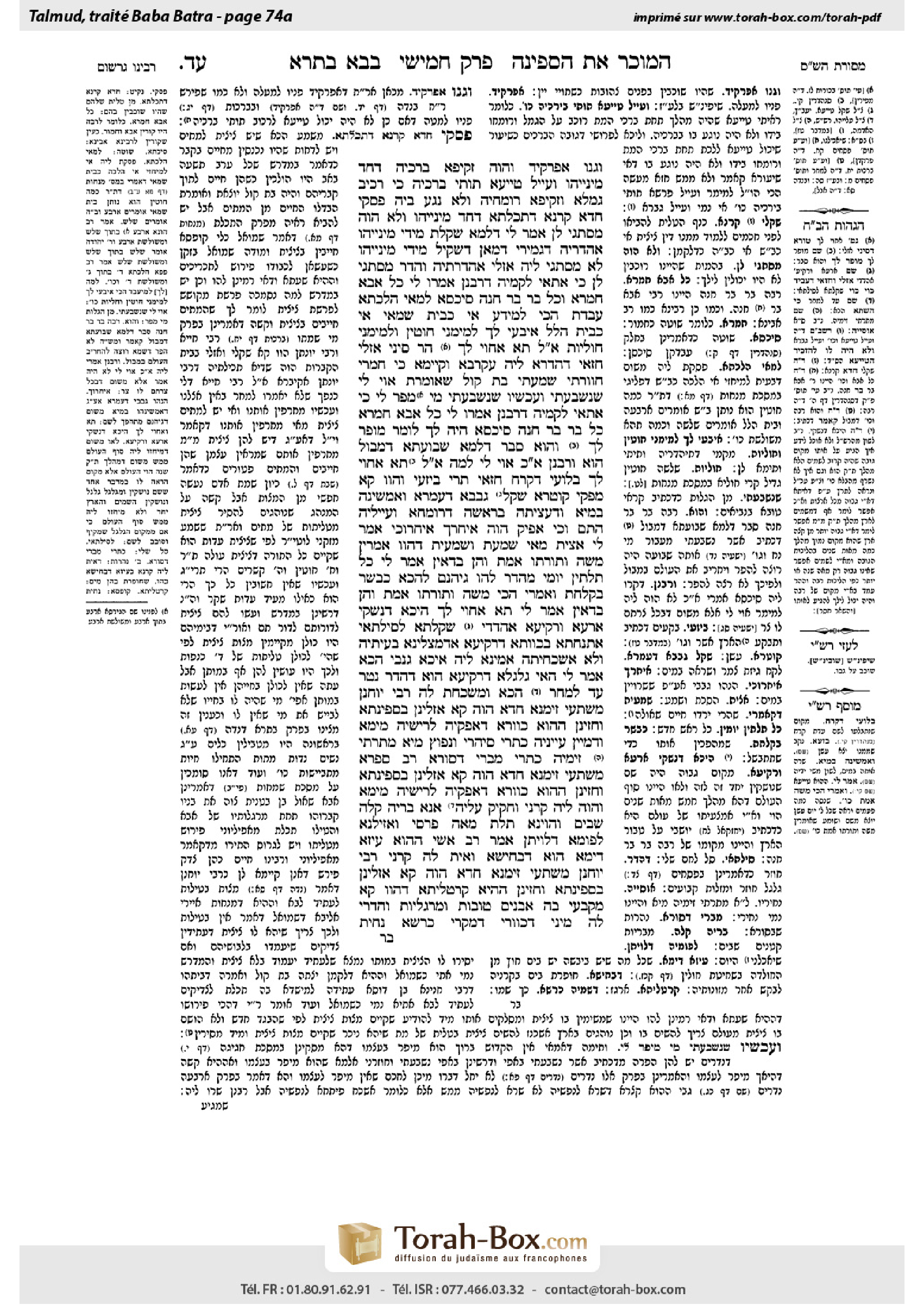
This page of Bava Batra includes the Aramaic text, an English translation and an AI-generated French translation, alongside the scan above.
בבא בתרא ע״ד א · Aramaic and Hebrew text
וְגָנוּ אַפַּרְקִיד. וַהֲוָה זְקִיפָא בִּרְכֵּיהּ דְּחַד מִינַּיְיהוּ, וְעָיֵל טַיָּיעָא תּוּתֵי בִּרְכֵּיהּ כִּי רְכִיב גַּמְלָא, וּזְקִיפָא רוּמְחֵיהּ וְלָא נָגַע בֵּיהּ. פְּסַקִי חֲדָא קַרְנָא דִתְכֵלְתָּא דְּחַד מִינַּיְיהוּ, וְלָא הֲוָה מִסְתַּגִּי לַן. אָמַר לִי: דִּלְמָא שְׁקַלְתְּ מִידֵּי מִינַּיְיהוּ? אַהְדְּרֵיהּ, דִּגְמִירִי דְּמַאן דְּשָׁקֵיל מִידֵּי מִינַּיְיהוּ לָא מִסְתַּגִּי לֵיהּ. אֲזַלִי אַהְדַּרְתֵּיהּ, וַהֲדַר מִסְתַּגִּי לַן.
כִּי אֲתַאי לְקַמֵּיהּ דְּרַבָּנַן, אֲמַרוּ לִי: כֹּל ״אַבָּא״ – חַמְרָא, וְכֹל ״בַּר בַּר חָנָה״ – סִיכְסָא! לְמַאי הִלְכְתָא עֲבַדְתְּ הָכִי? לְמִידַּע אִי כְּבֵית שַׁמַּאי אִי כְּבֵית הִלֵּל? אִיבְּעִי לָךְ לְמִימְנֵי חוּטִין וּלְמִימְנֵי חוּלְיוֹת.
אֲמַר לִי: תָּא אַחְוֵי לָךְ הַר סִינַי. אֲזַלִי, חֲזַאי דְּהָדְרָא לֵיהּ עַקְרַבָּא, וְקָיְימָא כִּי חֲמָרֵי חִווֹרָתִי. שָׁמַעְתִּי בַּת קוֹל שֶׁאוֹמֶרֶת: ״אוֹי לִי שֶׁנִּשְׁבַּעְתִּי; וְעַכְשָׁיו שֶׁנִּשְׁבַּעְתִּי – מִי מֵפֵר לִי?״
כִּי אֲתַאי לְקַמֵּיהּ דְּרַבָּנַן, אֲמַרוּ לִי: כָּל ״אַבָּא״ – חַמְרָא, כׇּל ״בַּר בַּר חָנָה״ – סִיכְסָא! הָיָה לְךָ לוֹמַר ״מוּפָר לָךְ״! וְהוּא סָבַר: דִּלְמָא שְׁבוּעֲתָא דְמַבּוּל הוּא. וְרַבָּנַן – אִם כֵּן, ״אוֹי לִי״ לָמָּה?
אָמַר לִי: תָּא אַחְוֵי לָךְ בְּלוּעֵי דְקֹרַח. חֲזַאי תְּרֵי בִּיזְעֵי, וַהֲווֹ קָא מַפְּקִי קוּטְרָא. שְׁקַל גְּבָבָא דְעַמְרָא וְאַמְשִׁינֵּהּ בְּמַיָּא, וְדַעֲצִיתֵהּ בְּרֵאשֵׁהּ דְּרוּמְחָא וְעַיְּילֵיהּ הָתָם, וְכִי אַפֵּיק, הֲוָה אִיחֲרַךְ אִיחֲרוֹכֵי. אָמַר לִי: אַצֵּית מַאי שָׁמְעַתְּ, וּשְׁמַעִית דַּהֲווֹ אָמְרִין: ״מֹשֶׁה וְתוֹרָתוֹ אֱמֶת, וְהֵן בַּדָּאִין״. אֲמַר לִי: כֹּל תְּלָתִין יוֹמֵי מַהְדַּר לְהוּ גֵּיהִנָּם לְהָכָא כְּבָשָׂר בְּקַלַּחַת, וְאָמְרִי הָכִי: ״מֹשֶׁה וְתוֹרָתוֹ אֱמֶת, וְהֵן בַּדָּאִין״.
אָמַר לִי: תָּא אַחְוֵי לָךְ הֵיכָא דְּנָשְׁקִי אַרְעָא וּרְקִיעָא אַהֲדָדֵי. שְׁקַלְתָּא לְסִילְתַּאי, אַתְנַחְתָּא בְּכַוְּותָא דִרְקִיעָא. אַדִּמְצַלֵּינָא, בְּעֵיתֵיהּ וְלָא אַשְׁכַּחְתֵּהּ. אָמֵינָא לֵיהּ: אִיכָּא גַּנָּבֵי הָכָא? אֲמַר לִי: הַאי גִּלְגְּלָא דִרְקִיעָא הֲוָה דְּהָדַר, נְטַר עַד לִמְחַר הָכָא – וּמַשְׁכַּחַתְּ לַהּ.
רַבִּי יוֹחָנָן מִשְׁתַּעֵי: זִימְנָא חֲדָא הֲוָה קָא אָזְלִינַן בִּסְפִינְתָּא; וַחֲזֵינַן הָהוּא כְּווֹרָא דְּאַפְּקֵיהּ לְרֵישֵׁיהּ מִיַּמָּא, וְדָמְיָין עַיְינֵיהּ כִּתְרֵי סֵיהֲרֵי; וּנְפוּץ מַיָּא מִתַּרְתֵּי זִימֵיהּ כִּתְרֵי מַבָּרֵי דְסוּרָא. רַב סָפְרָא מִשְׁתַּעֵי: זִימְנָא חֲדָא הֲוָה קָא אָזְלִינַן בִּסְפִינְתָּא; וַחֲזֵינַן הָהוּא כְּווֹרָא דְּאַפְּקֵיהּ לְרֵישֵׁיהּ מִיַּמָּא, וַהֲוָה לֵיהּ קַרְנֵי וַחֲקִיק עֲלָיהּ: ״אֲנָא בְּרִיָּה קַלָּה שֶׁבַּיָּם״; וַהֲוֵינָא תְּלָת מְאָה פַּרְסֵי, וְאָזֵילְנָא לְפוּמָּא דְלִוְיָתָן. אָמַר רַב אָשֵׁי: הָהוּא עִיזָּא דְיַמָּא הוּא, דְּבָחִישָׁא וְאִית לַהּ קַרְנֵי.
רַבִּי יוֹחָנָן מִשְׁתַּעֵי: זִימְנָא חֲדָא הֲוָה קָא אָזְלִינַן בִּסְפִינְתָּא; וַחֲזֵינַן הָהִיא קַרְטְלִיתָא, דַּהֲווֹ קָא מְקַבְּעִי בַּהּ אֲבָנִים טוֹבוֹת וּמַרְגָּלִיּוֹת, וְהָדְרִי לַהּ מִינֵי דִכְווֹרֵי דְּמִקְּרֵי כַּרְשָׁא. נְחֵית
Bava Batra 74a · English translation
and they were lying on their backs. And the knee of one of them was elevated, and he was so enormous that the Arab entered under his knee while riding a camel and with his spear upright, and he did not touch him. I cut one corner of the sky-blue garment that contains ritual fringes of one of them, and we were unable to walk. The Arab said to me: Perhaps you took something from them? Return it, as we know by tradition that one who takes something from them cannot walk. I then returned the corner of the garment, and then we were able to walk.
When I came before the Sages, they said to me in rebuke: Every Abba is a donkey, and every bar bar Ḥana is an idiot. For the purpose of clarifying what halakha did you do that? If you wanted to know whether the halakha is in accordance with the opinion of Beit Shammai or in accordance with the opinion of Beit Hillel, as to whether there are four or three threads and joints in ritual fringes, in that case there was no need to take anything with you, as you should have simply counted the threads and counted the joints.
Rabba bar bar Ḥana continues his account. That Arab also said to me: Come, I will show you Mount Sinai. I went and saw that scorpions were encircling it, and they were standing as high as white donkeys. I heard a Divine Voice saying: Woe is Me that I took an oath; and now that I took the oath, who will nullify it for me?
When I came before the Sages, they said to me in rebuke: Every Abba is a donkey, and every bar bar Ḥana is an idiot. You should have said: Your oath is nullified. The Gemara explains: And Rabba bar bar Ḥana did not nullify the oath because he reasoned: Perhaps God is referring to the oath that He will not flood the earth again. But the Sages would argue that if that were so, why say: Woe is Me? Rather, this must be referring to God’s oath of exile upon the Jewish people.
Rabba bar bar Ḥana continues his account. The Arab also said to me: Come, I will show you those who were swallowed by the earth due to the sin of Korah. I saw two rifts in the ground that were issuing smoke. The Arab took a shearing of wool, and dipped it in water, and inserted it on the head of a spear, and placed it in there. And when he removed the wool, it was scorched. He said to me: Listen to what you hear; and I heard that they were saying: Moses and his Torah are true, and they, i.e., we in the earth, are liars. The Arab further said to me: Every thirty days Gehenna returns them to here, like meat in a pot that is moved around by the boiling water as it cooks. And every time they say this: Moses and his Torah are true, and they, i.e., we in the earth, are liars.
This Arab also said to me: Come, I will show you the place where the earth and the heavens touch each other. I took my basket and placed it in a window of the heavens. After I finished praying, I searched for it but did not find it. I said to him: Are there thieves here? He said to me: This is the heavenly sphere that is turning around; wait here until tomorrow and you will find it.
§ Rabbi Yoḥanan relates: Once we were traveling on a ship and we saw a certain fish that took its head out of the sea, and its eyes had the appearance of two moons, and water scattered from its two gills like the two rivers of Sura. Rav Safra relates: Once we were traveling on a ship and we saw a certain fish that took its head out of the sea, and it had horns, and the following was inscribed on them: I am a lowly creature of the sea and I am three hundred parasangs long, and I am going into the mouth of the leviathan. Rav Ashi said: That is the goat of the sea, which searches through the sea and has horns.
Rabbi Yoḥanan relates: Once we were traveling on a ship and we saw a certain crate [kartalita] in which precious stones and pearls were set, and a species of fish called sharks encircled it. He descended,
Bava Batra 74a · Traduction française (IA)
et ils étaient allongés sur le dos. Et le genou d’un d’eux était levé, et il était si grand que l’Arabe entra sous son genou tout en montant un chameau, et avec sa lance dressée, et il ne l’a pas touché. J’ai coupé un coin du vêtement bleu ciel qui contient les franges rituelles d’un d’eux, et nous n’étions plus capables de marcher. L’Arabe m’a dit : Peut-être as-tu pris quelque chose chez eux ? Rends-le, car nous savons par la tradition que celui qui prend quelque chose chez eux ne peut pas marcher. J’ai alors rendu le coin du vêtement, et ensuite nous étions capables de marcher.
Quand je suis venu devant les Sages, ils m’ont réprimandé en disant : Chaque Abba est un âne, et chaque bar bar Ḥana est un imbécile. Pourquoi as-tu fait cela ? Si tu voulais savoir si la halakha est selon l’opinion de Beit Shammai ou selon l’opinion de Beit Hillel, concernant le nombre de fils et de joints dans les franges rituelles, dans ce cas-là, il n’y avait pas besoin de prendre quelque chose avec toi, car tu aurais simplement dû compter les fils et les joints.
Rabba bar bar Ḥana continue son récit. Cet Arabe m’a aussi dit : Viens, je te montrerai le Mont Sinaï. Je suis allé et j’ai vu que des araignées entouraient le mont, et elles étaient debout aussi haut que des ânes blancs. J’ai entendu une Voix divine dire : Malheur à Moi que j’ai pris un serment ; et maintenant que j’ai pris ce serment, qui me le fera annuler ?
Quand je suis venu devant les Sages, ils m'ont réprimandé en disant : Chaque Abba est un âne, et chaque bar bar Ḥana est un imbécile. Tu aurais dû dire : Ton serment est annulé. La Guemara explique : Et Rabba bar bar Ḥana n'a pas annulé le serment parce qu'il raisonnait : Peut-être Dieu fait référence au serment qu'Il ne submergera plus la terre. Mais les Sages auraient argumenté que si c'était le cas, pourquoi dire : Malheur à Moi ? Plutôt, cela doit faire référence au serment d'exil de Dieu sur le peuple juif.
Rabba bar bar Ḥana continue son récit. L'Arabe m'a aussi dit : Viens, je te montrerai ceux qui ont été avalés par la terre à cause du péché de Korah. J'ai vu deux fissures dans la terre qui émettaient de la fumée. L'Arabe a pris un morceau de laine, l'a trempé dans l'eau, et l'a placé sur la tête d'une lance, et l'a mis dedans. Et quand il a retiré la laine, elle était brûlée. Il m'a dit : Écoute ce que tu entends ; et j'ai entendu qu'ils disaient : Moïse et sa Torah sont vrais, et eux, c'est-à-dire nous sur la terre, sont des menteurs. L'Arabe a encore dit à moi : Chaque trente jours, Gehenna les ramène ici, comme de la viande dans une marmite qui est remuée par l'eau bouillante pendant qu'elle cuit. Et chaque fois qu'ils disent cela : Moïse et sa Torah sont vrais, et eux, c'est-à-dire nous sur la terre, sont des menteurs.
Cet Arabe m'a aussi dit : Viens, je te montrerai l'endroit où la terre et les cieux se touchent. J'ai pris mon panier et l'ai placé dans une fenêtre des cieux. Après que j'ai fini de prier, j'ai cherché mais je ne l'ai pas trouvé. J'ai dit à lui : Y a-t-il des voleurs ici ? Il m'a dit : C'est la sphère céleste qui tourne ; attends ici jusqu'à demain et tu le trouveras.
§ Rabbi Yoḥanan rapporte : Une fois, nous étions en voyage sur un bateau et nous avons vu un certain poisson qui sortait sa tête de la mer, et ses yeux avaient l’apparence de deux lunes, et de l’eau s’échappait de ses deux branchies comme les deux rivières de Sura. Rav Safra rapporte : Une fois, nous étions en voyage sur un bateau et nous avons vu un certain poisson qui sortait sa tête de la mer, et il avait des cornes, et l’écriture suivante était inscrite dessus : Je suis un être modeste de la mer et je mesure trois cents parasangs de long, et je vais dans la bouche du léviathan. Rav Ashi a dit : C’est le bouc de la mer, qui explore la mer et qui a des cornes.
Rabbi Yoḥanan rapporte : Une fois, nous étions en voyage sur un bateau et nous avons vu un certain coffre [kartalita] dans lequel des pierres précieuses et des perles étaient enchâssées, et une espèce de poisson appelée requins l’entourait. Il est descendu,
Traduction française générée par IA à partir de l’édition anglaise de Sefaria. Vérifie toujours un passage avec le texte source.
Text from Sefaria: William Davidson Edition - Vocalized Aramaic (CC BY NC); William Davidson Edition - English (CC BY NC).