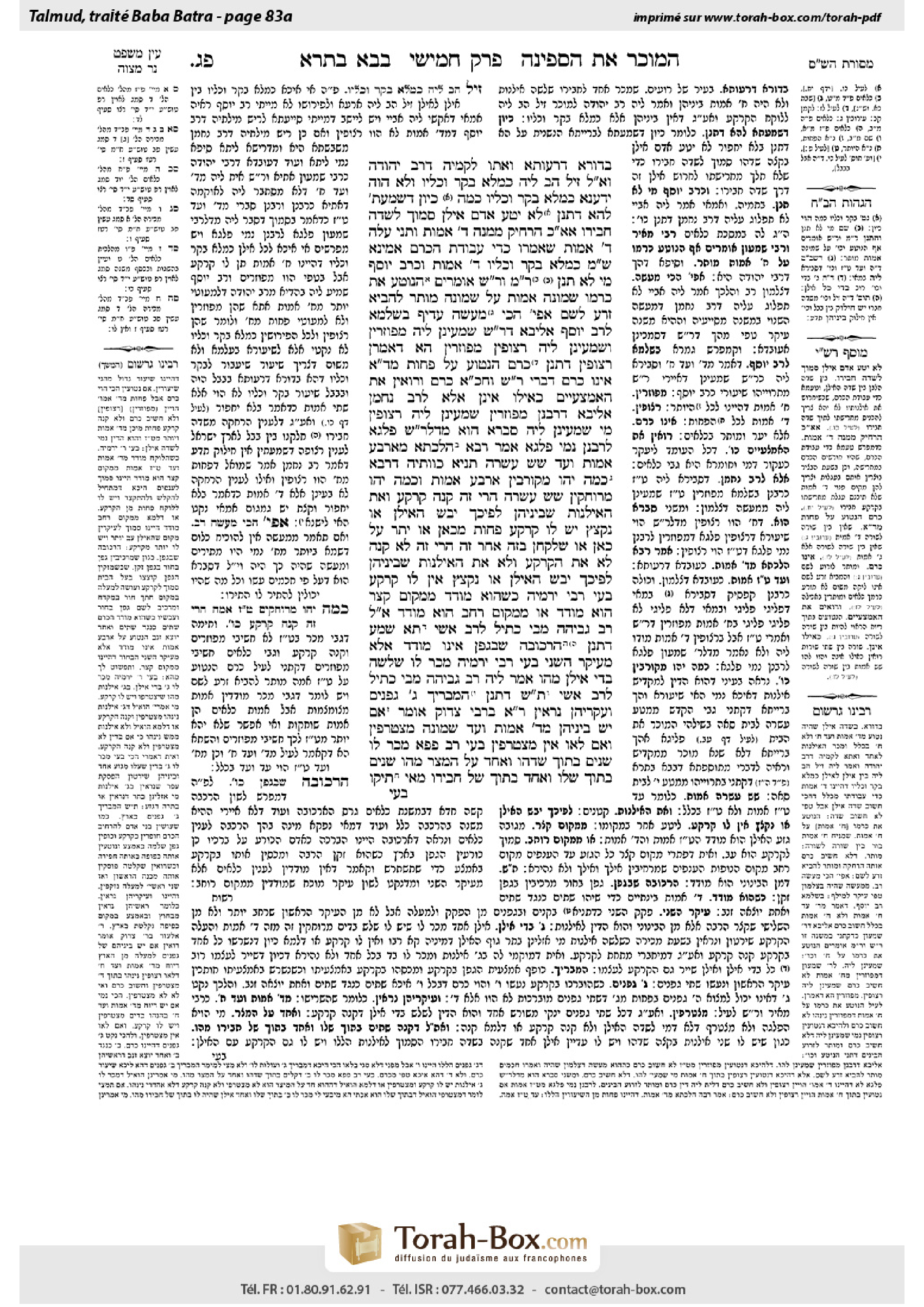
Bava Batra 83a: Talmud study for Daf Yomi
Study the Talmud for Daf Yomi with scanned pages, Hebrew text, English translations from Sefaria and AI-generated French translations.
Passage selection and English or AI-generated French translation are available where the scan has annotations. Daf Study is independent of Torah-Box and Sefaria.
Browse Bava Batra · בבא בתרא · All tractatesBava Batra 83a text and translations
This page of Bava Batra includes the Aramaic text, an English translation and an AI-generated French translation, alongside the scan above.
בבא בתרא פ״ג א · Aramaic and Hebrew text
בְּדוּרָא דְרָעֲוָתָא, וַאֲתוֹ לְקַמֵּיהּ דְּרַב יְהוּדָה, וַאֲמַר לֵיהּ: ״זִיל הַב לֵיהּ כִּמְלֹא בָּקָר וְכֵלָיו״; וְלָא הֲוָה יָדַעְנָא ״כִּמְלֹא בָּקָר וְכֵלָיו״ כַּמָּה; כֵּיוָן דְּשַׁמְעִתַהּ לְהָא דִּתְנַן: לֹא יִטַּע אָדָם אִילָן סָמוּךְ לִשְׂדֵה חֲבֵירוֹ, אֶלָּא אִם כֵּן הִרְחִיק מִמֶּנָּה אַרְבַּע אַמּוֹת;
וְתָנֵי עֲלַהּ: אַרְבַּע אַמּוֹת שֶׁאָמְרוּ – כְּדֵי עֲבוֹדַת הַכֶּרֶם; אָמֵינָא: שְׁמַע מִינַּהּ, ״כִּמְלֹא בָּקָר וְכֵלָיו״ – אַרְבַּע אַמּוֹת.
וּכְרַב יוֹסֵף מִי לָא תְּנַן?! רַבִּי מֵאִיר וְרַבִּי שִׁמְעוֹן אוֹמְרִים: הַנּוֹטֵעַ אֶת כַּרְמוֹ שְׁמוֹנֶה אַמּוֹת עַל שְׁמוֹנֶה – מוּתָּר לְהָבִיא זֶרַע לְשָׁם!
אֲפִילּוּ הָכִי, מַעֲשֶׂה עָדִיף.
בִּשְׁלָמָא לְרַב יוֹסֵף אַלִּיבָּא דְּרַבִּי שִׁמְעוֹן – שָׁמְעִינַן לֵיהּ מְפוּזָּרִין, וְשָׁמְעִינַן לֵיהּ רְצוּפִין; מְפוּזָּרִין – הָא דַּאֲמַרַן, רְצוּפִין – דִּתְנַן: כֶּרֶם הַנָּטוּעַ עַל פָּחוֹת מֵאַרְבַּע אַמּוֹת – אֵינוֹ כֶּרֶם, דִּבְרֵי רַבִּי שִׁמְעוֹן. וַחֲכָמִים אוֹמְרִים: כֶּרֶם, וְרוֹאִין אֶת הָאֶמְצָעִיִּים כְּאִילּוּ אֵינָן.
אֶלָּא לְרַב נַחְמָן אַלִּיבָּא דְּרַבָּנַן – מְפוּזָּרִין שָׁמְעִינַן לֵיהּ; רְצוּפִין מִי שָׁמְעִינַן לֵיהּ?! סְבָרָא הוּא: מִדִּלְרַבִּי שִׁמְעוֹן פַּלְגָא, לְרַבָּנַן נָמֵי פַּלְגָא.
אָמַר רָבָא: הִלְכְתָא, מֵאַרְבַּע אַמּוֹת וְעַד שֵׁשׁ עֶשְׂרֵה. תַּנְיָא כְּווֹתֵיהּ דְּרָבָא: כַּמָּה יְהוּ מְקוֹרָבִין? אַרְבַּע אַמּוֹת, וְכַמָּה יְהוּ מְרוּחָקִין? שֵׁשׁ עֶשְׂרֵה.
הֲרֵי זֶה קָנָה קַרְקַע וְאֶת הָאִילָנוֹת שֶׁבֵּינֵיהֶן; לְפִיכָךְ, יָבֵשׁ הָאִילָן אוֹ נִקְצַץ – יֵשׁ לוֹ קַרְקַע. פָּחוֹת מִכָּאן אוֹ יָתֵר עַל כָּאן, אוֹ שֶׁלְּקָחָן בְּזֶה אַחַר זֶה – הֲרֵי זֶה לֹא קָנָה לֹא אֶת הַקַּרְקַע וְלֹא אֶת הָאִילָנוֹת שֶׁבֵּינֵיהֶן; לְפִיכָךְ, יָבֵשׁ הָאִילָן אוֹ נִקְצַץ – אֵין לוֹ קַרְקַע.
בָּעֵי רַבִּי יִרְמְיָה: כְּשֶׁהוּא מוֹדֵד, מִמָּקוֹם קָצָר הוּא מוֹדֵד, אוֹ מִמָּקוֹם רָחָב הוּא מוֹדֵד? אֲמַר לֵיהּ רַב גְּבִיהָה מִבֵּי כְתִיל לְרַב אָשֵׁי: תָּא שְׁמַע, דִּתְנַן: הָרְכוּבָה שֶׁבַּגֶּפֶן – אֵינוֹ מוֹדֵד אֶלָּא מֵעִיקָּר הַשֵּׁנִי.
בָּעֵי רַבִּי יִרְמְיָה: מָכַר לוֹ שְׁלֹשָׁה בַּדֵּי אִילָן, מַהוּ?
אֲמַר לֵיהּ רַב גְּבִיהָה מִבֵּי כְתִיל לְרַב אָשֵׁי: תָּא שְׁמַע, דִּתְנַן: הַמַּבְרִיךְ שָׁלֹשׁ גְּפָנִים, וְעִקְּרֵיהֶן נִרְאִין – רַבִּי אֶלְעָזָר בְּרַבִּי צָדוֹק אוֹמֵר: אִם יֵשׁ בֵּינֵיהֶן מֵאַרְבַּע אַמּוֹת וְעַד שְׁמוֹנֶה – מִצְטָרְפִין, וְאִם לָאו – אֵין מִצְטָרְפִין.
בָּעֵי רַב פָּפָּא: מָכַר לוֹ שְׁנַיִם בְּתוֹךְ שָׂדֵהוּ וְאֶחָד עַל הַמֶּצֶר, מַהוּ? שְׁנַיִם בְּתוֹךְ שֶׁלּוֹ וְאֶחָד בְּתוֹךְ שֶׁל חֲבֵירוֹ, מַאי? תֵּיקוּ.
Bava Batra 83a · English translation
involving the sale of trees in a village of shepherds, and they came before Rav Yehuda, and he said to the seller: Go and give to the one who bought the trees sufficient land for an ox and its vessels. But I did not know how much was sufficient land for an ox and its vessels. When I heard that which we learned in a mishna (26a), I came to a conclusion with regard to this case. The mishna teaches as follows: A person may not plant a tree close by the field of another, unless he places it at a distance of four cubits from the other field.
Rav Yosef continues: And it is taught in a baraita with regard to this mishna: The four cubits that the Sages stated are for the work of the vineyard, so that he does not take oxen and a plow into his neighbor’s field while tending to his vineyard. I studied this mishna and baraita and said: Learn from it that the phrase: Sufficient for the ox and its vessels, means four cubits. At this stage, the Gemara has demonstrated that Rav Naḥman’s opinion is supported by a mishna, whereas Rav Yosef’s ruling is supported by the incident involving Rav Yehuda.
The Gemara asks: But didn’t we also learn a ruling in a mishna (Kilayim 4:9) in accordance with the opinion of Rav Yosef? That mishna teaches: Rabbi Meir and Rabbi Shimon say: In a case of one who plants his vineyard eight cubits by eight cubits, i.e., he leaves eight cubits between each row of vines, it is permitted for him to bring seeds to the empty spaces between the rows. This ruling can be cited in support of the opinion of Rav Yosef that if there is a space of eight cubits between trees or vines they are not considered one unit. Why, then, is this mishna not brought as proof?
The Gemara answers: Even so, it is preferable to cite the incident in Tzalmon as proof. Whenever possible, it is preferable to provide support for an opinion by means of a practical ruling, as it demonstrates that the Sages took action in accordance with that opinion and did not merely teach it as halakha in theory.
The Gemara comments: Granted, according to the analysis of Rav Yosef stated in accordance with the opinion of Rabbi Shimon, we hear about the maximum distance that the trees can be scattered, and we hear about the minimum distance that they can be planted close together. The distance that the trees can be scattered is that which we said, i.e., eight cubits. The minimum distance that they can be planted close together is as we learned in a mishna (Kilayim 5:2): A vineyard that is planted in consecutive rows with less than four cubits between the rows is not classified as a vineyard, because the rows are planted too close together. This is the statement of Rabbi Shimon. And the Rabbis say: It is considered a vineyard, and one views the middle vines as if they are not there, as they are slated to be uprooted.
But according to the analysis of Rav Naḥman stated in accordance with the opinion of the Rabbis, we hear the maximum distance that the trees can be scattered, i.e., sixteen cubits, as in the incident in Tzalmon. Concerning the minimum distance that they can be planted close together, did we hear this distance? The Gemara answers: This is based on logical reasoning; from the fact that according to Rabbi Shimon the minimum distance is half of the maximum distance, according to the Rabbis as well, the minimum distance is half of the maximum, i.e., eight cubits.
Rava says: The halakha is that one who buys three trees acquires the land if the distance between the trees is anywhere from four cubits to sixteen cubits. This ruling is a combination of the two opinions, which is favorable to the buyer. It is taught in a baraita in accordance with the opinion of Rava: How close may they be? Four cubits. And how far apart may they be? Sixteen cubits.
If one bought three trees planted in this manner, this one has acquired the land and the small trees that are between them. Therefore, if the tree dried up or was cut down he has ownership of the land. If the distance between the trees was less than this or more than this, or if he bought the trees one after the other, this buyer has not acquired either the land or the trees that are between them. Therefore, if the tree dried up or was cut down he has no ownership over the land.
§ Rabbi Yirmeya raises a dilemma: When one measures the distance between the trees, does he measure from the narrow place on the trunk of the tree or does he measure from the wide place? Rav Geviha of Bei Khatil said to Rav Ashi: Come and hear a proof, as we learned in a mishna (Kilayim 7:1): When one comes to measure from the layered branch of the vine he measures only from the second root, as this is the average, not the widest part of the vine.
Rabbi Yirmeya raises a dilemma: If the owner of the field sold to someone three branches that grew from one tree, and its trunk was covered with earth so that the branches appeared to be three separate trees, what is the halakha? Are they considered three trees, which would mean that their owner acquires the ground between them?
Rav Geviha of Bei Khatil said to Rav Ashi: Come and hear a proof, as we learned in a mishna (Kilayim 7:2): With regard to one who layers the branches of three vines into the ground so that they take root while still attached to the base of the vine, and their roots that rise above the ground are visible, Rabbi Elazar, son of Rabbi Tzadok, says: If there is a distance between them of four cubits to eight cubits, they combine to form one vineyard composed of six grapevines. And if not, they do not combine. It can be inferred from this mishna that the different branches of a tree are considered separate entities when the trunk is covered by earth, provided the required distance between them is maintained.
Rav Pappa raises a dilemma: If the owner of a field sold to someone two trees in his field and one situated on its border, what is the halakha? Similarly, if one bought two trees in the field of one person and one in the field of another, what is the halakha? Do the trees combine to form one unit of three trees, or not? The Gemara states that this dilemma shall stand unresolved.
Bava Batra 83a · Traduction française (IA)
concernant la vente d'arbres dans un village de bergers, et ils se présentèrent devant Rav Yehuda, et il dit au vendeur : Allez et donnez à celui qui a acheté les arbres une quantité de terre suffisante pour un bœuf et ses ustensiles. Mais je ne savais pas combien était suffisant pour un bœuf et ses ustensiles. Lorsque j'ai entendu ce que nous avons appris dans une mitsna (26a), j'ai pu conclure concernant ce cas. La mitsna enseigne comme suit : Une personne ne peut pas planter un arbre près du champ d'autrui, à moins qu'il ne le place à une distance de quatre coudées du champ d'autrui.
Rav Yosef continue : Et il est enseigné dans une baraïta concernant cette mitsna : Les quatre coudées que les Sages ont établies sont pour le travail du vignoble, afin qu'il ne prenne des bœufs et un bœuf de labour dans le champ d'autrui pendant qu'il s'occupe de son vignoble. J'ai étudié cette mitsna et cette baraïta et j'ai dit : Apprenez-en que la phrase : suffisant pour le bœuf et ses ustensiles, signifie quatre coudées. À ce stade, le Guemara a démontré que l'opinion de Rav Naḥman est soutenue par une mitsna, tandis que l'arrêt de Rav Yosef est soutenu par l'incident concernant Rav Yehuda.
Le Guemara pose la question : Mais n'avons-nous pas également appris un arrêt dans une mitsna (Kilayim 4:9) conformément à l'opinion de Rav Yosef ? Cette mitsna enseigne : Rabbi Meir et Rabbi Shimon disent : Dans le cas d'une personne qui cultive son vignoble en carré de huit coudées par huit coudées, c'est-à-dire qu'il laisse huit coudées entre chaque rangée de vigne, il est permis à lui de porter des graines dans les espaces vides entre les rangées. Cet arrêt peut être cité en faveur de l'opinion de Rav Yosef selon laquelle si l'espace entre les arbres ou les vigne est de huit coudées, ils ne sont pas considérés comme une unité. Pourquoi, alors, cette mitsna n'est-elle pas citée comme preuve ?
Le Guemara répond : Même ainsi, il est préférable de citer l'incident de Tzalmon comme preuve. Quand cela est possible, il est préférable de fournir un soutien à une opinion par un arrêt pratique, car cela démontre que les Sages ont agi conformément à cette opinion et n'ont pas simplement enseigné cette halakha en théorie.
Le Guemara commente : D'accord, selon l'analyse de Rav Yosef conformément à l'opinion de Rabbi Shimon, nous entendons la distance maximale à laquelle les arbres peuvent être dispersés, et nous entendons la distance minimale à laquelle ils peuvent être plantés ensembles. La distance à laquelle les arbres peuvent être dispersés est celle que nous avons dite, c'est-à-dire huit coudées. La distance minimale à laquelle ils peuvent être plantés ensembles est celle que nous avons apprise dans une mitsva (Kilayim 5:2) : Un vignoble planté en rangées successives avec moins de quatre coudées entre les rangées n'est pas considéré comme un vignoble, car les rangées sont plantées trop près l'une de l'autre. C'est l'opinion de Rabbi Shimon. Et les Rabbis disent : Il est considéré comme un vignoble, et l'on considère les vigne du milieu comme s'ils n'étaient pas là, car ils sont destinés à être arrachés.
Mais selon l'analyse de Rav Naḥman conformément à l'opinion des Rabbis, nous entendons la distance maximale à laquelle les arbres peuvent être dispersés, c'est-à-dire seize coudées, comme dans l'incident de Tzalmon. Concernant la distance minimale à laquelle ils peuvent être plantés ensembles, avons-nous entendu cette distance ? Le Guemara répond : Cela est basé sur un raisonnement logique ; à partir du fait que selon Rabbi Shimon la distance minimale est la moitié de la distance maximale, de même selon les Rabbis, la distance minimale est la moitié de la distance maximale, c'est-à-dire huit coudées.
Rava dit : La halakha est que celui qui achète trois arbres acquiert la terre si la distance entre les arbres est entre quatre coudées et seize coudées. Cette décision est une combinaison des deux opinions, qui est favorable à l'acheteur. Il est enseigné dans une baraïta conformément à l'opinion de Rava : À quel point peuvent-ils être proches ? Quatre coudées. Et à quel point peuvent-ils être éloignés ? Seize coudées.
Si l'on a acheté trois arbres plantés ainsi, celui-ci a acquis la terre et les petits arbres qui sont entre eux. Par conséquent, si l'arbre est mort ou coupé, il possède la terre. Si la distance entre les arbres était inférieure ou supérieure à cela, ou s'il a acheté les arbres les uns après les autres, cet acheteur n'a pas acquis ni la terre ni les arbres qui sont entre eux. Par conséquent, si l'arbre est mort ou coupé, il n'a pas la propriété de la terre.
§ Rabbi Yirmeya soulève un dilemme : Lorsqu'on mesure la distance entre les arbres, mesure-t-on depuis la partie étroite du tronc de l'arbre ou depuis la partie large ? Rav Geviha de Bei Khatil dit à Rav Ashi : Viens écouter une preuve, car nous avons appris dans une mitsva (Kilayim 7:1) : Lorsqu'on vient mesurer depuis la branche couchée de la vigne, on mesure seulement depuis la deuxième racine, car c'est la moyenne, pas la partie la plus large de la vigne.
Rabbi Yirmeya soulève un dilemme : Si l'propriétaire du champ a vendu à quelqu'un trois branches qui sont nées d'un même arbre, et que le tronc était recouvert de terre de sorte que les branches semblaient être trois arbres distincts, quelle est la halakha ? Sont-ils considérés comme trois arbres, ce qui signifierait que leur propriétaire acquiert la terre entre eux ?
Rav Geviha de Bei Khatil dit à Rav Ashi : Viens écouter une preuve, car nous avons appris dans une mitsva (Kilayim 7:2) : Concernant celui qui étend les branches de trois vigne dans le sol de sorte qu'elles prennent racine tout en restant attachées à la base de la vigne, et dont les racines qui sortent du sol sont visibles, Rabbi Elazar, fils de Rabbi Tzadok, dit : Si la distance entre eux est de quatre coudées à huit coudées, ils forment un vignoble composé de six vigne. Et si ce n'est pas le cas, ils ne forment pas un vignoble. On peut en déduire de cette mitsva que les différentes branches d'un arbre sont considérées comme des entités distinctes lorsque le tronc est recouvert de terre, à condition que la distance requise entre elles soit maintenue.
Rav Pappa pose un dilemme : Si un propriétaire d'un champ a vendu à quelqu'un deux arbres dans son champ et un autre situé à sa frontière, quelle est la halakha ? De même, si quelqu'un a acheté deux arbres dans le champ d'une personne et un dans celui d'une autre, quelle est la halakha ? Les arbres forment-ils un seul unité de trois arbres, ou non ? La Guemara indique que ce dilemme restera sans solution.
Traduction française générée par IA à partir de l’édition anglaise de Sefaria. Vérifie toujours un passage avec le texte source.
Text from Sefaria: William Davidson Edition - Vocalized Aramaic (CC BY NC); William Davidson Edition - English (CC BY NC).