Bava Batra 86a: Talmud study for Daf Yomi
Study the Talmud for Daf Yomi with scanned pages, Hebrew text, English translations from Sefaria and AI-generated French translations.
Passage selection and English or AI-generated French translation are available where the scan has annotations. Daf Study is independent of Torah-Box and Sefaria.
Browse Bava Batra · בבא בתרא · All tractatesBava Batra 86a text and translations
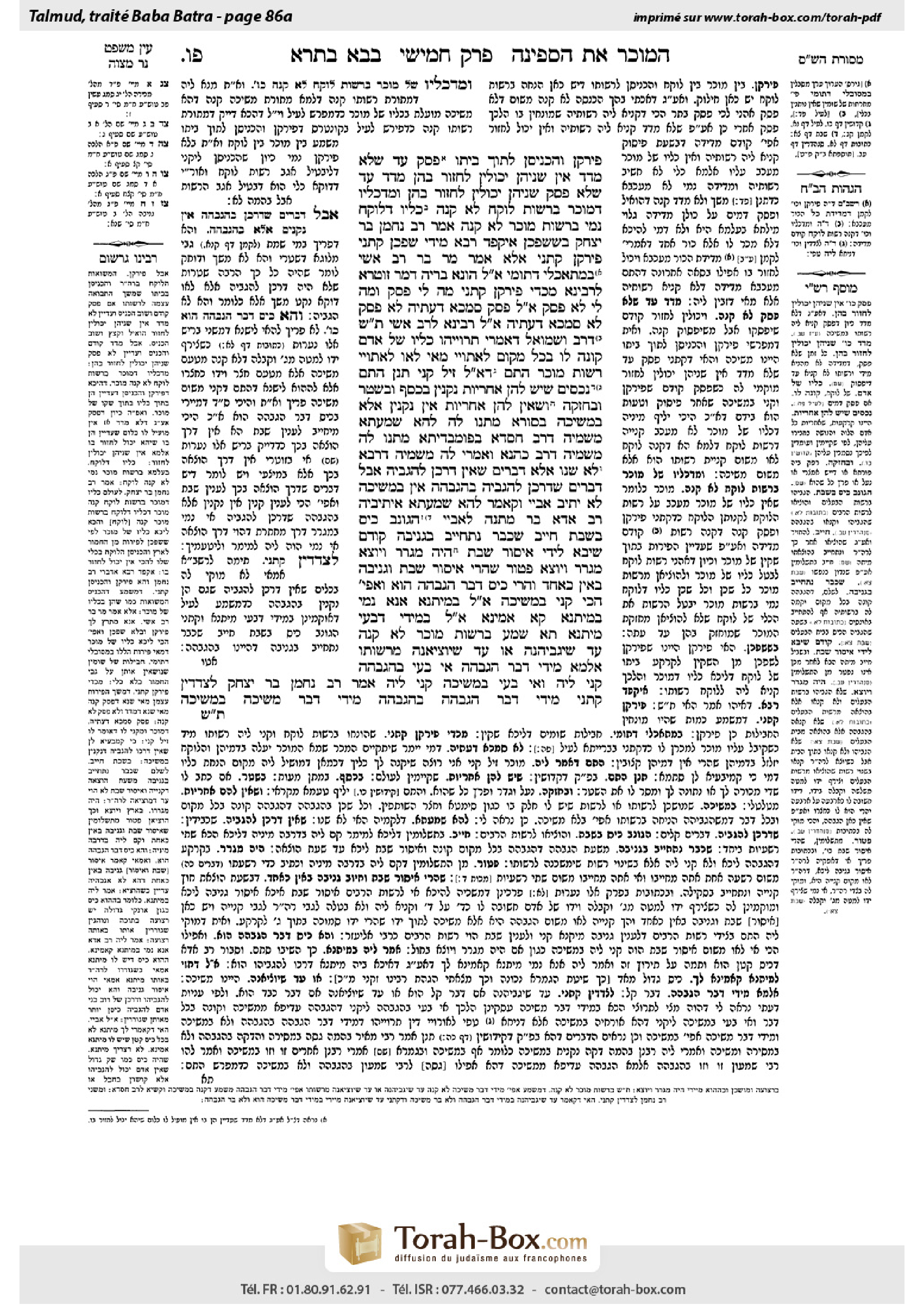
This page of Bava Batra includes the Aramaic text, an English translation and an AI-generated French translation, alongside the scan above.
בבא בתרא פ״ו א · Aramaic and Hebrew text
פֵּירְקָן וְהִכְנִיסָן לְתוֹךְ בֵּיתוֹ; פָּסַק עַד שֶׁלֹּא מָדַד – אֵין שְׁנֵיהֶן יְכוֹלִין לַחֲזוֹר בָּהֶן, מָדַד עַד שֶׁלֹּא פָּסַק – שְׁנֵיהֶן יְכוֹלִין לַחֲזוֹר בָּהֶן. וּמִדְּכִלְיוֹ דְמוֹכֵר בִּרְשׁוּת לוֹקֵחַ – לֹא קָנָה, כִּלְיוֹ דְלוֹקֵחַ נָמֵי – בִּרְשׁוּת מוֹכֵר לֹא קָנָה!
אָמַר רַב נַחְמָן בַּר יִצְחָק: בְּשֶׁשְּׁפָכָן. אִיקְּפַד רָבָא – מִידֵּי ״שְׁפָכָן״ קָתָנֵי?! ״פֵּירְקָן״ קָתָנֵי! אֶלָּא אָמַר מָר בַּר רַב אָשֵׁי: בִּמְתַאכְּלֵי דְתוּמֵי.
אֲמַר לֵיהּ הוּנָא בְּרֵיהּ דְּמָר זוּטְרָא לְרָבִינָא: מִכְּדֵי ״פֵּירְקָן״ קָתָנֵי; מָה לִי פָּסַק וּמָה לִי לֹא פָּסַק? אֲמַר לֵיהּ: פָּסַק – סָמְכָא דַּעְתֵּיהּ, לֹא פָּסַק – לָא סָמְכָא דַּעְתֵּיהּ.
אֲמַר לֵיהּ רָבִינָא לְרַב אָשֵׁי: תָּא שְׁמַע, דְּרַב וּשְׁמוּאֵל דְּאָמְרִי תַּרְוַיְיהוּ: כִּלְיוֹ שֶׁל אָדָם קוֹנֶה לוֹ בְּכׇל מָקוֹם. לְאֵתוֹיֵי מַאי? לָאו לְאֵתוֹיֵי רְשׁוּת מוֹכֵר? הָתָם, דְּאָמַר לֵיהּ: זִיל קְנִי.
תְּנַן הָתָם: נְכָסִים שֶׁיֵּשׁ לָהֶן אַחְרָיוּת – נִקְנִין בְּכֶסֶף וּבִשְׁטָר וּבַחֲזָקָה, וְשֶׁאֵין לָהֶן אַחְרָיוּת – אֵין נִקְנִין אֶלָּא בִּמְשִׁיכָה. בְּסוּרָא מַתְנוּ לַהּ לְהָא שְׁמַעְתָּא מִשְּׁמֵיהּ דְּרַב חִסְדָּא; בְּפוּמְבְּדִיתָא מַתְנוּ לַהּ מִשְּׁמֵיהּ דְּרַב כָּהֲנָא, וְאָמְרִי לַהּ מִשְּׁמֵיהּ דְּרָבָא: לֹא שָׁנוּ אֶלָּא דְּבָרִים שֶׁאֵין דַּרְכָּן לְהַגְבִּיהַּ, אֲבָל דְּבָרִים שֶׁדַּרְכָּן לְהַגְבִּיהַּ – בְּהַגְבָּהָה אִין, בִּמְשִׁיכָה לָא.
יְתֵיב אַבָּיֵי וְקָאָמַר לְהָא שְׁמַעְתָּא; אֵיתִיבֵיהּ רַב אַדָּא בַּר מַתְנָה לְאַבָּיֵי: הַגּוֹנֵב כִּיס בְּשַׁבָּת – חַיָּיב, שֶׁכְּבָר נִתְחַיֵּיב בִּגְנֵיבָה קוֹדֶם שֶׁיָּבֹא לִידֵי אִיסּוּר שַׁבָּת.
הָיָה מְגָרֵר וְיוֹצֵא מְגָרֵר וְיוֹצֵא – פָּטוּר, שֶׁהֲרֵי אִיסּוּר שַׁבָּת וּגְנֵיבָה בָּאִין כְּאֶחָד.
וַהֲרֵי כִּיס – דְּבַר הַגְבָּהָה הוּא, וַאֲפִילּוּ הָכִי קָנֵי בִּמְשִׁיכָה! אֲמַר לֵיהּ: בְּמִיתְנָא. אֲנָא נָמֵי בְּמִיתְנָא קָא אָמֵינָא! אֲמַר לֵיהּ: בְּמִידֵּי דְּבָעֵי מִיתְנָא.
תָּא שְׁמַע: בִּרְשׁוּת מוֹכֵר – לֹא קָנָה עַד שֶׁיַּגְבִּיהֶנָּה, אוֹ עַד שֶׁיּוֹצִיאֶנָּה מֵרְשׁוּתוֹ. אַלְמָא, מִידֵּי דְּבַר הַגְבָּהָה – אִי בָּעֵי בְּהַגְבָּהָה קָנֵי לֵיהּ, וְאִי בָּעֵי בִּמְשִׁיכָה קָנֵי לֵיהּ! אָמַר רַב נַחְמָן בַּר יִצְחָק: לִצְדָדִין קָתָנֵי – מִידֵּי דְּבַר הַגְבָּהָה, בְּהַגְבָּהָה; מִידֵּי דְּבַר מְשִׁיכָה, בִּמְשִׁיכָה.
Bava Batra 86a · English translation
But in a case where he unloaded the merchandise from them and brought it into his house, if he fixed a price before he measured the merchandise, both parties are no longer able to renege on the sale. If he measured the merchandise before fixing a price, both of them are able to renege on the sale. The Gemara comments: And from the fact that the vessels of the seller when in the domain of the buyer do not effect acquisition of the merchandise for the seller, i.e., they do not prevent the buyer from acquiring the merchandise, one can derive that the vessels of the buyer in the domain of the seller do not effect acquisition of the merchandise on his behalf as well.
Rav Naḥman bar Yitzḥak said: The merchandise was not placed in the domain of the buyer in vessels belonging to the seller. Rather, the baraita is referring to a case where he emptied the vessels onto the ground. Conversely, if the merchandise remains in the seller’s vessels, the buyer does not acquire it. Rava became angry with Rav Naḥman bar Yitzḥak at his rejection of Rava’s proof, and retorted: Does the baraita teach: He emptied them? No; it teaches: He unloaded them, i.e., he kept the goods in vessels belonging to the seller. Rather, Mar bar Rav Ashi says: This proof can be rejected by means of a different interpretation, as the halakha of the baraita does not refer to vessels full of goods but is stated with regard to bundles of garlic that were tied together. Therefore, they are unloaded straight onto the floor in the buyer’s domain.
With regard to the matter itself, Huna, son of Mar Zutra, said to Ravina: Since the baraita teaches: He unloaded them, which indicates that unloading the merchandise constitutes the act of acquisition, what difference is there to me if he fixed a price, and what difference is there to me if he did not fix a price? Ravina said to him: If he fixed a price he has made up his mind to sell, and therefore the transaction can take place. If he did not fix a price, he has not made up his mind to sell and the transaction does not occur. In any event, no convincing proof has been found with regard to the halakha in a case where the vessels of the buyer are in the domain of the seller.
Ravina said to Rav Ashi: Come and hear a resolution, as Rav and Shmuel both say: A person’s vessel effects acquisition for him of any item placed inside it, in any place that it is situated. What is added by the phrase: In any place? Does it not serve to add the domain of the seller? Rav Ashi answered: There, it is referring to a specific case, where the seller said to him: Go and acquire it. In that situation, the buyer does acquire the merchandise. This does not refer to a standard case where the buyer’s vessels are located in the domain of the seller.
§ We learned in a mishna elsewhere (Kiddushin 26a): Property that is guaranteed, i.e., land, is acquired by means of money, or by means of a bill, or by taking possession of it. And property that does not have a guarantee, i.e., movable property, can be acquired only by means of pulling. In Sura they taught this following halakha in the name of Rav Ḥisda, while in Pumbedita they taught it in the name of Rav Kahana, and some say in the name of Rava: They taught that movable property is acquired by means of pulling only with regard to items that are not typically lifted due to their weight or for some other reason. But in the case of items that are typically lifted, then yes, they are acquired by means of lifting, but they are not acquired by means of pulling.
Abaye sat and related this halakha. Rav Adda bar Mattana raised an objection to Abaye from a baraita: One who steals a purse on Shabbat is liable for theft. Based on the principle that one who is liable to receive two punishments receives only the greater of the two, in this case one might think that he should be exempt from paying for the theft, as the performance of a prohibited labor on Shabbat is punishable by death. The reason he is liable in this case, in apparent contradiction to that principle, is that he already became liable for the theft as soon as he lifted the purse. This occurred before he came to violate the prohibition of performing prohibited labor on Shabbat by carrying the purse into the public domain.
The baraita continues: If he did not lift the purse but was dragging it on the ground and exiting the private domain, continuously dragging and exiting, he is exempt, as the prohibition of performing labor on Shabbat and the prohibition of theft are violated simultaneously the moment he drags the purse out of the owner’s property into the public domain. Therefore, he receives only the greater punishment, death, for carrying on Shabbat.
Rav Adda bar Mattana explains his objection: But a purse is an item that can be lifted, and even so it is apparent from the baraita that one acquires it by means of pulling. How then can it be stated that items that are typically lifted are not acquired by pulling? Abaye said to him: The baraita is referring to a case where the thief pulled the purse with a rope. Rav Adda bar Mattana thought that Abaye meant that the thief happened to drag it with a rope, and he responded: I also state my question even in a case where he pulled the purse with a rope, as it is still evident that one can acquire the purse by means of pulling instead of lifting. Abaye said to him: I meant that the baraita is referring to an item that requires a rope. It is a purse that is so large that it cannot be lifted and must be pulled, therefore it is acquired by means of pulling.
The Gemara raises another objection. Come and hear: If the merchandise is in the domain of the seller, the buyer does not acquire the merchandise until he lifts it or until he removes it from the domain of the seller. Apparently, with regard to an item that can be lifted, if he so desires he acquires it by lifting, and if he so desires he acquires it by pulling. Rav Naḥman bar Yitzḥak said: This is not a proof, as it can be explained that the tanna teaches it disjunctively, i.e., the two options are referring to two different cases: In the case of an item that can be lifted, he acquires it by lifting, whereas with regard to regard to an item that can be pulled, he acquires it by pulling.
Bava Batra 86a · Traduction française (IA)
Mais dans le cas où il a déchargé les marchandises de ses mains et les a apportées chez lui, si l'on a fixé un prix avant de peser les marchandises, les deux parties ne peuvent plus annuler la vente. Si l'on a pesé les marchandises avant de fixer un prix, les deux peuvent annuler la vente. La Guemara commente : Et du fait que les ustensiles du vendeur, lorsqu'ils sont dans le domaine de l'acheteur, ne permettent pas l'acquisition des marchandises pour le vendeur, c'est-à-dire qu'ils n'empêchent pas l'acheteur d'acquérir les marchandises, on peut déduire que les ustensiles de l'acheteur dans le domaine du vendeur ne permettent pas non plus l'acquisition des marchandises pour lui.
Rav Naḥman bar Yitzḥak a dit : Les marchandises n'étaient pas placées dans le domaine de l'acheteur dans des ustensiles appartenant au vendeur. Plutôt, la baraïta fait référence à un cas où il a vidé les ustensiles sur le sol. À l'inverse, si les marchandises restent dans les ustensiles du vendeur, l'acheteur ne les acquiert pas. Rava s'est fâché contre Rav Naḥman bar Yitzḥak à cause de son rejet de la preuve de Rava, et a répliqué : La baraïta enseigne-t-elle : Il les a vidés ? Non ; elle enseigne : Il les a déchargés, c'est-à-dire qu'il a gardé les marchandises dans des ustensiles appartenant au vendeur. Plutôt, Mar bar Rav Ashi dit : Cette preuve peut être rejetée par une autre interprétation, car la halakha de la baraïta ne fait pas référence à des ustensiles pleins de marchandises mais est énoncée concernant des bouquets d'ail qui étaient liés ensemble. Ainsi, ils sont vidés directement au sol dans le domaine de l'acheteur.
Concernant la question elle-même, Huna, fils de Mar Zutra, a dit à Ravina : Puisque la baraïta enseigne : Il les a déchargés, ce qui indique que le déchargement des marchandises constitue l'acte d'acquisition, quelle différence y a-t-il pour moi si le prix a été fixé, et quelle différence y a-t-il pour moi si le prix n'a pas été fixé ? Ravina a répondu à lui : Si le prix a été fixé, il a décidé de vendre, et donc la transaction peut avoir lieu. Si le prix n'a pas été fixé, il n'a pas décidé de vendre et la transaction ne se produit pas. En tout cas, aucune preuve convaincante n'a été trouvée concernant la halakha dans le cas où les ustensiles de l'acheteur sont dans le domaine du vendeur.
Ravina a dit à Rav Ashi : Viens entendre une résolution, car Rav et Shmuel disent tous les deux : Les ustensiles d'une personne permettent l'acquisition pour lui de tout objet placé à l'intérieur, en tout lieu où ils se trouvent. Quel est l'ajout de la phrase : En tout lieu ? N'est-ce pas pour ajouter le domaine du vendeur ? Rav Ashi a répondu : Là, il s'agit d'un cas spécifique, où le vendeur a dit à lui : Va l'acquérir. Dans ce cas, l'acheteur acquiert les marchandises. Cela ne concerne pas un cas standard où les ustensiles de l'acheteur sont dans le domaine du vendeur.
§ Nous avons appris dans une mishna ailleurs (Kiddushin 26a) : La propriété garantie, c'est-à-dire la terre, est acquise par l'argent, ou par un billet, ou par la possession. Et la propriété non garantie, c'est-à-dire la propriété mobile, peut être acquise uniquement par le levage. À Sura, ils ont enseigné cette halakha en nom de Rav Ḥisda, tandis qu'à Pumbedita, ils l'ont enseignée en nom de Rav Kahana, et certains disent en nom de Rava : Ils ont enseigné que la propriété mobile est acquise par le levage uniquement concernant les objets qui ne sont pas habituellement levés en raison de leur poids ou pour une autre raison. Mais dans le cas d'objets qui sont habituellement levés, alors oui, ils sont acquises par le levage, mais ils ne sont pas acquises par le levage.
Abaye s'est assis et a rapporté cette halakha. Rav Adda bar Mattana a soulevé une objection contre Abaye à partir d'une baraïta : Celui qui vole un sac le sabbat est responsable de vol. Selon le principe que celui qui est responsable de deux punitions reçoit seulement la plus grande des deux, dans ce cas on pourrait penser qu'il est exempt de payer pour le vol, car la performance d'un travail interdit le sabbat est punie par la mort. La raison pour laquelle il est responsable dans ce cas, en contradiction avec ce principe, est qu'il est déjà responsable du vol dès qu'il a levé le sac. Cela s'est produit avant qu'il ne vienne à violer l'interdiction de faire un travail interdit le sabbat en portant le sac dans le domaine public.
La baraïta continue : Si l'on n'a pas levé le sac mais on le tirait sur le sol et on sortait du domaine privé, en tirant continuellement et en sortant, on est exempt, car l'interdiction de travailler le sabbat et l'interdiction de vol sont violées simultanément dès qu'on tire le sac hors de la propriété de l'propriétaire dans le domaine public. Ainsi, on reçoit seulement la punition plus grave, la mort, pour le port le sabbat.
Rav Adda bar Mattana explique son objection : Mais un sac est un objet qui peut être levé, et même ainsi il est évident de la baraïta que l'on acquiert cet objet par le tirage. Comment alors peut-on dire que les objets qui sont habituellement levés ne sont pas acquis par le tirage ? Abaye a dit à lui : La baraïta fait référence à un cas où le voleur a tiré le sac avec une corde. Rav Adda bar Mattana pensait que Abaye voulait dire que le voleur a tiré le sac avec une corde, et il a répondu : Je pose aussi ma question même dans le cas où il a tiré le sac avec une corde, car il est encore évident que l'on peut acquérir le sac par le tirage plutôt que par le levage. Abaye a dit à lui : Je veux dire que la baraïta fait référence à un objet qui nécessite une corde. C'est un sac si grand qu'il ne peut pas être levé et doit être tiré, donc il est acquis par le tirage.
La Guemara soulève une autre objection. Viens entendre : Si les marchandises sont dans le domaine du vendeur, l'acheteur ne les acquiert pas jusqu'à ce qu'il les lève ou qu'il les enlève du domaine du vendeur. Apparemment, concernant un objet qui peut être levé, s'il le désire, il l'acquiert par le levage, et s'il le désire, il l'acquiert par le tirage. Rav Naḥman bar Yitzḥak a dit : Ce n'est pas une preuve, car on peut l'expliquer en disant que le tanna l'enseigne de manière disjunctive, c'est-à-dire que les deux options font référence à deux cas différents : Dans le cas d'un objet qui peut être levé, il l'acquiert par le levage, tandis que concernant un objet qui peut être tiré, il l'acquiert par le tirage.
Traduction française générée par IA à partir de l’édition anglaise de Sefaria. Vérifie toujours un passage avec le texte source.
Text from Sefaria: William Davidson Edition - Vocalized Aramaic (CC BY NC); William Davidson Edition - English (CC BY NC).