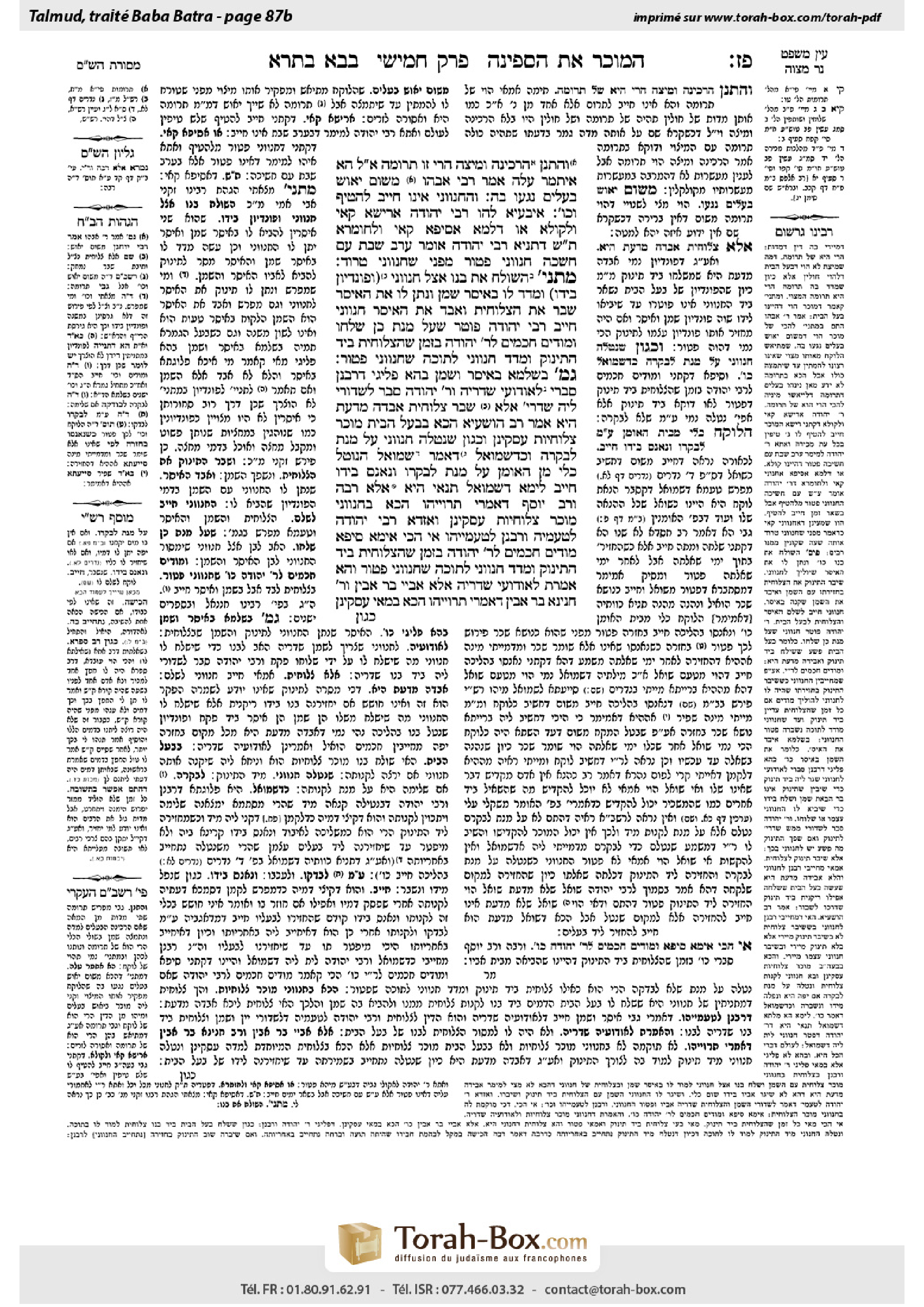
Bava Batra 87b: Talmud study for Daf Yomi
Study the Talmud for Daf Yomi with scanned pages, Hebrew text, English translations from Sefaria and AI-generated French translations.
Passage selection and English or AI-generated French translation are available where the scan has annotations. Daf Study is independent of Torah-Box and Sefaria.
Browse Bava Batra · בבא בתרא · All tractatesBava Batra 87b text and translations
This page of Bava Batra includes the Aramaic text, an English translation and an AI-generated French translation, alongside the scan above.
בבא בתרא פ״ז ב · Aramaic and Hebrew text
וְהָתְנַן, הִרְכִּינָהּ וּמִיצָּהּ – הֲרֵי זוֹ תְּרוּמָה!
אֲמַר לֵיהּ: הָא אִיתְּמַר עֲלַהּ, אָמַר רַבִּי אֲבָהוּ: מִשּׁוּם יֵאוּשׁ בְּעָלִים נָגְעוּ בָּהּ.
וְהַחֶנְווֹנִי אֵינוֹ חַיָּיב לְהַטִּיף וְכוּ׳. אִיבַּעְיָא לְהוּ: רַבִּי יְהוּדָה – אַרֵישָׁא קָאֵי, וּלְקוּלָּא; אוֹ דִלְמָא אַסֵּיפָא קָאֵי, וּלְחוּמְרָא?
תָּא שְׁמַע: דְּתַנְיָא, רַבִּי יְהוּדָה אוֹמֵר: עֶרֶב שַׁבָּת עִם חֲשֵׁכָה – חֶנְווֹנִי פָּטוּר, מִפְּנֵי שֶׁחֶנְווֹנִי טָרוּד.
מַתְנִי׳ הַשּׁוֹלֵחַ אֶת בְּנוֹ אֵצֶל חֶנְווֹנִי וּפוֹנְדְּיוֹן בְּיָדוֹ, וּמָדַד לוֹ בְּאִיסָּר שֶׁמֶן וְנָתַן לוֹ אֶת הָאִיסָּר; שָׁבַר אֶת הַצְּלוֹחִית וְאִבֵּד אֶת הָאִיסָּר – חֶנְווֹנִי חַיָּיב. רַבִּי יְהוּדָה פּוֹטֵר, שֶׁעַל מְנָת כֵּן שְׁלָחוֹ. וּמוֹדִים חֲכָמִים לְרַבִּי יְהוּדָה בִּזְמַן שֶׁהַצְּלוֹחִית בְּיַד הַתִּינוֹק וּמָדַד חֶנְווֹנִי לְתוֹכָהּ – שֶׁחֶנְווֹנִי פָּטוּר.
גְּמָ׳ בִּשְׁלָמָא בְּאִיסָּר וָשֶׁמֶן, בְּהָא פְּלִיגִי – דְּרַבָּנַן סָבְרִי: לְאוֹדוֹעֵי שַׁדְּרֵיהּ, וְרַבִּי יְהוּדָה סָבַר: לְשַׁדּוֹרֵי לֵיהּ שַׁדְּרֵיהּ; אֶלָּא שָׁבַר צְלוֹחִית – אֲבֵדָה מִדַּעַת הִיא!
אָמַר רַב הוֹשַׁעְיָא: הָכָא בְּבַעַל הַבַּיִת מוֹכֵר צְלוֹחִיּוֹת עָסְקִינַן, וּכְגוֹן שֶׁנְּטָלָהּ חֶנְווֹנִי עַל מְנָת לְבַקְּרָהּ; וּכְדִשְׁמוּאֵל – דְּאָמַר שְׁמוּאֵל: הַנּוֹטֵל כְּלִי מִן הָאוּמָּן עַל מְנָת לְבַקְּרוֹ, וְנֶאֱנַס בְּיָדוֹ – חַיָּיב.
לֵימָא דִּשְׁמוּאֵל תַּנָּאֵי הִיא?! אֶלָּא רַבָּה וְרַב יוֹסֵף דְּאָמְרִי תַּרְוַיְיהוּ: הָכָא בְּחֶנְווֹנִי מוֹכֵר צְלוֹחִיּוֹת עָסְקִינַן; וְאַזְדָּא רַבִּי יְהוּדָה לְטַעְמֵיהּ, וְרַבָּנַן לְטַעְמַיְיהוּ.
אִי הָכִי, אֵימָא סֵיפָא – מוֹדִים חֲכָמִים לְרַבִּי יְהוּדָה בִּזְמַן שֶׁהַצְּלוֹחִית בְּיַד הַתִּינוֹק, וּמָדַד חֶנְווֹנִי לְתוֹכָהּ – שֶׁחֶנְווֹנִי פָּטוּר. וְהָא אָמְרַתְּ לְאוֹדוֹעֵי שַׁדְּרֵיהּ! אֶלָּא אַבָּיֵי בַּר אָבִין וְרַבִּי חֲנִינָא בַּר אָבִין דְאָמְרִי תַּרְוַיְיהוּ: הָכָא בְּמַאי עָסְקִינַן –
Bava Batra 87b · English translation
But didn’t we learn in a mishna (Terumot 11:8): If one poured oil or wine of teruma from one vessel to another and turned the vessel on its side and drained out the last bits of liquid inside, this is teruma and must be given to the priest? This indicates that the last remnants of the liquid in the vessel belong to the one who receives the oil or wine, not the owner, i.e., the seller. Why, then, does the mishna here teach that the last remnants belong to the seller?
Rav Yitzḥak bar Avdimi said to Rabbi Elazar: But wasn’t it stated with regard to that mishna that Rabbi Abbahu says: Due to of the despair of the owner, who relinquishes his right to such a small amount of wine or oil, the Sages touched upon it and ruled that any remnants extracted from the vessel belong to the seller? By contrast, with regard to teruma, which is forbidden to non-priests, the despair of the buyer is irrelevant, and therefore anything that remains in the vessels is teruma.
§ The mishna teaches: And a storekeeper is not obligated to drip three drops. Rabbi Yehuda says: If the sale occurs on Shabbat eve as nightfall arrives, one is exempt from dripping these three drops. A dilemma was raised before the Sages: Is Rabbi Yehuda referring to the first clause of the mishna, and if so his ruling is lenient, as the mishna states that one must drip three drops and he states that on Shabbat eve one is exempt from doing so? Or perhaps he is referring to the latter clause and is stringent, as the mishna teaches that a storekeeper is always exempt, whereas Rabbi Yehuda rules that this is the halakha only on Shabbat eve?
The Gemara answers: Come and hear a resolution of this dilemma, as it is taught in a baraita that Rabbi Yehuda says: On Shabbat eve at nightfall a storekeeper is exempt because the storekeeper is busy. This proves that Rabbi Yehuda was referring to the latter clause of the mishna, i.e., he exempts the storekeeper from dripping the drops only on Shabbat eve.
MISHNA: With regard to one who sends his son to a storekeeper with a pundeyon, a coin worth two issar, in his hand, and the storekeeper measured oil for him for one issar and gave him the second issar as change, and the son broke the jug and lost the issar, the storekeeper must compensate the father, as he gave the jug and coin to one who is not halakhically competent. Rabbi Yehuda exempts him from liability, as he holds that the father sent his son in order to do this, i.e., to bring back the jug and coin. And the Rabbis concede to Rabbi Yehuda with regard to a case when the jug is in the hand of the child and the storekeeper measured the oil into it that the storekeeper is exempt if the child breaks the jug.
GEMARA: Granted, with regard to the issar and the oil, one can explain that they disagree over this matter: As the Rabbis hold that the father sent his son to inform the storekeeper that he needed oil but did not intend for the storekeeper to send the oil with the boy. For this reason, if the storekeeper gave the child the oil he is liable for its loss. And Rabbi Yehuda holds that he sent his son so that the storekeeper would send him back with the oil, and therefore the storekeeper is exempt from liability. But if the child broke the jug, why do the Rabbis hold that the storekeeper is responsible for it? It is a deliberate loss on the part of the father, as he entrusted the jug to his young son, who is not responsible enough to care for it.
Rav Hoshaya said: Here we are dealing with a proprietor who sells jugs, and the father sent his son with a jug in case the store owner might want to buy it. And this is a case where the storekeeper took the jug in order to examine it, and the ruling is in accordance with a statement of Shmuel. As Shmuel says: With regard to one who takes a vessel from a craftsman in order to examine it and buy it if he chooses, and an accident occurred while it was in his possession and it broke, he is liable to pay restitution for the vessel. He has the halakhic status of a borrower, and therefore he bears financial responsibility for the loss.
The Gemara asks: Shall we say that the opinion of Shmuel is subject to a dispute between tanna’im? Since Rabbi Yehuda disagrees with the Rabbis, his opinion evidently differs from that of Shmuel. Rather, Rabba and Rav Yosef both say that the disagreement in the mishna should be explained as follows: Here, we are dealing with a storekeeper who sells jugs, and the father sent his son to buy from him a jug filled with oil. And Rabbi Yehuda follows his line of reasoning, as explained above, that the father sent his son to bring back the merchandise, and the Rabbis follow their line of reasoning, that the father sent the son to inform the storekeeper what he needed, but not to carry it back.
The Gemara asks: If that is so, say the last clause: The Rabbis concede to Rabbi Yehuda in a case when the jug was in the hand of the child, and the storekeeper measured the oil into it, that the storekeeper is exempt. Why would the Rabbis rule that the storekeeper is exempt? But you said that the father sent his son only to inform the storekeeper of his order, but he did not intend for the storekeeper to give anything to his son. Rather, Abaye bar Avin and Rabbi Ḥanina bar Avin both say that the disagreement in the mishna should be explained as follows: With what are we dealing here?
Bava Batra 87b · Traduction française (IA)
Mais n'avons-nous pas appris dans une mitsva (Terumot 11:8) : Si l'on verse de l'huile ou du vin de terouma d'un récipient à un autre et qu'on retourne le récipient et qu'on épuise les dernières gouttes restantes, cela est considéré comme terouma et doit être donné au prêtre ? Cela montre que les dernières gouttes du liquide dans le récipient appartiennent à celui qui reçoit l'huile ou le vin, pas à l'acheteur, c'est-à-dire au vendeur. Pourquoi alors la mitsva ici enseigne-t-elle que les dernières gouttes appartiennent au vendeur ?
Rav Yitzḥak bar Avdimi dit à Rabbi Eléazar : Mais n'avait-on pas dit concernant cette mitsva que Rabbi Abbahu dit : En raison de la détresse du vendeur, qui renonce à son droit à une telle petite quantité de vin ou d'huile, les Sages ont abordé cette question et ont décidé que tout ce qui est extrait du récipient appartient au vendeur ? En revanche, concernant la terouma, qui est interdit aux non-prêtres, la détresse de l'acheteur n'est pas pertinente, et par conséquent tout ce qui reste dans les récipients est terouma.
§ La mitsva enseigne : Et le marchand n'est pas tenu de verser trois gouttes. Rabbi Yéhuda dit : Si la vente a lieu le soir du sabbat à mesure que la nuit arrive, on est exempt de verser ces trois gouttes. Une difficulté a été soulevée devant les Sages : Rabbi Yéhuda fait-il référence à la première partie de la mitsva, et si c'est le cas, son jugement est leniant, car la mitsva dit qu'on doit verser trois gouttes et il dit qu'en soirée de sabbat on est exempt ? Ou bien fait-il référence à la seconde partie et est-il strict, car la mitsva enseigne que le marchand est toujours exempt, alors que Rabbi Yéhuda considère que c'est la halakha uniquement en soirée de sabbat ?
Le Guemara répond : Approchez-vous d'une résolution de cette difficulté, car il est enseigné dans une baraïta que Rabbi Yéhuda dit : En soirée de sabbat à la tombée de la nuit, le marchand est exempt car il est occupé. Cela prouve que Rabbi Yéhuda faisait référence à la seconde partie de la mitsna, c'est-à-dire qu'il exempt le marchand de verser les gouttes uniquement en soirée de sabbat.
MITSVA : Concernant celui qui envoie son fils à un marchand avec un pundeyon, une pièce valant deux issar, dans la main, et le marchand mesure de l'huile pour lui pour un issar et lui donne le second issar comme monnaie, et le fils brise le récipient et perd l'issar, le marchand doit indemniser le père, car il a donné le récipient et la pièce à une personne non compétente halakhiquement. Rabbi Yéhuda exempt de responsabilité, car il considère que le père a envoyé son fils pour faire cela, c'est-à-dire pour rapporter le récipient et la pièce. Et les Sages acceptent Rabbi Yéhuda concernant le cas où le récipient est entre les mains du fils et le marchand a mesuré l'huile dans celui-ci, le marchand est exempt si le fils brise le récipient.
GUEMARA : D'accord, concernant l'issar et l'huile, on peut expliquer qu'ils divergent sur ce point : car les Sages considèrent que le père a envoyé son fils pour informer le marchand qu'il avait besoin d'huile mais n'avait pas l'intention que le marchand envoie l'huile avec le fils. Pour cette raison, si le marchand donne l'huile au fils, il est responsable de sa perte. Et Rabbi Yéhuda considère qu'il a envoyé son fils pour que le marchand lui envoie l'huile, et par conséquent le marchand est exempt de responsabilité. Mais si le fils brise le récipient, pourquoi les Sages considèrent-ils que le marchand est responsable ? C'est une perte délibérée du père, car il a confié le récipient à son jeune fils, qui n'est pas suffisamment responsable pour le garder.
Rav Hoshaya dit : Nous sommes ici en présence d'un propriétaire qui vend des récipients, et le père a envoyé son fils avec un récipient en cas où le marchand pourrait vouloir l'acheter. Et c'est un cas où le marchand a pris le récipient pour l'examiner, et la décision est en conformité avec un enseignement de Shmuel. Car Shmuel dit : Concernant celui qui prend un récipient d'un artisan pour l'examiner et l'acheter s'il le souhaite, et qu'un accident survient pendant qu'il est en sa possession et qu'il se brise, il est tenu de réparer le récipient. Il a le statut halakhique d'un prêteur, et par conséquent il assume la responsabilité financière de la perte.
Le Guemara pose la question : Devons-nous dire que l'opinion de Shmuel est sujette à un débat entre les tannaïm ? Car Rabbi Yéhuda diverge des Sages, son opinion diffère donc clairement de celle de Shmuel. Plutôt, Rabba et Rav Yosef disent tous les deux que le débat dans la mitsna devrait être expliqué ainsi : Ici, nous sommes en présence d'un marchand qui vend des récipients, et le père a envoyé son fils pour acheter un récipient rempli d'huile. Et Rabbi Yéhuda suit sa ligne de raisonnement, comme expliqué ci-dessus, que le père a envoyé son fils pour rapporter le produit, et les Sages suivent leur raisonnement, que le père a envoyé son fils pour informer le marchand de sa commande, mais pas pour le lui apporter.
Le Guemara pose la question : Si c'est ainsi, disent les dernières phrases : Les Sages acceptent Rabbi Yéhuda dans le cas où le récipient était entre les mains du fils, et le marchand avait mesuré l'huile dans celui-ci, que le marchand est exempt. Pourquoi les Sages décident-ils que le marchand est exempt ? Mais vous avez dit que le père a envoyé son fils uniquement pour informer le marchand de sa commande, mais pas pour que le marchand lui donne quelque chose. Plutôt, Abaye bar Avin et Rabbi Ḥanina bar Avin disent tous les deux que le débat dans la mitsna devrait être expliqué ainsi : Avec quoi sommes-nous en présence ici ?
Traduction française générée par IA à partir de l’édition anglaise de Sefaria. Vérifie toujours un passage avec le texte source.
Text from Sefaria: William Davidson Edition - Vocalized Aramaic (CC BY NC); William Davidson Edition - English (CC BY NC).