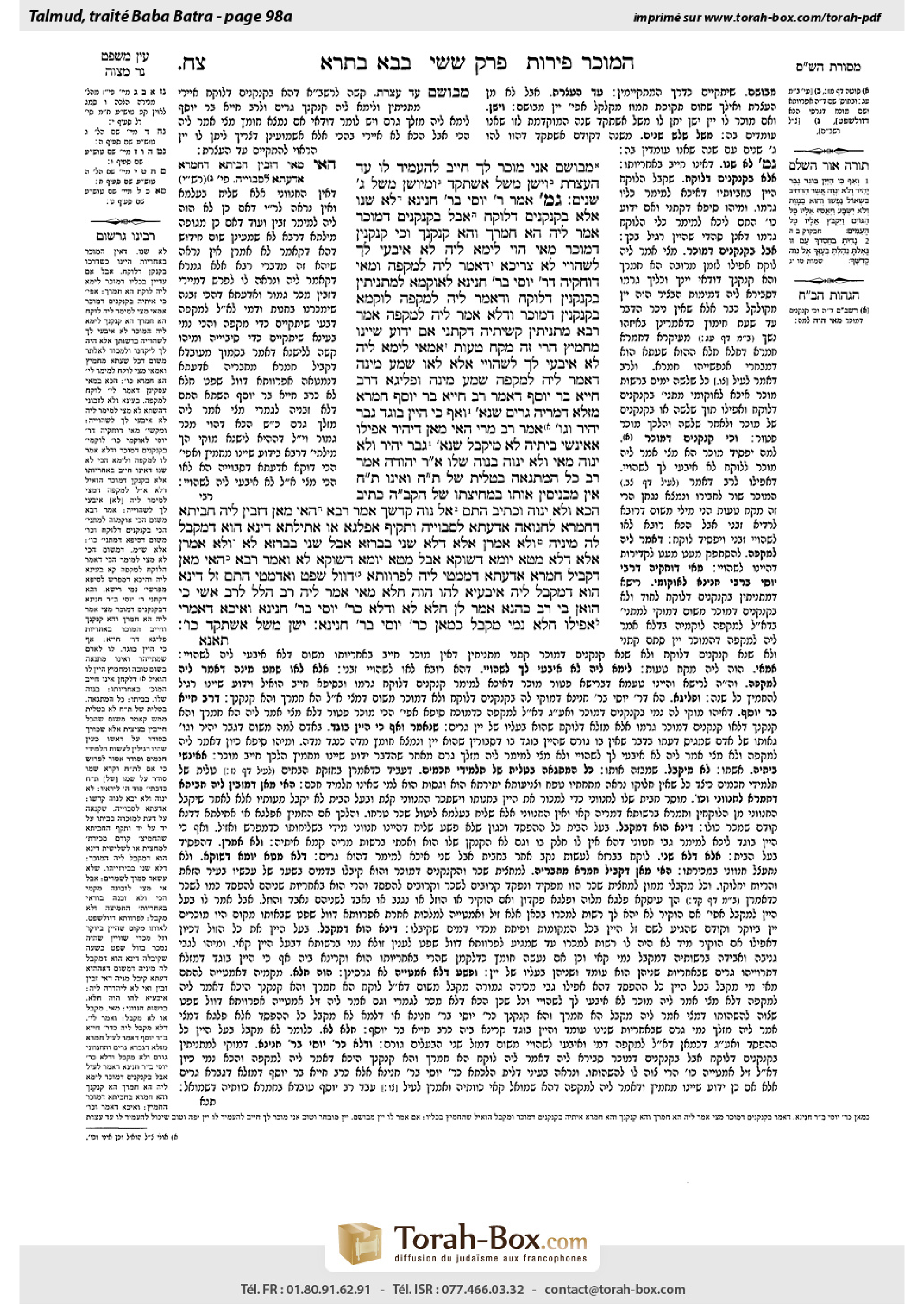
Bava Batra 98a: Talmud study for Daf Yomi
Study the Talmud for Daf Yomi with scanned pages, Hebrew text, English translations from Sefaria and AI-generated French translations.
Passage selection and English or AI-generated French translation are available where the scan has annotations. Daf Study is independent of Torah-Box and Sefaria.
Browse Bava Batra · בבא בתרא · All tractatesBava Batra 98a text and translations
This page of Bava Batra includes the Aramaic text, an English translation and an AI-generated French translation, alongside the scan above.
בבא בתרא צ״ח א · Aramaic and Hebrew text
מְבוּשָּׂם אֲנִי מוֹכֵר לָךְ״ – חַיָּיב לְהַעֲמִיד לוֹ עַד הָעֲצֶרֶת. וְ״יָשָׁן״ – מִשֶּׁל אֶשְׁתָּקַד, וּ״מְיוּשָּׁן״ – מִשֶּׁל שָׁלֹשׁ שָׁנִים.
גְּמָ׳ אָמַר רַבִּי יוֹסֵי בְּרַבִּי חֲנִינָא: לֹא שָׁנוּ אֶלָּא בְּקַנְקַנִּים דְּלוֹקֵחַ, אֲבָל בְּקַנְקַנִּים דְּמוֹכֵר – אָמַר לֵיהּ: הָא חַמְרָךְ וְהָא קַנְקַנָּךְ.
וְכִי קַנְקַנִּין דְּמוֹכֵר מַאי הָוֵי? לֵימָא לֵיהּ: לָא אִיבְּעִי לָךְ לְשַׁהוֹיֵי! לָא צְרִיכָא, דַּאֲמַר לֵיהּ לְמִקְפָּה.
וּמַאי דּוּחְקֵיהּ דְּרַבִּי יוֹסֵי בְּרַבִּי חֲנִינָא לְאוֹקֹמַהּ לְמַתְנִיתִין בְּקַנְקַנִּין דְּלוֹקֵחַ – וְדַאֲמַר לֵיהּ לְמִקְפָּה? לוֹקְמֵהַּ בְּקַנְקְנִּין דְּמוֹכֵר, וּדְלָא אֲמַר לֵיהּ לְמִקְפָּה!
אָמַר רָבָא: מַתְנִיתִין קְשִׁיתֵיהּ, דְּקָתָנֵי: אִם יָדוּעַ שֶׁיֵּינוֹ מַחְמִיץ – הֲרֵי זֶה מִקָּח טָעוּת. אַמַּאי? לֵימָא לֵיהּ: לָא אִיבְּעִי לָךְ לְשַׁהוֹיֵי! אֶלָּא לָאו שְׁמַע מִינַּהּ דַּאֲמַר לֵיהּ לְמִקְפָּה? שְׁמַע מִינַּהּ.
וּפְלִיגָא דְּרַב חִיָּיא בַּר יוֹסֵף – דְּאָמַר רַב חִיָּיא בַּר יוֹסֵף: חַמְרָא – מַזָּלָא דְמָרֵיהּ גָּרֵים, שֶׁנֶּאֱמַר: ״וְאַף כִּי הַיַּיִן בֹּגֵד, גֶּבֶר יָהִיר וְגוֹ׳״
אָמַר רַב מָרִי: הַאי מַאן דִּיהִיר – אֲפִילּוּ אַאִינָשֵׁי בֵיתֵיהּ לָא מִיקַּבַּל, שֶׁנֶּאֱמַר: ״גֶּבֶר יָהִיר וְלֹא יִנְוֶה״ – מַאי ״וְלֹא יִנְוֶה״? בַּנָּוֶה שֶׁלּוֹ.
אָמַר רַב יְהוּדָה אָמַר רַב: כׇּל הַמִּתְגָּאֶה בְּטַלִּית שֶׁל תַּלְמִיד חָכָם, וְאֵינוֹ תַּלְמִיד חָכָם – אֵין מַכְנִיסִין אוֹתוֹ בִּמְחִיצָתוֹ שֶׁל הַקָּדוֹשׁ בָּרוּךְ הוּא. כְּתִיב הָכָא: ״וְלֹא יִנְוֶה״, וּכְתִיב הָתָם: ״אֶל נְוֵה קׇדְשֶׁךָ״.
אָמַר רָבָא: הַאי מַאן דְּזַבֵּין לֵיהּ חָבִיתָא דְחַמְרָא לְחַנְוָאָה אַדַּעְתָּא לְסַבּוֹיֵיהּ, וּתְקֵיף אַפַּלְגָא אוֹ אַתִּילְּתָא, דִּינָא הוּא דִּמְקַבֵּל לַהּ מִינֵּיהּ. וְלָא אֲמַרַן אֶלָּא דְּלָא שַׁנִּי בְּבַרְזָא, אֲבָל שַׁנִּי בְּבַרְזָא – לָא. וְלָא אֲמַרַן אֶלָּא דְּלָא מְטָא יוֹמָא דְשׁוּקָא, אֲבָל מְטָא יוֹמָא דְשׁוּקָא – לָא.
וְאָמַר רָבָא: הַאי מַאן דְּקַבֵּיל חַמְרָא אַדַּעְתָּא דְּמַמְטֵי לֵיהּ לְפַרְווֹתָא דְּ״ווֹל שָׁפָט״, וְאַדְּמָטֵי הָתָם זָל; דִּינָא הוּא דִּמְקַבֵּל לֵיהּ.
אִיבַּעְיָא לְהוּ: הֲוָה חַלָּא, מַאי? אֲמַר לֵיהּ רַב הִלֵּל לְרַב אָשֵׁי: כִּי הֲוַאן בֵּי רַב כָּהֲנָא, אֲמַר לַן: חַלָּא לָא, וּדְלָא כְּרַבִּי יוֹסֵי בְּרַבִּי חֲנִינָא.
וְאִיכָּא דְּאָמְרִי: אֲפִילּוּ חַלָּא נָמֵי מְקַבֵּל. כְּמַאן? כְּרַבִּי יוֹסֵי בְּרַבִּי חֲנִינָא.
״יָשָׁן״ – מִשֶּׁל אֶשְׁתָּקַד כּוּ׳.
Bava Batra 98a · English translation
that is spiced, which is preserved and of lasting quality, that I am selling to you, then he bears financial responsibility to provide him with wine that will keep until the festival of Shavuot. And if the seller said: I am selling you old wine, he is responsible to provide wine from the previous year. And if he said: I am selling you aged wine, he is responsible to provide wine that is from three years earlier.
GEMARA: Rabbi Yosei, son of Rabbi Ḥanina, says: When they taught that the seller does not bear responsibility if the wine sours, that was only if it soured while in the jugs of the buyer; but if it soured in the jugs of the seller, then the buyer could say to him: This is your wine and this is your jug; take it and reimburse me. Since it soured while still in the original jugs, it was clearly flawed from the outset.
The Gemara asks: But even if the wine soured while in the jugs of the seller, what of it? Let the seller say to the buyer: You should not have left it for so long after purchasing it; I should not be responsible just because you chose to do so. The Gemara answers: No, this ruling is necessary in a case where the buyer had said to him that he was purchasing the wine for cooking, in which case it is understood that he needs it to maintain its quality over a longer period of time, as only a small amount is used each time.
The Gemara asks: And what impelled Rabbi Yosei, son of Rabbi Ḥanina, to interpret the mishna as referring to a case where the wine soured while in the jugs of the buyer, and where he had said to him that he wanted the wine for cooking? Instead, let him interpret it as referring to a case where the wine soured while in the jugs of the seller, and to where he had not said to him that he wanted the wine for cooking.
In explanation, Rava said: The mishna was difficult for him, as it teaches in the following clause: But if it is known of this seller that his wine always sours, then this sale is a mistaken transaction. With regard to this clause one could ask: Why is that so? Let the seller say to him: You should not have left it for so long after purchasing it. Rather, isn’t it correct to conclude from that clause that the mishna is referring to a case where the buyer had said to him that he wants the wine for cooking? The Gemara concludes: Yes, one can conclude from it that this is so.
And Rabbi Yosei, son of Rabbi Ḥanina, disagrees with the opinion of Rav Ḥiyya bar Yosef, as Rav Ḥiyya bar Yosef says: With regard to wine, it is the owner’s poor fortune that causes the wine to go sour, as it is stated: “And moreover, wine is a treacherous dealer; the haughty man abides not” (Habakkuk 2:5), which is interpreted to mean that the wine of a haughty man will betray him, as it will sour as a punishment for his arrogance. Accordingly, since the wine soured after the buyer purchased it, he cannot place the blame upon the seller.
The Gemara offers additional homiletic interpretations of the verse just cited. Rav Mari said: One who is haughty is not accepted even by the members of his household, as it is stated: “The haughty man abides not” (Habakkuk 2:5). What does the phrase “abides [yinveh] not” mean? It means that even in his abode [naveh], he is not accepted.
Rav Yehuda says that Rav says: With regard to anyone who glorifies himself by wearing a garment of the style worn by a Torah scholar, but in reality he is not a Torah scholar, he will not be brought within the boundary of the Holy One, Blessed be He, in the World-to-Come. This is alluded to by the fact that it is written in the verse here: “Abides [yinveh] not,” and the meaning of the word yinveh may be derived from that which is written in a verse there: “To Your holy habitation [neveh]” (Exodus 15:13).
Rava says: In the case of one who sells a barrel of wine to a shopkeeper with the understanding that the wine will be for serving to the shopkeeper’s customers and that he will be liable to pay the seller only once the barrel is finished, and the wine spoiled when one-half or one-third of the wine still remained, the halakha is that the seller must accept back the remaining wine from the shopkeeper, as the shopkeeper is liable to pay only for the wine that he sells. And we stated this halakha only in a case where the shopkeeper had not switched the tap of the barrel; but if he had switched the tap, the seller does not have to take the wine back and the shopkeeper must pay for it all. And furthermore, we stated this halakha only where the wine soured before the market day arrived and the shopkeeper did not have the opportunity to sell the entire barrel; but if the wine was still of good quality when the market day arrived, then the seller does not have to take the wine back.
And Rava says: In the case of a vintner who enters a business venture with another person who will sell the wine for him and afterward they will split the profits, then if this middleman who receives the wine to sell does so with the understanding that he will bring it to the port of the city of Vol Shefat and sell it only there, and before he arrives there the price of the wine drops, the halakha is that the vintner must accept the loss.
With regard to the previous case, a dilemma was raised before the Sages: If the wine becomes vinegar before he reaches Vol Shefat, what is the halakha? Rav Hillel said to Rav Ashi: When we were in the study hall of Rav Kahana, he said to us: If the wine becomes vinegar, the vintner does not have to accept the loss; and this is not in accordance with the opinion of Rabbi Yosei, son of Rabbi Ḥanina, who holds that as long as the wine is in the jug of the seller he is able to return it to the seller. The reason for this is that it is possible that the poor fortune of the middleman caused it to sour.
And there are those who say that even if the wine turns into vinegar, the vintner must also accept the loss. In accordance with whose opinion is this? It is in accordance with the opinion of Rabbi Yosei, son of Rabbi Ḥanina.
The mishna teaches: If the seller said: I am selling you old wine, he is responsible to provide wine from the previous year. And if he said: I am selling you aged wine, he is responsible to provide wine that is from three years earlier.
Bava Batra 98a · Traduction française (IA)
Celui qui vend du vin aromatisé, conservé et de qualité durable, que je vends à vous, il est responsable de lui fournir du vin qui tiendra jusqu'au festival de Shavuot. Et si le vendeur dit : Je vous vends du vin vieux, il est responsable de lui fournir du vin de l'année précédente. Et si il dit : Je vous vends du vin âgé, il est responsable de lui fournir du vin de trois ans plus tôt.
GUEMARA : Rabbi Yosei, fils de Rabbi Ḥanina, dit : Lorsqu'ils ont enseigné que le vendeur ne portait pas la responsabilité si le vin s'acidule, cela était seulement si l'acidulation avait lieu dans les tonneaux de l'acheteur ; mais si l'acidulation avait lieu dans les tonneaux du vendeur, alors l'acheteur pouvait dire à lui : C'est ton vin et c'est ton tonneau ; prends-le et récompense-moi. Puisque l'acidulation s'était produite alors qu'il était encore dans les tonneaux d'origine, il était clairement déficient dès le départ.
La Guemara pose la question : Mais même si le vin s'acidule alors qu'il est dans les tonneaux du vendeur, qu'y a-t-il de particulier ? Que le vendeur dise à l'acheteur : Tu ne devrais pas avoir laissé le vin si longtemps après l'avoir acheté ; je ne dois pas être responsable juste parce que tu as choisi de le faire. La Guemara répond : Non, cette décision est nécessaire dans le cas où l'acheteur avait dit au vendeur qu'il achetait le vin pour la cuisson, dans lequel cas il est compris qu'il a besoin de le conserver en bon état pendant une période plus longue, car seule une quantité petite est utilisée à chaque fois.
La Guemara pose la question : Et qu'a motivé Rabbi Yosei, fils de Rabbi Ḥanina, à interpréter la Michna comme se référant à un cas où le vin s'acidule alors qu'il est dans les tonneaux de l'acheteur, et où l'acheteur avait dit au vendeur qu'il voulait le vin pour la cuisson ? Au lieu de cela, que l'interprétation soit faite pour un cas où le vin s'acidule alors qu'il est dans les tonneaux du vendeur, et où l'acheteur n'avait pas dit au vendeur qu'il voulait le vin pour la cuisson.
Pour expliquer, Rava dit : La Michna était difficile pour lui, car elle enseigne dans la phrase suivante : Mais si on sait de ce vendeur que son vin s'acidule toujours, alors cette vente est une transaction erronée. Concernant cette phrase, on pourrait demander : Pourquoi est-ce ainsi ? Que le vendeur dise à lui : Tu ne devrais pas avoir laissé le vin si longtemps après l'avoir acheté. Plutôt, n'est-ce pas correct de conclure de cette phrase que la Michna se réfère à un cas où l'acheteur avait dit au vendeur qu'il voulait le vin pour la cuisson ? La Guemara conclut : Oui, on peut en conclure ainsi.
Et Rabbi Yosei, fils de Rabbi Ḥanina, est d'avis contraire à celui de Rav Ḥiyya bar Yosef, car Rav Ḥiyya bar Yosef dit : Concernant le vin, c'est la malchance du propriétaire qui cause l'acidulation, comme il est dit : « Et de plus, le vin est un traître ; le haïl ne demeure pas » (Habakuk 2:5), ce qui signifie que le vin du haïl le trahira, car il s'acidulera en punition de son arrogance. Ainsi, puisque le vin s'acidule après que l'acheteur l'ait acheté, il ne peut pas accuser le vendeur.
La Guemara propose d'autres interprétations homélatiques du verset cité précédemment. Rav Mari dit : Celui qui est haïl n'est pas accepté même par les membres de sa famille, comme il est dit : « Le haïl ne demeure pas » (Habakuk 2:5). Que signifie la phrase « ne demeure pas » ? Cela signifie que même dans son demeure, il n'est pas accepté.
Rav Yehuda dit que Rav dit : Concernant celui qui s'orgueille en portant une robe du style porté par un savant de la Torah, mais en réalité il n'est pas un savant de la Torah, il ne sera pas introduit dans la frontière du Saint, béni soit-Il, dans le Monde à Venir. Cela est allégué par le fait que cela est écrit dans la versette ici : « Ne demeure pas », et le sens du mot yinveh peut être dérivé de ce qui est écrit dans une versette là : « À ton saint demeure [neveh] » (Exode 15:13).
Rava dit : Dans le cas d'une personne qui vend une barrique de vin à un marchand avec l'entente que le vin sera utilisé pour servir aux clients du marchand et qu'il sera responsable de payer le vendeur seulement une fois que la barrique est terminée, et que le vin s'est détérioré lorsque la moitié ou le tiers du vin restait encore, la halakha est que le vendeur doit accepter le vin restant du marchand, car le marchand est responsable de payer seulement pour le vin qu'il vend. Et nous avons dit cette halakha seulement dans le cas où le marchand n'avait pas changé le robinet de la barrique ; mais si le marchand avait changé le robinet, le vendeur n'a pas à récupérer le vin et le marchand doit payer pour tout. Et de plus, nous avons dit cette halakha seulement dans le cas où le vin s'était détérioré avant la journée du marché et que le marchand n'avait pas eu l'occasion de vendre toute la barrique ; mais si le vin était encore de bonne qualité lors de la journée du marché, alors le vendeur n'a pas à récupérer le vin.
Et Rava dit : Dans le cas d'un vinaigrier qui entre dans une entreprise avec une autre personne qui vendra le vin pour lui et ensuite ils partageront les profits, alors si ce commis qui reçoit le vin pour le vendre le fait avec l'entente qu'il le conduira au port de la ville de Vol Shefat et le vendra seulement là, et avant qu'il n'arrive là le prix du vin baisse, la halakha est que le vinaigrier doit accepter la perte.
Concernant le cas précédent, un dilemme a été soulevé devant les Sages : Si le vin devient du vinaigre avant qu'il n'atteigne Vol Shefat, quelle est la halakha ? Rav Hillel a dit à Rav Ashi : Lorsque nous étions dans la salle d'étude de Rav Kahana, il nous a dit : Si le vin devient du vinaigre, le vinaigrier n'a pas à accepter la perte ; et cela n'est pas selon l'opinion de Rabbi Yosei, fils de Rabbi Ḥanina, qui considère que tant que le vin est dans le tonneau du vendeur, il peut le rendre au vendeur. La raison de cela est que c'est possible que la malchance du commis ait causé l'acidulation.
Et il y a ceux qui disent que même si le vin devient du vinaigre, le vinaigrier doit aussi accepter la perte. En conformité avec l'opinion de qui est-ce ? C'est selon l'opinion de Rabbi Yosei, fils de Rabbi Ḥanina.
La Michna enseigne : Si le vendeur dit : Je vends du vin vieux, il est tenu de fournir du vin de l'année précédente. Et s'il dit : Je vends du vin âgé, il est tenu de fournir du vin qui est de trois ans plus tôt.
Traduction française générée par IA à partir de l’édition anglaise de Sefaria. Vérifie toujours un passage avec le texte source.
Text from Sefaria: William Davidson Edition - Vocalized Aramaic (CC BY NC); William Davidson Edition - English (CC BY NC).