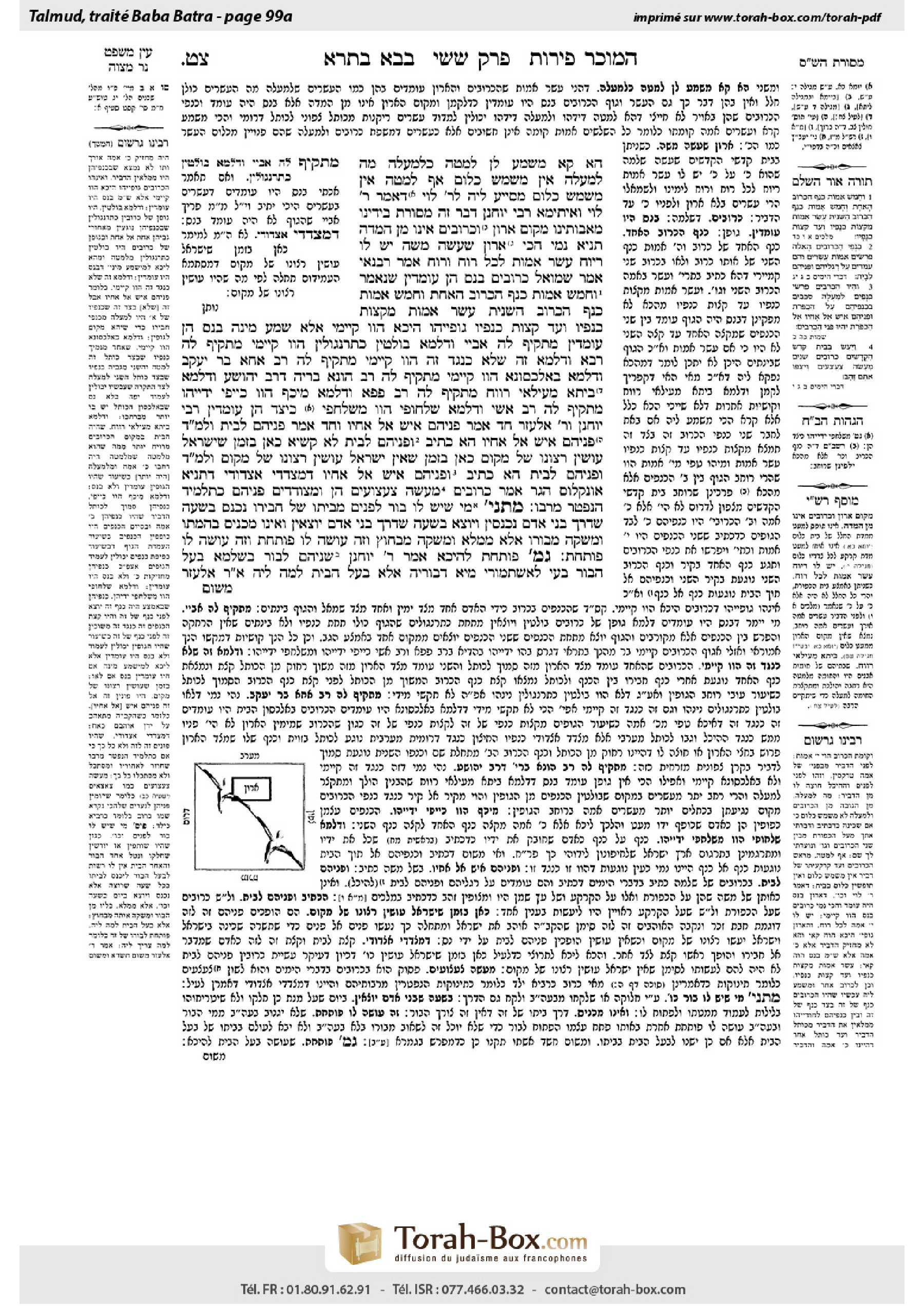
Bava Batra 99a: Talmud study for Daf Yomi
Study the Talmud for Daf Yomi with scanned pages, Hebrew text, English translations from Sefaria and AI-generated French translations.
Passage selection and English or AI-generated French translation are available where the scan has annotations. Daf Study is independent of Torah-Box and Sefaria.
Browse Bava Batra · בבא בתרא · All tractatesBava Batra 99a text and translations
This page of Bava Batra includes the Aramaic text, an English translation and an AI-generated French translation, alongside the scan above.
בבא בתרא צ״ט א · Aramaic and Hebrew text
הָא קָא מַשְׁמַע לַן – לְמַטָּה כִּלְמַעְלָה; מָה לְמַעְלָה אֵין מְשַׁמֵּשׁ כְּלוּם, אַף לְמַטָּה אֵין מְשַׁמֵּשׁ כְּלוּם.
מְסַיַּיע לֵיהּ לְרַבִּי לֵוִי – דְּאָמַר רַבִּי לֵוִי, וְאִיתֵּימָא רַבִּי יוֹחָנָן: דָּבָר זֶה מָסוֹרֶת בְּיָדֵינוּ מֵאֲבוֹתֵינוּ – מְקוֹם אָרוֹן וּכְרוּבִים אֵינוֹ מִן הַמִּדָּה. תַּנְיָא נָמֵי הָכִי: אָרוֹן שֶׁעָשָׂה מֹשֶׁה, יֵשׁ לוֹ רֶיוַח עֶשֶׂר אַמּוֹת לְכׇל רוּחַ וְרוּחַ.
אָמַר רַבְנַאי אָמַר שְׁמוּאֵל: כְּרוּבִים – בְּנֵס הֵן עוֹמְדִין, שֶׁנֶּאֱמַר: ״וְחָמֵשׁ אַמּוֹת כְּנַף הַכְּרוּב הָאֶחָת, וְחָמֵשׁ אַמּוֹת כְּנַף הַכְּרוּב הַשֵּׁנִית, עֶשֶׂר אַמּוֹת מִקְצוֹת כְּנָפָיו וְעַד קְצוֹת כְּנָפָיו״. גּוּפַיְיהוּ הֵיכָא הֲווֹ קָיְימִי? אֶלָּא שְׁמַע מִינַּהּ: בְּנֵס הֵן עוֹמְדִין.
מַתְקֵיף לַהּ אַבָּיֵי: וְדִלְמָא בּוֹלְטִין כְּתַרְנְגוֹלִין הֲווֹ קָיְימִי! מַתְקֵיף לַהּ רָבָא: וְדִלְמָא זֶה שֶׁלֹּא כְּנֶגֶד זֶה הֲווֹ קָיְימִי! מַתְקֵיף לַהּ רַב אַחָא בַּר יַעֲקֹב: וְדִלְמָא בַּאֲלַכְסוֹנָא הֲווֹ קָיְימִי!
מַתְקֵיף לַהּ רַב הוּנָא בְּרֵיהּ דְּרַב יְהוֹשֻׁעַ: וְדִלְמָא בֵּיתָא מֵעִילַּאי רָוַוח! מַתְקֵיף לַהּ רַב פָּפָּא: וְדִלְמָא מִיכָּף הֲווֹ כָּיְיפִי יְדַיְיהוּ! מַתְקֵיף לַהּ רַב אָשֵׁי: וְדִלְמָא שַׁלְחוֹפֵי הֲווֹ מְשַׁלְחֲפִי!
כֵּיצַד הֵן עוֹמְדִין? רַבִּי יוֹחָנָן וְרַבִּי אֶלְעָזָר; חַד אָמַר: פְּנֵיהֶם אִישׁ אֶל אָחִיו, וְחַד אָמַר: פְּנֵיהֶם לַבַּיִת. וּלְמַאן דְּאָמַר פְּנֵיהֶם אִישׁ אֶל אָחִיו, הָא כְּתִיב: ״וּפְנֵיהֶם לַבַּיִת״! לָא קַשְׁיָא; כָּאן בִּזְמַן שֶׁיִּשְׂרָאֵל עוֹשִׂין רְצוֹנוֹ שֶׁל מָקוֹם, כָּאן בִּזְמַן שֶׁאֵין יִשְׂרָאֵל עוֹשִׂין רְצוֹנוֹ שֶׁל מָקוֹם.
וּלְמַאן דְּאָמַר ״וּפְנֵיהֶם לַבַּיִת״, הָא כְּתִיב: ״וּפְנֵיהֶם אִישׁ אֶל אָחִיו״! דִּמְצַדְּדִי אַצְדּוֹדֵי – דְּתַנְיָא, אוּנְקְלוֹס הַגֵּר אָמַר: כְּרוּבִים – ״מַעֲשֵׂה צַעֲצֻעִים״ הֵן, וּמְצוֹדְדִים פְּנֵיהֶם כְּתַלְמִיד הַנִּפְטָר מֵרַבּוֹ.
מַתְנִי׳ מִי שֶׁיֵּשׁ לוֹ בּוֹר לִפְנִים מִבֵּיתוֹ שֶׁל חֲבֵירוֹ – נִכְנָס בְּשָׁעָה שֶׁדֶּרֶךְ בְּנֵי אָדָם נִכְנָסִין, וְיוֹצֵא בְּשָׁעָה שֶׁדֶּרֶךְ בְּנֵי אָדָם יוֹצְאִין. וְאֵינוֹ מַכְנִיס בְּהֶמְתּוֹ וּמַשְׁקָהּ מִבּוֹרוֹ, אֶלָּא מְמַלֵּא וּמַשְׁקָהּ מִבַּחוּץ. וְזֶה עוֹשֶׂה לוֹ פּוֹתַחַת, וְזֶה עוֹשֶׂה לוֹ פּוֹתַחַת.
גְּמָ׳ פּוֹתַחַת לְהֵיכָא? אֲמַר רַבִּי יוֹחָנָן: שְׁנֵיהֶם לַבּוֹר. בִּשְׁלָמָא בַּעַל הַבּוֹר, בָּעֵי לְאִשְׁתַּמּוֹרֵי מַיָּא דְּבוֹרֵיהּ; אֶלָּא בַּעַל הַבַּיִת – לְמָה לֵיהּ? אָמַר רַבִּי אֶלְעָזָר:
Bava Batra 99a · English translation
The verse teaches us this: The area below the cherubs is like the area above them; just as the area above the cherubs’ wings, which were spread out in the air, was not used for anything, i.e., it was empty space, so too the area below them was not used for anything and was empty.
This supports the opinion of Rabbi Levi, as Rabbi Levi said, and some say it was Rabbi Yoḥanan who said: This matter is a tradition handed down to us by our ancestors: The space occupied by the Ark of the Covenant and the cherubs is not included in the measurement of the Holy of Holies in which it rested, as miraculously it did not occupy any space at all. The Gemara comments: This is also taught in a baraita: When they brought the Ark that Moses crafted into the Holy of Holies in the Temple of King Solomon, even though the total width of the Holy of Holies was only twenty cubits, nevertheless the Ark had ten cubits of empty space between it and the wall in each and every direction.
Rabbenai says that Shmuel says: The cherubs stood miraculously and did not occupy any physical space, as it is stated: “And five cubits was one wing of the cherub, and five cubits was the second wing of the cherub; ten cubits from the tip of its wings until the tip of its wings” (I Kings 6:24). Accordingly, the wings of two cherubs, standing side by side, would occupy the entire twenty cubits width of the Sanctuary. But if so, where, in what space, were their bodies standing? Since their wings alone, which protruded from the sides of cherubs’ bodies, occupied twenty cubits, there was no room left in which their bodies could stand. Rather, one must conclude from the verse that the cherubs stood miraculously and did not occupy any physical space.
Abaye objects to this proof: But perhaps they stood with their bodies emerging beneath their wings, like chickens, with their wings protruding above them from the same point in the center of their backs. If so, their bodies would stand beneath their wings and would not occupy any additional space. Rava also objects to this proof: But perhaps they stood so that this one was not next to that one and the wings of the two cherubs overlapped, thereby allowing for the additional space occupied by their bodies. Rav Aḥa bar Yaakov also objects to this proof: But perhaps they were standing in a diagonal [ba’alakhsona] alignment from one corner of the Holy of Holies to the diagonally opposite corner. In this way there would be enough space for their bodies and their wings.
Rav Huna son of Rav Yehoshua also objects to this proof: But perhaps the width of twenty cubits stated in the verse refers only to the width at ground level, whereas the room widened at the top and was therefore able to accommodate both their wings and the width of the bodies. Rav Pappa also objects to this proof: But perhaps they were folding their wings somewhat; since their wings were not fully extended they did not actually fill the full twenty cubits of the Sanctuary. Rav Ashi also objects to this proof: But perhaps their wings crossed over one another, so that they did not occupy so much space.
§ Continuing its focus on the cherubs, the Gemara asks: How were the cherubs standing? Rabbi Yoḥanan and Rabbi Elazar disagree about this. One says: Their faces were turned one toward the other. And one says: Their faces were turned toward the House, i.e., the Sanctuary. The Gemara asks: But according to the one who says that their faces were turned one toward the other, isn’t it written: “And their faces were toward the House” (II Chronicles 3:13)? How does he explain the meaning of this verse? The Gemara answers: This is not difficult, as their faces miraculously changed directions in reflection of the Jewish people’s relationship to God. Here, when it states that the cherubs faced each other, it was when the Jewish people do the will of God. There, the verse that describes that the cherubs faced the Sanctuary and not toward each other, was when the Jewish people do not do the will of God.
The Gemara asks: And according to the one who says they stood as described in the verse: “And their faces were toward the House,” isn’t it written: “With their faces one toward the other” (Exodus 25:20). How does he explain the meaning of this verse? The Gemara answers: They were angled sideways so that they turned both to each other and toward the Sanctuary, as it is taught in a baraita: Onkelos the Convert said that the cherubs were of the form of children, as the verse states: “And in the Holy of Holies he made two cherubim of the form of children; and they overlaid them with gold” (II Chronicles 3:10), and their faces were angled sideways toward the Ark of the Covenant, like a student taking leave of his teacher.
MISHNA: One who has ownership of a cistern located beyond the house of another, i.e., the cistern can be accessed only by entering the property of the other, and also has access rights to that cistern, may enter the house to access his cistern only at a time when it is usual for people to enter, and may leave only at a time when it is usual for people to leave. And in addition, he may not bring his animal into the house and water it from his cistern; rather, he must fill a pail with water from the cistern and water his animal outside. And this one, the owner of the cistern, constructs for himself a lock on the entrance to the cistern to prevent the homeowner from drawing water from it, and that one, the homeowner, constructs for himself a lock.
GEMARA: The mishna states that the owner of the cistern and the homeowner each construct a lock. The Gemara asks: A lock to where? Rabbi Yoḥanan says: Both of them construct a lock on the opening to the cistern to prevent the other from accessing it unilaterally. The Gemara asks: Granted, the owner of the cistern constructs a lock, as he wants to protect the water of his well. But why does the homeowner construct a lock? Rabbi Elazar said:
Bava Batra 99a · Traduction française (IA)
La parallèle enseigne ceci : L'espace sous les chérubins est comme l'espace au-dessus d'eux ; tout comme l'espace au-dessus des ailes des chérubins, qui étaient étendues dans l'air, n'était pas utilisé pour quelque chose, c'est-à-dire qu'il était un espace vide, de même l'espace sous eux n'était pas utilisé pour quelque chose et était vide.
Cela soutient l'opinion du Rabbi Levi, car le Rabbi Levi a dit, et certains disent que c'est le Rabbi Yochanan qui a dit : cette question est une tradition transmise par nos ancêtres : l'espace occupé par l'Arca du Pacte et les chérubins n'est pas inclus dans la mesure du Saint des Saints où il reposait, car miraculeusement, il n'occupait aucun espace du tout. La Guemara commente : cela est également enseigné dans une baraïta : lorsqu'ils ont apporté l'Arca que Moïse avait façonné dans le Saint des Saints du Temple de Salomon, même si la largeur totale du Saint des Saints n'était que de vingt coudées, néanmoins l'Arca avait dix coudées d'espace vide entre elle et le mur dans chaque direction.
Rabbenai dit que Shmuel dit : les chérubins étaient debout miraculeusement et n'occupaient aucun espace physique, car il est dit : « Et cinq coudées était une aile du chérubin, et cinq coudées était la seconde aile du chérubin ; dix coudées de la pointe de ses ailes jusqu'à la pointe de ses ailes » (I Rois 6:24). Ainsi, les ailes des deux chérubins, debout côte à côte, occupaient toute la largeur de vingt coudées du Sanctuaire. Mais si c'est ainsi, où, dans quel espace, leurs corps étaient-ils debout ? Puisque leurs ailes seules, qui sortaient des côtés de leurs corps, occupaient vingt coudées, il n'y avait plus de place pour que leurs corps puissent se tenir. Il faut donc conclure à partir de la parole que les chérubins étaient debout miraculeusement et n'occupaient aucun espace physique.
Abaye s'oppose à cette preuve : mais peut-être qu'ils étaient debout avec leurs corps sortant sous leurs ailes, comme les poulets, et leurs ailes sortant au-dessus d'eux depuis le même point au centre de leur dos. Si c'était le cas, leurs corps se tenaient sous leurs ailes et ne prenaient aucun espace supplémentaire. Rava s'oppose également à cette preuve : mais peut-être qu'ils étaient debout de sorte que celui-ci ne soit pas à côté de celui-là et que les ailes des deux chérubins se chevauchent, permettant ainsi l'espace supplémentaire occupé par leurs corps. Rav Aḥa bar Yaakov s'oppose également à cette preuve : mais peut-être qu'ils étaient debout en diagonale [ba'alahsona] du coin du Saint des Saints au coin opposé. Ainsi, il y aurait assez d'espace pour leurs corps et leurs ailes.
Rav Huna fils de Rav Yehoshua s'oppose également à cette preuve : mais peut-être que la largeur de vingt coudées mentionnée dans la parole fait référence uniquement à la largeur au niveau du sol, tandis que la pièce s'élargissait en haut et pouvait donc accueillir à la fois leurs ailes et la largeur de leurs corps. Rav Pappa s'oppose également à cette preuve : mais peut-être qu'ils pliaient leurs ailes un peu ; puisque leurs ailes n'étaient pas entièrement tendues, elles n'occupaient pas effectivement toute la vingt coudées du Sanctuaire. Rav Ashi s'oppose également à cette preuve : mais peut-être que leurs ailes se croisaient les unes sur les autres, de sorte qu'elles n'occupaient pas autant d'espace.
§ Continuant son examen des chérubins, la Guemara pose la question : comment les chérubins étaient-ils orientés ? Rabbi Yoḥanan et Rabbi Elazar sont en désaccord à ce sujet. L'un dit : leurs visages étaient tournés l'un vers l'autre. L'autre dit : leurs visages étaient tournés vers la Maison, c'est-à-dire le Sanctuaire. La Guemara pose la question : mais selon celui qui dit qu'ils étaient tournés l'un vers l'autre, n'est-il pas écrit : « Et leurs visages étaient tournés vers la Maison » (II Chroniques 3:13) ? Comment explique-t-il la signification de cette parole ? La Guemara répond : cela n'est pas difficile, car leurs visages étaient miraculeusement orientés en fonction de la relation du peuple juif avec Dieu. Ici, lorsqu'il est dit que les chérubins étaient tournés l'un vers l'autre, c'était lorsque le peuple juif faisait la volonté de Dieu. Là, la parole qui décrit que les chérubins étaient tournés vers le Sanctuaire et non l'un vers l'autre, était lorsque le peuple juif ne faisait pas la volonté de Dieu.
La Guemara pose la question : et selon celui qui dit qu'ils étaient orientés comme décrit dans la parole : « Et leurs visages étaient tournés vers la Maison », n'est-il pas écrit : « Avec leurs visages l'un vers l'autre » (Exode 25:20) ? Comment explique-t-il la signification de cette parole ? La Guemara répond : ils étaient orientés de côté de sorte qu'ils étaient tournés l'un vers l'autre et vers le Sanctuaire, comme il est enseigné dans une baraïta : Onkélas le Converti a dit que les chérubins étaient de la forme d'enfants, car la parole dit : « Et dans le Saint des Saints il fit deux chérubins de la forme d'enfants ; et il les recouvrit d'or » (II Chroniques 3:10), et leurs visages étaient orientés de côté vers l'Arca du Pacte, comme un élève qui quitte son maître.
MICHNA : Celui qui possède un puits situé au-delà de la maison d'un autre, c'est-à-dire un puits qui peut être accessible uniquement en entrant dans la propriété de l'autre, et qui a également le droit d'accéder à ce puits, peut entrer dans la maison pour accéder à son puits uniquement lorsqu'il est habituel pour les gens d'entrer, et peut sortir uniquement lorsqu'il est habituel pour les gens de sortir. Et en outre, il ne doit pas amener son animal dans la maison et le faire boire à partir de son puits ; il doit plutôt remplir un seau d'eau à partir du puits et faire boire son animal à l'extérieur. Et celui-ci, le propriétaire du puits, construit pour lui-même un verrou à l'entrée du puits afin d'empêcher le propriétaire de la maison de tirer de l'eau de là, et celui-là, le propriétaire de la maison, construit pour lui-même un verrou.
GUEMARA : La mishna dit que le propriétaire du puits et le propriétaire de la maison construisent tous les deux un verrou. La Guemara pose la question : un verrou vers où ? Rabbi Yoḥanan dit : les deux construisent un verrou à l'ouverture du puits afin d'empêcher l'autre d'y accéder unilatéralement. La Guemara pose la question : certes, le propriétaire du puits construit un verrou, car il veut protéger l'eau de son puits. Mais pourquoi le propriétaire de la maison construit-il un verrou ? Rabbi Elazar a dit :
Traduction française générée par IA à partir de l’édition anglaise de Sefaria. Vérifie toujours un passage avec le texte source.
Text from Sefaria: William Davidson Edition - Vocalized Aramaic (CC BY NC); William Davidson Edition - English (CC BY NC).