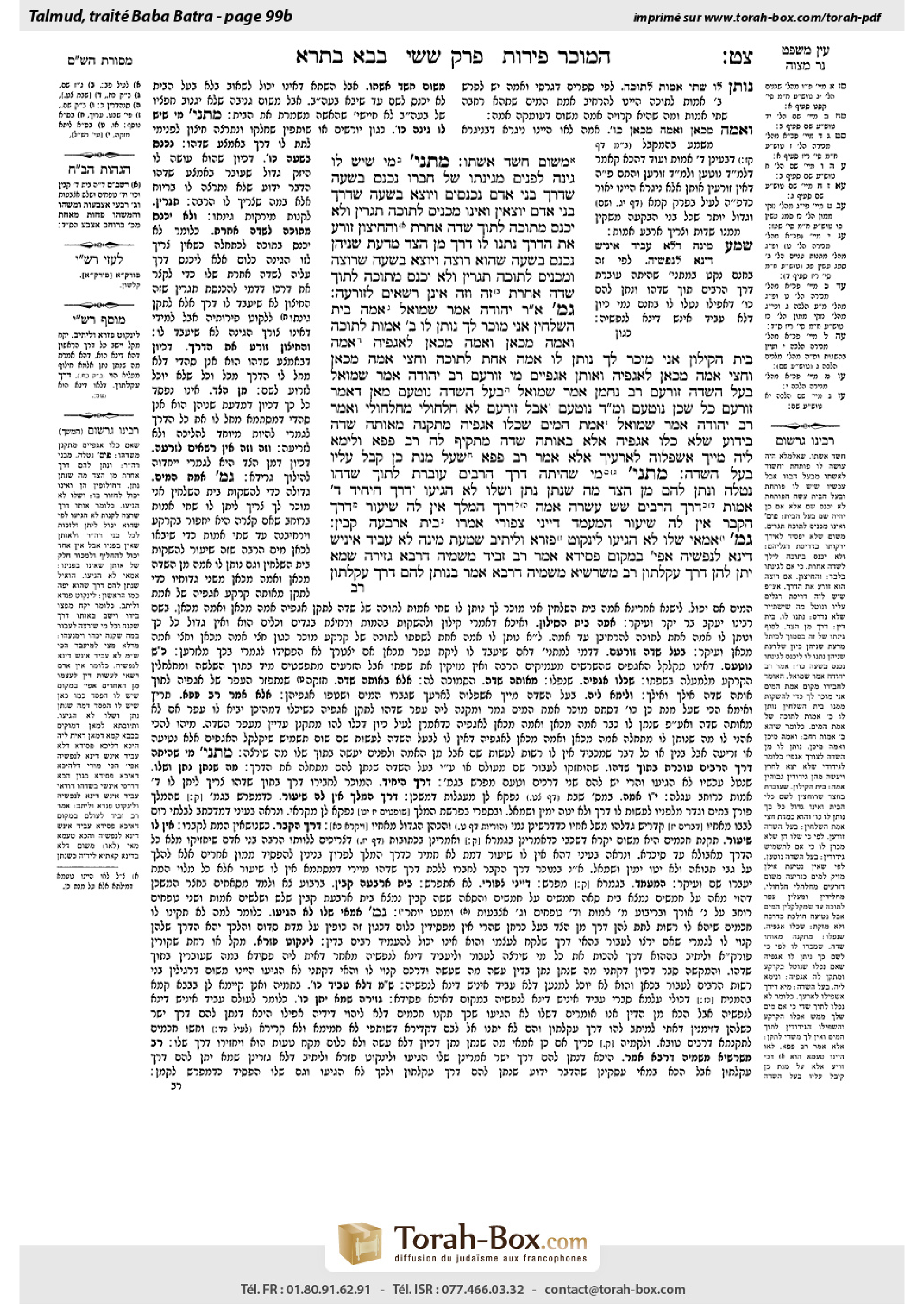
Bava Batra 99b: Talmud study for Daf Yomi
Study the Talmud for Daf Yomi with scanned pages, Hebrew text, English translations from Sefaria and AI-generated French translations.
Passage selection and English or AI-generated French translation are available where the scan has annotations. Daf Study is independent of Torah-Box and Sefaria.
Browse Bava Batra · בבא בתרא · All tractatesBava Batra 99b text and translations
This page of Bava Batra includes the Aramaic text, an English translation and an AI-generated French translation, alongside the scan above.
בבא בתרא צ״ט ב · Aramaic and Hebrew text
מִשּׁוּם חֲשַׁד אִשְׁתּוֹ.
מַתְנִי׳ מִי שֶׁיֵּשׁ לוֹ גִּינָּה לִפְנִים מִגִּינָּתוֹ שֶׁל חֲבֵרוֹ – נִכְנָס בְּשָׁעָה שֶׁדֶּרֶךְ בְּנֵי אָדָם נִכְנָסִים, וְיוֹצֵא בְּשָׁעָה שֶׁדֶּרֶךְ בְּנֵי אָדָם יוֹצְאִין; וְאֵינוֹ מַכְנִיס לְתוֹכָהּ תַּגָּרִין; וְלֹא יִכָּנֵס מִתּוֹכָהּ לְתוֹךְ שָׂדֶה אַחֶרֶת; וְהַחִיצוֹן זוֹרֵעַ אֶת הַדֶּרֶךְ.
נָתְנוּ לוֹ דֶּרֶךְ מִן הַצַּד מִדַּעַת שְׁנֵיהֶן – נִכְנָס בְּשָׁעָה שֶׁהוּא רוֹצֶה, וְיוֹצֵא בְּשָׁעָה שֶׁרוֹצֶה; וּמַכְנִיס לְתוֹכָהּ תַּגָּרִין. וְלֹא יִכָּנֵס מִתּוֹכָהּ לְתוֹךְ שָׂדֶה אַחֶרֶת. זֶה וָזֶה אֵינָן רַשָּׁאִים לְזוֹרְעָהּ.
גְּמָ׳ אָמַר רַב יְהוּדָה אָמַר שְׁמוּאֵל: ״אַמָּה בֵּית הַשְּׁלָחִין אֲנִי מוֹכֵר לָךְ״ – נוֹתֵן לוֹ שְׁתֵּי אַמּוֹת לְתוֹכָהּ, וְאַמָּה מִכָּאן וְאַמָּה מִכָּאן לַאֲגַפֶּיהָ. ״אַמָּה בֵּית הַקִּילוֹן אֲנִי מוֹכֵר לָךְ״ – נוֹתֵן לוֹ אַמָּה אַחַת לְתוֹכָהּ, וַחֲצִי אַמָּה מִכָּאן וַחֲצִי אַמָּה מִכָּאן לַאֲגַפֶּיהָ.
וְאוֹתָן אֲגַפַּיִים – מִי זוֹרְעָם? רַב יְהוּדָה אָמַר שְׁמוּאֵל: בַּעַל הַשָּׂדֶה זוֹרְעָם, רַב נַחְמָן אָמַר שְׁמוּאֵל: בַּעַל הַשָּׂדֶה נוֹטְעָם. מַאן דְּאָמַר זוֹרְעָם – כׇּל שֶׁכֵּן נוֹטְעָם. וּמַאן דְּאָמַר נוֹטְעָם – אֲבָל זוֹרְעָם לָא, חַלְחוֹלֵי מְחַלְחֲלִי.
וְאָמַר רַב יְהוּדָה אָמַר שְׁמוּאֵל: אַמַּת הַמַּיִם שֶׁכָּלוּ אֲגַפֶּיהָ – מְתַקְּנָהּ מֵאוֹתָה שָׂדֶה; בְּיָדוּעַ שֶׁלֹּא כָּלוּ אֲגַפֶּיהָ אֶלָּא בְּאוֹתָהּ שָׂדֶה.
מַתְקֵיף לַהּ רַב פָּפָּא, וְלֵימָא לֵיהּ: מַיָּיךְ אַשְׁפְּלוּהָ לְאַרְעָיךְ! אֶלָּא אָמַר רַב פָּפָּא: שֶׁעַל מְנָת כֵּן קִבֵּל עָלָיו בַּעַל הַשָּׂדֶה.
מַתְנִי׳ מִי שֶׁהָיְתָה דֶּרֶךְ הָרַבִּים עוֹבֶרֶת לְתוֹךְ שָׂדֵהוּ; נְטָלָהּ וְנָתַן לָהֶם מִן הַצַּד – מַה שֶּׁנָּתַן נָתַן, וְשֶׁלּוֹ לֹא הִגִּיעוֹ.
דֶּרֶךְ הַיָּחִיד – אַרְבַּע אַמּוֹת. דֶּרֶךְ הָרַבִּים – שֵׁשׁ עֶשְׂרֵה אַמָּה. דֶּרֶךְ הַמֶּלֶךְ – אֵין לָהּ שִׁיעוּר. דֶּרֶךְ הַקֶּבֶר – אֵין לָהּ שִׁיעוּר. הַמַּעֲמָד – דַּיָּינֵי צִפּוֹרִי אָמְרוּ: בֵּית אַרְבָּעָה קַבִּין.
גְּמָ׳ אַמַּאי שֶׁלּוֹ לֹא הִגִּיעוֹ? לִינְקוֹט פַּזְרָא וְלִיתֵּיב! שָׁמְעַתְּ מִינַּהּ לָא עָבֵיד אִינִישׁ דִּינָא לְנַפְשֵׁיהּ – אֲפִילּוּ בִּמְקוֹם פְּסֵידָא?
אָמַר רַב זְבִיד מִשְּׁמֵיהּ דְּרָבָא: גְּזֵירָה שֶׁמָּא יִתֵּן לָהֶן דֶּרֶךְ עֲקַלָּתוֹן. רַב מְשַׁרְשְׁיָא מִשְּׁמֵיהּ דְּרָבָא אָמַר: בְּנוֹתֵן לָהֶם דֶּרֶךְ עֲקַלָּתוֹן.
Bava Batra 99b · English translation
He does so due to a suspicion that the owner of the cistern might enter the house at a time when the owner of the house is not present, and thereby be secluded together in the house with the homeowner’s wife.
MISHNA: One who has ownership of a garden located beyond the garden of another, and also has access rights to it, may enter his garden only at a time when it is usual for people to enter, and may leave only at a time when it is usual for people to leave. Furthermore, he may not bring merchants into his garden, and he may not enter the garden solely in order to use it as a passageway, to enter from it into another field. And the owner of the outer garden may sow the path leading to the inner garden.
If the court gave him an access path from the side of the outer garden, with the agreement of both of them, he may enter at any time he wants, and leave at any time he wants, and may bring merchants into the inner garden. But he may still not enter the garden solely in order to enter from it into another field. In such a case, neither this one, the owner of the inner garden, nor that one, the owner of the outer garden, is permitted to plant that side path.
GEMARA: Rav Yehuda says that Shmuel says: If a field owner says to another: I am selling you from my land a water channel fit for bringing water to an irrigated field, he is required to give him land two cubits wide for the inside of the channel, and one cubit on this side and one cubit on that side for its banks. If he said to him: I am selling you a shadoof [kilon] channel, he is required to give him land one cubit wide for the inside of the channel and half a cubit on this side and half a cubit on that side for its banks.
The Gemara asks: And with regard to those banks, who has permission to sow them? Rav Yehuda says that Shmuel says: The field owner may sow them with vegetables or crops. Rav Naḥman says that Shmuel says: The field owner may plant them with trees. The Gemara elaborates: The one who says that the field owner may sow them holds that all the more so he may plant them with trees. And the one who says that he may plant them with trees holds that he may only plant trees, but sowing them with other plants is not permitted. This is because the roots perforate the ground, which weakens it and can cause damage to the water channel.
§ And Rav Yehuda says that Shmuel says: With regard to a water channel whose banks collapsed, the owner of the channel may repair it with earth from that field through which the channel runs, even though the field does not belong to him. It is permitted because it is known that when its banks collapsed the earth that the banks were made from spread only into that surrounding field.
Rav Pappa objects to this: But let the field owner say to the owner of the channel: Your water in your channel carried away your earth from your banks, so you have no right to take earth from my field. Rather, Rav Pappa said he may repair the banks with earth from the field because when the field owner sold the rights to the channel he accepted that condition upon himself.
MISHNA: In the case of one who had a public thoroughfare passing through his field, and he appropriated it and instead gave the public an alternative thoroughfare on the side of his property, the halakha is that the thoroughfare that he gave them, he gave them, and they may use it. But the original thoroughfare that he took for himself has not reached him, i.e., he cannot appropriate it for his personal use.
The standard width of a private path is four cubits. If a field owner sells the right to pass through his field to an individual, without specifying the width of the path, he must provide him with a path four cubits wide. The standard width of a public thoroughfare is sixteen cubits. The width of a king’s thoroughfare has no maximum measure, as the king may appropriate whatever width thoroughfare he wishes. The width of the path for the burial procession to a grave has no maximum measure. With regard to the practice of standing and comforting the mourners following a funeral, the judges of Tzippori said that the standard requisite size is the area required for sowing four kav of seed.
GEMARA: The Gemara asks: Why does the mishna rule that the public thoroughfare that the landowner took for himself has not reached him? If by making the exchange the original thoroughfare now belongs to him, let him take a stick [pazra] and sit on the thoroughfare and physically prevent anyone from passing through. Apparently, the Sages did not permit him to do so. The Gemara suggests: Does it follow that one can conclude from the mishna’s ruling that a person may not execute judgment for himself even in circumstances where refraining from acting will cause him a loss? This would contradict the accepted halakha that one may do so.
Rav Zevid said in the name of Rava: Although generally one may do so, in this case the Sages issued a decree prohibiting it, lest he give them a circuitous route that will lengthen the distance the public will have to travel. Rav Mesharshiyya said in the name of Rava that the ruling of the mishna applies only where he actually gives them a circuitous route instead of the original straight thoroughfare. But one may exchange a public thoroughfare for an equally straight thoroughfare, appropriating the original for his personal use.
Bava Batra 99b · Traduction française (IA)
Il le fait ainsi en raison d'une suspicion que l'propriétaire du puits pourrait entrer dans la maison à un moment où l'propriétaire de la maison n'est pas présent, et ainsi être seul avec la femme de l'propriétaire de la maison.
MICHNA: Celui qui possède un jardin situé au-delà du jardin d'un autre, et qui a également le droit d'accès, peut entrer dans son jardin uniquement à un moment où il est habituel que les gens entrent, et peut sortir uniquement à un moment où il est habituel que les gens sortient. De plus, il ne doit pas amener des marchands dans son jardin, et il ne doit pas entrer dans le jardin uniquement pour l'utiliser comme un passage, afin d'entrer d'ici dans un autre champ. Et l'propriétaire du jardin extérieur peut semer le chemin menant au jardin intérieur.
Si la cour lui a donné un chemin d'accès du côté du jardin extérieur, avec le consentement des deux parties, il peut entrer à tout moment qu'il veut, et sortir à tout moment qu'il veut, et peut amener des marchands dans le jardin intérieur. Mais il ne peut toujours pas entrer dans le jardin uniquement pour entrer d'ici dans un autre champ. Dans ce cas, ni celui-ci, l'propriétaire du jardin intérieur, ni celui-là, l'propriétaire du jardin extérieur, n'est autorisé à planter ce côté du chemin.
GUEMARA: Rav Yehuda dit que Shmuel dit : Si un propriétaire de champ dit à un autre : Je vends à toi un canal d'eau adapté pour apporter de l'eau à un champ irrigué, il doit lui donner un terrain de deux coudées de largeur pour l'intérieur du canal, et une coudée de ce côté et une coudée de l'autre côté pour ses berges. Si il dit à lui : Je vends à toi un canal de shadoof [kilon], il doit lui donner un terrain d'une coudée de largeur pour l'intérieur du canal et demi-coudée de ce côté et demi-coudée de l'autre côté pour ses berges.
La Guemara pose la question : Et concernant ces berges, qui a le droit de les semer ? Rav Yehuda dit que Shmuel dit : L'propriétaire du champ peut les semer avec des légumes ou des cultures. Rav Naḥman dit que Shmuel dit : L'propriétaire du champ peut planter des arbres. La Guemara précise : Celui qui dit que l'propriétaire du champ peut les semer considère qu'il est encore plus permis de les planter avec des arbres. Et celui qui dit qu'il peut les planter avec des arbres considère qu'il peut uniquement planter des arbres, mais semer d'autres plantes n'est pas permis. Cela est dû au fait que les racines perforent le sol, ce qui affaiblit le sol et peut causer des dommages au canal d'eau.
§ Et Rav Yehuda dit que Shmuel dit : Concernant un canal d'eau dont les berges s'étaient effondrées, l'propriétaire du canal peut le réparer avec de la terre provenant de ce champ par lequel le canal passe, même si le champ n'appartient pas à lui. C'est permis car on sait que lorsque ses berges s'étaient effondrées, la terre provenant des berges s'était répandue uniquement dans ce champ environnant.
Rav Pappa s'oppose à cela : Mais laisse l'propriétaire du champ dire à l'propriétaire du canal : Votre eau dans votre canal a emporté votre terre de vos berges, donc vous n'avez pas le droit de prendre de la terre de mon champ. Plutôt, Rav Pappa a dit qu'il peut réparer les berges avec de la terre du champ car lorsque l'propriétaire du champ a vendu les droits du canal, il a accepté cette condition.
MICHNA: Dans le cas d'une voie publique passant par son champ, et qu'il l'a appropriée et a donné à la communauté une voie publique alternative sur le côté de sa propriété, la halakha est que la voie qu'il a donnée à la communauté, il l'a donnée, et ils peuvent l'utiliser. Mais la voie originale qu'il a prise pour lui-même n'a pas atteint lui, c'est-à-dire qu'il ne peut l'approprier pour son usage personnel.
La largeur standard d'un chemin privé est de quatre coudées. Si un propriétaire de champ vend le droit de passer par son champ à un individu, sans spécifier la largeur du chemin, il doit lui fournir un chemin de quatre coudées de largeur. La largeur standard d'une voie publique est de seize coudées. La largeur d'une voie royale n'a pas de mesure maximale, car le roi peut approprier la largeur de la voie qu'il souhaite. La largeur du chemin pour la procession funéraire vers une tombe n'a pas de mesure maximale. Concernant la pratique de se tenir et de consoler les veuves après un enterrement, les juges de Tzippori ont dit que la taille standard requise est l'espace nécessaire pour semer quatre kav de grain.
GUEMARA : La Guemara pose la question : Pourquoi la Michna règle-t-elle que la voie publique que l'propriétaire a prise pour lui-même n'a pas atteint lui ? Si en faisant l'échange la voie originale appartient maintenant à lui, laisse-le prendre un bâton [pazra] et s'asseoir sur la voie et empêcher physiquement quiconque de passer. Apparemment, les Sages n'ont pas permis cela. La Guemara suggère : Est-ce que cela implique que l'on peut conclure de la décision de la Michna que personne ne peut exercer un jugement pour soi-même même dans les circonstances où l'abstention causerait une perte ? Cela contredirait la halakha acceptée qui permet cela.
Rav Zevid a dit en nom de Rava : Bien que généralement on puisse le faire, dans ce cas les Sages ont émis un décret interdisant cela, de peur qu'il leur donne un itinéraire détourné qui allongerait la distance que la communauté devrait parcourir. Rav Mesharshiyya a dit en nom de Rava que la décision de la Michna s'applique uniquement là où il donne effectivement un itinéraire détourné au lieu de la voie originale droite. Mais on peut échanger une voie publique contre une voie aussi droite, s'appropriant la voie originale pour son usage personnel.
Traduction française générée par IA à partir de l’édition anglaise de Sefaria. Vérifie toujours un passage avec le texte source.
Text from Sefaria: William Davidson Edition - Vocalized Aramaic (CC BY NC); William Davidson Edition - English (CC BY NC).