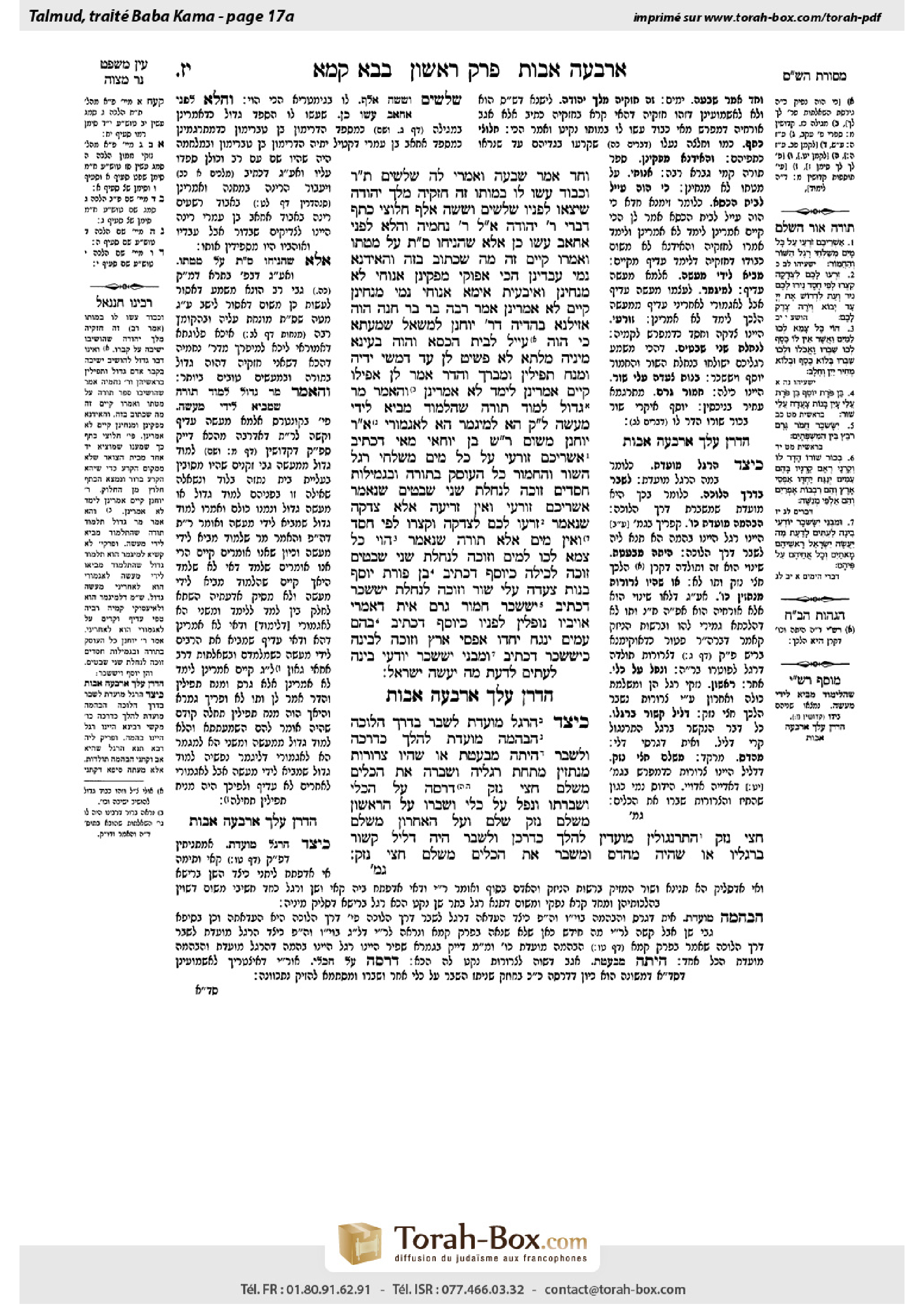
Bava Kamma 17a: Talmud study for Daf Yomi
Study the Talmud for Daf Yomi with scanned pages, Hebrew text, English translations from Sefaria and AI-generated French translations.
Passage selection and English or AI-generated French translation are available where the scan has annotations. Daf Study is independent of Torah-Box and Sefaria.
Browse Bava Kamma · בבא קמא · All tractatesBava Kamma 17a text and translations
This page of Bava Kamma includes the Aramaic text, an English translation and an AI-generated French translation, alongside the scan above.
בבא קמא י״ז א · Aramaic and Hebrew text
וְחַד אָמַר שִׁבְעָה. וְאָמְרִי לַהּ: שְׁלֹשִׁים.
תָּנוּ רַבָּנַן: ״וְכָבוֹד עָשׂוּ לוֹ בְמוֹתוֹ״ – זֶה חִזְקִיָּה מֶלֶךְ יְהוּדָה, שֶׁיָּצְאוּ לְפָנָיו שְׁלֹשִׁים וְשִׁשָּׁה אֶלֶף חֲלוּצֵי כָתֵף, דִּבְרֵי רַבִּי יְהוּדָה.
אָמַר לוֹ רַבִּי נְחֶמְיָה: וַהֲלֹא לִפְנֵי אַחְאָב עָשׂוּ כֵּן!
אֶלָּא שֶׁהִנִּיחוּ סֵפֶר תּוֹרָה עַל מִטָּתוֹ, וְאָמְרוּ: קִיֵּים זֶה מַה שֶּׁכָּתוּב בָּזֶה.
וְהָאִידָּנָא נָמֵי עָבְדִינַן הָכִי! אַפּוֹקֵי מַפְּקִינַן, אַנּוֹחֵי לָא מַנְּחִינַן. וְאִיבָּעֵית אֵימָא: אַנּוֹחֵי נָמֵי מַנְּחִינַן, ״קִיֵּים״ לָא אָמְרִינַן.
אָמַר רַבָּה בַּר בַּר חָנָה: הֲוָה אָזֵילְנָא בַּהֲדֵיהּ דְּרַבִּי יוֹחָנָן לְמִשְׁאַל שְׁמַעְתָּא, כִּי הֲוָה עָיֵיל לְבֵית הַכִּסֵּא וַהֲוָה בָּעֵינָא מִינֵּיהּ מִלְּתָא, לָא פָּשֵׁיט לַן עַד דְּמָשֵׁי יְדֵיהּ וּמַנַּח תְּפִילִּין וּמְבָרֵךְ, וַהֲדַר אֲמַר לַן: אֲפִילּוּ ״קִיֵּים״ אָמְרִינַן; ״לִימֵּד״ לָא אָמְרִינַן.
וְהָאָמַר מָר: גָּדוֹל תַּלְמוּד תּוֹרָה, שֶׁהַתַּלְמוּד מֵבִיא לִידֵי מַעֲשֶׂה! לָא קַשְׁיָא; הָא לְמִיגְמַר, הָא לְאַגְמוֹרֵי.
אָמַר רַבִּי יוֹחָנָן מִשּׁוּם רַבִּי שִׁמְעוֹן בֶּן יוֹחַאי, מַאי דִּכְתִיב: ״אַשְׁרֵיכֶם זֹרְעֵי עַל כׇּל מָיִם, מְשַׁלְּחֵי רֶגֶל הַשּׁוֹר וְהַחֲמוֹר״? כׇּל הָעוֹסֵק בְּתוֹרָה וּבִגְמִילוּת חֲסָדִים, זוֹכֶה לְנַחֲלַת שְׁנֵי שְׁבָטִים.
שֶׁנֶּאֱמַר: ״אַשְׁרֵיכֶם זֹרְעֵי״ – וְאֵין ״זְרִיעָה״ אֶלָּא צְדָקָה, שֶׁנֶּאֱמַר: ״זִרְעוּ לָכֶם לִצְדָקָה וְקִצְרוּ לְפִי חֶסֶד״; וְאֵין ״מַיִם״ אֶלָּא תּוֹרָה, שֶׁנֶּאֱמַר: ״הוֹי כׇּל צָמֵא לְכוּ לַמַּיִם״.
וְזוֹכֶה לְנַחֲלַת שְׁנֵי שְׁבָטִים – זוֹכֶה לְכִילָה כְּיוֹסֵף, דִּכְתִיב: ״בֵּן פֹּרָת יוֹסֵף, בָּנוֹת צָעֲדָה עֲלֵי שׁוּר״; וְזוֹכֶה לְנַחֲלַת יִשָּׂשכָר, דִּכְתִיב: ״יִשָּׂשכָר חֲמֹר גָּרֶם״.
אִית דְּאָמְרִי: אוֹיְבָיו נוֹפְלִים לְפָנָיו כְּיוֹסֵף – דִּכְתִיב: ״בָּהֶם עַמִּים יְנַגַּח יַחְדָּו אַפְסֵי אָרֶץ״; וְזוֹכֶה לְבִינָה כְּיִשָּׂשכָר – דִּכְתִיב: ״וּמִבְּנֵי יִשָּׂשכָר יוֹדְעֵי בִינָה לַעִתִּים, לָדַעַת מַה יַּעֲשֶׂה יִשְׂרָאֵל״.
הֲדַרַן עֲלָיךְ אַרְבָּעָה אָבוֹת
מַתְנִי׳ כֵּיצַד הָרֶגֶל מוּעֶדֶת? לִשְׁבֹּר בְּדֶרֶךְ הִלּוּכָהּ. הַבְּהֵמָה מוּעֶדֶת לְהַלֵּךְ כְּדַרְכָּהּ וּלְשַׁבֵּר.
הָיְתָה מְבַעֶטֶת, אוֹ שֶׁהָיוּ צְרוֹרוֹת מְנַתְּזִין מִתַּחַת רַגְלֶיהָ – וְשָׁבְרָה אֶת הַכֵּלִים, מְשַׁלֵּם חֲצִי נֶזֶק. דָּרְסָה עַל הַכְּלִי וּשְׁבָרַתּוּ, וְנָפַל עַל כְּלִי וּשְׁבָרוֹ – עַל הָרִאשׁוֹן מְשַׁלֵּם נֶזֶק שָׁלֵם, וְעַל הָאַחֲרוֹן מְשַׁלֵּם חֲצִי נֶזֶק.
הַתַּרְנְגוֹלִין מוּעָדִין לְהַלֵּךְ כְּדַרְכָּן וּלְשַׁבֵּר. הָיָה דְּלִיל קָשׁוּר בְּרַגְלָיו, אוֹ שֶׁהָיָה מְהַדֵּס וּמְשַׁבֵּר אֶת הַכֵּלִים – מְשַׁלֵּם חֲצִי נֶזֶק.
Bava Kamma 17a · English translation
And the other one said: They studied there for seven days. And some say they studied there for thirty days.
The Sages taught a baraita that offers another interpretation of the verse cited: “And afforded him [lo] honor in his death” (II Chronicles 32:33). This is referring to the honor given to Hezekiah, king of Judea, that at his burial 36,000 men with bared shoulders went out before him. They removed their robes from their shoulders as a sign of mourning. The number 36,000 is alluded to by the numerical value of the word lo, which is thirty-six. This is the statement of Rabbi Yehuda.
Rabbi Neḥemya said to him: But didn’t they also do this before Ahab? Apparently, if they did this for the wicked king Ahab, it is an honor shown to all kings, and it is was not a unique show of honor for the righteous Hezekiah.
Rather, the honor that was done for Hezekiah was that they laid a Torah scroll upon his bier and they said: This one, i.e., Hezekiah, fulfilled that which is written in this, i.e., the Torah scroll.
The Gemara asks: But nowadays as well, we do this for any great Torah scholar that dies, so what is unique about what was done to honor Hezekiah? The Gemara answers: Nowadays, we take a Torah scroll out but we do not lay it on the bier of the deceased. And if you wish, say instead that nowadays we also lay a Torah scroll on the bier of the deceased; but we do not say: This one fulfilled that which is written in this.
Rabba bar bar Ḥana said: I was once walking together with Rabbi Yoḥanan to ask him about this statement. Whenever he would enter a lavatory, upon his exit I would ask him to explain a matter, and he would not answer us until he had washed his hands and donned his phylacteries and made the blessing, and only then would he answer us. With regard to the honor given to King Hezekiah, he said: Nowadays, we even say: This one fulfilled that which is written in this, but we do not say: He taught that which is written in this, which was a unique honor performed at the burial of the righteous King Hezekiah.
The Gemara asks: But didn’t the Master say: Torah study is great because the study of Torah leads to one’s performance of the mitzvot? This indicates that the performance of mitzvot is considered of greater value than Torah study. If so, once Hezekiah had been praised with the fact that he fulfilled the mitzvot of the Torah, why mention that he studied it? The Gemara explains: This is not difficult: This statement of the Master is about studying the Torah for one’s own knowledge, and that unique praise given to King Hezekiah was about teaching the Torah to others.
§ A verse that was cited at the beginning of this chapter (2b) as part of a halakhic exposition is now explained homiletically: Rabbi Yoḥanan says in the name of Rabbi Shimon ben Yoḥai: What is the meaning of that which is written: “Happy are you that sow beside all waters, that send forth the feet of the ox and the donkey” (Isaiah 32:20)? It teaches that whoever engages in the study of Torah and in the performance of acts of kindness merits reward equal to the portion of two tribes, Joseph and Issachar.
The Gemara explains how this is derived from the verse: As it is stated: “Happy are you that sow.” And the reference to sowing refers only to acts of charity, as it is stated: “Sow for yourselves for charity, reap according to kindness” (Hosea 10:12). And the reference to water refers only to the study of Torah, as it is stated with regard to Torah study: “Ho, all who are thirsty, go to water” (Isaiah 55:1).
And the fact that he merits reward equal to the portion of two tribes is derived as follows: The reference to the ox in the verse is an allusion to Joseph, who is described as an ox (Deuteronomy 33:17), and one’s reward is that he merits to receive a canopy of honor, as did Joseph, as it is written: “Joseph is a fruitful vine, a fruitful vine by a fountain; its branches run over the wall.” The branches over the wall in this verse allude to the canopy. And the reference to the donkey is an allusion to the fact that he merits to receive the portion of Issachar, who is described as a donkey, as it is stated: “Issachar is a large-boned donkey” (Genesis 49:14).
There are some who say that the comparison should be understood in a different manner. His enemies will fall before him just like in the blessing given by Moses to the tribe of Joseph, as it is written in the blessing bestowed by Moses to the tribe of Joseph: “His horns are the horns of the wild-ox; with them he shall gore the nations, even to the ends of the earth” (Deuteronomy 33:17). And he merits the understanding of Issachar, as it is written: “And of the children of Issachar, men that had understanding of the times, to know what Israel ought to do” (I Chronicles 12:33).
MISHNA: The mishna in the previous chapter (15b) teaches that the owner of an animal is always forewarned with regard to the category of Trampling. The mishna elaborates: For what damage caused with the hoof is the animal deemed forewarned? It is deemed forewarned with regard to trampling objects and breaking them in the course of its walking. An animal is deemed forewarned with regard to walking in its typical manner and, by doing so, breaking objects as it proceeds.
By contrast, if the animal was kicking while it was walking, or it transpired that pebbles were inadvertently propelled from under its feet and those pebbles broke vessels, cases of that kind do not fit precisely into the primary category of Trampling. In both of these cases the owner of the animal pays half the cost of the damage. If an animal trod upon a vessel and broke it and then a shard of that vessel fell upon a second vessel and broke it, the owner pays the full cost of the damage for the first vessel, as its action is classified under the primary category of Trampling, and he pays half the cost of the damage for the latter vessel, as the damage caused by the shard is tantamount to damage caused by pebbles inadvertently propelled by the foot of an animal.
Chickens are deemed forewarned with regard to walking in their typical manner and breaking objects, and therefore, the owner of a chicken pays the full restitution for the damage done to any objects broken by his chicken. If there was a string [delil] tied to a chicken’s leg as an indication of ownership and it wrapped around a vessel and broke it, or if the chicken was hopping in an atypical manner and breaking vessels, its owner pays half the cost of the damage.
Bava Kamma 17a · Traduction française (IA)
Et l'autre dit : Ils y ont étudié sept jours. Et certains disent qu'ils y ont étudié trente jours.
Les Sages enseignèrent une baraïta qui propose une autre interprétation du verset cité : « Et il lui [lo] a rendu honneur en son deuil » (II Rois 32:33). Il s'agit de l'honneur rendu à Hachiaque, roi de Juda, lors de son enterrement, où trente-six mille hommes, les épaules découvertes, sortirent devant lui. Ils retirèrent leurs robes de leurs épaules comme signe de deuil. Le nombre trente-six mille est allusion à la valeur numérique du mot « lo », qui est trente-six. C'est la déclaration du Rabbi Yéhouda.
Le Rabbi Néchemyah lui dit : Mais n'ont-ils pas aussi fait cela avant Achab ? Apparemment, si cela a été fait pour le roi méchant Achab, c'est un honneur rendu à tous les rois, et ce n'était pas un honneur unique pour le juste Hachiaque.
En réalité, l'honneur qui a été rendu à Hachiaque était qu'ils posaient un rouleau de Torah sur son cercueil et ils disaient : Celui-ci, c'est-à-dire Hachiaque, a accompli ce qui est écrit ici, c'est-à-dire dans ce rouleau de Torah.
La Guemara demande : Mais aujourd'hui aussi, nous faisons cela pour tout grand savant de Torah qui meurt, donc qu'est-ce qui rend unique ce qui a été fait pour honorer Hachiaque ? La Guemara répond : Aujourd'hui, nous sortons un rouleau de Torah, mais nous ne le posons pas sur le cercueil du défunt. Et si tu veux, dis plutôt que nous posons aussi un rouleau de Torah sur le cercueil du défunt aujourd'hui ; mais nous ne disons pas : Celui-ci a accompli ce qui est écrit ici.
Rabba bar bar Ḥana dit : J'étais une fois en marche avec Rabbi Yoḥanan pour lui demander une explication de cette déclaration. Quand il entrait dans une salle de toilette, à son départ, je lui demandais d'expliquer une question, et il ne répondait pas avant d'avoir lavé ses mains et d'avoir mis ses phylactères et de faire la prière. Et seulement alors répondait-il. En ce qui concerne l'honneur rendu au roi Hachiaque, il dit : Aujourd'hui, nous disons même : Celui-ci a accompli ce qui est écrit ici, mais nous ne disons pas : Il a enseigné ce qui est écrit ici, ce qui était un honneur unique rendu au juste roi Hachiaque.
La Guemara demande : Mais n’a-t-il pas dit le Maître : L’étude de la Torah est grande, car l’étude de la Torah conduit à la performance des mitsvot ? Cela indique que la performance des mitsvot est considérée comme plus importante que l’étude de la Torah. Si tel est le cas, une fois que Hachiaque a été loué pour avoir accompli les mitsvot de la Torah, pourquoi mentionner qu’il l’avait étudiée ? La Guemara explique : Ce n’est pas difficile : Cette déclaration du Maître est à propos de l’étude de la Torah pour son propre savoir, et cette louange unique rendue au roi Hachiaque était à propos de l’enseignement de la Torah aux autres.
§ Un verset cité au début de ce chapitre (2b) comme partie d’une exposition halakhique est maintenant expliqué de manière allégorique : Rabbi Yoḥanan dit au nom de Rabbi Shimon ben Yoḥai : Quelle est la signification de ce qui est écrit : « Heureux celui qui sème près de tous les eaux, qui envoie les pieds du bœuf et de l’âne » (Michna, Yachout 32:20) ? Il enseigne que celui qui s’engage dans l’étude de la Torah et dans la pratique des actes de bonté mérite une récompense égale à la part de deux tribus, Yosef et Yissachar.
La Guemara explique comment cela est dérivé du verset : Comme il est dit : « Heureux celui qui sème ». Et la référence à s’engager est uniquement à l’acte de charité, comme il est dit : « Sème pour toi-même pour la charité, récolte selon la bonté » (Ovadiah 10:12). Et la référence à l’eau est uniquement à l’étude de la Torah, comme il est dit concernant l’étude de la Torah : « Ho, tous ceux qui ont soif, allez vers l’eau » (Yachout 55:1).
Et le fait qu'il mérite une récompense égale à la part de deux tribus est dérivé comme suit : La référence au bœuf dans le verset est une allusion à Yosef, décrit comme un bœuf (Deutéronome 33:17), et sa récompense est qu'il mérite de recevoir un dais d'honneur, comme Yosef, comme il est écrit : « Yosef est une vigne fructueuse, une vigne fructueuse près d'une source ; ses branches dépassent le mur ». Les branches au-dessus du mur dans ce verset désignent le dais. Et la référence à l'âne est une allusion au fait qu'il mérite la part d'Yissachar, décrit comme un âne, comme il est dit : « Yissachar est un âne à ossature épaisse » (Genèse 49:14).
Certains disent que la comparaison devrait être comprise différemment. Ses ennemis tomberont devant lui, tout comme dans la bénédiction donnée par Moïse à la tribu de Yosef, comme il est écrit dans la bénédiction donnée par Moïse à la tribu de Yosef : « Ses cornes sont les cornes de l'antilope sauvage ; avec elles il fera taire les nations, jusqu'aux extrémités de la terre » (Deutéronome 33:17). Et il mérite la compréhension d'Yissachar, comme il est écrit : « Et des enfants d'Yissachar, des hommes qui avaient la compréhension des temps, pour savoir ce que Israël doit faire » (I Rois 12:33).
MICHNA : La mishna du chapitre précédent (15b) enseigne que le propriétaire d'un animal est toujours averti concernant la catégorie du piétinement. La mishna précise : Pour quel dommage causé par le sabot l'animal est considéré comme averti ? Il est considéré comme averti concernant le piétinement des objets et leur destruction pendant sa marche. Un animal est considéré comme averti concernant sa marche dans son mode habituel et, en le faisant, il brise des objets en marchant.
Par contraste, si l'animal marchait et donnait des coups de pied, ou s'il était établi que des cailloux avaient été accidentellement projetés sous ses pieds et que ceux-ci avaient brisé des objets, des cas de ce genre ne s'inscrivent pas exactement dans la catégorie principale de l'Écrasement. Dans les deux cas, le propriétaire de l'animal paie la moitié du coût des dommages. Si un animal a foulé un objet et l'a brisé, puis qu'un fragment de cet objet est tombé sur un deuxième objet et l'a brisé, le propriétaire paie le coût complet des dommages pour le premier objet, car son action est classée dans la catégorie principale de l'Écrasement, et il paie la moitié du coût des dommages pour le second objet, car les dommages causés par le fragment sont équivalents à ceux causés par des cailloux projetés accidentellement par les pieds d'un animal.
Les poulets sont considérés comme avertis concernant leur marche habituelle et la cassure d'objets, et par conséquent, le propriétaire d'un poulet paie la réparation complète des dommages causés à tout objet brisé par son poulet. Si une corde [delil] était attachée à la patte d'un poulet comme indication de propriété et qu'elle s'était enroulée autour d'un objet et l'avait brisé, ou si le poulet sautait de manière inhabituelle et brisait des objets, son propriétaire paie la moitié du coût des dommages.
Traduction française générée par IA à partir de l’édition anglaise de Sefaria. Vérifie toujours un passage avec le texte source.
Text from Sefaria: William Davidson Edition - Vocalized Aramaic (CC BY NC); William Davidson Edition - English (CC BY NC).