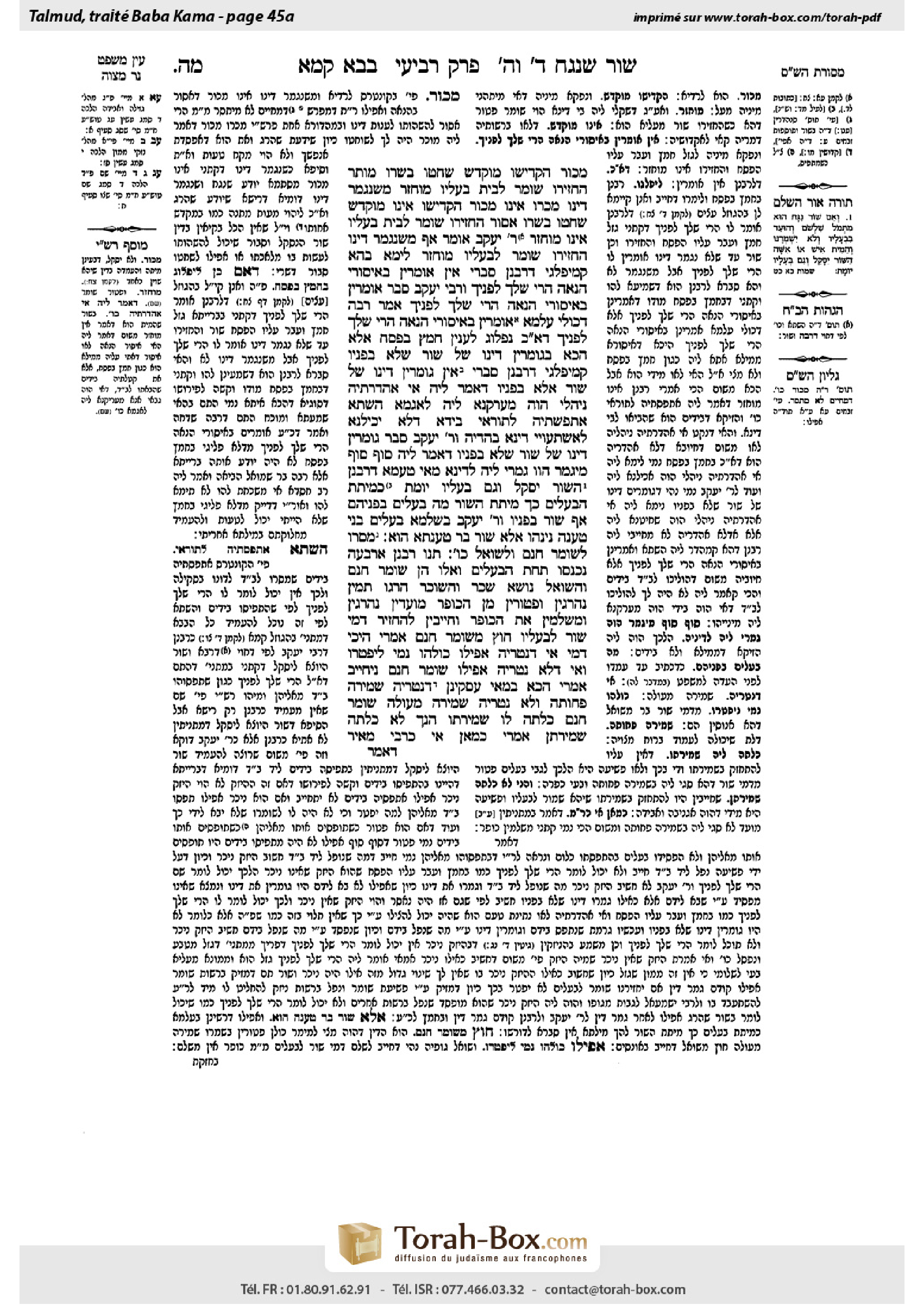
Bava Kamma 45a: Talmud study for Daf Yomi
Study the Talmud for Daf Yomi with scanned pages, Hebrew text, English translations from Sefaria and AI-generated French translations.
Passage selection and English or AI-generated French translation are available where the scan has annotations. Daf Study is independent of Torah-Box and Sefaria.
Browse Bava Kamma · בבא קמא · All tractatesBava Kamma 45a text and translations
This page of Bava Kamma includes the Aramaic text, an English translation and an AI-generated French translation, alongside the scan above.
בבא קמא מ״ה א · Aramaic and Hebrew text
מָכוּר, הִקְדִּישׁוֹ מוּקְדָּשׁ, שְׁחָטוֹ – בְּשָׂרוֹ מוּתָּר, הֶחְזִירוֹ שׁוֹמֵר לְבֵית בְּעָלָיו – מוּחְזָר.
מִשֶּׁנִּגְמַר דִּינוֹ – מְכָרוֹ אֵינוֹ מָכוּר, הִקְדִּישׁוֹ אֵינוֹ מוּקְדָּשׁ, שְׁחָטוֹ – בְּשָׂרוֹ אָסוּר, הֶחְזִירוֹ שׁוֹמֵר לְבֵית בְּעָלָיו – אֵינוֹ מוּחְזָר. רַבִּי יַעֲקֹב אוֹמֵר: אַף מִשֶּׁנִּגְמַר דִּינוֹ – הֶחְזִירוֹ שׁוֹמֵר לִבְעָלָיו, מוּחְזָר.
לֵימָא בְּהָא קָמִיפַּלְגִי – דְּרַבָּנַן סָבְרִי: אֵין אוֹמְרִין בְּאִיסּוּרֵי הֲנָאָה ״הֲרֵי שֶׁלְּךָ לְפָנֶיךָ״, וְרַבִּי יַעֲקֹב סָבַר: אוֹמְרִין בְּאִיסּוּרֵי הֲנָאָה ״הֲרֵי שֶׁלְּךָ לְפָנֶיךָ״?
אָמַר רַבָּה: דְּכוּלֵּי עָלְמָא אוֹמְרִין בְּאִיסּוּרֵי הֲנָאָה ״הֲרֵי שֶׁלְּךָ לְפָנֶיךָ״, דְּאִם כֵּן – נִפְלוֹג לְעִנְיַן חָמֵץ בַּפֶּסַח.
אֶלָּא הָכָא, בְּגוֹמְרִין דִּינוֹ שֶׁל שׁוֹר שֶׁלֹּא בְּפָנָיו קָמִיפַּלְגִי – דְּרַבָּנַן סָבְרִי: אֵין גּוֹמְרִין דִּינוֹ שֶׁל שׁוֹר אֶלָּא בְּפָנָיו; דְּאָמַר לֵיהּ: אִי אַהְדַּרְתֵּיהּ נִיהֲלִי – הֲוָה מַעְרֵקְנָא לֵיהּ לְאַגְמָא, הַשְׁתָּא – אַתְפַּשְׂתֵּיהּ לְתוֹרַאי בִּידָא דְּלָא יָכֵילְנָא לְאִשְׁתַּעוֹיֵי דִּינָא בַּהֲדֵיהּ.
וְרַבִּי יַעֲקֹב סָבַר: גּוֹמְרִין דִּינוֹ שֶׁל שׁוֹר שֶׁלֹּא בְּפָנָיו – דְּאָמַר לֵיהּ: סוֹף סוֹף מִיגְמָר הֲווֹ גָּמְרִי לֵיהּ לְדִינָא.
מַאי טַעְמָא דְּרַבָּנַן? ״הַשּׁוֹר יִסָּקֵל וְגַם בְּעָלָיו יוּמָת״ – כְּמִיתַת הַבְּעָלִים כָּךְ מִיתַת הַשּׁוֹר; מָה בְּעָלִים בִּפְנֵיהֶם, אַף שׁוֹר בְּפָנָיו.
וְרַבִּי יַעֲקֹב – בִּשְׁלָמָא בְּעָלִים, בְּנֵי טַעֲנָה נִינְהוּ; אֶלָּא שׁוֹר, בַּר טַעַנְתָּא הוּא?
מְסָרוֹ לְשׁוֹמֵר חִנָּם וּלְשׁוֹאֵל כּוּ׳. תָּנוּ רַבָּנַן: אַרְבָּעָה נִכְנְסוּ תַּחַת הַבְּעָלִים, וְאֵלּוּ הֵן: שׁוֹמֵר חִנָּם וְהַשּׁוֹאֵל נוֹשֵׂא שָׂכָר וְהַשּׂוֹכֵר. הָרְגוּ תַּמִּין – נֶהֱרָגִין, וּפְטוּרִין מִן הַכּוֹפֶר. מוּעָדִין – נֶהֱרָגִין, וּמְשַׁלְּמִין אֶת הַכּוֹפֶר. וְחַיָּיבִין לְהַחֲזִיר דְּמֵי שׁוֹר לִבְעָלָיו, חוּץ מִשּׁוֹמֵר חִנָּם.
אָמְרִי: הֵיכִי דָמֵי? אִי דְּנַטְרֵיהּ – אֲפִילּוּ כּוּלְּהוּ נָמֵי לִיפַּטְרוּ! וְאִי דְּלָא נַטְרֵיהּ – אֲפִילּוּ שׁוֹמֵר חִנָּם נִיחַיַּיב!
אָמְרִי: הָכָא בְּמַאי עָסְקִינַן – דְּנַטְרֵיהּ שְׁמִירָה פְּחוּתָה, וְלָא נַטְרֵיהּ שְׁמִירָה מְעוּלָּה. שׁוֹמֵר חִנָּם – כָּלְתָה לוֹ שְׁמִירָתוֹ, הָנָךְ – לָא כָּלְתָה שְׁמִירָתָן.
אָמְרִי: כְּמַאן? אִי כְּרַבִּי מֵאִיר,
Bava Kamma 45a · English translation
it is considered legally sold and belongs to the purchaser for all purposes. Similarly, if he consecrated it, it is halakhically consecrated, and all the halakhot of consecrated property apply to it. If he slaughtered it, one is permitted to eat its meat. If a bailee charged with safeguarding it returned it to its owner’s house before the verdict it is considered to be returned, and the owner has no further claim against the bailee.
By contrast, once its verdict has been issued, if the owner sells it, it is not considered sold, since the ox is no longer his. Similarly, if he consecrates it, it is not considered consecrated. If he slaughters it, its meat is forbidden. If a bailee returns it to its owner’s house it is not considered to have been returned, since the ox is considered to have been killed. Rabbi Ya’akov says: Even once its verdict has been issued, if the bailee returns it to its owner it is considered to have been returned.
The Gemara suggests: Let us say that they disagree about this: The Rabbis hold that with regard to items from which it is prohibited to derive benefit one does not say: That which is yours is before you, and no compensation is required. Once the deposited item was rendered forbidden, the bailee cannot return it as is to its owner, claiming that since it has not been physically damaged he has fulfilled his obligation to return it and therefore the owner has no further claims against him. And Rabbi Ya’akov holds that one does say, with regard to items from which it is prohibited to derive benefit: That which is yours is before you.
Rabba said: Clearly, according to everyone, one says with regard to items from which it is prohibited to derive benefit: That which is yours is before you; as, if this was the subject of disagreement, let them dispute this matter with regard to leavened bread on Passover, which is a more common case of an item from which it is prohibited to derive benefit.
Rather, here they disagree with regard to the matter of issuing the verdict for an ox in its absence. The Rabbis hold that the verdict for an ox can be issued only in its presence. Therefore, the bailee is not exempt by returning it after the verdict, as the owner could say to him: If you had returned the ox to me before the verdict I would have smuggled it to the marsh, and the court would not have been able to sentence it to stoning. Now you have let my ox be seized by the court, with whom I cannot engage in litigation.
And Rabbi Ya’akov holds that the verdict for an ox can be issued in its absence. Therefore, the bailee is exempt, as he can say to the owner in response to his claim: Ultimately, they would have issued the verdict anyway, so I did not cause your ox to be stoned by not returning it to you before the verdict.
According to this explanation, what is the reason for the opinion of the Rabbis that the ox’s verdict can be issued only in its presence? The verse states: “The ox shall be stoned, and its owner also shall be put to death” (Exodus 21:29), indicating that as the death of the owner, i.e., a person, for killing another person, so is the death of the ox for killing a person. Just as the owner is sentenced to death only in his presence, so too, an ox is sentenced to death only in its presence.
And Rabbi Ya’akov holds that the owner and the ox cannot be compared. Granted, the owner must be present when the verdict is issued, as people are able to present claims in their defense; but as for an ox, is it capable of presenting claims? Consequently, it makes no difference whether or not the verdict is issued in its presence.
§ The mishna teaches: If the ox’s owner conveyed it to an unpaid bailee, or to a borrower, or to a paid bailee, or to a renter, they enter into the responsibilities and liabilities in place of the owner. The Sages taught: There are four people who enter into the responsibilities and liabilities in place of the owner, and they are: An unpaid bailee, and a borrower, a paid bailee, and a renter. If the oxen killed people while in the possession of one of these people, if the oxen were innocuous at the time they killed, they are killed and the bailees are exempt from paying ransom. If they were forewarned, they are killed and the bailees pay ransom. And regardless if they were innocuous or forewarned, the bailees are liable to return the value of the ox to its owner, with the exception of an unpaid bailee.
The Sages said: What are the circumstances in which the bailees are liable, with the exception of an unpaid bailee? If he safeguarded the ox appropriately but the ox killed a person anyway, all of the other bailees should also be exempt from reimbursing the owner for the ox and not just an unpaid bailee, as they did everything that was required of them. And if he did not safeguard it properly, even the unpaid bailee should be liable, as he was also required to safeguard it.
The Sages said in response: Here we are dealing with a case where the bailee provided reduced safeguarding and did not provide superior safeguarding. In this case the unpaid bailee has fulfilled his safeguarding duties; since he does not receive anything in exchange this level of safeguarding is sufficient. Those other bailees, who have a greater responsibility, have not fulfilled their required level of safeguarding.
The Sages said, in clarification of the baraita: In accordance with whose opinion is this baraita? If it is in accordance with the opinion of Rabbi Meir,
Bava Kamma 45a · Traduction française (IA)
Il est considéré comme vendu légalement et appartient au acheteur pour tous les usages. De même, si l'on a consacré l'animal, il est consacré halakhiquement, et toutes les halakhot relatives aux biens consacrés s'appliquent à lui. Si l'on a sacrifié l'animal, on est autorisé à manger sa viande. Si un dépositaire chargé de le garder le rend à la maison de son propriétaire avant que le verdict ne soit rendu, il est considéré comme rendu, et le propriétaire n'a plus de revendications contre le dépositaire.
Par contraste, une fois que le verdict a été rendu, si le propriétaire le vend, il n'est pas considéré comme vendu, car l'animal n'est plus à lui. De même, si l'on consacre l'animal, il n'est pas considéré comme consacré. Si l'on sacrifie l'animal, sa viande est interdite. Si un dépositaire le rend à la maison de son propriétaire, il n'est pas considéré comme rendu, car l'animal est considéré comme mort. Rabbi Ya'akov dit : Même une fois que le verdict a été rendu, si le dépositaire le rend à son propriétaire, il est considéré comme rendu.
La Guemara suggère : Disons qu'ils sont d'accord sur cela : Les Rabbins affirment que concernant les objets dont il est interdit d'extraire un bénéfice, on ne dit pas : Ce qui est à toi est devant toi, et aucune compensation n'est requise. Une fois que l'objet déposé est devenu interdit, le dépositaire ne peut pas le rendre tel quel à son propriétaire, affirmant qu'il a rempli son obligation en le rendant tel quel et que le propriétaire n'a plus de revendications contre lui. Et Rabbi Ya'akov affirme que l'on dit, concernant les objets dont il est interdit d'extraire un bénéfice : Ce qui est à toi est devant toi.
Rabba dit : Évidemment, selon tout le monde, l'on dit concernant les objets dont il est interdit d'extraire un bénéfice : Ce qui est à toi est devant toi ; car, si cela était sujet à débat, qu'ils disputent ce point concernant la chamade de Pessah, qui est un cas plus courant d'objet dont il est interdit d'extraire un bénéfice.
Plutôt, ici ils divergent concernant la question de rendre verdict sur un bœuf en son absence. Les Rabbins affirment que le verdict sur un bœuf peut être rendu uniquement en sa présence. Par conséquent, le dépositaire n'est pas exempt en rendant le bœuf après le verdict, car le propriétaire pourrait lui dire : Si tu avais rendu le bœuf à moi avant le verdict, je l'aurais caché dans la marais, et le tribunal n'aurait pas pu le condamner à la pierre. Maintenant tu as laissé mon bœuf être saisi par le tribunal, avec qui je ne peux pas engager une procédure.
Et Rabbi Ya'akov affirme que le verdict sur un bœuf peut être rendu en son absence. Par conséquent, le dépositaire est exempt, car il peut répondre au propriétaire en disant : Finalement, ils auraient tout de même rendu le verdict, donc je n'ai pas causé que ton bœuf soit lapidé en ne le rendant pas à toi avant le verdict.
Selon cette explication, quelle est la raison de l'opinion des Rabbins que le verdict sur le bœuf peut être rendu uniquement en sa présence ? La Parashah dit : « Le bœuf sera lapidé, et son propriétaire aussi sera mis à mort » (Exode 21:29), indiquant que comme la mort du propriétaire, c'est-à-dire une personne, pour avoir tué une autre personne, ainsi est la mort du bœuf pour avoir tué une personne. Aussi, le propriétaire est condamné à la mort uniquement en sa présence, ainsi l'animal est condamné à la mort uniquement en sa présence.
Et Rabbi Ya’akov affirme que le propriétaire et le bœuf ne peuvent pas être comparés. Bien sûr, le propriétaire doit être présent lors du rendu du verdict, car les gens peuvent présenter des réclamations en leur faveur ; mais concernant un bœuf, est-ce qu'il est capable de présenter des réclamations ? Par conséquent, il n'y a pas de différence si le verdict est rendu en sa présence ou non.
§ La mitsna enseigne : Si l'propriétaire a transmis son bœuf à un dépositaire non rémunéré, ou à un prêteur, ou à un dépositaire rémunéré, ou à un locataire, ils entrent dans les responsabilités et les obligations à la place du propriétaire. Les Sages enseignent : Il y a quatre personnes qui entrent dans les responsabilités et les obligations à la place du propriétaire, et ce sont : Le dépositaire non rémunéré, le prêteur, le dépositaire rémunéré et le locataire. Si les bœufs ont tué des personnes pendant qu'ils étaient en possession de l'une de ces personnes, si les bœufs étaient inoffensifs lorsqu'ils ont tué, ils sont tués et les dépositaires sont exemptés de payer la rançon. Si ils avaient été avertis, ils sont tués et les dépositaires paient la rançon. Et qu'ils soient inoffensifs ou avertis, les dépositaires sont tenus de rembourser la valeur du bœuf à son propriétaire, à l'exception du dépositaire non rémunéré.
Les Sages dirent : Quelles sont les circonstances où les dépositaires sont tenus responsables, à l'exception du dépositaire non rémunéré ? Si l'on a gardé le bœuf de manière appropriée mais le bœuf a tout de même tué une personne, tous les autres dépositaires devraient également être exemptés de rembourser le propriétaire pour le bœuf et pas seulement le dépositaire non rémunéré, car ils ont accompli tout ce qui était requis. Et si l'on n'a pas gardé le bœuf de manière appropriée, même le dépositaire non rémunéré devrait être responsable, car il était également tenu de le garder.
Les Sages dirent en réponse : Ici nous sommes en présence d'un cas où le dépositaire a fourni une garde réduite et n'a pas fourni une garde supérieure. Dans ce cas, le dépositaire non rémunéré a accompli ses obligations de garde ; puisqu'il ne reçoit rien en échange, ce niveau de garde est suffisant. Ces autres dépositaires, qui ont une responsabilité plus grande, n'ont pas accompli leur niveau requis de garde.
Les Sages dirent, en clarifiant la baraïta : Selon l'opinion de qui est-ce que cette baraïta ? Si c'est selon l'opinion de Rabbi Meïr,
Traduction française générée par IA à partir de l’édition anglaise de Sefaria. Vérifie toujours un passage avec le texte source.
Text from Sefaria: William Davidson Edition - Vocalized Aramaic (CC BY NC); William Davidson Edition - English (CC BY NC).