Bava Kamma 54a: Talmud study for Daf Yomi
Study the Talmud for Daf Yomi with scanned pages, Hebrew text, English translations from Sefaria and AI-generated French translations.
Passage selection and English or AI-generated French translation are available where the scan has annotations. Daf Study is independent of Torah-Box and Sefaria.
Browse Bava Kamma · בבא קמא · All tractatesBava Kamma 54a text and translations
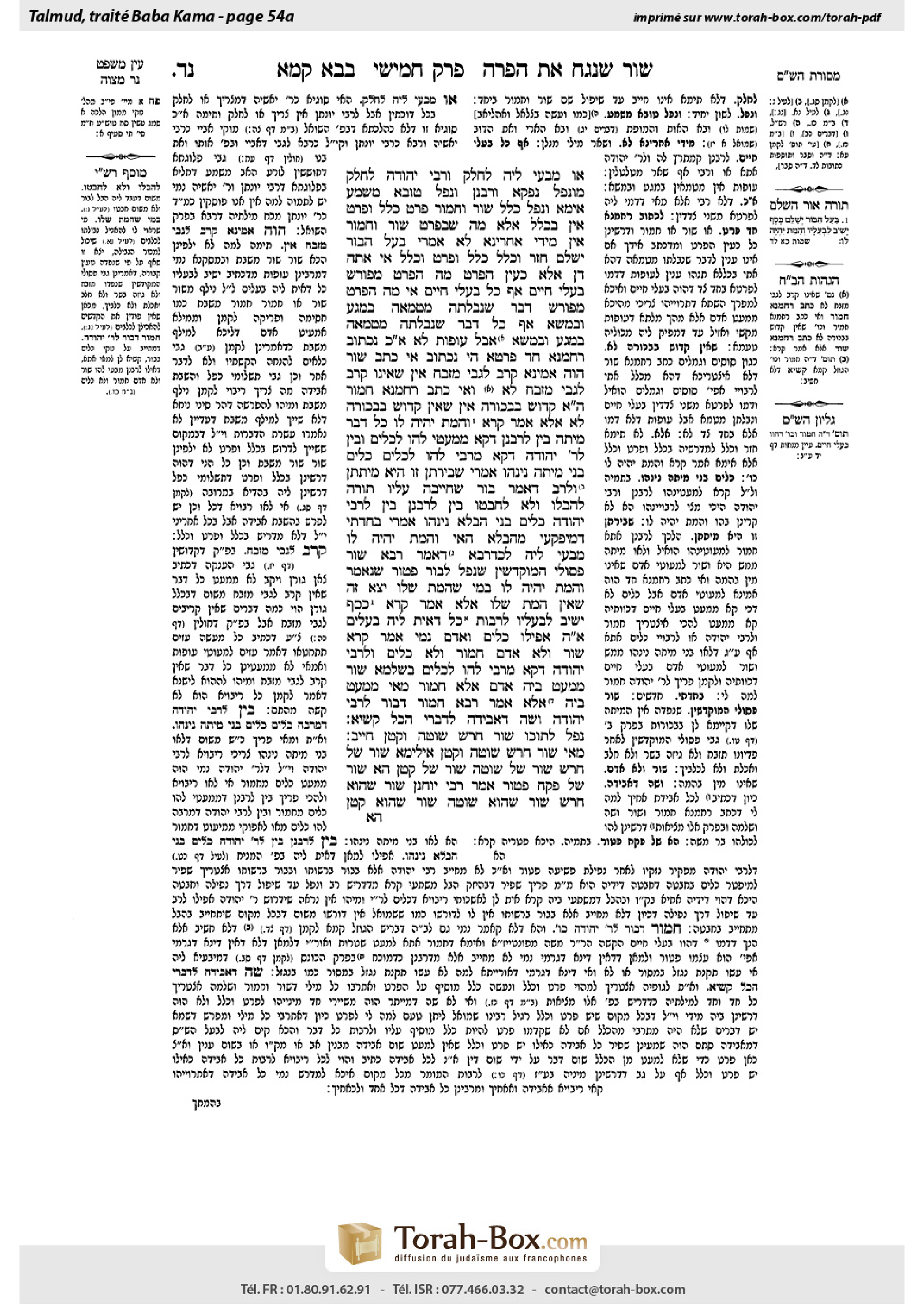
This page of Bava Kamma includes the Aramaic text, an English translation and an AI-generated French translation, alongside the scan above.
בבא קמא נ״ד א · Aramaic and Hebrew text
״אוֹ״, מִיבְּעֵי לֵיהּ לְחַלֵּק. וְרַבִּי יְהוּדָה – לְחַלֵּק מִ״וְּנָפַל״ נָפְקָא. וְרַבָּנַן – ״וְנָפַל״, טוּבָא מַשְׁמַע.
אֵימָא ״וְנָפַל״ – כָּלַל, ״שׁוֹר וַחֲמוֹר״ – פָּרַט; כְּלָל וּפְרָט – אֵין בַּכְּלָל אֶלָּא מַה שֶּׁבַּפְּרָט; שׁוֹר וַחֲמוֹר – אִין, מִידֵּי אַחֲרִינָא – לָא!
אָמְרִי: ״בַּעַל הַבּוֹר יְשַׁלֵּם״ – חָזַר וְכָלַל. כְּלָל וּפְרָט וּכְלָל – אִי אַתָּה דָן אֶלָּא כְעֵין הַפְּרָט; מָה הַפְּרָט מְפוֹרָשׁ – בַּעֲלֵי חַיִּים, אַף כֹּל בַּעֲלֵי חַיִּים.
אִי, מָה הַפְּרָט מְפוֹרָש, דָּבָר שֶׁנִּבְלָתוֹ מְטַמְּאָה בְּמַגָּע וּבְמַשָּׂא – אַף כׇּל דָּבָר שֶׁנִּבְלָתוֹ מְטַמְּאָה בְּמַגָּע וּבְמַשָּׂא, אֲבָל עוֹפוֹת לֹא!
אִם כֵּן, נִכְתּוֹב רַחֲמָנָא חַד פְּרָטָא! הֵי נִכְתּוֹב? אִי כְּתַב ״שׁוֹר״, הֲוָה אָמֵינָא: קָרֵב לְגַבֵּי מִזְבֵּחַ – אִין, שֶׁאֵינוֹ קָרֵב לְגַבֵּי מִזְבֵּחַ – לָא. וְאִי כְּתַב רַחֲמָנָא ״חֲמוֹר״, הֲוָה אָמֵינָא: קָדוֹשׁ בִּבְכוֹרָה – אִין, שֶׁאֵין קָדוֹשׁ בִּבְכוֹרָה – לָא!
אֶלָּא אָמַר קְרָא: ״וְהַמֵּת יִהְיֶה לוֹ״ – כֹּל דְּבַר מִיתָה.
בֵּין לְרַבָּנַן דְּקָא מְמַעֲטִי לְהוּ לְכֵלִים, וּבֵין לְרַבִּי יְהוּדָה דְּקָא מְרַבֵּי לְהוּ לְכֵלִים – כֵּלִים בְּנֵי מִיתָה נִינְהוּ?! אָמְרִי: שְׁבִירָתָן זוֹ הִיא מִיתָתָן.
וּלְרַב דְּאָמַר: בּוֹר שֶׁחִיְּיבָה עָלָיו תּוֹרָה – לְהֶבְלוֹ וְלֹא לַחֲבָטוֹ; בֵּין לְרַבָּנַן בֵּין לְרַבִּי יְהוּדָה – כֵּלִים בְּנֵי הַבְלָא נִינְהוּ?! אָמְרִי: בְּחַדְתֵי, דְּמִיפַּקְעִי מֵהַבְלָא.
הַאי ״וְהַמֵּת יִהְיֶה לוֹ״ מִבְּעֵי לֵיהּ לְכִדְרָבָא, דְּאָמַר רָבָא: שׁוֹר פְּסוּלֵי הַמּוּקְדָּשִׁין שֶׁנָּפַל לְבוֹר – פָּטוּר, שֶׁנֶּאֱמַר: ״וְהַמֵּת יִהְיֶה לוֹ״ – בְּמִי שֶׁהַמֵּת שֶׁלּוֹ, יָצָא זֶה שֶׁאֵין הַמֵּת שֶׁלּוֹ.
אֶלָּא אָמַר קְרָא: ״כֶּסֶף יָשִׁיב לִבְעָלָיו״ – לְרַבּוֹת כֹּל דְּאִית לֵיהּ בְּעָלִים. אִי הָכִי, אֲפִילּוּ כֵּלִים וְאָדָם נָמֵי!
אָמַר קְרָא: ״שׁוֹר״ – וְלֹא אָדָם, ״חֲמוֹר״ – וְלֹא כֵּלִים. וּלְרַבִּי יְהוּדָה דְּקָא מְרַבֵּי לְהוּ לְכֵלִים, בִּשְׁלָמָא ״שׁוֹר״ – מְמַעֵט בֵּיהּ אָדָם, אֶלָּא ״חֲמוֹר״ מַאי מְמַעֵט בֵּיהּ?
אֶלָּא אָמַר רָבָא: ״חֲמוֹר״ דְּבוֹר לְרַבִּי יְהוּדָה, וְ״שֶׂה״ דַּאֲבֵידָה לְדִבְרֵי הַכֹּל – קַשְׁיָא.
נָפַל לְתוֹכוֹ שׁוֹר חֵרֵשׁ שׁוֹטֶה וְקָטָן – חַיָּיב. מַאי ״שׁוֹר חֵרֵשׁ שׁוֹטֶה וְקָטָן״? אִילֵימָא שׁוֹר שֶׁל חֵרֵשׁ, שׁוֹר שֶׁל שׁוֹטֶה, שׁוֹר שֶׁל קָטָן – הָא שׁוֹר שֶׁל פִּקֵּחַ פָּטוּר?!
אָמַר רַבִּי יוֹחָנָן: שׁוֹר שֶׁהוּא חֵרֵשׁ, שׁוֹר שֶׁהוּא שׁוֹטֶה, שׁוֹר שֶׁהוּא קָטָן.
Bava Kamma 54a · English translation
The word “or” is necessary to separate the cases of the ox and donkey. This indicates that if either falls in individually, the owner of the pit is liable. And how does Rabbi Yehuda derive the halakha to separate the cases in the verse? He derives it from the use of the singular form of the verb: “And an ox or donkey fall [venafal],” indicating that he is liable if even one animal falls. And the Rabbis maintain that the term and fall can also indicate many animals, as the use of the singular form of a verb does not prove that the subject is necessarily singular.
The Gemara now challenges both opinions: Say that the term “and fall” is a generalization, whereas the phrase “an ox or a donkey” is a detail. According to the principles of halakhic exegesis, when the Torah presents a generalization and a detail, the generalization includes only what is contained in the detail. Therefore, an ox and a donkey are indeed included, but anything else is not included.
The Sages said in response: The following verse: “The owner of the pit shall pay” (Exodus 21:34), means that it then generalized again. The verses are structured according to the principle of halakhic exegesis of: A generalization, and a detail, and a generalization. According to this principle, you may deduce that the verses are referring only to items that are similar to the detail. In this case, just as the explicit detail is referring to animals, so too, all items included in the generalization must be animals.
The Gemara now challenges this answer: If so, just as the explicit detail, i.e., the ox and donkey, is referring to items whose carcass renders a person ritually impure by contact or by carrying, so too, all items, i.e., all animals, whose carcass renders a person ritually impure through contact or by carrying, should be included in the halakhot of damage classified as Pit. But birds, whose carcasses do not render a person impure through contact or by carrying, would not be included.
The Gemara answers: If so, let the Merciful One write only one detail, from which the exclusion of birds could be derived. The Gemara asks: Which detail should the Torah write? If it writes only an ox, I would say that an item that is sacrificed on the altar, such as an ox, indeed renders the owner of the pit liable, whereas an item that is not sacrificed on the altar does not render him liable. And if the Merciful One writes only a donkey, I would say: Those animals whose firstborn is sanctified, such as a donkey, as described in the Torah (Exodus 13:13), do indeed render their owners liable, but animals whose firstborn is not sanctified do not render them liable. Therefore, the Torah states both an ox and a donkey.
The original difficulty therefore resurfaces: Why is the verse not expounded as a generalization, a detail, and a generalization, thereby excluding birds? Rather, the previous method of deriving liability for a pit must be rejected, and instead it should be derived as follows: The verse states: “And the carcass shall be for him” (Exodus 21:34), from which it may be inferred that anything subject to death is included.
The Gemara asks: If this is the basis for liability for a pit, then both according to the Rabbis, who exclude vessels from liability based on another verse, and according to Rabbi Yehuda, who has amplified the halakha to include vessels, one could ask: Are vessels subject to death? Clearly, vessels cannot be subject to death. Why, then, is a separate source necessary to derive their halakhic status? The Sages said in reply: Vessels may also be considered subject to death in the sense that their shattering is tantamount to their death.
The Gemara continues to challenge this explanation: But according to Rav, who says: With regard to Pit, for which the Torah deems a person liable, it is only for damage caused by its lethal fumes, but not for damage caused by the impact of the fall, the following question may be raised both according to the Rabbis and according to Rabbi Yehuda: Are vessels capable of being broken by the lethal fumes, such that a verse is necessary to exclude them? The Sages said in reply: There is such a case concerning new vessels, which crack from the fumes.
The Gemara asks further: But isn’t this verse: “And the carcass shall be for him,” necessary for that which Rava ruled, as Rava says: With regard to a disqualified consecrated ox that fell into a pit, the owner of the pit is exempt, as it is stated: “And the carcass shall be for him.” It is referring to a person to whom the carcass belongs, thereby excluding this person, to whom the carcass does not belong. Once a halakha has already been derived from this verse, it cannot be used as the basis for deriving a second halakha.
Rather, the halakhot of liability for Pit must be derived from another source. The verse states concerning Pit: “He shall recompense money to its owners” (Exodus 21:34), thereby including any item that has an owner within the scope of liability. The Gemara challenges this answer: If so, then even vessels and people should be included as well, which presents a difficulty for all opinions.
The Gemara answers: This is why the verse states: “An ox,” but not a person; “a donkey,” but not vessels. The Gemara asks: And according to Rabbi Yehuda, who amplifies the scope of liability to include vessels, granted that the term “an ox” is necessary, as he excludes people based on it, for which he is not liable. But with regard to the term “a donkey,” what does he exclude based on it?
Rather, Rava said: The term “donkey” stated with regard to Pit, according to the opinion of Rabbi Yehuda, and the term “sheep” (Deuteronomy 22:1), stated with regard to a lost item, according to the opinion of everyone (see Bava Metzia 27a) are difficult. There is no explanation for why they are stated.
§ The mishna teaches: If a ḥeresh ox or a shoteh ox or a katan ox fell into the pit, the owner of the pit is liable. The Gemara clarifies: What is meant by the phrase: A ḥeresh ox or a shoteh ox or a katan ox? If we say that it means: An ox belonging to a deaf-mute [ḥeresh], an ox belonging to an imbecile [shoteh], or an ox belonging to a minor [katan], then it can be inferred that if it was an ox belonging to a halakhically competent adult, the owner of the pit would be exempt. What would be the reason for this exemption?
Rabbi Yoḥanan says: Instead, it should be interpreted as: An ox that is impaired by being deaf, or an ox that is an imbecile, or an ox that is very young.
Bava Kamma 54a · Traduction française (IA)
Le mot « ou » est nécessaire pour distinguer les cas de l'âne et du bœuf. Cela indique que si l'un d'eux tombe seul, l'propriétaire du trou est responsable. Et comment Rabbi Yéhuda dérive-t-il la halakha pour distinguer les cas à partir du verset ? Il le dérive de l'emploi de la forme singulière du verbe : « Et un bœuf ou un âne tombe [venafal] », indiquant qu'il est responsable si même un seul animal tombe. Et les Sages maintiennent que le terme « tombe » peut aussi indiquer plusieurs animaux, car l'emploi de la forme singulière d'un verbe ne prouve pas que le sujet est nécessairement singulier.
La Guemara conteste maintenant les deux opinions : Disons que le terme « tombe » est une généralisation, tandis que la phrase « un bœuf ou un âne » est un détail. Selon les principes d'exégèse halakhique, lorsque la Torah présente une généralisation et un détail, la généralisation inclut uniquement ce qui est contenu dans le détail. Ainsi, un bœuf et un âne sont effectivement inclus, mais tout autre chose ne l'est pas.
Les Sages répondent en disant : Le verset suivant : « L'propriétaire du trou paiera » (Exode 21:34), signifie qu'il généralise à nouveau. Les versets sont structurés selon le principe d'exégèse halakhique suivant : une généralisation, un détail, et une généralisation. Selon ce principe, on peut déduire que les versets se réfèrent uniquement aux choses similaires au détail. Dans ce cas, tout comme le détail explicite se réfère aux animaux, ainsi toutes les choses incluses dans la généralisation doivent être des animaux.
La Guemara conteste maintenant cette réponse : Si c'est ainsi, tout comme le détail explicite, c'est-à-dire le bœuf et l'âne, se réfère aux choses dont la carcasse rend un homme impur par contact ou par transport, ainsi toutes les choses, c'est-à-dire tous les animaux, dont la carcasse rend un homme impur par contact ou par transport, doivent être incluses dans les halakhot du dommage classé comme trou. Les oiseaux, dont la carcasse ne rend pas un homme impur par contact ou par transport, ne devraient pas être inclus.
La Guemara répond : Si c'est ainsi, que le Très Miséricordieux écrive seulement un détail, duquel on pourrait déduire l'exclusion des oiseaux. La Guemara demande : Quel détail devrait écrire la Torah ? Si elle écrit seulement un bœuf, je dirais que l'objet qui est sacrifié sur l'autel, comme un bœuf, rend effectivement l'propriétaire du trou responsable, tandis qu'un objet qui n'est pas sacrifié sur l'autel ne le rend pas responsable. Et si le Très Miséricordieux écrit seulement un âne, je dirais : Ces animaux dont le premier-né est sanctifié, comme un âne, tels que décrits dans la Torah (Exode 13:13), rendent effectivement leurs propriétaires responsables, mais les animaux dont le premier-né n'est pas sanctifié ne les rendent pas responsables. Ainsi, la Torah mentionne à la fois un bœuf et un âne.
Le problème original ressurgit donc : Pourquoi le verset n'est-il pas interprété comme une généralisation, un détail, et une généralisation, excluant ainsi les oiseaux ? Plutôt, la méthode précédente de déduire la responsabilité pour un trou doit être rejetée, et il devrait être déduit comme suit : Le verset dit : « Et la carcasse sera pour lui » (Exode 21:34), d'où on peut déduire que toute chose soumise à la mort est incluse.
La Guemara demande : Si c'est la base de la responsabilité pour un trou, alors à la fois selon les Sages, qui excluent les ustensiles de la responsabilité selon un autre verset, et selon Rabbi Yéhuda, qui a étendu la halakha pour inclure les ustensiles, on pourrait poser la question : Les ustensiles sont-ils soumis à la mort ? Évidemment, les ustensiles ne peuvent pas être soumis à la mort. Pourquoi alors une source séparée est-elle nécessaire pour déduire leur statut halakhique ? Les Sages répondent en disant : Les ustensiles peuvent aussi être considérés comme soumis à la mort au sens où leur éclatement est équivalent à leur mort.
La Guemara continue à contester cette explication : Mais selon Rav, qui dit : Concernant le trou, pour lequel la Torah considère un homme responsable, c'est seulement pour le dommage causé par ses fumées mortelles, mais pas pour le dommage causé par l'impact de la chute, la question suivante pourrait être posée à la fois selon les Sages et selon Rabbi Yéhuda : Les ustensiles sont-ils capables d'être brisés par les fumées mortelles, de sorte qu'un verset est nécessaire pour les exclure ? Les Sages répondent en disant : Il y a un tel cas concernant les ustensiles nouveaux, qui se fissurent des fumées.
La Guemara demande de plus : N'est-ce pas ce verset : « Et la carcasse sera pour lui », nécessaire pour ce que Rava a décidé, car Rava dit : Concernant un bœuf consacré mais disqualifié qui est tombé dans un trou, l'propriétaire du trou est exempt, car il est dit : « Et la carcasse sera pour lui ». Il se réfère à une personne à qui la carcasse appartient, excluant ainsi cette personne, à qui la carcasse n'appartient pas. Une fois qu'une halakha a déjà été déduite à partir de ce verset, il ne peut plus être utilisé comme base pour déduire une autre halakha.
Plutôt, les halakhot de responsabilité pour un trou doivent être déduites d'une autre source. Le verset dit concernant un trou : « Il paiera de l'argent à ses propriétaires » (Exode 21:34), incluant ainsi tout objet ayant un propriétaire dans le champ de la responsabilité. La Guemara conteste cette réponse : Si c'est ainsi, alors même les ustensiles et les personnes devraient être inclus, ce qui présente un problème pour toutes les opinions.
La Guemara répond : C'est pourquoi le verset dit : « Un bœuf », mais pas une personne ; « un âne », mais pas les ustensiles. La Guemara demande : Et selon Rabbi Yéhuda, qui étend la portée de la responsabilité pour inclure les ustensiles, admettons que le terme « un bœuf » est nécessaire, car il exclut les personnes sur la base de cela, pour lesquelles il n'est pas responsable. Mais concernant le terme « un âne », de quoi exclut-il-t-il ainsi ?
Plutôt, Rava a dit : Le terme « âne » mentionné concernant un trou, selon l'opinion de Rabbi Yéhuda, et le terme « mouton » (Deutéronome 22:1), mentionné concernant un objet perdu, selon l'opinion de tous (voir Bava Métsia 27a) sont difficiles. Il n'y a pas d'explication pour pourquoi ils sont mentionnés.
§ La Michna enseigne : Si un taureau sourd-muet, ou un taureau fou, ou un taureau mineur tombe dans un puits, l'propriétaire du puits est responsable. La Guemara précise : De quoi la phrase : un taureau sourd-muet, ou un taureau fou, ou un taureau mineur ? Si nous disons qu'elle signifie : un taureau appartenant à un sourd-muet, un taureau appartenant à un fou, ou un taureau appartenant à un mineur, alors on peut en déduire que si c'était un taureau appartenant à un adulte halakhiquement compétent, l'propriétaire du puits serait exempt. De quelle raison cette exemption serait-elle ?
Rabbi Yoḥanan dit : Au contraire, il faut l'interpréter ainsi : un taureau qui est déficient par la surdité, ou un taureau qui est fou, ou un taureau très jeune.
Traduction française générée par IA à partir de l’édition anglaise de Sefaria. Vérifie toujours un passage avec le texte source.
Text from Sefaria: William Davidson Edition - Vocalized Aramaic (CC BY NC); William Davidson Edition - English (CC BY NC).