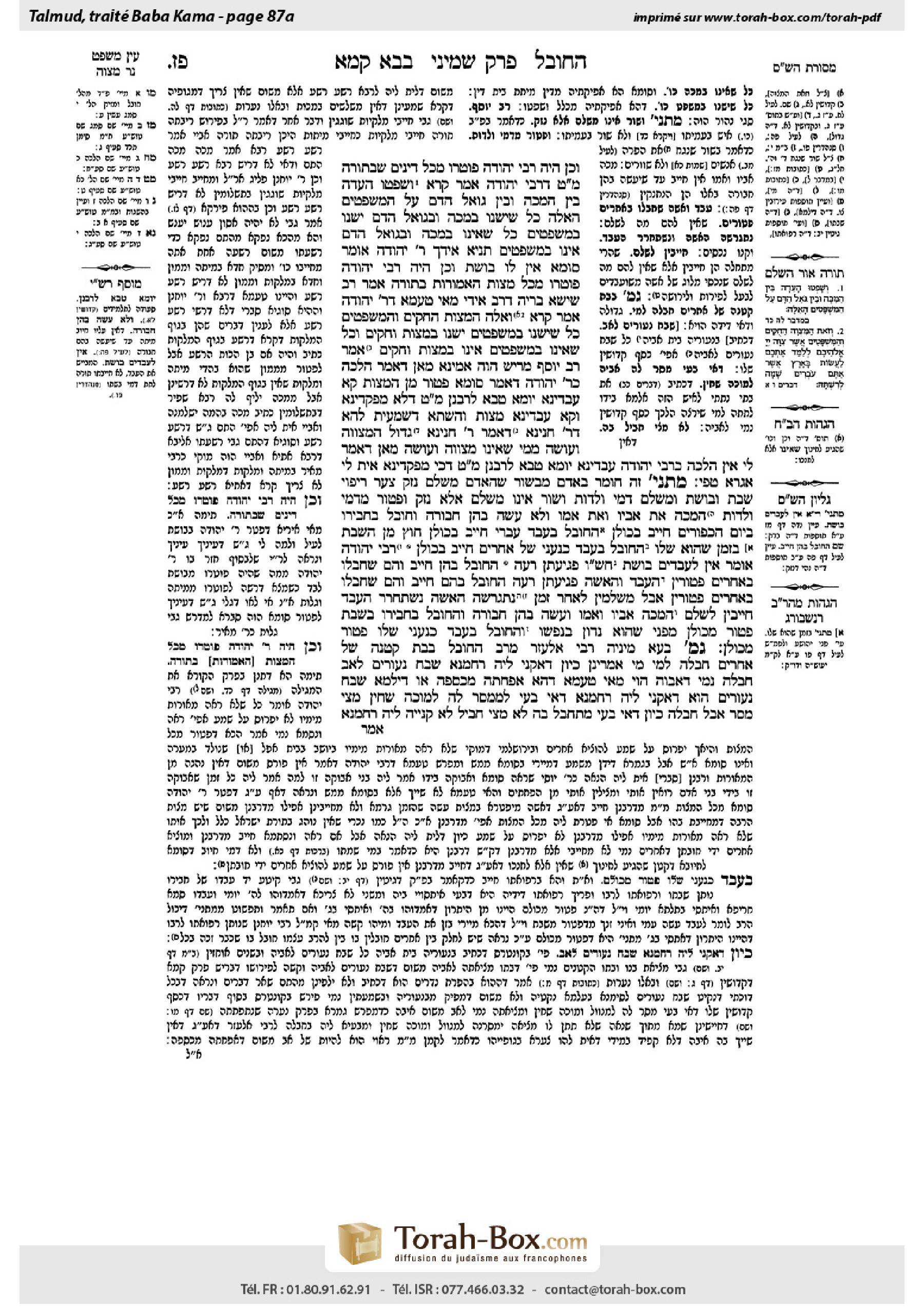
Bava Kamma 87a: Talmud study for Daf Yomi
Study the Talmud for Daf Yomi with scanned pages, Hebrew text, English translations from Sefaria and AI-generated French translations.
Passage selection and English or AI-generated French translation are available where the scan has annotations. Daf Study is independent of Torah-Box and Sefaria.
Browse Bava Kamma · בבא קמא · All tractatesBava Kamma 87a text and translations
This page of Bava Kamma includes the Aramaic text, an English translation and an AI-generated French translation, alongside the scan above.
בבא קמא פ״ז א · Aramaic and Hebrew text
וְכֵן הָיָה רַבִּי יְהוּדָה פּוֹטְרוֹ מִכׇּל דִּינִים שֶׁבַּתּוֹרָה. מַאי טַעְמָא דְּרַבִּי יְהוּדָה? אָמַר קְרָא: ״וְשָׁפְטוּ הָעֵדָה בֵּין הַמַּכֶּה וּבֵין גֹּאֵל הַדָּם עַל הַמִּשְׁפָּטִים הָאֵלֶּה״ – כֹּל שֶׁיֶּשְׁנוֹ בְּמַכֶּה וּבְגוֹאֵל הַדָּם, יֶשְׁנוֹ בְּמִשְׁפָּטִים; כֹּל שֶׁאֵינוֹ בְּמַכֶּה וּבַגּוֹאֵל הַדָּם, אֵינוֹ בְּמִשְׁפָּטִים.
תַּנְיָא אִידַּךְ, רַבִּי יְהוּדָה אוֹמֵר: סוֹמֵא אֵין לוֹ בּוֹשֶׁת. וְכֵן הָיָה רַבִּי יְהוּדָה פּוֹטְרוֹ מִכׇּל מִצְוֹת הָאֲמוּרוֹת בַּתּוֹרָה. אָמַר רַב שִׁישָׁא בְּרֵיהּ דְּרַב אִידִי: מַאי טַעְמָא דְּרַבִּי יְהוּדָה? אָמַר קְרָא: ״וְאֵלֶּה הַמִּצְוֹת הַחֻקִּים וְהַמִּשְׁפָּטִים״ – כֹּל שֶׁיֶּשְׁנוֹ בְּמִשְׁפָּטִים, יֶשְׁנוֹ בְּמִצְוֹת וְחֻקִּים; וְכֹל שֶׁאֵינוֹ בְּמִשְׁפָּטִים, אֵינוֹ בְּמִצְוֹת וְחֻקִּים.
אָמַר רַב יוֹסֵף, מֵרֵישׁ הֲוָה אָמֵינָא: מַאן דְּאָמַר הֲלָכָה כְּרַבִּי יְהוּדָה – דְּאָמַר: סוֹמֵא פָּטוּר מִן הַמִּצְוֹת, קָא עָבֵדְינָא יוֹמָא טָבָא לְרַבָּנַן, מַאי טַעְמָא? דְּלָא מִפַּקַּדְנָא, וְקָא עָבֵדְינָא מִצְוֹת.
וְהַשְׁתָּא דִּשְׁמַעִית לְהָא דְּרַבִּי חֲנִינָא, דְּאָמַר רַבִּי חֲנִינָא: גָּדוֹל הַמְצֻוֶּוה וְעוֹשֶׂה – מִמִּי שֶׁאֵינוֹ מְצֻוֶּוה וְעוֹשֶׂה; מַאן דְּאָמַר לִי: אֵין הֲלָכָה כְּרַבִּי יְהוּדָה, עָבֵידְנָא יוֹמָא טָבָא לְרַבָּנַן. מַאי טַעְמָא? דְּכִי מִפַּקַּדְינָא – אִית לִי אַגְרָא טְפֵי.
מַתְנִי׳ זֶה חוֹמֶר בָּאָדָם מִבַּשּׁוֹר – שֶׁהָאָדָם מְשַׁלֵּם נֶזֶק, צַעַר, רִיפּוּי, שֶׁבֶת וּבוֹשֶׁת, וּמְשַׁלֵּם דְּמֵי וְלָדוֹת; וְשׁוֹר אֵינוֹ מְשַׁלֵּם אֶלָּא נֶזֶק, וּפָטוּר מִדְּמֵי וְלָדוֹת.
הַמַּכֶּה אֶת אָבִיו וְאֶת אִמּוֹ וְלֹא עָשָׂה בָּהֶן חַבּוּרָה, וְחוֹבֵל בַּחֲבֵירוֹ בְּיוֹם הַכִּפּוּרִים – חַיָּיב בְּכוּלָּן.
הַחוֹבֵל בְּעֶבֶד עִבְרִי – חַיָּיב בְּכוּלָּן, חוּץ מִן הַשֶּׁבֶת בִּזְמַן שֶׁהוּא שֶׁלּוֹ. הַחוֹבֵל בְּעֶבֶד כְּנַעֲנִי שֶׁל אֲחֵרִים – חַיָּיב בְּכוּלָּן. רַבִּי יְהוּדָה אוֹמֵר: אֵין לַעֲבָדִים בּוֹשֶׁת.
חֵרֵשׁ, שׁוֹטֶה וְקָטָן פְּגִיעָתָן רָעָה, הַחוֹבֵל בָּהֶן – חַיָּיב, וְהֵם שֶׁחָבְלוּ בַּאֲחֵרִים – פְּטוּרִין.
הָעֶבֶד וְהָאִשָּׁה פְּגִיעָתָן רָעָה, הַחוֹבֵל בָּהֶם – חַיָּיב, וְהֵם שֶׁחָבְלוּ בַּאֲחֵרִים – פְּטוּרִין, אֲבָל מְשַׁלְּמִין לְאַחַר זְמַן. נִתְגָּרְשָׁה הָאִשָּׁה, נִשְׁתַּחְרֵר הָעֶבֶד – חַיָּיבִין לְשַׁלֵּם.
הַמַּכֶּה אָבִיו וְאִמּוֹ וְעָשָׂה בָּהֶן חַבּוּרָה, וְהַחוֹבֵל בַּחֲבֵירוֹ בְּשַׁבָּת – פָּטוּר מִכּוּלָּן, מִפְּנֵי שֶׁהוּא נִדּוֹן בְּנַפְשׁוֹ.
וְהַחוֹבֵל בְּעֶבֶד כְּנַעֲנִי שֶׁלּוֹ – פָּטוּר מִכּוּלָּן.
גְּמָ׳ בְּעָא מִינֵּיהּ רַבִּי אֶלְעָזָר מֵרַב: הַחוֹבֵל בְּבַת קְטַנָּה שֶׁל אֲחֵרִים, חֲבָלָה לְמִי?
מִי אָמְרִינַן: כֵּיוָן דְּאַקְנִי לֵיהּ רַחֲמָנָא שֶׁבַח נְעוּרִים לְאָב – חֲבָלָה נָמֵי דַּאֲבוּהּ הָוֵי, מַאי טַעְמָא – דְּהָא אַפְחֲתַהּ מִכַּסְפַּהּ; אוֹ דִילְמָא, שֶׁבַח נְעוּרִים הוּא דְּאַקְנִי לֵיהּ רַחֲמָנָא, דְּאִי בָּעֵי לְמִמְסַר לַהּ לְמוּכֵּה שְׁחִין – מָצֵי מָסַר, אֲבָל חֲבָלָה – כֵּיוָן דְּאִי בָּעֵי מִ(ת)חְבַּל בַּהּ לָא מָצֵי חָבֵיל, לָא (קַנְיֵיהּ) [אַקְנִי] לֵיהּ רַחֲמָנָא?
Bava Kamma 87a · English translation
and so did Rabbi Yehuda exempt a blind person from all judgments of civil law that are in the Torah. The Gemara explains: What is the reasoning of Rabbi Yehuda? The verse states with regard to an unintentional killing: “Then the congregation shall judge between the smiter and the avenger of blood, according to these laws” (Numbers 35:24), to teach that anyone who is subject to the halakha of a smiter and to the halakha of an avenger of blood is subject to civil laws, and anyone who is not subject to the halakha of a smiter or to the halakha of an avenger of blood, including a blind person, is not subject to civil laws.
The Gemara presents another statement of Rabbi Yehuda. It is taught in another baraita that Rabbi Yehuda says: A blind person does not have, i.e., receive, compensation for humiliation, and so did Rabbi Yehuda exempt a blind person from all mitzvot that are stated in the Torah. Rav Sheisha, son of Rav Idi, said: What is the reasoning of Rabbi Yehuda? The verse states: “And this is the commandment, statutes, and laws” (Deuteronomy 6:1), to teach that anyone who is subject to civil laws is also subject to the commandments and statutes, and anyone who is not subject to civil laws, including a blind person, is also not subject to the commandments and statutes.
Rav Yosef, who was blind, said: At first, I would say: If I hear one who says that the halakha is in accordance with the opinion of Rabbi Yehuda, who says: A blind person is exempt from the mitzvot, then I will host a festive day for the Sages. What is the reason? It is that I am not commanded and nevertheless I perform mitzvot.
Rav Yosef continues. But now that I heard this statement of Rabbi Ḥanina, as Rabbi Ḥanina says: One who is commanded and performs a mitzva is greater than one who is not commanded and performs it, I say: If I hear one who says to me that the halakha is not in accordance with the opinion of Rabbi Yehuda, then I will host a festive day for the Sages. What is the reason? It is that as I am commanded, I have more reward.
MISHNA: This halakha is a stringency with regard to a person who caused injury, compared to the halakha with regard to an ox that caused injury: The halakha is that the person pays compensation for damage, pain, medical costs, loss of livelihood, and humiliation; and if he caused a woman to miscarry he also pays compensation for miscarried offspring, as the verse states (see Exodus 21:22). But in the case of an ox that caused injury, the owner pays only compensation for damage, and he is exempt from paying compensation for miscarried offspring.
The mishna continues: One who strikes his father or his mother but did not cause them to have a bruise, and therefore is not liable to receive court-imposed capital punishment, and one who injures another on Yom Kippur, the punishment for which is not court-imposed capital punishment, is liable to pay for all of the five types of indemnity.
One who injures a Hebrew slave is liable to pay for all of the five types of indemnity. This is except for compensation for loss of livelihood suffered during the time that the injured slave belongs to the one that injured him. Since the right to the slave’s labor belongs to his master, his inability to work is his master’s loss. One who injures a Canaanite slave belonging to others is liable to pay for all of the five types of indemnity. Rabbi Yehuda says: Canaanite slaves do not have humiliation, so the one who injures the slave pays only the other four types of indemnity.
The mishna continues: With regard to a deaf-mute, an imbecile, or a minor, an encounter with them is disadvantageous. In other words, no favorable outcome is possible for someone involved in an incident with one of these people, since one who injures them is liable. But if they were the ones who injured others, they are exempt. This is because they lack awareness and are not responsible for their actions.
Similarly, with regard to a slave and a married woman, an encounter with them is disadvantageous, since one who injures them is liable. But if they were the ones who injured others, they are exempt, because they do not have money with which to pay compensation. But they pay compensation at a later time. The exemption is only temporary, as, if the woman becomes divorced or the slave becomes emancipated, and they then have their own money, they are liable to pay compensation.
The mishna continues: One who strikes his father or his mother and causes them to have a bruise, or one who injures another on Shabbat, is exempt from paying all of the five types of indemnity, because he is judged with losing his life. The court imposes capital punishment for these acts, so there is no additional monetary punishment.
And one who injures his own Canaanite slave is exempt from paying all of the five types of indemnity, because his slave is his property.
GEMARA: The Gemara discusses a case of compensation for injury. Rabbi Elazar raised a dilemma before Rav: In a case of one who injures the minor daughter of others, to whom does he pay compensation for the injury?
Rabbi Elazar explains the dilemma: Do we say that since the Merciful One granted the profits of her youth to the father, as he receives her betrothal money, compensation for injury also belongs to her father? What is the reason that he should receive it? The reason is that the one who injured her lowered her monetary value, resulting in her father receiving gifts of lesser value when she is betrothed. Or perhaps it is only the profits of her youth that the Merciful One granted to her father, because if he desires to give her in marriage to a man afflicted with boils, he can give her to him, but with regard to injury, since if he desires to injure her he may not injure her, just as he may not injure any other person, the Merciful One did not grant him the right to receive the compensation when she is injured.
Bava Kamma 87a · Traduction française (IA)
et Rabbi Yehuda a exempté un homme aveugle de toutes les lois civiles qui sont dans la Torah. La Guemara explique : Quel est le raisonnement de Rabbi Yehuda ? La Parashah dit concernant un meurtre non intentionnel : « Puis le congrès jugera entre le meurtrier et le vengeur de sang, selon ces lois » (Nombres 35:24), pour enseigner que celui qui est soumis à la halakha du meurtrier et à la halakha du vengeur de sang est soumis aux lois civiles, et celui qui n'est pas soumis à la halakha du meurtrier ou à la halakha du vengeur de sang, y compris un homme aveugle, n'est pas soumis aux lois civiles.
La Guemara présente une autre déclaration de Rabbi Yehuda. Elle est enseignée dans une autre baraïta que Rabbi Yehuda dit : un homme aveugle ne reçoit pas de compensation pour l'humiliation, et ainsi Rabbi Yehuda a exempté un homme aveugle de toutes les Mitsvot qui sont mentionnées dans la Torah. Rav Sheisha, fils de Rav Idi, dit : Quel est le raisonnement de Rabbi Yehuda ? La Parashah dit : « Et ceci est la Mitsva, les statuts et les lois » (Deutéronome 6:1), pour enseigner que celui qui est soumis aux lois civiles est aussi soumis aux Mitsvot et aux statuts, et celui qui n'est pas soumis aux lois civiles, y compris un homme aveugle, n'est pas non plus soumis aux Mitsvot et aux statuts.
Rav Yosef, qui était aveugle, dit : D'abord, je disais : Si je dois entendre quelqu'un qui dit que la halakha suit l'opinion de Rabbi Yehuda, qui dit : un homme aveugle est exempt des Mitsvot, alors je fêterais un jour festif pour les Sages. Quelle est la raison ? C'est que je ne suis pas commandé et pourtant je fais des Mitsvot.
Rav Yosef continue. Mais maintenant que j'ai entendu cette déclaration de Rabbi Ḥanina, comme Rabbi Ḥanina dit : celui qui est commandé et qui accomplit une mitsva est supérieur à celui qui n'est pas commandé et qui l'accomplit, je dis : si je dois entendre quelqu'un qui me dit que la halakha ne suit pas l'opinion de Rabbi Yehuda, alors je fêterais un jour festif pour les Sages. Quelle est la raison ? C'est que comme je suis commandé, j'ai plus de récompense.
MICHNA : Cette halakha est une stricte exigence concernant une personne qui a causé un préjudice, par rapport à la halakha concernant un bœuf qui a causé un préjudice : la halakha est que la personne paie la compensation pour le préjudice, la douleur, les frais médicaux, la perte de revenu et l'humiliation ; et si elle a causé à une femme un avortement, elle paie aussi la compensation pour l'enfant avorté, comme la Parashah dit (voir Exode 21:22). Mais dans le cas d'un bœuf qui a causé un préjudice, le propriétaire paie seulement la compensation pour le préjudice, et il est exempt de payer la compensation pour l'enfant avorté.
La Michna continue : celui qui frappe son père ou sa mère mais ne les a pas blessés, et donc n'est pas puni par la justice pour la peine de mort, et celui qui blesse un autre le Yom Kippour, la punition de laquelle n'est pas la peine de mort imposée par la justice, est tenu de payer pour tous les cinq types de réparation.
Celui qui blesse un serviteur hébreu est tenu de payer pour tous les cinq types de réparation. Cela est excepté pour la compensation de la perte de revenu subie pendant la période où le serviteur blessé appartient à celui qui l'a blessé. Puisque le droit au travail du serviteur appartient à son maître, sa perte de travail est la perte de son maître. Celui qui blesse un serviteur cananéen appartenant à autrui est tenu de payer pour tous les cinq types de réparation. Rabbi Yehuda dit : les serviteurs cananéens n'ont pas d'humiliation, donc celui qui blesse le serviteur paie seulement les quatre autres types de réparation.
La Michna continue : concernant un sourd-muet, un imbécile ou un mineur, une rencontre avec eux est défavorable. En d'autres termes, aucun résultat favorable n'est possible pour quelqu'un impliqué dans un incident avec l'un de ces personnes, puisque celui qui les blesse est tenu. Mais si ce sont eux qui ont blessé d'autres, ils sont exemptés. Cela est dû au fait qu'ils manquent de conscience et ne sont pas responsables de leurs actions.
De même, concernant un serviteur et une femme mariée, une rencontre avec eux est défavorable, puisque celui qui les blesse est tenu. Mais si ce sont eux qui ont blessé d'autres, ils sont exemptés, car ils n'ont pas d'argent pour payer la compensation. Mais ils paient la compensation plus tard. L'exemption est temporaire, car, si la femme devient divorcée ou le serviteur est libéré, et qu'ils ont alors leur propre argent, ils sont tenu de payer la compensation.
La Michna continue : celui qui frappe son père ou sa mère et leur cause un ecchymose, ou celui qui blesse un autre le Shabbat est exempt de payer toutes les cinq types de réparation, car il est jugé avec la perte de sa vie. La cour impose la peine de mort pour ces actes, donc il n'y a pas de punition monétaire supplémentaire.
Et celui qui blesse son propre serviteur cananéen est exempt de payer toutes les cinq types de réparation, car son serviteur est sa propriété.
GUEMARA : La Guemara discute d'un cas de compensation pour un préjudice. Rabbi Elazar a posé un dilemme devant Rav : dans un cas où l'on blesse la fille mineure d'autrui, à qui doit-on payer la compensation pour le préjudice ?
Rabbi Elazar explique le dilemme : disons-nous que puisque l'Éternel a accordé les profits de sa jeunesse au père, comme il reçoit son argent de fiancée, la compensation pour le préjudice appartient-elle aussi au père ? Quelle est la raison qu'il doive la recevoir ? La raison est que celui qui a blessé sa fille a abaissé sa valeur monétaire, entraînant que le père reçoive des cadeaux de moindre valeur lorsqu'elle est fiancée. Ou peut-être est-ce seulement les profits de sa jeunesse que l'Éternel a accordé au père, car s'il désire lui donner en mariage un homme souffrant de cloques, il peut le lui donner, mais concernant le préjudice, puisque s'il désire blesser sa fille il ne peut pas la blesser, tout comme il ne peut pas blesser quiconque, l'Éternel n'a pas accordé au père le droit de recevoir la compensation lorsqu'elle est blessée.
Traduction française générée par IA à partir de l’édition anglaise de Sefaria. Vérifie toujours un passage avec le texte source.
Text from Sefaria: William Davidson Edition - Vocalized Aramaic (CC BY NC); William Davidson Edition - English (CC BY NC).