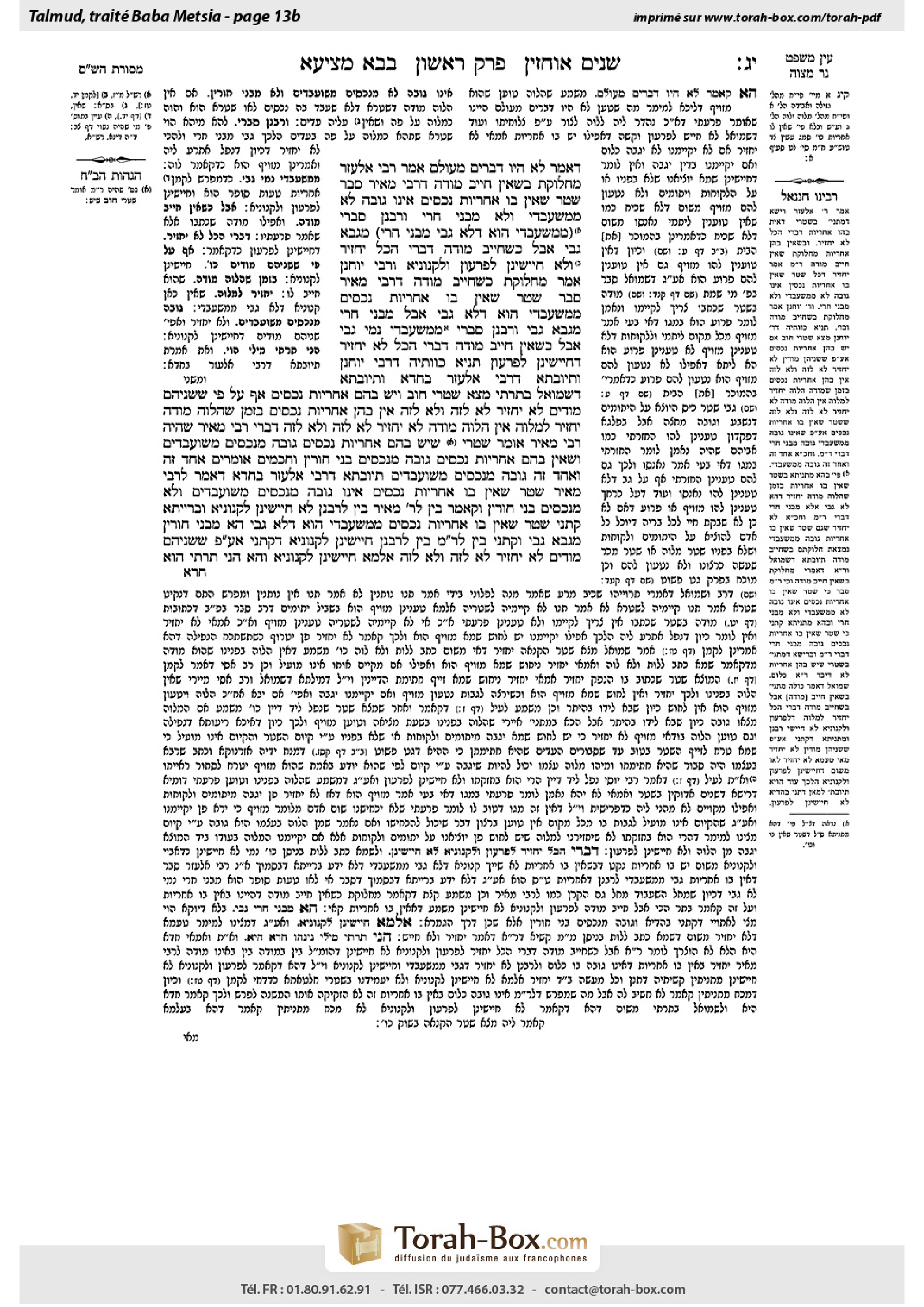
Bava Metzia 13b: Talmud study for Daf Yomi
Study the Talmud for Daf Yomi with scanned pages, Hebrew text, English translations from Sefaria and AI-generated French translations.
Passage selection and English or AI-generated French translation are available where the scan has annotations. Daf Study is independent of Torah-Box and Sefaria.
Browse Bava Metzia · בבא מציעא · All tractatesBava Metzia 13b text and translations
This page of Bava Metzia includes the Aramaic text, an English translation and an AI-generated French translation, alongside the scan above.
בבא מציעא י״ג ב · Aramaic and Hebrew text
דְּאָמַר לֹא הָיוּ דְבָרִים מֵעוֹלָם.
אָמַר רַבִּי אֶלְעָזָר: מַחְלוֹקֶת בְּשֶׁאֵין חַיָּיב מוֹדֶה. דְּרַבִּי מֵאִיר סָבַר: שְׁטָר שֶׁאֵין בּוֹ אַחְרָיוּת נְכָסִים – אֵינוֹ גּוֹבֶה לָא מִמְּשַׁעְבְּדִי וְלָא מִבְּנֵי חָרֵי. וְרַבָּנַן סָבְרִי: מִמְּשַׁעְבְּדִי הוּא דְּלָא גָּבֵי, מִבְּנֵי חָרֵי – מִגְבָּא גָּבֵי. אֲבָל כְּשֶׁחַיָּיב מוֹדֶה – דִּבְרֵי הַכֹּל יַחְזִיר, וְלָא חָיְישִׁינַן לְפֵרָעוֹן וְלִקְנוּנְיָא.
וְרַבִּי יוֹחָנָן אָמַר: מַחְלוֹקֶת כְּשֶׁחַיָּיב מוֹדֶה, דְּרַבִּי מֵאִיר סָבַר: שְׁטָר שֶׁאֵין בּוֹ אַחְרָיוּת נְכָסִים – מִמְּשַׁעְבְּדִי הוּא דְּלָא גָּבֵי, אֲבָל מִבְּנֵי חָרֵי – מִגְבָּא גָּבֵי. וְרַבָּנַן סָבְרִי: מִמְּשַׁעְבְּדֵי נָמֵי גָּבֵי. אֲבָל כְּשֶׁאֵין חַיָּיב מוֹדֶה – דִּבְרֵי הַכֹּל לֹא יַחְזִיר, דְּחָיְישִׁינַן לְפֵרָעוֹן.
תַּנְיָא כְּווֹתֵיהּ דְּרַבִּי יוֹחָנָן, וּתְיוּבְתָּא דְּרַבִּי אֶלְעָזָר בַּחֲדָא, וּתְיוּבְתָּא דִשְׁמוּאֵל בְּתַרְתֵּי.
מָצָא שִׁטְרֵי חוֹב וְיֵשׁ בָּהֶם אַחְרָיוּת נְכָסִים, אַף עַל פִּי שֶׁשְּׁנֵיהֶם מוֹדִים – לֹא יַחְזִיר לֹא לָזֶה וְלֹא לָזֶה. אֵין בָּהֶן אַחְרָיוּת נְכָסִים, בִּזְמַן שֶׁהַלֹּוֶה מוֹדֶה – יַחְזִיר לַמַּלְוֶה, אֵין הַלֹּוֶה מוֹדֶה – לֹא יַחְזִיר לֹא לָזֶה וְלֹא לָזֶה, דִּבְרֵי רַבִּי מֵאִיר.
שֶׁהָיָה רַבִּי מֵאִיר אוֹמֵר: שְׁטָרי שֶׁיֵּשׁ (בָּהֶם) [בּוֹ] אַחְרָיוּת נְכָסִים, גּוֹבֶה מִנְּכָסִים מְשׁוּעְבָּדִים. וְשֶׁאֵין (בָּהֶם) [בּוֹ] אַחְרָיוּת נְכָסִים, גּוֹבֶה מִנְּכָסִים בְּנֵי חוֹרִין. וַחֲכָמִים אוֹמְרִים: אֶחָד זֶה וְאֶחָד זֶה גּוֹבֶה מִנְּכָסִים מְשׁוּעְבָּדִים.
תְּיוּבְתָּא דְּרַבִּי אֶלְעָזָר בַּחֲדָא, דְּאָמַר: לְרַבִּי מֵאִיר שְׁטָר שֶׁאֵין בּוֹ אַחְרָיוּת נְכָסִים – אֵינוֹ גּוֹבֶה מִנְּכָסִים מְשׁוּעְבָּדִים וְלֹא מִנְּכָסִים בְּנֵי חוֹרִין. וְקָאָמַר: בֵּין לְרַבִּי מֵאִיר בֵּין לְרַבָּנַן לָא חָיְישִׁינַן לִקְנוּנְיָא.
וּבָרָיְיתָא קָתָנֵי: שְׁטָר שֶׁאֵין בּוֹ אַחְרָיוּת נְכָסִים – מִמְּשַׁעְבְּדִי הוּא דְּלָא גָּבֵי, הָא מִבְּנֵי חוֹרִין מִגְבָּא גָּבֵי. וְקָתָנֵי: בֵּין לְרַבִּי מֵאִיר בֵּין לְרַבָּנַן, חָיְישִׁינַן לִקְנוּנְיָא. דְּקָתָנֵי: אַף עַל פִּי שֶׁשְּׁנֵיהֶם מוֹדִים לֹא יַחְזִיר לֹא לָזֶה וְלֹא לָזֶה. אַלְמָא חָיְישִׁינַן לִקְנוּנְיָא.
וְהָא הָנֵי תַּרְתֵּי הוּא?
Bava Metzia 13b · English translation
the one who says that these matters, the loan, never happened and that the promissory note is forged. Therefore, he has no claim to the paper on which the promissory note is written.
§ Rabbi Elazar says: The dispute in the mishna between Rabbi Meir and the Rabbis is in a case when the purported liable party does not admit to the debt. As, Rabbi Meir holds that with a promissory note that does not include a property guarantee, one can collect a debt neither from liened property that has been sold nor from unsold property. And the Rabbis hold that it is only from liened property that one cannot collect a debt using this promissory note but that one does collect a debt from unsold property. But in a case when the liable party admits to the debt, everyone agrees that the finder must return the promissory note, and we do not suspect the creditor and the debtor of engaging in repayment and collusion [veliknuneya] to the detriment of one who purchased land from the debtor.
And Rabbi Yoḥanan says: The dispute is in a case when the liable party admits to the debt. As, Rabbi Meir holds that it is only from liened property that one cannot collect a debt using a promissory note that does not include a property guarantee, but one does collect a debt from unsold property. And the Rabbis hold that one collects a debt from liened property too. But in a case when the liable party does not admit to the debt, everyone agrees that the finder may not return the promissory note, as we suspect that perhaps there was repayment.
It is taught in a baraita in accordance with the opinion of Rabbi Yoḥanan, and from it there is also a conclusive refutation of one element of the opinion of Rabbi Elazar and a conclusive refutation of two elements of the opinion of Shmuel.
The baraita teaches: In a case where one found promissory notes and they include a property guarantee, even if both the creditor and the debtor agree about the existence of the debt, the finder should not return it to this creditor or to that debtor. If they do not include a property guarantee, then in a case when the debtor admits to the debt, one should return the promissory note to the creditor. But if the debtor does not admit to the debt, one should not return it to this creditor or to that debtor. This is the statement of Rabbi Meir.
The baraita continues: As Rabbi Meir would say: With promissory notes that include a property guarantee, one can collect the debt from liened property; but with those that do not include a property guarantee, one collects the debt only from unsold property. And the Rabbis say: With both this type and that type of promissory note, one can collect the debt from liened property.
This is a conclusive refutation of one element of the opinion of Rabbi Elazar, who says that according to Rabbi Meir, with a promissory note that does not include a property guarantee one can collect a debt neither from liened property that has been sold nor from unsold property. And Rabbi Elazar also says that according to both Rabbi Meir and the Rabbis, we do not suspect that there is collusion between the debtor and the creditor.
And the baraita teaches that with a promissory note that does not include a property guarantee the creditor cannot collect a debt from liened property, but he can collect it from unsold property. And the baraita also teaches that according to the opinions of both Rabbi Meir and the Rabbis, we suspect that there is collusion between the debtor and the creditor, as it is taught that if one found promissory notes that include a property guarantee, even if both the creditor and the debtor agree about the existence of the debt, the finder should not return it to this creditor or to that debtor. Apparently, we suspect collusion. This refutes Rabbi Elazar’s opinion that there is no suspicion of collusion.
The Gemara asks: But aren’t these two elements of Rabbi Elazar’s statement that are refuted by the baraita? Why was it stated above that only one element is refuted?
Bava Metzia 13b · Traduction française (IA)
celui qui affirme que ces affaires, le prêt, n'ont jamais eu lieu et que l'ordre de paiement est falsifié. Ainsi, il n'a aucun droit sur le papier sur lequel l'ordre de paiement est écrit.
§ Rabbi Elazar dit : Le débat dans la mitsna entre Rabbi Meir et les Rabbins est dans le cas où la personne redevable ne reconnaît pas la dette. En effet, Rabbi Meir affirme que, avec un ordre de paiement ne comportant pas une garantie immobilière, on ne peut récupérer la dette ni à partir d'un bien hypothéqué vendu ni à partir d'un bien non vendu. Et les Rabbins affirment qu'on ne peut récupérer la dette à partir d'un bien hypothéqué, mais qu'on peut le faire à partir d'un bien non vendu. Mais dans le cas où la personne redevable reconnaît la dette, tous s'accordent sur le fait que le trouvère doit rendre l'ordre de paiement, et nous ne soupçonnons pas le créancier et le débiteur d'avoir entrepris un règlement ou une complicité [veliknuneya] à l'encontre de celui qui a acheté un terrain au débiteur.
Et Rabbi Yoḥanan dit : Le débat est dans le cas où la personne redevable reconnaît la dette. En effet, Rabbi Meir affirme qu'on ne peut récupérer la dette à partir d'un bien hypothéqué avec un ordre de paiement ne comportant pas une garantie immobilière, mais qu'on peut le faire à partir d'un bien non vendu. Et les Rabbins affirment qu'on peut récupérer la dette à partir d'un bien hypothéqué également. Mais dans le cas où la personne redevable ne reconnaît pas la dette, tous s'accordent sur le fait que le trouvère ne doit pas rendre l'ordre de paiement, car nous soupçonnons qu'il y a eu un règlement.
Il est enseigné dans une baraïta selon l'opinion de Rabbi Yoḥanan, et à partir de celle-ci il y a aussi une refutation définitive d'un élément de l'opinion de Rabbi Elazar et une refutation définitive de deux éléments de l'opinion de Shmuel.
La baraïta enseigne : Dans le cas où l'on a trouvé des ordres de paiement et qu'ils comportent une garantie immobilière, même si le créancier et le débiteur s'accordent sur l'existence de la dette, le trouvère ne doit pas rendre l'ordre de paiement à ce créancier ou à ce débiteur. Si les ordres de paiement ne comportent pas de garantie immobilière, alors dans le cas où le débiteur reconnaît la dette, on doit rendre l'ordre de paiement au créancier. Mais si le débiteur ne reconnaît pas la dette, on ne doit pas rendre l'ordre de paiement à ce créancier ou à ce débiteur. C'est l'opinion de Rabbi Meir.
La baraïta continue : Comme Rabbi Meir dirait : Avec des ordres de paiement comportant une garantie immobilière, on peut récupérer la dette à partir d'un bien hypothéqué ; mais avec ceux qui n'en comportent pas, on récupère la dette uniquement à partir d'un bien non vendu. Et les Rabbins disent : Avec les deux types d'ordres de paiement, on peut récupérer la dette à partir d'un bien hypothéqué.
C'est une réfutation définitive d'un élément de l'opinion de Rabbi Elazar, qui affirme que selon Rabbi Meir, avec un ordre de paiement ne comportant pas une garantie immobilière, on ne peut récupérer la dette ni à partir d'un bien hypothéqué vendu ni à partir d'un bien non vendu. Et Rabbi Elazar affirme aussi que selon les opinions de Rabbi Meir et des Rabbins, nous ne soupçonnons pas de complicité entre le débiteur et le créancier.
Et la baraïta enseigne que, avec un ordre de paiement ne comportant pas une garantie immobilière, le créancier ne peut récupérer la dette à partir d'un bien hypothéqué, mais il peut le faire à partir d'un bien non vendu. Et la baraïta enseigne aussi que selon les opinions de Rabbi Meir et des Rabbins, nous soupçonnons une complicité entre le débiteur et le créancier, car il est dit que si l'on a trouvé des ordres de paiement comportant une garantie immobilière, même si le créancier et le débiteur s'accordent sur l'existence de la dette, le trouvère ne doit pas rendre l'ordre de paiement à ce créancier ou à ce débiteur. Apparemment, nous soupçonnons une complicité. Cela réfute l'opinion de Rabbi Elazar selon laquelle il n'y a pas de soupçon de complicité.
La Guemara demande : Mais ne sont-ce pas deux éléments de l'opinion de Rabbi Elazar qui sont réfutés par la baraïta ? Pourquoi a-t-on dit ci-dessus que seul un élément est réfuté ?
Traduction française générée par IA à partir de l’édition anglaise de Sefaria. Vérifie toujours un passage avec le texte source.
Text from Sefaria: William Davidson Edition - Vocalized Aramaic (CC BY NC); William Davidson Edition - English (CC BY NC).