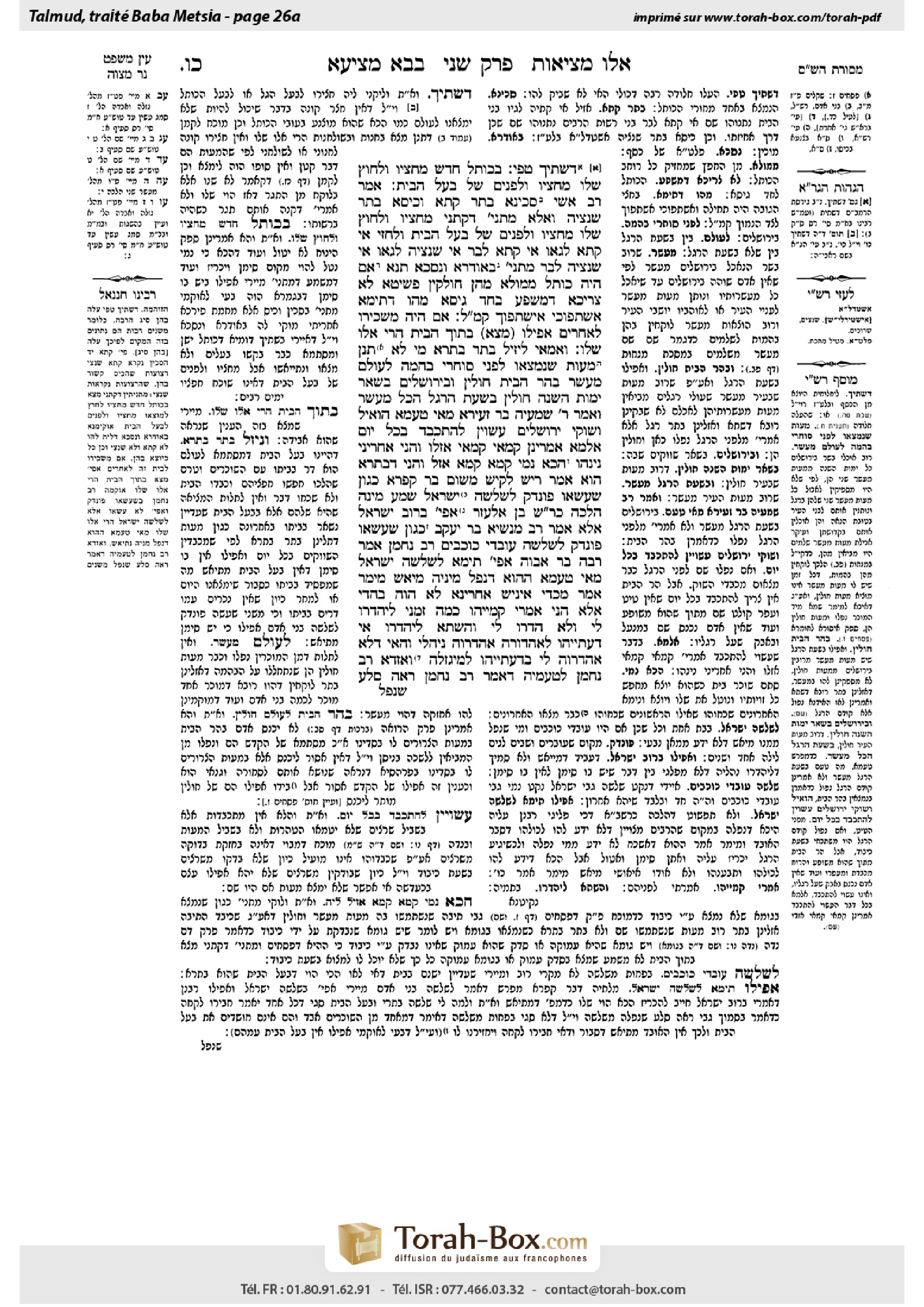
Bava Metzia 26a: Talmud study for Daf Yomi
Study the Talmud for Daf Yomi with scanned pages, Hebrew text, English translations from Sefaria and AI-generated French translations.
Passage selection and English or AI-generated French translation are available where the scan has annotations. Daf Study is independent of Torah-Box and Sefaria.
Browse Bava Metzia · בבא מציעא · All tractatesBava Metzia 26a text and translations
This page of Bava Metzia includes the Aramaic text, an English translation and an AI-generated French translation, alongside the scan above.
בבא מציעא כ״ו א · Aramaic and Hebrew text
דִּשְׁתִיךְ טְפֵי.
בְּכוֹתֶל חָדָשׁ, מֵחֶצְיוֹ וְלַחוּץ – שֶׁלּוֹ, מֵחֶצְיוֹ וְלִפְנִים – שֶׁל בַּעַל הַבַּיִת.
אָמַר רַב אָשֵׁי: סַכִּינָא בָּתַר קַתָּא, וְכִיסָא בָּתַר שִׁנְצֵיהּ.
וְאֶלָּא מַתְנִיתִין דְּקָתָנֵי: מֵחֶצְיוֹ וְלַחוּץ – שֶׁלּוֹ, מֵחֶצְיוֹ וְלִפְנִים – שֶׁל בַּעַל הַבַּיִת. וְלֶחְזֵי, אִי קַתָּא לְגָאו אִי קַתָּא לְבַר! אִי שִׁנְצֵיהּ לְגָאו אִי שִׁנְצֵיהּ לְבַר! מַתְנִיתִין בְּאוּדְרָא וּנְסָכָא.
תָּנָא: אִם הָיָה כּוֹתֶל מְמוּלָּא מֵהֶן – חוֹלְקִין. פְּשִׁיטָא! לָא צְרִיכָא, דִּמְשַׁפַּע בְּחַד גִּיסָא, מַהוּ דְּתֵימָא: אִשְׁתְּפוֹכֵי אִישְׁתְּפוּךְ, קָא מַשְׁמַע לַן.
אִם הָיָה מַשְׂכִּירוֹ לַאֲחֵרִים, אֲפִילּוּ מָצָא בְּתוֹךְ הַבַּיִת – הֲרֵי אֵלּוּ שֶׁלּוֹ. וְאַמַּאי? לֵיזִיל בָּתַר בָּתְרָא.
מִי לָא תְּנַן: מָעוֹת שֶׁנִּמְצְאוּ לִפְנֵי סוֹחֲרֵי בְּהֵמָה – לְעוֹלָם מַעֲשֵׂר, בְּהַר הַבַּיִת – חוּלִּין;
וּבִירוּשָׁלַיִם, בִּשְׁאָר יְמוֹת הַשָּׁנָה – חוּלִּין. בִּשְׁעַת הָרֶגֶל – הַכֹּל מַעֲשֵׂר.
וְאָמַר רַב שְׁמַעְיָה בַּר זְעֵירָא: מַאי טַעְמָא? הוֹאִיל וְשׁוּקֵי יְרוּשָׁלַיִם עֲשׂוּיִן לְהִתְכַּבֵּד בְּכׇל יוֹם. אַלְמָא אָמְרִינַן קַמָּאֵי קַמָּאֵי אֲזַלוּ, וְהָנֵי אַחֲרִינֵי נִינְהוּ. הָכָא נָמֵי: קַמָּא קַמָּא אֲזַל, וְהָנֵי דְּבָתְרָא הוּא!
אָמַר רֵישׁ לָקִישׁ מִשּׁוּם בַּר קַפָּרָא: כְּגוֹן שֶׁעֲשָׂאוֹ פּוּנְדָּק לִשְׁלֹשָׁה יִשְׂרָאֵל.
שְׁמַע מִינַּהּ הֲלָכָה כְּרַבִּי שִׁמְעוֹן בֶּן אֶלְעָזָר אֲפִילּוּ בְּרוֹב יִשְׂרָאֵל!
אֶלָּא אָמַר רַב מְנַשְּׁיָא בַּר יַעֲקֹב: כְּגוֹן שֶׁעֲשָׂאוֹ פּוּנְדָּק לִשְׁלֹשָׁה נָכְרִים.
רַב נַחְמָן אָמַר רַבָּה בַּר אֲבוּהּ: אֲפִילּוּ תֵּימָא לִשְׁלֹשָׁה יִשְׂרָאֵל, מַאי טַעְמָא? הָהוּא דִּנְפַל מִינֵּיהּ מִיָּאַשׁ, מֵימָר אָמַר: מִכְּדֵי אִינִישׁ אַחֲרִינָא לָא הֲוָה בַּהֲדַי אֶלָּא הָנֵי, אֲמַרִי קַמַּיְיהוּ כַּמָּה זִמְנֵי לַיהְדְּרוּ לִי, וְלָא [אַ]הְדַּרוּ לִי, וְהַשְׁתָּא לַיהְדְּרוּ?! אִי דַּעְתַּיְיהוּ לְאַהְדּוֹרַהּ אַהְדְּרוּהָ נִיהֲלִי, וְהַאי דְּלָא אַהְדְּרוּהָ לִי בְּדַעְתַּיְיהוּ לְמִיגְזְלַהּ.
וְאַזְדָּא רַב נַחְמָן לְטַעְמֵיהּ, דְּאָמַר רַב נַחְמָן: רָאָה סֶלַע
Bava Metzia 26a · English translation
where the item is extremely rusted, indicating that it had been left there for a long time.
§ The mishna teaches: If one found lost items in a new wall from its midpoint and outward, they belong to him. But if he found the items from its midpoint and inward, they belong to the homeowner.
Rav Ashi said: The determination of ownership with regard to a knife found in a wall follows the handle, and the determination of ownership with regard to a money pouch follows the laces at the opening of the pouch. If the handle or laces face inward, they belong to the homeowner. If the handle or laces face outward, they belong to the finder.
The Gemara asks: But if so, what is the applicability of the ruling of the mishna, which teaches: If one found lost items in a new wall from its midpoint and outward, they belong to him, and from its midpoint and inward, they belong to the homeowner? But instead, to determine ownership, let us see if its handle faces inward or if its handle faces outward, or if its straps face inward or if its straps face outward. The Gemara answers: The mishna is referring to a case where one found rags or metal strips.
It is taught: If the hollow in the wall was filled with lost items, e.g., coins, the homeowner and the finder divide them. The Gemara asks: Isn’t that obvious? The Gemara answers: No, it is necessary to teach this only in a case where the hollow in the wall is inclined toward one side of the wall. Lest you say that all the items were initially on the elevated side, and due to the incline they slipped and filled the entire space, the tanna teaches us that the homeowner and the finder divide them.
§ The mishna teaches: If the homeowner would rent the house to others on a regular basis and there was a steady turnover of residents, even if one found lost items inside the house, these belong to him. The Gemara asks: And why do they belong to the finder? Let us follow the last renter and determine that he is the owner of the items.
Didn’t we learn in a mishna (Shekalim 7:2): With regard to money that was found before animal merchants in Jerusalem, it is always assumed to be money of the second tithe, as most of the animals purchased in Jerusalem were bought with second-tithe money. This halakha applies both during a Festival and throughout the year, as people would typically purchase animals for meat with their second-tithe money. If the money was found on the Temple Mount it is considered non-sacred money. This halakha applies even during a Festival, when people would come to Jerusalem with second-tithe money in hand, as it can be assumed that one who entered the Temple Mount had already spent that money and only non-sacred money is left in his possession.
The mishna continues: And if the coins were found elsewhere in Jerusalem, the following distinction applies: If it was found during the rest of the days of the year, it is considered non-sacred money. But if the money was found during the Festival, when many people would come to Jerusalem with their second-tithe money, all money is presumed to be second-tithe money.
And Rav Shemaya bar Ze’eira says in explanation of the mishna: What is the reason that during the rest of the year the money is considered non-sacred, even on the day after the Festival? Since the markets of Jerusalem tend to be cleaned every day, any money left there would already have been found by the street cleaners. Consequently, any money found there must have been left there recently. Apparently, we say that each of the first coins is gone, and these coins are other ones, i.e., they were left there after the conclusion of the Festival. Here too, with regard to lost items found in a rented house, why not say that the items belonging to each of the first renters are gone and these items belong to the last renter?
Reish Lakish said in the name of bar Kappara: The mishna that states that the item belongs to the finder is referring to a case where the homeowner rendered his house an inn [pundak] for three Jews. Since it is unclear to which of them the item belonged, the owner despairs of its recovery.
The Gemara previously (see 24a) raised a dilemma with regard to the halakha stated by Rabbi Shimon ben Elazar that a lost item found in a location frequented by the multitudes belongs to the finder. Is the halakha in accordance with his ruling? Moreover, is his ruling specifically with regard to a location with a gentile majority, or is it even applicable in a location with a Jewish majority? Based on the opinion of bar Kappara, the Gemara suggests: Conclude from it that the halakha is in accordance with the opinion of Rabbi Shimon ben Elazar even in a location with a Jewish majority.
The Gemara rejects this conclusion, and presents an alternative explanation of the latter clause of the mishna. Rather, Rav Menashya bar Ya’akov said: The mishna is referring to a case where he rendered his house an inn for three gentiles. According to that explanation, perhaps Rabbi Shimon ben Elazar issued his ruling specifically in a location with a gentile majority.
Rav Naḥman said that Rabba bar Avuh said: Even if you say that the owner rendered his house an inn for three Jews, one cannot conclude that Rabbi Shimon ben Elazar issued his ruling even in an area with a Jewish majority. What is the reason that the item belongs to the finder? It is because the person from whom the item fell despairs of its recovery. The one who lost the item says: Now, no other person was with me here, only these residents of the inn. I said in their presence several times to return the item to me, and they did not return it to me; and is it likely that now they are going to return it? If their intention was to return the item, they would have already returned it to me, and the fact that they did not yet return it to me indicates that it is their intention to rob me of the item.
And Rav Naḥman follows his standard line of reasoning, as Rav Naḥman says: If one saw a sela coin
Bava Metzia 26a · Traduction française (IA)
où l'objet est extrêmement rouillé, indiquant qu'il avait été laissé là depuis longtemps.
§ La Michna enseigne : Si l'on trouve des objets perdus dans une muraille neuve à partir du milieu et vers l'extérieur, ils appartiennent à celui qui les a trouvés. Mais si l'on trouve les objets à partir du milieu et vers l'intérieur, ils appartiennent au propriétaire.
Rav Ashi a dit : La détermination de la propriété concernant un couteau trouvé dans une muraille suit le manche, et la détermination de la propriété concernant un sac d'argent suit les lanières à l'ouverture du sac. Si le manche ou les lanières sont tournés vers l'intérieur, ils appartiennent au propriétaire. Si le manche ou les lanières sont tournés vers l'extérieur, ils appartiennent à celui qui les a trouvés.
Le Guemara pose la question : Mais si c'est ainsi, quelle est l'application de la décision de la Michna, qui enseigne : Si l'on trouve des objets perdus dans une nouvelle muraille à partir du milieu et vers l'extérieur, ils appartiennent à celui qui les a trouvés, et à partir du milieu et vers l'intérieur, ils appartiennent au propriétaire ? Mais au contraire, pour déterminer la propriété, examinons si le manche est tourné vers l'intérieur ou si le manche est tourné vers l'extérieur, ou si les lanières sont tournées vers l'intérieur ou si les lanières sont tournées vers l'extérieur. Le Guemara répond : La Michna fait référence à un cas où l'on a trouvé des chiffons ou des bandes métalliques.
Il est enseigné : Si le vide dans la muraille était rempli d'objets perdus, par exemple des monnaies, le propriétaire et celui qui les a trouvés les partagent. Le Guemara pose la question : N'est-ce pas évident ? Le Guemara répond : Non, il est nécessaire d'enseigner cela uniquement dans un cas où le vide dans la muraille est incliné vers un côté de la muraille. De peur que l'on dise que tous les objets étaient initialement sur le côté élevé, et en raison de l'inclinaison, ils sont tombés et ont rempli l'espace entier, le tanna nous enseigne que le propriétaire et celui qui les a trouvés les partagent.
§ La Michna enseigne : Si le propriétaire louait la maison à d'autres régulièrement et qu'il y avait un turnover constant des résidents, même si l'on trouvait des objets perdus à l'intérieur de la maison, ceux-ci appartiennent à lui. Le Guemara pose la question : Et pourquoi appartiennent-ils à celui qui les a trouvés ? Examinons le dernier locataire et déterminons qu'il est le propriétaire des objets.
N'avons-nous pas appris dans une Michna (Shekalim 7:2) : Concernant l'argent trouvé avant les marchands d'animaux à Jérusalem, il est toujours considéré comme de la dîme de la seconde, car la plupart des animaux achetés à Jérusalem étaient achetés avec de l'argent de la dîme de la seconde. Cette halakha s'applique aussi pendant un festival et toute l'année, car les gens achetaient généralement des animaux pour la viande avec leur argent de la dîme de la seconde. Si l'argent était trouvé sur le Mont du Temple, il est considéré comme de l'argent non sacré. Cette halakha s'applique même pendant un festival, lorsque les gens venaient à Jérusalem avec de l'argent de la dîme de la seconde, car on peut supposer qu'une personne qui est entrée sur le Mont du Temple avait déjà dépensé cet argent et qu'il ne restait que de l'argent non sacré en son possession.
La Michna continue : Et si les monnaies étaient trouvées ailleurs à Jérusalem, la distinction suivante s'applique : Si elles ont été trouvées pendant les autres jours de l'année, elles sont considérées comme de l'argent non sacré. Mais si l'argent a été trouvé pendant le festival, lorsque beaucoup de gens venaient à Jérusalem avec leur argent de la dîme de la seconde, toutes les monnaies sont considérées comme de l'argent de la dîme de la seconde.
Et Rav Shemaya bar Ze’eira dit en expliquant la Michna : Quelle est la raison que pendant l'année, l'argent est considéré comme non sacré, même le jour après le festival ? Parce que les marchés de Jérusalem ont tendance à être nettoyés chaque jour, toute monnaie laissée là aurait déjà été trouvée par les nettoyeurs de rue. Ainsi, toute monnaie trouvée là doit avoir été laissée récemment. Apparemment, nous disons que chaque pièce précédente est partie, et ces pièces sont d'autres, c'est-à-dire qu'elles ont été laissées là après la fin du festival. Ici aussi, concernant les objets trouvés dans une maison louée, pourquoi ne pas dire que les objets appartenant à chaque locataire précédent sont partis et ces objets appartiennent au dernier locataire ?
Reish Lakish a dit en nom de bar Kappara : La Michna qui dit que l'objet appartient à celui qui l'a trouvé fait référence à un cas où le propriétaire a rendu sa maison un auberge [pundak] pour trois Juifs. Puisque c'est indéterminé à qui appartient l'objet, le propriétaire désespère de le récupérer.
Le Guemara avait précédemment (voir 24a) soulevé un dilemme concernant la halakha énoncée par Rabbi Shimon ben Elazar, selon laquelle un objet trouvé dans un lieu fréquenté par la multitude appartient à celui qui l'a trouvé. La halakha est-elle en conformité avec son avis ? De plus, est-ce qu'il s'agit spécifiquement d'un lieu avec une majorité de non-Juifs, ou s'applique-t-elle même dans un lieu avec une majorité juive ? Selon l'opinion de bar Kappara, le Guemara suggère : Concluez-en que la halakha est en conformité avec l'avis de Rabbi Shimon ben Elazar même dans un lieu avec une majorité juive.
Le Guemara rejette cette conclusion et présente une autre explication de la dernière partie de la Michna. Plutôt, Rav Menashya bar Ya’akov a dit : La Michna fait référence à un cas où il a rendu sa maison un auberge pour trois non-Juifs. Selon cette explication, peut-être que Rabbi Shimon ben Elazar a formulé son avis spécifiquement dans un lieu avec une majorité de non-Juifs.
Rav Naḥman a dit que Rabba bar Avuh a dit : Même si vous dites que le propriétaire a rendu sa maison un auberge pour trois Juifs, on ne peut pas conclure que Rabbi Shimon ben Elazar a rendu son avis même dans un lieu où il y a une majorité juive. Quelle est la raison pour laquelle l'objet appartient à celui qui l'a trouvé ? C'est parce que la personne de qui l'objet est tombé désespère de le récupérer. La personne qui a perdu l'objet dit : Maintenant, aucun autre personne n'était avec moi ici, seulement ces résidents de l'auberge. J'ai plusieurs fois dit devant eux de me rendre l'objet, et ils ne me l'ont pas rendu ; et est-il probable qu'ils veuillent maintenant me le rendre ? Si leur intention était de me le rendre, ils l'auraient déjà rendu à moi, et le fait qu'ils ne me l'ont pas encore rendu indique qu'ils veulent me le voler.
Et Rav Naḥman suit sa ligne de raisonnement habituelle, car Rav Naḥman dit : Si l'on voit une pièce de sela
Traduction française générée par IA à partir de l’édition anglaise de Sefaria. Vérifie toujours un passage avec le texte source.
Text from Sefaria: William Davidson Edition - Vocalized Aramaic (CC BY NC); William Davidson Edition - English (CC BY NC).