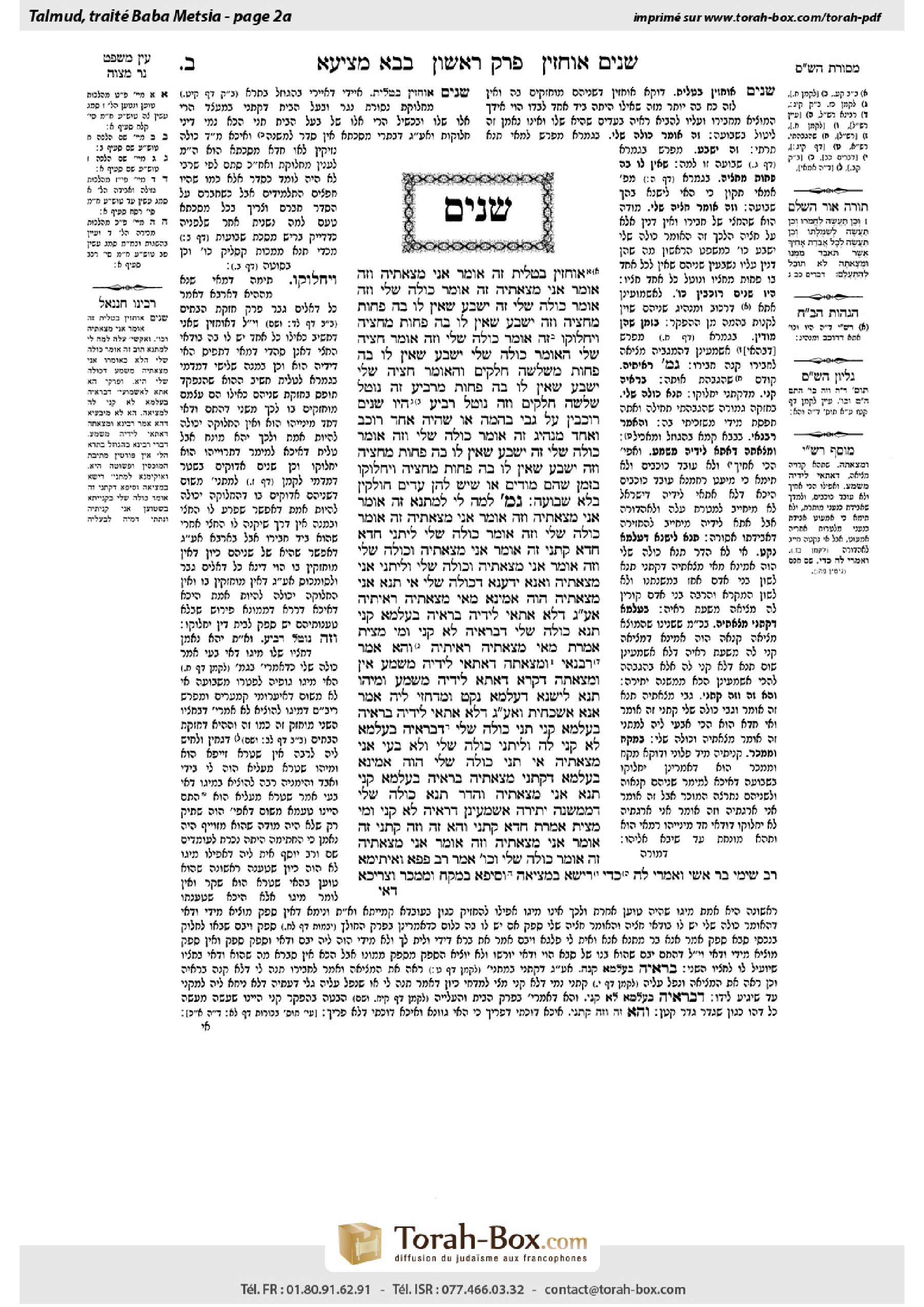
Bava Metzia 2a: Talmud study for Daf Yomi
Study the Talmud for Daf Yomi with scanned pages, Hebrew text, English translations from Sefaria and AI-generated French translations.
Passage selection and English or AI-generated French translation are available where the scan has annotations. Daf Study is independent of Torah-Box and Sefaria.
Browse Bava Metzia · בבא מציעא · All tractatesBava Metzia 2a text and translations
This page of Bava Metzia includes the Aramaic text, an English translation and an AI-generated French translation, alongside the scan above.
בבא מציעא ב׳ א · Aramaic and Hebrew text
שְׁנַיִם אוֹחֲזִין בְּטַלִּית, זֶה אוֹמֵר: ״אֲנִי מְצָאתִיהָ״, וְזֶה אוֹמֵר: ״אֲנִי מְצָאתִיהָ״. זֶה אוֹמֵר: ״כּוּלָּהּ שֶׁלִּי״, וְזֶה אוֹמֵר: ״כּוּלָּהּ שֶׁלִּי״. זֶה יִשָּׁבַע שֶׁאֵין לוֹ בָּהּ פָּחוֹת מֵחֶצְיָהּ, וְזֶה יִשָּׁבַע שֶׁאֵין לוֹ בָּהּ פָּחוֹת מֵחֶצְיָהּ – וְיַחְלוֹקוּ.
זֶה אוֹמֵר: ״כּוּלָּהּ שֶׁלִּי״, וְזֶה אוֹמֵר: ״חֶצְיָהּ שֶׁלִּי״, הָאוֹמֵר כּוּלָּהּ שֶׁלִּי – יִשָּׁבַע שֶׁאֵין לוֹ בָּהּ פָּחוֹת מִשְּׁלֹשָׁה חֲלָקִים, וְהָאוֹמֵר חֶצְיָהּ שֶׁלִּי – יִשָּׁבַע שֶׁאֵין לוֹ בָּהּ פָּחוֹת מֵרְבִיעַ. זֶה נוֹטֵל שְׁלֹשָׁה חֲלָקִים, וְזֶה נוֹטֵל רְבִיעַ.
הָיוּ שְׁנַיִם רוֹכְבִין עַל גַּבֵּי בְּהֵמָה, אוֹ שֶׁהָיָה אֶחָד רוֹכֵב וְאֶחָד מַנְהִיג, זֶה אוֹמֵר: כּוּלָּהּ שֶׁלִּי, וְזֶה אוֹמֵר: כּוּלָּהּ שֶׁלִּי – זֶה יִשָּׁבַע שֶׁאֵין לוֹ בָּהּ פָּחוֹת מֵחֶצְיָהּ, וְזֶה יִשָּׁבַע שֶׁאֵין לוֹ בָּהּ פָּחוֹת מֵחֶצְיָהּ, וְיַחְלוֹקוּ.
בִּזְמַן שֶׁהֵם מוֹדִים אוֹ שֶׁיֵּשׁ לָהֶן עֵדִים – חוֹלְקִין בְּלֹא שְׁבוּעָה.
גְּמָ׳ לְמָה לִי לְמִתְנָא זֶה אוֹמֵר אֲנִי מְצָאתִיהָ וְזֶה אוֹמֵר אֲנִי מְצָאתִיהָ, זֶה אוֹמֵר כּוּלָּהּ שֶׁלִּי וְזֶה אוֹמֵר כּוּלָּהּ שֶׁלִּי? לִיתְנֵי חֲדָא! חֲדָא קָתָנֵי: זֶה אוֹמֵר אֲנִי מְצָאתִיהָ וְכוּלָּהּ שֶׁלִּי, וְזֶה אוֹמֵר אֲנִי מְצָאתִיהָ וְכוּלָּהּ שֶׁלִּי.
וְלִיתְנֵי ״אֲנִי מְצָאתִיהָ״, וַאֲנָא יָדַעְנָא דְּכוּלָּהּ שֶׁלִּי! אִי תְּנָא ״אֲנִי מְצָאתִיהָ״, הֲוָה אָמֵינָא: מַאי ״מְצָאתִיהָ״ – רְאִיתִיהָ. אַף עַל גַּב דְּלָא אֲתַאי לִידֵיהּ – בִּרְאִיָּה בְּעָלְמָא קָנֵי, תְּנָא: ״כּוּלָּהּ שֶׁלִּי״ – דְּבִרְאִיָּה לָא קָנֵי.
וּמִי מָצֵית אָמְרַתְּ מַאי ״מְצָאתִיהָ״ – רְאִיתִיהָ, וְהָא אָמַר רַבְנַאי ״וּמְצָאתָהּ״ – דַּאֲתַאי לִידֵיהּ מַשְׁמַע.
אִין ״וּמְצָאתָהּ״ דִּקְרָא – דַּאֲתָא לִידֵיהּ מַשְׁמַע, וּמִיהוּ תַּנָּא לִישָּׁנָא דְעָלְמָא נָקֵט, וּמִדְּחָזֵי לֵיהּ אָמַר: אֲנָא אַשְׁכַּחִית, וְאַף עַל גַּב דְּלָא אֲתַאי לִידֵיהּ בִּרְאִיָּה בְּעָלְמָא קָנֵי, תָּנֵי: ״כּוּלָּהּ שֶׁלִּי״ – דְּבִרְאִיָּה בְּעָלְמָא לָא קָנֵי לַהּ.
וְלִיתְנֵי ״כּוּלָּהּ שֶׁלִּי״ וְלָא בָּעֵי ״אֲנִי מְצָאתִיהָ״! אִי תָּנֵי ״כּוּלָּהּ שֶׁלִּי״ הֲוָה אָמֵינָא: בְּעָלְמָא דְּקָתָנֵי ״מְצָאתִיהָ״ בִּרְאִיָּה בְּעָלְמָא קָנֵי, תְּנָא ״אֲנִי מְצָאתִיהָ״ וַהֲדַר תְּנָא ״כּוּלָּהּ שֶׁלִּי״ דְּמִמִּשְׁנָה יַתִּירָה אַשְׁמְעִינַן דִּרְאִיָּה לָא קָנֵי.
וּמִי מָצֵית אָמְרַתְּ חֲדָא קָתָנֵי? וְהָא ״זֶה״ וְ״זֶה״ קָתָנֵי: ״זֶה אוֹמֵר אֲנִי מְצָאתִיהָ וְזֶה אוֹמֵר אֲנִי מְצָאתִיהָ, זֶה אוֹמֵר כּוּלָּהּ שֶׁלִּי״ וְכוּ׳.
אָמַר רַב פָּפָּא, וְאִיתֵּימָא רַב שִׁימִי בַּר אָשֵׁי, וְאָמְרִי לַהּ כְּדִי: רֵישָׁא בִּמְצִיאָה, וְסֵיפָא בְּמִקָּח וּמִמְכָּר.
וּצְרִיכָא:
Bava Metzia 2a · English translation
The early commentaries ask why this chapter, which discusses details of the halakhot of found items, precedes the second chapter, which discusses the fundamental halakhot of found items.
Tosafot explain that as tractate Bava Metzia follows tractate Bava Kamma, the halakhot of found items are elucidated in this chapter as a continuation of the topics discussed in the last chapter of Bava Kamma, which discussed the division of items between litigants by means of an oath, which is also the ruling in the mishna here (see Shita Mekubbetzet). The Rosh explains that because there is a suspicion of theft in this case, these matters are juxtaposed with the halakhot of theft, which are described at length in Bava Kamma.
MISHNA: If two people came to court holding a garment, and this one, the first litigant, says: I found it, and that one, the second litigant, says: I found it; this one says: All of it is mine, and that one says: All of it is mine; how does the court adjudicate this case? This one takes an oath that he does not have ownership of less than half of it, and that one takes an oath that he does not have ownership of less than half of it, and they divide it.
If this one says: All of it is mine, and that one says: Half of it is mine, since they both agree that half of the cloak belongs to one of them, the conflict between them is only about the other half. Therefore, the one who says: All of it is mine, takes an oath that he does not have ownership of less than three parts, i.e., three-fourths, of it, and the one who says: Half of it is mine, takes an oath that he does not have ownership of less than one-quarter of it. This one takes three parts, and that one takes one-quarter.
If two people were sitting in a riding position on the back of an animal, e.g., a donkey or camel, or one was sitting in a riding position on the animal and one was leading it by its halter, and this one says: All of it is mine, and that one says: All of it is mine, how does the court adjudicate this case? This one takes an oath that he does not have ownership of less than half of it, and that one takes an oath that he does not have ownership of less than half of it, and they divide it.
When they admit to the validity of each other’s claims or when they each have witnesses attesting to their claims, they divide the disputed item without taking an oath, as an oath is administered only in a case where the parties have no other way to prove their claims.
GEMARA: The Gemara asks: Why do I need the tanna to teach two separate claims made by each party? Why does the tanna say both: This one says: I found it, and that one says: I found it; and in addition: This one says: All of it is mine, and that one says: All of it is mine? Let the tanna teach one case. The Gemara answers: The correct understanding of the mishna is that it teaches one claim of each party, as their claims were as follows: This one says: I found it and all of it is mine, and that one says: I found it and all of it is mine.
The Gemara asks: But let the tanna teach a case where each one merely claims: I found it, and I would know that the intention of each litigant is to claim: All of it is mine. The Gemara answers: If the tanna would teach only that each one claimed: I found it, I would say that what is the meaning of the claim: I found it? It means: I saw it. In other words, he is claiming that he saw the item first, and he believes that even though it did not reach his possession, he acquired it through mere sight. Since it would have been possible to think that this is an effective claim, the tanna teaches that the litigant states definitively: All of it is mine, to teach that one does not acquire a lost item through sight alone.
The Gemara challenges this explanation: But how can you say that what the term: I found it, means is actually: I saw it? But didn’t Rabbenai say in interpreting the verse: “And so shall you do with every lost item of your brother’s, which he has lost, and you have found it” (Deuteronomy 22:3), that “and you have found it” indicates that it came into his possession? The term find in the Torah refers exclusively to a situation where the item is in the possession of the finder.
The Gemara answers: Indeed, the phrase “and you have found it” in the verse certainly indicates that it came into his possession. But one might say that the tanna employed colloquial language in the mishna. And in colloquial language, once a person sees an item, he says: I found it, even if it did not yet come into his possession, because he believes that he acquired the item through mere sight. Since it would have been possible to understand the claim of: I found it, in this manner, the tanna teaches that the litigant states definitively: All of it is mine, to teach that one does not acquire a lost item through sight alone.
The Gemara asks: But if that was the objective of the tanna, let him teach that each party need only state: All of it is mine, and the litigant would not need to say: I found it. The Gemara answers: If the tanna had taught that it is sufficient for each party to claim only: All of it is mine, I would say that in general, when the tanna teaches that one claims: I found it, he means that the finder acquires the item through mere sight. Therefore, he taught that the litigants claimed: I found it, and he then taught that the litigants claimed: All of it is mine, to teach that only when the litigants each make both of these claims does the court divide the item, as from the superfluous expression in the mishna he teaches us that one does not acquire the item through sight alone.
After explaining the viability of this interpretation, the Gemara asks: But how can you say that the mishna is teaching one claim of each party? But doesn’t the mishna teach: This one says, and again: This one says? In other words, the mishna writes: This one says: I found it, and that one says: I found it; and it states additionally: This one says: All of it is mine, and that one says: All of it is mine. From the fact that the tanna introduced each of the claims with the phrase: This one says, it is apparent that they are two separate claims, not one compound claim.
Rav Pappa said, and some say it was said by Rav Shimi bar Ashi, and some say it was an unattributed [kedi] statement: The first clause, where each party says: I found it, is referring to a case of a found item, where two people found one item. And the latter clause, where each party says: All of it is mine, is referring to a case of buying and selling, where each party claims that he is the one who bought the item from its seller.
And it is necessary for the mishna to teach its ruling both with regard to a found item and with regard to a purchase.
Bava Metzia 2a · Traduction française (IA)
Les commentaires précoces se demandent pourquoi ce chapitre, qui discute des détails des halakhot des objets trouvés, précède le deuxième chapitre, qui traite des halakhot fondamentaux des objets trouvés. Tosafot expliquent que comme le tractat Bava Metzia suit le tractat Bava Kamma, les halakhot des objets trouvés sont éclairés dans ce chapitre comme une continuation des sujets discutés dans le dernier chapitre de Bava Kamma, qui traitait de la division des objets entre les parties par serment, ce qui est également la décision de la mishna ici (voir Shita Mekubbetzet). Le Rosh explique que puisque il y a un soupçon de vol dans ce cas, ces questions sont placées à côté des halakhot du vol, qui sont détaillées dans Bava Kamma. MICHNA : Si deux personnes viennent devant le tribunal avec une robe, et celle-ci, la première partie, dit : Je l'ai trouvée, et celle-là, la deuxième partie, dit : Je l'ai trouvée ; celle-ci dit : Tout est à moi, et celle-là dit : Tout est à moi ; comment le tribunal résout-il ce cas ? Celle-ci prend un serment qu'elle ne possède pas moins de la moitié, et celle-là prend un serment qu'elle ne possède pas moins de la moitié, et elles divisent l'objet.
Si l'un dit : Tout est à moi, et l'autre dit : La moitié est à moi, puisqu'ils sont d'accord sur le fait que la moitié de la robe appartient à l'un d'entre eux, le conflit entre eux est seulement sur l'autre moitié. Par conséquent, celui qui dit : Tout est à moi, prend un serment qu'il ne possède pas moins de trois parties, c'est-à-dire trois-quarts, de l'objet, et celui qui dit : La moitié est à moi, prend un serment qu'il ne possède pas moins d'un quart de l'objet. Celui-ci prend trois parties, et celui-là prend un quart.
Si deux personnes étaient assises en position de monture sur le dos d'un animal, par exemple un âne ou un chameau, ou l'une était assise en position de monture sur l'animal et l'autre le guidait par la bride, et l'un dit : Tout est à moi, et l'autre dit : Tout est à moi, comment le tribunal résout-il ce cas ? Celui-ci prend un serment qu'il ne possède pas moins de la moitié, et celui-là prend un serment qu'il ne possède pas moins de la moitié, et ils divisent l'objet.
Lorsqu'ils admettent la validité de leurs réclamations mutuelles ou lorsqu'ils ont tous deux des témoins attestant de leurs réclamations, ils divisent l'objet disputé sans prendre de serment, car un serment est administré uniquement dans un cas où les parties n'ont pas d'autre moyen de prouver leurs réclamations.
GUEMARA : La Guemara se demande : Pourquoi a-t-on besoin du tanna pour enseigner deux réclamations distinctes faites par chaque partie ? Pourquoi le tanna dit-il à la fois : Celle-ci dit : J’ai trouvé, et celle-là dit : J’ai trouvé ; et en plus : Celle-ci dit : Tout est à moi, et celle-là dit : Tout est à moi ? Pourquoi ne pas enseigner un seul cas. La Guemara répond : La compréhension correcte de la mishna est qu’elle enseigne une réclamation de chaque partie, car leurs réclamations étaient comme suit : Celle-ci dit : J’ai trouvé et tout est à moi, et celle-là dit : J’ai trouvé et tout est à moi.
La Guemara se demande : Mais pourquoi ne pas enseigner un cas où chaque partie affirme simplement : J’ai trouvé, et je saurais que l’intention de chaque partie est de réclamer : Tout est à moi. La Guemara répond : Si le tanna avait enseigné seulement que chaque partie affirmait : J’ai trouvé, je dirais que la signification de la réclamation : J’ai trouvé est : J’ai vu. En d’autres termes, il affirme avoir vu l’objet en premier, et il croit qu’il l’a acquis par simple vue. Puisque cela aurait pu être compris comme une réclamation efficace, le tanna enseigne que la partie affirme définitivement : Tout est à moi, pour enseigner que l’on ne peut acquérir un objet perdu par simple vue.
La Guemara remet en question cette explication : Mais comment pouvez-vous dire que le terme : J’ai trouvé signifie en réalité : J’ai vu ? Mais n’ont-ils pas les Rabbanim dit dans l’interprétation du verset : « Et ainsi tu feras avec tout objet perdu de ton frère, qu’il a perdu, et que tu as trouvé » (Deutéronome 22:3), que « et que tu as trouvé » indique qu’il est entré en possession de l’objet ? Le terme trouver dans la Torah désigne exclusivement une situation où l’objet est en possession du trouver.
La Guemara répond : En effet, la phrase « et que tu as trouvé » dans le verset indique certainement que l'objet est entré en possession de la personne. Mais on pourrait dire que le tanna a utilisé un langage courant dans la mishna. Et dans un langage courant, une personne qui voit un objet dit : J'ai trouvé, même s'il n'est pas encore entré en possession de lui, car il croit avoir acquis l'objet par simple vue. Puisque cela aurait pu être compris ainsi, le tanna enseigne que la partie affirme définitivement : Tout est à moi, pour enseigner que l'on ne peut acquérir un objet perdu par simple vue.
La Guemara se demande : Mais si c'était l'objectif du tanna, pourquoi ne pas enseigner que chaque partie n'a besoin que d'affirmer : Tout est à moi, et la partie n'aurait pas besoin de dire : J'ai trouvé. La Guemara répond : Si le tanna avait enseigné que chaque partie n'avait besoin que d'affirmer : Tout est à moi, je dirais que dans la généralité, quand le tanna enseigne que l'on affirme : J'ai trouvé, il signifie que le trouver acquiert l'objet par simple vue. Par conséquent, il a enseigné que les parties affirmaient : J'ai trouvé, et ensuite il a enseigné que les parties affirmaient : Tout est à moi, pour enseigner que seul quand les parties affirment les deux réclamations, le tribunal divise l'objet, car à partir de l'expression superflue dans la mishna, il nous enseigne que l'on ne peut acquérir l'objet par simple vue.
Après avoir expliqué la validité de cette interprétation, la Guemara pose la question : Mais comment pouvez-vous affirmer que la Michna enseigne une réclamation de chaque partie ? Mais n'est-ce pas que la Michna dit : Celle-ci dit, et à nouveau : Celle-ci dit ? En d'autres termes, la Michna écrit : Celle-ci dit : J'ai trouvé, et celle-là dit : J'ai trouvé ; et elle ajoute en outre : Celle-ci dit : Tout est à moi, et celle-là dit : Tout est à moi. À partir du fait que le tanna a introduit chaque réclamation avec la phrase : Celle-ci dit, il est évident qu'il s'agit de deux réclamations distinctes, et non d'une seule réclamation composée.
Rav Pappa a dit, et certains disent que c'était Rav Shimi bar Ashi qui l'a dit, et d'autres disent que c'était une déclaration non attribuée [kedi] : La première clause, où chaque partie dit : Je l'ai trouvé, se réfère à un cas d'objet trouvé, où deux personnes ont trouvé un même objet. Et la seconde clause, où chaque partie dit : Tout est à moi, se réfère à un cas d'achat et de vente, où chaque partie affirme avoir acheté l'objet auprès de son vendeur.
Et il est nécessaire que la michna enseigne sa décision à la fois concernant un objet trouvé et concernant un achat.
Traduction française générée par IA à partir de l’édition anglaise de Sefaria. Vérifie toujours un passage avec le texte source.
Text from Sefaria: William Davidson Edition - Vocalized Aramaic (CC BY NC); William Davidson Edition - English (CC BY NC).