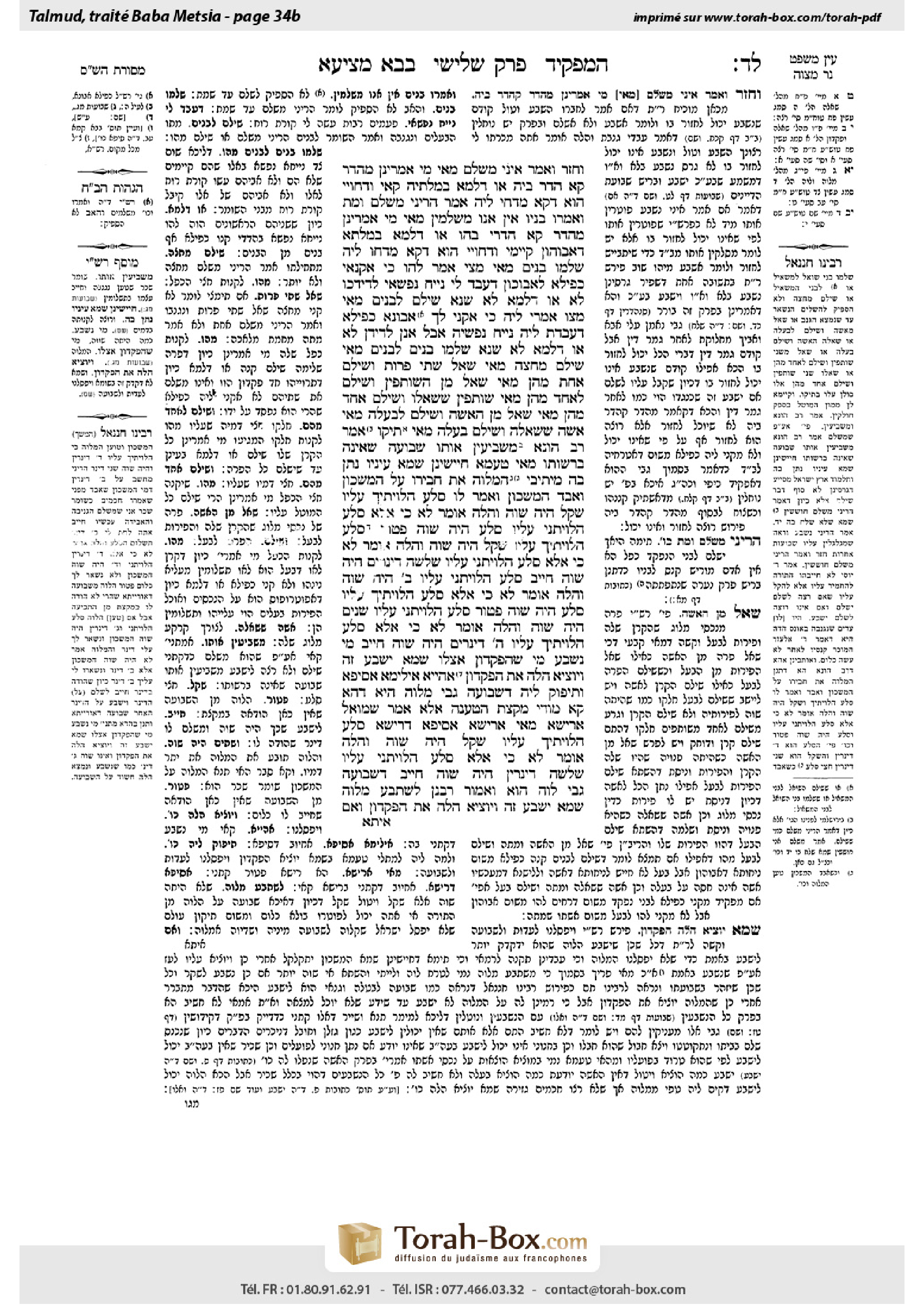
Bava Metzia 34b: Talmud study for Daf Yomi
Study the Talmud for Daf Yomi with scanned pages, Hebrew text, English translations from Sefaria and AI-generated French translations.
Passage selection and English or AI-generated French translation are available where the scan has annotations. Daf Study is independent of Torah-Box and Sefaria.
Browse Bava Metzia · בבא מציעא · All tractatesBava Metzia 34b text and translations
This page of Bava Metzia includes the Aramaic text, an English translation and an AI-generated French translation, alongside the scan above.
בבא מציעא ל״ד ב · Aramaic and Hebrew text
וְחָזַר וְאָמַר ״אֵינִי מְשַׁלֵּם״, מַאי? מִי אָמְרִינַן מִהְדָּר קָא הָדַר בֵּיהּ, אוֹ דִלְמָא בְּמִלְּתֵיהּ קָאֵי וְדַחוֹיֵי הוּא דְּקָא מְדַחֵי לֵיהּ?
אָמַר ״הֲרֵינִי מְשַׁלֵּם״ וָמֵת, וְאָמְרוּ בָּנָיו ״אֵין אָנוּ מְשַׁלְּמִין״, מַאי? מִי אָמְרִינַן מִהְדָּר קָא הָדְרִי בְּהוּ, אוֹ דִלְמָא בְּמִלְּתָא דַאֲבוּהוֹן קָיְימִי, וְדַחוֹיֵי הוּא דְּקָא מְדַחוּ לֵיהּ?
שִׁלְּמוּ בָּנִים, מַאי? מָצֵי אָמַר לְהוּ: כִּי אַקְנַאי כְּפֵילָא – לַאֲבוּכוֹן דַּעֲבַד לִי נְיָיח נַפְשַׁאי, לְדִידְכוּ לָא, אוֹ דִלְמָא לָא שְׁנָא.
שִׁילֵּם לְבָנִים, מַאי? מָצוּ אָמְרִי לֵיהּ: כִּי אַקְנִי לָךְ אֲבוּנָא כְּפֵילָא – דַּעֲבַדְתְּ לֵיהּ נְיָיח נַפְשֵׁיהּ, אֲבָל אֲנַן לְדִידַן לָא, אוֹ דִלְמָא לָא שְׁנָא. שִׁלְּמוּ בָּנִים לְבָנִים, מַאי?
שִׁילֵּם מֶחֱצָה, מַאי? שָׁאַל שְׁתֵּי פָּרוֹת וְשִׁילֵּם אַחַת מֵהֶן, מַאי? שָׁאַל מִן הַשּׁוּתָּפִין וְשִׁילֵּם לְאֶחָד מֵהֶן, מַאי? שׁוּתָּפִין שֶׁשָּׁאֲלוּ וְשִׁילֵּם אֶחָד מֵהֶן, מַאי? שָׁאַל מִן הָאִשָּׁה וְשִׁילֵּם לְבַעְלָהּ, מַאי? אִשָּׁה שֶׁשָּׁאֲלָה וְשִׁילֵּם בַּעֲלָהּ, מַאי? תֵּיקוּ.
אָמַר רַב הוּנָא: מַשְׁבִּיעִין אוֹתוֹ שְׁבוּעָה שֶׁאֵינָהּ בִּרְשׁוּתוֹ. מַאי טַעְמָא? חָיְישִׁינַן שֶׁמָּא עֵינָיו נָתַן בָּהּ.
מֵיתִיבִי: הַמַּלְוֶה אֶת חֲבֵירוֹ עַל הַמַּשְׁכּוֹן, וְאָבַד הַמַּשְׁכּוֹן, וְאָמַר לוֹ: סֶלַע הִלְוִיתִיךָ עָלָיו, שֶׁקֶל הָיָה שָׁוֶה. וְהַלָּה אוֹמֵר: לֹא כִּי, אֶלָּא סֶלַע הִלְוִיתַנִי עָלָיו, סֶלַע הָיָה שָׁוֶה – פָּטוּר.
סֶלַע הִלְוִיתִיךָ עָלָיו, שֶׁקֶל הָיָה שָׁוֶה, וְהַלָּה אוֹמֵר: לֹא כִי, אֶלָּא סֶלַע הִלְוִיתַנִי עָלָיו, שְׁלֹשָׁה דִּינָרִים הָיָה שָׁוֶה – חַיָּיב.
סֶלַע הִלְוִיתַנִי עָלָיו, שְׁנַיִם הָיָה שָׁוֶה, וְהַלָּה אוֹמֵר: לֹא כִּי, אֶלָּא סֶלַע הִלְוִיתִיךָ עָלָיו, סֶלַע הָיָה שָׁוֶה – פָּטוּר.
סֶלַע הִלְוִיתַנִי עָלָיו, שְׁנַיִם הָיָה שָׁוֶה, וְהַלָּה אוֹמֵר: לֹא כִּי, אֶלָּא סֶלַע הִלְוִיתִיךָ עָלָיו, חֲמִשָּׁה דִּינָרִים הָיָה שָׁוֶה – חַיָּיב.
מִי נִשְׁבָּע? מִי שֶׁהַפִּקָּדוֹן אֶצְלוֹ. שֶׁמָּא יִשָּׁבַע זֶה וְיוֹצִיא הַלָּה אֶת הַפִּקָּדוֹן.
אַהֵיָיא? אִילֵּימָא אַסֵּיפָא, וְתִיפּוֹק לֵיהּ דִּשְׁבוּעָה גַּבֵּי מַלְוֶה הִיא, דְּהָא קָא מוֹדֵי מִקְצָת הַטַּעֲנָה! אֶלָּא אָמַר שְׁמוּאֵל: אַרֵישָׁא.
מַאי אַרֵישָׁא? אַסֵּיפָא דְּרֵישָׁא, סֶלַע הִלְוִיתִיךָ עָלָיו שֶׁקֶל הָיָה שָׁוֶה, וְהַלָּהּ אוֹמֵר: לֹא כִּי, אֶלָּא סֶלַע הִלְוִיתַנִי עָלָיו, שְׁלֹשָׁה דִּינָרִין הָיָה שָׁוֶה – חַיָּיב. דִּשְׁבוּעָה גַּבֵּי לֹוֶה הוּא, וַאֲמוּר רַבָּנַן: לִשְׁתְּבַע מַלְוֶה, שֶׁמָּא יִשָּׁבַע זֶה וְיוֹצִיא הַלָּה אֶת הַפִּקָּדוֹן.
וְאִם
Bava Metzia 34b · English translation
and then said: I will not pay, what is the halakha? Do we say he is retracting his intention to pay and therefore has no right to the double payment? Or, perhaps he stands committed to his initial statement and is merely postponing payment to a later date, in which case he maintains rights to the double payment.
The Gemara raises another dilemma. If the bailee said: I hereby choose to pay, and then he died before paying, and his sons said: We are not paying, what is the halakha? Do we say they are retracting their father’s decision to pay, or perhaps they stand committed to fulfilling their father’s statement and are merely postponing payment to a later date when they will be able to pay?
The Gemara raises another dilemma. If the father died before he declared his willingness to pay and the sons paid, what is the halakha? Can the owner say to them: When I transferred rights to the double payment, I transferred them to your father, who pleased me, but to you, I did not transfer those rights? Or perhaps this case is no different, and the owner transfers rights to the double payment provided that he receives payment, and it does not matter whether it was the bailee or his sons who paid him.
If the owner of the deposit died and the bailee paid the payment to the owner’s sons, what is the halakha? Can the sons say to the bailee: When our father transferred rights to the double payment to you, it was because you pleased him, but as far as we are concerned, you did not please us? Or perhaps it is no different, and the bailee receives the double payment. Likewise, if both the owner and the bailee died, and sons of the bailee paid the sons of the owner, what is the halakha?
The Gemara raises additional dilemmas: If the bailee paid half the value of the deposit before the thief was discovered, what is the halakha? If one borrowed two cows, and they were stolen, and he paid the value of one of them, what is the halakha? If one borrowed an item from partners, and he paid one of them, what is the halakha? In the case of partners who borrowed an item and one of them paid, what is the halakha? If one borrowed an item from a woman and paid her husband, what is the halakha? In the case of a woman who borrowed an item, and her husband paid, what is the halakha? The Gemara concludes: All of these dilemmas shall stand unresolved [teiku].
§ Rav Huna says: Even if the bailee declares his intention to pay for the deposit, the court administers an oath to him that the item was actually stolen or lost and is not in his possession. What is the reason for this oath? We are concerned that perhaps he coveted that item.
The Gemara raises an objection from a mishna (Shevuot 43a): In the case of one who lends money to another on the basis of collateral, and the collateral was lost, and the creditor says to the debtor: I loaned you a sela on the basis of that collateral and that collateral was worth a shekel, i.e., a half-sela. Therefore you owe me a shekel. And the other individual, the debtor, says in response to that claim: That is not the case. Rather, you loaned me a sela on the basis of that collateral, and the collateral was worth a sela; I owe you nothing. In this case, the debtor is exempt from payment.
The mishna continues: If the creditor claimed: I loaned you a sela on the basis of that collateral and it was worth a shekel. And the other individual, the debtor, says: That is not the case; rather, you loaned me a sela on the basis of that collateral and the collateral was worth three dinars, i.e., three-quarters of a sela. In this case, the debtor is obligated to take an oath, due to the fact that he responded to the claim of the creditor with a partial admission.
The mishna continues: If the debtor said: You loaned me a sela on the basis of that collateral and the collateral was worth two sela, so now you owe me a sela. And the other party, i.e., the creditor, said: That is not the case; rather, I loaned you a sela on the basis of that collateral and the collateral was worth a sela. Here, the creditor is exempt.
If the debtor said: You loaned me a sela on the basis of that collateral and the collateral was worth two sela. And the other party, i.e., the creditor, said: That is not the case; rather, I loaned you a sela on the basis of that collateral and the collateral was worth five dinars. Here, the creditor is obligated to take an oath due to the fact that he responded to the claim of the debtor with a partial admission.
The mishna concludes: Who takes the oath? The one in whose possession the deposit was located, i.e., the creditor, who took collateral from the debtor. The Sages instituted this provision lest this party, i.e., the debtor, take an oath and the other party, i.e., the creditor, produce the deposit and prove the oath false.
The Gemara seeks to clarify the mishna: To which case in the mishna is this halakha referring? If we say it is referring to the latter clause of the mishna, where the debtor claims that the creditor owes him money, the mishna’s explanation is unnecessary: Derive that the obligation to take the oath is incumbent upon the creditor due to the fact that he admits to part of the debtor’s claim, which renders one obligated to take an oath by Torah law. Rather, Shmuel says: This halakha is referring to the first clause of the mishna.
The Gemara clarifies further: What is the meaning of Shmuel’s statement that this halakha is referring to the first clause of the mishna? It is referring to the latter part of the first clause: The creditor says: I loaned you a sela on the basis of that collateral and it was worth a shekel. And the other individual, the debtor, says: That is not the case; rather, you loaned me a sela on the basis of that collateral and the collateral was worth three dinars. Here, the halakha is that the debtor is obligated to take an oath. Fundamentally, the obligation to take the oath is that of the borrower, as he is the one who responds to the creditor’s claim with a partial admission. But the Sages said: Let the creditor take the oath to bolster his claim, lest this party, the debtor, take an oath and the other party, the creditor, produce the deposit.
After explaining this mishna from tractate Shevuot, the Gemara analyzes its connection to the statement of Rav Huna: But if
Bava Metzia 34b · Traduction française (IA)
et il dit : Je ne paierai pas, quelle est la halakha ? Disons-nous qu'il rétracte son intention de payer et qu'il n'a donc pas le droit à la double rétribution ? Ou bien, peut-être qu'il reste engagé par sa déclaration initiale et qu'il reporte simplement le paiement à une date ultérieure, dans ce cas il conserve ses droits à la double rétribution.
La Guemara soulève un autre dilemme. Si le bailee dit : Je choisis de payer, et qu'il meurt avant de payer, et ses fils disent : Nous ne paierons pas, quelle est la halakha ? Disons-nous qu'ils rétractent la décision de leur père de payer, ou bien qu'ils restent engagés à honorer la déclaration de leur père et qu'ils reportent simplement le paiement à une date ultérieure où ils pourront le faire ?
La Guemara soulève un autre dilemme. Si le père est mort avant de déclarer son intention de payer et que ses fils ont payé, quelle est la halakha ? Le propriétaire peut-il dire à ses fils : Lorsque j'ai transféré les droits à la double rétribution, j'ai transféré ceux-ci à mon père, qui m'a plu, mais pas à vous ? Ou bien cette situation n'est pas différente, et le propriétaire transfère les droits à la double rétribution à condition qu'il reçoive le paiement, et cela n'a pas d'importance que ce soit le bailee ou ses fils qui aient payé ?
Si le propriétaire du dépôt est mort et que le bailee a payé la somme due aux fils du propriétaire, quelle est la halakha ? Les fils peuvent-ils dire au bailee : Lorsque notre père a transféré les droits à la double rétribution à vous, c'était parce que vous lui avez plu, mais concernant nous, vous n'avez pas plu à nous ? Ou bien cette situation n'est pas différente, et le bailee reçoit la double rétribution. De même, si à la fois le propriétaire et le bailee sont morts, et que les fils du bailee ont payé les fils du propriétaire, quelle est la halakha ?
La Guemara soulève d'autres dilemmes : Si le bailee a payé la moitié de la valeur du dépôt avant que le voleur ne soit découvert, quelle est la halakha ? Si l'on a emprunté deux vaches et qu'elles ont été volées, et qu'on a payé la valeur d'une d'entre elles, quelle est la halakha ? Si l'on a emprunté un objet à des partenaires et qu'on a payé l'un d'eux, quelle est la halakha ? Dans le cas de partenaires qui ont emprunté un objet et que l'un d'eux a payé, quelle est la halakha ? Si l'on a emprunté un objet à une femme et qu'on a payé son mari, quelle est la halakha ? Dans le cas d'une femme qui a emprunté un objet et que son mari a payé, quelle est la halakha ? La Guemara conclut : Tous ces dilemmes restent sans solution [teiku].
§ Rav Huna dit : Même si le bailee déclare son intention de payer pour le dépôt, la cour administre un serment à lui selon lequel l'objet a effectivement été volé ou perdu et n'est pas en son possession. Quelle est la raison de ce serment ? Nous craignons qu'il ait convoité cet objet.
La Guemara soulève un objet tiré d'une michna (Shevuot 43a) : Dans le cas où l'on prête de l'argent à un autre sur la base d'une garantie, et que la garantie a été perdue, et que le créancier dit au débiteur : J'ai prêté à toi un sela sur la base de cette garantie et cette garantie valait un shekel, c'est-à-dire la moitié d'un sela. Donc tu dois moi un shekel. Et l'autre individu, le débiteur, répond à cette revendication : Ce n'est pas le cas. Plutôt, tu as prêté à moi un sela sur la base de cette garantie, et la garantie valait un sela ; je dois toi rien. Dans ce cas, le débiteur est exempt de paiement.
La michna continue : Si le créancier affirmait : J'ai prêté à toi un sela sur la base de cette garantie et elle valait un shekel. Et l'autre individu, le débiteur, dit : Ce n'est pas le cas ; plutôt, tu as prêté à moi un sela sur la base de cette garantie et la garantie valait trois dinars, c'est-à-dire trois-quarts d'un sela. Dans ce cas, le débiteur est tenu de prendre un serment, en raison du fait qu'il a répondu à la revendication du créancier avec une admission partielle.
La michna continue : Si le débiteur dit : Tu as prêté à moi un sela sur la base de cette garantie et la garantie valait deux sela, donc maintenant tu dois moi un sela. Et l'autre partie, c'est-à-dire le créancier, dit : Ce n'est pas le cas ; plutôt, j'ai prêté à toi un sela sur la base de cette garantie et la garantie valait un sela. Ici, le créancier est exempt.
Si le débiteur dit : Tu as prêté à moi un sela sur la base de cette garantie et la garantie valait deux sela. Et l'autre partie, c'est-à-dire le créancier, dit : Ce n'est pas le cas ; plutôt, j'ai prêté à toi un sela sur la base de cette garantie et la garantie valait cinq dinars. Ici, le créancier est tenu de prendre un serment en raison du fait qu'il a répondu à la revendication du débiteur avec une admission partielle.
La michna conclut : Qui prend le serment ? Celui qui avait la possession du dépôt, c'est-à-dire le créancier, qui a pris la garantie du débiteur. Les Sages ont institué cette disposition afin que ce parti, c'est-à-dire le débiteur, ne prenne pas le serment et que l'autre parti, c'est-à-dire le créancier, produise le dépôt et démontre que le serment est faux.
La Guemara cherche à clarifier la michna : À quel cas de la michna cette halakha fait-elle référence ? Si nous disons qu'il s'agit du dernier cas de la michna, où le débiteur affirme que le créancier lui doit de l'argent, l'explication de la michna est inutile : Il faut déduire que l'obligation de prendre le serment incombe au créancier en raison du fait qu'il admet partiellement la revendication du débiteur, ce qui rend une personne tenu de prendre un serment selon la loi divine. Plutôt, Shmuel dit : Cette halakha fait référence au premier cas de la michna.
La Guemara clarifie davantage : De quelle manière faut-il comprendre la déclaration de Shmuel selon laquelle cette halakha fait référence à la première partie de la mitsna ? Elle fait référence à la seconde partie de la première clause : Le créancier dit : J’ai prêté à toi un sela sur la base de ce garantie et celle-ci valait un shekel. Et l’autre individu, le débiteur, dit : Ce n’est pas le cas ; plutôt, tu m’as prêté un sela sur la base de ce garantie et celle-ci valait trois dinars. Ici, la halakha est que le débiteur est tenu de prendre un serment. Fondamentalement, l’obligation de prendre le serment incombe au prêteur, car c’est lui qui répond à la revendication du créancier avec une admission partielle. Mais les Sages dirent : Que le créancier prenne le serment afin de renforcer sa revendication, afin que ce parti, le débiteur, ne prenne pas le serment et que l’autre parti, le créancier, produise le dépôt.
Après avoir expliqué cette mitsva du traité Shevuot, la Guemara analyse sa connexion avec la déclaration de Rav Huna : Mais si
Traduction française générée par IA à partir de l’édition anglaise de Sefaria. Vérifie toujours un passage avec le texte source.
Text from Sefaria: William Davidson Edition - Vocalized Aramaic (CC BY NC); William Davidson Edition - English (CC BY NC).