Bava Metzia 35b: Talmud study for Daf Yomi
Study the Talmud for Daf Yomi with scanned pages, Hebrew text, English translations from Sefaria and AI-generated French translations.
Passage selection and English or AI-generated French translation are available where the scan has annotations. Daf Study is independent of Torah-Box and Sefaria.
Browse Bava Metzia · בבא מציעא · All tractatesBava Metzia 35b text and translations
This page of Bava Metzia includes the Aramaic text, an English translation and an AI-generated French translation, alongside the scan above.
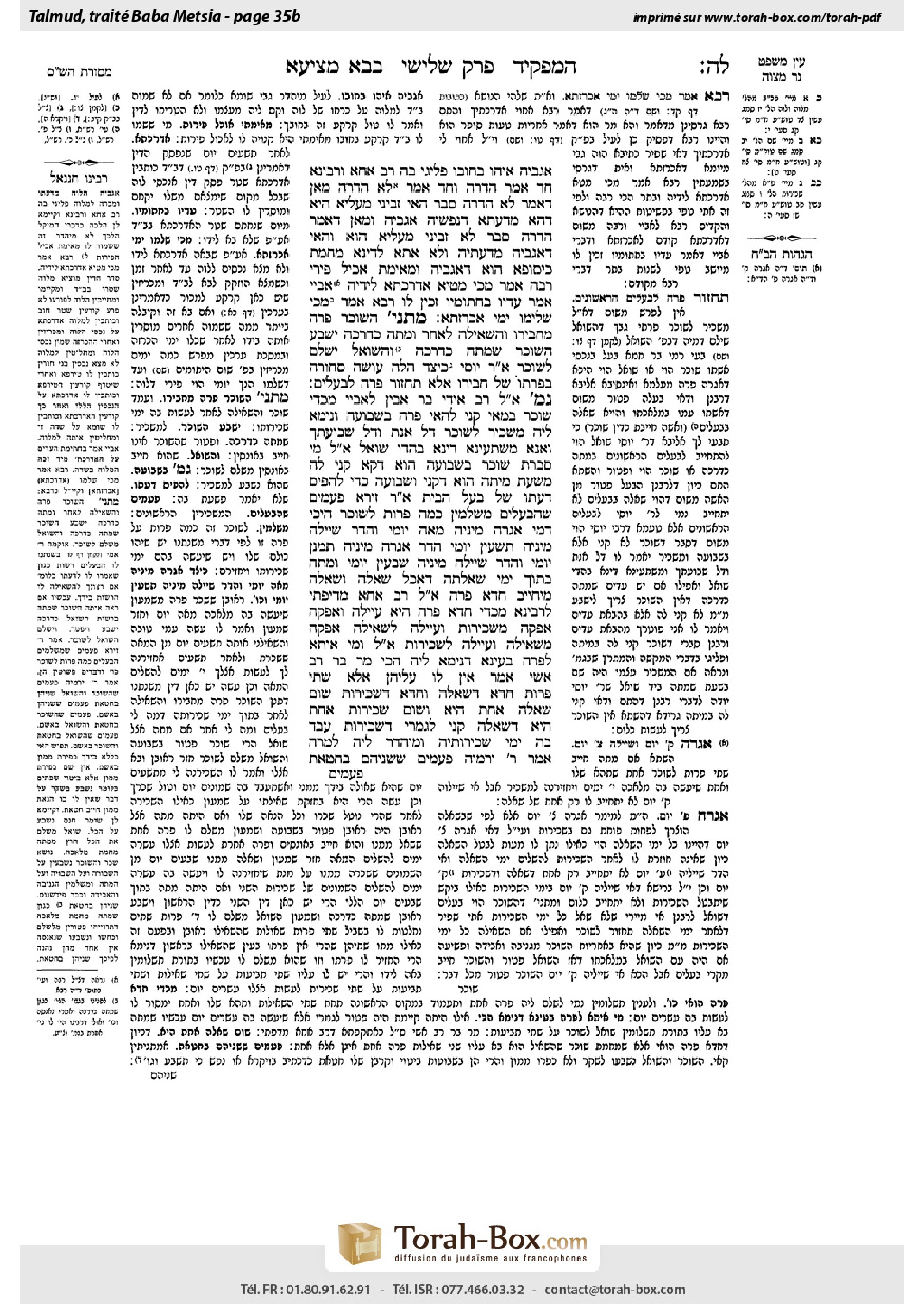
בבא מציעא ל״ה ב · Aramaic and Hebrew text
אַגְבְּיֵהּ אִיהוּ בְּחוֹבוֹ, פְּלִיגִי בַּהּ רַב אַחָא וְרָבִינָא. חַד אָמַר: הָדְרָה, וְחַד אָמַר: לָא הָדְרָה.
מַאן דְּאָמַר לָא הָדְרָה סָבַר: הַאי זְבִינֵי מְעַלְּיָא הִיא, דְּהָא מִדַּעְתָּא דְּנַפְשֵׁיהּ אַגְבְּיֵהּ. וּמַאן דְּאָמַר הָדְרָה סָבַר: לָא זְבִינֵי מְעַלְּיָא הוּא, וְהַאי דְּאַגְבְּיֵהּ מִדַּעְתֵּיהּ וְלָא אֲתָא לְדִינָא – מֵחֲמַת כִּיסּוּפָא הוּא דְּאַגְבְּיֵהּ.
וּמֵאֵימַת אָכֵיל פֵּירֵי? רַבָּה אָמַר: מִכִּי מָטְיָא אַדְרַכְתָּא לִידֵיהּ. אַבָּיֵי אָמַר: עֵדָיו בַּחֲתוּמָיו זָכִין לוֹ.
רָבָא אָמַר: מִכִּי שְׁלִימוּ יְמֵי אַכְרַזְתָּא.
מַתְנִי׳ הַשּׂוֹכֵר פָּרָה מֵחֲבֵירוֹ וְהִשְׁאִילָהּ לְאַחֵר, וּמֵתָה כְּדַרְכָּהּ – יִשָּׁבַע הַשּׂוֹכֵר שֶׁמֵּתָה כְּדַרְכָּהּ, וְהַשּׁוֹאֵל יְשַׁלֵּם לַשּׂוֹכֵר. אָמַר רַבִּי יוֹסֵי: כֵּיצַד הַלָּה עוֹשֶׂה סְחוֹרָה בְּפָרָתוֹ שֶׁל חֲבֵירוֹ? אֶלָּא תַּחְזוֹר פָּרָה לַבְּעָלִים.
גְּמָ׳ אֲמַר לֵיהּ רַב אִידִי בַּר אָבִין לְאַבָּיֵי: מִכְּדֵי, שׂוֹכֵר בְּמַאי קָנֵי לְהַאי פָּרָה? בִּשְׁבוּעָה.
וְנֵימָא לֵיהּ מַשְׂכִּיר לְשׂוֹכֵר: דַּל אַנְתְּ וְדַל שְׁבוּעֲתָךְ, וַאֲנָא מִשְׁתַּעֵינָא דִּינָא בַּהֲדֵי שׁוֹאֵל. אֲמַר לֵיהּ: מִי סָבְרַתְּ, שׂוֹכֵר בִּשְׁבוּעָה הוּא דְּקָא קָנֵי לַהּ? מִשְּׁעַת מִיתָה הוּא דְּקָנֵי. וּשְׁבוּעָה כְּדֵי לְהָפִיס דַּעְתּוֹ שֶׁל בַּעַל הַבַּיִת.
אָמַר רַבִּי זֵירָא: פְּעָמִים שֶׁהַבְּעָלִים מְשַׁלְּמִין כַּמָּה פָּרוֹת לַשּׂוֹכֵר. הֵיכִי דָּמֵי? אַגְרַהּ מִינֵּיהּ מְאָה יוֹמֵי, וַהֲדַר שַׁיְילַהּ מִינֵּיהּ תִּשְׁעִין יוֹמֵי, הֲדַר אַגְרַהּ מִינֵּיהּ תְּמָנַן יוֹמֵי, וַהֲדַר שַׁיְילַהּ מִינֵּיהּ שִׁבְעִין יוֹמֵי, וּמֵתָה בְּתוֹךְ יְמֵי שְׁאֵלָתָהּ, דְּאַכֹּל שְׁאֵלָה וּשְׁאֵלָה מִיחַיַּיב חֲדָא פָּרָה.
אֲמַר לֵיהּ רַב אַחָא מִדִּיפְתִּי לְרָבִינָא: מִכְּדִי חֲדָא פָּרָה הִיא, עַיְילַהּ וְאַפְּקַהּ, אַפְּקַהּ מִשְּׂכִירוּת וְעַיְּילַהּ לִשְׁאֵילָה, אַפְּקַהּ מִשְּׁאֵילָה וְעַיְּילַהּ לִשְׂכִירוּת? אֲמַר לֵיהּ: וּמִי אִיתַהּ לְפָרָה בְּעֵינָא דְּנֵימָא לֵיהּ הָכִי?
מָר בַּר רַב אָשֵׁי אָמַר: אֵין לוֹ עֲלֵיהֶן אֶלָּא שְׁתֵּי פָּרוֹת, חֲדָא דִּשְׁאֵלָה וַחֲדָא דִּשְׂכִירוּת. שׁוּם שְׁאֵלָה אַחַת הִיא, וְשׁוּם שְׂכִירוּת אַחַת הִיא. דִּשְׁאֵלָה קָנֵי לִגְמָרֵי, דִּשְׂכִירוּת – עָבֵד בַּהּ יְמֵי שְׂכִירוּתֵיהּ, וּמַיהְדַּר לַיהּ לְמָרַהּ.
אָמַר רַבִּי יִרְמְיָה: פְּעָמִים שֶׁשְּׁנֵיהֶם בְּחַטָּאת,
Bava Metzia 35b · English translation
With regard to a case where the debtor, not the court, authorized his creditor to repossess the land for his debt, and now he seeks to pay his debt and reclaim it, Rav Aḥa and Ravina disagree. One says: If he pays the debt, the repossession based on the appraisal is reversed and he reclaims the land. And one says: The repossession based on the appraisal is not reversed.
The Gemara elaborates: The one who says that the repossession based on the appraisal is not reversed holds that this is a full-fledged sale, as he authorized the repossession at his own initiative. Consequently, he cannot retract it. And the one who says that the repossession based on the appraisal is reversed holds that it is not a full-fledged sale. And the fact that he authorized the repossession at his initiative and did not wait to come to court for a ruling that his land be repossessed does not make it a full-fledged sale. It was only due to his desire to avoid embarrassment that he authorized the repossession.
The Gemara clarifies the halakhot of repossession: And when a creditor repossesses the debtor’s land, from when does he consume the produce of that land? Rabba said: He consumes the produce from the time when the document of authorization reaches his possession. This is a document that authorizes him to repossess the property of the debtor in payment of the debt wherever that property is located. Abaye said: He need not wait until he receives that document. Rather, the document’s witnesses, with their signatures, acquire the debtor’s land on his behalf. From the moment they sign the document, the land is his.
Rava said: He consumes the produce from the time when the days of proclamation conclude. After property belonging to the debtor is located, the court proclaims that the property will be auctioned to raise funds to repay the debt. Therefore, even after the document of authorization reaches him, the creditor is not entitled to the produce, as someone else may purchase it. If the creditor enters the highest bid, he is entitled to the produce.
MISHNA: In the case of one who rents a cow from another, and this renter then lends it to another person, and the cow dies in its typical manner, i.e., of natural causes, in the possession of the borrower, the renter takes an oath to the owner of the cow that the cow died in its typical manner, and the borrower pays the renter for the cow that he borrowed. A renter is exempt in a case of damage due to circumstances beyond his control, including death, but a borrower is liable to compensate the owner even for damage due to circumstances beyond his control. Rabbi Yosei said: How does the other party, i.e., the renter, do business with and profit from another’s cow? Rather, the value of the cow should be returned to the owner. The renter need not take an oath, but the borrower must compensate the owner of the cow.
GEMARA: Rav Idi bar Avin said to Abaye: After all, with regard to the renter, with what does he acquire this cow to the extent that one who borrows the cow from him is liable to compensate him if it dies? He acquires it with an oath that he took to the owner of the cow that the cow died of natural causes.
The Gemara asks: But since the acquisition is effected by the renter’s oath, let the one who rented his animal for hire say to the renter: Remove yourself and remove your oath. I do not want to deal with you at all in this case, and I will litigate with the borrower to recover my cow. Abaye said to Rav Idi bar Avin: Do you hold that it is with an oath that the renter acquires the cow? That is not so, as from the moment of the cow’s death, the renter acquires the cow. From the moment the cow dies in the possession of the borrower, the renter has the right to receive another cow in exchange. And this oath that the renter takes to the owner of the cow is not required by the halakha. Rather, he takes the oath to alleviate the concerns of the owner, so that the owner will not suspect him of negligence. Consequently, the owner of the cow cannot litigate with the borrower, and even if he waives his right to demand an oath from the renter, he is unable to receive a cow from the borrower.
Rabbi Zeira says: According to the halakha in the mishna, there are times when the owner pays several cows to the renter. What are the circumstances? In a case where the renter rented a cow from him for one hundred days, and the owner of the cow then borrowed that cow from the renter for ninety days, and the renter then rented that cow from the owner for eighty days, and the latter then borrowed that cow from the renter for seventy days, and that cow died within the seventy-day period of its borrowing, then for each and every occasion of borrowing of the cow, the owner, who then became the borrower, owes one cow. Since there were two discrete acts of borrowing and two discrete acts of rental, the owner owes him four cows, two outright as compensation for the borrowed cows that died, and two cows for the renter to use for the duration of his rental periods.
Rav Aḥa of Difti said to Ravina concerning this halakha: After all, it is one cow, and he introduced it into one legal status and removed it from another legal status. He removed it from the status of rental and he introduced it into the status of borrowing; he removed it from the status of borrowing and introduced it into the status of rental. How then does the owner pay multiple cows for one cow? Ravina said to Rav Aḥa: And is the cow intact so that the owner could say this to the renter: Here is your cow? Since the borrower cannot return the cow to the creditor, he is liable to return that which he committed to return, and he committed to return two cows, not one.
Mar bar Rav Ashi said a third opinion: The renter has against the owner only a claim of two cows, one for the borrowing done by the owner, and one for fulfillment of his rental agreement. This is because the category of borrowing is one and the category of rental is one. As for the cow that is repayment for the borrowing, the renter acquires it completely. And as for the one for the rental, he works with it for the duration of its rental period and then he returns it to its owner.
Apropos the situations described in the mishna, Rabbi Yirmeya says: If the renter and the borrower each took a false oath and are liable to bring offerings for their false oaths, there are times that both are liable to bring a sin-offering;
Bava Metzia 35b · Traduction française (IA)
Concernant un cas où le débiteur, et non le tribunal, a autorisé son créancier à reprendre la terre à titre de paiement de sa dette, et qu'il souhaite maintenant payer sa dette et récupérer la terre, Rav Aḥa et Ravina sont en désaccord. L'un dit : Si il paie la dette, la reprise fondée sur l'appréciation est annulée et il récupère la terre. L'autre dit : La reprise fondée sur l'appréciation n'est pas annulée.
La Guemara développe : Celui qui affirme que la reprise fondée sur l'appréciation n'est pas annulée considère que c'est une vente pleinement établie, car il a autorisé la reprise à sa propre initiative. Par conséquent, il ne peut pas la rétracter. Et celui qui affirme que la reprise fondée sur l'appréciation est annulée considère qu'il ne s'agit pas d'une vente pleinement établie. Et le fait qu'il ait autorisé la reprise à sa propre initiative et ne soit pas attendu que le tribunal statue sur la reprise de sa terre ne rend pas cela une vente pleinement établie. C'était uniquement en raison de son désir d'éviter l'humiliation qu'il a autorisé la reprise.
La Guemara clarifie les halakhot de la reprise : Et lorsque un créancier reprend la terre du débiteur, à partir de quel moment peut-il consommer les produits de cette terre ? Rabba dit : Il peut consommer les produits à partir du moment où le document d'autorisation arrive en son possession. Ce document autorise à reprendre la propriété du débiteur en paiement de la dette, où que celle-ci se trouve. Abaye dit : Il n'a pas besoin d'attendre jusqu'à ce qu'il reçoive ce document. Plutôt, les témoins du document, avec leurs signatures, acquièrent la terre du débiteur à sa place. À partir du moment où ils signent le document, la terre est sienne.
Rava dit : Il consomme les produits à partir du moment où les jours de proclamation s'achèvent. Après que la propriété appartenant au débiteur ait été trouvée, la cour proclame que la propriété sera mise aux enchères afin de récolter des fonds pour rembourser la dette. Ainsi, même après que le document d'autorisation arrive jusqu'à lui, le créancier n'a pas le droit aux produits, car quelqu'un d'autre pourrait les acheter. Si le créancier offre le prix le plus élevé, il est autorisé à prendre possession des produits.
MICHNA : Dans le cas d'une personne qui loue un taureau à un autre, et que ce loueur le prête ensuite à une autre personne, et que le taureau meure dans son état normal, c'est-à-dire par causes naturelles, pendant qu'il est en possession du prêteur, le loueur jure devant le propriétaire du taureau qu'il est mort dans son état normal, et le prêteur paie le loueur pour le taureau qu'il a emprunté. Le loueur est exempt dans le cas de dommages dus à des circonstances hors de son contrôle, y compris la mort, mais le prêteur est tenu de compenser le propriétaire même en cas de dommages dus à des circonstances hors de son contrôle. Rabbi Yosei a dit : Comment l'autre partie, c'est-à-dire le loueur, peut-il commercer et tirer profit d'un taureau appartenant à un autre ? Plutôt, la valeur du taureau doit être rendue au propriétaire. Le loueur n'a pas besoin de jurer, mais le prêteur doit compenser le propriétaire du taureau.
GUEMARA : Rav Idi bar Avin dit à Abaye : Après tout, concernant le locataire, avec quoi acquiert-il cette vache de sorte que celui qui emprunte la vache de lui soit tenu de la compenser en cas de mort ? Il l'acquiert par un serment qu'il a prêté au propriétaire de la vache selon lequel la vache est morte de causes naturelles.
La Guemara pose la question : Mais puisque l'acquisition est effectuée par l'œuf du locataire, que celui qui a loué son animal à titre onéreux dise au locataire : Retire-toi et retire ton serment. Je n'ai nullement l'intention de m'occuper de toi dans ce cas, et je porterai plainte contre le prêteur afin de récupérer ma vache. Abaye dit à Rav Idi bar Avin : Tu penses que l'acquisition est faite par serment ? Ce n'est pas le cas, car dès le moment de la mort de la vache, le locataire acquiert la vache. Dès que la vache meurt entre les mains du prêteur, le locataire a le droit de recevoir une autre vache en échange. Et ce serment que le locataire prend envers l'propriétaire de la vache n'est pas requis par la halakha. En réalité, il prend ce serment pour apaiser les inquiétudes de l'propriétaire, afin qu'il ne soupçonne pas le locataire de négligence. Par conséquent, l'propriétaire de la vache ne peut pas porter plainte contre le prêteur, et même s'il renonce à son droit de demander un serment au locataire, il ne peut pas recevoir une vache du prêteur.
Rabbi Zeira dit : Selon la halakha du michna, il y a des cas où l'propriétaire paie plusieurs vaches au locataire. Quels sont ces cas ? Dans un cas où le locataire a loué une vache à titre onéreux pendant cent jours, et l'propriétaire de la vache a ensuite emprunté cette vache au locataire pendant quatre-vingt-dix jours, et le locataire a ensuite loué cette vache à l'propriétaire pendant quatre-vingt jours, et l'propriétaire a ensuite emprunté cette vache au locataire pendant soixante-dix jours, et cette vache est morte pendant la période de soixante-dix jours de son emprunt, alors pour chaque occasion d'emprunt de la vache, l'propriétaire, qui est ensuite devenu le prêteur, doit une vache. Puisque les deux actes d'emprunt et les deux actes de location étaient distincts, l'propriétaire doit quatre vaches, deux en compensation pour les vaches empruntées qui sont mortes, et deux vaches pour que le locataire puisse les utiliser pendant la durée de ses locations.
Rav Aḥa de Difti dit à Ravina concernant cette halakha : Après tout, c'est une seule vache, et il l'a introduite dans un statut juridique et l'a retirée d'un autre statut juridique. Il l'a retirée du statut de location et l'a introduite dans le statut de prêt ; il l'a retirée du statut de prêt et l'a introduite dans le statut de location. Comment alors le propriétaire paie-t-il plusieurs vaches pour une seule vache ? Ravina dit à Rav Aḥa : Et la vache est intacte, de sorte que le propriétaire puisse dire cela au locataire : Ici est votre vache ? Puisque le prêteur ne peut pas rendre la vache au créancier, il est tenu de rendre ce qu'il a engagé de rendre, et il a engagé de rendre deux vaches, pas une.
Mar bar Rav Ashi a dit une troisième opinion : Le locataire a contre l'propriétaire seulement une revendication de deux vaches, une pour le prêt effectué par l'propriétaire, et une pour l'accomplissement de son contrat de location. Cela est parce que la catégorie du prêt est une et la catégorie de la location est une. En ce qui concerne la vache qui est la réparation du prêt, le locataire l'acquiert entièrement. Et en ce qui concerne celle de la location, il l'utilise pendant la durée de son bail et puis il la rend à son propriétaire.
En ce qui concerne les situations décrites dans la mitsva, Rabbi Yirmeya dit : Si le locataire et le prêteur ont chacun pris un faux serment et sont tenus de présenter des offrandes pour leurs faux serments, il y a des cas où les deux sont tenus de présenter un sacrifice expiatoire ;
Traduction française générée par IA à partir de l’édition anglaise de Sefaria. Vérifie toujours un passage avec le texte source.
Text from Sefaria: William Davidson Edition - Vocalized Aramaic (CC BY NC); William Davidson Edition - English (CC BY NC).