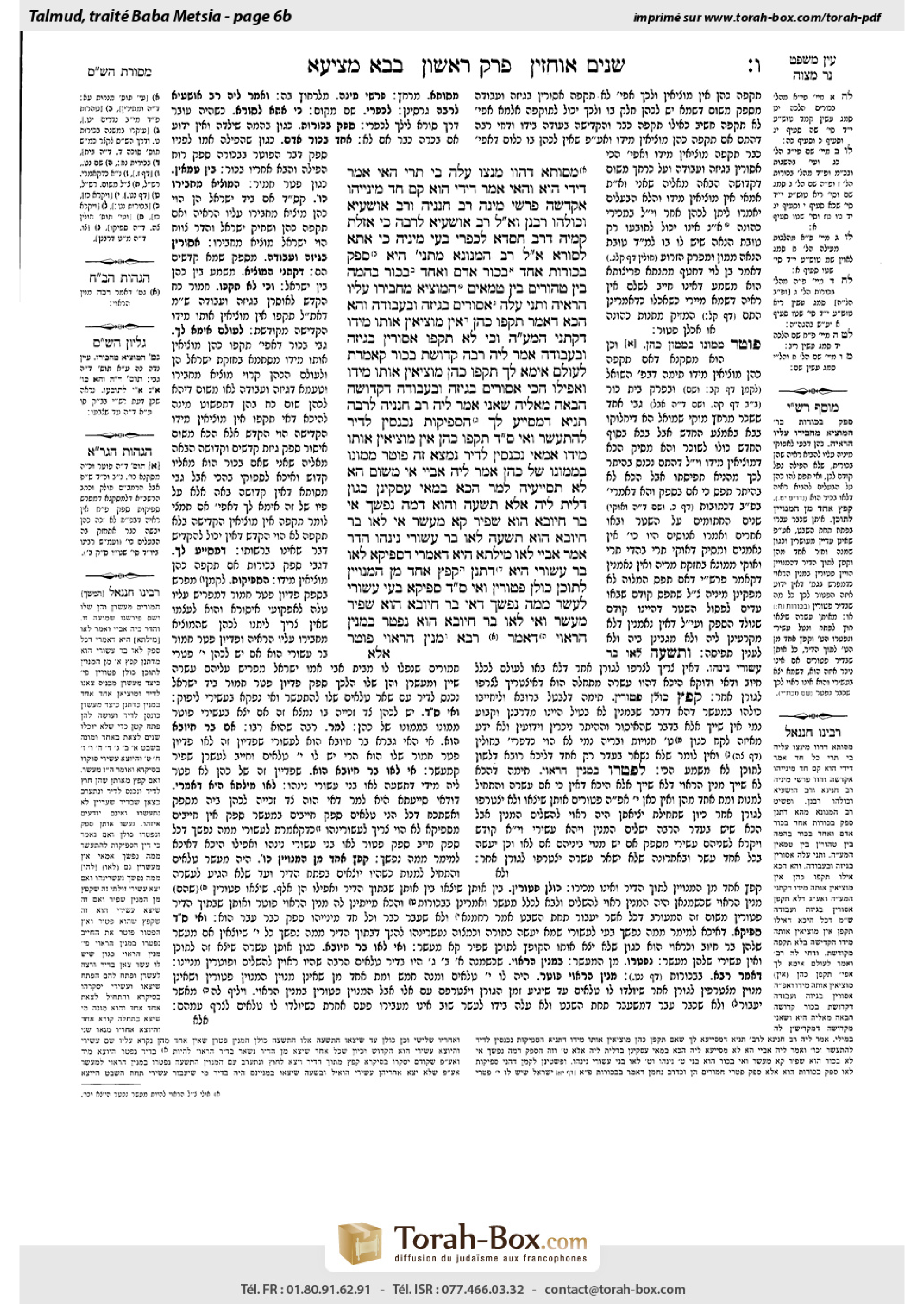
Bava Metzia 6b: Talmud study for Daf Yomi
Study the Talmud for Daf Yomi with scanned pages, Hebrew text, English translations from Sefaria and AI-generated French translations.
Passage selection and English or AI-generated French translation are available where the scan has annotations. Daf Study is independent of Torah-Box and Sefaria.
Browse Bava Metzia · בבא מציעא · All tractatesBava Metzia 6b text and translations
This page of Bava Metzia includes the Aramaic text, an English translation and an AI-generated French translation, alongside the scan above.
בבא מציעא ו׳ ב · Aramaic and Hebrew text
מַסּוּתָא דַּהֲווֹ מִנְּצוּ עֲלַהּ בֵּי תְרֵי, הַאי אָמַר דִּידִי הוּא וְהַאי אָמַר דִּידִי הוּא. קָם חַד מִינַּיְיהוּ אַקְדְּשַׁהּ. פָּרְשִׁי מִינַּהּ רַב חֲנַנְיָה וְרַב אוֹשַׁעְיָא וְכוּלְּהוּ רַבָּנַן. וַאֲמַר לֵיהּ רַב אוֹשַׁעְיָא לְרַבָּה: כִּי אָזְלַתְּ קַמֵּיהּ דְּרַב חִסְדָּא לְכַפְרִי, בְּעִי מִינֵּיהּ.
כִּי אֲתָא לְסוּרָא, אֲמַר לֵיהּ רַב הַמְנוּנָא: מַתְנִיתִין הִיא. סְפֵק בְּכוֹרוֹת, אֶחָד בְּכוֹר אָדָם וְאֶחָד בְּכוֹר בְּהֵמָה, בֵּין טְהוֹרִים בֵּין טְמֵאִים: הַמּוֹצִיא מֵחֲבֵירוֹ עָלָיו הָרְאָיָה. וְתָנֵי עֲלַהּ: אֲסוּרִים בְּגִיזָה וּבַעֲבוֹדָה.
וְהָא הָכָא דְּאָמַר תְּקָפוֹ כֹּהֵן – אֵין מוֹצִיאִין אוֹתוֹ מִיָּדוֹ, דְּקָתָנֵי הַמּוֹצִיא מֵחֲבֵירוֹ עָלָיו הָרְאָיָה, וְכִי לֹא תְּקָפוֹ – אֲסוּרִין בְּגִיזָּה וּבַעֲבוֹדָה.
אֲמַר לֵיהּ רַבָּה: קְדוּשַּׁת בְּכוֹר קָאָמְרַתְּ – לְעוֹלָם אֵימָא לָךְ תְּקָפוֹ כֹּהֵן מוֹצִיאִין אוֹתוֹ מִיָּדוֹ, וַאֲפִילּוּ הָכִי אֲסוּרִים בְּגִיזָּה וּבַעֲבוֹדָה, דִּקְדוּשָּׁה הַבָּאָה מֵאֵלֶיהָ שָׁאנֵי.
אֲמַר לֵיהּ רַב חֲנַנְיָה לְרַבָּה, תַּנְיָא דִּמְסַיַּיע לָךְ: הַסְּפֵיקוֹת נִכְנָסִין לַדִּיר לְהִתְעַשֵּׂר.
וְאִי סָלְקָא דַעְתָּךְ תְּקָפוֹ כֹּהֵן אֵין מוֹצִיאִין אוֹתוֹ מִיָּדוֹ, אַמַּאי נִכְנָסִין לַדִּיר? נִמְצָא זֶה פּוֹטֵר מָמוֹנוֹ בְּמָמוֹנוֹ שֶׁל כֹּהֵן!
אֲמַר לֵיהּ אַבָּיֵי: אִי מִשּׁוּם הָא לָא תְּסַיְּיעֵיהּ לְמָר, הָכָא בְּמַאי עָסְקִינַן – כְּגוֹן דְּלֵית לֵיהּ אֶלָּא תִּשְׁעָה, וְהוּא דְּמָה נַפְשָׁךְ: אִי בַּר חִיּוּבָא הוּא, שַׁפִּיר קָא מְעַשַּׂר. אִי לָאו בַּר חִיּוּבָא הוּא, תִּשְׁעָה לָאו בַּר עַשּׂוֹרֵי נִינְהוּ.
הֲדַר אָמַר אַבָּיֵי: לָאו מִילְּתָא הִיא דְּאָמְרִי דִּסְפֵיקָא לָאו בַּר עַשּׂוֹרֵי הִיא, דִּתְנַן: קָפַץ אֶחָד מִן הַמְּנוּיִין לְתוֹכָן – כּוּלָּן פְּטוּרִין.
וְאִי סָלְקָא דַּעְתָּךְ סְפֵיקָא בָּעֵי עַשּׂוֹרֵי, לְעַשֵּׂר מִמָּה נַפְשָׁךְ: דְּאִי בַּר חִיּוּבָא הוּא – שַׁפִּיר מְעַשַּׂר, וְאִי לָאו בַּר חִיּוּבָא הוּא – נִפְּטַר בְּמִנְיָן הָרָאוּי.
דְּאָמַר רָבָא: מִנְיָן הָרָאוּי פּוֹטֵר.
Bava Metzia 6b · English translation
bathhouse over which two people were arguing, and of which neither of them were in possession. This one said: It is mine, and that one said: It is mine. One of them arose and consecrated the bathhouse. Rav Ḥananya and Rav Oshaya and all the Rabbis kept away from the bathhouse and refrained from bathing there lest they transgress the prohibition against misusing consecrated property, as they were uncertain whether this act of consecration took effect. And Rav Oshaya said to Rabba: When you go to study before Rav Ḥisda in the town of Kafrei, ask him what we should do in this case.
When on his way to Kafrei, Rabba came to the city of Sura and related the incident to the Sages there. Rav Hamnuna said to him: The resolution to your dilemma is found in the following mishna (Teharot 4:12): If there is uncertainty with regard to firstborns, whether a human firstborn or an animal firstborn, whether with regard to kosher animals or non-kosher animals, i.e., the firstborn of a donkey, the burden of proof rests upon the claimant. The priest may not take the animal from its owner, or the redemption payment from the child’s father. And it is taught in that regard in a baraita: One is nevertheless prohibited from shearing and from working such animals, as their status as firstborns is uncertain.
Rav Hamnuna continued: And here, where the mishna effectively says that if a priest forcefully seized an animal whose status as firstborn is uncertain the court does not remove it from his possession, as it teaches that the burden of proof rests upon the claimant, the baraita states that even when the priest did not seize it, one is prohibited from shearing and working it. Evidently, the fact that the priest would remain in possession of the animal were he to seize it suffices to accord consecrated status to the animal even in a case where the priest did not seize it. The same is true in the case of the bathhouse, that even though the one who consecrated it had not taken possession of it, his consecration takes effect.
Rabba said to him: This is no proof, as the cases are not comparable. You say a ruling concerning the sanctity of a firstborn. Actually, I will say to you with regard to an animal whose status as firstborn is uncertain, if a priest seized it, the court removes it from his possession, as there is no validity to ownership acquired by force. Accordingly, when the mishna states that the burden of proof rests upon the claimant, it means that the priest must bring proof that the animal is a firstborn. And nevertheless, one is prohibited from shearing and from working such an animal, as sanctity that emerges by itself is different. The sanctity of a firstborn does not result from an act of consecration; rather, the firstborn is consecrated by itself at birth. Therefore, the uncertainty with regard to its sanctity is intrinsic, and one is prohibited from using the animal as long as the uncertainty exists.
Rav Ḥananya said to Rabba: A halakha is taught in a baraita that supports your opinion that if a priest seizes an animal whose status as firstborn is uncertain, the court removes it from his possession: The animals whose status as firstborn is uncertain enter the pen to be tithed. They are brought in together with the rest of the young animals from whom the animal tithe is separated. This is so despite the fact that the halakhot of animal tithe do not apply to a firstborn animal.
And if it enters your mind to say that in the case of an animal whose status as firstborn is uncertain that is seized by a priest, the court does not remove it from his possession, why do these animals enter the pen? Isn’t this a case of the owner exempting his property from the animal tithe with the property of a priest? If the animal belongs to the priests, it cannot be used as a tithe since one is obligated to separate the animal tithe from one’s own animals.
Abaye said to him: If your support for Rabba’s opinion is due to that baraita, it does not support the Master. Here, we are dealing with a case where the owner has only nine animals and it, the animal whose status as firstborn is uncertain. Since whichever way you look at it, the owner of the animals is exempt: If that animal is not a firstborn, it belongs to the owner and is subject to the obligation to be tithed as part of a group of ten animals, and the owner tithes properly. And if the animal is a firstborn, it belongs to the priests and the animals are not subject to the obligation to be tithed, since the nine animals belonging to an owner are not subject to tithing.
Abaye then said: That which I said is not correct, as, contrary to what I said, an animal whose status as firstborn is uncertain is not subject to tithing, as we learned in a mishna (Bekhorot 58b): If before one completed tithing his animals, one of those already counted jumped back into the pen among the animals that were not yet counted, all those in the pen are exempt from the obligation to be tithed, because each of them could be the animal that was already counted.
And if it enters your mind that an animal whose status as firstborn is uncertain requires tithing, let him tithe the remaining animals, as whichever way you look at it, his tithing would be effective. Because if this group of ten emerging now renders the owner obligated in the animal tithe, he is tithing properly. And if it does not render the owner obligated in the animal tithe, as one of the ten is the animal that was previously counted, nevertheless, each of the other nine is exempt from animal tithe due to the principle of a tally fit to reach ten.
This principle is as Rava says: A tally fit to reach ten exempts oneself from the obligation to tithe. If one began counting animals for the purpose of tithing and when he began the tally the group was fit to be tithed, but ultimately he was unable to separate the tithe, for example, because one of the animals died and there were only nine left, those that were counted while the tally was fit to reach ten are exempt from the requirement of animal tithe, and the owner is not required to include them in the tithe the following year. Similarly, in a case where one of the ten animals was already counted, the other nine are nevertheless exempted by this count, as while he was counting them, the tally was fit to reach ten.
Bava Metzia 6b · Traduction française (IA)
Une maison de bain sur laquelle deux personnes disputaient, et dont ni l'une ni l'autre ne disposaient. L'une disait : C'est à moi, et l'autre disait : C'est à à moi. L'une d'entre elles se leva et consacra la maison de bain. Rav Ḥananya et Rav Oshaya et tous les Rabbins s'éloignèrent de la maison de bain et se refusèrent à s'y baigner de peur de transgresser l'interdiction d'utiliser des biens consacrés, car ils étaient incertains quant à l'effet de cette consécration. Et Rav Oshaya dit à Rabba : Quand tu vas étudier devant Rav Ḥisda dans la ville de Kafrei, demande-lui ce que nous devons faire dans ce cas-ci.
Quand il se rendait à Kafrei, Rabba arriva à la ville de Sura et rapporta l'incident aux Sages présents. Rav Hamnuna lui dit : La résolution de votre dilemme se trouve dans la suivante mitsna (Téharot 4:12) : Si l'on est incertain quant aux premiers-nés, qu'il s'agisse d'un premier-né humain ou d'un premier-né animal, qu'il s'agisse d'animaux kasher ou non kasher, c'est-à-dire le premier-né d'un âne, la charge de la preuve incombe à l'individu qui réclame. Le prêtre ne peut pas prendre l'animal de son propriétaire, ni la rançon de la part du père de l'enfant. Et cela est enseigné dans un baraïta : On est toutefois interdit de tondre et de travailler ces animaux, car leur statut de premier-né est incertain.
Rav Hamnuna continua : Et ici, où la mitsna dit effectivement que si un prêtre s'empare fortement d'un animal dont le statut de premier-né est incertain, la cour ne l'ôte pas de sa possession, car elle enseigne que la charge de la preuve incombe à l'individu qui réclame, le baraïta dit que même lorsque le prêtre n'a pas s'emparé de l'animal, on est interdit de tondre et de travailler cet animal. Évidemment, le fait que le prêtre resterait en possession de l'animal s'il s'en emparait suffit à accorder un statut consacré à l'animal même dans un cas où le prêtre n'a pas s'en emparé. De même, c'est le cas de la maison de bain, que même si celui qui l'a consacrée n'a pas pris possession d'elle, sa consécration prend effet.
Rabba dit à lui : Cela n'est pas une preuve, car les cas ne sont pas comparables. Tu parles d'une décision concernant la sanctité d'un premier-né. En réalité, je vais te dire concernant un animal dont le statut de premier-né est incertain, si un prêtre s'en empare, la cour l'ôte de sa possession, car il n'y a pas de validité à la propriété acquise par la force. Ainsi, lorsque la mitsna dit que la charge de la preuve incombe à l'individu qui réclame, cela signifie que le prêtre doit apporter la preuve que l'animal est un premier-né. Et pourtant, on est interdit de tondre et de travailler cet animal, car la sanctité qui émerge d'elle-même est différente. La sanctité d'un premier-né ne provient pas d'une consécration, mais le premier-né est consacré d'office à la naissance. Ainsi, l'incertitude concernant sa sanctité est intrinsèque, et on est interdit d'utiliser l'animal tant que l'incertitude persiste.
Rav Ḥananya dit à Rabba : Une halakha est enseignée dans un baraïta qui soutient votre opinion : si un prêtre s'empare d'un animal dont le statut de premier-né est incertain, la cour l'ôte de sa possession : Les animaux dont le statut de premier-né est incertain entrent dans la cour pour être tithés. Ils sont amenés ensemble avec les autres jeunes animaux desquels on sépare la tithe animale. C'est ainsi malgré le fait que les halakhot de la tithe animale ne s'appliquent pas à un premier-né.
Et si vous pensez que dans le cas d'un animal dont le statut de premier-né est incertain qui est s'emparé par un prêtre, la cour ne l'ôte pas de sa possession, pourquoi ces animaux entrent-ils dans la cour ? N'est-ce pas un cas où l'propriétaire exempt son propriété de la tithe animale avec la propriété d'un prêtre ? Si l'animal appartient aux prêtres, il ne peut pas être utilisé comme tithe, car on est tenu de séparer la tithe animale de ses propres animaux.
Abaye dit à lui : Si votre soutien pour l'opinion de Rabba provient de ce baraïta, il ne soutient pas le Maître. Ici, nous sommes dans un cas où l'propriétaire a seulement neuf animaux et celui-ci, l'animal dont le statut de premier-né est incertain. Puisque, de toute façon, l'propriétaire des animaux est exempt : Si cet animal n'est pas un premier-né, il appartient à l'propriétaire et est soumis à l'obligation de être tithé comme partie d'un groupe de dix animaux, et l'propriétaire tithé correctement. Et si l'animal est un premier-né, il appartient aux prêtres et les animaux ne sont pas soumis à l'obligation de être tithé, car les neuf animaux appartenant à un propriétaire ne sont pas soumis à la tithe.
Abaye dit alors : Ce que j'ai dit n'est pas correct, car, contrairement à ce que j'ai dit, un animal dont le statut de premier-né est incertain n'est pas soumis à la tithe, car nous avons appris dans une mitsva (Bekhorot 58b) : Si avant qu'un individu n'ait terminé la tithe de ses animaux, l'un de ceux déjà comptés saute dans la cour parmi les animaux qui n'ont pas encore été comptés, tous ceux dans la cour sont exemptés de l'obligation de être tithés, car chacun d'eux pourrait être l'animal déjà compté.
Et si vous pensez que l'animal dont le statut de premier-né est incertain exige la tithe, faites-titler les autres animaux, car de toute façon, sa tithe serait efficace. Car si ce groupe de dix actuellement rend l'propriétaire obligé de la tithe animale, il tithé correctement. Et si cela ne rend pas l'propriétaire obligé de la tithe animale, car l'un des dix est l'animal déjà compté, néanmoins, chaque autre des neuf est exempt de la tithe animale en vertu du principe d'un comptage suffisant pour atteindre dix.
Ce principe est celui que dit Rava : un décompte suffisant pour atteindre dix exempté l'individu de l'obligation de dîme. Si l'on commence à compter les animaux à l'effet de dîmer et que lorsqu'on commence le décompte le groupe était dîmable, mais finalement on ne peut pas séparer la dîme, par exemple parce qu'un des animaux est mort et qu'il en reste seulement neuf, ceux qui ont été comptés pendant que le décompte était suffisant pour atteindre dix sont exemptés de la exigence de dîme des animaux, et l'propriétaire n'est pas tenu de les inclure dans la dîme de l'année suivante. De même, dans le cas où l'un des dix animaux était déjà compté, les neuf autres sont toutefois exemptés par ce décompte, car pendant qu'il les comptait, le décompte était suffisant pour atteindre dix.
Traduction française générée par IA à partir de l’édition anglaise de Sefaria. Vérifie toujours un passage avec le texte source.
Text from Sefaria: William Davidson Edition - Vocalized Aramaic (CC BY NC); William Davidson Edition - English (CC BY NC).