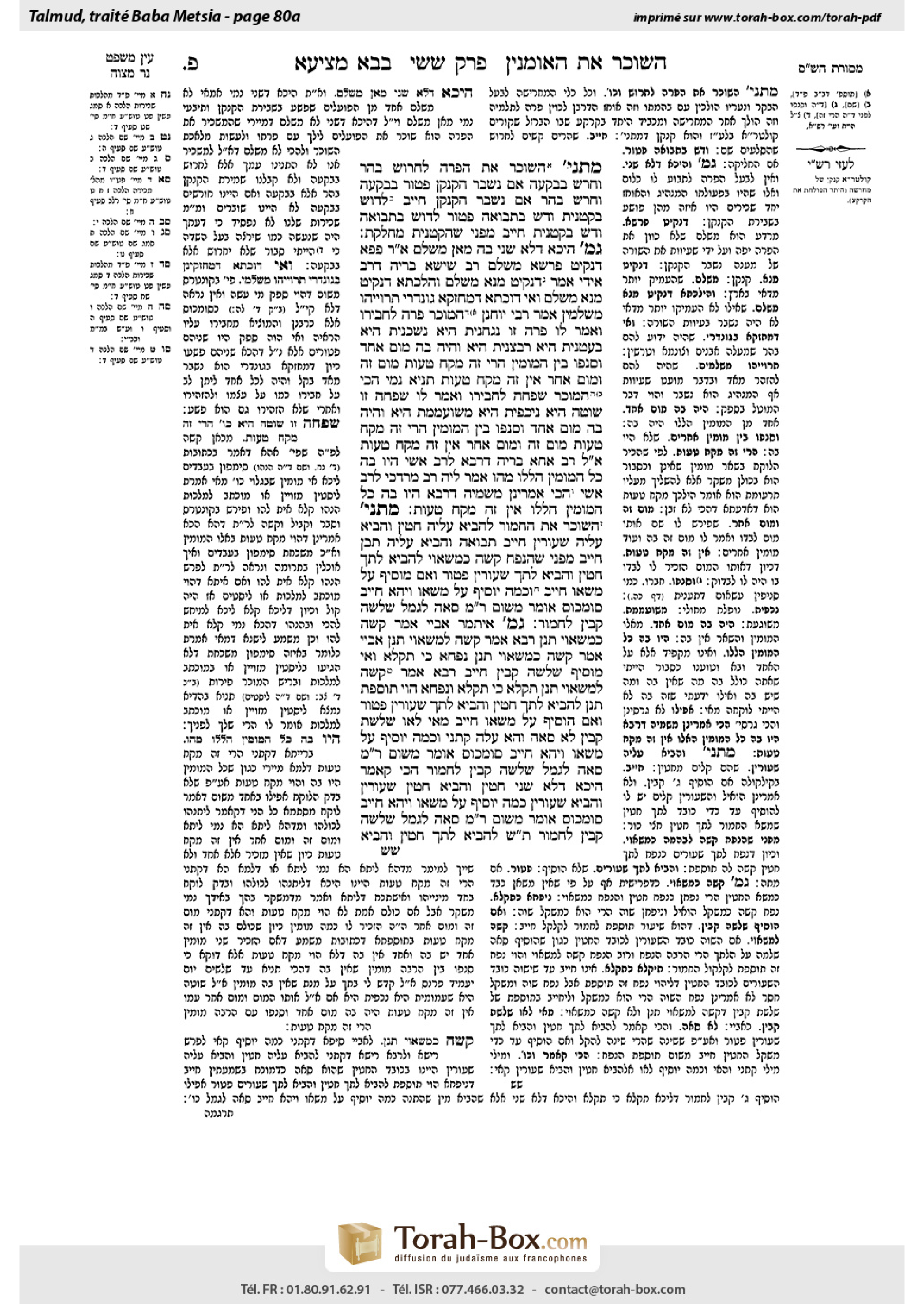
Bava Metzia 80a: Talmud study for Daf Yomi
Study the Talmud for Daf Yomi with scanned pages, Hebrew text, English translations from Sefaria and AI-generated French translations.
Passage selection and English or AI-generated French translation are available where the scan has annotations. Daf Study is independent of Torah-Box and Sefaria.
Browse Bava Metzia · בבא מציעא · All tractatesBava Metzia 80a text and translations
This page of Bava Metzia includes the Aramaic text, an English translation and an AI-generated French translation, alongside the scan above.
בבא מציעא פ׳ א · Aramaic and Hebrew text
מַתְנִי׳ הַשּׂוֹכֵר אֶת הַפָּרָה לַחֲרוֹשׁ בָּהָר וְחָרַשׁ בַּבִּקְעָה, אִם נִשְׁבַּר הַקַּנְקַן – פָּטוּר. בַּבִּקְעָה וְחָרַשׁ בָּהָר, אִם נִשְׁבַּר הַקַּנְקַן – חַיָּיב. לָדוּשׁ בְּקִטְנִית וְדָשׁ בִּתְבוּאָה – פָּטוּר, לָדוּשׁ בִּתְבוּאָה וְדָשׁ בְּקִטְנִית – חַיָּיב, מִפְּנֵי שֶׁהַקִּטְנִית מַחְלֶקֶת.
גְּמָ׳ הֵיכָא דְּלָא שַׁנִּי בָּהּ, מַאן מְשַׁלֵּם? אָמַר רַב פָּפָּא: דְּנָקֵיט פְּרָשָׁא מְשַׁלֵּם. רַב שִׁישָׁא בְּרֵיהּ דְּרַב אִידִי אָמַר: דְּנָקֵיט מָנָא מְשַׁלֵּם. וְהִלְכְתָא: דְּנָקֵיט מָנָא מְשַׁלֵּם. וְאִי דּוּכְתָּא דְּמַחְזְקִי (גּוּנְדְּרֵי) – [גְּרוּנְדֵּי] תַּרְוַיְיהוּ מְשַׁלְּמִין.
אָמַר רַבִּי יוֹחָנָן: הַמּוֹכֵר פָּרָה לַחֲבֵירוֹ, וְאָמַר לוֹ: פָּרָה זוֹ נַגְחָנִית הִיא, נַשְׁכָנִית הִיא, בַּעֲטָנִית הִיא, רַבְצָנִית הִיא, וְהָיָה בָּהּ מוּם אֶחָד וּסְנָפוֹ בֵּין הַמּוּמִין – הֲרֵי זֶה מִקַּח טָעוּת. מוּם זֶה וּמוּם אַחֵר – אֵין זֶה מִקַּח טָעוּת.
תַּנְיָא נָמֵי הָכִי: הַמּוֹכֵר שִׁפְחָה לַחֲבֵירוֹ, וְאָמַר לוֹ: שִׁפְחָה זוֹ שׁוֹטָה הִיא, נִיכְפֵּית הִיא, מְשׁוּעְמֶמֶת הִיא, וְהָיָה בָּהּ מוּם אֶחָד וּסְנָפוֹ בֵּין הַמּוּמִין – הֲרֵי זֶה מִקַּח טָעוּת. מוּם זֶה וּמוּם אַחֵר – אֵין זֶה מִקַּח טָעוּת.
אֲמַר לֵיהּ רַב אַחָא בְּרֵיהּ דְּרָבָא לְרַב אָשֵׁי: הָיוּ בָּהּ כׇּל הַמּוּמִין הַלָּלוּ, מַהוּ? אֲמַר לֵיהּ רַב מָרְדֳּכַי לְרַב אָשֵׁי, הָכִי אָמְרִינַן מִשְּׁמֵיהּ דְּרָבָא: הָיוּ בָּהּ כׇּל הַמּוּמִין הַלָּלוּ – אֵין זֶה מִקַּח טָעוּת.
מַתְנִי׳ הַשּׂוֹכֵר אֶת הַחֲמוֹר לְהָבִיא עָלֶיהָ חִטִּין, וְהֵבִיא עָלֶיהָ שְׂעוֹרִין – חַיָּיב. תְּבוּאָה, וְהֵבִיא עָלֶיהָ תֶּבֶן – חַיָּיב, מִפְּנֵי שֶׁהַנֶּפַח קָשֶׁה כְּמַשּׂאוֹי. לְהָבִיא לֶתֶךְ חִטִּין, וְהֵבִיא לֶתֶךְ שְׂעוֹרִין – פָּטוּר. וְאִם מוֹסִיף עַל מַשָּׂאוֹ חַיָּיב. וְכַמָּה יוֹסִיף עַל מַשָּׂאוֹ וִיהֵא חַיָּיב? סוֹמְכוֹס אוֹמֵר מִשּׁוּם רַבִּי מֵאִיר: סְאָה לְגָמָל, שְׁלֹשָׁה קַבִּין לַחֲמוֹר.
גְּמָ׳ אִיתְּמַר. אַבָּיֵי אָמַר: ״קָשֶׁה כְּמַשּׂאוֹי״ תְּנַן. רָבָא אָמַר: ״קָשֶׁה לְמַשּׂאוֹי״ תְּנַן. אַבָּיֵי אָמַר: ״קָשֶׁה כְּמַשּׂאוֹי״ תְּנַן, נִפְחָא כִּי תִקְלָא, וְאִי מוֹסִיף שְׁלֹשָׁה קַבִּין – חַיָּיב. רָבָא אָמַר: ״קָשֶׁה לְמַשּׂאוֹי״ תְּנַן, תִּקְלָא כִּי תִקְלָא וְנִפְחָא הָוֵי תּוֹסֶפֶת.
תְּנַן: לְהָבִיא לֶתֶךְ חִטִּין, וְהֵבִיא לֶתֶךְ שְׂעוֹרִין – פָּטוּר. וְאִם הוֹסִיף עַל מַשָּׂאוֹ – חַיָּיב. מַאי לָאו שְׁלֹשֶׁת קַבִּין?! לֹא, סְאָה. וְהָא עֲלַהּ קָתָנֵי: וְכַמָּה יוֹסִיף עַל מַשָּׂאוֹ וִיהֵא חַיָּיב? סוֹמְכוֹס אוֹמֵר מִשּׁוּם רַבִּי מֵאִיר: סְאָה לְגָמָל, שְׁלֹשָׁה קַבִּין לַחֲמוֹר!
הָכִי קָאָמַר: הֵיכָא דְּלָא שַׁנִּי חִטִּין וְהֵבִיא חִטִּין, שְׂעוֹרִין וְהֵבִיא שְׂעוֹרִין, כַּמָּה יוֹסִיף עַל מַשָּׂאוֹ וִיהֵא חַיָּיב? סוֹמְכוֹס אוֹמֵר מִשּׁוּם רַבִּי מֵאִיר: סְאָה לְגָמָל שְׁלֹשָׁה קַבִּין לַחֲמוֹר.
תָּא שְׁמַע: לְהָבִיא לֶתֶךְ חִטִּין וְהֵבִיא
Bava Metzia 80a · English translation
MISHNA: With regard to one who rents a cow and a plow in order to plow on the mountain but he plowed in the valley, if the plowshare, the cutting tool on the bottom part of the plow, breaks, he is exempt, as it was even more likely to break on mountainous terrain. In a case where he rents the cow and a plow to plow in the valley but he plowed on the mountain, if the plowshare breaks he is liable. If he hired the cow to thresh legumes but it threshed grain, and the cow slipped and broke its leg, he is exempt. If he hired it to thresh grain but it threshed legumes he is liable, because legumes are slippery.
GEMARA: The mishna discussed the liability of a renter who diverged from the terms of the rental agreement, but it does not teach the halakha of liability for broken machinery in a case where the renter did follow the agreement. The Gemara asks: In a case where the renter did not diverge from their agreement, who pays? Rav Pappa said: The one who holds the goad [parasha] pays, as it can be assumed that he caused the plow to break by not leading it in a straight path. Rav Sheisha, son of Rav Idi, said: The one who holds the vessel, the plow itself, pays. And the halakha is that the one who holds the vessel pays. And if it was a place where rocks are commonly found they both pay, as in this case any small irregularity in the ground where the plow digs a furrow is likely to cause the plow to break.
§ Rabbi Yoḥanan says, citing the Tosefta (Bava Batra 4:6): In a case of one who sells a cow to another and says to him: You should know that this cow has defects, it is accustomed to goring, it is accustomed to biting, it is a kicker, it lies down habitually; but in reality it had only one defect and he inserted it among the list of defects that it did not have, this is a mistaken transaction, as the buyer saw that it did not have the other defects and therefore did not take seriously any of the defects the seller enumerated, including the one that the cow actually had. But if the seller stated: The animal has this defect, i.e., the defect that it in fact has, and other defects, without specifying what they were, this is not a mistaken transaction.
The Gemara notes that this is also taught in a baraita (Tosefta, Bava Batra 4:3): With regard to one who sells a maidservant to another and says to him: This maidservant is an imbecile, she is epileptic, she is crazy [meshuamemet]; but in reality she had only one defect and he inserted it among the other defects, this is a mistaken transaction. But if the seller stated: The maidservant has this defect, i.e., the defect that she in fact has, and other defects, without specifying what they were, this is not a mistaken transaction.
Rav Aḥa, son of Rava, said to Rav Ashi: If the animal had all of these defects, what is the halakha in that case? Can the buyer claim to have thought that the seller was not serious when he mentioned so many problems? Rav Mordekhai said to Rav Ashi: We say this halakha in the name of Rava: If the animal had all of these defects, it is not a mistaken transaction, as he was forthright. The seller is not at fault if the buyer did not believe him.
MISHNA: With regard to one who rents a donkey in order to bring wheat on it, to transport it on its back, and he brought upon it an identical weight of barley, which is lighter than wheat, and the donkey was injured, he is liable. Similarly, if he hired it for transporting grain, and he brought straw of the same weight upon it, he is liable, because the extra volume is as difficult for the animal as the load itself. If he rented a donkey in order to bring on it a letekh, i.e., a measurement of volume, of wheat, but he brought a letekh of barley, he is exempt, as he brought the same volume of a lighter substance. And one who adds to a load a greater volume than he stipulated is liable. And how much must he add to the load for him to be liable? Sumakhos says in the name of Rabbi Meir: A se’a on a camel and three kav on a donkey.
GEMARA: It was stated that amora’im disagreed about the precise text of this mishna. Abaye said that we learned in the mishna: Difficult as the load. Rava said that we learned: Difficult for the load. The Gemara explains: Abaye said that we learned: Difficult as the load, with the meaning that volume is like weight, and therefore when the volume of the two substances is equal, if one adds three kav he is liable. Rava said that we learned: Difficult for the load, with the meaning that if one weight is like the other weight, then the difference in volume is considered an addition. In other words, one is liable if the weight of the barley is the same as that of the wheat, in which case the additional volume is considered to cause damage. Rava holds that if the volume of the two is equal, one is not liable for the additional three kav of weight.
The Gemara attempts to cite a proof for one of these opinions. We learned in the mishna: If one hired a donkey to bring a letekh of wheat, but he brought a letekh of barley, he is exempt. And one who adds to a load a greater volume than he stipulated is liable. What, is it not correct that this means he did not bring exactly a letekh of barley, but added three kav, which would support the opinion of Abaye? The Gemara refutes this interpretation: No, he added a whole se’a. The Gemara asks: But the continuation of the mishna was taught concerning this case: How much must he add to the load for him to be liable? Sumakhos says in the name of Rabbi Meir: A se’a on a camel and three kav on a donkey.
The Gemara explains that this is what the last clause of the mishna is saying: In a case where the renter did not diverge from their agreement, e.g., they stipulated that he would bring wheat and he brought wheat, or barley and he brought barley, how much must he add to the load for him to be liable? Sumakhos says in the name of Rabbi Meir: A se’a on a camel and three kav on a donkey.
The Gemara further suggests: Come and hear a proof from a baraita: If one hired a donkey to bring a letekh, i.e., fifteen se’a, of wheat, but he brought
Bava Metzia 80a · Traduction française (IA)
MICHNA : Concernant celui qui loue un taureau et une charrue pour labourer sur une montagne mais il laboure dans la vallée, si la pointe de la charrue, l'outil de coupe au bas de la charrue, se brise, il est exempt, car il était même plus probable qu'elle se brise sur un terrain montagneux. Dans le cas où il loue le taureau et la charrue pour labourer dans la vallée mais il laboure sur la montagne, si la pointe de la charrue se brise, il est responsable. Si on lui a loué le taureau pour battre des légumes mais il a battu des céréales, et que le taureau a glissé et a cassé une patte, il est exempt. Si on lui a loué le taureau pour battre des céréales mais il a battu des légumes, il est responsable, car les légumes sont glissants.
GUEMARA : La mishna a discuté de la responsabilité d'un locataire qui s'est écarté des termes du contrat de location, mais elle ne traite pas de la halakha de responsabilité pour des machines brisées dans le cas où le locataire a respecté le contrat. La Guemara pose la question : Dans le cas où le locataire n'a pas divergé du contrat, qui paie ? Rav Pappa a dit : Celui qui tient le bâton [parasha] paie, car on peut supposer qu'il a causé la cassure de la charrue en ne la guidant pas en ligne droite. Rav Sheisha, fils de Rav Idi, a dit : Celui qui tient le récipient, la charrue elle-même, paie. Et la halakha est que celui qui tient le récipient paie. Et si c'était un lieu où des rochers sont courants, ils paient tous les deux, car dans ce cas, toute petite irrégularité du sol où la charrue creuse un sillon est susceptible de faire se briser la charrue.
§ Rabbi Yoḥanan dit, en citant la Tosefta (Bava Batra 4:6) : Dans le cas où l'on vend un taureau à un autre et qu'on lui dit : Tu dois savoir que ce taureau a des défauts, il est habitué à tuer, il est habitué à mordre, il est un bête à jeter, il s'allonge habituellement ; mais en réalité il avait seulement un défaut et on l'a inséré parmi les défauts qu'il n'avait pas, c'est une transaction erronée, car l'acheteur a vu qu'il n'avait pas les autres défauts et n'a donc pas pris au sérieux les défauts énumérés par le vendeur, y compris celui que le taureau avait effectivement. Mais si le vendeur a dit : L'animal a ce défaut, c'est-à-dire le défaut qu'il a effectivement, et d'autres défauts, sans préciser quels ils étaient, c'est une transaction non erronée.
La Guemara note que cela est également enseigné dans une baraïta (Tosefta, Bava Batra 4:3) : Concernant celui qui vend une servante à un autre et lui dit : Cette servante est une imbécile, elle est épileptique, elle est folle [meshuamemet] ; mais en réalité elle avait seulement un défaut et on l'a inséré parmi les autres défauts, c'est une transaction erronée. Mais si le vendeur a dit : La servante a ce défaut, c'est-à-dire le défaut qu'elle a effectivement, et d'autres défauts, sans préciser quels ils étaient, c'est une transaction non erronée.
Rav Aḥa, fils de Rava, a dit à Rav Ashi : Si l'animal avait tous ces défauts, quelle est la halakha dans ce cas ? L'acheteur peut-il prétendre qu'il pensait que le vendeur n'était pas sérieux lorsqu'il a mentionné autant de problèmes ? Rav Mordekhai a dit à Rav Ashi : Nous disons cette halakha au nom de Rava : Si l'animal avait tous ces défauts, ce n'est pas une transaction erronée, car il était franc. Le vendeur n'est pas fautif si l'acheteur ne l'a pas cru.
MICHNA : Concernant celui qui loue un âne pour transporter du blé sur son dos, pour le transporter sur son dos, et il a transporté une charge identique d'orge, qui est plus léger que le blé, et l'âne s'est blessé, il est responsable. De même, si on l'avait loué pour transporter des céréales et qu'on avait transporté de la paille de même poids, il est responsable, car le volume supplémentaire est aussi difficile pour l'animal que la charge elle-même. Si on l'avait loué pour transporter un letekh, c'est-à-dire une mesure de volume, de blé, mais on avait transporté un letekh d'orge, il est exempt, car on avait transporté le même volume d'une substance plus légère. Et celui qui ajoute à la charge un volume supérieur à celui stipulé est responsable. Et combien doit-il ajouter à la charge pour être responsable ? Sumakhos dit au nom de Rabbi Meir : Un se’a sur un âne et trois kav sur un âne.
GUEMARA : Il a été dit que les amora’im étaient d'accord sur le texte précis de cette mishna. Abaye a dit que nous avons appris dans la mishna : Difficile comme la charge. Rava a dit que nous avons appris : Difficile pour la charge. La Guemara explique : Abaye a dit que nous avons appris : Difficile comme la charge, avec la signification que le volume est comme le poids, et donc lorsque le volume des deux substances est égal, si l'on ajoute trois kav, il est responsable. Rava a dit que nous avons appris : Difficile pour la charge, avec la signification que si un poids est comme l'autre poids, alors la différence de volume est considérée comme une addition. En d'autres termes, l'on est responsable si le poids de l'orge est le même que celui du blé, dans le cas où l'ajout de volume est considéré comme un préjudice. Rava considère que si le volume des deux est égal, l'on n'est pas responsable de l'ajout de trois kav de poids.
La Guemara tente de citer une preuve pour l'une de ces opinions. Nous avons appris dans la mishna : Si l'on a loué un chameau pour transporter un letekh de blé, mais on a transporté un letekh d'orge, il est exempt. Et celui qui ajoute à la charge un volume supérieur à celui stipulé est responsable. Qu'est-ce que cela signifie, n'est-ce pas que cela ne signifie pas qu'il n'a pas transporté exactement un letekh d'orge, mais qu'il a ajouté trois kav, ce qui soutiendrait l'opinion d'Abaye ? La Guemara réfute cette interprétation : Non, il a ajouté un se’a entier. La Guemara pose la question : Mais la continuation de la mishna a été enseignée concernant ce cas : Combien doit-il ajouter à la charge pour être responsable ? Sumakhos dit au nom de Rabbi Meir : Un se’a sur un chameau et trois kav sur un chameau.
La Guemara explique que c'est ce que la dernière phrase de la mishna dit : Dans le cas où le locataire n'a pas divergé de son contrat, par exemple s'ils ont stipulé qu'il devait transporter du blé et il a transporté du blé, ou de l'orge et il a transporté de l'orge, combien doit-il ajouter à la charge pour être responsable ? Sumakhos dit au nom de Rabbi Meir : Un se’a sur un chameau et trois kav sur un chameau.
La Guemara suggère davantage : Viens écouter une preuve d'une baraïta : Si l'on a loué un chameau pour transporter un letekh, c'est-à-dire quinze se’a, de blé, mais on a transporté
Traduction française générée par IA à partir de l’édition anglaise de Sefaria. Vérifie toujours un passage avec le texte source.
Text from Sefaria: William Davidson Edition - Vocalized Aramaic (CC BY NC); William Davidson Edition - English (CC BY NC).