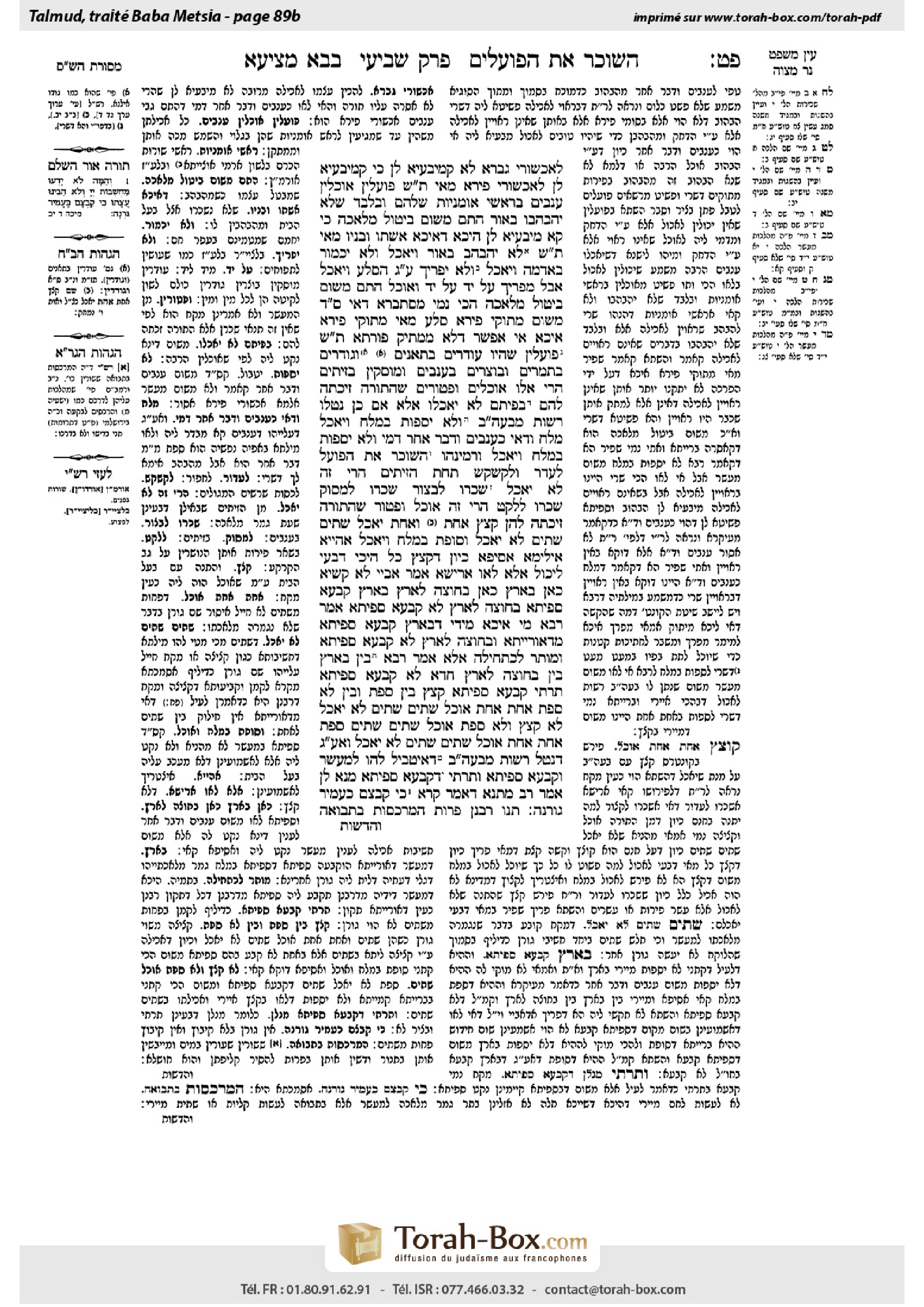
Bava Metzia 89b: Talmud study for Daf Yomi
Study the Talmud for Daf Yomi with scanned pages, Hebrew text, English translations from Sefaria and AI-generated French translations.
Passage selection and English or AI-generated French translation are available where the scan has annotations. Daf Study is independent of Torah-Box and Sefaria.
Browse Bava Metzia · בבא מציעא · All tractatesBava Metzia 89b text and translations
This page of Bava Metzia includes the Aramaic text, an English translation and an AI-generated French translation, alongside the scan above.
בבא מציעא פ״ט ב · Aramaic and Hebrew text
לְאַכְשׁוֹרֵי גַּבְרָא לָא קָמִיבַּעְיָא לַן, כִּי קָמִיבַּעְיָא לַן לְאַכְשׁוֹרֵי פֵּירָא, מַאי? תָּא שְׁמַע: פּוֹעֲלִין אוֹכְלִין עֲנָבִים בְּרָאשֵׁי אוּמָּנִיּוֹת שֶׁלָּהֶם, וּבִלְבַד שֶׁלֹּא יְהַבְהֲבוּ בָּאוּר!
הָתָם מִשּׁוּם בִּיטּוּל מְלָאכָה, כִּי קָא מִיבַּעְיָא לַן, הֵיכָא דְּאִיכָּא אִשְׁתּוֹ וּבָנָיו, מַאי?
תָּא שְׁמַע: לֹא יְהַבְהֵב בָּאוּר וְיֹאכַל, וְלֹא יִכְמוֹר בַּאֲדָמָה וְיֹאכַל, וְלֹא יַפְרִיךְ עַל גַּבֵּי הַסֶּלַע וְיֹאכַל, אֲבָל מְפָרֵיךְ עַל יָד עַל יָד וְאוֹכֵל. הָתָם מִשּׁוּם בִּיטּוּל מְלָאכָה. הָכִי נָמֵי מִסְתַּבְּרָא, דְּאִי סָלְקָא דַּעְתָּךְ מִשּׁוּם מַתּוֹקֵי פֵּירָא – סֶלַע מַאי מַתּוֹקֵי פֵּירָא אִיכָּא? אִי אֶפְשָׁר דְּלָא מְמַתֵּיק פּוּרְתָּא.
תָּא שְׁמַע: פּוֹעֲלִין שֶׁהָיוּ עוֹדְרִים בִּתְאֵנִים וְגוֹדְרִים בִּתְמָרִים וּבוֹצְרִים בַּעֲנָבִים וּמוֹסְקִין בְּזֵיתִים – הֲרֵי אֵלּוּ אוֹכְלִים, וּפְטוּרִים, שֶׁהַתּוֹרָה זִיכְּתָה לָהֶם. בְּפִיתָּם לֹא יֹאכְלוּ, אֶלָּא אִם כֵּן נָטְלוּ רְשׁוּת מִבַּעַל הַבַּיִת. וְלֹא יִסְפּוֹת בַּמֶּלַח וְיֹאכַל!
מֶלַח וַדַּאי כַּעֲנָבִים וְדָבָר אַחֵר דָּמֵי.
וְלֹא יִסְפּוֹת בַּמֶּלַח וְיֹאכַל. וּרְמִינְהוּ: הַשּׂוֹכֵר אֶת הַפּוֹעֵל לְעַדֵּר וּלְקַשְׁקֵשׁ תַּחַת הַזֵּיתִים – הֲרֵי זֶה לֹא יֹאכַל, שְׂכָרוֹ לִבְצוֹר שְׂכָרוֹ לִמְסוֹק שְׂכָרוֹ לְלַקֵּט – הֲרֵי זֶה אוֹכֵל וּפָטוּר, שֶׁהַתּוֹרָה זִיכְּתָה לָהֶן. קָצַץ אַחַת וְאַחַת – יֹאכַל, שְׁתַּיִם שְׁתַּיִם – לֹא יֹאכַל, וְסוֹפֵת בַּמֶּלַח וְיֹאכַל.
אַהֵיָיא? אִילֵּימָא אַסֵּיפָא – כֵּיוָן דְּקָצַץ, כֹּל הֵיכִי דְּבָעֵי לֵיכוֹל, אֶלָּא לָאו אַרֵישָׁא!
אָמַר אַבָּיֵי: לָא קַשְׁיָא. כָּאן – בָּאָרֶץ, כָּאן – בְּחוּצָה לָאָרֶץ. בָּאָרֶץ קָבְעָא סְפִיתָא, בְּחוּצָה לָאָרֶץ לָא קְבַעָא סְפֵיתָא. אָמַר רָבָא: מִי אִיכָּא מִידֵּי דְּבָאָרֶץ קְבַעָא סְפֵיתָא מִדְּאוֹרָיְיתָא, וּבְחוּצָה לָאָרֶץ לֹא קִבְעָא סְפֵיתָא, וּמוּתָּר לְכַתְּחִילָּה?!
אֶלָּא אָמַר רָבָא: בֵּין בָּאָרֶץ בֵּין בְּחוּצָה לָאָרֶץ, חֲדָא לָא – קִבְעָא סְפֵיתָא, תַּרְתֵּי – קְבַעָא סְפֵיתָא. קָצַץ: בֵּין סָפַת וּבֵין לֹא סָפַת, אַחַת אַחַת – אוֹכֵל, שְׁתַּיִם שְׁתַּיִם – לֹא יֹאכַל. לֹא קָצַץ וְלֹא סָפַת – אוֹכֵל שְׁתַּיִם שְׁתַּיִם, סָפַת: אַחַת אַחַת – אוֹכֵל, שְׁתַּיִם שְׁתַּיִם – לֹא יֹאכַל, וְאַף עַל גַּב דְּנָטַל רְשׁוּת מִבַּעַל הַבַּיִת, דְּאִיטְּבִיל לְהוּ לְמַעֲשֵׂר וְקָבְעָא סְפִיתָא.
וְתַרְתֵּי דְּקָבְעָא סְפִיתָא מְנָא לַן? אָמַר רַב מַתְנָא, דְּאָמַר קְרָא: ״כִּי קִבְּצָם כֶּעָמִיר גֹּרְנָה״.
תָּנוּ רַבָּנַן: פָּרוֹת הַמְרַכְּסוֹת בִּתְבוּאָה,
Bava Metzia 89b · English translation
The Gemara refutes this proof: We did not raise the difficulty with regard to the fitness of the man himself to eat, as it is obvious that one may act in advance so that he will be able to eat a great deal. When this dilemma was raised to us, it was with regard to the fitness of the produce for eating. May they be prepared by singeing? What, then, is the halakha? The Gemara offers another suggestion: Come and hear a proof from a baraita: Laborers may eat grapes at the end of their rows of vines, provided that they do not singe the grapes in fire.
The Gemara rejects this claim: This affords no proof, as the prohibition there is not because of his use of the fire but due to his neglect of his labor, as he has no right to busy himself with other matters during his work time. When the dilemma is raised to us, it is with regard to a case where he does not have to stop his work, e.g., when he has his wife and children with him, who can singe the fruit for him without him having to pause in his labor. What is the halakha in a case of this kind?
The Gemara again suggests: Come and hear a proof from a baraita: A laborer may not singe produce in fire and eat, and he may not heat produce in the ground and eat, and he may not break produce on rocks and eat, but he may break it little by little and eat. Once again, the Gemara refutes the proof: There too, the reason is due to his neglect of his labor. The Gemara comments: So too, it is reasonable that this is the case. As, if it enters your mind that it is prohibited due to his sweetening of the produce, what sweetening of the produce is there in his use of a rock? The Gemara responds: This is not a conclusive argument, as it is impossible that the produce would not be sweetened a little.
The Gemara further suggests: Come and hear a proof from a baraita: With regard to laborers who were plucking figs, or plucking dates, or harvesting grapes, or harvesting olives, they may eat and they are exempt from separating tithes, as the Torah entitled them to eat. Nevertheless, they may not eat these fruits together with their bread unless they received permission from the homeowner. Similarly, one may not dip [lo yispot] these fruits in salt and eat. This indicates that it is prohibited to sweeten the fruit.
The Gemara rejects this proof as well: Salt is certainly considered like grapes and something else, as one is adding an ingredient, which is undoubtedly prohibited. By contrast, one who singes produce in fire has not added anything, and therefore it is possible that this practice is permitted. Consequently, the Gemara’s question is left unresolved.
§ The baraita mentioned earlier taught: And he may not dip these fruits in salt and eat. And the Gemara raises a contradiction to this from a baraita: In the case of one who hires a laborer to till and dig a circle under olives, this one may not eat from the olives. But if he hired him to harvest grapes, or hired him to harvest olives, or hired him to gather any other fruit, this one may eat and he is exempt from separating tithes, as the Torah entitled these laborers to eat. In a case where he stipulated with the owner beforehand that he may eat even when he is not entitled to do so by Torah law, if he eats the fruit one by one, he may eat without separating tithes, but if he consumes two by two he may not eat without separating tithes. And he may dip these fruits in salt and eat.
The Gemara analyzes this last statement: To which section of the baraita is this referring? If we say that it is referring to the latter clause, in which the laborer had an agreement with the owner, it is superfluous: Since the laborer stipulated that he may eat in any manner he wishes, he may certainly eat with salt. Rather, is it not referring to the first clause of the baraita, concerning a laborer who eats by Torah law? This would prove that a laborer may dip fruit in salt without separating tithes.
Abaye said: This is not difficult, as here it is prohibited because he is in Eretz Yisrael, whereas there he is outside of Eretz Yisrael. The reason for the difference is as follows: In Eretz Yisrael, dipping fruit in salt establishes his consumption as a fixed meal, which renders the fruit subject to tithes. Outside of Eretz Yisrael, by contrast, dipping fruit in salt does not establish his consumption as a meal, as the mitzva of tithes does not apply outside of Eretz Yisrael by Torah law. Rava said: Is there any produce with regard to which the halakha is that in Eretz Yisrael dipping establishes it as a meal by Torah law, and yet outside Eretz Yisrael dipping does not establish it as a meal and it is even permitted ab initio? It cannot be that there is such a great difference between these places, as the enactments of the Sages are modeled on Torah law.
Rather, Rava rejected Abaye’s answer and stated a different resolution: Whether in Eretz Yisrael or outside of Eretz Yisrael, if he ate one fruit, its dipping in salt does not establish it as anything more than a casual meal, but if he ate two, dipping in salt does establish it as a meal. Therefore, in a case where he stipulated that he may eat, whether he dipped in salt or did not dip in salt, he may eat one by one, but he may not eat two by two. If he did not stipulate and did not dip in salt, he may eat two by two. If he dips in salt he may eat one by one, but he may not eat two by two, even though he received permission to eat two at a time from the homeowner. The reason is that they have already been rendered untithed produce with regard to tithes, because the dipping established them as ready for tithing. Consequently, the laborer may not partake of them until he has separated tithes.
The Gemara asks: And from where do we derive this halakha that with regard to eating fruit two at a time, dipping in salt establishes that they are subject to tithes? Rav Mattana said that it is as the verse states: “For He has gathered them as the sheaves to the threshing-floor” (Micah 4:12). This verse shows that one who gathers items together, an act that involves at least two items, is considered to have brought them into his granary. Consequently, if he also dips them in salt he has established his consumption as a fixed meal, which means that he must separate tithes.
The Sages taught: In the case of cows that tread on produce for which the work has been completed but which is threshed again in this manner as part of its preparation into food,
Bava Metzia 89b · Traduction française (IA)
Le Guemara réfute cette preuve : Nous n'avons pas soulevé de difficulté concernant la fitness du homme lui-même à manger, car il est évident qu'on peut agir à l'avance afin qu'il puisse manger beaucoup. Lorsque cette difficulté nous a été soulevée, c'était concernant la fitness des produits à manger. Doivent-ils être préparés en les brûlant ? Qu'est-ce donc que la halakha ? Le Guemara propose une autre suggestion : Viens et écoute une preuve d'une baraïta : Les ouvriers peuvent manger des raisins à la fin de leurs rangées de vignes, à condition qu'ils ne brûlent pas les raisins au feu.
Le Guemara rejette cette affirmation : Cela ne constitue pas une preuve, car l'interdiction là-bas n'est pas en raison de son utilisation du feu, mais en raison de son négligence dans son travail, car il n'a pas le droit de s'occuper d'autres choses pendant son temps de travail. Lorsque la difficulté est soulevée, c'est concernant un cas où il n'a pas à arrêter son travail, par exemple lorsqu'il a sa femme et ses enfants avec lui, qui peuvent brûler les fruits pour lui sans qu'il doive interrompre son travail. Quelle est la halakha dans un cas de ce genre ?
Le Guemara suggère à nouveau : Viens et écoute une preuve d'une baraïta : Un ouvrier ne doit pas brûler les produits au feu et manger, et ne doit pas réchauffer les produits au sol et manger, et ne doit pas écraser les produits sur les rochers et manger, mais il peut les écraser petit à petit et manger. Une fois de plus, le Guemara réfute cette preuve : Là aussi, la raison est en raison de son négligence dans son travail. Le Guemara commente : De même, il est raisonnable que cela soit ainsi. Car, si cela entre dans votre pensée que cela est interdit en raison de son sucrage des produits, quel sucrage des produits y a-t-il dans son utilisation d'une pierre ? Le Guemara répond : Cela n'est pas un argument concluant, car il est impossible que les produits ne soient pas un peu sucrés.
Le Guemara suggère encore : Viens et écoute une preuve d'une baraïta : Concernant les ouvriers qui arrachaient des figues, ou des dattes, ou récoltaient des raisins, ou récoltaient des olives, ils peuvent manger et sont exemptés de séparer les dîmes, car la Torah leur a donné le droit de manger. Cependant, ils ne peuvent pas manger ces fruits avec leur pain à moins qu'ils n'aient reçu la permission du propriétaire. De même, on ne peut pas tremper ces fruits dans le sel et manger. Cela indique que c'est interdit de sucrer les fruits.
Le Guemara rejette cette preuve également : Le sel est certainement considéré comme des raisins et quelque chose d'autre, car on ajoute un ingrédient, ce qui est clairement interdit. En revanche, celui qui brûle les produits au feu n'a pas ajouté quelque chose, et donc il est possible que cette pratique soit permise. Ainsi, la question du Guemara reste sans réponse.
§ La baraïta mentionnée plus tôt enseignait : Et il ne doit pas tremper ces fruits dans le sel et manger. Et le Guemara soulève une contradiction à ce propos à partir d'une autre baraïta : Dans le cas d'une personne qui embauche un ouvrier pour labourer et creuser un cercle sous les olives, cette personne ne peut pas manger des olives. Mais si on l'a embauché pour récolter des raisins, ou pour récolter des olives, ou pour réunir tout autre fruit, cette personne peut manger et est exempté de séparer les dîmes, car la Torah a donné le droit à ces ouvriers de manger. Dans un cas où il a stipulé avec le propriétaire à l'avance qu'il peut manger même s'il n'a pas le droit de le faire selon la loi juive, s'il mange les fruits un par un, il peut manger sans séparer les dîmes, mais s'il consomme deux par deux, il ne peut pas manger sans séparer les dîmes. Et il peut tremper ces fruits dans le sel et manger.
Le Guemara examine cette dernière déclaration : À quelle partie de la baraïta cela fait-il référence ? Si nous disons qu'il s'agit de la clause ultérieure, celle où l'ouvrier avait un accord avec le propriétaire, cela est superflu : puisque l'ouvrier a stipulé qu'il peut manger comme il le souhaite, il peut certainement manger avec du sel. Plutôt, n'est-ce pas qu'il s'agit de la première clause de la baraïta, concernant un ouvrier qui mange selon la loi juive ? Cela prouverait que l'ouvrier peut tremper les fruits dans le sel sans séparer les dîmes.
Abaye dit : Cela n'est pas difficile, car ici il est interdit car il est en Terre d'Israël, tandis que là il est en dehors de Terre d'Israël. La raison de la différence est la suivante : En Terre d'Israël, tremper les fruits dans le sel établit sa consommation comme un repas fixe, ce qui rend les fruits sujets aux dîmes. En dehors de Terre d'Israël, en revanche, tremper les fruits dans le sel ne les établit pas comme un repas, car la mitsva des dîmes ne s'applique pas en dehors de Terre d'Israël selon la loi juive. Rava dit : Y a-t-il un produit concernant lequel la halakha est que, en Terre d'Israël, tremper établit la consommation comme un repas selon la loi juive, et pourtant, en dehors de Terre d'Israël, tremper ne l'établit pas comme un repas et il est même permis dès le début ? Il ne peut pas être que cette différence entre ces deux lieux soit si grande, car les édicts des Sages sont modélisés sur la loi juive.
Plutôt, Rava a rejeté la réponse d'Abaye et a émis une autre résolution : Quoi qu'il en soit en Terre d'Israël ou en dehors de Terre d'Israël, si l'on a mangé un fruit, son tremper dans le sel ne l'établit pas comme un repas plus que casual, mais si l'on a mangé deux, tremper dans le sel l'établit comme un repas. Ainsi, dans un cas où il a stipulé qu'il peut manger, qu'il ait tremper dans le sel ou non, il peut manger un par un, mais il ne peut pas manger deux par deux. Si on n'a pas stipulé et qu'on n'a pas tremper dans le sel, on peut manger deux par deux. Si on trempe dans le sel, on peut manger un par un, mais on ne peut pas manger deux par deux, même s'il a reçu la permission du propriétaire de manger deux à la fois. La raison est qu'ils ont déjà été rendus des produits non titrés concernant les dîmes, car le tremper les a rendus prêts à la titration. Ainsi, l'ouvrier ne peut pas participer à leur consommation jusqu'à ce qu'il ait séparé les dîmes.
La Guemara pose la question : D'où dérivons-nous cette halakha selon laquelle, concernant la consommation de fruits deux à deux, le badigeonnement en sel établit qu'ils sont soumis aux dîmes ? Rav Mattana a dit que c'est comme la parole de la Torah qui dit : « Car il les a rassemblés comme les gerbes sur le tapis de meunier » (Micha 4:12). Cette parole montre qu'une personne qui rassemble des objets ensemble, une action qui implique au moins deux objets, est considérée comme ayant apporté ces objets dans son grenier. Ainsi, si elle les badigeonne également en sel, elle a établi sa consommation comme un repas fixe, ce qui signifie qu'elle doit séparer les dîmes.
Les Sages ont enseigné : Dans le cas de vaches qui foulent les produits pour lesquels le travail a été achevé, mais qui sont meunés à nouveau de cette manière faisant partie de leur préparation en nourriture,
Traduction française générée par IA à partir de l’édition anglaise de Sefaria. Vérifie toujours un passage avec le texte source.
Text from Sefaria: William Davidson Edition - Vocalized Aramaic (CC BY NC); William Davidson Edition - English (CC BY NC).