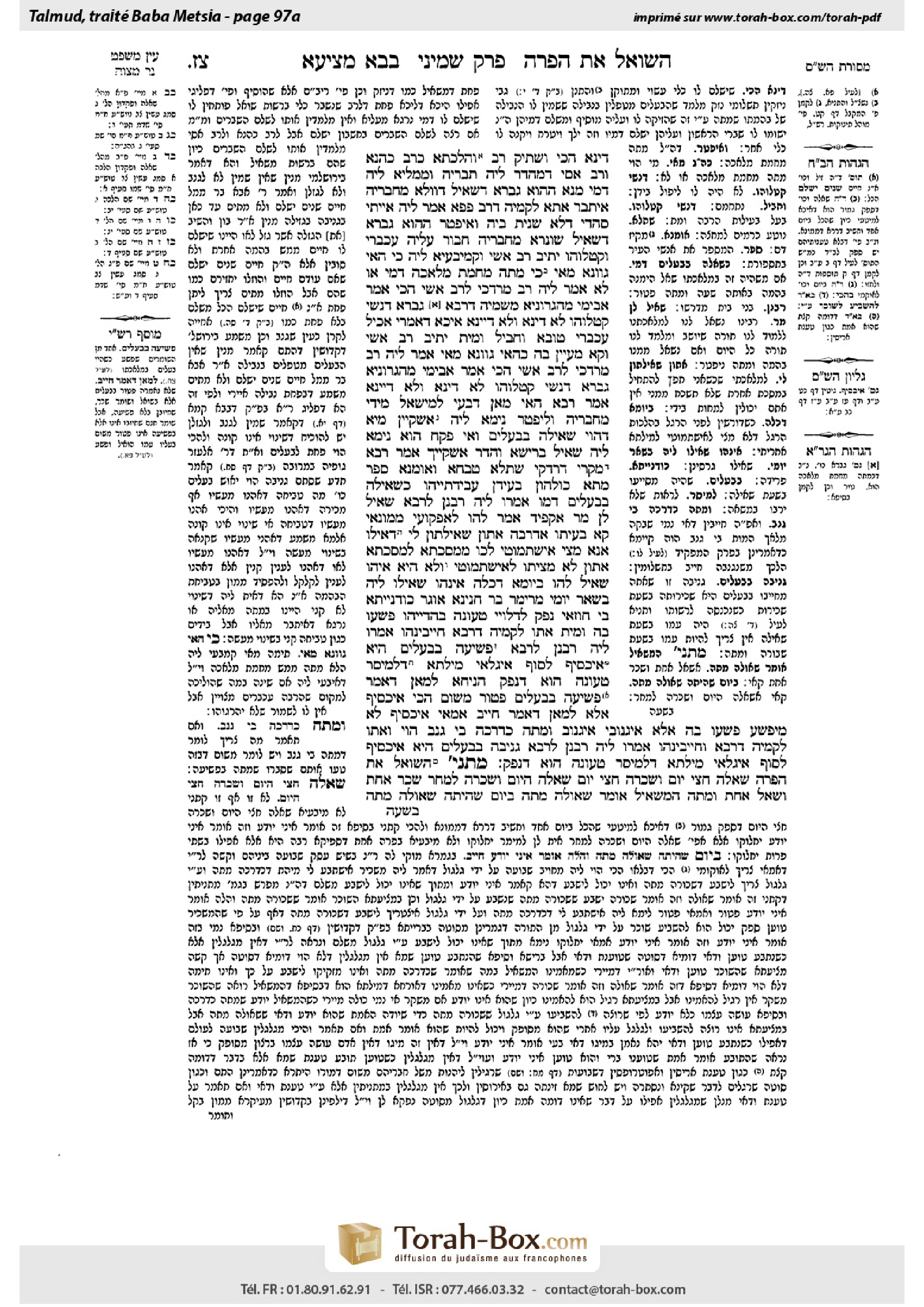
Bava Metzia 97a: Talmud study for Daf Yomi
Study the Talmud for Daf Yomi with scanned pages, Hebrew text, English translations from Sefaria and AI-generated French translations.
Passage selection and English or AI-generated French translation are available where the scan has annotations. Daf Study is independent of Torah-Box and Sefaria.
Browse Bava Metzia · בבא מציעא · All tractatesBava Metzia 97a text and translations
This page of Bava Metzia includes the Aramaic text, an English translation and an AI-generated French translation, alongside the scan above.
בבא מציעא צ״ז א · Aramaic and Hebrew text
דִּינָא הָכִי וּשְׁתֵיק רַב.
וְהִלְכְתָא כְּרַב כָּהֲנָא וְרַב אַסִּי, דְּמַהְדַּר לֵיהּ תַּבְרֵיהּ וּמְמַלֵּי לֵיהּ דְּמֵי מָנָא.
הָהוּא גַּבְרָא דִּשְׁאֵיל דַּוְולָא מֵחַבְרֵיהּ, אִיתְּבַר. אֲתָא לְקַמֵּיהּ דְּרַב פָּפָּא. אֲמַר לֵיהּ: אַיְיתִי סָהֲדִי דְּלָא שַׁנֵּית בֵּיהּ, וְאִיפְּטַר.
הָהוּא גַּבְרָא דִּשְׁאֵיל שׁוּנָרָא מֵחַבְרֵיהּ, חֲבוּר עֲלֵיהּ עַכְבְּרֵי וְקַטְלוּהּ. יָתֵיב רַב אָשֵׁי וְקָמִיבַּעְיָא לֵיהּ: כִּי הַאי גַוְונָא מַאי? כִּי מֵתָה מֵחֲמַת מְלָאכָה דָּמֵי, אוֹ לָא? אֲמַר לֵיהּ רַב מָרְדֳּכַי לְרַב אָשֵׁי הָכִי אָמַר אֲבִימִי מֵהַגְרוֹנְיָא מִשְּׁמֵיהּ דְּרָבָא: גַּבְרָא דִּנְשֵׁי קַטְלוּהּ – לָא דִּינָא וְלָא דַּיָּינָא.
אִיכָּא דְּאָמְרִי: אֲכַל עַכְבְּרֵי טוּבָא וַחֲבִיל וּמִית. יָתֵיב רַב אָשֵׁי וְקָא מְעַיֵּין בַּהּ: כְּהַאי גַּוְונָא מַאי? אֲמַר לֵיהּ רַב מָרְדֳּכַי לְרַב אָשֵׁי: הָכִי אָמַר אֲבִימִי מֵהַגְרוֹנְיָא: גַּבְרָא דִּנְשֵׁי קַטְלוּהּ – לָא דִּינָא וְלָא דַּיָּינָא.
אָמַר רָבָא: הַאי מַאן דְּבָעֵי לְמִישְׁאַל מִידֵּי מֵחַבְרֵיהּ וְלִיפְּטַר, נֵימָא לֵיהּ: אַשְׁקְיַין מַיָּא, דְּהָוֵי שְׁאֵילָה בִּבְעָלִים.
וְאִי פִּקֵּחַ הוּא, נֵימָא לֵיהּ: שְׁאֵיל בְּרֵישָׁא וַהֲדַר אַשְׁקְיָיךְ.
אָמַר רָבָא: מַקְרֵי דַרְדְּקֵי, שַׁתָּלָא, טַבָּחָא, וְאוּמָּנָא, סַפַּר מָתָא – כּוּלְּהוֹן בְּעִידָּן עֲבִידְתַּיְיהוּ כִּשְׁאֵילָה בִּבְעָלִים דָּמוּ.
אֲמַרוּ לֵיהּ רַבָּנַן לְרָבָא: שְׁאִיל לַן מָר. אִקְּפִיד. אֲמַר לְהוּ: לְאַפְקוֹעֵי מָמוֹנַאי קָא בָעֵיתוּ?! אַדְּרַבָּה, אַתּוּן שְׁאִילְתּוּן לִי. דְּאִילּוּ אֲנָא מָצֵי אִישְׁתְּמוֹטֵי לְכוּ מִמַּסֶּכְתָּא לְמַסֶּכְתָּא, אַתּוּן לָא מָצֵיתוּ לְאִישְׁתְּמוֹטֵי.
וְלָא הִיא, אִיהוּ שְׁאִיל לְהוּ בְּיוֹמָא דְכַלָּה. אִינְהוּ שְׁאִילוּ לֵיהּ בִּשְׁאָר יוֹמֵי.
מָרִימָר בַּר חֲנִינָא אוֹגַר כּוּדַנְיָיתָא בֵּי חוֹזָאֵי, נְפַק לְדַלּוֹיֵי טְעוּנַהּ בַּהֲדַיְיהוּ, פְּשַׁעוּ בַּהּ וּמִית. אֲתוֹ לְקַמֵּיהּ דְּרָבָא, חַיְּיבִינְהוּ. אֲמַרוּ לֵיהּ רַבָּנַן לְרָבָא: פְּשִׁיעָה בִּבְעָלִים הִיא! אִיכְּסִיף. לְסוֹף אִיגַּלַּאי מִילְּתָא דִּלְמֵיסַר טְעוּנַהּ הוּא דִּנְפַק.
הָנִיחָא לְמַאן דְּאָמַר פְּשִׁיעָה בִּבְעָלִים פָּטוּר, מִשּׁוּם הָכִי אִיכְּסִיף. אֶלָּא לְמַאן דְּאָמַר חַיָּיב, אַמַּאי אִיכְּסִיף?
לָא מִיפְשָׁע פְּשַׁעוּ בָּהּ, אֶלָּא אִיגְּנוֹבֵי אִיגְּנוּב, וּמֵתָה כְּדַרְכָּהּ בֵּי גַנָּב הָוֵי. וַאֲתוֹ לְקַמֵּיהּ דְּרָבָא וְחַיְּיבִינְהוּ. אֲמַרוּ לֵיהּ רַבָּנַן לְרָבָא: גְּנֵיבָה בִּבְעָלִים הִיא. אִכְּסִיף. לְסוֹף אִיגַּלַּאי מִילְּתָא דִּלְמֵיסַר טְעוּנַהּ הוּא דִּנְפַק.
מַתְנִי׳ הַשּׁוֹאֵל אֶת הַפָּרָה, שְׁאָלָהּ חֲצִי יוֹם וּשְׂכָרָהּ חֲצִי יוֹם. שְׁאָלָהּ הַיּוֹם וּשְׂכָרָהּ לְמָחָר. שָׂכַר אַחַת וְשָׁאַל אַחַת, וּמֵתָה. הַמַּשְׁאִיל אוֹמֵר: שְׁאוּלָה מֵתָה, בְּיוֹם שֶׁהָיְתָה שְׁאוּלָה מֵתָה,
Bava Metzia 97a · English translation
Is this the halakha? Is it not sufficient to pay him the difference between the broken ax’s previous and current value? And Rav was silent; he did not answer.
The Gemara concludes: And the halakha is in accordance with the opinion of Rav Kahana and Rav Asi, that he returns to him the broken tool and makes up the remainder of the tool’s previous value with a monetary payment.
The Gemara relates: A certain man borrowed a pail from another and it broke. He came before Rav Pappa for judgment. Rav Pappa said to him: Bring witnesses that you did not deviate from its regular use, and you will be exempt from liability, as this is comparable to a case of a borrowed animal that died due to ordinary labor.
The Gemara relates: A certain man borrowed a cat from another to hunt and kill mice for him. The mice banded together against it and killed it. Rav Ashi sat and raised a dilemma: In a case like this, what is the halakha? Is this case comparable to a case where a borrowed animal died due to ordinary labor, or not? Rav Mordekhai said to Rav Ashi: Avimi of Hagronya said this in the name of Rava: With regard to a man who women killed, there is a need for neither judgment nor a judge, i.e., it is obvious that they are liable. In this case as well, it is obvious that the borrower may bring the cat to hunt mice, and he is therefore exempt from liability.
There are those who say that the incident actually occurred as follows: The cat ate many mice, and was harmed by doing so and died. Rav Ashi sat and deliberated: In a case like this, what is the halakha? Rav Mordekhai said to Rav Ashi: Avimi of Hagronya said this: With regard to a man who overindulged in sexual intercourse to the extent that women killed him by exhausting him, there is neither judgment nor judge, i.e., there is no redress since it is his own fault.
Rava says: With regard to one who wants to borrow something from another and be exempt from liability, let him say to the lender at the time of borrowing: Pour me water. He will thereby be exempt, as it is then a case of borrowing an item and borrowing or hiring the services of its owner with it.
And if the lender is perspicacious and wishes to prevent the borrower from being exempt from liability, let him say to him: Borrow the item first and then I will pour the water for you. Since the owner will not yet be working for the borrower at the time of the borrowing, the exemption does not apply.
Rava says: A teacher of children, the local gardener, the local butcher, and the local bloodletter, and a scribe of the city, with regard to all of them, if someone borrows an item from them at the time of their work, he is exempt from liability, as the case is comparable to borrowing an item and borrowing or hiring its owner with it. These people are always considered in the employ of the residents of the place where they work.
The Gemara relates: The Rabbis said to Rava: Master, you are lent to us to teach us Torah, and so if we borrow an item from you, we should be exempt from liability. These Rabbis stated this based on Rava’s own ruling. Rava was angered by this and said to them: Do you want to take my money away from me? On the contrary, I am not lent to you; rather, you are lent to me, since you assist me in consolidating my Torah knowledge. And this is the proof that it is you who are assisting me: Whereas I am able to deflect you from one tractate to another tractate because I am not obligated to teach specifically that which you want to learn, you are not able to deflect me from what I wish to teach.
The Gemara comments: But it is not so that a teacher is never lent to his students. During the days of the kalla, the gatherings for Torah study during Elul and Adar, the teacher is required to teach a specific subject, and therefore he is lent to them. During the rest of the days of the year, they are lent to him, as he can teach whatever subject matter he wishes.
The Gemara relates: Mareimar bar Ḥanina rented out a mule to the residents of Bei Ḥozai. He went out to raise up a load onto the mule together with those who rented it. Later they were negligent with the animal, and it died. They came before Rava for judgment, and he deemed them liable to pay. The Sages said to Rava: This is a case of a mishap that occurred due to a renter’s negligence in safeguarding a deposit that was rented together with its owner, and the halakha in such a case is that the renter is exempt. Rava was embarrassed that he had ruled incorrectly. Ultimately it was revealed that Mareimar bar Ḥanina had gone out only to supervise the loading but did not actually participate in loading the animal. Accordingly, Rava’s ruling that the renters were liable proved to be correct.
The Gemara comments: This works out well according to the one who says that in a case of a mishap that occurred because of a borrower’s negligence in safeguarding a deposit that was borrowed together with its owner, the borrower is exempt; for that reason Rava was embarrassed for ruling incorrectly. But according to the one who says that in such a case the borrower is liable, why was he embarrassed; wouldn’t it appear that he ruled correctly?
The Gemara emends the details of the incident: Those that rented the mule were not negligent with it. Rather, it was stolen from them and then it died naturally in the house of the thief. And those who rented the mule came before Rava for judgment, and he deemed them liable. The Sages said to Rava: This is a case of theft of a deposit that was borrowed together with borrowing the services of the owner, and so the borrower should be exempt. Rava was embarrassed that he had ruled incorrectly. Ultimately it was revealed that Mareimar bar Ḥanina had gone out only to supervise the loading but did not actually participate in loading the animal. Accordingly, Rava’s ruling proved to be correct.
MISHNA: There is one who borrowed a cow. He borrowed it for half of the day and rented it for the other half of the day; or he borrowed it for today and rented it for tomorrow; or he rented one cow and borrowed another one from the same person. And in one of the first two cases, the cow died and it is not clear during which period the cow died. Or in the last case, one of the cows died and it is not clear whether it had been the borrowed cow or the rented cow. If the lender then says: The borrowed cow is the one that died; or: It died on the day that it was being borrowed;
Bava Metzia 97a · Traduction française (IA)
Est-ce la halakha ? N’est-il pas suffisant de lui payer la différence entre la valeur précédente et la valeur actuelle de la hache brisée ? Et Rav restait silencieux ; il ne répondit pas.
La Guemara conclut : Et la halakha suit l’opinion de Rav Kahana et de Rav Asi, selon laquelle il lui rend la pièce brisée et compense la valeur précédente du reste du matériel avec un paiement monétaire.
La Guemara rapporte : Un certain homme avait emprunté un seau à un autre et il s’était cassé. Il vint devant Rav Pappa pour être jugé. Rav Pappa lui dit : Apporte des témoins qui attestent que tu n’as pas dévié de son usage normal, et tu seras exempt de responsabilité, car cela est comparable à un cas d’animal emprunté qui est mort à cause du travail ordinaire.
La Guemara rapporte : Un certain homme avait emprunté un chat à un autre pour chasser et tuer les souris. Les souris s’étaient réunies contre lui et l’avaient tué. Rav Ashi s’asseyait et posait un problème : Dans un cas comme celui-ci, quelle est la halakha ? Est-ce comparable à un cas où un animal emprunté est mort à cause du travail ordinaire, ou non ? Rav Mordekhai dit à Rav Ashi : Avimi de Hagronya a dit cela au nom de Rava : Concernant un homme qui a été tué par des femmes, il n’y a ni jugement ni juge, c’est-à-dire que cela est évident qu’ils sont responsables. Dans ce cas également, cela est évident que le prêteur peut amener le chat pour chasser les souris, et il est donc exempt de responsabilité.
Certains disent que l’incident s’est réellement passé ainsi : Le chat avait mangé beaucoup de souris, et avait été blessé en le faisant et était mort. Rav Ashi s’asseyait et réfléchissait : Dans un cas comme celui-ci, quelle est la halakha ? Rav Mordekhai dit à Rav Ashi : Avimi de Hagronya a dit cela : Concernant un homme qui s’est excessivement livré à l’acte sexuel à tel point que les femmes l’ont tué en l’épuisant, il n’y a ni jugement ni juge, c’est-à-dire qu’il n’y a pas de réparation puisque c’est sa propre faute.
Rava dit : Concernant celui qui veut emprunter quelque chose à un autre et être exempt de responsabilité, qu’il dise à l’emprunteur au moment de l’emprunt : Verse-moi de l’eau. Il sera ainsi exempt, car c’est alors un cas d’emprunt d’un objet et d’emprunt ou de location des services de son propriétaire.
Et si le prêteur est perspicace et veut empêcher le prêteur d'être exempt de responsabilité, qu'il dise à l'emprunteur : Emprunte d'abord l'objet, puis je te verserai de l'eau. Puisque le propriétaire ne travaillera pas encore pour l'emprunteur au moment de l'emprunt, l'exemption ne s'applique pas.
Rava dit : Un maître d'enfants, le jardinier local, le boucher local, le saigneur local, et un scribe de la ville, concernant tous ceux-ci, si quelqu'un emprunte un objet lorsqu'ils travaillent, il est exempt de responsabilité, car le cas est comparable à l'emprunt d'un objet et à l'emprunt ou à la location des services de son propriétaire. Ces personnes sont toujours considérées comme employées par les habitants du lieu où ils travaillent.
La Guemara rapporte : Les Rabbins dirent à Rava : Maître, tu es prêt à nous enseigner la Torah, et donc si nous empruntons un objet de toi, nous devrions être exempt de responsabilité. Ces Rabbins ont dit cela basé sur la décision de Rava lui-même. Rava s'indigna de cela et dit à eux : Voulez-vous me voler mon argent ? Au contraire, je ne suis pas prêt à vous, mais vous êtes prêt à moi, car vous m'aidez à consolider mes connaissances de la Torah. Et c'est la preuve que c'est vous qui m'aidez : Tandis que je suis capable de vous détourner d'un masekhta à un autre masekhta car je ne suis pas tenu de vous enseigner spécifiquement ce que vous voulez apprendre, vous n'êtes pas capable de me détourner de ce que je veux enseigner.
La Guemara commente : Mais ce n’est pas ainsi que le maître n’est jamais prêt à ses élèves. Pendant les jours de la kalla, les réunions d’étude de la Torah durant Elul et Adar, le maître est tenu d’enseigner une matière spécifique, et donc il est prêt à eux. Pendant les autres jours de l’année, ils sont prêt à lui, car il peut enseigner toute matière qu’il veut.
La Guemara rapporte : Mareimar bar Ḥanina avait loué un mulet aux habitants de Bei Ḥozai. Il était sorti pour charger le mulet avec ceux qui l’avaient loué. Plus tard, ils avaient négligé l’animal, et il était mort. Ils vinrent devant Rava pour être jugés, et il déclara qu’ils étaient responsables. Les Sages dirent à Rava : C’est un cas d’accident survenu à cause de la négligence du locataire dans la garde d’un dépôt loué avec son propriétaire, et la halakha dans un tel cas est que le locataire est exempt. Rava fut embarrassé qu’il avait rendu un jugement erroné. Finalement, il fut révélé que Mareimar bar Ḥanina était sorti uniquement pour surveiller le chargement mais n’avait pas participé effectivement au chargement de l’animal. Ainsi, le jugement de Rava selon lequel les locataires étaient responsables s’est révélé correct.
La Guemara commente : Cela s’ajuste bien selon celui qui dit que dans un cas d’accident survenu à cause de la négligence du prêteur dans la garde d’un dépôt emprunté avec son propriétaire, le prêteur est exempt ; pour cette raison Rava fut embarrassé pour avoir rendu un jugement erroné. Mais selon celui qui dit que dans un tel cas le prêteur est responsable, pourquoi fut-il embarrassé ; ne serait-ce pas apparu qu’il avait rendu un jugement correct ?
La Guemara corrige les détails de l’incident : Ceux qui avaient loué le mulet n’étaient pas négligents envers lui. Plutôt, il avait été volé et était mort naturellement chez le voleur. Et ceux qui avaient loué le mulet vinrent devant Rava pour être jugés, et il déclara qu’ils étaient responsables. Les Sages dirent à Rava : C’est un cas de vol d’un dépôt emprunté avec l’emprunt des services du propriétaire, et donc le prêteur devrait être exempt. Rava fut embarrassé qu’il avait rendu un jugement erroné. Finalement, il fut révélé que Mareimar bar Ḥanina était sorti uniquement pour surveiller le chargement mais n’avait pas participé effectivement au chargement de l’animal. Ainsi, le jugement de Rava s’est révélé correct.
MICHNA : Il y a un homme qui a emprunté un taureau. Il l'a emprunté pour la moitié de la journée et l'a loué pour l'autre moitié de la journée ; ou il l'a emprunté aujourd'hui et l'a loué demain ; ou il a loué un taureau et a emprunté un autre taureau de la même personne. Et dans l'une des deux premières situations, le taureau est mort et on ne sait pas durant quelle période il est mort. Ou dans la dernière situation, l'un des taureaux est mort et on ne sait pas s'il s'agissait du taureau emprunté ou du taureau loué. Si alors le prêteur dit : C'est le taureau emprunté qui est mort ; ou : Il est mort le jour où il était emprunté ;
Traduction française générée par IA à partir de l’édition anglaise de Sefaria. Vérifie toujours un passage avec le texte source.
Text from Sefaria: William Davidson Edition - Vocalized Aramaic (CC BY NC); William Davidson Edition - English (CC BY NC).