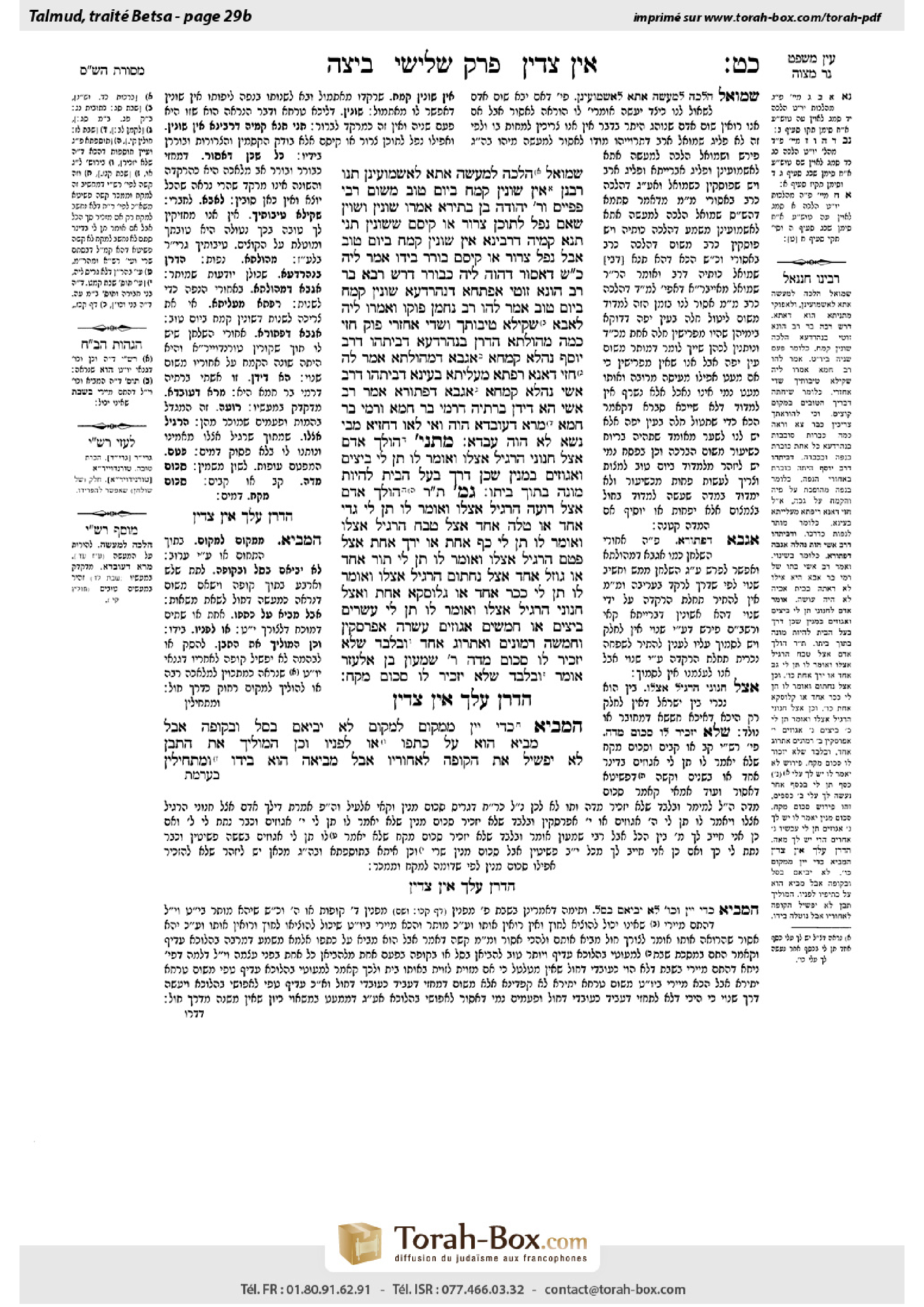
Beitzah 29b: Talmud study for Daf Yomi
Study the Talmud for Daf Yomi with scanned pages, Hebrew text, English translations from Sefaria and AI-generated French translations.
Passage selection and English or AI-generated French translation are available where the scan has annotations. Daf Study is independent of Torah-Box and Sefaria.
Browse Beitzah · ביצה · All tractatesBeitzah 29b text and translations
This page of Beitzah includes the Aramaic text, an English translation and an AI-generated French translation, alongside the scan above.
ביצה כ״ט ב · Aramaic and Hebrew text
שְׁמוּאֵל — הֲלָכָה לְמַעֲשֶׂה אֲתָא לְאַשְׁמוֹעִינַן.
תָּנוּ רַבָּנַן: אֵין שׁוֹנִין קֶמַח בְּיוֹם טוֹב. מִשּׁוּם רַבִּי פַּפְּיָיס וְרַבִּי יְהוּדָה בֶּן בְּתִירָא אָמְרוּ: שׁוֹנִין. וְשָׁוִין שֶׁאִם נָפַל לְתוֹכָן צְרוֹר אוֹ קֵיסָם, שֶׁשּׁוֹנִין.
תָּנֵי תַּנָּא קַמֵּיהּ דְּרָבִינָא: אֵין שׁוֹנִין קֶמַח בְּיוֹם טוֹב, אֲבָל נָפַל צְרוֹר אוֹ קֵיסָם — בּוֹרֵר בְּיָדוֹ. אֲמַר לֵיהּ: כׇּל שֶׁכֵּן דְּאָסוּר, דְּהָוֵה לֵיהּ כְּבוֹרֵר.
דָּרֵשׁ רָבָא בַּר רַב הוּנָא זוּטֵי אַפִּתְחָא דִנְהַרְדְּעָא: שׁוֹנִין קֶמַח בְּיוֹם טוֹב. אֲמַר לְהוּ רַב נַחְמָן: פּוּקוּ וֶאֱמַרוּ לֵיהּ לְאַבָּא: שְׁקִילָא טֵיבוּתָךְ וְשַׁדְיָ[א] אַחִזְרֵי, פּוֹק חֲזִי כַּמָּה מַהוֹלָתָא הַדְרָן בִּנְהַרְדְּעָא.
דְּבֵיתְהוּ דְּרַב יוֹסֵף נָהֲלָא קִמְחָא אַגַּבָּא דְּמַהוֹלְתָּא. אֲמַר לַהּ: חֲזַי, דַּאֲנָא רִפְתָּא מְעַלַּיְתָא בָּעֵינָא. דְּבֵיתְהוּ דְּרַב אָשֵׁי נָהֲלָא קִמְחָא אַגַּבָּא דְּפָתוּרָא. אָמַר רַב אָשֵׁי: הָא דִּידַן, בְּרַתֵּיה דְּרָמֵי בַּר חָמָא, וְרָמֵי בַּר חָמָא מָרָא דְעוֹבָדָא הֲוָה, וְאִי לָאו דַּחֲזַאי מִבֵּי נָשָׁא לָא הֲוָה עָבְדָא.
מַתְנִי׳ הוֹלֵךְ אָדָם אֵצֶל חֶנְוָנִי הָרָגִיל אֶצְלוֹ וְאוֹמֵר לוֹ: תֵּן לִי בֵּיצִים וֶאֱגוֹזִים בְּמִנְיָן, שֶׁכֵּן דֶּרֶךְ בַּעַל הַבַּיִת לִהְיוֹת מוֹנֶה בְּתוֹךְ בֵּיתוֹ.
גְּמָ׳ תָּנוּ רַבָּנַן: הוֹלֵךְ אָדָם אֵצֶל רוֹעֶה הָרָגִיל אֶצְלוֹ וְאוֹמֵר לוֹ: תֵּן לִי גְּדִי אֶחָד אוֹ טָלֶה אֶחָד. אֵצֶל טַבָּח הָרָגִיל אֶצְלוֹ וְאוֹמֵר לוֹ: תֵּן לִי כַּף אַחַת אוֹ יָרֵךְ אַחַת. אֵצֶל פַּטָּם הָרָגִיל אֶצְלוֹ וְאוֹמֵר לוֹ: תֵּן לִי תּוֹר אֶחָד אוֹ גּוֹזָל אֶחָד. אֵצֶל נַחְתּוֹם הָרָגִיל אֶצְלוֹ וְאוֹמֵר לוֹ: תֵּן לִי כִּכָּר אֶחָד אוֹ גְּלוּסְקָא אַחַת.
וְאֵצֶל חֶנְוָנִי הָרָגִיל אֶצְלוֹ וְאוֹמֵר לוֹ: תֵּן לִי עֶשְׂרִים בֵּיצִים, אוֹ חֲמִשִּׁים אֱגוֹזִים, עֲשָׂרָה אֲפַרְסְקִין, וַחֲמִשָּׁה רִמּוֹנִים וְאֶתְרוֹג אֶחָד. וּבִלְבַד שֶׁלֹּא יַזְכִּיר לוֹ סְכוּם מִדָּה. רַבִּי שִׁמְעוֹן בֶּן אֶלְעָזָר אוֹמֵר: וּבִלְבַד שֶׁלֹּא יַזְכִּיר לוֹ סְכוּם מִקָּח.
הֲדַרַן עֲלָךְ אֵין צָדִין
הַמֵּבִיא כַּדֵּי יַיִן מִמָּקוֹם לְמָקוֹם — לֹא יְבִיאֵם בְּסַל וּבְקוּפָּה, אֲבָל מֵבִיא הוּא עַל כְּתֵפוֹ אוֹ לְפָנָיו. וְכֵן הַמּוֹלִיךְ אֶת הַתֶּבֶן — לֹא יַפְשִׁיל אֶת הַקּוּפָּה לַאֲחוֹרָיו, אֲבָל מְבִיאָהּ הוּא בְּיָדוֹ. וּמַתְחִילִין
Beitzah 29b · English translation
it is reasonable to conclude that Shmuel came to teach us the practical halakha. Knowing that a baraita permits the practice, Shmuel found it necessary to state that the halakha is otherwise.
§ The Sages taught in a baraita: One may not sift flour a second time on a Festival, as this involves unnecessary extra effort. They said in the name of Rabbi Papeyyas and Rabbi Yehuda ben Beteira: One may sift flour a second time. However, they all agree that if a pebble or a wood chip fell into the flour after it had been sifted the previous day, one may sift it a second time in order to remove the items.
A tanna taught the following baraita before Ravina: One may not sift flour a second time on a Festival, but if a pebble or a wood chip fell into the flour after the first sifting, he may remove it with his hand. Ravina said to him: All the more so is the latter procedure prohibited, as it is similar to the prohibited labor of selecting. It is therefore preferable to sift the flour with a sieve, and the unwanted items will thereby be removed.
Rava bar Rav Huna the Short taught at the entrance to Neharde’a: One may sift flour a second time on a Festival. Rav Naḥman said to the students standing before him: Go out and say to Abba, i.e., to Rava bar Rav Huna, as Rava is a shortened form of Rav Abba: Your good has been removed and cast upon thorns, meaning that your teachings are not needed. Go out and see how many sieves circulate in Neharde’a, as all the women already know that this is permitted.
The Gemara relates that Rav Yosef’s wife was once sifting flour in an unusual manner on the reverse side of a sieve. He said to her: Look, I want good-quality bread, hinting that she need not invert the sieve but may sift the flour in her regular fashion. The Gemara likewise relates that Rav Ashi’s wife was once sifting flour onto a table, rather than into a bowl in the usual manner. Rav Ashi said: This one of ours, my wife, is the daughter of Rami bar Ḥama, and Rami bar Ḥama is a master of good deeds who is meticulous in his performance of mitzvot. Had my wife not observed this practice in her father’s house, she would not have acted in this manner. Therefore, one can learn the halakha in practice from her actions.
MISHNA: A person may go on a Festival to a grocer from whom he is accustomed to buy and say to him: Give me eggs and nuts of such-and-such a number, as it is the manner of a homeowner to count this way in his own house. Counting eggs or nuts is not considered a commercial activity, as people regularly mention the number of eggs and nuts that they need.
GEMARA: The Sages taught in the Tosefta: A person may go on a Festival to a shepherd with whom he is accustomed to deal and say to him: Give me one kid, or one lamb. Similarly, one may go on a Festival to a butcher from whom he is accustomed to buy and say to him: Give me one foreleg of an animal, or one thigh. Likewise, one may approach one who deals in fattened fowl from whom he is accustomed to buy and say to him: Give me one dove or one pigeon. He may also visit a baker from whom he is accustomed to buy and say to him: Give me one loaf or one cake [geluska].
And one may go on a Festival to a grocer from whom he is accustomed to buy and say to him: Give me twenty eggs, or fifty nuts, or ten peaches, or five pomegranates, or one etrog, provided that he does not mention any measure. In other words, he must not specify a unit of measurement, e.g., a kav; rather, he must state a number, which is not the usual manner of making a purchase. Rabbi Shimon ben Elazar says: This is permitted, provided that he does not mention the amount of the purchase, meaning that he must not mention the sum of money that he is spending, but rather he must take what he needs and after the Festival they will calculate how much he owes.
MISHNA: One who brings wine jugs from one place to another place may not bring a large number of them in a basket or in a tub in the usual weekday manner on a Festival, as this is disrespectful of the Festival; but he may bring one or two barrels on his shoulder or carry them in front of himself. Similarly, one who brings straw for kindling or for feeding animals may not place the tub behind him while carrying it, as this is the usual weekday manner; but he may transport it in front of him in his hand, in an unusual fashion. And one may begin taking straw for kindling
Beitzah 29b · Traduction française (IA)
il est raisonnable de conclure que Shmuel a voulu nous enseigner la halakha pratique. Sachant qu'une baraïta permet cette pratique, Shmuel a jugé nécessaire de préciser que la halakha est différente.
§ Les Sages enseignèrent dans une baraïta : On ne doit pas tamiser la farine une deuxième fois pendant un festival, car cela implique un effort inutile supplémentaire. Ils dirent en nom de Rabbi Papeyyas et Rabbi Yehuda ben Beteira : On peut tamiser la farine une deuxième fois. Cependant, ils s'entendent tous sur le fait que si un caillou ou un morceau de bois était tombé dans la farine après qu'elle avait été tamisée la veille, on pouvait la tamiser une deuxième fois afin d'enlever ces objets.
Un tanna enseigna la suivante baraïta avant Ravina : On ne doit pas tamiser la farine une deuxième fois pendant un festival, mais si un caillou ou un morceau de bois était tombé dans la farine après la première tamisation, on pouvait l'enlever à la main. Ravina dit à lui : Tout autant que cela, cette procédure est interdite, car elle ressemble à l'œuvre interdite de sélection. Il est donc préférable de tamiser la farine avec un tamis, et les objets indésirables seront ainsi enlevés.
Rava bar Rav Huna le Court enseigna à l'entrée de Neharde’a : On peut tamiser la farine une deuxième fois pendant un festival. Rav Naḥman dit aux étudiants qui étaient devant lui : Sortez et dites à Abba, c'est-à-dire à Rava bar Rav Huna, car Rava est une forme abrégée de Rav Abba : Votre bien a été ôté et jeté sur des épines, ce qui signifie que vos enseignements ne sont plus nécessaires. Sortez et voyez combien de tamis circulent à Neharde’a, car toutes les femmes savent déjà que cela est permis.
La Guemara rapporte que la femme de Rav Yosef était une fois en train de tamiser la farine d'une manière inhabituelle sur le côté opposé d'un tamis. Il lui dit : Regarde, je veux du pain de bonne qualité, ce qui sous-entendait qu'elle ne devait pas inverser le tamis mais pouvait tamiser la farine selon sa manière habituelle. La Guemara rapporte également que la femme de Rav Ashi était une fois en train de tamiser la farine sur une table, plutôt que dans un bol selon la manière habituelle. Rav Ashi dit : Celle-ci, notre femme, est la fille de Rami bar Ḥama, et Rami bar Ḥama est un maître des bonnes œuvres qui est minutieux dans l'accomplissement des mitsvot. Si ma femme n'avait pas observé cette pratique chez son père, elle n'aurait pas agi ainsi. On peut donc apprendre la halakha en pratique à partir de ses actions.
MICHNA : Une personne peut aller pendant un festival chez un boulanger avec lequel il est habitué à acheter et lui dire : Donne-moi des œufs et des noix en telle quantité, car c'est la manière d'un propriétaire de mentionner ainsi dans sa maison. Compter des œufs ou des noix n'est pas considéré comme une activité commerciale, car les gens mentionnent régulièrement la quantité d'œufs et de noix dont ils ont besoin.
GUEMARA : Les Sages enseignèrent dans la Tosefta : Une personne peut aller pendant un festival chez un berger avec lequel il est habitué à traiter et lui dire : Donne-moi un agneau, ou un petit mouton. De même, on peut aller pendant un festival chez un boucher avec lequel il est habitué à acheter et lui dire : Donne-moi une cuisse d'animaux, ou un avant-train. De même, on peut s'adresser à celui qui vend des oiseaux gras avec lequel il est habitué à acheter et lui dire : Donne-moi un pigeon ou un colvert. On peut également visiter un boulanger avec lequel il est habitué à acheter et lui dire : Donne-moi un pain ou un gâteau [geluska].
Et on peut aller pendant un festival chez un boulanger avec lequel il est habitué à acheter et lui dire : Donne-moi vingt œufs, ou cinquante noix, ou dix pêches, ou cinq pamplemousses, ou un citron, à condition qu'il ne mentionne pas de mesure. En d'autres termes, il ne doit pas spécifier une unité de mesure, par exemple un kav ; il doit plutôt indiquer un nombre, ce qui n'est pas la manière habituelle de faire un achat. Rabbi Shimon ben Elazar dit : Cela est permis, à condition qu'il ne mentionne pas la quantité de l'achat, c'est-à-dire qu'il ne doit pas mentionner la somme d'argent qu'il dépense, mais plutôt il doit prendre ce qu'il a besoin et après le festival ils calculeront combien il doit.
MICHNA : Celui qui transporte des tonneaux de vin d'un lieu à un autre lieu ne peut pas transporter une grande quantité d'entre eux dans un panier ou dans un bac selon la manière habituelle du jour de semaine pendant un festival, car cela est déshonorant pour le festival ; mais il peut transporter un ou deux tonneaux sur son épaule ou les porter devant lui. De même, celui qui transporte du foin pour allumer un feu ou pour nourrir les animaux ne peut pas placer le bac derrière lui pendant qu'il le transporte, car c'est la manière habituelle du jour de semaine ; mais il peut le transporter devant lui dans sa main, de manière inhabituelle. Et on peut commencer à prendre du foin pour allumer un feu.
Traduction française générée par IA à partir de l’édition anglaise de Sefaria. Vérifie toujours un passage avec le texte source.
Text from Sefaria: William Davidson Edition - Vocalized Aramaic (CC BY NC); William Davidson Edition - English (CC BY NC).