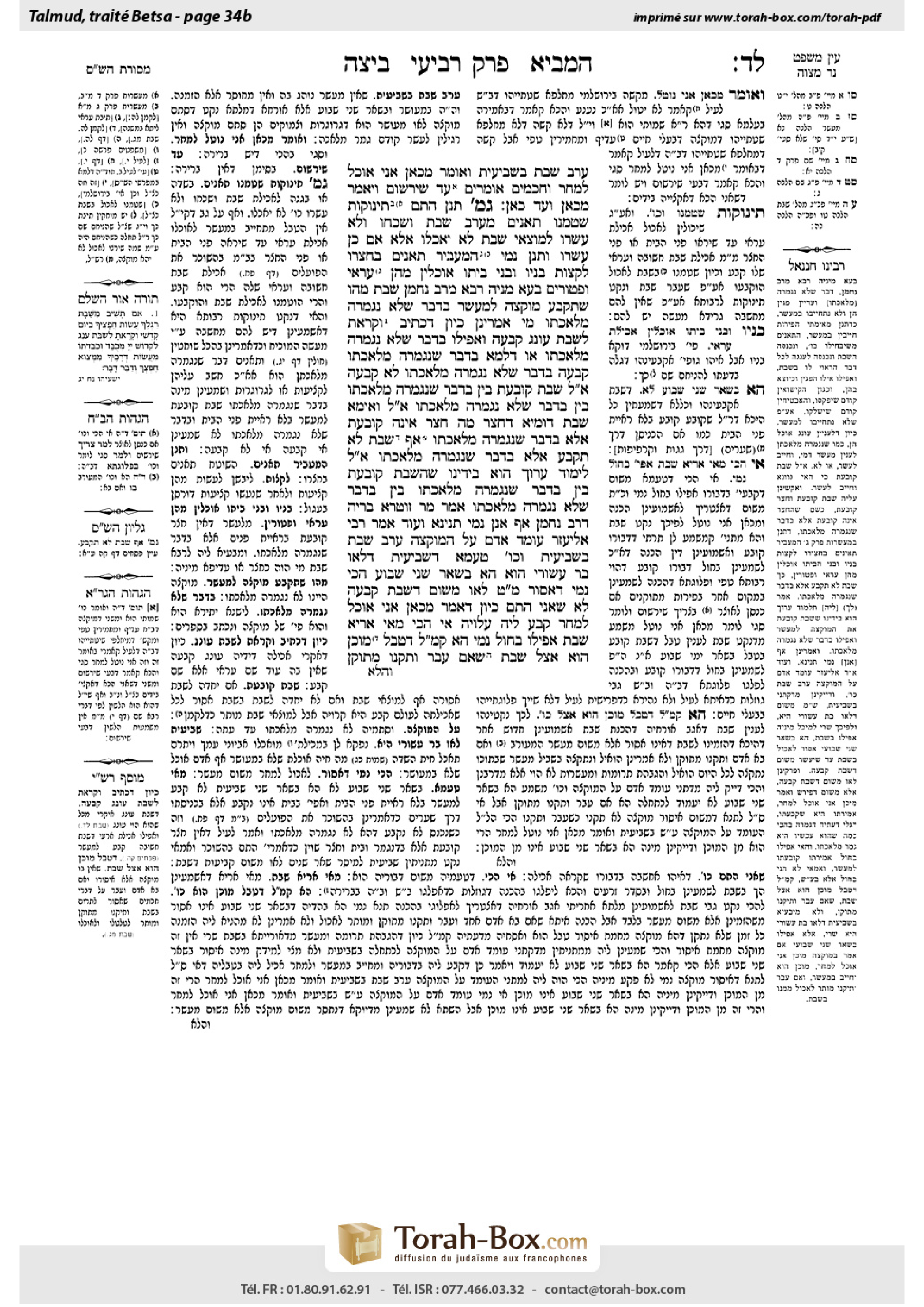
Beitzah 34b: Talmud study for Daf Yomi
Study the Talmud for Daf Yomi with scanned pages, Hebrew text, English translations from Sefaria and AI-generated French translations.
Passage selection and English or AI-generated French translation are available where the scan has annotations. Daf Study is independent of Torah-Box and Sefaria.
Browse Beitzah · ביצה · All tractatesBeitzah 34b text and translations
This page of Beitzah includes the Aramaic text, an English translation and an AI-generated French translation, alongside the scan above.
ביצה ל״ד ב · Aramaic and Hebrew text
עֶרֶב שַׁבָּת בַּשְּׁבִיעִית, וְאוֹמֵר: מִכָּאן אֲנִי אוֹכֵל לְמָחָר. וַחֲכָמִים אוֹמְרִים: עַד שֶׁיִּרְשׁוֹם וְיֹאמַר מִכָּאן וְעַד כָּאן.
גְּמָ׳ תְּנַן הָתָם: תִּינוֹקוֹת שֶׁטָּמְנוּ תְּאֵנִים מֵעֶרֶב שַׁבָּת וְשָׁכְחוּ וְלֹא עִשְּׂרוּ — לְמוֹצָאֵי שַׁבָּת לֹא יֹאכְלוּ אֶלָּא אִם כֵּן עִשְּׂרוּ. וּתְנַן נָמֵי: הַמַּעֲבִיר תְּאֵנִים בַּחֲצֵרוֹ לְקַצּוֹת — בָּנָיו וּבְנֵי בֵּיתוֹ אוֹכְלִין מֵהֶן עֲרַאי וּפְטוּרִים.
בְּעָא מִנֵּיהּ רָבָא מֵרַב נַחְמָן: שַׁבָּת, מַהוּ שֶׁתִּקְבַּע מוּקְצֶה לְמַעֲשֵׂר בְּדָבָר שֶׁלֹּא נִגְמְרָה מְלַאכְתּוֹ? מִי אָמְרִינַן, כֵּיוָן דִּכְתִיב: ״וְקָרָאתָ לַשַּׁבָּת עוֹנֶג״, קָבְעָה וַאֲפִילּוּ בְּדָבָר שֶׁלֹּא נִגְמְרָה מְלַאכְתּוֹ, אוֹ דִלְמָא: בְּדָבָר שֶׁנִּגְמְרָה מְלַאכְתּוֹ — קָבְעָה, בְּדָבָר שֶׁלֹּא נִגְמְרָה מְלַאכְתּוֹ — לָא קָבְעָה?
אֲמַר לֵיהּ: שַׁבָּת קוֹבַעַת, בֵּין בְּדָבָר שֶׁנִּגְמְרָה מְלַאכְתּוֹ, בֵּין בְּדָבָר שֶׁלֹּא נִגְמְרָה מְלַאכְתּוֹ. אֲמַר לֵיהּ: וְאֵימָא שַׁבָּת דּוּמְיָא דְחָצֵר, מָה חָצֵר — אֵינָהּ קוֹבַעַת אֶלָּא בְּדָבָר שֶׁנִּגְמְרָה מְלַאכְתּוֹ, אַף שַׁבָּת — לֹא תִּקְבַּע אֶלָּא בְּדָבָר שֶׁנִּגְמְרָה מְלַאכְתּוֹ! אֲמַר לֵיהּ: תַּלְמוּד עָרוּךְ הוּא בְּיָדֵינוּ שֶׁהַשַּׁבָּת קוֹבַעַת, בֵּין בְּדָבָר שֶׁנִּגְמְרָה מְלַאכְתּוֹ, בֵּין בְּדָבָר שֶׁלֹּא נִגְמְרָה מְלַאכְתּוֹ.
אָמַר מָר זוּטְרָא בְּרֵיהּ דְּרַב נַחְמָן: אַף אֲנַן נָמֵי תְּנֵינָא, וְעוֹד אָמַר רַבִּי אֱלִיעֶזֶר: עוֹמֵד אָדָם עַל הַמּוּקְצֶה עֶרֶב שַׁבָּת בַּשְּׁבִיעִית וְכוּ׳. טַעְמָא דִּשְׁבִיעִית — דְּלָאו בַּר עַשּׂוֹרֵי הוּא, הָא בִּשְׁאָר שְׁנֵי שָׁבוּעַ — הָכִי נָמֵי דְּאָסוּר, מַאי טַעְמָא — לָאו מִשּׁוּם דְּשַׁבָּת קָבְעָה?
לָא, שָׁאנֵי הָתָם, כֵּיוָן דְּאָמַר: ״מִכָּאן אֲנִי אוֹכֵל לְמָחָר״ — קָבַע לֵיהּ עִלָּוֵיהּ. אִי הָכִי מַאי אִרְיָא שַׁבָּת, אֲפִילּוּ בְּחוֹל נָמֵי! הָא קָא מַשְׁמַע לַן דְּטֶבֶל מוּכָן הוּא אֵצֶל שַׁבָּת, שֶׁאִם עָבַר וְתִקְּנוֹ — מְתוּקָּן.
Beitzah 34b · English translation
on Shabbat eve during the Sabbatical Year, during which no tithes are separated, which means one may take fruit on the following day without the need for any corrective measure, and say: From here, from these fruits, I will eat tomorrow. And the Rabbis say: He may not eat unless he marks the pile of fruit the day before and explicitly says: From here to there I will take.
GEMARA: We learned in a mishna there: (Ma'asrot 4:2) Children who hid figs for themselves in a field on Shabbat eve in order to eat them on Shabbat, and they forgot and did not separate tithes, not only are they prohibited from eating them on Shabbat, for eating on Shabbat is always considered a fixed meal that obligates the produce in tithes, but even after the conclusion of Shabbat, they may not eat until they have separated tithes. And we also learned in a mishna: One who transfers figs in his courtyard in order to make them into dry figs, his children and the members of his household may in the meantime partake of them in a casual manner, and they are exempt from tithes. The fact that the fruit has reached his courtyard, as opposed to his house, is not enough to cause it to be liable for tithing.
Based on these two sources, Rava inquired of Rav Naḥman: With regard to Shabbat, what is the halakha in terms of whether it establishes an obligation to tithe food that has been muktze on Shabbat? Specifically, in the case of an item whose labor has not been completed, does the fact that the food is muktze on Shabbat give it the status of completely prepared food, or not? Do we say that since it is written: “And call Shabbat a delight” (Isaiah 58:13), this implies that any food one eats on Shabbat is considered a delight and not a casual meal, and therefore Shabbat establishes an obligation to tithe, as if the food were fully completed and fit to be eaten as a fixed meal, even for an item that has not had its labor completed? Or perhaps Shabbat establishes an obligation to tithe an item whose labor is completed, but regarding an item whose labor is not completed it does not establish an obligation to tithe?
Rav Naḥman said to Rava: Shabbat establishes the obligation for tithes, both with regard to an item whose work is completed and things whose work is not completed. Rava said to Rav Naḥman and challenged: But say that the law of Shabbat should be similar to that of a courtyard: Just as a courtyard establishes food placed inside it as a fixed meal with regard to tithes only when the work on an item is completed, so too, Shabbat should establish only an item whose work is completed as liable for tithing. Rav Naḥman said to Rava: I did not say this based on my own logic, which can be countered by logic of your own. Rather, we have it as an ordered teaching that Shabbat establishes both things whose work is completed and things whose work is not completed.
Mar Zutra, son of Rav Naḥman, said: We, too, have learned in the mishna: And Rabbi Eliezer further stated that a person may stand over objects in the storage area on Shabbat eve during the Sabbatical Year and say: I will eat from here and here. The reason is that it is fruit of the Sabbatical Year, with regard to which one is not obligated to separate tithes. However, if it occurred in the other years of the Sabbatical cycle, so too, you will say that it is prohibited to eat them without separating tithes. What is the reason for this? Is it not because Shabbat establishes them with regard to tithes, and consequently they may not be eaten until tithes have been separated?
The Gemara refutes this: This is no proof, for there it is different: Since he said: From here I will eat tomorrow, he has immediately established for himself a meal with them, by stating his intention to eat the food as it is. The Gemara asks: If so, why does the mishna mention particularly Shabbat? Even if one said so on a weekday the same should also apply. Since he has set them aside for his meal, they are considered finished and are liable to tithes. The Gemara answers: This comes to teach us the following: One should not conclude that untithed produce is inherently muktze because one may not separate the tithes and eat it; rather, it is considered prepared with regard to Shabbat, in that if one transgressed the words of the Sages and corrected it by separating the tithes, it is considered corrected.
Beitzah 34b · Traduction française (IA)
Le soir du sabbat, durant l'année sabbatique, durant laquelle aucun dîme n'est séparé, ce qui signifie qu'on peut prendre les fruits le lendemain sans avoir besoin de mesures correctives, et dire : D'ici, de ces fruits, je mangerai demain. Et les Sages disent : Il ne peut pas manger sans avoir marqué la pile de fruits la veille et avoir explicitement dit : D'ici vers là, je prendrai.
GUEMARA : Nous avons appris dans une mitsva là : (Ma'asrot 4:2) Les enfants qui ont caché des figues pour eux-mêmes dans un champ le soir du sabbat afin de les manger le sabbat, et qui ont oublié et n'ont pas séparé les dîmes, non seulement sont-ils interdits de les manger le sabbat, car manger le sabbat est toujours considéré comme un repas fixe qui impose la dîme aux fruits, mais même après la fin du sabbat, ils ne peuvent pas manger jusqu'à ce qu'ils aient séparé les dîmes. Et nous avons également appris dans une mitsva : Celui qui transfère des figues dans son jardin afin de les faire sécher, ses enfants et les membres de sa famille peuvent, pendant ce temps, en prendre de manière informelle, et ils sont exemptés de dîmes. Le fait que les fruits aient atteint son jardin, contrairement à sa maison, n'est pas suffisant pour les rendre obligatoires à la dîme.
Sur la base de ces deux sources, Rava a interrogé Rav Naḥman : En ce qui concerne le sabbat, quelle est la halakha en ce qui concerne l'obligation de dîmer les aliments qui sont muktze le sabbat ? En particulier, dans le cas d'un objet dont le travail n'est pas achevé, le fait que l'aliment soit muktze le sabbat lui donne-t-il le statut d'aliment complètement préparé, ou non ? Disons-nous que puisque cela est écrit : « Et appelle le sabbat un délice » (Isaïe 58:13), cela implique que tout ce que l'on mange le sabbat est considéré comme un délice et non un repas informel, et donc le sabbat établit l'obligation de dîme, comme si l'aliment était entièrement achevé et prêt à être mangé comme un repas fixe, même pour un objet dont le travail n'est pas achevé ? Ou peut-être que le sabbat établit l'obligation de dîme pour un objet dont le travail est achevé, mais pas pour un objet dont le travail n'est pas achevé ?
Rav Naḥman a dit à Rava : Le sabbat établit l'obligation de dîme, tant pour un objet dont le travail est achevé que pour un objet dont le travail n'est pas achevé. Rava a dit à Rav Naḥman et a contesté : Mais disons que la loi du sabbat est semblable à celle d'un jardin : Tout comme un jardin établit les aliments placés à l'intérieur comme un repas fixe en ce qui concerne la dîme uniquement lorsque le travail sur un objet est achevé, de même, le sabbat devrait établir uniquement un objet dont le travail est achevé comme dû à la dîme. Rav Naḥman a dit à Rava : Je n'ai pas dit cela en fonction de ma propre logique, qui peut être contredite par la logique de ta propre. Plutôt, nous l'avons comme une enseignement ordonné que le sabbat établit à la fois les objets dont le travail est achevé et ceux dont le travail n'est pas achevé.
Mar Zutra, fils de Rav Naḥman, a dit : Nous, aussi, avons appris dans la mitsna : Et Rabbi Eliezer a dit de plus que l'on peut se tenir sur des objets dans la zone de stockage le soir du sabbat durant l'année sabbatique et dire : Je mangerai d'ici et d'ici. La raison est que c'est des fruits de l'année sabbatique, concernant lesquels on n'est pas tenu de séparer les dîmes. Cependant, si cela s'est produit durant les autres années du cycle sabbatique, tu diras aussi que c'est interdit de les manger sans séparer les dîmes. Quelle est la raison de cela ? N'est-ce pas parce que le sabbat les établit en ce qui concerne la dîme, et donc on ne peut pas les manger avant que les dîmes ne soient séparées ?
La Guemara réfute cela : Cela n'est pas une preuve, car c'est différent : Puisqu'il a dit : D'ici je mangerai demain, il a immédiatement établi pour lui-même un repas avec eux, en exprimant son intention de manger les aliments tels qu'ils sont. La Guemara demande : Si c'est ainsi, pourquoi la mitsna mentionne spécifiquement le sabbat ? Même si l'on a dit cela un jour de semaine, la même chose devrait s'appliquer. Puisqu'il a mis de côté les aliments pour son repas, ils sont considérés comme achevés et sont dûs à la dîme. La Guemara répond : Cela vient enseigner ceci : On ne doit pas conclure que les produits non dîmés sont intrinsèquement muktze parce qu'on ne peut pas séparer les dîmes et les manger ; plutôt, ils sont considérés comme préparés en ce qui concerne le sabbat, dans le sens où si l'on a transgressé les paroles des Sages et on a corrigé en séparant les dîmes, cela est considéré comme corrigé.
Traduction française générée par IA à partir de l’édition anglaise de Sefaria. Vérifie toujours un passage avec le texte source.
Text from Sefaria: William Davidson Edition - Vocalized Aramaic (CC BY NC); William Davidson Edition - English (CC BY NC).