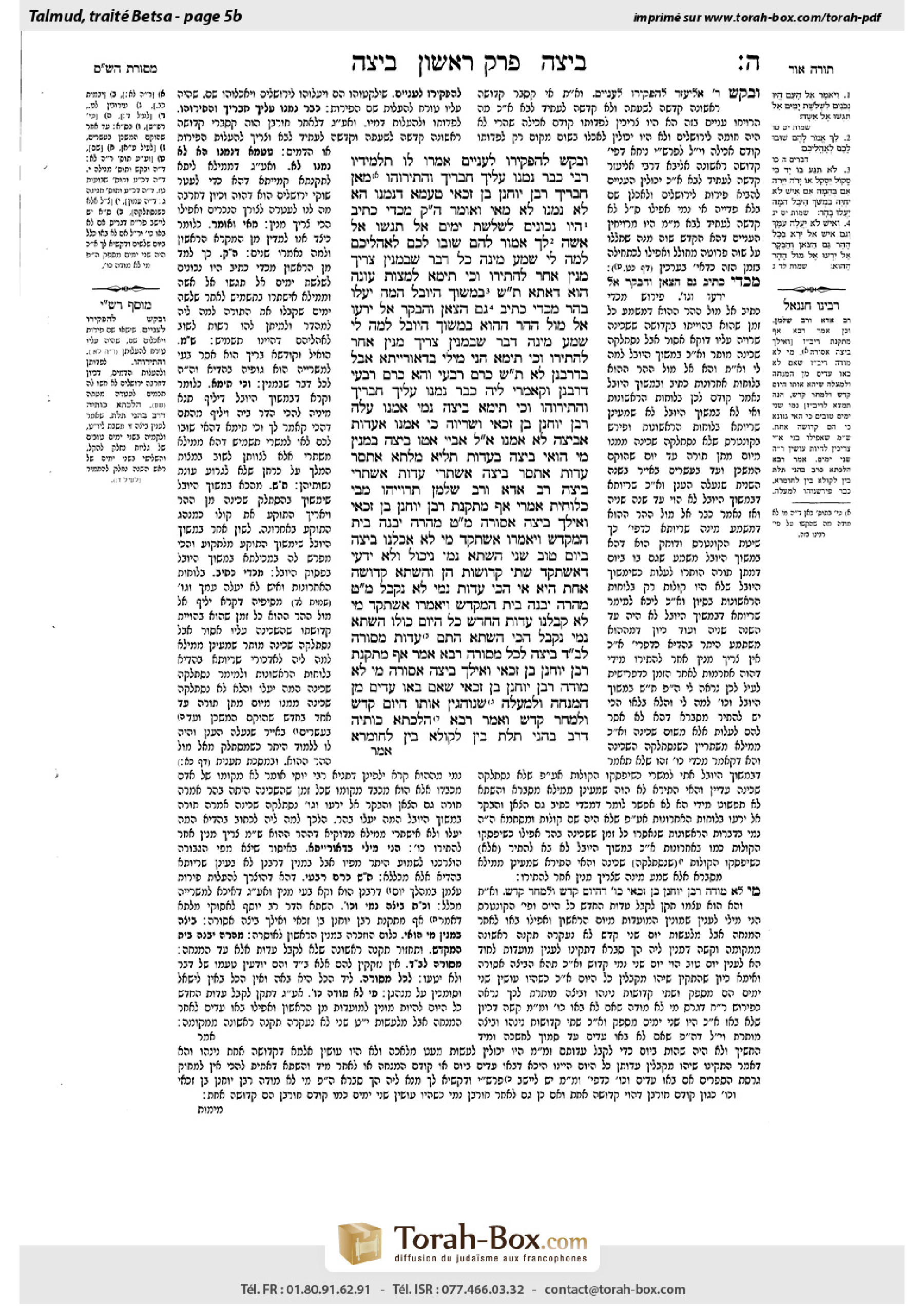
Beitzah 5b: Talmud study for Daf Yomi
Study the Talmud for Daf Yomi with scanned pages, Hebrew text, English translations from Sefaria and AI-generated French translations.
Passage selection and English or AI-generated French translation are available where the scan has annotations. Daf Study is independent of Torah-Box and Sefaria.
Browse Beitzah · ביצה · All tractatesBeitzah 5b text and translations
This page of Beitzah includes the Aramaic text, an English translation and an AI-generated French translation, alongside the scan above.
ביצה ה׳ ב · Aramaic and Hebrew text
וּבִקֵּשׁ לְהַפְקִירוֹ לַעֲנִיִּים. אָמְרוּ לוֹ תַּלְמִידָיו: רַבִּי, כְּבָר נִמְנוּ עָלֶיךָ חֲבֵרֶיךָ וְהִתִּירוּהוּ. מַאן חֲבֵרֶיךָ — רַבָּן יוֹחָנָן בֶּן זַכַּאי.
טַעְמָא דְּנִמְנוּ. הָא לָא נִמְנוּ — לֹא.
מַאי ״וְאוֹמֵר״? הָכִי קָאָמַר, מִכְּדֵי כְּתִיב ״הֱיוּ נְכוֹנִים לִשְׁלֹשֶׁת יָמִים אַל תִּגְּשׁוּ אֶל אִשָּׁה״, ״לֵךְ אֱמוֹר לָהֶם שׁוּבוּ לָכֶם לְאׇהֳלֵיכֶם״ לְמָה לִי? שְׁמַע מִינַּהּ כׇּל דָּבָר שֶׁבְּמִנְיָן — צָרִיךְ מִנְיָן אַחֵר לְהַתִּירוֹ.
וְכִי תֵּימָא: לְמִצְוַת עוֹנָה הוּא דַּאֲתָא. תָּא שְׁמַע: ״בִּמְשֹׁךְ הַיֹּבֵל הֵמָּה יַעֲלוּ בָהָר״.
מִכְּדֵי כְּתִיב: ״גַּם הַצֹּאן וְהַבָּקָר אַל יִרְעוּ אֶל מוּל הָהָר הַהוּא״, ״בִּמְשֹׁךְ הַיֹבֵל״ לְמָה לִי? שְׁמַע מִינַּהּ: דָּבָר שֶׁבְּמִנְיָן — צָרִיךְ מִנְיָן אַחֵר לְהַתִּירוֹ.
וְכִי תֵּימָא הָנֵי מִילֵּי בִּדְאוֹרָיְיתָא, אֲבָל בִּדְרַבָּנַן לָא — תָּא שְׁמַע כֶּרֶם רְבָעִי, וְהָא כֶּרֶם רְבָעִי דְּרַבָּנַן, וְקָאָמְרִי לֵיהּ: כְּבָר נִמְנוּ עָלֶיךָ חֲבֵרֶיךָ וְהִתִּירוּהוּ.
וְכִי תֵּימָא: בֵּיצָה נָמֵי, אִמְּנוֹ עֲלַהּ רַבָּן יוֹחָנָן בֶּן זַכַּאי וְשַׁרְיוּהָ. כִּי אִמְּנוֹ — אַעֵדוּת, אַבֵּיצָה לָא אִמְּנוֹ.
אֲמַר לֵיהּ אַבָּיֵי: אַטּוּ בֵּיצָה בְּמִנְיָן מִי הֲוַאי? בֵּיצָה בְּעֵדוּת תַּלְיָא מִלְּתָא. אִתְּסַר עֵדוּת — אִתְּסַר בֵּיצָה, אִשְׁתְּרַי עֵדוּת — אִשְׁתְּרַי בֵּיצָה.
רַב אַדָּא וְרַב שַׁלְמָן, תַּרְוַיְיהוּ מִבֵּי כְלוֹחִית, אָמְרִי: אַף מִתַּקָּנַת רַבָּן יוֹחָנָן בֶּן זַכַּאי וְאֵילָךְ בֵּיצָה אֲסוּרָה. מַאי טַעְמָא — מְהֵרָה יִבָּנֶה בֵּית הַמִּקְדָּשׁ, וְיֹאמְרוּ: אֶשְׁתָּקַד מִי לֹא אָכַלְנוּ בֵּיצָה בְּיוֹם טוֹב שֵׁנִי? הַשְׁתָּא נָמֵי נֵיכוֹל. וְלָא יָדְעִי דְּאֶשְׁתָּקַד שְׁתֵּי קְדוּשּׁוֹת הֵן, וְהַשְׁתָּא קְדוּשָּׁה אַחַת הִיא.
אִי הָכִי, עֵדוּת נָמֵי לֹא נְקַבֵּל, מַאי טַעְמָא — מְהֵרָה יִבָּנֶה בֵּית הַמִּקְדָּשׁ, וְיֹאמְרוּ: אֶשְׁתָּקַד מִי לֹא קִבַּלְנוּ עֵדוּת הַחֹדֶשׁ כׇּל הַיּוֹם כּוּלּוֹ, הַשְׁתָּא נָמֵי נְקַבֵּל!
הָכִי הַשְׁתָּא! הָתָם עֵדוּת מְסוּרָה לְבֵית דִּין. בֵּיצָה לַכֹּל מְסוּרָה.
רָבָא אָמַר: אַף מִתַּקָּנַת רַבָּן יוֹחָנָן בֶּן זַכַּאי וְאֵילָךְ בֵּיצָה אֲסוּרָה. מִי לֹא מוֹדֶה רַבָּן יוֹחָנָן בֶּן זַכַּאי שֶׁאִם בָּאוּ עֵדִים מִן הַמִּנְחָה וּלְמַעְלָה, שֶׁנּוֹהֲגִין אוֹתוֹ הַיּוֹם קֹדֶשׁ וּלְמָחָר קֹדֶשׁ?
וְאָמַר רָבָא: הִלְכְתָא כְּוָתֵיהּ דְּרַב בְּהָנֵי תְּלָת, בֵּין לְקוּלָּא בֵּין לְחוּמְרָא.
Beitzah 5b · English translation
and he sought to render the fruit ownerless in favor of the poor, for whom it would be worth the effort to bring the fruit to Jerusalem. His students said to him: Rabbi, there is no need to do so, as your colleagues have already voted for you and permitted it. The members of the Sanhedrin have already taken a vote and permitted the redemption of the fruit of a fourth-year grapevine even near Jerusalem. The reason is that after the destruction of the Temple there is no need to adorn the markets of Jerusalem. The Gemara explains: Who are: Your colleagues? This is referring to Rabban Yoḥanan ben Zakkai.
The Gemara infers from the baraita: The reason is that they explicitly voted to annul the decree, which indicates that if they had not voted, the ordinance would not have lapsed on its own, despite the fact that its justification was no longer applicable. Similarly, the prohibition of a laid egg is not nullified, as it was never explicitly permitted.
The Gemara seeks to clarify why Rav Yosef cited two verses as proof. The Gemara asks: What is the reason for: And it says? Why does Rav Yosef find it necessary to quote a second verse? The Gemara explains that this is what he is saying. Now since it is written: “Be ready for the third day, do not come near a woman” (Exodus 19:15), why do I need the verse “Go, say to them: Return to your tents” (Deuteronomy 5:26)? After three days the prohibition would lapse in any case. Conclude from this that any matter established by a vote requires another vote to permit it.
And if you say an alternative explanation, that the instruction to “return to your tents” was not given to permit the men to return home to their wives, but rather it came as a special command to fulfill the mitzva of conjugal rights, i.e., the obligation of a man to engage in periodic marital relations with his wife, then it was to refute this possibility that Rav Yosef continued: Come and hear a different proof from another verse: “When the ram’s horn sounds long, they may come up to the mount” (Exodus 19:13).
Now since it is written: “Neither shall the flocks nor the herds feed before that mount” (Exodus 34:3), this indicates that the prohibition applies only when the Divine Presence is revealed on the mountain, and it is permitted immediately afterward. If so, why do I need the verse “When the ram’s horn sounds long”? Why is a special signal required? Conclude from this that any matter established by a vote requires another vote to permit it.
And if you say: That statement, that a specific vote is necessary, applies only to matters prohibited by Torah law, but in the case of a matter prohibited by rabbinic law, no, this halakha does not apply, come and hear the baraita concerning a fourth-year grapevine. The halakha that the fruit of a fourth-year grapevine must be brought to Jerusalem and may not be redeemed is by rabbinic law, and they nevertheless said to Rabbi Eliezer: Your colleagues have already voted for you and permitted it. This indicates that without a vote, the prohibition would not be abrogated.
And if you say: In the case of the prohibition of an egg also, Rabban Yoḥanan ben Zakkai took a vote on it and permitted it; the Gemara answers: When they took a vote, it was with regard to testimony to determine the start of the month; they did not take a vote to annul the prohibition of an egg.
Abaye said to Rav Yosef: Is that to say that an egg was prohibited by a vote? Did the court take a special vote to render prohibited an egg laid on Rosh HaShana? Isn’t the halakha of an egg dependent on the matter of testimony? When testimony in the late afternoon was prohibited, the eating of an egg laid on Rosh HaShana was thereby prohibited as well, and when this testimony was permitted, the eating of an egg was automatically permitted. Rav Yosef’s observation is therefore incorrect.
Rav Adda and Rav Shalman, who both came from Bei Keloḥit, said: Even from the time of the ordinance of Rabban Yoḥanan ben Zakkai and onward, an egg remains prohibited. What is the reason? May the Temple speedily be built, and the ordinance that testimony is accepted only until minḥa time will be restored, and people will say: Last year, didn’t we eat an egg laid on the first day of Rosh HaShana on the following day, the second Festival day of Rosh HaShana? Now, too, we will eat it, like last year. And they will not know the significant difference in halakha between the two cases, as last year the two days of Rosh HaShana were two sanctities, and now they are one long sanctity.
The Gemara challenges this: If so, that this is the concern, we also should not accept testimony nowadays. What is the reason? May the Temple speedily be built, and the people will say: Last year, didn’t we accept testimony to determine the start of the month all day? Now, too, we will accept the testimony of witnesses even after minḥa time.
The Gemara rejects this challenge: How can these cases be compared? There, with regard to witnesses, testimony is entrusted to the court, and the court is capable of distinguishing between the reasons for decrees. An egg, however, is entrusted to all, and as not all people will consult a Sage about the status of their eggs, there is a legitimate concern about error.
Rava said: Even from the time of the ordinance of Rabban Yoḥanan ben Zakkai and onward, an egg remains prohibited. Rava explained his reasoning: Doesn’t Rabban Yoḥanan ben Zakkai concede that if witnesses came from minḥa time and onward, even after the destruction of the Temple, then one observes that day as a holy day and also the following day as a holy day? The only difference is that during the time of the Temple any testimony delivered on the first day was not taken into account at all, which meant the second day was considered the first of the new year, whereas during the time of Rabban Yoḥanan ben Zakkai the new year was counted from the first day. As far as the sanctity of the Festival is concerned, however, the second day was also treated as sacred, which proves that when two days were observed in Eretz Yisrael, they were considered a single sanctity rather than two.
And Rava said in summary: The halakha is in accordance with the opinion of Rav in these three cases, whether the ruling is lenient, or whether the ruling is stringent.
Beitzah 5b · Traduction française (IA)
et il chercha à rendre le fruit propriété de personne en faveur des pauvres, pour qui il serait utile de transporter le fruit à Jérusalem. Ses élèves lui dirent : Rabbi, il n’est pas nécessaire de le faire, car vos collègues ont déjà voté pour vous et l’ont autorisé. Les membres du Sanhédrin ont déjà voté et autorisé la rachat du fruit d’une vigne de quatre ans même près de Jérusalem. La raison est que, après la destruction du Temple, il n’est plus nécessaire d’adornner les marchés de Jérusalem. La Guemara explique : Qui sont : vos collègues ? Cela fait référence à Rabban Yochanan ben Zakai.
La Guemara déduit de la baraïta : La raison est qu’ils ont explicitement voté pour annuler le décret, ce qui indique que si ils n’avaient pas voté, l’ordonnance ne serait pas tombée d’elle-même, malgré le fait que sa justification ne s’appliquait plus. De même, la prohibition d’un œuf pondu est non annulée, car elle n’a jamais été explicitement autorisée.
La Guemara cherche à clarifier pourquoi Rav Yosef cite deux versets comme preuve. La Guemara demande : Quelle est la raison de : Et il dit ? Pourquoi Rav Yosef juge-t-il nécessaire de citer un second verset ? La Guemara explique que c’est ce qu’il est en train de dire. Maintenant que cela est écrit : « Soyez prêts pour le troisième jour, ne vous approchez pas d’une femme » (Exode 19:15), pourquoi ai-je besoin du verset « Allez, dites-leur : Retournez dans vos tentes » (Deutéronome 5:26) ? Après trois jours, la prohibition serait tombée d’elle-même en tout cas. Concluez-en que toute matière établie par un vote nécessite un autre vote pour l’autoriser.
Et si vous aviez dit une autre explication, que l’instruction de « retournez dans vos tentes » n’avait pas été donnée pour permettre aux hommes de rentrer chez eux pour leurs épouses, mais plutôt comme une commande spéciale afin d’accomplir la mitsva des relations conjugales, c’est-à-dire l’obligation d’un homme de maintenir des relations régulières avec sa femme, alors c’est pour réfuter cette possibilité que Rav Yosef continue : Venez et entendez une autre preuve tirée d’un autre verset : « Quand le cor de la bête sonne longtemps, ils peuvent monter sur la montagne » (Exode 19:13).
Maintenant que cela est écrit : « Ni les troupeaux ni les bêtes ne doivent manger avant cette montagne » (Exode 34:3), cela montre que la prohibition s’applique uniquement lorsque la Présence Divine est révélée sur la montagne, et qu’elle est autorisée immédiatement après. Si c’est ainsi, pourquoi avons-nous besoin du verset « Quand le cor de la bête sonne longtemps » ? Pourquoi un signal spécial est-il requis ? Concluez-en que toute matière établie par un vote nécessite un autre vote pour l’autoriser.
Et si vous dites : Cette déclaration, que l’un vote spécifique est nécessaire, s’applique uniquement aux matières interdites par la loi divine, mais dans le cas d’une matière interdite par la loi rabbinique, non, cette halakha ne s’applique pas, venez et entendez la baraïta concernant la vigne de quatre ans. La halakha selon laquelle le fruit d’une vigne de quatre ans doit être apporté à Jérusalem et ne peut être racheté est de droit rabbinique, et ils dirent tout de même à Rabbi Eliezer : Vos collègues ont déjà voté pour vous et l’ont autorisé. Cela montre que sans un vote, la prohibition ne serait pas abrogée.
Et si vous dites : Dans le cas de la prohibition d’un œuf également, Rabban Yochanan ben Zakai a pris un vote sur cela et l’a autorisé ; la Guemara répond : Lorsqu’ils ont pris un vote, c’était en matière de témoignage pour déterminer le début du mois ; ils n’ont pas pris un vote pour annuler la prohibition d’un œuf.
Abaye dit à Rav Yosef : Est-ce que cela signifie que l’œuf était interdit par un vote ? Le tribunal a-t-il pris un vote spécial pour rendre interdit un œuf pondu le premier jour de Rosh HaShana ? N’est-ce pas la halakha de l’œuf qui dépend de la matière du témoignage ? Lorsque le témoignage de l’après-midi était interdit, la consommation d’un œuf pondu le premier jour de Rosh HaShana était également interdite, et lorsque ce témoignage était autorisé, la consommation d’un œuf était automatiquement autorisée. L’observation de Rav Yosef est donc incorrecte.
Rav Adda et Rav Shalman, qui venaient tous les deux de Bei Keloḥit, dirent : Même depuis l’ordonnance de Rabban Yochanan ben Zakai et après, l’œuf reste interdit. Quelle est la raison ? Que le Temple soit bâti rapidement, et l’ordonnance selon laquelle le témoignage est accepté uniquement jusqu’à l’heure de minḥa soit restaurée, et les gens diront : L’an dernier, n’avons-nous pas mangé un œuf pondu le premier jour de Rosh HaShana le lendemain, le deuxième jour de Rosh HaShana ? Maintenant aussi, nous en mangerons, comme l’an dernier. Et ils ne sauront pas la différence significative dans la halakha entre les deux cas, car l’an dernier les deux jours de Rosh HaShana étaient deux sanctuaires, et maintenant ils sont un seul sanctuaire long.
La Guemara conteste cela : Si c’est ainsi, nous devrions aussi ne pas accepter le témoignage aujourd’hui. Quelle est la raison ? Que le Temple soit bâti rapidement, et les gens diront : L’an dernier, n’avons-nous pas accepté le témoignage pour déterminer le début du mois toute la journée ? Maintenant aussi, nous accepterons le témoignage des témoins même après l’heure de minḥa.
La Guemara rejette ce défi : Comment peuvent ces cas être comparés ? Là, concernant les témoins, le témoignage est confié au tribunal, et le tribunal est capable de distinguer entre les raisons des décrets. L’œuf, cependant, est confié à tous, et comme non tous les gens consulteront un Sage sur le statut de leurs œufs, il y a une préoccupation légitime concernant l’erreur.
Rava dit : Même à partir de l'époque de la déclaration de Rabban Yoḥanan ben Zakkai, un œuf reste interdit. Rava expliqua sa raison : Ne reconnaît pas Rabban Yoḥanan ben Zakkai pas que si des témoins sont venus à partir de l'heure de minḥa et au-delà, même après la destruction du Temple, on observe ce jour comme un jour saint et aussi le jour suivant comme un jour saint ? La seule différence est que durant l'époque du Temple, toute déclaration faite le premier jour n'était pas prise en compte du tout, ce qui signifiait que le deuxième jour était considéré comme le premier du nouveau mois, tandis que durant l'époque de Rabban Yoḥanan ben Zakkai, le nouveau mois était compté à partir du premier jour. En ce qui concerne la sainteté du festival, cependant, le deuxième jour était également traité comme sacré, ce qui prouve que lorsqu'on observait deux jours en Eretz Yisrael, ils étaient considérés comme une seule sainteté plutôt que deux.
Et Rava dit en résumé : La halakha suit l'opinion de Rav dans ces trois cas, qu'il s'agisse d'une décision clémente ou d'une décision stricte.
Traduction française générée par IA à partir de l’édition anglaise de Sefaria. Vérifie toujours un passage avec le texte source.
Text from Sefaria: William Davidson Edition - Vocalized Aramaic (CC BY NC); William Davidson Edition - English (CC BY NC).