Beitzah 6b: Talmud study for Daf Yomi
Study the Talmud for Daf Yomi with scanned pages, Hebrew text, English translations from Sefaria and AI-generated French translations.
Passage selection and English or AI-generated French translation are available where the scan has annotations. Daf Study is independent of Torah-Box and Sefaria.
Browse Beitzah · ביצה · All tractatesBeitzah 6b text and translations
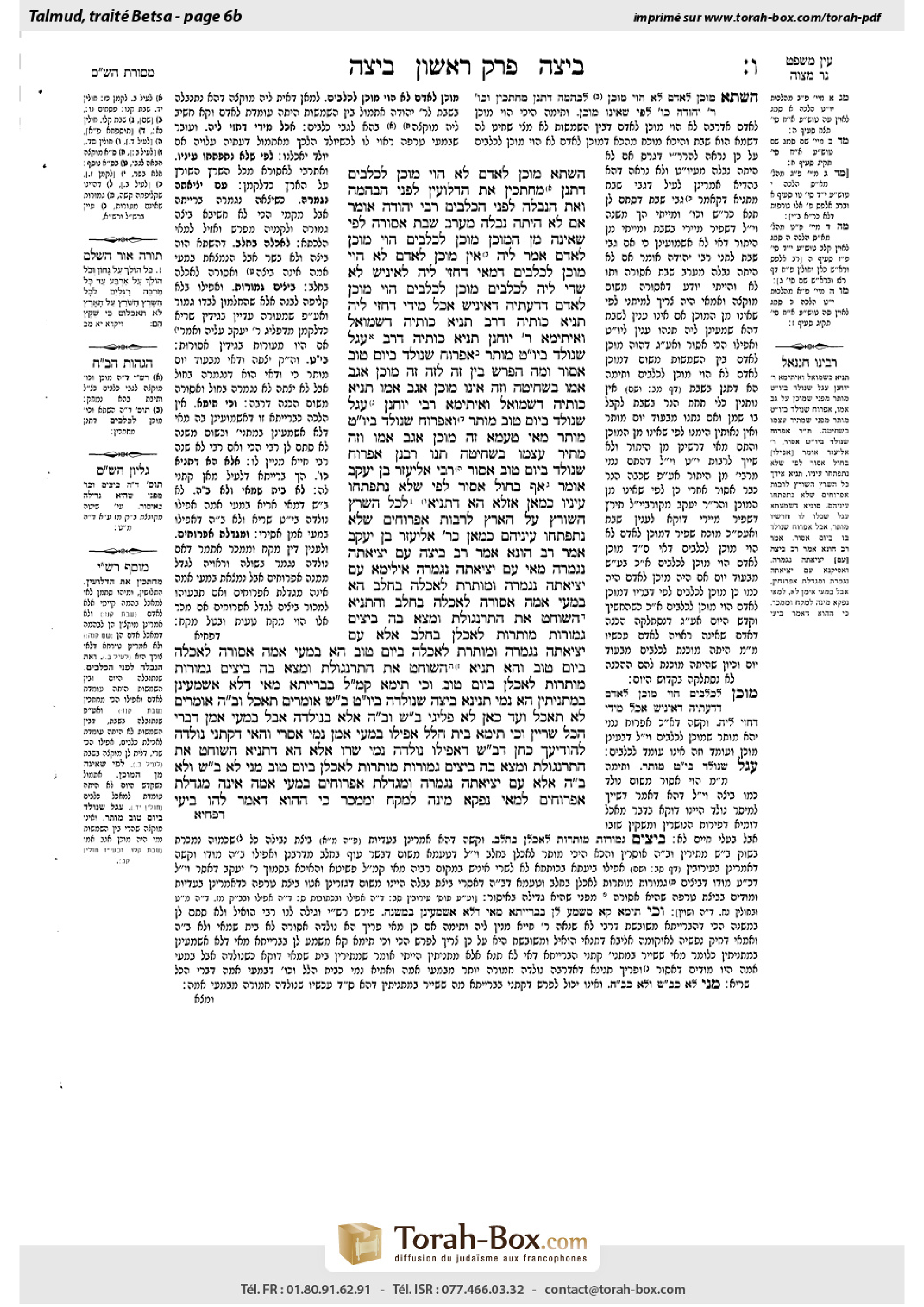
This page of Beitzah includes the Aramaic text, an English translation and an AI-generated French translation, alongside the scan above.
ביצה ו׳ ב · Aramaic and Hebrew text
הַשְׁתָּא מוּכָן לְאָדָם לָא הָוֵי מוּכָן לִכְלָבִים, דִּתְנַן: מְחַתְּכִין אֶת הַדִּלּוּעִין לִפְנֵי הַבְּהֵמָה, וְאֶת הַנְּבֵלָה לִפְנֵי הַכְּלָבִים. רַבִּי יְהוּדָה אוֹמֵר: אִם לֹא הָיְתָה נְבֵלָה מֵעֶרֶב שַׁבָּת — אֲסוּרָה, לְפִי שֶׁאֵינָהּ מִן הַמּוּכָן; מוּכָן לִכְלָבִים הָוֵי מוּכָן לְאָדָם?!
אֲמַר לֵיהּ: אִין, מוּכָן לְאָדָם — לָא הָוֵי מוּכָן לִכְלָבִים, דְּמַאי דַּחֲזֵי לֵיהּ לְאִינִישׁ לָא שָׁדֵי לֵיהּ לִכְלָבִים. מוּכָן לִכְלָבִים — הָוֵי מוּכָן לְאָדָם, דְּדַעְתֵּיהּ דְּאִינִישׁ אַכׇּל מִידֵּי דַּחֲזֵי לֵיהּ.
תַּנְיָא כְּוָתֵיהּ דְּרַב, תַּנְיָא כְּוָתֵיהּ דִּשְׁמוּאֵל וְאִיתֵּימָא רַבִּי יוֹחָנָן.
תַּנְיָא כְּוָתֵיהּ דְּרַב: עֵגֶל שֶׁנּוֹלַד בְּיוֹם טוֹב — מוּתָּר, אֶפְרוֹחַ שֶׁנּוֹלַד בְּיוֹם טוֹב — אָסוּר, וּמָה הֶפְרֵשׁ בֵּין זֶה לָזֶה? זֶה מוּכָן אַגַּב אִמּוֹ בִּשְׁחִיטָה, וְזֶה אֵינוֹ מוּכָן אַגַּב אִמּוֹ.
תַּנְיָא כְּוָתֵיהּ דִּשְׁמוּאֵל וְאִיתֵּימָא רַבִּי יוֹחָנָן: עֵגֶל שֶׁנּוֹלַד בְּיוֹם טוֹב — מוּתָּר, וְאֶפְרוֹחַ שֶׁנּוֹלַד בְּיוֹם טוֹב — מוּתָּר, מַאי טַעְמָא: זֶה מוּכָן אַגַּב אִמּוֹ, וְזֶה מַתִּיר עַצְמוֹ בִּשְׁחִיטָה.
תָּנוּ רַבָּנַן: אֶפְרוֹחַ שֶׁנּוֹלַד בְּיוֹם טוֹב — אָסוּר. רַבִּי אֱלִיעֶזֶר בֶּן יַעֲקֹב אוֹמֵר: אַף בַּחוֹל אָסוּר, לְפִי שֶׁלֹּא נִתְפַּתְּחוּ עֵינָיו.
כְּמַאן אָזְלָא הָא דְּתַנְיָא: ״לְכׇל הַשֶּׁרֶץ הַשֹּׁרֵץ עַל הָאָרֶץ״, לְרַבּוֹת אֶפְרוֹחִים שֶׁלֹּא נִתְפַּתְּחוּ עֵינֵיהֶם. כְּמַאן — כְּרַבִּי אֱלִיעֶזֶר בֶּן יַעֲקֹב.
אָמַר רַב הוּנָא אָמַר רַב: בֵּיצָה, עִם יְצִיאָתָהּ נִגְמְרָה. מַאי ״עִם יְצִיאָתָהּ נִגְמְרָה״? אִילֵּימָא, עִם יְצִיאָתָהּ נִגְמְרָה וּמוּתֶּרֶת לְאׇכְלָה בְּחָלָב — הָא בִּמְעֵי אִמָּהּ אֲסוּרָה לְאׇכְלָה בְּחָלָב? וְהָתַנְיָא: הַשּׁוֹחֵט אֶת הַתַּרְנְגוֹלֶת וּמָצָא בָּהּ בֵּיצִים גְּמוּרוֹת — מוּתָּרוֹת לְאָכְלָן בְּחָלָב!
אֶלָּא: עִם יְצִיאָתָהּ נִגְמְרָה — וּמוּתֶּרֶת לְאוֹכְלָהּ בְּיוֹם טוֹב. הָא בִּמְעֵי אִמָּהּ אֲסוּרָה לְאׇכְלָה בְּיוֹם טוֹב? וְהָא תַּנְיָא: הַשּׁוֹחֵט אֶת הַתַּרְנְגוֹלֶת וּמָצָא בָּהּ בֵּיצִים גְּמוּרוֹת — מוּתָּרוֹת לְאָכְלָן בְּיוֹם טוֹב!
וְכִי תֵּימָא: קָא מַשְׁמַע לַן בְּבָרַיְיתָא מַאי דְּלָא אַשְׁמְעִינַן בְּמַתְנִיתִין, הָא נָמֵי תְּנֵינָא: בֵּיצָה שֶׁנּוֹלְדָה בְּיוֹם טוֹב, בֵּית שַׁמַּאי אוֹמְרִים: תֵּאָכֵל, וּבֵית הִלֵּל אוֹמְרִים: לֹא תֵּאָכֵל. וְעַד כָּאן לָא פְּלִיגִי בֵּית שַׁמַּאי וּבֵית הִלֵּל אֶלָּא בְּנוֹלְדָה, אֲבָל בִּמְעֵי אִמָּן — דִּבְרֵי הַכֹּל שַׁרְיָין.
וְכִי תֵּימָא בֵּית הִלֵּל אֲפִילּוּ בִּמְעֵי אִמָּן נָמֵי אָסְרִי, וְהַאי דְּקָתָנֵי ״נוֹלְדָה״ — לְהוֹדִיעֲךָ כֹּחָן דְּבֵית שַׁמַּאי דַּאֲפִילּוּ נוֹלְדָה נָמֵי שָׁרוּ, אֶלָּא הָא דְּתַנְיָא: הַשּׁוֹחֵט אֶת הַתַּרְנְגוֹלֶת וּמָצָא בָּהּ בֵּיצִים גְּמוּרוֹת — מוּתָּרוֹת לְאָכְלָן בְּיוֹם טוֹב, מַנִּי? לָא בֵּית שַׁמַּאי וְלָא בֵּית הִלֵּל!
אֶלָּא: עִם יְצִיאָתָהּ, נִגְמְרָה — וּמְגַדֶּלֶת אֶפְרוֹחִים, בִּמְעֵי אִמָּהּ — אֵינָהּ מְגַדֶּלֶת אֶפְרוֹחִים. לְמַאי נָפְקָא מִינַּהּ? לְמִקָּח וּמִמְכָּר. כִּי הָהוּא דַּאֲמַר לְהוּ: בֵּיעֵי
Beitzah 6b · English translation
Now, we know that food prepared, i.e., fit, for human consumption that became spoiled is not automatically considered prepared for dogs, as we learned in a mishna (see 2a): One may cut pumpkins before an animal to facilitate their consumption, and likewise one may cut up an animal carcass, even of an animal that died on Shabbat, before dogs. Rabbi Yehuda says: If the animal was not already a carcass, i.e., it was not dead and fit for dogs, prior to Shabbat, it is prohibited, because it is not in the category of items considered prepared for use on Shabbat. This shows that although this animal was fit for human consumption while alive, it does not automatically become prepared for dogs once it dies. If so, can food prepared for dogs be considered prepared for humans?
He said to him: Yes. It is not surprising that something prepared and fit for humans is not considered fit and prepared for dogs, as that which is fit for a person, one does not throw it to dogs, and he has therefore removed that animal from his mind. However, something that is prepared for dogs is also considered fit and prepared for humans, as a person’s mind is on anything fit to be eaten by him. One does not completely remove from his mind even food meant for dogs, if it is kosher and edible. Consequently, one has in mind the possibility that he might eat the calf of a cow that is a tereifa once it is born, since at that point it will be kosher and edible.
With regard to the dispute itself, the Gemara comments: It is taught in a baraita in accordance with the opinion of Rav; and it is taught in another baraita in accordance with the opinion of Shmuel, and some say in accordance with the opinion of Rabbi Yoḥanan.
The Gemara elaborates: It is taught in a baraita in accordance with the opinion of Rav: A calf born on a Festival is permitted; a chick born on a Festival is prohibited. And what is the difference between this case and that one? This one, the calf, is prepared on account of its mother by slaughter; and that one, the chick, is not prepared on account of its mother.
The Gemara further explains: It is taught in a baraita in accordance with the opinion of Shmuel, and some say it is the opinion of Rabbi Yoḥanan: A calf born on a Festival is permitted, and a chick born on a Festival is likewise permitted. What is the reason? This one, the calf, is prepared on account of its mother; and that one, the chick, is itself rendered permitted through slaughter.
The Sages taught in a baraita: A chick born on a Festival is prohibited. Rabbi Eliezer ben Ya’akov says: Even on a weekday, the chick is prohibited on the day it hatched because its eyes have not yet opened. A small chick of this kind is not yet considered a bird fit for consumption; rather, it is similar to a creeping animal.
The Gemara comments: In accordance with whose opinion is that which is taught: The verse that states: “Even all creeping animals that creep upon the earth, you shall not eat them, for they are a detestable thing” (Leviticus 11:42) comes to include in the list of prohibited creeping animals even chicks that have not yet opened their eyes. In accordance with whose opinion is this baraita? It is in accordance with the opinion of Rabbi Eliezer ben Ya’akov.
§ Rav Huna said that Rav said: An egg is fully formed upon its emergence; i.e., it is not considered an egg until it is laid. The Gemara inquires: What is the meaning of the statement: An egg is fully formed upon its emergence? To which issue is Rava referring? If we say he meant an egg is fully formed and called an egg only upon its emergence, and at this stage it is permitted to eat it with milk, this indicates that while an egg is still inside its mother, even if it is fully formed, it is considered meat and it is prohibited to eat it with milk. But isn’t it taught in a baraita: With regard to one who slaughters a chicken and finds fully formed eggs inside it, it is permitted to eat them with milk?
Rather, Rav’s statement should be explained as follows: An egg is fully formed upon its emergence in that it is permitted to eat it on a Festival only if the entire egg emerged on a weekday. The Gemara expresses surprise at this claim: This indicates that if an egg is found inside its mother, it is prohibited to eat it on a Festival. But isn’t it taught: With regard to one who slaughters a chicken and finds fully formed eggs inside it, it is permitted to eat them on a Festival?
And if you say: The baraita teaches us that which the mishna did not explicitly teach us, and Rav stated the halakha accordingly; however, this we already learned in the mishna here, as it says in the mishna: With regard to an egg laid on a Festival, Beit Shammai say it may be eaten, and Beit Hillel say it may not be eaten. And Beit Shammai and Beit Hillel disagree only with regard to an egg that was already laid, but concerning eggs inside their mothers, all agree that they are permitted.
And if you say that the mishna should be explained in the opposite manner, as Beit Hillel also prohibit eggs inside their mothers, and the fact that the mishna teaches: Laid, is to convey the far-reaching nature of the opinion of Beit Shammai, that they permit even an egg that was laid. However, consider that which is taught in the aforementioned baraita: With regard to one who slaughters a chicken and finds inside it fully formed eggs, it is permitted to eat them on a Festival. In accordance with whose opinion is this baraita? It is the opinion neither of Beit Shammai nor of Beit Hillel.
Rather, Rav certainly did not prohibit an egg that has not yet been laid. Instead, his statement should be explained as follows: An egg is fully formed upon its emergence, and it produces chicks, i.e., an egg laid in the regular manner can be incubated and a chick will hatch from it. By contrast, an egg that remained inside its mother cannot produce chicks. The Gemara asks: What is the practical halakhic difference of this observation? The Gemara answers: It is relevant for buying and selling. In other words, the difference between the types of eggs has ramifications for terms of commerce. This is like that incident involving a certain individual who would say to the general public: Eggs
Beitzah 6b · Traduction française (IA)
Nous savons que les aliments préparés, c'est-à-dire adaptés à la consommation humaine, qui se sont détériorés ne sont pas automatiquement considérés comme adaptés aux chiens, comme nous l'avons appris dans une mitsna (voir 2a) : On peut couper des courges avant un animal pour faciliter leur consommation, et de même on peut découper un cadavre d'animaux, même s'il est mort le sabbat, avant les chiens. Rabbi Yéhuda dit : Si l'animal n'était pas déjà un cadavre, c'est-à-dire s'il n'était pas mort et adapté aux chiens avant le sabbat, il est interdit, car il ne relève pas de la catégorie des choses considérées comme préparées à l'usage du sabbat. Cela montre que bien que cet animal fût adapté à la consommation humaine lorsqu'il était vivant, il ne devient pas automatiquement adapté aux chiens une fois qu'il meurt. Si tel est le cas, peut-on considérer les aliments préparés pour les chiens comme étant préparés pour les humains ?
Il lui répondit : Oui. Il n'est pas surprenant que quelque chose préparé et adapté aux humains ne soit pas considéré comme adapté et préparé pour les chiens, car ce qui est adapté à une personne, on ne le jette pas aux chiens, et il a donc retiré cet animal de son esprit. Cependant, quelque chose préparé pour les chiens est également considéré comme adapté et préparé pour les humains, car l'esprit d'une personne est sur tout ce qui est comestible. On ne retire pas complètement de son esprit même les aliments destinés aux chiens, si ceux-ci sont kasher et comestibles. Ainsi, on considère la possibilité qu'on puisse manger le veau d'une vache tereifa une fois qu'il est né, car à ce moment-là il sera kasher et comestible.
En ce qui concerne le débat lui-même, la Guemara commente : Il est enseigné dans une baraïta selon l'opinion de Rav ; et il est enseigné dans une autre baraïta selon l'opinion de Shmuel, et certains disent selon l'opinion de Rabbi Yoḥanan.
Le Guemara développe : Il est enseigné dans une baraïta selon l'opinion de Rav : Un veau né pendant un festival est permis ; un poussin né pendant un festival est interdit. Et quelle est la différence entre ces deux cas ? Ce dernier, le veau, est préparé en raison de sa mère par l'abattage ; et celui-ci, le poussin, n'est pas préparé en raison de sa mère.
Le Guemara explique davantage : Il est enseigné dans une baraïta selon l'opinion de Shmuel, et certains disent selon l'opinion de Rabbi Yoḥanan : Un veau né pendant un festival est permis, et un poussin né pendant un festival est également permis. Quelle est la raison ? Ce dernier, le veau, est préparé en raison de sa mère ; et celui-ci, le poussin, est lui-même rendu permis par l'abattage.
Les Sages ont enseigné dans une baraïta : Un poussin né pendant un festival est interdit. Rabbi Eliezer ben Ya’akov dit : Même un jour de semaine, le poussin est interdit le jour où il est né, car ses yeux n'ont pas encore ouverts. Un petit poussin de ce genre n'est pas encore considéré comme un oiseau comestible ; il est plutôt comparable à un animal rampant.
Le Guemara commente : Selon l'opinion de qui est-ce que l'on enseigne : La parole qui dit : « Tous les animaux rampants qui rampent sur la terre, vous ne les mangerez pas, car ils sont des choses abominables » (Lévitique 11:42) vise à inclure dans la liste des animaux rampants interdits même les poussins dont les yeux n'ont pas encore été ouverts. Selon l'opinion de qui est-ce que cette baraïta ? C'est selon l'opinion de Rabbi Eliezer ben Ya’akov.
§ Rav Huna dit que Rav a dit : Un œuf est pleinement formé à son émergence ; c'est-à-dire qu'il n'est pas considéré comme un œuf avant d'être pondu. Le Guemara interroge : Quelle est la signification de la déclaration : Un œuf est pleinement formé à son émergence ? À quel problème Rava fait-il référence ? Si nous disons qu'il entendait par là qu'un œuf est pleinement formé et appelé œuf seulement à son émergence, et à ce stade il est permis de le manger avec du lait, cela indique que pendant qu'un œuf est encore dans sa mère, même s'il est pleinement formé, il est considéré comme de la viande et il est interdit de le manger avec du lait. Mais n'est-il pas enseigné dans une baraïta : Concernant celui qui abat un poulet et trouve des œufs pleinement formés à l'intérieur, il est permis de les manger avec du lait ?
Plutôt, la déclaration de Rav devrait être expliquée comme suit : Un œuf est pleinement formé à son émergence dans la mesure où il est permis de le manger pendant un festival uniquement si l'ensemble de l'œuf est sorti un jour de semaine. Le Guemara exprime une surprise à cet égard : Cela indique que si un œuf est trouvé à l'intérieur de sa mère, il est interdit de le manger pendant un festival. Mais n'est-il pas enseigné : Concernant celui qui abat un poulet et trouve à l'intérieur des œufs pleinement formés, il est permis de les manger pendant un festival ?
Et si vous dites : la baraïta nous apprend ce que la mitsna n'a pas explicitement enseigné, et Rav a formulé la halakha en conséquence ; cependant, cela nous a déjà été appris dans la mitsna ici, car elle dit dans la mitsna : Concernant un œuf pondu pendant un festival, Beit Shammai disent qu'il peut être mangé, et Beit Hillel disent qu'il ne peut pas être mangé. Et Beit Shammai et Beit Hillel ne s'entendent qu'en ce qui concerne un œuf déjà pondu, mais concernant les œufs à l'intérieur de leurs mères, tous s'accordent à dire qu'ils sont permis.
Et si vous dites que la mitsna devrait être expliquée dans le sens opposé, à savoir que Beit Hillel interdisent également les œufs à l'intérieur de leurs mères, et le fait que la mitsna enseigne : pondus, est pour faire comprendre la portée de l'opinion de Beit Shammai, qui permettent même un œuf déjà pondu. Cependant, considérez ce qui est enseigné dans la baraïta mentionnée précédemment : Concernant celui qui abat un poulet et trouve à l'intérieur des œufs pleinement formés, il est permis de les manger pendant un festival. Selon l'opinion de qui est-ce que cette baraïta ? C'est selon l'opinion ni de Beit Shammai ni de Beit Hillel.
En réalité, Rav n'a certainement pas interdit un œuf qui n'a pas encore été pondu. Au contraire, sa déclaration doit être interprétée ainsi : Un œuf est pleinement formé à son émergence, et il produit des poussins, c'est-à-dire qu'un œuf pondu normalement peut être incube et un poussin en émerge. En revanche, un œuf resté à l'intérieur de sa mère ne peut pas produire de poussins. La Guemara demande : Quelle est la différence halakhique pratique de cette observation ? La Guemara répond : Cela est pertinent pour l'achat et la vente. En d'autres termes, la différence entre les types d'œufs a des répercussions sur les termes de commerce. Cela ressemble à l'incident concernant un certain individu qui disait au public : des œufs
Traduction française générée par IA à partir de l’édition anglaise de Sefaria. Vérifie toujours un passage avec le texte source.
Text from Sefaria: William Davidson Edition - Vocalized Aramaic (CC BY NC); William Davidson Edition - English (CC BY NC).