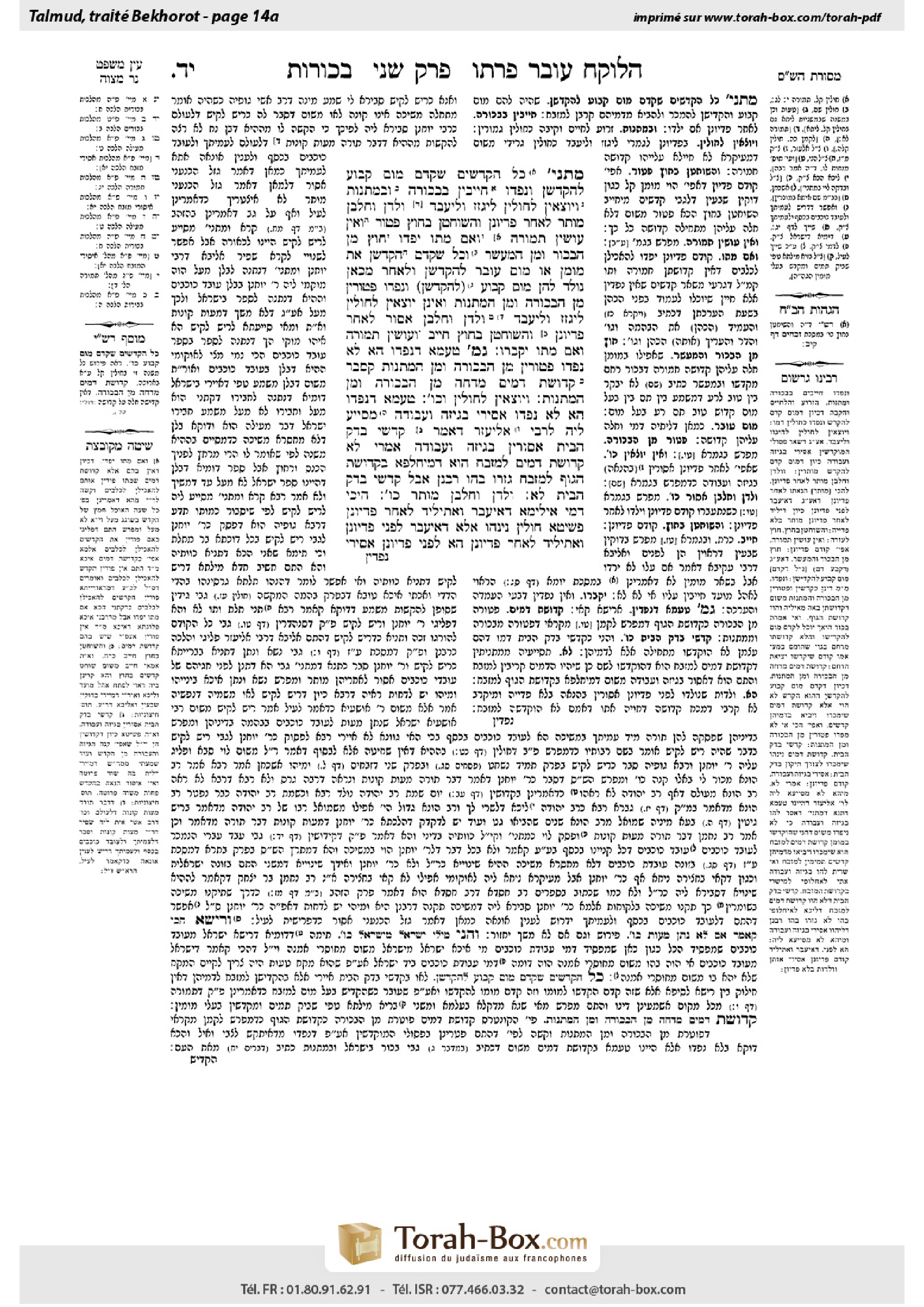
Bekhorot 14a: Talmud study for Daf Yomi
Study the Talmud for Daf Yomi with scanned pages, Hebrew text, English translations from Sefaria and AI-generated French translations.
Passage selection and English or AI-generated French translation are available where the scan has annotations. Daf Study is independent of Torah-Box and Sefaria.
Browse Bekhorot · בכורות · All tractatesBekhorot 14a text and translations
This page of Bekhorot includes the Aramaic text, an English translation and an AI-generated French translation, alongside the scan above.
בכורות י״ד א · Aramaic and Hebrew text
מַתְנִי׳ כׇּל הַקֳּדָשִׁים שֶׁקָּדַם מוּם קָבוּעַ לְהֶקְדֵּשָׁן וְנִפְדּוּ — חַיָּיבִין בַּבְּכוֹרָה וּבַמַּתָּנוֹת, וְיוֹצְאִין לְחוּלִּין לִיגָּזֵז וְלֵיעָבֵד, וְלָדָן וַחֲלָבָן מוּתָּר לְאַחַר פִּדְיוֹנָן.
וְהַשּׁוֹחֲטָן בַּחוּץ פָּטוּר, וְאֵין עוֹשִׂין תְּמוּרָה, וְאִם מֵתוּ — יִפָּדוּ, חוּץ מִן הַבְּכוֹר וּמִן הַמַּעֲשֵׂר.
וְכׇל שֶׁקָּדַם הֶקְדֵּשָׁן אֶת מוּמָן, אוֹ מוּם עוֹבֵר לְהֶקְדֵּשָׁן, וּלְאַחַר מִכָּאן נוֹלַד לָהֶן מוּם קָבוּעַ לְהֶקְדֵּשָׁן וְנִפְדּוּ — פְּטוּרִין מִן הַבְּכוֹרָה וּמִן הַמַּתָּנוֹת, וְאֵינָן יוֹצְאִין לְחוּלִּין לִיגָּזֵז וְלֵיעָבֵד.
וְלָדָן וַחֲלָבָן אָסוּר לְאַחַר פִּדְיוֹנָן, וְהַשּׁוֹחֲטָן בַּחוּץ חַיָּיב, וְעוֹשִׂין תְּמוּרָה, וְאִם מֵתוּ — יִקָּבֵרוּ.
גְּמָ׳ טַעְמָא דְּנִפְדּוּ, הָא לֹא נִפְדּוּ — פְּטוּרִין מִן הַבְּכוֹרָה וּמִן הַמַּתָּנוֹת. קָסָבַר: קְדוּשַּׁת דָּמִים מְדַחָה מִן הַבְּכוֹרָה וּמִן הַמַּתָּנוֹת.
וְיוֹצְאִין לְחוּלִּין וְכוּ׳. טַעְמָא דְּנִפְדּוּ, הָא לֹא נִפְדּוּ — אֲסִירִי בְּגִיזָּה וַעֲבוֹדָה. מְסַיַּיע לֵיהּ לְרַבִּי אֱלִיעֶזֶר, דְּאָמַר: קׇדְשֵׁי בֶּדֶק הַבַּיִת אֲסוּרִין בְּגִיזָּה וַעֲבוֹדָה?
אָמְרִי: לָא, קְדוּשַּׁת דָּמִים לַמִּזְבֵּחַ הוּא דְּמִיחַלְּפָא בִּקְדוּשַּׁת הַגּוּף לַמִּזְבֵּחַ, גְּזַרוּ בְּהוּ רַבָּנַן, אֲבָל קׇדְשֵׁי בֶּדֶק הַבַּיִת — לָא.
וְלָדָן וַחֲלָבָן מוּתָּר כּוּ׳. הֵיכִי דָמֵי? אִילֵּימָא דְּאִיעַבַּר וְאִתְיְלִיד לְאַחַר פִּדְיוֹנָן — פְּשִׁיטָא, חוּלִּין נִינְהוּ! אֶלָּא דְּאִיעַבַּר לִפְנֵי פִּדְיוֹנָן, וְאִתְיְלִיד לְאַחַר פִּדְיוֹנָן.
הָא לִפְנֵי פִּדְיוֹנָן — אֲסִירִי.
Bekhorot 14a · English translation
MISHNA: All sacrificial animals in which a permanent blemish preceded their consecration do not assume inherent sanctity and only their value is consecrated, and once they were redeemed, they are obligated in the mitzva of a firstborn, i.e., their offspring are subject to being counted a firstborn, and in the priestly gifts of the foreleg, the jaw, and the maw, and they can emerge from their sacred status and assume complete non-sacred status in order to be shorn and to be utilized for labor. And their offspring and their milk are permitted after their redemption.
And one who slaughters them outside the Temple courtyard is exempt from karet, and those animals do not render an animal that was a substitute for them consecrated. And if these animals died before they were redeemed, they may be redeemed and fed to dogs, and they do not require burial, except for the firstborn and the animal tithe. With regard to these two types of offerings, even if they were blemished before they became consecrated they assume inherent sanctity, like other offerings that were consecrated and subsequently became blemished.
And all sacrificial animals whose consecration preceded their blemish, or who had a temporary blemish prior to their consecration and afterward developed a permanent blemish and they were redeemed, they are exempt from, i.e., their offspring are not counted, a firstborn, and from the gifts of the foreleg, the jaw, and the maw, and they do not completely emerge from their sacred status and assume non-sacred status in order to be shorn and to be utilized for labor.
And their offspring, which were conceived prior to redemption, and their milk, are prohibited after their redemption. And one who slaughters them outside the Temple courtyard is liable to receive karet, and those animals render an animal that was a substitute for them consecrated. And if these animals died before they were redeemed, they may not be redeemed and fed to dogs; rather, they must be buried.
GEMARA: The mishna teaches that all animals that were blemished prior to their consecration are subject to their offspring being counted a firstborn and to the obligation of the gifts once they have been redeemed. The Gemara infers: The reason that they are subject to the obligations of a firstborn and the gifts is that they were redeemed. But if they were not redeemed, they are exempt from their offspring being counted a firstborn and from the obligation of the priestly gifts. The Gemara comments: This indicates that the tanna of the mishna holds: Sanctity that inheres in an animal’s value defers, i.e., renders it exempt, from the mitzva of the firstborn and from the gifts.
§ The mishna further teaches: And they can emerge from their sacred status and assume complete non-sacred status in order to be shorn and to be utilized for labor. The Gemara infers: The reason they become non-sacred is that they were redeemed. But if they were not redeemed, they remain sacred and are prohibited with regard to shearing and labor. The Gemara notes: This supports the opinion of Rabbi Eliezer, who says: Animals consecrated for the Temple maintenance are prohibited with regard to shearing and labor. Since animals consecrated for the Temple maintenance are equivalent to animals that possess sanctity that inheres in their value, the mishna supports Rabbi Eliezer’s opinion.
The Gemara rejects this suggestion: The Sages said: No; the mishna does not necessarily support the opinion of Rabbi Eliezer. It is possible that it is only with regard to an animal that has sanctity that inheres in its value and that was consecrated for the altar, which can be mistakenly exchanged with an animal that possesses inherent sanctity and was likewise consecrated for the altar, that the Sages decreed that it is prohibited to shear it and perform labor with it, due to a concern that one might confuse it with an animal that possesses inherent sanctity and ultimately violate a Torah prohibition. But with regard to animals consecrated for the Temple maintenance, no such decree was issued, as this concern does not apply.
§ The mishna teaches that their offspring and their milk are permitted after their redemption. The Gemara asks: What are the circumstances of the case of the mishna, in which the offspring of blemished redeemed animals are permitted? If we say that the mishna is referring to a case where the animals became pregnant and gave birth after their redemption, then it is obvious that the offspring are permitted, as they are non-sacred animals from the moment of conception. Rather, it must be referring to a case where they became pregnant before their redemption, and gave birth after their redemption, and the mishna is teaching that the offspring are permitted despite the fact they were conceived while their mothers were consecrated.
The Gemara infers from this ruling: But if the animals gave birth before their redemption, the offspring are prohibited until they are redeemed.
Bekhorot 14a · Traduction française (IA)
MICHNA : Tous les animaux sacrifiés dont une imperfection permanente précédait leur consécration ne possèdent pas une sanctité inhérente et seule leur valeur est consacrée, et une fois qu'ils ont été rachetés, ils sont soumis à la Mitsva du premier-né, c'est-à-dire que leurs descendants sont considérés comme des premiers-nés, et aux offrandes du cou, de la mâchoire et de la gueule, et ils peuvent sortir de leur statut sacré et prendre un statut complet non sacré afin d'être rasés et utilisés pour le travail. Et leurs descendants et leur lait sont permis après leur rachat.
Et celui qui les sacrifie en dehors du cortège du Temple est exempt de la peine de karet, et ces animaux ne rendent pas sacré un animal qui les remplacait. Et si ces animaux sont morts avant leur rachat, ils peuvent être rachetés et nourris aux chiens, et ils n'ont pas besoin d'être enterrés, sauf pour le premier-né et l'offrande de dixième animal. Concernant ces deux types d'offrandes, même s'ils étaient blemis avant leur consécration, ils possèdent une sanctité inhérente, comme les autres offrandes qui ont été consacrés et ensuite sont devenus blemis.
Et tous les animaux sacrifiés dont la consécration a précédé leur imperfection, ou qui avaient une imperfection temporaire avant leur consécration et ont ensuite développé une imperfection permanente et ont été rachetés, ils sont exemptés, c'est-à-dire leurs descendants ne sont pas comptés comme des premiers-nés, et des offrandes du cou, de la mâchoire et de la gueule, et ils ne sortent pas complètement de leur statut sacré et ne prennent pas un statut non sacré afin d'être rasés et utilisés pour le travail.
Et leurs descendants, conçus avant leur rachat, ainsi que leur lait, sont interdits après leur rachat. Et celui qui les sacrifie en dehors du cortège du Temple est puni de karet, et ces animaux rendent sacré un animal qui les remplacait. Et si ces animaux sont morts avant leur rachat, ils ne peuvent pas être rachetés et nourris aux chiens ; ils doivent être enterrés.
GUEMARA : La MICHNA enseigne que tous les animaux blemis avant leur consécration sont soumis à ce que leurs descendants soient comptés comme des premiers-nés et à l'obligation des offrandes une fois qu'ils ont été rachetés. La GUEMARA déduit : La raison pour laquelle ils sont soumis à ces obligations est qu'ils ont été rachetés. Mais s'ils n'ont pas été rachetés, ils sont exemptés de ce que leurs descendants soient comptés comme des premiers-nés et de l'obligation des offrandes du cou, de la mâchoire et de la gueule. La GUEMARA commente : Cela indique que le tanna de la MICHNA maintient que la sanctité inhérant à la valeur de l'animal diffère, c'est-à-dire l'exempte, de la Mitsva du premier-né et des offrandes.
§ La MICHNA enseigne également : Et ils peuvent sortir de leur statut sacré et prendre un statut complet non sacré afin d'être rasés et utilisés pour le travail. La GUEMARA déduit : La raison pour laquelle ils deviennent non sacrés est qu'ils ont été rachetés. Mais s'ils n'ont pas été rachetés, ils restent sacrés et sont interdits en ce qui concerne le rasage et le travail. La GUEMARA note : Cela soutient l'opinion de Rabbi Eliezer, qui dit : Les animaux consacrés à l'entretien du Temple sont interdits en ce qui concerne le rasage et le travail. Puisque les animaux consacrés à l'entretien du Temple sont équivalents aux animaux dont la sanctité inhérent à leur valeur, la MICHNA soutient l'opinion de Rabbi Eliezer.
La GUEMARA rejette cette suggestion : Les Sages dirent : Non ; la MICHNA ne soutient pas nécessairement l'opinion de Rabbi Eliezer. Il est possible qu'elle ne s'applique qu'aux animaux dont la sanctité inhérent à leur valeur et qui ont été consacrés à l'autel, qui peuvent être échangés par erreur avec un animal dont la sanctité est inhérente et qui a également été consacrés à l'autel, et que les Sages ont décrété qu'il est interdit de les raser et de les utiliser pour le travail, en raison de la crainte qu'on puisse les confondre avec un animal dont la sanctité est inhérente et enfreindre ainsi une interdiction divine. Mais concernant les animaux consacrés à l'entretien du Temple, aucun tel décret n'a été émis, car cette crainte ne s'applique pas.
§ La MICHNA enseigne que leurs descendants et leur lait sont permis après leur rachat. La GUEMARA pose une question : Quelles sont les circonstances du cas de la MICHNA, dans lequel les descendants des animaux blemis rachetés sont permis ? Si nous disons que la MICHNA fait référence à un cas où les animaux ont conçu et donné naissance après leur rachat, alors il est évident que les descendants sont permis, car ils sont des animaux non sacrés dès la conception. Au contraire, il doit s'agir d'un cas où ils ont conçu avant leur rachat et donné naissance après leur rachat, et la MICHNA enseigne que les descendants sont permis malgré le fait qu'ils ont été conçus alors que leurs mères étaient sacrés.
La GUEMARA déduit de cette décision : Mais si les animaux ont donné naissance avant leur rachat, les descendants sont interdits jusqu'à ce qu'ils soient rachetés.
Traduction française générée par IA à partir de l’édition anglaise de Sefaria. Vérifie toujours un passage avec le texte source.
Text from Sefaria: William Davidson Edition - Vocalized Aramaic (CC BY NC); William Davidson Edition - English (CC BY NC).