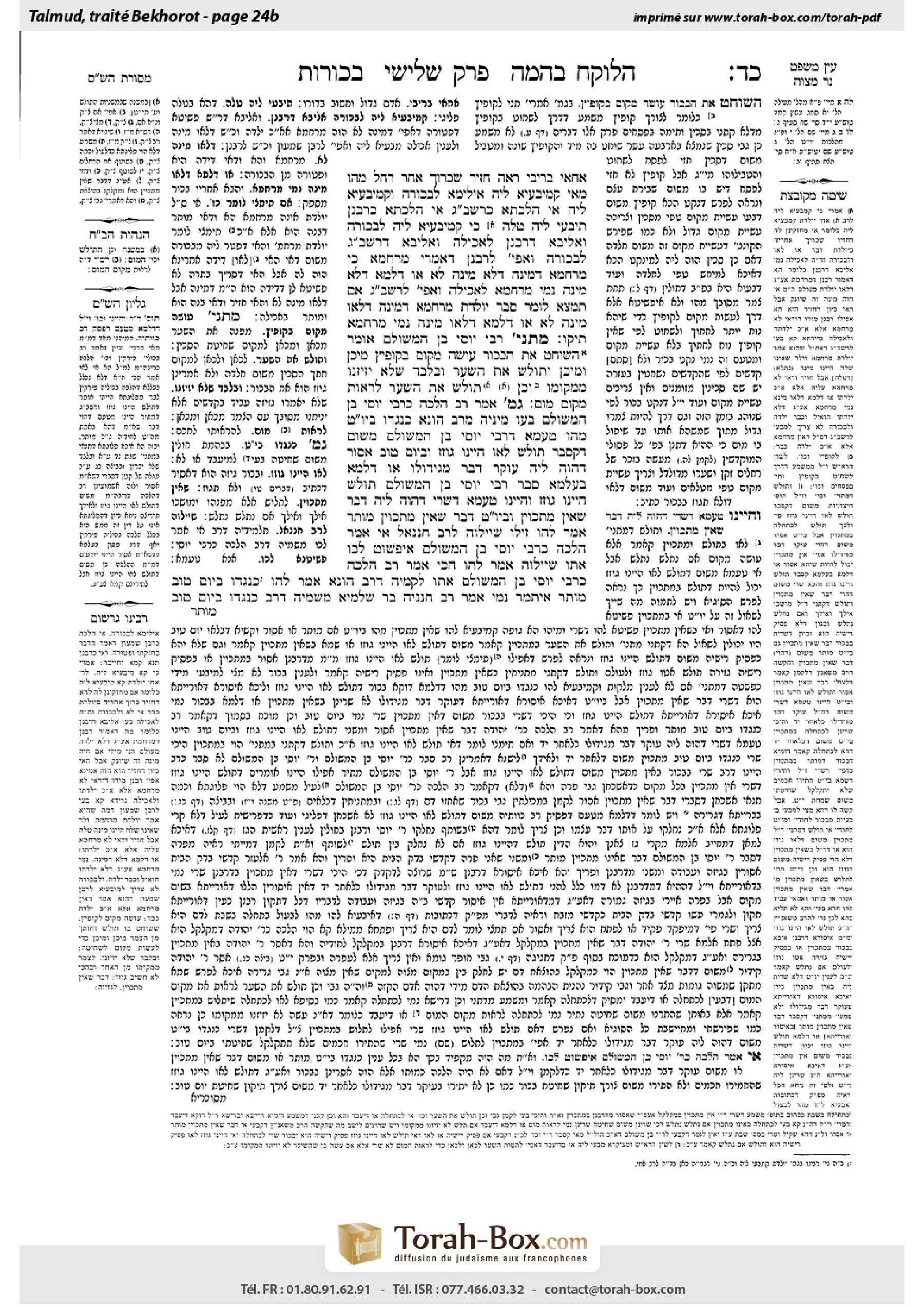
Bekhorot 24b: Talmud study for Daf Yomi
Study the Talmud for Daf Yomi with scanned pages, Hebrew text, English translations from Sefaria and AI-generated French translations.
Passage selection and English or AI-generated French translation are available where the scan has annotations. Daf Study is independent of Torah-Box and Sefaria.
Browse Bekhorot · בכורות · All tractatesBekhorot 24b text and translations
This page of Bekhorot includes the Aramaic text, an English translation and an AI-generated French translation, alongside the scan above.
בכורות כ״ד ב · Aramaic and Hebrew text
אַחַאי בְּרִיבִּי: רָאָה חֲזִיר שֶׁכָּרוּךְ אַחַר רָחֵל, מַהוּ? מַאי קָמִיבַּעְיָא לֵיהּ? אִילֵּימָא לִבְכוֹרָה, וְקָמִיבַּעְיָא לֵיהּ אִי הִלְכְתָא כְּרַבָּן שִׁמְעוֹן בֶּן גַּמְלִיאֵל אִי הִלְכְתָא כְּרַבָּנַן, תִּיבְּעֵי לֵיהּ טָלֶה!
כִּי קָמִיבַּעְיָא לֵיהּ, לִבְכוֹרָה וְאַלִּיבָּא דְּרַבָּנַן, לַאֲכִילָה וְאַלִּיבָּא דְּרַבָּן שִׁמְעוֹן בֶּן גַּמְלִיאֵל.
לִבְכוֹרָה, וַאֲפִילּוּ לְרַבָּנַן דְאָמְרִי מְרַחֲמָא, כִּי מְרַחֲמָא דְּמִינַהּ, דְּלָא מִינַהּ — לָא, אוֹ דִלְמָא דְּלָא מִינַהּ נָמֵי מְרַחֲמָא?
לַאֲכִילָה, וַאֲפִילּוּ לְרַבָּן שִׁמְעוֹן בֶּן גַּמְלִיאֵל — אִם תִּמְצָא לוֹמַר סָבַר: יוֹלֶדֶת מְרַחֲמָא דְּמִינַהּ, דְּלָאו מִינַהּ — לָא; אוֹ דִלְמָא: דְּלָאו מִינַהּ נָמֵי מְרַחֲמָא? תֵּיקוּ.
מַתְנִי׳ רַבִּי יוֹסֵי בֶּן הַמְשׁוּלָּם אוֹמֵר: הַשּׁוֹחֵט אֶת הַבְּכוֹר, עוֹשֶׂה מָקוֹם בְּקוֹפִיץ מִיכָּן וּמִיכָּן, וְתוֹלֵשׁ אֶת הַשֵּׂעָר, וּבִלְבַד שֶׁלֹּא יְזִיזֶנּוּ מִמְּקוֹמוֹ, וְכֵן תּוֹלֵשׁ אֶת הַשֵּׂעָר לִרְאוֹת מְקוֹם מוּם.
גְּמָ׳ אָמַר רַב: הֲלָכָה כְּרַבִּי יוֹסֵי בֶּן הַמְשׁוּלָּם. בְּעוֹ מִינֵּיהּ מֵרַב הוּנָא: כְּנֶגְדּוֹ בְּיוֹם טוֹב מַהוּ? טַעְמָא דְּרַבִּי יוֹסֵי בֶּן הַמְשׁוּלָּם מִשּׁוּם דְּקָסָבַר תּוֹלֵשׁ לָאו הַיְינוּ גּוֹזֵז, וּבְיוֹם טוֹב אָסוּר, דְּהָוֵה לֵיהּ עוֹקֵר דָּבָר מִגִּידּוּלוֹ.
אוֹ דִלְמָא בְּעָלְמָא סָבַר רַבִּי יוֹסֵי בֶּן הַמְשׁוּלָּם תּוֹלֵשׁ הַיְינוּ גּוֹזֵז, וְהַיְינוּ טַעְמָא דִּשְׁרֵי, דְּהָוֵה לֵיהּ דָּבָר שֶׁאֵין מִתְכַּוֵּין, וּבְיוֹם טוֹב דָּבָר שֶׁאֵין מִתְכַּוֵּין מוּתָּר?
אֲמַר לְהוּ: זִילוּ שַׁיְילוּהּ לְרַב חֲנַנְאֵל, אִי אָמַר הֲלָכָה כְּרַבִּי יוֹסֵי בֶּן הַמְשׁוּלָּם, אֶיפְשׁוֹט לְכוּ. אֲתוֹ שַׁיְילוּהּ, אֲמַר לְהוּ: הָכִי אָמַר רַב: הֲלָכָה כְּרַבִּי יוֹסֵי בֶּן הַמְשׁוּלָּם. אֲתוֹ לְקַמֵּיהּ דְּרַב הוּנָא, אֲמַר לְהוּ: כְּנֶגְדּוֹ בְּיוֹם טוֹב מוּתָּר. אִיתְּמַר נָמֵי, אָמַר רַב חֲנַנְיָה בַּר שֶׁלֶמְיָא מִשְּׁמֵיהּ דְּרַב: כְּנֶגְדּוֹ בְּיוֹם טוֹב
Bekhorot 24b · English translation
by Aḥai the Distinguished [beribbi]: If one saw an animal with the appearance of a pig that was trailing after a ewe, what is the halakha? The Gemara asks: What is the dilemma he is raising? If we say he is inquiring with regard to the firstborn status of the future offspring, and he is therefore essentially asking if the halakha is in accordance with the opinion of Rabban Shimon ben Gamliel or if the halakha is in accordance with the opinion of the Rabbis, then let the dilemma be raised with respect to the more common case of a lamb, rather than the irregular case of a pig-like animal.
The Gemara answers: Actually, when Aḥai the Distinguished raised the dilemma it was with respect to the ramifications of each opinion: He inquired with regard to the future offspring’s firstborn status, and this aspect of the dilemma was raised under the assumption that the halakha is in accordance with the opinion of the Rabbis. He also inquired with regard to whether or not the pig-like animal is permitted for consumption, and this aspect of the dilemma was raised under the assumption that the halakha is in accordance with the opinion of Rabban Shimon ben Gamliel.
The Gemara elaborates: He inquired with regard to the offspring’s firstborn status, and this question applies even according to the opinion of the Rabbis, who say that an animal might be merciful toward other young animals. The Gemara explains the dilemma: One can say that when an animal is merciful this applies only toward an animal that is of its own species, but to a young animal that is not of its own species a mother animal certainly does not show mercy. Therefore, the fact that it nursed proves that it is its offspring. Or perhaps an animal might also be merciful toward an offspring that is not of its own species. If it is merciful only to its own species, the ewe is exempt from having its future offspring counted a firstborn; if its mercy extends to other species then it is not exempt.
And Aḥai the Distinguished also inquired with regard to whether the pig-like animal is permitted for consumption, and this question applies even according to the opinion of Rabban Shimon ben Gamliel: If you say he holds that an animal that has given birth might be merciful and nurse another mother’s offspring, perhaps that is so only with regard to an animal that is of its own species, but to an animal that is not of its own species it is not merciful, which means the pig-like animal is kosher. Or perhaps a mother might also be merciful toward an offspring that is not of its own species, in which case the pig-like animal might not be kosher and therefore may not be eaten. After explaining the dilemma of Aḥai the Distinguished, the Gemara concludes: The dilemma shall stand unresolved.
MISHNA: Rabbi Yosei ben HaMeshullam says: Since it is prohibited by Torah law to shear a firstborn, as it states: “And you shall not shear the firstborn of your flock” (Deuteronomy 15:19), one who is slaughtering a firstborn, and must clear hair or wool from the area of the neck in order to facilitate proper slaughter, clears space by uprooting the hair with a cleaver [bekofitz] from here and from there, on either side of the neck, although he thereby plucks out the hair. He may clear space in this manner provided that he does not move the plucked hair from its place; it must remain intermingled with the rest of the hair so it will appear that he did not shear the animal. And likewise, one plucks the hair to enable one of the Sages to examine the place of a blemish and thereby determine whether it is permitted to slaughter the firstborn outside the Temple.
GEMARA: Rav says: The halakha is in accordance with the opinion of Rabbi Yosei ben HaMeshullam. The Sages raised a dilemma before Rav Huna: What is the halakha in the parallel case of one who wishes to slaughter a non-sacred animal on a Festival? The resolution depends on the reason for the ruling of Rabbi Yosei ben HaMeshullam: Does he permit clearing hair with a cleaver because he holds that plucking is not the same as shearing, and as opposed to plucking the hair of a firstborn, it is prohibited to pluck hair on the Festival, as this is considered uprooting an item from its place of growth?
Or perhaps in general Rabbi Yosei ben HaMeshullam holds that plucking is considered a form of shearing. And this is the reason that it is permitted to clear space with a cleaver in the case of the firstborn, as it is an unintentional act, i.e., an action performed for a permitted purpose from which a prohibited labor may inadvertently ensue, since he does not intend to pluck out the hair; and on a Festival an unintentional act is permitted.
Rav Huna said to them: Go and ask Rav’s disciple, Rav Ḥananel, and if Rav in fact said the halakha is in accordance with the opinion of Rabbi Yosei ben HaMeshullam, I will explain to you the resolution of your dilemma. They went and asked Rav Ḥananel, and he said to them that this is what Rav says: The halakha is in accordance with the opinion of Rabbi Yosei ben HaMeshullam. They came before Rav Huna, and he said to them: In the parallel case of one who wishes to slaughter a non-sacred animal on a Festival, it is permitted to pluck the hair in order to facilitate proper slaughter. It was also stated that Rav Ḥananya bar Shelamya says in the name of Rav: In the parallel case of one who wishes to slaughter a non-sacred animal on a Festival,
Bekhorot 24b · Traduction française (IA)
Par Aḥai le-Katan [beribbi] : Si l'on voit un animal ayant l'apparence d'un porc qui suit une brebis, quelle est la halakha ? La Guemara pose la question : Quel est le dilemme qu'il soulève ? Si l'on dit qu'il s'interroge sur le statut de premier-né des descendants futurs, et qu'il s'interroge donc essentiellement sur le fait que la halakha suit l'opinion de Rabban Shimon ben Gamliel ou celle des Sages, alors le dilemme doit être posé concernant le cas plus courant d'une agnelle, plutôt que le cas inhabituel d'un animal ayant l'apparence d'un porc.
La Guemara répond : En réalité, lorsque Aḥai le Distingué a posé le dilemme, c'était concernant les conséquences de chaque opinion : Il s'interrogeait sur le statut de premier-né des descendants futurs, et ce point du dilemme était posé sous l'hypothèse que la halakha suit l'opinion des Sages. Il s'interrogeait également sur la permisssibilité de consommer l'animal ayant l'apparence d'un porc, et ce point du dilemme était posé sous l'hypothèse que la halakha suit l'opinion de Rabban Shimon ben Gamliel.
La Guemara développe : Il s'interrogeait sur le statut de premier-né des descendants, et cette question s'applique même selon l'opinion des Sages, qui disent qu'un animal peut être miséricordieux envers d'autres jeunes animaux. La Guemara explique le dilemme : On peut dire que lorsque l'animal est miséricordieux, cela s'applique uniquement à un animal de sa propre espèce, mais à un jeune animal d'une espèce différente, la mère ne montre certainement pas de miséricorde. Par conséquent, le fait qu'il ait nourri prouve qu'il s'agit de son propre descendant. Ou peut-être qu'un animal peut aussi être miséricordieux envers un descendant d'une espèce différente. Si la miséricorde s'applique uniquement à sa propre espèce, la brebis est exemptée de compter son descendant futur comme premier-né ; si sa miséricorde s'étend à d'autres espèces, alors elle n'est pas exemptée.
Et Aḥai le Distingué s'est également interrogé sur la permisssibilité de consommer l'animal ayant l'apparence d'un porc, et cette question s'applique même selon l'opinion de Rabban Shimon ben Gamliel : Si vous dites qu'il considère qu'un animal qui a donné naissance peut être miséricordieux et nourrir un autre mère, peut-être cela s'applique uniquement à un animal de sa propre espèce, mais pas à un animal d'une espèce différente, ce qui signifie que l'animal ayant l'apparence d'un porc est permis. Ou peut-être qu'une mère peut aussi être miséricordieuse envers un descendant d'une espèce différente, dans ce cas l'animal ayant l'apparence d'un porc pourrait ne pas être permis et donc ne pas être consommable. Après avoir expliqué le dilemme d'Aḥai le Distingué, la Guemara conclut : Le dilemme restera sans résolution.
MICHNA : Rabbi Yosei ben HaMeshullam dit : Puisque c'est interdit par la Torah de tailler les premiers-nés, comme il est dit : « Et vous ne taillerez pas le premier-né de votre troupeau » (Deutéronome 15:19), celui qui immole un premier-né, et doit dégager la région du cou pour faciliter une bonne immolation, dégager l'espace en arrachant la fourrure avec un couteau [bekofitz] d'ici et d'ailleurs, des deux côtés du cou, bien qu'il en arrache ainsi la fourrure. Il peut dégager l'espace ainsi à condition qu'il ne déplace pas la fourrure arrachée de son lieu ; elle doit rester mêlée avec le reste de la fourrure afin qu'il semble qu'il n'ait pas taillé l'animal. De même, on arrache la fourrure pour permettre à l'un des Sages d'examiner la zone d'une imperfection et ainsi déterminer si l'animal est permis à immoler en dehors du Temple.
GUEMARA : Rav dit : La halakha suit l'opinion de Rabbi Yosei ben HaMeshullam. Les Sages ont posé un dilemme devant Rav Huna : Quelle est la halakha dans le cas parallèle d'un animal non sacré que l'on souhaite immoler pendant un festival ? La résolution dépend de la raison de la décision de Rabbi Yosei ben HaMeshullam : Est-ce qu'il permet l'arrachage de la fourrure avec un couteau parce qu'il considère que l'arrachage n'est pas considéré comme la taille, et que contrairement à l'arrachage de la fourrure d'un premier-né, il est interdit d'arracher de la fourrure pendant un festival, car cela est considéré comme l'arrachage d'un objet de son lieu de croissance ?
Ou peut-être que Rabbi Yosei ben HaMeshullam considère généralement que l'arrachage est considéré comme une forme de taille. Et c'est la raison pour laquelle il est permis de dégager l'espace avec un couteau dans le cas des premiers-nés, car c'est une action accidentelle, c'est-à-dire une action faite pour un but permis à partir de laquelle une activité interdite peut accidentellement survenir, puisque l'intention n'est pas d'arracher la fourrure ; et pendant un festival, une action accidentelle est permise.
Rav Huna dit à eux : Allez demander à l'élève de Rav, Rav Ḥananel, et si Rav a effectivement dit que la halakha suit l'opinion de Rabbi Yosei ben HaMeshullam, je vous expliquerai la résolution de votre dilemme. Ils allèrent demander à Rav Ḥananel, et il leur dit que c'est ce que Rav dit : La halakha suit l'opinion de Rabbi Yosei ben HaMeshullam. Ils revinrent devant Rav Huna, et il leur dit : Dans le cas parallèle d'un animal non sacré que l'on souhaite immoler pendant un festival, il est permis d'arracher la fourrure afin de faciliter une bonne immolation. Il a également été dit que Rav Ḥananya bar Shelamya dit en nom de Rav : Dans le cas parallèle d'un animal non sacré que l'on souhaite immoler pendant un festival,
Traduction française générée par IA à partir de l’édition anglaise de Sefaria. Vérifie toujours un passage avec le texte source.
Text from Sefaria: William Davidson Edition - Vocalized Aramaic (CC BY NC); William Davidson Edition - English (CC BY NC).