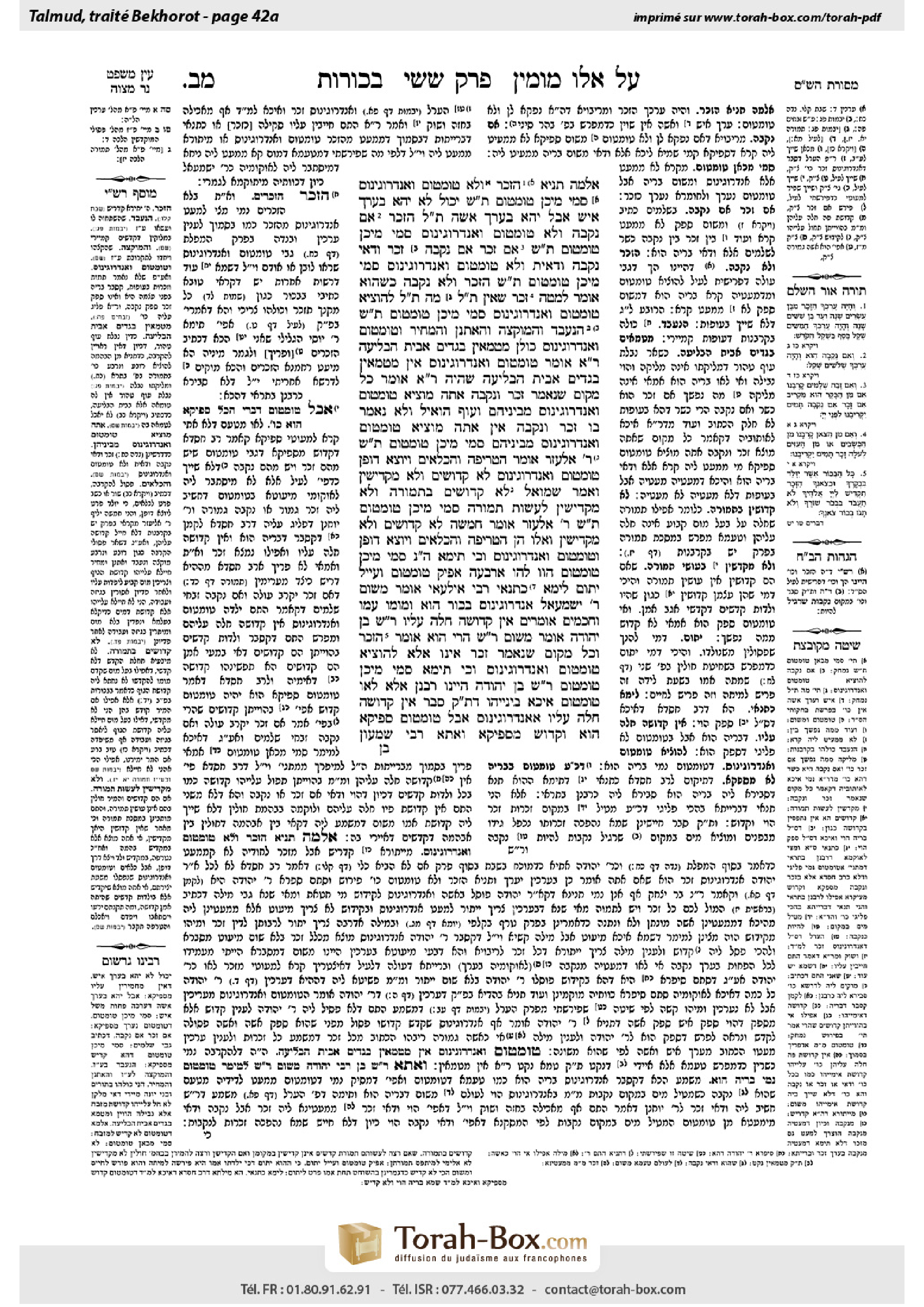
Bekhorot 42a: Talmud study for Daf Yomi
Study the Talmud for Daf Yomi with scanned pages, Hebrew text, English translations from Sefaria and AI-generated French translations.
Passage selection and English or AI-generated French translation are available where the scan has annotations. Daf Study is independent of Torah-Box and Sefaria.
Browse Bekhorot · בכורות · All tractatesBekhorot 42a text and translations
This page of Bekhorot includes the Aramaic text, an English translation and an AI-generated French translation, alongside the scan above.
בכורות מ״ב א · Aramaic and Hebrew text
אַלְּמָה תַּנְיָא: ״הַזָּכָר״ — וְלֹא טוּמְטוּם וְאַנְדְּרוֹגִינוֹס! סְמִי מִיכָּן טוּמְטוּם.
תָּא שְׁמַע: יָכוֹל לֹא יְהֵא בְּעֵרֶךְ אִישׁ, אֲבָל יְהֵא בְּעֵרֶךְ אִשָּׁה? תַּלְמוּד לוֹמַר: ״הַזָּכָר... אִם נְקֵבָה״, וְלֹא טוּמְטוּם וְאַנְדְּרוֹגִינוֹס! סְמִי מִיכָּן טוּמְטוּם.
תָּא שְׁמַע: ״אִם זָכָר אִם נְקֵבָה״ — זָכָר וַדַּאי נְקֵבָה וַדָּאִית, וְלֹא טוּמְטוּם וְאַנְדְּרוֹגִינוֹס. סְמִי מִיכָּן טוּמְטוּם.
תָּא שְׁמַע: ״הַזָּכָר״ — וְלֹא נְקֵבָה. כְּשֶׁהוּא אוֹמֵר לְמַטָּהּ ״זָכָר״, שֶׁאֵין תַּלְמוּד לוֹמַר; מָה תַּלְמוּד לוֹמַר? לְהוֹצִיא טוּמְטוּם וְאַנְדְּרוֹגִינוֹס. סְמִי מִיכָּן טוּמְטוּם.
תָּא שְׁמַע: הַנֶּעֱבָד, וְהַמּוּקְצֶה, וְהָאֶתְנַן, וְהַמְּחִיר, וְטוּמְטוּם וְאַנְדְּרוֹגִינוֹס — כּוּלָּן מְטַמְּאִין בְּגָדִים אַבֵּית הַבְּלִיעָה.
רַבִּי אֱלִיעֶזֶר אוֹמֵר: טוּמְטוּם וְאַנְדְּרוֹגִינוֹס אֵין מְטַמְּאִין בְּגָדִים אַבֵּית הַבְּלִיעָה, שֶׁהָיָה רַבִּי אֱלִיעֶזֶר אוֹמֵר: כׇּל מָקוֹם שֶׁנֶּאֱמַר ״זָכָר וּנְקֵבָה״ אַתָּה מוֹצִיא טוּמְטוּם וְאַנְדְּרוֹגִינוֹס מִבֵּינֵיהֶם.
וְעוֹף, הוֹאִיל וְלֹא נֶאֱמַר בּוֹ ״זָכָר וּנְקֵבָה״, אֵין אַתָּה מוֹצִיא טוּמְטוּם וְאַנְדְּרוֹגִינוֹס מִבֵּינֵיהֶם! סְמִי מִיכָּן טוּמְטוּם.
תָּא שְׁמַע: רַבִּי אֶלְעָזָר אוֹמֵר: הַטְּרֵיפָה, וְהַכִּלְאַיִם, וְיוֹצֵא דּוֹפֶן, טוּמְטוּם וְאַנְדְּרוֹגִינוֹס — לֹא קְדוֹשִׁים וְלֹא מַקְדִּישִׁין.
וְאָמַר שְׁמוּאֵל: לֹא קְדוֹשִׁים בִּתְמוּרָה, וְלֹא מַקְדִּישִׁין לַעֲשׂוֹת תְּמוּרָה! סְמִי מִיכָּן טוּמְטוּם.
תָּא שְׁמַע: רַבִּי אֶלְעָזָר אוֹמֵר: חֲמִשָּׁה לֹא קְדוֹשִׁים וְלֹא מַקְדִּישִׁין, וְאֵלּוּ הֵן: הַטְּרֵיפָה, וְהַכִּלְאַיִם, וְיוֹצֵא דּוֹפֶן, וְטוּמְטוּם, וְאַנְדְּרוֹגִינוֹס. וְכִי תֵּימָא הָכָא נָמֵי סְמִי מִיכָּן טוּמְטוּם — הָווּ לְהוּ אַרְבָּעָה! אַפֵּיק טוּמְטוּם, וְעָיֵיל יָתוֹם.
לֵימָא כְּתַנָּאֵי? רַבִּי אִילְעַאי אוֹמֵר מִשּׁוּם רַבִּי יִשְׁמָעֵאל: אַנְדְּרוֹגִינוֹס בְּכוֹר הוּא וּמוּמוֹ עִמּוֹ, וַחֲכָמִים אוֹמְרִים: אֵין קְדוּשָּׁה חָלָה עָלָיו. רַבִּי שִׁמְעוֹן בֶּן יְהוּדָה אוֹמֵר מִשּׁוּם רַבִּי שִׁמְעוֹן: הֲרֵי הוּא אוֹמֵר ״הַזָּכָר״, וְכׇל מָקוֹם שֶׁנֶּאֱמַר ״זָכָר״ אֵינוֹ אֶלָּא לְהוֹצִיא טוּמְטוּם וְאַנְדְּרוֹגִינוֹס.
וְכִי תֵּימָא: סְמִי מִיכָּן טוּמְטוּם, רַבִּי שִׁמְעוֹן בֶּן יְהוּדָה הַיְינוּ רַבָּנַן! אֶלָּא לָאו טוּמְטוּם אִיכָּא בֵּינַיְיהוּ, דְּתַנָּא קַמָּא סָבַר: אֵין קְדוּשָּׁה חָלָה עָלָיו אַאַנְדְּרוֹגִינוֹס, אֲבָל טוּמְטוּם סְפֵיקָא הוּא וְקָדוֹשׁ מִסְּפֵיקָא, וַאֲתָא רַבִּי שִׁמְעוֹן
Bekhorot 42a · English translation
Why, then, is it taught in a baraita that the verse: “Then your valuation shall be for the male” (Leviticus 27:3), includes one whose status as a male is certain but not a tumtum or a hermaphrodite? The Gemara answers: Omit from this baraita the mention of a tumtum, as it is referring only to a hermaphrodite, which is a distinct entity.
The Gemara suggests: Come and hear the continuation of that baraita: One might have thought that these shall not be valuated according to the valuation of a man, but they shall be valuated according to the valuation of a woman. Therefore, the verse states: “The male,” and in the following verse it states: “And if she is a female, then your valuation shall be thirty shekels” (Leviticus 27:4), indicating only one whose status as a male or female is certain, but not a tumtum or a hermaphrodite, which are categorized as neither male nor female. The Gemara again answers: Omit from this baraita the mention of a tumtum, as it is referring only to a hermaphrodite.
The Gemara suggests: Come and hear a baraita discussing the peace offering, with regard to which it states: “Whether male or female” (Leviticus 3:1). This indicates: Only a definite male or a definite female, but not a tumtum or a hermaphrodite. Yet again the Gemara responds: Omit from this baraita the mention of a tumtum.
The Gemara suggests: Come and hear a baraita: It states with regard to a burnt offering from cattle: “A male” (Leviticus 1:3), from which it can be inferred: But not a female. When it says below, with regard to a burnt offering from sheep: “A male” (Leviticus 1:10), a second time, it is difficult to understand, as there is no need for the verse to state this. Why must the verse state “a male” again? This serves to exclude a tumtum and a hermaphrodite, which are disqualified as burnt offerings. The Gemara answers: Omit from this baraita the mention of a tumtum.
The Gemara suggests: Come and hear a baraita discussing the halakhot of ritual impurity imparted by a bird in the throat: Any bird that was not slaughtered in the proper manner, i.e., in its neck with a knife, has the status of a carcass. This carcass renders the one who eats it impure when it is in his throat. Bird offerings, which are killed by pinching the nape of the neck with a fingernail, are the exception to this principle, and they do not impart impurity. With regard to a bird that is worshipped as a deity, or one set aside for idol worship, or one given as payment to a prostitute, or one that was given as the price of a dog (see Deuteronomy 23:19), and similarly with regard to a bird that is a tumtum or a hermaphrodite, if one killed any of them by pinching, they are ritually impure, as they are disqualified as offerings, and the pinching does not purify them. Therefore, they all render a person and the garments he is wearing ritually impure if an olive-bulk of them comes into contact with the throat while eating.
Rabbi Eliezer says: If one pinched the neck of a tumtum or a hermaphrodite, it does not render the person and the garments he is wearing ritually impure when they are in the throat, as they are in fact fit to be sacrificed. As Rabbi Eliezer would say: Wherever it is stated explicitly in the Torah: “Male,” and: “Female,” you should exclude a tumtum and a hermaphrodite from among them, as their status is uncertain. This applies to animal offerings, with regard to which the Torah states “male” and “female.”
But in the case of a bird offering, since “male” and “female” are not stated with regard to it, but simply doves and pigeons are stated with regard to it, you do not exclude a tumtum and a hermaphrodite from among them, as they are fit for the altar. Now if a tumtum is considered either definitely a male or a female, then why does the first tanna disqualify it from being sacrificed? The Gemara again replies: Omit from this baraita the mention of a tumtum.
The Gemara suggests: Come and hear that Rabbi Elazar says: An animal with a condition that will cause it to die within twelve months [tereifa], and prohibited diverse kinds of livestock, and an animal born by caesarean section, and an animal that is a tumtum or a hermaphrodite do not become consecrated and do not render another animal consecrated in their place.
And Shmuel says in explanation: They do not become consecrated by substitution, i.e., if one sought to substitute one of these animals for a sacrificial animal, it does not become sacred. And if one of these was born to a sacrificial animal, they do not render a non-sacred animal consecrated in a case where one wanted to render it a substitute for them. And if a tumtum is either a male or female, why would it not become consecrated and render another animal consecrated? The Gemara answers: Omit from this baraita the mention of a tumtum.
The Gemara suggests: Come and hear a slightly different version of that baraita. Rabbi Elazar says: There are five types of animals that do not become consecrated and do not render another animal consecrated, and they are: A tereifa, and prohibited diverse kinds of livestock, and an animal born by caesarean section, and an animal that is a tumtum, and a hermaphrodite. And if you would say: Here too, omit from this baraita a tumtum, then there are only four types of animals listed in the baraita. The Gemara answers: Remove the mention of a tumtum and in its place insert an orphan, i.e., an animal born after the death of its mother, which is also disqualified as a sacrifice.
The Gemara suggests: Let us say that this question of whether a tumtum is a distinct entity or is definitely either a male or female is the subject of a dispute between tanna’im. As it is taught in a baraita that Rabbi Ilai says in the name of Rabbi Yishmael: A hermaphrodite is a firstborn, and it comes with its blemish; and the Rabbis say: It is not imbued with sanctity. Rabbi Shimon ben Yehuda says in the name of Rabbi Shimon: The verse states: “Males” (Deuteronomy 15:19), and wherever it is stated: Male,” this serves to exclude only a tumtum and a hermaphrodite. Since according to Rabbi Shimon ben Yehuda it is necessary for a verse to exclude a tumtum, like a hermaphrodite, from the category of a male, evidently in his opinion a tumtum is not considered to be one whose status as a male is uncertain but a distinct entity.
The Gemara analyzes this baraita: And if you would say: Here too, omit from this baraita a tumtum, then the opinion of Rabbi Shimon ben Yehuda is the same as that of the Rabbis, as they too maintain that a hermaphrodite is not sacred. Rather, is it not that the difference between them is with regard to the status of a tumtum, as the first tanna, i.e., the Rabbis, holds: It is not imbued with sanctity, and they are referring specifically to a hermaphrodite, which was the subject of Rabbi Ilai’s statement, but a tumtum is an uncertain case, and therefore it is sacred due to uncertainty. And Rabbi Shimon
Bekhorot 42a · Traduction française (IA)
Pourquoi, alors, est-il enseigné dans une baraïta que la parole : « Alors leur valeur sera celle du mâle » (Lévitique 27,3), inclut celui dont le statut de mâle est certain mais pas un tumtum ou un hermaphrodite ? La Guemara répond : Omettez de cette baraïta la mention du tumtum, car elle fait référence uniquement à l'hermaphrodite, qui est une entité distincte.
La Guemara suggère : Venez écouter la continuation de cette baraïta : On aurait pu penser qu'ils ne seraient pas valorisés selon la valeur d'un homme, mais selon celle d'une femme. Ainsi, la parole dit : « Le mâle », et dans la parole suivante elle dit : « Et si c'est une femme, alors leur valeur sera trente sicles » (Lévitique 27,4), indiquant uniquement celui dont le statut de mâle ou de femme est certain, mais pas un tumtum ou un hermaphrodite, qui sont classés comme ni mâle ni femme. La Guemara répond à nouveau : Omettez de cette baraïta la mention du tumtum, car elle fait référence uniquement à l'hermaphrodite.
La Guemara suggère : Venez écouter une baraïta discutant de l'offrande de paix, avec laquelle il est dit : « Quel que soit le mâle ou la femelle » (Lévitique 3,1). Cela indique : uniquement un mâle certain ou une femelle certaine, mais pas un tumtum ou un hermaphrodite. Et encore une fois, la Guemara répond : Omettez de cette baraïta la mention du tumtum.
La Guemara suggère : Venez écouter une baraïta : Il est dit concernant l'holocauste provenant d'un bœuf : « Un mâle » (Lévitique 1,3), d'où on peut déduire : mais pas une femelle. Lorsqu'il dit plus bas, concernant l'holocauste provenant d'une brebis : « Un mâle » (Lévitique 1,10), une deuxième fois, cela est difficile à comprendre, car il n'y a pas besoin que la parole le mentionne. Pourquoi la parole doit-elle dire « un mâle » à nouveau ? Cela sert à exclure un tumtum et un hermaphrodite, qui sont disqualifiés comme offrandes brûlées. La Guemara répond : Omettez de cette baraïta la mention du tumtum.
La Guemara suggère : Venez écouter une baraïta discutant des halakhot de l'impureté rituelle transmise par un oiseau dans la gorge : Tout oiseau qui n'a pas été tué de manière appropriée, c'est-à-dire dans son cou avec un couteau, a le statut d'un cadavre. Ce cadavre rend impur celui qui le mange lorsqu'il est dans sa gorge. Les offrandes d'oiseaux, qui sont tués en pinçant le cou par le doigt, sont l'exception à ce principe, et ne transmettent pas l'impureté. Concernant un oiseau adoré comme dieu, ou un oiseau réservé à l'idolâtrie, ou un oiseau donné comme paiement à une prostituée, ou un oiseau donné comme prix d'un chien (cf Dt 23,19), et de même concernant un oiseau qui est un tumtum ou un hermaphrodite, si l'on tue l'un d'eux en pinçant, ils sont rituellement impurs, car ils sont disqualifiés comme offrandes, et le pinçage ne les purifie pas. Ainsi, ils rendent un homme et les vêtements qu'il porte rituellement impurs si une quantité d'olive de ces oiseaux entre en contact avec la gorge lors de la consommation.
Rabbi Eliezer dit : Si l'on a écrasé le cou d'un tumtum ou d'un hermaphrodite, cela ne rend pas l'homme et les vêtements qu'il porte rituellement impurs lorsqu'ils sont dans la gorge, car ils sont en fait dignes d'être sacrifiés. Comme Rabbi Eliezer le dirait : Partout où il est dit explicitement dans la Torah : « Mâle », et : « Femelle », vous devez exclure un tumtum et un hermaphrodite parmi eux, car leur statut est incertain. Cela s'applique aux offrandes d'animaux, concernant lesquelles la Torah dit « mâle » et « femelle ».
Mais dans le cas d'une offrande d'oiseau, puisque « mâle » et « femelle » ne sont pas mentionnés concernant elle, mais simplement des colombes et des pigeons, vous ne devez pas exclure un tumtum et un hermaphrodite parmi eux, car ils sont dignes de l'autel. Maintenant, si un tumtum est considéré comme étant soit un mâle soit une femelle, alors pourquoi le premier tanna le disqualifie-t-il ? La Guemara répond à nouveau : Omettez de cette baraïta la mention du tumtum.
La Guemara suggère : Venez écouter que Rabbi Elazar dit : Un animal ayant une condition qui le fera mourir dans les douze mois [tereifa], et les bêtes prohibées de diverses espèces, et un animal né par césarienne, et un animal qui est un tumtum ou un hermaphrodite ne deviennent pas consacrés et ne rendent pas un autre animal consacré à leur place.
Et Shmuel dit en explication : Ils ne deviennent pas consacrés par substitution, c'est-à-dire si l'on cherche à substituer l'un de ces animaux à un animal sacré, il ne devient pas sacré. Et si l'un d'eux est né d'un animal sacré, ils ne rendent pas un animal non sacré consacré dans le cas où l'on veut le rendre un substitut pour eux. Et si un tumtum est soit un mâle soit une femelle, pourquoi ne devient-il pas consacré et ne rend-il pas un autre animal consacré ? La Guemara répond : Omettez de cette baraïta la mention du tumtum.
La Guemara suggère : Venez écouter une version légèrement différente de cette baraïta. Rabbi Elazar dit : Il y a cinq types d'animaux qui ne deviennent pas consacrés et ne rendent pas un autre animal consacré, et ils sont : un tereifa, et les bêtes prohibées de diverses espèces, et un animal né par césarienne, et un animal qui est un tumtum, et un hermaphrodite. Et si vous dites : Ici aussi, omettez de cette baraïta la mention du tumtum, alors il n'y a plus que quatre types d'animaux mentionnés dans la baraïta. La Guemara répond : Enlevez la mention du tumtum et insérez à sa place un orphelin, c'est-à-dire un animal né après la mort de sa mère, qui est également disqualifié comme sacrifice.
La Guemara suggère : Disons que cette question de savoir si un tumtum est une entité distincte ou s'il est certainement masculin ou féminin est l'objet d'un débat entre les tannaïm. Comme il est enseigné dans une baraïta que Rabbi Ilai dit en nom de Rabbi Yishmael : Un hermaphrodite est un premier-né, et il vient avec sa tache ; et les Sages disent : Il n'est pas sanctifié. Rabbi Shimon ben Yehuda dit en nom de Rabbi Shimon : La Parabole dit : « Mâles » (Deutéronome 15:19), et là où il est dit : « Mâle », cela sert à exclure uniquement un tumtum et un hermaphrodite. Puisque selon Rabbi Shimon ben Yehuda il est nécessaire qu'une Parabole exclue un tumtum, comme un hermaphrodite, de la catégorie de mâle, il est évident, selon son avis, qu'un tumtum n'est pas considéré comme une entité dont le statut masculin est incertain mais une entité distincte.
La Guemara analyse cette baraïta : Et si l'on disait : Ici aussi, omettez un tumtum de cette baraïta, alors l'opinion de Rabbi Shimon ben Yehuda serait la même que celle des Sages, car ils aussi maintiennent qu'un hermaphrodite n'est pas sanctifié. Plutôt, n'est-ce pas que la différence entre eux concerne le statut d'un tumtum, car le premier tanna, c'est-à-dire les Sages, affirme : Il n'est pas sanctifié, et ils se réfèrent spécifiquement à un hermaphrodite, qui était la matière de la déclaration de Rabbi Ilai, mais un tumtum est un cas incertain, et par conséquent il est sanctifié à cause de l'incertitude. Et Rabbi Shimon
Traduction française générée par IA à partir de l’édition anglaise de Sefaria. Vérifie toujours un passage avec le texte source.
Text from Sefaria: William Davidson Edition - Vocalized Aramaic (CC BY NC); William Davidson Edition - English (CC BY NC).