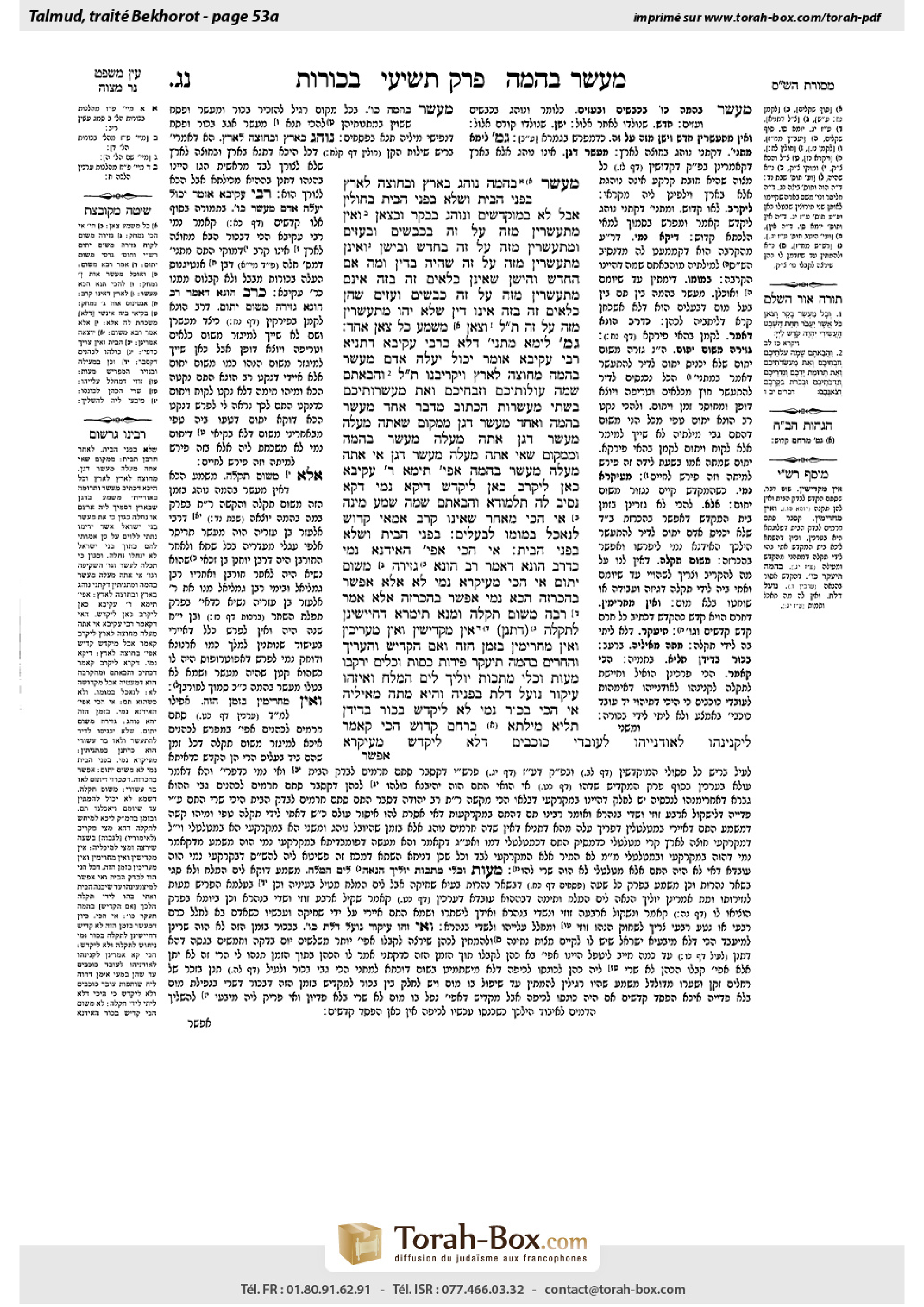
Bekhorot 53a: Talmud study for Daf Yomi
Study the Talmud for Daf Yomi with scanned pages, Hebrew text, English translations from Sefaria and AI-generated French translations.
Passage selection and English or AI-generated French translation are available where the scan has annotations. Daf Study is independent of Torah-Box and Sefaria.
Browse Bekhorot · בכורות · All tractatesBekhorot 53a text and translations
This page of Bekhorot includes the Aramaic text, an English translation and an AI-generated French translation, alongside the scan above.
בכורות נ״ג א · Aramaic and Hebrew text
מַתְנִי׳ מַעְשַׂר בְּהֵמָה נוֹהֵג בָּאָרֶץ וּבְחוּצָה לָאָרֶץ, בִּפְנֵי הַבַּיִת וְשֶׁלֹּא בִּפְנֵי הַבַּיִת, בַּחוּלִּין אֲבָל לֹא בַּמּוּקְדָּשִׁין. וְנוֹהֵג בַּבָּקָר וּבַצֹּאן, וְאֵינָן מִתְעַשְּׂרִים מִזֶּה עַל זֶה. בַּכְּבָשִׂים וּבָעִזִּים וּמִתְעַשְּׂרִין מִזֶּה עַל זֶה.
בֶּחָדָשׁ וּבַיָּשָׁן, וְאֵינָן מִתְעַשְּׂרִין מִזֶּה עַל זֶה. שֶׁהָיָה בַּדִּין, וּמָה אִם הֶחָדָשׁ וְהַיָּשָׁן שֶׁאֵינָן כִּלְאַיִם זֶה בָּזֶה אֵינָם מִתְעַשְּׂרִין מִזֶּה עַל זֶה, כְּבָשִׂים וְעִזִּים שֶׁהֵן כִּלְאַיִם זֶה בָּזֶה — אֵינוֹ דִּין שֶׁלֹּא יְהוּ מִתְעַשְּׂרִין מִזֶּה עַל זֶה? תַּלְמוּד לוֹמַר: ״וְצֹאן״, מַשְׁמַע כׇּל צֹאן אֶחָד.
גְּמָ׳ לֵימָא מַתְנִיתִין דְּלָא כְּרַבִּי עֲקִיבָא? דְּתַנְיָא, רַבִּי עֲקִיבָא אוֹמֵר: יָכוֹל יַעֲלֶה אָדָם מַעְשַׂר בְּהֵמָה מֵחוּצָה לָאָרֶץ וְיַקְרִיבֶנּוּ? תַּלְמוּד לוֹמַר: ״וַהֲבֵאתֶם שָׁמָּה עֹלֹתֵיכֶם וְזִבְחֵיכֶם וְאֵת מַעְשְׂרֹתֵיכֶם״.
בִּשְׁתֵּי מַעַשְׂרוֹת הַכָּתוּב מְדַבֵּר, אֶחָד מַעְשַׂר בְּהֵמָה וְאֶחָד מַעְשַׂר דָּגָן, מִמָּקוֹם שֶׁאַתָּה מַעֲלֶה מַעְשַׂר דָּגָן אַתָּה מַעֲלֶה מַעְשַׂר בְּהֵמָה, וּמִמְּקוֹם שֶׁאִי אַתָּה מַעֲלֶה מַעְשַׂר דָּגָן אִי אַתָּה מַעֲלֶה מַעְשַׂר בְּהֵמָה!
אֲפִילּוּ תֵּימָא רַבִּי עֲקִיבָא, כָּאן לִיקְרַב, כָּאן לִיקְדַּשׁ. דַּיְקָא נָמֵי, דְּקָא נָסֵיב לַהּ תַּלְמוּדָא ״וַהֲבֵאתֶם שָׁמָּה״, שְׁמַע מִינַּהּ.
אִי הָכִי, מֵאַחַר שֶׁאֵינוֹ קָרֵב, אַמַּאי קָדוֹשׁ? לְנֶאֱכָל בְּמוּמוֹ לַבְּעָלִים.
בִּפְנֵי הַבַּיִת וְשֶׁלֹּא בִּפְנֵי הַבַּיִת. אִי הָכִי, אֲפִילּוּ הָאִידָּנָא נָמֵי! כִּדְרַב הוּנָא, דְּאָמַר רַב הוּנָא: גְּזֵירָה מִשּׁוּם יָתוֹם.
אִי הָכִי, מֵעִיקָּרָא נָמֵי לָא! אֶלָּא, אֶפְשָׁר בְּהַכְרָזָה. הָכָא נָמֵי, אֶפְשָׁר בְּהַכְרָזָה!
אֶלָּא אָמַר רַבָּה: מִשּׁוּם תַּקָּלָה, וּמְנָא תֵּימְרָא דְּחָיְישִׁינַן לְתַקָּלָה? דִּתְנַן: אֵין מַקְדִּישִׁין, וְאֵין מַעֲרִיכִין, וְאֵין מַחְרִימִין בַּזְּמַן הַזֶּה.
וְאִם הִקְדִּישׁ וְהֶעֱרִיךְ וְהֶחְרִים, בְּהֵמָה — תֵּיעָקֵר, פֵּירוֹת כְּסוּת וְכֵלִים — יֵרָקְבוּ, מָעוֹת וּכְלֵי מַתָּכוֹת — יוֹלִיךְ לְיָם הַמֶּלַח. וְאֵיזֶהוּ עִיקּוּר? נוֹעֵל דֶּלֶת בְּפָנֶיהָ וְהִיא מֵתָה מֵאֵילֶיהָ.
אִי הָכִי, בְּכוֹר נָמֵי לָא לִיקְדֹּשׁ! בְּכוֹר בְּדִידַן תַּלְיָא מִילְּתָא? בְּרֶחֶם קָדוֹשׁ! הָכִי קָאָמַר: לִיקְנִינְהוּ לְאוּדְנַיְיהוּ לְגוֹיִם, דְּלָא לִיקְדֹּשׁ מֵעִיקָּרָא!
Bekhorot 53a · English translation
MISHNA: The mitzva of animal tithe is in effect both in Eretz Yisrael and outside of Eretz Yisrael, in the presence of, i.e., in the time of, the Temple and not in the presence of the Temple. It is in effect with regard to non-sacred animals but not with regard to sacrificial animals. And it is in effect with regard to the herd and the flock, but they are not tithed from one for the other; and it is in effect with regard to sheep and goats, and they are tithed from one for the other.
And it is in effect with regard to animals from the new flock and with regard to animals from the old flock, but they are not tithed from one for the other. As by right, it should be inferred: If in the case of animals from the new flock and the old flock, which do not carry the prohibition of mating diverse kinds when mated with each other because they are one species, are nevertheless not tithed from one for the other, then with regard to sheep and goats, which do carry the prohibition of mating diverse kinds when mated with each other, is it not right that they will not be tithed from one for the other? Therefore, the verse states: “And all the tithe of the herd or the flock, whatever passes under the rod, the tenth shall be sacred to the Lord” (Leviticus 27:32), indicating that with regard to animal tithe, all animals that are included in the term flock are one species.
GEMARA: The mishna teaches that the mitzva of animal tithe is in effect both in Eretz Yisrael and outside of Eretz Yisrael. The Gemara suggests: Let us say that the mishna is not in accordance with the opinion of Rabbi Akiva. As it is taught in a baraita that Rabbi Akiva says: One might have thought that a person must bring up his animal tithe from outside of Eretz Yisrael and sacrifice it in the Temple. Therefore, the verse states: “And you shall bring there your burnt offerings, and your offerings, and your tithes, and the offering of your hand, and your vows, and your gift offerings, and the firstborn of your herd and of your flock” (Deuteronomy 12:6).
Rabbi Akiva explains: The plural form “tithes” indicates that the verse is speaking of two tithes; one is the animal tithe, and the other one is the second tithe of grain, i.e., produce. Since these two tithes are included in the same word, it is derived from here that from the place where you bring up the tithe of grain, i.e., Eretz Yisrael, as the obligation to separate tithe of grain applies only there, you also bring up the animal tithe; but from a place where you do not bring up the tithe of grain, i.e., outside of Eretz Yisrael, you do not bring up the animal tithe either. This baraita, which states the opinion of Rabbi Akiva, apparently contradicts the ruling of the mishna.
The Gemara responds: You may even say that the mishna is in accordance with the opinion of Rabbi Akiva, as the baraita and the mishna are referring to different cases. The baraita there is referring to the requirement to bring the animal tithe to Jerusalem for it to be sacrificed on the altar. By contrast, the mishna here is speaking of the status of every tenth animal; these animals are to be separated and consecrated. The Gemara adds that the language of the baraita is also precise, as it adduces a derivation from the phrase “and you shall bring there.” Conclude from this citation that the baraita is referring specifically to the requirement to bring the animal tithe and sacrifice it in Jerusalem.
The Gemara asks: If so, since animal tithe outside of Eretz Yisrael is not sacrificed on the altar, why is it consecrated? What is the significance of its sanctity? The Gemara answers that it is consecrated to the extent that it may be eaten by its owner only when it develops a blemish.
§ The mishna teaches that the animal tithe is in effect both in the presence of the Temple and not in the presence of the Temple. The Gemara challenges: If so, then even nowadays the halakha of the animal tithe should be in effect. Why then do people not remove every tenth animal from their flock or herd? The Gemara answers: The reason is in accordance with the opinion of Rav Huna, as Rav Huna says: This is a rabbinic decree due to an orphan, i.e., a baby animal whose mother died before it was born, lest it be included with the other animals to be tithed; the obligation of animal tithe does not apply to it.
The Gemara challenges: If so, then even originally, when the Temple stood, the practice should have also been not to separate animal tithe in case an orphaned animal was included in the counting. Rather, the Gemara explains that there was no concern for an orphaned animal when the Temple stood, as it was possible to remove this concern by issuing an announcement to everyone that an orphaned animal is exempt from animal tithe. The Gemara suggests: Here too, it is possible to remove the concern by means of an announcement that an orphaned animal is exempt from animal tithe.
Rather, Rabba says: The reason animal tithe is no longer separated is due to concern that a mishap might occur. And from where do you say that we are concerned for a mishap after the destruction of the Temple? As we learned in a baraita: One may neither consecrate items, nor valuate an item’s worth based on its appraisal, nor dedicate items for sacred use (see Leviticus, chapter 27) and dedicate its monetary worth to the Temple treasury, in the present time, when the Temple is no longer standing.
The baraita continues: And if one did consecrate, or valuate, or dedicate items for sacred use, the presence of these items might lead to the mishap of the violation of the prohibition against using consecrated property. Therefore, if one dedicated an animal it should be destroyed. If he dedicated produce, garments, or vessels made from materials that decompose, he should store them until they decompose. And if he dedicated money or metal vessels, he should take them and cast them into the Dead Sea. The Gemara adds: And in the case of an animal, what constitutes uprooting? He locks the door before it, and it dies on its own from hunger. This baraita indicates that animals that cannot be sacrificed nowadays must be left to die so that they are not used improperly.
The Gemara challenges: If so, then a firstborn should also not be consecrated, as this too could lead to a mishap. The Gemara responds: Does the matter of the consecration of a firstborn depend on us? The animal is automatically consecrated upon its exit from the womb. The Gemara answers that this is what the questioner is saying: Let us sell the ears of all firstborn animals to gentiles before their births, so that they are not consecrated from the outset. A firstborn animal that is jointly owned by a Jew and a gentile does not become consecrated as a firstborn.
Bekhorot 53a · Traduction française (IA)
MICHNA: La mitsva de l'offrande de dixième est en vigueur tant en Terre d'Israël qu'à l'extérieur, en présence, c'est-à-dire en temps, du Temple et non en son absence. Elle s'applique aux animaux non sacrés mais pas aux animaux sacrés. Elle s'applique aux troupeaux et aux bêtes, mais on ne tithise pas l'un pour l'autre ; elle s'applique aux moutons et aux chèvres, et on tithise l'un pour l'autre.
Et elle s'applique aux animaux de la nouvelle basse et aux animaux de la basse ancienne, mais on ne tithise pas l'un pour l'autre. D'après la déduction, on pourrait penser : Si les animaux de la nouvelle basse et de la basse ancienne, qui ne portent pas la prohibition de croiser des espèces différentes lorsqu'ils s'accouplent entre eux, car ils sont de la même espèce, ne sont pas tithisés l'un pour l'autre, alors, concernant les moutons et les chèvres, qui portent cette prohibition, ne devraient-ils pas non plus être tithisés l'un pour l'autre ? Par conséquent, la Sainte Écriture dit : « Et toute l'offrande de la basse ou du troupeau, tout ce qui passe sous le bâton, le dixième sera consacré au Seigneur » (Lévitique 27:32), indiquant que concernant l'offrande de dixième, tous les animaux inclus dans le terme « troupeau » sont de la même espèce.
GUEMARA : La mishna enseigne que la mitsva de l'offrande de dixième est en vigueur tant en Terre d'Israël qu'à l'extérieur. La Guemara suggère : Disons que la mishna ne suit pas l'opinion de Rabbi Akiva. Comme il est enseigné dans une baraïta que Rabbi Akiva dit : On pourrait penser qu'une personne doit ramener son dixième animal hors de Terre d'Israël et le sacrifier au Temple. Par conséquent, la Sainte Écriture dit : « Et vous apporterez là vos offrandes brûlantes, vos offrandes, vos dixièmes, votre offrande de main, vos vœux, vos offrandes de don, les premiers-nés de votre troupeau et de votre basse » (Dt 12:6).
Rabbi Akiva explique : La forme plurielle « dixièmes » indique que la Sainte Écriture parle de deux dixièmes ; l'un est l'offrande de dixième, l'autre est le dixième de céréales, c'est-à-dire les produits. Puisque ces deux dixièmes sont inclus dans le même mot, on en déduit ici que, depuis la place où vous ramenez le dixième de céréales, c'est-à-dire Terre d'Israël, où l'obligation de séparer le dixième de céréales s'applique seulement là, vous ramenez aussi l'offrande de dixième ; mais depuis la place où vous ne ramenez pas le dixième de céréales, c'est-à-dire hors de Terre d'Israël, vous ne ramenez pas non plus l'offrande de dixième. Cette baraïta, qui exprime l'opinion de Rabbi Akiva, semble contredire la décision de la mishna.
La Guemara répond : On peut même dire que la Michna suit l'opinion de Rabbi Akiva, car la baraïta et la Michna parlent de cas différents. La baraïta parle de la nécessité de ramener l'offrande de dixième à Jérusalem pour qu'elle soit sacrifiée sur l'autel. En revanche, la Michna ici parle du statut de chaque dixième animal ; ces animaux doivent être séparés et consacrés. La Guemara ajoute que la langue de la baraïta est aussi précise, car elle tire une déduction du phrasé « et vous apporterez là ». Concluez de cette citation que la baraïta parle spécifiquement de la nécessité de ramener l'offrande de dixième et de la sacrifier à Jérusalem.
La Guemara pose la question : Si c'est ainsi, puisque l'offrande de dixième hors de Terre d'Israël n'est pas sacrifiée sur l'autel, pourquoi est-elle consacrée ? Quel est le sens de sa sanctité ? La Guemara répond que la consécration est telle qu'elle peut être mangée par son propriétaire uniquement lorsqu'elle développe une tache.
§ La Michna enseigne que l'offrande de dixième est en vigueur en présence du Temple et non en son absence. La Guemara conteste : Si c'est ainsi, alors même aujourd'hui la halakha de l'offrande de dixième devrait être en vigueur. Pourquoi alors les gens ne séparent pas chaque dixième animal de leur troupeau ou de leur basse ? La Guemara répond : La raison est selon l'opinion de Rav Huna, car Rav Huna dit : C'est un décret rabbinique en raison d'un orphelin, c'est-à-dire un animal dont la mère est morte avant sa naissance, de peur qu'il ne soit inclus avec les autres animaux à être tithisés ; l'obligation de l'offrande de dixième ne s'applique pas à lui.
La Guemara conteste : Si c'est ainsi, alors même à l'origine, lorsque le Temple était debout, la pratique devrait avoir été de ne pas séparer l'offrande de dixième dans le cas d'un animal orphelin inclus dans le comptage. La Guemara explique que lorsqu'il y avait un Temple, il n'y avait pas de préoccupation concernant un animal orphelin, car il était possible de résoudre cette préoccupation en faisant une proclamation à tous les gens indiquant que l'animal orphelin est exempt de l'offrande de dixième. La Guemara suggère : Ici aussi, il est possible de résoudre cette préoccupation par une proclamation indiquant que l'animal orphelin est exempt de l'offrande de dixième.
Rabba dit : La raison pour laquelle l'offrande de dixième n'est plus séparée est due à la préoccupation qu'un accident pourrait survenir. Et d'où dit-on que nous nous inquiétons d'un accident après la destruction du Temple ? Comme nous avons appris dans une baraïta : On ne peut ni consacrer des objets, ni évaluer la valeur d'un objet en se basant sur son estimation, ni dédier des objets à l'usage sacré (voir Lévitique, chapitre 27) et dédier leur valeur monétaire au trésor du Temple, en temps présent, lorsque le Temple ne se dresse plus.
La baraïta continue : Et si l'on avait consacré, ou évalué, ou dédié des objets à l'usage sacré, la présence de ces objets pourrait entraîner l'accident de la violation de la prohibition d'utiliser des objets consacrés. Par conséquent, si l'on avait dédié un animal, il devrait être détruit. Si l'on avait dédié des produits, des vêtements ou des objets faits de matériaux qui se décomposent, il devrait être conservé jusqu'à ce qu'ils se décomposent. Et si l'on avait dédié de l'argent ou des objets en métal, il devrait être pris et jeté dans la Mer Morte. La Guemara ajoute : Et dans le cas d'un animal, qu'est-ce qui constitue l'uprooting ? Il verrouille la porte avant qu'il ne meure, et il meurt seul de faim. Cette baraïta indique que les animaux qui ne peuvent être sacrifiés aujourd'hui doivent être laissés mourir afin qu'ils ne soient pas utilisés de manière inappropriée.
La Guemara conteste : Si c’est ainsi, alors un premier-né ne devrait pas non plus être consacré, car cela pourrait également entraîner un malheur. La Guemara répond : La question de la consécration du premier-né dépend-elle de nous ? L’animal est automatiquement consacré dès sa sortie du ventre. La Guemara répond que c’est ce que l’interrogateur dit : Faisons-nous vendre les oreilles de tous les animaux premiers-nés aux non-Juifs avant leur naissance, afin qu’ils ne soient pas consacrés dès le départ. Un animal premier-né possédé conjointement par un Juif et un non-Juif ne devient pas consacré comme premier-né.
Traduction française générée par IA à partir de l’édition anglaise de Sefaria. Vérifie toujours un passage avec le texte source.
Text from Sefaria: William Davidson Edition - Vocalized Aramaic (CC BY NC); William Davidson Edition - English (CC BY NC).