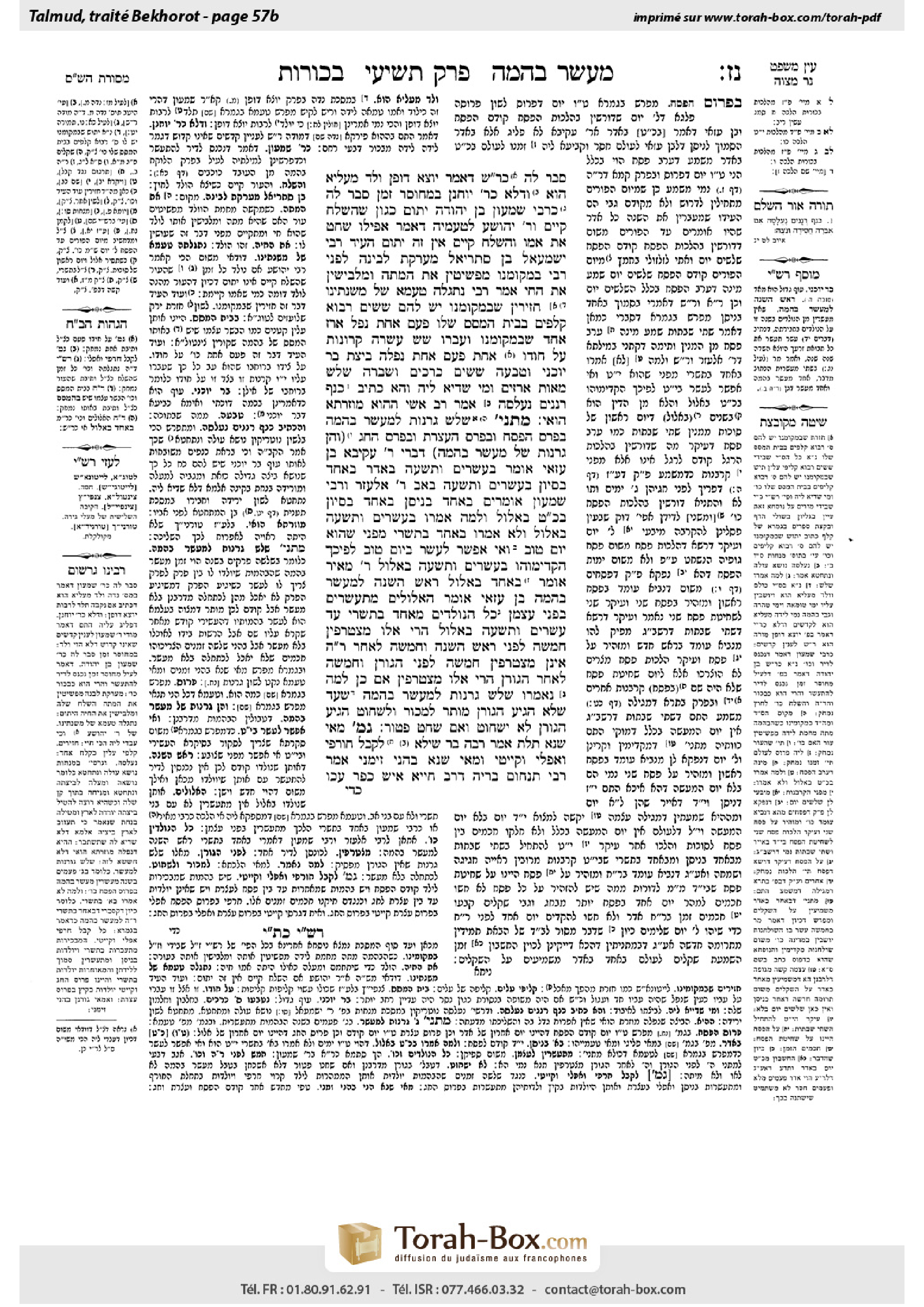
Bekhorot 57b: Talmud study for Daf Yomi
Study the Talmud for Daf Yomi with scanned pages, Hebrew text, English translations from Sefaria and AI-generated French translations.
Passage selection and English or AI-generated French translation are available where the scan has annotations. Daf Study is independent of Torah-Box and Sefaria.
Browse Bekhorot · בכורות · All tractatesBekhorot 57b text and translations
This page of Bekhorot includes the Aramaic text, an English translation and an AI-generated French translation, alongside the scan above.
בכורות נ״ז ב · Aramaic and Hebrew text
סָבַר לַהּ כְּרַבִּי שִׁמְעוֹן, דְּאָמַר: יוֹצֵא דּוֹפֶן — וָלָד מְעַלְּיָא הוּא, וּדְלָא כְּרַבִּי יוֹחָנָן.
בִּמְחוּסַּר זְמַן סָבַר לַהּ כְּרַבִּי שִׁמְעוֹן בֶּן יְהוּדָה, יָתוֹם — כְּגוֹן שֶׁהַשֶּׁלַח קַיָּים, וְרַבִּי יְהוֹשֻׁעַ לְטַעְמֵיהּ, דְּאָמַר: אֲפִילּוּ שָׁחַט אֶת אִמּוֹ וְהַשֶּׁלַח קַיָּים — אֵין זֶה יָתוֹם.
הֵעִיד רַבִּי יִשְׁמָעֵאל בֶּן סַתְרִיאֵל מֵעַרְקַת לִבְנָה לִפְנֵי רַבִּי: בִּמְקוֹמֵנוּ מַפְשִׁיטִין אֶת הַמֵּתָה וּמַלְבִּישִׁין אֶת הַחַי. אָמַר רַבִּי: נִתְגַּלָּה טַעְמָהּ שֶׁל מִשְׁנָתֵינוּ.
חֲזֵירִין שֶׁבִּמְקוֹמֵנוּ יֵשׁ לָהֶם שִׁשִּׁים רִבּוֹא קְלָפִים בְּבֵית הֶמְסֵס שֶׁלּוֹ, פַּעַם אַחַת נָפַל אֶרֶז אֶחָד שֶׁבִּמְקוֹמֵנוּ, וְעָבְרוּ שֵׁשׁ עֶשְׂרֵה קְרוֹנוֹת עַל חוּדּוֹ אַחַת.
פַּעַם אַחַת נָפְלָה בֵּיצַת בַּר יוֹכָנִי, וְטִבְּעָה שִׁשִּׁים כְּרַכִּים, וְשִׁבְּרָה שְׁלֹשׁ מֵאוֹת אֲרָזִים. וּמִי שָׁדְיָא לֵיהּ? וְהָא כְּתִיב: ״כְּנַף רְנָנִים נֶעֱלָסָה״! אָמַר רַב אָשֵׁי: הָהוּא מוּזַרְתָּא הֲוַאי.
מַתְנִי׳ שָׁלֹשׁ גֳּרָנוֹת לְמַעְשַׂר בְּהֵמָה: בִּפְרַס הַפֶּסַח, וּבִפְרַס הָעֲצֶרֶת, וּבִפְרַס הֶחָג, וְהֵן גֳּרָנוֹת שֶׁל מַעְשַׂר בְּהֵמָה, דִּבְרֵי רַבִּי עֲקִיבָא.
בֶּן עַזַּאי אוֹמֵר: בְּעֶשְׂרִים וְתִשְׁעָה בַּאֲדָר, בְּאֶחָד בְּסִיוָן, בְּעֶשְׂרִים וְתִשְׁעָה בְּאָב. רַבִּי אֶלְעָזָר וְרַבִּי שִׁמְעוֹן אוֹמְרִים: בְּאֶחָד בְּנִיסָן, בְּאֶחָד בְּסִיוָן, בְּעֶשְׂרִים וְתִשְׁעָה בֶּאֱלוּל. וְלָמָה אָמְרוּ בְּעֶשְׂרִים וְתִשְׁעָה בֶּאֱלוּל וְלֹא אָמְרוּ בְּאֶחָד בְּתִשְׁרִי? מִפְּנֵי שֶׁהוּא יוֹם טוֹב, וְאִי אֶפְשָׁר לְעַשֵּׂר בְּיוֹם טוֹב — לְפִיכָךְ הִקְדִּימוּהוּ בְּעֶשְׂרִים וְתִשְׁעָה בֶּאֱלוּל.
רַבִּי מֵאִיר אוֹמֵר: בְּאֶחָד בֶּאֱלוּל רֹאשׁ הַשָּׁנָה לְמַעְשַׂר בְּהֵמָה. בֶּן עַזַּאי אוֹמֵר: הָאֱלוּלִים מִתְעַשְּׂרִים בִּפְנֵי עַצְמָן.
כׇּל הַנּוֹלָדִים מֵאֶחָד בְּתִשְׁרִי עַד עֶשְׂרִים וְתִשְׁעָה בֶּאֱלוּל — הֲרֵי אֵלּוּ מִצְטָרְפִין. חֲמִשָּׁה לִפְנֵי רֹאשׁ הַשָּׁנָה וַחֲמִשָּׁה לְאַחַר רֹאשׁ הַשָּׁנָה — אֵינָן מִצְטָרְפִין. חֲמִשָּׁה לִפְנֵי הַגּוֹרֶן וַחֲמִשָּׁה לְאַחַר הַגּוֹרֶן — הֲרֵי אֵלּוּ מִצְטָרְפִין. אִם כֵּן, לָמָּה נֶאֶמְרוּ שָׁלֹשׁ גֳּרָנוֹת לְמַעְשַׂר בְּהֵמָה? שֶׁעַד שֶׁלֹּא הִגִּיעַ הַגּוֹרֶן — מוּתָּר לִמְכּוֹר וְלִשְׁחוֹט, הִגִּיעַ הַגּוֹרֶן — לֹא יִשְׁחוֹט, וְאִם שָׁחַט — פָּטוּר.
גְּמָ׳ מַאי שְׁנָא תְּלָת? אָמַר רַבָּה בַּר שֵׁילָא: לָקֳבֵל חוּרְפֵי, וְאַפְלֵי, וְקַיְיטֵי.
וּמַאי שְׁנָא בְּהָנֵי זִימְנֵי? אָמַר רַבִּי תַּנְחוּם בְּרֵיהּ דְּרַב חִיָּיא אִישׁ כְּפַר עַכּוֹ:
Bekhorot 57b · English translation
he holds in accordance with the opinion of Rabbi Shimon, who says that a human child born by caesarean section is a full-fledged offspring and renders its mother ritually impure with the impurity of childbirth. Likewise, with regard to an animal born by caesarean section, he holds the birth was a proper birth and the animal may be brought as an offering, and therefore it also enters the pen to be tithed. And this is not in accordance with the opinion of Rabbi Yoḥanan, who holds that Rabbi Shimon concedes that an animal born by caesarean section is disqualified from being brought as an offering (see Nidda 40a).
And with regard to an animal whose time has not yet arrived, this tanna holds in accordance with the opinion of Rabbi Shimon ben Yehuda, who maintains that the obligation of animal tithe applies to such an animal. As for an orphan animal, he is referring to a case where the mother’s hide exists at birth, i.e., the mother’s hide is present after the birth, and therefore the animal is not considered an orphan. And Rabbi Yehoshua, whose opinion this tanna follows, conforms to his standard line of reasoning, as he says: Even if its mother was slaughtered but its hide exists at birth, i.e., if the mother’s hide is present after the birth, this is not an orphan.
Rabbi Yishmael ben Satriel, from a place called Arkat Leveina, testified before Rabbi Yehuda HaNasi: In our locale, if an animal dies while giving birth they flay the dead mother’s skin and clothe the living newborn animal with it for protection. Rabbi Yehuda HaNasi said: This testimony of yours reveals the reason for the ruling of the mishna that if the hide of the mother still exists the offspring is not considered to be an orphan; the hide serves as a substitute for the mother.
Rabbi Yishmael ben Satriel also testified before Rabbi Yehuda HaNasi: The lettuce in our locale has 600,000 leaves in its omasum, i.e., in its core. Rabbi Yishmael ben Satriel further testified before Rabbi Yehuda HaNasi: Once one cedar tree fell in our locale, and it was so wide that sixteen wagons passed over its back, meaning the width of its trunk, as one, i.e., side by side.
Rabbi Yishmael ben Satriel also testified before Rabbi Yehuda HaNasi: Once an egg of the bird called bar yokhani fell, and the contents of the egg drowned sixty cities and broke three hundred cedar trees. The Gemara asks: And does the bar yokhani bird throw its eggs to the ground? But isn’t it written: “The kenaf renanim bird rejoices, but are her wings and feathers those of the stork? For she leaves her eggs on the earth, and warms them in dust” (Job 39:13–14)? The Sages understood that kenaf renanim is another name for the bar yokhani bird. If so, how could its egg fall if it lays its eggs on the ground? Rav Ashi said in explanation: That egg was unfertilized, and since it would never hatch the bird threw it to the ground.
MISHNA: There are three times during the year designated for gathering the animals that were born since the last date for animal tithe: Adjacent to Passover, and adjacent to Shavuot, and adjacent to Sukkot. And those are the gathering times for animal tithe; this is the statement of Rabbi Akiva.
Ben Azzai says the dates are: On the twenty-ninth of Adar, on the first of Sivan, and on the twenty-ninth of Av. Rabbi Elazar and Rabbi Shimon say that the dates are: On the first of Nisan, on the first of Sivan, and on the twenty-ninth of Elul. And why did Rabbi Elazar and Rabbi Shimon say the twenty-ninth of Elul, and why did they not say the first of Tishrei? It is due to the fact that the first of Tishrei is the festival of Rosh HaShana, and one cannot tithe on a Festival. Consequently, they brought it earlier, to the twenty-ninth of Elul.
Rabbi Meir says: The beginning of the new year for animal tithe is on the first of Elul. Ben Azzai says: The animals born in Elul are tithed by themselves, due to the uncertainty as to whether the halakha is in accordance with the opinion of Rabbi Meir, i.e., that the new year begins on the first of Elul, or in accordance with the opinion of Rabbi Elazar and Rabbi Shimon, which would mean that the new year begins on the first of Tishrei.
According to the opinion of Rabbi Elazar and Rabbi Shimon, with regard to all animals that are born from the first of Tishrei until the twenty-ninth of Elul, those animals join to be tithed together. If five were born before Rosh HaShana and five after Rosh HaShana, those animals do not join to be tithed together. If five were born before a time designated for gathering and five after that time designated for gathering, those animals join to be tithed together. If so, why were three times stated for gathering the animals for animal tithe? The reason is that until the time designated for gathering arrives it is permitted to sell and slaughter the animals. Once the time designated for gathering arrives one may not slaughter those animals before tithing them; but if he slaughtered an animal without tithing it he is exempt.
GEMARA: The mishna teaches that there are three times during the year designated for gathering the animals born since the last date for animal tithe. The Gemara asks: What is different about these dates, i.e., why are there specifically three times designated in the year? Rabba bar Sheila said: There are three times in order to collect the animals born early in winter, and the animals born later in spring, and the animals born in the summer.
The Gemara asks: And what is different about these three times, i.e., before Passover, Shavuot, and Sukkot, that they are chosen? Rabbi Tanḥum, son of Rav Ḥiyya, of the village of Akko, says:
Bekhorot 57b · Traduction française (IA)
il suit l'opinion du Rabbi Shimon, qui affirme qu'un enfant humain né par césarienne est un enfant complet et rend sa mère impure rituellement avec l'impureté de l'accouchement. De même, concernant un animal né par césarienne, il considère que la naissance était une naissance normale et que l'animal peut être offert, et par conséquent il entre dans l'enclos pour être titré. Et cela n'est pas selon l'opinion du Rabbi Yoḥanan, qui considère que le Rabbi Shimon reconnaît que l'animal né par césarienne est disqualifié pour être offert (voir Nidda 40a).
Et concernant un animal dont le temps n'est pas encore arrivé, ce tanna suit l'opinion du Rabbi Shimon ben Yehuda, qui affirme que l'obligation de titre animal s'applique à cet animal. En ce qui concerne un animal orphelin, il s'agit d'un cas où la peau de la mère existe à la naissance, c'est-à-dire que la peau de la mère est présente après la naissance, et par conséquent l'animal n'est pas considéré comme orphelin. Et le Rabbi Yehoshua, dont l'opinion ce tanna suit, correspond à sa ligne de raisonnement habituelle, car il dit : Même si sa mère a été tuée mais sa peau existe à la naissance, c'est-à-dire si la peau de la mère est présente après la naissance, cela n'est pas un orphelin.
Rabbi Yishmael ben Satriel, d'un lieu appelé Arkat Leveina, a témoigné devant Rabbi Yehuda HaNasi : Dans notre région, si un animal meurt pendant l'accouchement, ils dépeignent la peau de la mère morte et vêtent l'animal nouveau-né vivant avec elle pour le protéger. Rabbi Yehuda HaNasi a dit : Ce témoignage de votre part révèle la raison de la décision de la mitsva qui stipule que si la peau de la mère existe encore, l'offspring n'est pas considéré comme orphelin ; la peau sert de substitut à la mère.
Rabbi Yishmael ben Satriel a également témoigné devant Rabbi Yehuda HaNasi : La laitue dans notre région a 600 000 feuilles dans son omasum, c'est-à-dire dans son cœur. Rabbi Yishmael ben Satriel a également témoigné devant Rabbi Yehuda HaNasi : Une fois un arbre de cèdre est tombé dans notre région, et il était si large que seize chariots sont passés sur son dos, c'est-à-dire la largeur de son tronc, côte à côte.
Rabbi Yishmael ben Satriel a également témoigné devant Rabbi Yehuda HaNasi : Une fois un œuf de l'oiseau appelé bar yokhani est tombé, et le contenu de l'œuf a inondé soixante villes et a brisé trois cents arbres de cèdre. La Guemara demande : Et l'oiseau bar yokhani jette-t-il ses œufs au sol ? Mais n'est-il pas écrit : « Le kenaf renanim s'élance de joie, mais sont-elles ses ailes et plumes celles du cormoran ? Elle laisse ses œufs sur la terre, et les réchauffe dans la poussière » (Job 39:13–14) ? Les Sages ont compris que kenaf renanim est un autre nom pour le bar yokhani. Si c'est le cas, comment cet œuf a-t-il pu tomber si l'oiseau pose ses œufs au sol ? Rav Ashi a expliqué en disant : Cet œuf était non fécondé, et puisque cela ne pouvait pas éclore, l'oiseau l'a jeté au sol.
MICHNA : Il y a trois fois par an désignées pour réunir les animaux nés depuis la dernière date du titrage animal : Proche de Pessah, et proche de Shavuot, et proche de Souccot. Et ces sont les temps de réunion pour le titrage animal ; c'est l'opinion du Rabbi Akiva.
Ben Azzai dit que les dates sont : Le vingt-neuvième d'Adar, le premier de Sivan, et le vingt-neuvième d'Av. Rabbi Elazar et Rabbi Shimon disent que les dates sont : Le premier de Nisan, le premier de Sivan, et le vingt-neuvième d'Elul. Et pourquoi Rabbi Elazar et Rabbi Shimon disent le vingt-neuvième d'Elul, et pourquoi ne disent-ils pas le premier de Tishrei ? C'est en raison du fait que le premier de Tishrei est la fête de Rosh HaShana, et on ne peut pas titrer lors d'une fête. Par conséquent, ils l'ont amené plus tôt, au vingt-neuvième d'Elul.
Rabbi Meir dit : Le début de l'année nouvelle pour le titrage animal est le premier d'Elul. Ben Azzai dit : Les animaux nés en Elul sont titrés par eux-mêmes, en raison de l'incertitude quant à savoir si la halakha suit l'opinion de Rabbi Meir, c'est-à-dire que l'année nouvelle commence le premier d'Elul, ou en suivant l'opinion de Rabbi Elazar et Rabbi Shimon, ce qui signifierait que l'année nouvelle commence le premier de Tishrei.
Selon l'opinion de Rabbi Elazar et Rabbi Shimon, concernant tous les animaux nés du premier de Tishrei jusqu'au vingt-neuvième d'Elul, ces animaux s'unissent pour être titrés ensemble. Si cinq ont été nés avant Rosh HaShana et cinq après Rosh HaShana, ces animaux ne s'unissent pas pour être titrés ensemble. Si cinq ont été nés avant un moment désigné pour la réunion et cinq après ce moment désigné pour la réunion, ces animaux s'unissent pour être titrés ensemble. Si c'est ainsi, pourquoi les trois fois ont-elles été mentionnées pour la réunion des animaux pour le titrage animal ? La raison est que jusqu'au moment désigné pour la réunion arrive, il est permis de vendre et de tuer les animaux. Une fois que le moment désigné pour la réunion arrive, on ne peut plus tuer ces animaux avant de les titrer ; mais si l'on a tué un animal sans le titrer, on est exempt.
GUEMARA : La mitsva enseigne qu'il y a trois fois par an désignées pour réunir les animaux nés depuis la dernière date de titres animaux. La Guemara demande : Qu'est-ce qui est différent à ces dates, c'est-à-dire pourquoi sont spécifiquement trois fois désignées dans l'année ? Rabba bar Sheila a dit : Il y a trois fois afin de collecter les animaux nés tôt en hiver, et les animaux nés plus tard en printemps, et les animaux nés en été.
La Guemara demande : Et qu'est-ce qui est différent à ces trois fois, c'est-à-dire avant Pessah, Shavuot et Souccot, qui sont choisis ? Rabbi Tanḥum, fils de Rav Ḥiyya, du village d'Akko, dit :
Traduction française générée par IA à partir de l’édition anglaise de Sefaria. Vérifie toujours un passage avec le texte source.
Text from Sefaria: William Davidson Edition - Vocalized Aramaic (CC BY NC); William Davidson Edition - English (CC BY NC).