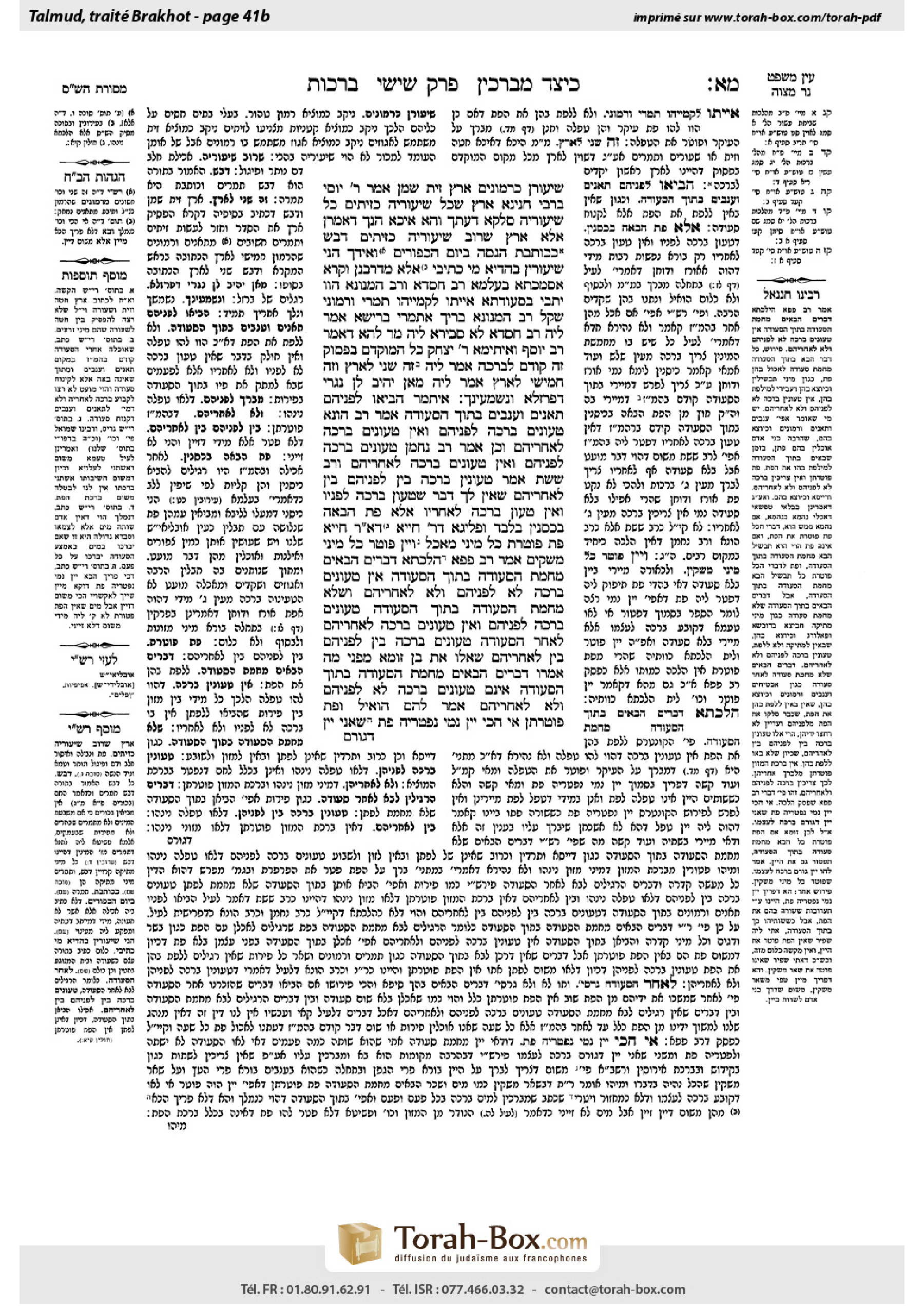
Berakhot 41b: Talmud study for Daf Yomi
Study the Talmud for Daf Yomi with scanned pages, Hebrew text, English translations from Sefaria and AI-generated French translations.
Passage selection and English or AI-generated French translation are available where the scan has annotations. Daf Study is independent of Torah-Box and Sefaria.
Browse Berakhot · ברכות · All tractatesBerakhot 41b text and translations
This page of Berakhot includes the Aramaic text, an English translation and an AI-generated French translation, alongside the scan above.
ברכות מ״א ב · Aramaic and Hebrew text
שִׁיעוּרָן כְּרִמּוֹנִים.
״אֶרֶץ זֵית שֶׁמֶן״, אָמַר רַבִּי יוֹסֵי בְּרַבִּי חֲנִינָא: אֶרֶץ שֶׁכָּל שִׁיעוּרֶיהָ כְּזֵיתִים. כׇּל שִׁיעוּרֶיהָ סָלְקָא דַּעְתָּךְ?! וְהָא אִיכָּא הָנָךְ דַּאֲמַרַן! אֶלָּא אֶרֶץ שֶׁרוֹב שִׁיעוּרֶיהָ כְּזֵיתִים.
״דְּבָשׁ״, כְּכוֹתֶבֶת הַגַּסָּה בְּיוֹם הַכִּפּוּרִים. וְאִידָךְ — הָנֵי שִׁיעוּרִין בְּהֶדְיָא מִי כְּתִיבִי? אֶלָּא מִדְּרַבָּנַן, וּקְרָא אַסְמַכְתָּא בְּעָלְמָא.
רַב חִסְדָּא וְרַב הַמְנוּנָא הֲווֹ יָתְבִי בִּסְעוֹדְתָּא. אַיְיתוֹ לְקַמַּיְיהוּ תַּמְרֵי וְרִמּוֹנֵי. שְׁקַל רַב הַמְנוּנָא, בָּרֵיךְ אַתַּמְרֵי בְּרֵישָׁא. אֲמַר לֵיהּ רַב חִסְדָּא: לָא סָבַר לַהּ מָר לְהָא דְּאָמַר רַב יוֹסֵף, וְאִיתֵּימָא רַבִּי יִצְחָק: כׇּל הַמּוּקְדָּם בְּפָסוּק זֶה קוֹדֵם לִבְרָכָה?
אֲמַר לֵיהּ: זֶה שֵׁנִי לְ״אֶרֶץ״, וְזֶה חֲמִישִׁי לְ״אֶרֶץ״. אֲמַר לֵיהּ: מַאן יָהֵיב לַן נִגְרֵי דְפַרְזְלָא וּנְשַׁמְּעִינָּךְ.
אִיתְּמַר: הֵבִיאוּ לִפְנֵיהֶם תְּאֵנִים וַעֲנָבִים בְּתוֹךְ הַסְּעוּדָה, אָמַר רַב הוּנָא: טְעוּנִים בְּרָכָה לִפְנֵיהֶם וְאֵין טְעוּנִים בְּרָכָה לְאַחֲרֵיהֶם. וְכֵן אָמַר רַב נַחְמָן: טְעוּנִים בְּרָכָה לִפְנֵיהֶם וְאֵין טְעוּנִים בְּרָכָה לְאַחֲרֵיהֶם. וְרַב שֵׁשֶׁת אָמַר: טְעוּנִין בְּרָכָה בֵּין לִפְנֵיהֶם בֵּין לְאַחֲרֵיהֶם. שֶׁאֵין לְךָ דָּבָר שֶׁטָּעוּן בְּרָכָה לְפָנָיו וְאֵין טָעוּן בְּרָכָה לְאַחֲרָיו אֶלָּא פַּת הַבָּאָה בְּכִסָנִין בִּלְבַד. וּפְלִיגָא דְּרַבִּי חִיָּיא דְּאָמַר רַבִּי חִיָּיא: פַּת פּוֹטֶרֶת כׇּל מִינֵי מַאֲכָל, וְיַיִן פּוֹטֵר כׇּל מִינֵי מַשְׁקִים.
אָמַר רַב פָּפָּא: הִלְכְתָא דְּבָרִים הַבָּאִים מֵחֲמַת הַסְּעוּדָה בְּתוֹךְ הַסְּעוּדָה — אֵין טְעוּנִים בְּרָכָה לֹא לִפְנֵיהֶם וְלֹא לְאַחֲרֵיהֶם. וְשֶׁלֹּא מֵחֲמַת הַסְּעוּדָה בְּתוֹךְ הַסְּעוּדָה — טְעוּנִים בְּרָכָה לִפְנֵיהֶם וְאֵין טְעוּנִים בְּרָכָה לְאַחֲרֵיהֶם. לְאַחַר הַסְּעוּדָה — טְעוּנִים בְּרָכָה בֵּין לִפְנֵיהֶם בֵּין לְאַחֲרֵיהֶם.
שָׁאֲלוּ אֶת בֶּן זוֹמָא: מִפְּנֵי מָה אָמְרוּ דְּבָרִים הַבָּאִים מֵחֲמַת הַסְּעוּדָה בְּתוֹךְ הַסְּעוּדָה אֵינָם טְעוּנִים בְּרָכָה לֹא לִפְנֵיהֶם וְלֹא לְאַחֲרֵיהֶם? אָמַר לָהֶם: הוֹאִיל וּפַת פּוֹטַרְתָּן. אִי הָכִי, יַיִן נָמֵי נִפְטְרֵיהּ פַּת! שָׁאנֵי יַיִן
Berakhot 41b · English translation
as an impure vessel loses its status as a vessel and consequently its impurity when it can no longer be used, if they have holes the size of pomegranates.
A land of olive oil: Rabbi Yosei, son of Rabbi Ḥanina, said that the verse should be expounded as follows: A land, all of whose measures are the size of olives. The Gemara poses a question: Can it enter your mind that it is a land all of whose measures are the size of olives? Aren’t there those measures that we mentioned above, which are not the size of olives? Rather, say: A land, most of whose measures are the size of olives, as most of the measures relating to forbidden foods and other matters are the size of olives.
Honey, i.e., dates from which date honey is extracted, also alludes to a measurement. With regard to Yom Kippur, one is only liable if he eats the equivalent of a large date on Yom Kippur. The Gemara asks: And what will the other amora, who interpreted the verse as referring to the halakhot of precedence in blessings, say with regard to this midrash? The Gemara responds: Are these measures written explicitly in the Torah? Rather, they are by rabbinic law, and the verse is a mere support, an allusion to these measures.
With regard to the halakhot of precedence in blessings, the Gemara relates: Rav Ḥisda and Rav Hamnuna were sitting at a meal. They brought dates and pomegranates before them. Rav Hamnuna took and recited a blessing over the dates first. Rav Ḥisda said to him: Does the Master not hold that halakha which Rav Yosef, and some say Rabbi Yitzḥak, said: Each food that precedes the others in this verse, precedes the others in terms of blessing as well? The pomegranate precedes the date in that verse.
Rav Hamnuna said to him: This, the date, is mentioned second to the word land, in the verse: “A land of olive oil and honey,” just after the olive, and this, the pomegranate, is fifth to the word land. Rav Ḥisda said to him admiringly: Who will give us iron legs that we may serve you and constantly hear from you novel ideas.
It was stated: If they brought figs and grapes before them during a meal, what blessings need to be recited? Rav Huna said: They require a blessing before eating them, and do not require a blessing after eating them, as Grace after Meals exempts them. And so too, Rav Naḥman said: They require a blessing before eating them, and do not require a blessing after eating them. And Rav Sheshet said: They require a blessing both before eating them and after eating them, even if he ate them during the meal, as you have nothing which requires a blessing before eating it and does not require a blessing after eating it, because it is exempted by Grace after Meals, except bread, a sweetened and spiced pastry, that comes as dessert, as it, too, is a type of bread. The statements of both Rav Huna and Rav Sheshet disagree with the opinion of Rabbi Ḥiyya, as Rabbi Ḥiyya said: Bread exempts all the types of food that one eats after it, and wine exempts all types of drinks that one drinks after it, and one need not recite a blessing either before or after eating them.
Summarizing, Rav Pappa said that the halakha is: Food items that come due to the meal, which are eaten together with the bread as part of the meal, during the meal, neither require a blessing before eating them nor after eating them, as they are considered secondary to the bread. And food items like fruit, that do not come due to the meal, as part of the meal, but may be brought during the meal, require a blessing before eating them and do not require a blessing after eating them. If they come after the meal, they require a blessing both before eating them and after eating them.
The Gemara relates that the students asked Ben Zoma: Why did the Sages say that food items that come due to the meal during the meal, neither require a blessing before eating them nor after eating them? He said to them: Because bread exempts them. They asked: If so, bread should also exempt wine. Yet, one recites a blessing over wine during the meal. The Gemara responds: Wine is different,
Berakhot 41b · Traduction française (IA)
comme un vase impur perd son statut de vase et donc son impureté lorsqu'il ne peut plus être utilisé, si les trous sont aussi grands que des grenades.
Un pays d'huile d'olive : Rabbi Yosei, fils de Rabbi Ḥanina, a dit que la parabole doit être interprétée ainsi : Un pays dont toutes les mesures sont de la taille d'une olive. La Guemara pose une question : Est-ce que cela entre dans votre esprit que c'est un pays dont toutes les mesures sont de la taille d'une olive ? N'y a-t-il pas des mesures que nous avons mentionnées ci-dessus, qui ne sont pas de la taille d'une olive ? Plutôt, disons : Un pays, la plupart de ses mesures sont de la taille d'une olive, car la plupart des mesures concernant les aliments interdits et d'autres choses sont de la taille d'une olive.
Le miel, c'est-à-dire les dattes desquelles on extrait le miel, évoque également une mesure. En ce qui concerne le Yom Kippur, on est seulement responsable si l'on mange l'équivalent d'une date grande comme un œuf le Yom Kippur. La Guemara pose la question : Et que dira l'autre amora, qui a interprété la parabole en référence aux halakhot de la priorité dans les bénédictions, concernant ce midrash ? La Guemara répond : Ces mesures sont-elles écrites explicitement dans la Torah ? Plutôt, elles sont de droit rabbinique, et la parabole est simplement un support, une allusion à ces mesures.
En ce qui concerne les halakhot de la priorité dans les bénédictions, la Guemara rapporte : Rav Ḥisda et Rav Hamnuna étaient assis à un repas. Ils ont apporté des dattes et des grenades devant eux. Rav Hamnuna a pris et a récité une bénédiction sur les dattes en premier. Rav Ḥisda a dit à lui : Le Maître ne tient-il pas la halakha que Rav Yosef, et certains disent Rabbi Yitzḥak, a dit : Chaque aliment qui précède les autres dans cette versette précède les autres en matière de bénédictions également ? La grenade précède la date dans cette versette.
Rav Hamnuna a dit à lui : Cette date est mentionnée deuxième après le mot « pays » dans la versette : « Un pays d'huile d'olive et de miel », juste après l'olive, et cette grenade, c'est la cinquième après le mot « pays ». Rav Ḥisda a dit à lui avec admiration : Qui nous donnera des jambes d'acier afin que nous puissions vous servir et constamment entendre de vos idées nouvelles.
Il a été dit : Si des figues et des raisins ont été apportés pendant un repas, quels bénédictions doivent être récitées ? Rav Huna a dit : Ils nécessitent une bénédiction avant de les manger, mais pas après, car la Bénédiction après le Repas les exempt. De même, Rav Naḥman a dit : Ils nécessitent une bénédiction avant de les manger, mais pas après. Et Rav Sheshet a dit : Ils nécessitent une bénédiction avant et après, même s'il les a mangés pendant le repas, car vous n'avez rien qui nécessite une bénédiction avant et pas après, car il est exempté par la Bénédiction après le Repas, sauf le pain, un gâteau sucré et aromatisé, qui vient comme dessert, car il est également un type de pain. Les déclarations de Rav Huna et de Rav Sheshet contredisent l'opinion de Rabbi Ḥiyya, car Rabbi Ḥiyya a dit : Le pain exempt tous les types d'aliments que l'on mange après, et le vin exempt tous les types de boissons que l'on boit après, et l'on n'a pas besoin de réciter une bénédiction avant ou après.
En résumant, Rav Pappa a dit que la halakha est : Les aliments qui proviennent du repas, qui sont mangés avec le pain comme partie du repas pendant le repas, n'ont pas besoin de bénédictions avant ou après, car ils sont considérés comme secondaires par rapport au pain. Et les aliments comme les fruits, qui ne proviennent pas du repas, mais peuvent être apportés pendant le repas, nécessitent une bénédiction avant et pas après. Si ils arrivent après le repas, ils nécessitent une bénédiction avant et après.
La Guemara rapporte que les étudiants ont demandé à Ben Zoma : Pourquoi les Sages ont-ils dit que les aliments qui proviennent du repas pendant le repas n'ont pas besoin de bénédictions avant ou après ? Il a répondu à eux : Parce que le pain les exempt. Ils ont demandé : Si c'est ainsi, le pain devrait aussi exempter le vin. Cependant, on récite une bénédiction sur le vin pendant le repas. La Guemara répond : Le vin est différent,
Traduction française générée par IA à partir de l’édition anglaise de Sefaria. Vérifie toujours un passage avec le texte source.
Text from Sefaria: William Davidson Edition - Vocalized Aramaic (CC BY NC); William Davidson Edition - English (CC BY NC).