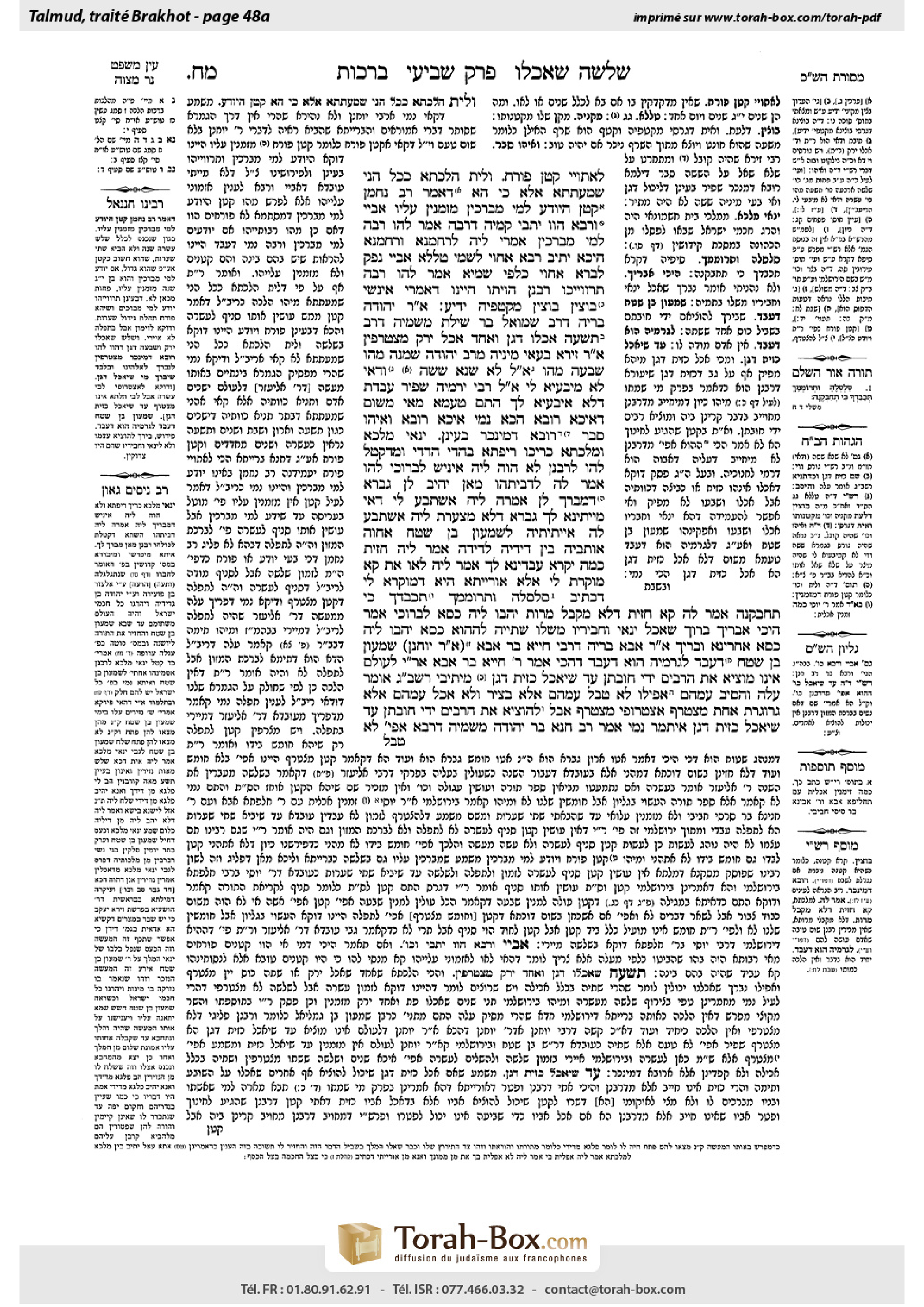
Berakhot 48a: Talmud study for Daf Yomi
Study the Talmud for Daf Yomi with scanned pages, Hebrew text, English translations from Sefaria and AI-generated French translations.
Passage selection and English or AI-generated French translation are available where the scan has annotations. Daf Study is independent of Torah-Box and Sefaria.
Browse Berakhot · ברכות · All tractatesBerakhot 48a text and translations
This page of Berakhot includes the Aramaic text, an English translation and an AI-generated French translation, alongside the scan above.
ברכות מ״ח א · Aramaic and Hebrew text
לְאֵתוּיֵי קָטָן פּוֹרֵחַ?
וְלֵית הִלְכְתָא כְּכׇל הָנֵי שְׁמַעְתָּתָא, אֶלָּא כִּי הָא דְּאָמַר רַב נַחְמָן: קָטָן הַיּוֹדֵעַ לְמִי מְבָרְכִין — מְזַמְּנִין עָלָיו.
אַבָּיֵי וְרָבָא הֲווֹ יָתְבִי קַמֵּיהּ דְּרַבָּה. אֲמַר לְהוּ רַבָּה: לְמִי מְבָרְכִין? אָמְרִי לֵיהּ: לְרַחֲמָנָא. וְרַחֲמָנָא הֵיכָא יָתֵיב? — רָבָא אַחְוִי לִשְׁמֵי טְלָלָא. אַבָּיֵי נְפַק לְבַרָּא, אַחְוִי כְּלַפֵּי שְׁמַיָּא. אֲמַר לְהוּ רַבָּה: תַּרְוַיְיכוּ רַבָּנַן הָוֵיתוּ. הַיְינוּ דְּאָמְרִי אִינָשֵׁי: בּוּצִין בּוּצִין מִקִּטְפֵיהּ יְדִיעַ.
אָמַר רַב יְהוּדָה בְּרֵיהּ דְּרַב שְׁמוּאֵל בַּר שִׁילַת מִשְּׁמֵיהּ דְּרַב: תִּשְׁעָה אָכְלוּ דָּגָן וְאֶחָד אָכַל יָרָק — מִצְטָרְפִין. אָמַר רַבִּי זֵירָא: בְּעַאי מִינֵּיהּ מֵרַב יְהוּדָה: שְׁמֹנָה מַהוּ? שִׁבְעָה מַהוּ? אָמַר לִי: לָא שְׁנָא. שִׁשָּׁה וַדַּאי לָא מִבַּעְיָא לִי. אָמַר לֵיהּ רַבִּי יִרְמְיָה: שַׁפִּיר עֲבַדְתְּ דְּלָא אִיבַּעְיָא לְךָ, הָתָם טַעְמָא מַאי — מִשּׁוּם דְּאִיכָּא רוּבָּא, הָכָא נָמֵי אִיכָּא רוּבָּא. וְאִיהוּ סָבַר רוּבָּא דְמִינְּכַר בָּעֵינַן.
יַנַּאי מַלְכָּא וּמַלְכְּתָא כְּרִיכוּ רִיפְתָּא בַּהֲדֵי הֲדָדֵי, וּמִדִּקְטַל לְהוּ לְרַבָּנַן לָא הֲוָה לֵיהּ אִינִישׁ לְבָרוֹכֵי לְהוּ. אֲמַר לַהּ לִדְבֵיתְהוּ: מַאן יָהֵיב לַן גַּבְרָא דִּמְבָרֵךְ לַן? אֲמַרָה לֵיהּ: אִשְׁתְּבַע לִי דְּאִי מַיְיתֵינָא לָךְ גַּבְרָא דְּלָא מְצַעֲרַתְּ לֵיהּ. אִשְׁתְּבַע לַהּ. אַיְיתִיתֵיהּ לְשִׁמְעוֹן בֶּן שָׁטַח אֲחוּהָ. אוֹתְבֵיהּ בֵּין דִּידֵיהּ לְדִידַהּ. אֲמַר לֵיהּ: חָזֵית כַּמָּה יְקָרָא עָבֵידְנָא לָךְ. אָמַר לֵיהּ: לָאו אַתְּ קָא מוֹקְרַתְּ לִי אֶלָּא אוֹרָיְיתָא הִיא דְּמוֹקְרָא לִי, דִּכְתִיב: ״סַלְסְלֶהָ וּתְרוֹמְמֶךָּ תְּכַבֵּדְךָ כִּי תְחַבְּקֶנָּה״. אֲמַר לַהּ: קָא חָזֵית דְּלָא מְקַבֵּל מָרוּת.
יְהַבוּ לֵיהּ כָּסָא לְבָרוֹכֵי. אֲמַר: הֵיכִי אֲבָרֵיךְ — ״בָּרוּךְ שֶׁאָכַל יַנַּאי וַחֲבֵירָיו מִשֶּׁלּוֹ״? שַׁתְיֵיהּ לְהָהוּא כָּסָא, יְהַבוּ לֵיהּ כָּסָא אַחֲרִינָא וּבָרֵיךְ.
אָמַר רַבִּי אַבָּא בְּרֵיהּ דְּרַבִּי חִיָּיא בַּר אַבָּא אָמַר רַבִּי יוֹחָנָן: שִׁמְעוֹן בֶּן שָׁטַח דַּעֲבַד — לְגַרְמֵיהּ הוּא דַּעֲבַד, דְּהָכִי אָמַר רַבִּי חִיָּיא בַּר אַבָּא אָמַר רַבִּי יוֹחָנָן: לְעוֹלָם אֵינוֹ מוֹצִיא אֶת הָרַבִּים יְדֵי חוֹבָתָן עַד שֶׁיֹּאכַל כְּזַיִת דָּגָן.
מֵיתִיבִי, רַבָּן שִׁמְעוֹן בֶּן גַּמְלִיאֵל אוֹמֵר: עָלָה וְהֵסֵיב עִמָּהֶם אֲפִילּוּ לֹא טִבֵּל עִמָּהֶם אֶלָּא בְּצִיר, וְלֹא אָכַל עִמָּהֶם אֶלָּא גְּרוֹגֶרֶת אַחַת — מִצְטָרֵף.
אִיצְטְרוֹפֵי מִצְטָרֵף אֲבָל לְהוֹצִיא אֶת הָרַבִּים יְדֵי חוֹבָתָן — עַד שֶׁיֹּאכַל כְּזַיִת דָּגָן.
אִיתְּמַר נָמֵי, אָמַר רַב חָנָא בַּר יְהוּדָה מִשְּׁמֵיהּ דְּרָבָא: אֲפִילּוּ לֹא
Berakhot 48a · English translation
to include a mature minor? Explain the baraita as follows: A minor who grew two hairs is included in a zimmun, and we are not exacting with regard to a minor to ascertain whether or not he has reached the age of majority.
The Gemara concludes: The halakha is not in accordance with all of these statements. Rather, the halakha is in accordance with this statement that Rav Naḥman said: A minor who knows to Whom one recites a blessing is included in a zimmun.
The Gemara relates that Abaye and Rava, when they were children, were seated before Rabba. Rabba said to them: To whom does one recite blessings? They said to him: To God, the All-Merciful. Rabba asked them: And where does the All-Merciful reside? Rava pointed to the ceiling. Abaye went outside and pointed toward the heaven. Rabba said to them: You will both become Sages. It is as the popular saying goes: A cucumber can be recognized from its blossoming stage. Similarly, a great person can be recognized even from a young age.
Rav Yehuda, son of Rav Shmuel bar Sheilat, said in the name of Rav: If nine ate grain and one ate vegetables, they join and form a zimmun of ten. Rabbi Zeira said: I raised a dilemma before Rav Yehuda: What is the ruling if eight ate grain and two ate vegetables? May they join together? What is the ruling if seven ate grain? He said to me: There is no difference. I certainly had no dilemma with regard to six, as it was clear to me that six are insufficient to warrant a zimmun. Rabbi Yirmeya said to him: You did well that you had no dilemma with regard to six, but for the opposite reason. There, in the case of seven or eight, what is the reason that they form a zimmun of ten? Because there is a majority of those dining who ate grain. Here, too, there is a majority. Rabbi Zeira, however, held: We require an obvious majority. Therefore, contrary to the opinion of Rabbi Yirmeya, it was clear to him that six who ate grain are insufficient to form a zimmun.
The Gemara relates: King Yannai and the queen ate bread together. And since Yannai executed the Sages, there was no one to recite the Grace after Meals blessing on their behalf. He said to his wife: Who will provide us with a man to recite the blessing on our behalf? She said to him: Swear to me that if I bring you such a man, you will not harass him. He swore, and she brought her brother, Shimon ben Shataḥ. She sat him between the King’s throne and hers. The King said to him: Do you see how much honor I am according you? He responded: It is not you who honors me; rather, the Torah honors me, as it is written: “Extol her and she will exalt you; she will bring you to honor when you embrace her” (Proverbs 4:8). Yannai said to his wife: You see that he does not accept authority.
They gave Shimon ben Shataḥ a cup of wine over which to recite Grace after Meals. He said: How shall I recite the blessing? Shall I say: Blessed is He from Whom Yannai and his companions have eaten? I have not eaten anything. He drank that cup of wine. They gave him another cup, and he recited the Grace after Meals blessing. By drinking the first cup he joined the other diners and was therefore eligible to recite Grace after Meals on their behalf.
With regard to this story, Rabbi Abba, son of Rabbi Ḥiyya bar Abba, said (that Rabbi Yoḥanan said): That which Shimon ben Shataḥ did, reciting Grace after Meals on their behalf, he did on his own, and not in accordance with the accepted halakha, as Rabbi Ḥiyya bar Abba said that Rabbi Yoḥanan said as follows: One who recites Grace after Meals cannot fulfill the obligation of others to recite it until he eats an olive-bulk of grain.
The Gemara raises an objection based on what was taught in a baraita: Rabban Shimon ben Gamliel says: One who entered and reclined together with those who were dining, even if he only dipped with them a small bit of food in spicy brine that was before them and ate with them only a single dry fig, he joins them. This baraita demonstrates that one need not necessarily eat grain to recite Grace after Meals on their behalf.
The Gemara responds: Indeed, he joins them, but he cannot satisfy the obligation of the many unless he has eaten an olive-bulk of grain.
Similarly, this halakha was also stated: Rav Ḥana bar Yehuda said in the name of Rava: Even if he only
Berakhot 48a · Traduction française (IA)
Inclure un mineur majeur ? Expliquez la baraïta ainsi : un mineur qui a poussé deux cheveux est inclus dans un zimmun, et nous ne sommes pas exigeants envers un mineur pour déterminer s'il a atteint l'âge de majorité.
La Guemara conclut : la halakha ne suit pas toutes ces déclarations. Plutôt, la halakha suit cette déclaration que Rav Naḥman a dite : un mineur qui sait à qui on récite une berakha est inclus dans un zimmun.
La Guemara rapporte que Abaye et Rava, lorsqu'ils étaient enfants, étaient assis devant Rabba. Rabba leur demanda : à qui on récite des bénédictions ? Ils répondirent : à Dieu, le Tout-Merci. Rabba demanda : et où réside le Tout-Merci ? Rava indiqua le plafond. Abaye sortit et indiqua le ciel. Rabba leur dit : vous deviendrez tous des Sages. C'est comme la devise populaire : on reconnaît un concombre à partir de sa floraison. De même, une grande personne peut être reconnue même à un jeune âge.
Rav Yehuda, fils de Rav Shmuel bar Sheilat, a dit en nom de Rav : si neuf ont mangé du grain et un a mangé des légumes, ils forment un zimmun de dix. Rabbi Zeira a dit : j'ai posé une question à Rav Yehuda : quelle est la décision si huit ont mangé du grain et deux des légumes ? Doivent-ils se joindre ? Quelle est la décision si sept ont mangé du grain ? Il me dit : il n'y a pas de différence. Je n'ai certainement pas eu de doute concernant six, car il était clair pour moi que six étaient insuffisants pour former un zimmun. Rabbi Yirmeya lui a dit : vous avez bien fait de n'avoir pas eu de doute concernant six, mais pour une raison opposée. Là, dans le cas de sept ou huit, quelle est la raison pour laquelle ils forment un zimmun de dix ? Parce qu'il y a une majorité de ceux qui dînent qui ont mangé du grain. Ici aussi, il y a une majorité. Rabbi Zeira, cependant, pensait : nous exigeons une majorité évidente. Ainsi, contrairement à l'opinion de Rabbi Yirmeya, il était clair pour lui que six qui ont mangé du grain étaient insuffisants pour former un zimmun.
La Guemara rapporte : le roi Yannai et la reine mangèrent du pain ensemble. Et puisque Yannai exécuta les Sages, il n'y avait personne pour réciter la berakha de Grace après le repas à leur place. Il dit à sa femme : qui nous fournira un homme pour réciter la berakha à notre place ? Elle lui dit : jure-moi que si je te trouve un tel homme, tu ne le harcèleras pas. Il jura, et elle apporta son frère, Shimon ben Shataḥ. Elle le mit entre le trône du roi et le sien. Le roi lui dit : vois comme tu es honoré ? Il répondit : ce n'est pas toi qui m'honore, mais la Torah m'honore, car il est écrit : « Éloge-la et elle te glorifiera ; elle te fera honorer quand tu l'embrasseras » (Proverbes 4:8). Yannai dit à sa femme : tu vois qu'il ne veut pas d'autorité.
Ils donnèrent à Shimon ben Shataḥ un verre de vin sur lequel réciter la Grace après le repas. Il dit : comment dois-je réciter la berakha ? Dois-je dire : béni soit Il d'où Yannai et ses compagnons ont mangé ? Je n'ai rien mangé. Il but ce verre de vin. Ils lui donnèrent un autre verre, et il récita la berakha de Grace après le repas. En buvant le premier verre, il s'est joint aux autres convives et était donc éligible à réciter la Grace après le repas à leur place.
Concernant cette histoire, Rabbi Abba, fils de Rabbi Ḥiyya bar Abba, a dit (que Rabbi Yoḥanan a dit) : ce que Shimon ben Shataḥ a fait, réciter la Grace après le repas à leur place, il le faisait de son propre chef, et non conformément à la halakha acceptée, car Rabbi Ḥiyya bar Abba a dit que Rabbi Yoḥanan a dit ainsi : celui qui récite la Grace après le repas ne peut pas remplir l'obligation des autres à réciter cette berakha jusqu'à ce qu'il ait mangé une quantité d'olive de grain.
La Guemara soulève un objet d'opposition basé sur ce qui a été enseigné dans une baraïta : Rabban Shimon ben Gamliel dit : celui qui est entré et s'est allongé avec ceux qui dînaient, même s'il n'a que légèrement immergé un petit morceau de nourriture dans une sauce piquante qui était devant eux et a mangé seulement une fig seche, il s'unit à eux. Cette baraïta montre que l'on n'a pas besoin de manger du grain pour réciter la Grace après le repas à leur place.
La Guemara répond : effectivement, il s'unit à eux, mais il ne peut pas satisfaire l'obligation des nombreux à moins qu'il n'ait mangé une quantité d'olive de grain.
De même, cette halakha a également été énoncée : Rav Ḥana bar Yehuda a dit en nom de Rava : même s'il n'a que
Traduction française générée par IA à partir de l’édition anglaise de Sefaria. Vérifie toujours un passage avec le texte source.
Text from Sefaria: William Davidson Edition - Vocalized Aramaic (CC BY NC); William Davidson Edition - English (CC BY NC).