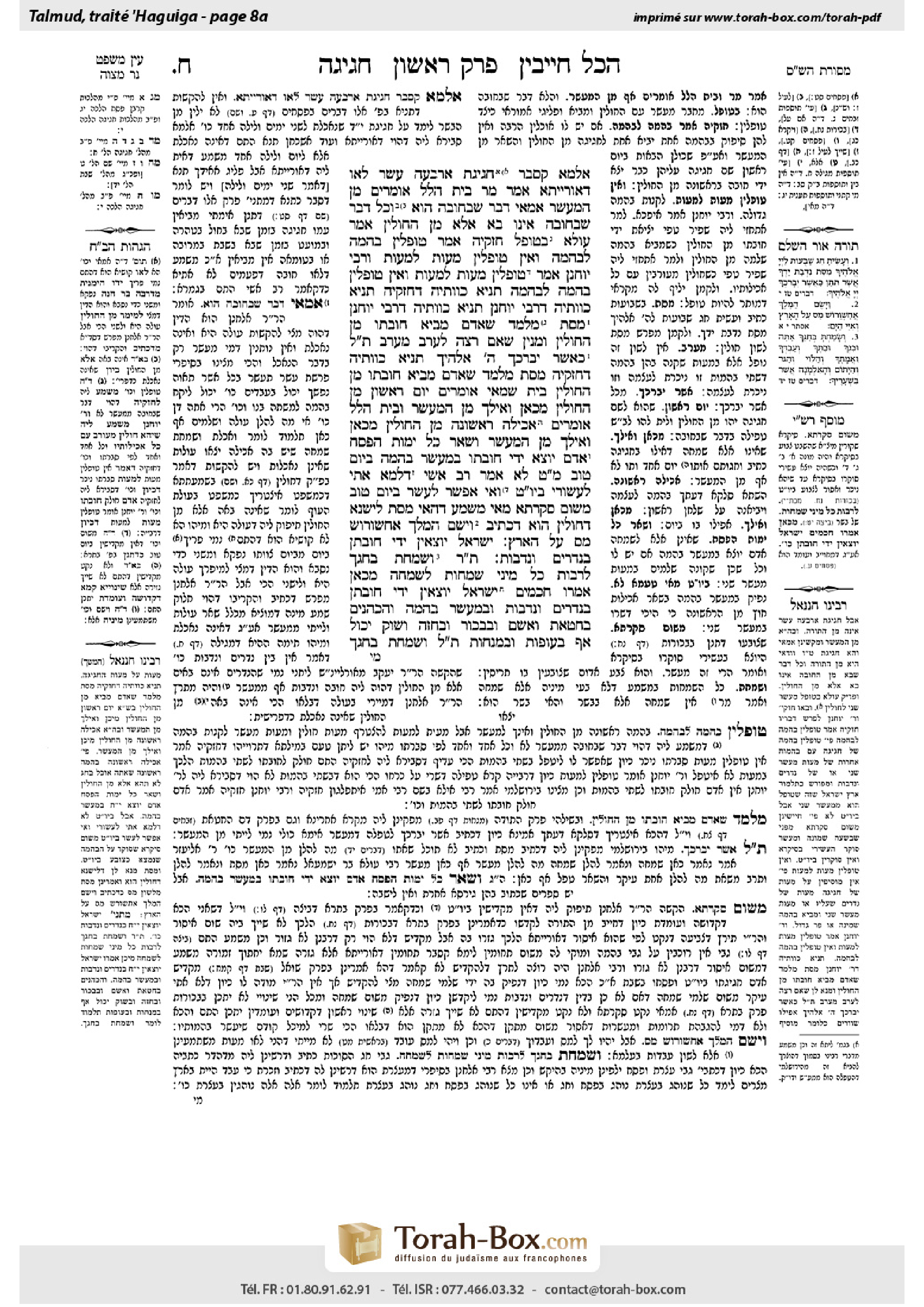
Chagigah 8a: Talmud study for Daf Yomi
Study the Talmud for Daf Yomi with scanned pages, Hebrew text, English translations from Sefaria and AI-generated French translations.
Passage selection and English or AI-generated French translation are available where the scan has annotations. Daf Study is independent of Torah-Box and Sefaria.
Browse Chagigah · חגיגה · All tractatesChagigah 8a text and translations
This page of Chagigah includes the Aramaic text, an English translation and an AI-generated French translation, alongside the scan above.
חגיגה ח׳ א · Aramaic and Hebrew text
אַלְמָא קָסָבַר — חֲגִיגַת אַרְבָּעָה עָשָׂר לָאו דְּאוֹרָיְיתָא.
אָמַר מָר, בֵּית הִלֵּל אוֹמְרִים: מִן הַמַּעֲשֵׂר. אַמַּאי? דָּבָר שֶׁבְּחוֹבָה הוּא, וְכׇל דָּבָר שֶׁבְּחוֹבָה אֵינוֹ בָּא אֶלָּא מִן הַחוּלִּין? אָמַר עוּלָּא: בְּטוֹפֵל.
חִזְקִיָּה אָמַר, טוֹפְלִין בְּהֵמָה לִבְהֵמָה, וְאֵין טוֹפְלִין מָעוֹת לְמָעוֹת. וְרַבִּי יוֹחָנָן אָמַר: טוֹפְלִין מָעוֹת לְמָעוֹת, וְאֵין טוֹפְלִין בְּהֵמָה לִבְהֵמָה.
תַּנְיָא כְּווֹתֵיהּ דְּחִזְקִיָּה, תַּנְיָא כְּווֹתֵיהּ דְּרַבִּי יוֹחָנָן. תַּנְיָא כְּווֹתֵיהּ דְּרַבִּי יוֹחָנָן: ״מִסַּת״ — מְלַמֵּד שֶׁאָדָם מֵבִיא חוֹבָתוֹ מִן הַחוּלִּין. וּמִנַּיִן שֶׁאִם רָצָה לְעָרֵב מְעָרֵב — תַּלְמוּד לוֹמַר: ״כַּאֲשֶׁר יְבָרֶכְךָ ה׳ אֱלֹהֶיךָ״.
תַּנְיָא כְּווֹתֵיהּ דְּחִזְקִיָּה: ״מִסַּת״ — מְלַמֵּד שֶׁאָדָם מֵבִיא חוֹבָתוֹ מִן הַחוּלִּין, בֵּית שַׁמַּאי אוֹמְרִים: יוֹם רִאשׁוֹן מִן הַחוּלִּין, מִכָּאן וְאֵילָךְ מִן הַמַּעֲשֵׂר. וּבֵית הִלֵּל אוֹמְרִים: אֲכִילָה רִאשׁוֹנָה מִן הַחוּלִּין, מִכָּאן וְאֵילָךְ מִן הַמַּעֲשֵׂר.
וּשְׁאָר כׇּל יְמוֹת הַפֶּסַח, אָדָם יוֹצֵא יְדֵי חוֹבָתוֹ בְּמַעֲשֵׂר בְּהֵמָה. בְּיוֹם טוֹב מַאי טַעְמָא לָא?
אָמַר רַב אָשֵׁי: דִּלְמָא אָתֵי לְעַשּׂוֹרֵי בְּיוֹם טוֹב, וְאִי אֶפְשָׁר לְעַשֵּׂר בְּיוֹם טוֹב מִשּׁוּם סְקַרְתָּא.
מַאי מַשְׁמַע דְּהַאי מִסַּת לִישָּׁנָא דְחוּלִּין הוּא? דִּכְתִיב: ״וַיָּשֶׂם הַמֶּלֶךְ אֲחַשְׁוֵרוֹשׁ מַס עַל הָאָרֶץ״.
יִשְׂרָאֵל יוֹצְאִין יְדֵי חוֹבָתָן בִּנְדָרִים וּנְדָבוֹת. תָּנוּ רַבָּנַן: ״וְשָׂמַחְתָּ בְּחַגֶּךָ״ — לְרַבּוֹת כׇּל מִינֵי שְׂמָחוֹת לְשִׂמְחָה. מִכָּאן אָמְרוּ חֲכָמִים: יִשְׂרָאֵל יוֹצְאִין יְדֵי חוֹבָתָן בִּנְדָרִים וּנְדָבוֹת וּבְמַעְשַׂר בְּהֵמָה,
וְהַכֹּהֲנִים בְּחַטָּאת וְאָשָׁם וּבִבְכוֹר, וּבְחָזֶה וָשׁוֹק. יָכוֹל אַף בָּעוֹפוֹת וּבִמְנָחוֹת — תַּלְמוּד לוֹמַר: ״וְשָׂמַחְתָּ בְּחַגֶּךָ״,
Chagigah 8a · English translation
Apparently, he holds that the Festival peace-offering of the fourteenth does not apply by Torah law, and therefore one may bring it even from second-tithe funds.
§ The Master said in the baraita that Beit Hillel say: Festival peace-offerings may be brought even from the second tithe. The Gemara asks: Why? It is an obligatory matter, and any obligatory matter may come only from non-sacred property. Ulla said: This is referring to a case where one combines, i.e., the offering is purchased with a combination of second-tithe funds and non-sacred money. The Gemara adds that amora’im dispute the details of this halakha.
Ḥizkiya said: One may combine one animal with another animal. If one has a large household for which one animal will not suffice, he brings one animal for the Festival offering from non-sacred money and he may combine funds of second tithe to purchase a second animal. Since he has fulfilled his obligation of the Festival offering by bringing one animal from non-sacred money, he may bring the others from second tithe or animal tithes. But one may not combine money with other money, i.e., one may not combine second-tithe funds with non-sacred money toward the purchase of one animal for the Festival offering. And Rabbi Yoḥanan said: One may combine money with other money, but one may not combine one animal with another animal.
The Gemara comments: It is taught in a baraita in accordance with the opinion of Ḥizkiya, and it is taught in another baraita in accordance with the opinion of Rabbi Yoḥanan. The Gemara elaborates: It is taught in a baraita in accordance with the opinion of Rabbi Yoḥanan: “After the measure of the gift offering of your hand” (Deuteronomy 16:10). This teaches that a person brings his obligatory offering from non-sacred property. And from where is it derived that if one wishes to mix he may mix? The verse states: “As the Lord your God blesses you” (Deuteronomy 16:10), i.e., one may use any money with which God has blessed him, even second tithe. The term: Mix, means combining money from different sources.
It is taught in a baraita in accordance with the opinion of Ḥizkiya: “After the measure” (Deuteronomy 16:10). This teaches that a person brings his obligatory offering from non-sacred property. Beit Shammai and Beit Hillel disagree with regard to this issue, as Beit Shammai say: On the first day one may bring only from non-sacred property. From this point forward one may buy the animal from the second-tithe money. And Beit Hillel say: The first eating must be from non-sacred property. From this point forward one may bring from the second-tithe money. The phrase: The first eating, means the first animal that one eats, which is in accordance with Ḥizkiya’s opinion.
The baraita concludes: All this applies on the first day of the Festival. But with regard to all the other days of Passover, on which one is obligated to bring peace-offerings of rejoicing, a person fulfills his obligation even with animal tithes, and certainly with funds of second tithe. The Gemara asks: What is the reason that one does not fulfill his obligation with animal tithes on the Festival?
Rav Ashi said: There is a concern that if one requires additional animals, perhaps he may come to separate tithes on the Festival itself, and one may not separate tithes on the Festival due to the red dye [sikrata]. Every tenth animal is marked with red dye, and as it is prohibited to dye on a Festival due to the labor of writing, one may not separate tithes on a Festival.
The Gemara asks: From where may it be inferred that this: “After the measure [missat],” mentioned in the verse, is a term for non-sacred property? The Gemara answers: As it is written: “And the king Ahasuerus laid a tribute [mas] upon the land” (Esther 10:1), which is clearly referring to a tribute of non-sacred property.
§ The mishna stated that Israelites fulfill their obligation to eat peace-offerings of rejoicing with their vow offerings and gift offerings. The Sages taught that the verse: “And you shall rejoice in your feast” (Deuteronomy 16:14) comes to include all types of rejoicing as constituting a fulfillment of the mitzva of rejoicing. From here the Sages stated: Israelites fulfill their obligation to eat peace-offerings of rejoicing with their vow offerings and gift offerings and likewise with animal tithes.
And the priests fulfill their obligation of rejoicing with the meat of sin-offerings and guilt-offerings, and with firstborn offerings, and with the breast and thigh of peace-offerings. One might have thought that they can fulfill their obligation even by eating bird-offerings and meal-offerings. Therefore, the verse states: “And you shall rejoice in your feast.”
Chagigah 8a · Traduction française (IA)
Apparemment, il considère que l'offrande de paix du quatorzième ne s'applique pas selon la Torah, et par conséquent on peut l'apporter même à partir des fonds de la deuxième dîme.
§ Le Maître a dit dans la baraïta que Beit Hillel disent : les offrandes de paix du festival peuvent être apportées même à partir des fonds de la deuxième dîme. La Guemara demande : pourquoi ? C'est une obligation, et toute obligation peut provenir uniquement de biens non sacrés. Ulla a dit : cela se réfère à un cas où l'on combine, c'est-à-dire où l'offrande est achetée avec une combinaison de fonds de la deuxième dîme et de biens non sacrés. La Guemara ajoute que les amoraïm débattent des détails de cette halakha.
Ḥizkiya a dit : on peut combiner un animal avec un autre animal. Si l'on a une grande famille pour laquelle un seul animal ne suffit, on apporte un animal pour l'offrande du festival à partir de biens non sacrés et on peut combiner les fonds de la deuxième dîme pour acheter un deuxième animal. Puisqu'on a accompli son obligation de l'offrande du festival en apportant un animal à partir de biens non sacrés, on peut apporter les autres à partir de la deuxième dîme ou des dîmes d'animaux. Mais on ne peut pas combiner des fonds avec d'autres fonds, c'est-à-dire on ne peut pas combiner les fonds de la deuxième dîme avec des biens non sacrés pour l'achat d'un seul animal pour l'offrande du festival. Et Rabbi Yoḥanan a dit : on peut combiner des fonds avec d'autres fonds, mais on ne peut pas combiner un animal avec un autre animal.
La Guemara commente : il est enseigné dans une baraïta selon l'opinion de Ḥizkiya, et il est enseigné dans une autre baraïta selon l'opinion de Rabbi Yoḥanan. La Guemara développe : il est enseigné dans une baraïta selon l'opinion de Rabbi Yoḥanan : « Après la mesure de l'offrande de votre main » (Deutéronome 16:10). Cela enseigne qu'une personne apporte son offrande obligatoire à partir de biens non sacrés. Et d'où est-il déduit que si l'on veut mélanger, on peut le faire ? La parole dit : « Comme le Seigneur votre Dieu vous bénit » (Deutéronome 16:10), c'est-à-dire qu'on peut utiliser tout l'argent avec lequel Dieu a bénit, même la deuxième dîme. Le terme : mélanger, signifie combiner des fonds provenant de différentes sources.
Il est enseigné dans une baraïta selon l'opinion de Ḥizkiya : « Après la mesure » (Deutéronome 16:10). Cela enseigne qu'une personne apporte son offrande obligatoire à partir de biens non sacrés. Beit Shammai et Beit Hillel s'opposent sur ce point, car Beit Shammai disent : le premier jour on peut apporter uniquement à partir de biens non sacrés. À partir de ce moment on peut acheter l'animal à partir des fonds de la deuxième dîme. Et Beit Hillel disent : la première consommation doit être à partir de biens non sacrés. À partir de ce moment on peut apporter à partir des fonds de la deuxième dîme. La phrase : la première consommation, signifie l'animal que l'on consomme en premier, ce qui est selon l'opinion de Ḥizkiya.
La baraïta conclut : cela s'applique au premier jour du festival. Mais concernant tous les autres jours de Pâque, où l'on est tenu d'apporter des offrandes de paix de joie, une personne accompli son obligation même avec les dîmes d'animaux, et certainement avec les fonds de la deuxième dîme. La Guemara demande : quelle est la raison pour laquelle on ne peut accomplir son obligation avec les dîmes d'animaux lors du festival ?
Rav Ashi a dit : il y a une crainte que si l'on a besoin d'animaux supplémentaires, peut-être l'on viendra à séparer des dîmes lors du festival lui-même, et on ne peut pas séparer des dîmes lors du festival en raison du joug du Royaume des Cieux. Chaque dixième animal est marqué avec une teinture rouge, et comme il est interdit de teinter lors d'un festival en raison du travail d'écriture, on ne peut pas séparer des dîmes lors d'un festival.
La Guemara demande : d'où peut-on déduire que ce : « Après la mesure [missat] », mentionné dans la parole, est un terme pour les biens non sacrés ? La Guemara répond : comme il est écrit : « Et le roi Ahasuerus imposa une contribution [mas] sur la terre » (Esther 10:1), ce qui fait clairement référence à une contribution de biens non sacrés.
§ La michna a dit que les Israélites accomplissent leur obligation de manger des offrandes de paix de joie avec leurs offrandes de vœux et d'offrandes de don. Les Sages ont enseigné que la parole : « Et vous vous réjouirez à votre fête » (Deutéronome 16:14) vient inclure toutes sortes de joie comme constituant l'accomplissement de la mitsva de joie. D'où les Sages ont dit : les Israélites accomplissent leur obligation de manger des offrandes de paix de joie avec leurs offrandes de vœux et d'offrandes de don et de même avec les dîmes d'animaux.
Et les prêtres accomplissent leur obligation de se réjouir avec la viande des offrandes de péché et de culpabilité, ainsi que des offrandes des premiers-nés, et avec la poitrine et la cuisse des offrandes de paix. On aurait pu penser qu'ils peuvent accomplir leur obligation même en mangeant des offrandes d'oiseaux et des offrandes de farine. Par conséquent, la parole dit : « Et vous vous réjouirez à votre fête. »
Traduction française générée par IA à partir de l’édition anglaise de Sefaria. Vérifie toujours un passage avec le texte source.
Text from Sefaria: William Davidson Edition - Vocalized Aramaic (CC BY NC); William Davidson Edition - English (CC BY NC).