Chullin 101a: Talmud study for Daf Yomi
Study the Talmud for Daf Yomi with scanned pages, Hebrew text, English translations from Sefaria and AI-generated French translations.
Passage selection and English or AI-generated French translation are available where the scan has annotations. Daf Study is independent of Torah-Box and Sefaria.
Browse Chullin · חולין · All tractatesChullin 101a text and translations
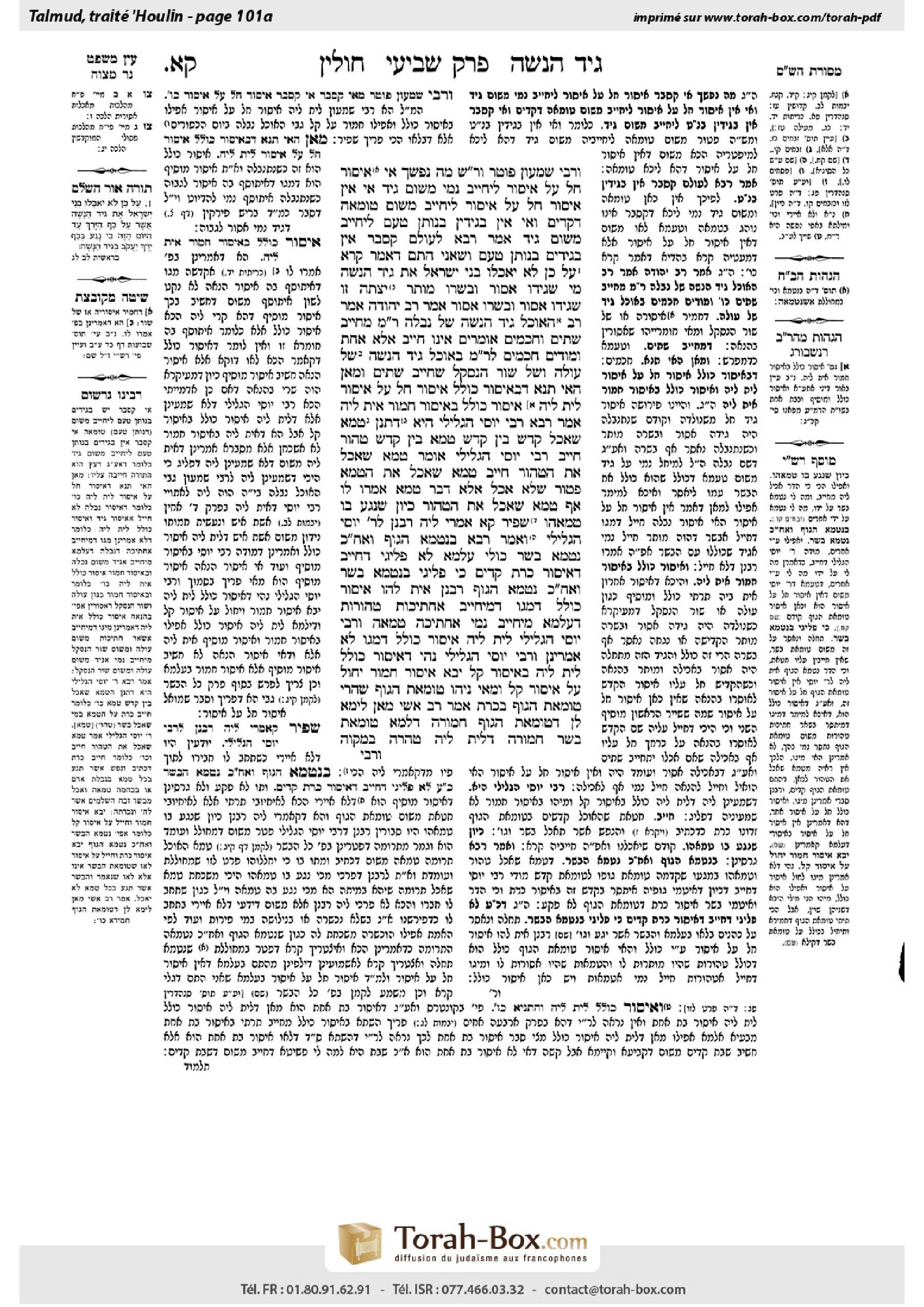
This page of Chullin includes the Aramaic text, an English translation and an AI-generated French translation, alongside the scan above.
חולין ק״א א · Aramaic and Hebrew text
וְרַבִּי שִׁמְעוֹן פּוֹטֵר.
וְרַבִּי שִׁמְעוֹן, מָה נַפְשָׁךְ? אִי אִיסּוּר חָל עַל אִיסּוּר – לִיחַיַּיב נָמֵי מִשּׁוּם גִּיד, אִי אֵין אִיסּוּר חָל עַל אִיסּוּר – לִיחַיַּיב מִשּׁוּם טוּמְאָה דִּקְדֵים, וְאִי אֵין בְּגִידִין בְּנוֹתֵן טַעַם – לִיחַיַּיב מִשּׁוּם גִּיד.
אָמַר רָבָא: לְעוֹלָם קָסָבַר אֵין בְּגִידִים בְּנוֹתֵן טַעַם, וְשָׁאנֵי הָתָם דְּאָמַר קְרָא: ״עַל כֵּן לֹא יֹאכְלוּ בְנֵי יִשְׂרָאֵל אֶת גִּיד הַנָּשֶׁה״, מִי שֶׁגִּידוֹ אָסוּר וּבְשָׂרוֹ מוּתָּר, יָצְתָה זוֹ שֶׁגִּידוֹ אָסוּר וּבְשָׂרוֹ אָסוּר.
אָמַר רַב יְהוּדָה, אָמַר רַב: הָאוֹכֵל גִּיד הַנָּשֶׁה שֶׁל נְבֵלָה – רַבִּי מֵאִיר מְחַיֵּיב שְׁתַּיִם, וַחֲכָמִים אוֹמְרִים: אֵינוֹ חַיָּיב אֶלָּא אַחַת.
וּמוֹדִים חֲכָמִים לְרַבִּי מֵאִיר בְּאוֹכֵל גִּיד הַנָּשֶׁה שֶׁל עוֹלָה וְשֶׁל שׁוֹר הַנִּסְקָל, שֶׁחַיָּיב שְׁתַּיִם.
וּמַאן הַאי תַּנָּא, דִּבְאִיסּוּר כּוֹלֵל – אִיסּוּר חָל עַל אִיסּוּר לֵית לֵיהּ, אִיסּוּר כּוֹלֵל בְּאִיסּוּר חָמוּר – אִית לֵיהּ.
אָמַר רָבָא: רַבִּי יוֹסֵי הַגְּלִילִי הִיא, דִּתְנַן: טָמֵא שֶׁאָכַל קֹדֶשׁ, בֵּין קֹדֶשׁ טָמֵא בֵּין קֹדֶשׁ טָהוֹר – חַיָּיב.
רַבִּי יוֹסֵי הַגְּלִילִי אוֹמֵר: טָמֵא שֶׁאָכַל אֶת הַטָּהוֹר – חַיָּיב, טָמֵא שֶׁאָכַל אֶת הַטָּמֵא – פָּטוּר, שֶׁלֹּא אֲכַל אֶלָּא דָּבָר טָמֵא.
אָמְרוּ לוֹ: אַף טָמֵא שֶׁאָכַל אֶת הַטָּהוֹר, כֵּיוָן שֶׁנָּגַע בּוֹ, טִמְּאָהוּ.
שַׁפִּיר קָא אָמְרִי לֵיהּ רַבָּנַן לְרַבִּי יוֹסֵי הַגְּלִילִי, וְאָמַר רָבָא: בְּנִטְמָא הַגּוּף וְאַחַר כָּךְ נִטְמָא בָּשָׂר – כּוּלֵּי עָלְמָא לָא פְּלִיגִי דְּחַיָּיב, דְּאִיסּוּר כָּרֵת קָדֵים.
כִּי פְּלִיגִי בְּנִטְמָא בָּשָׂר, וְאַחַר כָּךְ נִטְמָא הַגּוּף. רַבָּנַן אִית לְהוּ אִיסּוּר כּוֹלֵל, דְּמִגּוֹ דְּמִיחַיַּיב אַחֲתִיכוֹת טְהוֹרוֹת דְּעָלְמָא, מִיחַיַּיב נָמֵי אַחֲתִיכָה טְמֵאָה.
וְרַבִּי יוֹסֵי הַגְּלִילִי לֵית לֵיהּ אִיסּוּר כּוֹלֵל, דְּמִגּוֹ לָא אָמְרִינַן.
וְרַבִּי יוֹסֵי הַגְּלִילִי, נְהִי דְּאִיסּוּר כּוֹלֵל לֵית לֵיהּ, בְּאִיסּוּר קַל יָבֹא אִיסּוּר חָמוּר יָחוּל עַל אִיסּוּר קַל, וּמַאי נִיהוּ? טוּמְאַת הַגּוּף, שֶׁהֲרֵי טוּמְאַת הַגּוּף בְּכָרֵת.
אָמַר רַב אָשֵׁי: מַאן לֵימָא לַן דְּטוּמְאַת הַגּוּף חֲמוּרָה, דִּלְמָא טוּמְאַת בָּשָׂר חֲמוּרָה, דְּלֵית לֵיהּ טׇהֳרָה בְּמִקְוֶה.
Chullin 101a · English translation
and Rabbi Shimon exempts him entirely.
The Gemara objects: But according to Rabbi Shimon, whichever way you look at it, it is difficult. If a prohibition takes effect where another prohibition already exists, let Rabbi Shimon deem one liable for eating non-kosher meat and also due to the prohibition of eating the sciatic nerve. Conversely, if a prohibition does not take effect where another prohibition already exists, let Rabbi Shimon deem one liable due to the prohibition of eating meat from a non-kosher species, which preceded the prohibition of the sciatic nerve. And if Rabbi Shimon holds that sciatic nerves do not impart flavor, and therefore the prohibition of eating non-kosher meat does not apply, let him deem one liable due to the prohibition of eating the sciatic nerve.
Rava said in response: Actually Rabbi Shimon holds that sciatic nerves do not impart flavor, and therefore they are not subject to the prohibition of eating non-kosher meat. And the reason the prohibition of eating the sciatic nerves does not apply to non-kosher animals is that it is different there, because the verse states: “Therefore the children of Israel eat not the sciatic nerve” (Genesis 32:33). This teaches that the prohibition applies only to a species whose sciatic nerve is forbidden but whose meat is permitted, and excludes this case of a non-kosher animal, whose sciatic nerve would be forbidden and whose meat would also be forbidden.
§ Having discussed the status of the sciatic nerve of a non-kosher animal, the Gemara addresses the status of the sciatic nerve of a kosher animal that did not undergo a proper ritual slaughter. Rav Yehuda says that Rav says: With regard to one who eats the sciatic nerve of an unslaughtered carcass, Rabbi Meir deems him liable to receive two sets of lashes, and the Rabbis say: He is liable to receive only one set of lashes.
And the Rabbis concede to Rabbi Meir in a case where one eats the sciatic nerve of a burnt offering or of an ox that is stoned that he is liable to receive two sets of lashes. The prohibitions concerning a burnt offering and an ox that is stoned are more severe than that of the sciatic nerve, in that it is forbidden to derive any benefit from them, whereas the sciatic nerve is merely forbidden for consumption. Consequently, these prohibitions take effect even with regard to the sciatic nerve, despite the fact that the sciatic nerve was already forbidden before the animal was consecrated or before it gored a person and became liable to be stoned.
The Gemara challenges: And who is this tanna who does not hold that in the case of a more inclusive prohibition, the prohibition takes effect where another prohibition already exists, and consequently, according to his opinion the prohibition of eating an unslaughtered animal, which applies to the entire animal, does not take effect with regard to the sciatic nerve. Yet, he does hold that where the second prohibition is both a more inclusive prohibition and a more stringent prohibition, it does take effect, and therefore the prohibition of eating a burnt offering or an ox that is stoned does take effect with regard to the sciatic nerve.
Rava said: It is Rabbi Yosei HaGelili who holds that a more inclusive prohibition does not take effect where there is an already existing prohibition. As we learned in a mishna (Zevaḥim 106a): One who is ritually impure who ate sacrificial food, whether it was ritually impure sacrificial food or ritually pure sacrificial food, is liable to receive karet if he did so intentionally and to bring a sliding-scale offering if he did so unwittingly.
Rabbi Yosei HaGelili says: An impure individual who ate pure sacrificial food is liable. But an impure individual who ate impure sacrificial food is exempt, as he merely ate an impure item, and the prohibition of eating sacrificial food while one is impure does not apply to impure sacrificial food.
The Rabbis said to him: According to your logic, this halakha would apply even in a case of an impure individual who ate what had been pure sacrificial food, because once he has touched it, he has thereby rendered it impure. Yet, in such a case, he is certainly liable for eating it. So too, an impure individual who ate impure sacrificial food is liable.
The Gemara asks: The Rabbis are saying well to Rabbi Yosei HaGelili; why does Rabbi Yosei HaGelili disagree? And Rava said in elaboration of the dispute: In a case where the person’s body became impure and then afterward the sacrificial meat became impure, everyone agrees that he is liable if he eats the meat, as the prohibition of eating sacrificial meat while impure, which carries the punishment of karet, preceded the prohibition of eating impure sacrificial meat.
They disagree when the meat became impure and then afterward the person’s body became impure. The Rabbis hold that a more inclusive prohibition takes effect even where there is an already existing prohibition. Consequently, since the prohibition for an impure person to eat sacrificial meat is more inclusive than the prohibition for a pure person to eat impure sacrificial meat, as an impure person is liable for eating even pure pieces of sacrificial meat that are permitted to the rest of the world, he is also liable for this prohibition when he eats an impure piece of sacrificial meat.
And Rabbi Yosei HaGelili does not accept the principle that a more inclusive prohibition takes effect even where there is an already existing prohibition, as he holds that we do not say that since it applies to cases that were not yet prohibited it applies to all cases.
The Gemara objects: But even according to Rabbi Yosei HaGelili, granted that he does not hold that a more inclusive prohibition always takes effect where there is an already existing prohibition. But in the case of an already existing lenient prohibition, a more stringent prohibition should come and take effect on the more lenient prohibition. And what is the more stringent prohibition? The prohibition due to the impurity of a person’s body, as one who eats sacrificial food when he has impurity of the body is liable to karet, whereas a pure person who eats impure sacrificial food is merely liable to be flogged. Consequently, the prohibition of eating sacrificial food while impure should apply even though the meat became impure before the person became impure.
Rav Ashi said: Who can say to us that the prohibition due to the impurity of a person’s body is more stringent? Perhaps the prohibition due to the impurity of the meat is more stringent, as impure meat does not have the possibility of restoring its state of purity via immersion in a ritual bath, whereas a ritually impure person can become pure in this manner.
Chullin 101a · Traduction française (IA)
et le Rabbi Shimon l'exempte entièrement.
La Guemara s'oppose : Mais selon le Rabbi Shimon, qu'importe la manière dont on y regarde, c'est difficile. Si une interdiction prend effet là où une autre interdiction existe déjà, que le Rabbi Shimon considère l'individu comme coupable d'avoir mangé de la viande non-kosher et aussi en raison de l'interdiction de manger la moelle du fémur. À l'inverse, si une interdiction ne prend pas effet là où une autre interdiction existe déjà, que le Rabbi Shimon considère l'individu comme coupable en raison de l'interdiction de manger de la viande d'une espèce non-kosher, qui a précédé l'interdiction de la moelle du fémur. Et si le Rabbi Shimon considère que les moelles du fémur ne transmettent pas de goût, et donc l'interdiction de manger de la viande non-kosher ne s'applique pas, que le Rabbi Shimon considère l'individu comme coupable en raison de l'interdiction de manger la moelle du fémur.
Rava répondit : En réalité, le Rabbi Shimon considère que les moelles du fémur ne transmettent pas de goût, et donc elles ne sont pas soumises à l'interdiction de manger de la viande non-kosher. Et la raison pour laquelle l'interdiction de manger les moelles du fémur ne s'applique pas aux animaux non-kosher est qu'il s'agit d'une situation différente, car la Parashah dit : « Ainsi les enfants d'Israël ne doivent pas manger la moelle du fémur » (Genèse 32:33). Cela enseigne que l'interdiction s'applique uniquement à une espèce dont la moelle du fémur est interdite mais dont la viande est permise, et exclut ce cas d'un animal non-kosher, dont la moelle du fémur serait interdite et dont la viande serait également interdite.
§ Ayant discuté du statut de la moelle du fémur d'un animal non-kosher, la Guemara aborde le statut de la moelle du fémur d'un animal kosher qui n'a pas subi un abattage rituel approprié. Rav Yehuda dit que Rav dit : Concernant celui qui mange la moelle du fémur d'un cadavre non abattu, le Rabbi Meir considère qu'il est punissable de deux fois la peine de flagellation, et les Rabbins disent : Il est punissable de seulement une fois la peine de flagellation.
Et les Rabbins reconnaissent à Rabbi Meir le cas où l'on mange la moelle du fémur d'un holocauste ou d'un bœuf lapé, qu'il est tenu de recevoir deux fois la peine de flagellation. Les interdictions concernant un holocauste et un bœuf lapé sont plus graves que celle de la moelle du fémur, car il est interdit d'en tirer quelque bénéfice que ce soit, alors que la moelle du fémur est simplement interdite à la consommation. Par conséquent, ces interdictions s'appliquent même à la moelle du fémur, malgré le fait que la moelle du fémur était déjà interdite avant que l'animal ne soit consacré ou avant qu'il ne fasse un malheur et ne devienne coupable d'être lapé.
La Guemara soulève un défi : Et qui est ce tanna qui ne considère pas que dans le cas d'une interdiction plus inclusive, l'interdiction s'applique là où une autre interdiction existe déjà, et donc, selon son opinion, l'interdiction de manger un animal non sacrifié, qui s'applique à l'ensemble de l'animal, ne s'applique pas à la moelle du fémur. Cependant, il considère que dans le cas où l'interdiction secondaire est à la fois une interdiction plus inclusive et une interdiction plus stricte, elle s'applique, et donc l'interdiction de manger un holocauste ou un bœuf lapé s'applique à la moelle du fémur.
Rava dit : C'est Rabbi Yosei HaGelili qui affirme que l'interdiction plus générale ne s'applique pas là où une interdiction existe déjà. Comme nous l'avons appris dans une mitsna (Zevaḥim 106a) : Celui qui est impur et a mangé de la nourriture sacrée, qu'il s'agisse de nourriture sacrée impure ou de nourriture sacrée pure, est puni de karet s'il l'a fait intentionnellement et doit présenter une offrande proportionnelle s'il l'a fait sans le savoir.
Rabbi Yosei HaGelili dit : Un individu impur qui a mangé de la nourriture sacrée pure est puni. Mais un individu impur qui a mangé de la nourriture sacrée impure est exempt, car il a simplement mangé un objet impur, et l'interdiction de manger de la nourriture sacrée lorsqu'on est impur ne s'applique pas à la nourriture sacrée impure.
Les Rabbins dirent à lui : Selon votre raisonnement, cette halakha s'appliquerait même dans le cas d'un individu impur qui a mangé de la nourriture sacrée pure, car une fois qu'il l'a touchée, il l'a rendue impure. Cependant, dans ce cas, il est certainement coupable de l'avoir mangée. De même, un individu impur qui a mangé de la nourriture sacrée impure est coupable.
La Guemara pose la question : Les Rabbins disent bien à Rabbi Yosei HaGelili ; pourquoi Rabbi Yosei HaGelili désaccorde-t-il ? Et Rava dit en développant le débat : Dans le cas où le corps de la personne est devenu impur et ensuite la viande sacrée est devenue impure, tout le monde convient qu'il est coupable s'il mange la viande, car l'interdiction de manger de la viande sacrée lorsqu'on est impur, qui porte la peine de karet, a précédé l'interdiction de manger de la viande sacrée impure.
Ils désaccordent lorsqu'il s'agit de la viande devenue impure et ensuite du corps de la personne devenu impur. Les Rabbins considèrent que l'interdiction plus inclusive s'applique même là où une interdiction existe déjà. Par conséquent, puisque l'interdiction pour une personne impure de manger de la viande sacrée est plus inclusive que l'interdiction pour une personne pure de manger de la viande sacrée impure, car une personne impure est coupable de manger même des morceaux de viande sacrée permis au reste du monde, il est également coupable de cette interdiction lorsqu'il mange un morceau de viande sacrée impure.
Et Rabbi Yosei HaGelili ne reconnaît pas le principe que l'interdiction plus inclusive s'applique même là où une interdiction existe déjà, car il considère que nous ne disons pas que puisque cela s'applique aux cas qui n'étaient pas encore interdits, cela s'applique à tous les cas.
La Guemara rétorque : Mais même selon Rabbi Yosei HaGelili, on admet que s'il ne considère pas que l'interdiction plus large s'applique toujours là où il y a déjà une interdiction existante. Cependant, dans le cas d'une interdiction existante qui est leniente, une interdiction plus stricte devrait prendre effet sur l'interdiction leniente. Et quelle est cette interdiction plus stricte ? L'interdiction liée à l'impureté du corps d'une personne, car celui qui mange de la nourriture sacrée lorsqu'il est impur est puni de karet, tandis qu'une personne pure qui mange de la nourriture sacrée impure est seulement punie de flagellation. Ainsi, l'interdiction de manger de la nourriture sacrée lorsqu'on est impur devrait s'appliquer même si la viande est devenue impure avant que la personne ne devienne impure.
Rav Ashi dit : Qui peut affirmer que l'interdiction liée à l'impureté du corps d'une personne est plus stricte ? Peut-être que l'interdiction liée à l'impureté de la viande est plus stricte, car la viande impure ne peut pas retrouver son état de pureté par immersion dans un bain rituel, tandis qu'une personne impure peut devenir pure de cette manière.
Traduction française générée par IA à partir de l’édition anglaise de Sefaria. Vérifie toujours un passage avec le texte source.
Text from Sefaria: William Davidson Edition - Vocalized Aramaic (unknown); William Davidson Edition - English (CC BY NC).