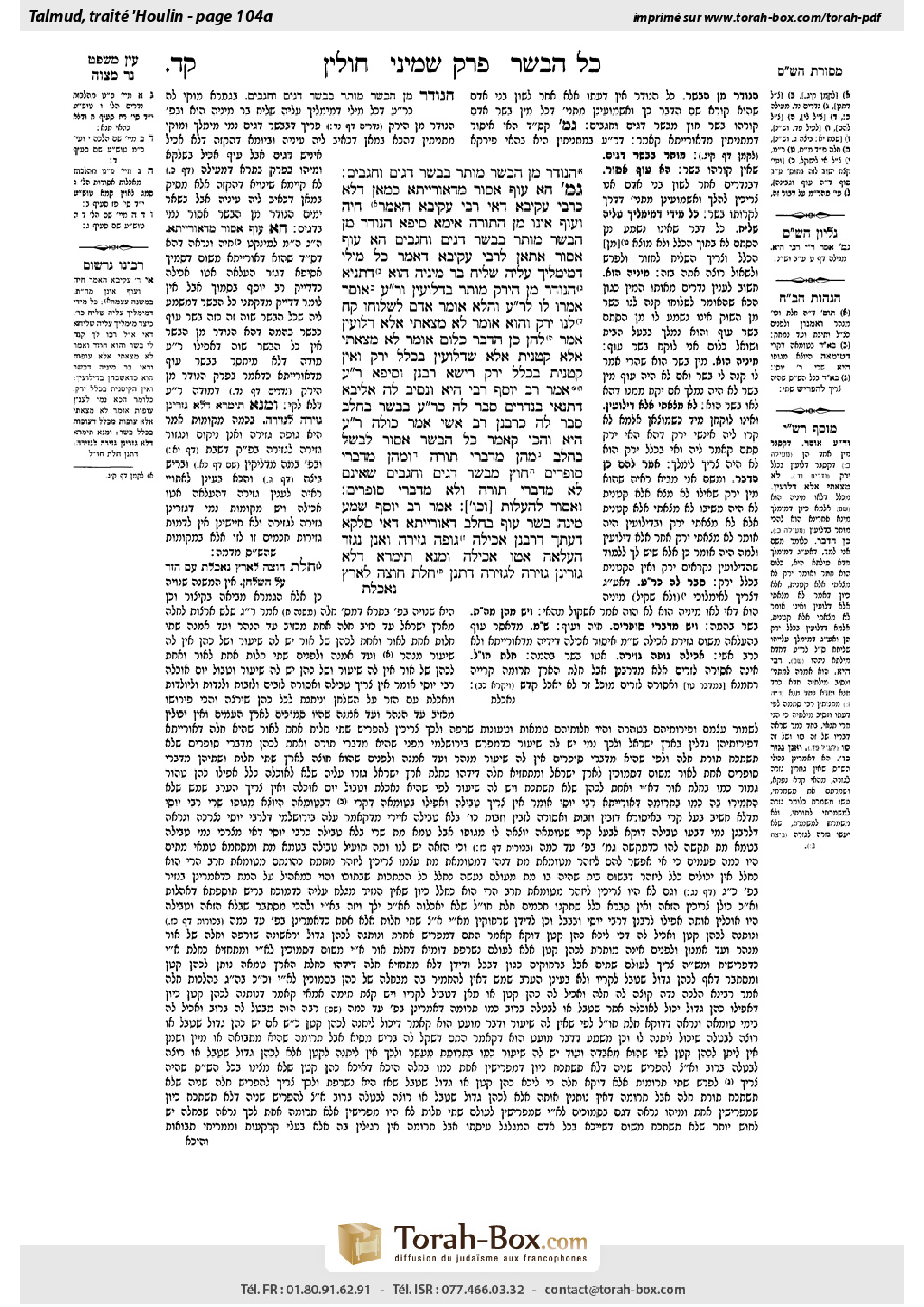
Chullin 104a: Talmud study for Daf Yomi
Study the Talmud for Daf Yomi with scanned pages, Hebrew text, English translations from Sefaria and AI-generated French translations.
Passage selection and English or AI-generated French translation are available where the scan has annotations. Daf Study is independent of Torah-Box and Sefaria.
Browse Chullin · חולין · All tractatesChullin 104a text and translations
This page of Chullin includes the Aramaic text, an English translation and an AI-generated French translation, alongside the scan above.
חולין ק״ד א · Aramaic and Hebrew text
הַנּוֹדֵר מִן הַבָּשָׂר מוּתָּר בִּבְשַׂר דָּגִים וַחֲגָבִים.
גְּמָ׳ הָא עוֹף אָסוּר מִדְּאוֹרָיְיתָא, כְּמַאן? דְּלָא כְּרַבִּי עֲקִיבָא, דְּאִי רַבִּי עֲקִיבָא – הָאָמַר: חַיָּה וָעוֹף אֵינוֹ מִן הַתּוֹרָה.
אֵימָא סֵיפָא: הַנּוֹדֵר מִן הַבָּשָׂר – מוּתָּר בִּבְשַׂר דָּגִים וַחֲגָבִים, הָא עוֹף אָסוּר, אֲתָאן לְרַבִּי עֲקִיבָא, דְּאָמַר: כֹּל מִילֵּי דְּמִימְּלִיךְ עֲלֵיהּ שָׁלִיחַ – בַּר מִינֵיהּ הוּא.
דְּתַנְיָא: הַנּוֹדֵר מִן הַיָּרָק, מוּתָּר בַּדִּלּוּעִין, וְרַבִּי עֲקִיבָא אוֹסֵר. אָמְרוּ לוֹ לְרַבִּי עֲקִיבָא: וַהֲלֹא אוֹמֵר אָדָם לִשְׁלוּחוֹ ״קַח לָנוּ יָרָק״, וְהוּא אוֹמֵר ״לֹא מָצָאתִי אֶלָּא דִּלּוּעִין״!
אָמַר לָהֶן: כֵּן הַדָּבָר, כְּלוּם אוֹמֵר ״לֹא מָצָאתִי אֶלָּא קִטְנִית״?! אֶלָּא שֶׁדִּלּוּעִין בִּכְלַל יָרָק, וְאֵין קִטְנִית בִּכְלַל יָרָק. רֵישָׁא רַבָּנַן, וְסֵיפָא רַבִּי עֲקִיבָא!
אָמַר רַב יוֹסֵף: רַבִּי הִיא, וְנָסֵיב לַהּ אַלִּיבָּא דְתַנָּאֵי, בִּנְדָרִים סָבַר לַהּ כְּרַבִּי עֲקִיבָא, בְּבָשָׂר בְּחָלָב סָבַר לַהּ כְּרַבָּנַן.
רַב אָשֵׁי אָמַר: כּוּלַּהּ רַבִּי עֲקִיבָא הִיא, וְהָכִי קָאָמַר: כׇּל הַבָּשָׂר אָסוּר לְבַשֵּׁל בְּחָלָב, מֵהֶן מִדִּבְרֵי תוֹרָה וּמֵהֶן מִדִּבְרֵי סוֹפְרִים, חוּץ מִבְּשַׂר דָּגִים וַחֲגָבִים, שֶׁאֵינָם לֹא מִדִּבְרֵי תוֹרָה וְלֹא מִדִּבְרֵי סוֹפְרִים.
וְאָסוּר לְהַעֲלוֹת [וְכוּ׳]. אָמַר רַב יוֹסֵף: שְׁמַע מִינַּהּ בְּשַׂר עוֹף בְּחָלָב דְּאוֹרָיְיתָא, דְּאִי סָלְקָא דַעְתָּךְ דְּרַבָּנַן – אֲכִילָה גּוּפַהּ גְּזֵירָה, וַאֲנַן נִגְזַר הַעֲלָאָה אַטּוּ אֲכִילָה?
וּמְנָא תֵּימְרָא דְּלָא גָּזְרִינַן גְּזֵירָה לִגְזֵירָה? דִּתְנַן: חַלַּת חוּצָה לָאָרֶץ
Chullin 104a · English translation
And one who takes a vow that meat is prohibited to him is permitted to eat the meat of fish and grasshoppers.
GEMARA: Since the mishna does not distinguish between the meat of animals and that of birds, it may consequently be inferred that the meat of birds cooked in milk is prohibited by Torah law, just like the meat of animals. In accordance with whose opinion is this ruling? It is not in accordance with the opinion of Rabbi Akiva, as, if you say it is in accordance with the opinion of Rabbi Akiva, didn’t he say that the prohibition of the meat of undomesticated animals and birds cooked in milk is not by Torah law?
The Gemara continues: But say the latter clause of the mishna: One who takes a vow that meat is forbidden to him is permitted to eat the meat of fish and grasshoppers. It may consequently be inferred that it is prohibited for him to eat birds. If so, here we arrive at the opinion of Rabbi Akiva, who said: Anything about which an agent sent to purchase a given item would inquire, being unsure whether it qualifies as that type of item, is considered its type.
As it is taught in a mishna (Nedarim 54a): One who takes a vow that vegetables are forbidden to him is permitted to eat gourds, as people do not typically consider gourds a type of vegetable, but Rabbi Akiva deems it prohibited for him to eat gourds. The Rabbis said to Rabbi Akiva: But it is a common occurrence that a person says to his agent: Purchase vegetables for us, and the agent, after failing to find vegetables, returns and says: I found only gourds. This indicates that gourds are not considered vegetables.
Rabbi Akiva said to them: The matter is so, and that proves that my opinion is correct. Does the agent return and say: I found only legumes? Rather, it is evident that gourds are included in the category of vegetables, although they differ from other vegetables, and therefore, the agent explains that he found only gourds, and asks whether he should purchase them. But legumes are not included in the category of vegetables, and that is why an agent would not even ask about them. Therefore, Rabbi Akiva should also hold that one who takes a vow that meat is forbidden to him is prohibited from eating birds. And if so, the first clause of the mishna is in accordance with the opinion of the Rabbis, who disagree with Rabbi Akiva, and the latter clause is in accordance with the opinion of Rabbi Akiva.
Rav Yosef said: That is not difficult. The entire mishna is in accordance with the opinion of Rabbi Yehuda HaNasi, and he formulates the mishna according to the opinions of different tanna’im. In the latter clause, with regard to vows, he holds in accordance with the opinion of Rabbi Akiva, whereas in the first clause, with regard to meat cooked in milk, he holds in accordance with the opinion of the Rabbis.
Rav Ashi said a different explanation: The entire mishna is in accordance with the opinion of Rabbi Akiva, as indicated by the latter clause, concerning vows. And as for the first part of the mishna, this is what it is saying: It is prohibited to cook any meat in milk, some types of meat by Torah law, i.e., that of domesticated animals, and some types of meat by rabbinic law, i.e., that of undomesticated animals and birds. This prohibition applies to all types of meat except for the meat of fish and grasshoppers, which are not prohibited, neither by Torah law nor by rabbinic law.
§ The mishna teaches further: And it is prohibited to place any meat with cheese on one table. Rav Yosef said: Conclude from this clause that eating the meat of birds cooked in milk is prohibited by Torah law. As, if it enters your mind that the prohibition against eating it applies merely by rabbinic law, this would be because the consumption of the meat of birds cooked in milk is itself a rabbinic decree, lest one come to eat the meat of an animal in milk. And would we decree against placing birds together with cheese on one table due to the possibility of consumption, which is itself a decree? The Sages do not enact one decree to prevent the violation of another decree.
The Gemara asks: And from where do you say that we do not issue one rabbinic decree to prevent violation of another rabbinic decree? The source is as we learned in a mishna (Ḥalla 4:8): Ḥalla from outside of Eretz Yisrael, which must be eaten by a priest,
Chullin 104a · Traduction française (IA)
Et celui qui prend un serment interdisant la viande à lui-même est autorisé à manger la viande des poissons et des sauterelles.
GUEMARA : Puisque la mitsva ne distingue pas entre la viande des animaux et celle des oiseaux, on peut en déduire que la viande des oiseaux cuite avec du lait est interdite par la Loi divine, tout comme la viande des animaux. Selon quel avis est-ce que cette décision est formulée ? Ce n'est pas selon l'avis de Rabbi Akiva, car, si vous dites qu'il s'agit de l'avis de Rabbi Akiva, n'a-t-il pas dit que l'interdiction de la viande des animaux sauvages et des oiseaux cuite avec du lait n'est pas divine ?
La Guemara continue : Mais disons la seconde partie de la mitsva : Celui qui prend un serment interdisant la viande à lui-même est autorisé à manger la viande des poissons et des sauterelles. On peut en déduire que cela lui est interdit de manger des oiseaux. Si c'est ainsi, nous arrivons à l'avis de Rabbi Akiva, qui disait : Tout ce dont un agent envoyé pour acheter un objet donné demandera, étant incertain s'il s'agit de ce type d'objet, est considéré comme de ce type.
Comme il est enseigné dans une mitsna (Nedarim 54a) : Celui qui prend un serment interdisant les légumes à lui-même est autorisé à manger les courges, car les gens ne considèrent généralement pas les courges comme un type de légume, mais Rabbi Akiva considère qu'il est interdit à lui de manger les courges. Les Sages dirent à Rabbi Akiva : Mais c'est une chose courante qu'une personne dise à son agent : Achète-nous des légumes, et l'agent, après avoir échoué à trouver des légumes, revient et dit : J'ai trouvé seulement des courges. Cela montre que les courges ne sont pas considérées comme des légumes.
Rabbi Akiva dit à eux : La chose est ainsi, et cela prouve que mon avis est correct. Est-ce que l'agent revient et dit : J'ai trouvé seulement des légumineuses ? Plutôt, il est évident que les courges sont incluses dans la catégorie des légumes, bien qu'elles diffèrent des autres légumes, et c'est pourquoi l'agent explique qu'il a trouvé seulement des courges, et demande s'il devrait les acheter. Mais les légumineuses ne sont pas incluses dans la catégorie des légumes, et c'est pourquoi un agent ne demanderait même pas à les acheter. Par conséquent, Rabbi Akiva devrait aussi considérer que celui qui prend un serment interdisant la viande à lui-même est interdit de manger des oiseaux. Et si c'est ainsi, la première partie de la mitsna est selon l'avis des Sages, qui s'opposent à Rabbi Akiva, et la seconde partie est selon l'avis de Rabbi Akiva.
Rav Yosef dit : Ce n'est pas difficile. L'ensemble de la mitsna est selon l'avis de Rabbi Yehuda HaNasi, et il formule la mitsna selon les avis des différents tannaïm. Dans la seconde partie, concernant les serments, il adopte l'avis de Rabbi Akiva, tandis que dans la première partie, concernant la viande cuite avec du lait, il adopte l'avis des Sages.
Rav Ashi dit une autre explication : L'ensemble de la mitsna est selon l'avis de Rabbi Akiva, comme indiqué par la dernière partie, concernant les vœux. Et concernant la première partie de la mitsna, cela signifie : Il est interdit de cuire toute viande avec du lait, certaines viandes par Loi divine, c'est-à-dire celle des animaux domestiques, et d'autres viandes par Loi rabbinique, c'est-à-dire celle des animaux sauvages et des oiseaux. Cette interdiction s'applique à toutes les viandes sauf celle des poissons et des sauterelles, qui ne sont pas interdites, ni par Loi divine ni par Loi rabbinique.
§ La mitsna enseigne de plus : Et il est interdit de placer toute viande avec du fromage sur une même table. Rav Yosef dit : Concluez de cette clause que manger la viande des oiseaux cuite avec du lait est interdit par Loi divine. Car, si vous pensez que l'interdiction de la consommation s'applique uniquement par Loi rabbinique, cela serait parce que la consommation de la viande des oiseaux cuite avec du lait est elle-même une déclaration rabbinique, afin de ne pas manger la viande d'un animal avec du lait. Et serait-on enclin à décréter de ne pas placer les oiseaux avec du fromage sur une même table en raison de la possibilité de consommation, qui est elle-même une déclaration ? Les Sages ne décrètent pas une déclaration rabbinique pour empêcher la violation d'une autre déclaration rabbinique.
La Guemara pose la question : Et d'où dis-tu que nous ne décrétons pas une déclaration rabbinique pour empêcher la violation d'une autre déclaration rabbinique ? La source est comme nous l'avons appris dans une mitsna (Ḥalla 4:8) : La ḥalla provenant en dehors de la Terre d'Israël, qui doit être mangée par un prêtre,
Traduction française générée par IA à partir de l’édition anglaise de Sefaria. Vérifie toujours un passage avec le texte source.
Text from Sefaria: William Davidson Edition - Vocalized Aramaic (unknown); William Davidson Edition - English (CC BY NC).