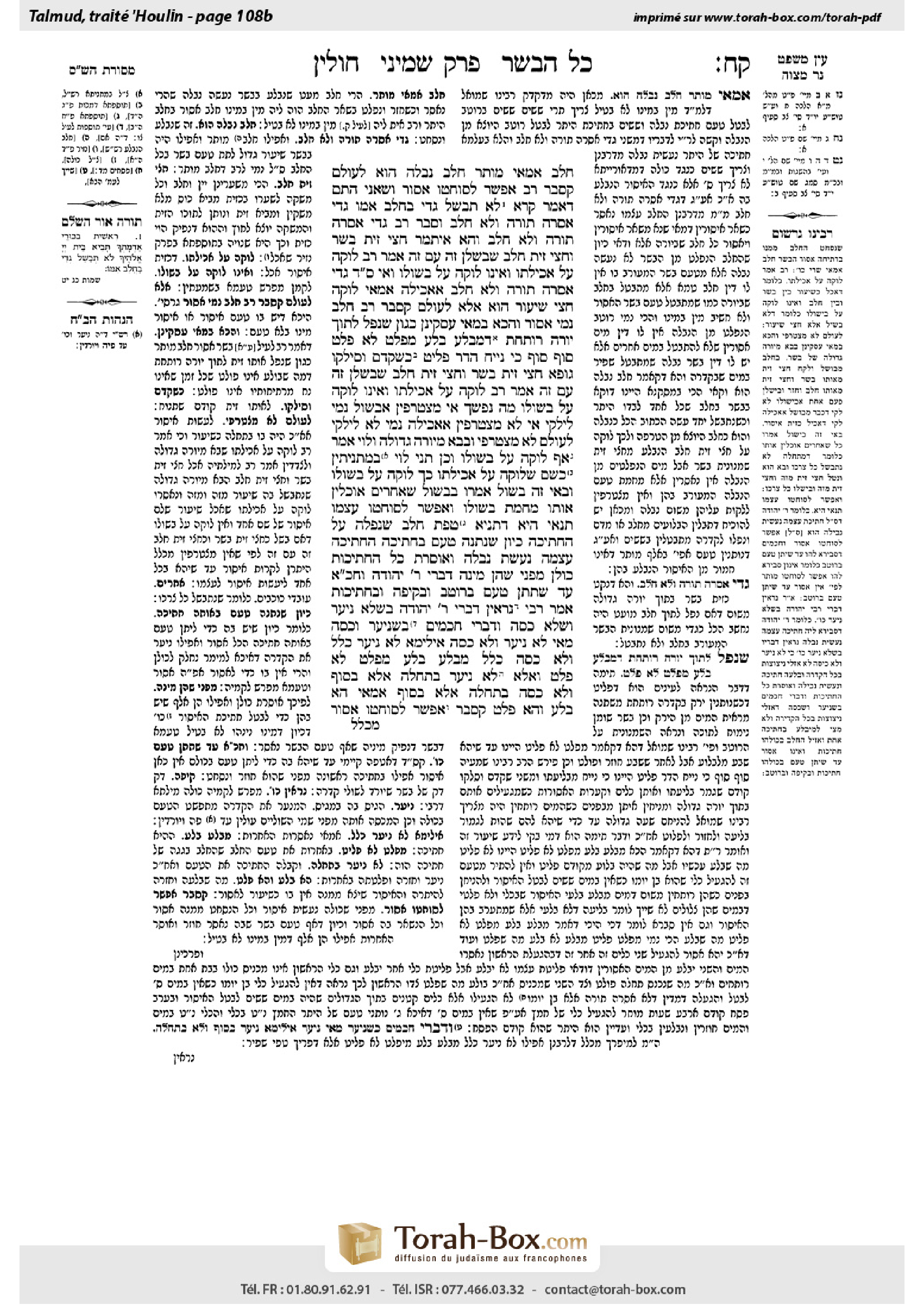
Chullin 108b: Talmud study for Daf Yomi
Study the Talmud for Daf Yomi with scanned pages, Hebrew text, English translations from Sefaria and AI-generated French translations.
Passage selection and English or AI-generated French translation are available where the scan has annotations. Daf Study is independent of Torah-Box and Sefaria.
Browse Chullin · חולין · All tractatesChullin 108b text and translations
This page of Chullin includes the Aramaic text, an English translation and an AI-generated French translation, alongside the scan above.
חולין ק״ח ב · Aramaic and Hebrew text
חָלָב אַמַּאי מוּתָּר? חָלָב נְבֵלָה הוּא!
לְעוֹלָם קָסָבַר רַב אֶפְשָׁר לְסוֹחֳטוֹ אָסוּר, וְשָׁאנֵי הָתָם דְּאָמַר קְרָא ״לֹא תְבַשֵּׁל גְּדִי בַּחֲלֵב אִמּוֹ״ – גְּדִי אָסְרָה תּוֹרָה, וְלֹא חָלָב.
וְסָבַר רַב גְּדִי אָסְרָה תּוֹרָה וְלֹא חָלָב? וְהָא אִיתְּמַר: חֲצִי זַיִת בָּשָׂר וַחֲצִי זַיִת חָלָב שֶׁבִּשְּׁלָן זֶה עִם זֶה, אָמַר רַב: לוֹקֶה עַל אֲכִילָתוֹ, וְאֵינוֹ לוֹקֶה עַל בִּשּׁוּלוֹ. וְאִי סָלְקָא דַעְתָּךְ גְּדִי אָסְרָה תּוֹרָה וְלֹא חָלָב, אַאֲכִילָה אַמַּאי לוֹקֶה? חֲצִי שִׁיעוּר הוּא!
אֶלָּא, לְעוֹלָם קָסָבַר רַב חָלָב נָמֵי אָסוּר, וְהָכָא בְּמַאי עָסְקִינַן? כְּגוֹן שֶׁנָּפַל לְתוֹךְ יוֹרָה רוֹתַחַת, דְּמִבְלָע בָּלַע, מִפְלָט לָא פָּלֵט.
סוֹף סוֹף כִּי נָיַיח, הֲדַר פָּלֵיט! כְּשֶׁקָּדַם וְסִילְּקוֹ.
גּוּפָא: חֲצִי זַיִת בָּשָׂר וַחֲצִי זַיִת חָלָב שֶׁבִּשְּׁלָן זֶה עִם זֶה, אָמַר רַב: לוֹקֶה עַל אֲכִילָתוֹ, וְאֵינוֹ לוֹקֶה עַל בִּשּׁוּלוֹ. מָה נַפְשָׁךְ? אִי מִצְטָרְפִין – אַבִּשּׁוּל נָמֵי לִילְקֵי, אִי לֹא מִצְטָרְפִין – אַאֲכִילָה נָמֵי לָא לִילְקֵי.
לְעוֹלָם לָא מִצְטָרְפִי, וּבְבָא מִיּוֹרָה גְּדוֹלָה.
וְלֵוִי אָמַר: אַף לוֹקֶה עַל בִּשּׁוּלוֹ, וְכֵן תָּנֵי לֵוִי בְּמַתְנִיתִין: כְּשֵׁם שֶׁלּוֹקֶה עַל אֲכִילָתוֹ כָּךְ לוֹקֶה עַל בִּשּׁוּלוֹ, וּבְאֵי זֶה בִּשּׁוּל אָמְרוּ? בְּבִשּׁוּל שֶׁאֲחֵרִים אוֹכְלִין אוֹתוֹ מֵחֲמַת בִּשּׁוּלוֹ.
וְאֶפְשָׁר לְסוֹחֳטוֹ עַצְמוֹ – תַּנָּאֵי הִיא, דְּתַנְיָא: טִפַּת חָלָב שֶׁנָּפְלָה עַל הַחֲתִיכָה, כֵּיוָן שֶׁנָּתְנָה טַעַם בַּחֲתִיכָה – הַחֲתִיכָה עַצְמָהּ נַעֲשֵׂת נְבֵלָה, וְאוֹסֶרֶת כׇּל הַחֲתִיכוֹת כּוּלָּן מִפְּנֵי שֶׁהֵן מִינָהּ, דִּבְרֵי רַבִּי יְהוּדָה.
וַחֲכָמִים אוֹמְרִים: עַד שֶׁתִּתֵּן טַעַם בָּרוֹטֶב וּבַקֵּיפֶה וּבַחֲתִיכוֹת.
אָמַר רַבִּי: נִרְאִין דִּבְרֵי רַבִּי יְהוּדָה בְּשֶׁלֹּא נִיעֵר וְשֶׁלֹּא כִּסָּה, וְדִבְרֵי חֲכָמִים בְּשֶׁנִּיעֵר וְכִסָּה.
מַאי ״לֹא נִיעֵר וְלֹא כִּסָּה״? אִילֵּימָא לֹא נִיעֵר כְּלָל, וְלֹא כִּסָּה כְּלָל – מִבְלָע בָּלַע, מִפְלָט לָא פָּלֵט.
וְאֶלָּא, לֹא נִיעֵר בַּתְּחִלָּה אֶלָּא בַּסּוֹף, וְלֹא כִּסָּה בַּתְּחִלָּה אֶלָּא בַּסּוֹף, אַמַּאי? הָא בָּלַע וְהָא פָּלֵט!
קָסָבַר אֶפְשָׁר לְסוֹחֳטוֹ אָסוּר.
Chullin 108b · English translation
why is the milk permitted? All the milk that the meat absorbed is rendered non-kosher milk in and of itself. When it seeps back out of the meat, it cannot be nullified by the rest of the milk, which is the same substance, as Rav holds in accordance with Rabbi Yehuda that a type of food mixed with food of its own type is not nullified. Therefore, the whole pot of milk should be prohibited.
The Gemara answers: Rav actually maintains that an item that can be wrung to remove the forbidden substance is prohibited, and there, the pot of milk mentioned above is different, as the verse states: “You shall not cook a kid in its mother’s milk” (Deuteronomy 14:21). The verse teaches that the Torah prohibits only the kid, i.e., the meat, that was cooked in milk, but not the milk that was cooked in meat. The milk is not itself rendered non-kosher.
The Gemara challenges: And does Rav really maintain that the Torah prohibits only the kid but not the milk cooked with it? But isn’t it stated: If half an olive-bulk of meat and half an olive-bulk of milk were cooked together, Rav says: One is flogged for consuming the combined olive-bulk, as he has eaten a whole olive-bulk of forbidden food. But he is not flogged for cooking the two half olive-bulks, as he did not cook items of the minimum size. And if it should enter your mind that Rav holds that the Torah prohibits only the kid but not the milk, why is this individual flogged for consuming only half an olive-bulk of meat? It is only half the prohibited measure.
Rather, Rav actually maintains that milk cooked in meat is also prohibited, and the reason Rav permits the pot of milk mentioned above is that here we are dealing with a case where the olive-bulk of meat fell into a boiling pot of milk. In such a case the meat absorbs milk, but it does not expel it, and therefore the prohibited milk does not mix with the rest.
The Gemara challenges: Ultimately, when the pot cools from boiling, the meat then expels the prohibited milk. The Gemara answers: It is referring to a case where he first removed the meat before the pot cooled.
The Gemara turns to the matter itself mentioned above: If half an olive-bulk of meat and half an olive-bulk of milk were cooked together, Rav says: One is flogged for consuming the mixture, but he is not flogged for cooking it. The Gemara objects: Whichever way you look at it, this ruling is problematic. If these two halves of olive-bulks combine to form the requisite measure, then let him be flogged for cooking them as well. And if they do not combine, then let him not be flogged for their consumption either.
The Gemara answers: Actually, half an olive-bulk of meat and half an olive-bulk of milk do not combine to form the requisite measure, and when Rav says that one is flogged for consuming them, he is referring to a case where they come from a large pot, in which a sizable amount of meat and cheese had been cooked. The mixture is now considered a single prohibited entity, such that half an olive-bulk of the cheese and the meat can combine to constitute the requisite measure to be held liable for consumption.
And Levi disagrees with Rav on this matter, and says: Half an olive-bulk of meat and half an olive-bulk of milk can combine to form the requisite measure, and therefore one is also flogged for cooking the mixture. And so Levi teaches in his collection of baraitot: Just as one is flogged for consuming it, so too he is flogged for cooking it. And for what degree of cooking did they say that one is liable to be flogged? It is for a degree of cooking that produces food that others, gentiles, would eat due to its cooking, i.e., cooking that renders it fit for consumption.
§ The Gemara returns to the issue previously discussed: And the case of an item that can be wrung to remove an absorbed prohibited substance is itself the subject of a dispute between tanna’im, as it is taught in a baraita: If a drop of milk fell onto a piece of meat, once it imparts flavor to the piece, the piece itself is rendered non-kosher in its own right. And it therefore renders all the other pieces of meat in the pot prohibited, even if they combine to more than sixty times its size; this is because they are of the same type, and a type of food mixed with food of its own type is not nullified. This is the statement of Rabbi Yehuda.
And the Rabbis say that even the original piece of meat is not prohibited unless there is enough milk to impart flavor even to the gravy and to the spices and to the other pieces of meat in the pot, since the milk is assumed to diffuse from the first piece until it is evenly distributed throughout the pot.
With regard to this dispute, Rabbi Yehuda HaNasi said: The statement of Rabbi Yehuda appears to be correct in a case where one did not stir the contents of the pot and where he did not cover it, both of which would promote the diffusion of the milk throughout the pot. And the statement of the Rabbis appears to be correct in a case where one stirred the contents of the pot and covered it.
The Gemara asks: What is the meaning of the clause: Where one did not stir the pot and did not cover it? If we say that he did not stir the contents of the pot at all and did not cover it at all, in this case the piece of meat onto which the milk fell absorbs the drop of milk but does not expel it. Therefore, even according to the opinion of Rabbi Yehuda there is no reason to prohibit the other pieces of meat.
And if you say rather that he did not not stir the contents of the pot at the beginning, immediately after the milk fell in, but stirred at the end, afterward, and likewise he did not cover the pot at the beginning but at the end, one must ask: Why are all the pieces in the pot prohibited? The same milk that the piece absorbs it subsequently expels, and once the milk diffuses throughout the pot it should be nullified.
The Gemara responds: Evidently, Rabbi Yehuda HaNasi maintains that an item that can be wrung remains prohibited. Once the first piece of meat absorbs the milk, it is considered non-kosher in its own right, and even after the milk itself is nullified, the flavor of the forbidden meat renders the rest of the pieces prohibited. The flavor of the meat cannot be nullified by the other meat in the pot, since a substance in contact with the same type of substance is not nullified, according to the opinion of Rabbi Yehuda.
Chullin 108b · Traduction française (IA)
Pourquoi le lait est-il permis ? Toute le lait que la viande a absorbé devient lui-même lait non-kosher. Lorsqu'il s'écoule à nouveau de la viande, il ne peut être annulé par le reste du lait, qui est de la même substance, selon la position de Rav, qui suit Rabbi Yehuda : un aliment mélangé à un aliment de même type n'est pas annulé. Ainsi, toute la casserole de lait devrait être interdite.
La Guemara répond : Rav maintient en réalité que tout ce qui peut être égoutté pour enlever la substance interdite est lui-même interdit. Et là, la casserole de lait mentionnée ci-dessus est différente, car la Parashia dit : « Tu ne cuisiras pas un petit veau dans le lait de sa mère » (Deutéronome 14:21). La Parashia enseigne que la Torah interdit uniquement le petit veau, c'est-à-dire la viande, cuite dans le lait, mais pas le lait lui-même cuit dans la viande. Le lait n'est pas lui-même rendu non-kosher.
La Guemara soulève un défi : Et Rav maintient-il vraiment que la Torah interdit uniquement le petit veau mais pas le lait cuisiné avec lui ? Mais n'est-il pas dit : Si un demi-olive de viande et un demi-olive de lait ont été cuits ensemble, Rav dit : On frappe celui qui a mangé la quantité totale d'olive, car il a mangé une quantité entière d'aliment interdit. Mais on ne frappe pas celui qui a cuisiné les deux demi-olives, car il n'a pas cuisiné des aliments de la taille minimale. Et si cela vous vient à l'esprit que Rav considère que la Torah interdit uniquement le petit veau mais pas le lait, pourquoi cet individu est-il frappé pour avoir mangé seulement un demi-olive de viande ? C'est seulement la moitié de la mesure interdite.
En réalité, Rav affirme que le lait cuisiné avec de la viande est également interdit, et la raison pour laquelle Rav permet la casserole de lait mentionnée ci-dessus est que dans ce cas, on a un demi-olive de viande tombant dans une casserole de lait bouillante. Dans ce cas, la viande absorbe le lait, mais ne le rejette pas, et donc le lait interdit ne se mélange pas avec le reste.
La Guemara soulève un défi : Finalement, lorsque la casserole se refroidit, la viande rejette alors le lait interdit. La Guemara répond : Il s'agit d'un cas où l'on a d'abord retiré la viande avant que la casserole ne se refroidisse.
La Guemara aborde le problème mentionné ci-dessus : Si un demi-olive de viande et un demi-olive de lait ont été cuits ensemble, Rav dit : On frappe celui qui a mangé la mixture, mais on ne frappe pas celui qui a cuisiné. La Guemara soulève un défi : Quel que soit le point de vue, cette décision est problématique. Si ces deux demi-olives se combinent pour former la mesure requise, alors on frappera celui qui a cuisiné. Et si elles ne se combinent pas, alors on ne frappera pas celui qui a mangé non plus.
La Guemara répond : En réalité, un demi-olive de viande et un demi-olive de lait ne se combinent pas pour former la mesure requise, et lorsque Rav dit que l'on frappe celui qui a mangé, il fait référence à un cas où ils proviennent d'une grande casserole, dans laquelle une quantité importante de viande et de fromage avait été cuite. La mixture est alors considérée comme un seul entité interdite, de sorte qu'un demi-olive de fromage et de viande peut se combiner pour constituer la mesure requise pour être tenu responsable de la consommation.
Et Levi s'oppose à Rav sur ce point, et dit : Un demi-olive de viande et un demi-olive de lait peuvent se combiner pour former la mesure requise, et donc l'on frappe également celui qui a cuisiné. Et ainsi Levi enseigne dans sa collection de baraitot : Tout comme l'on frappe pour la consommation, l'on frappe également pour la cuisson. Et à quel degré de cuisson dit-on qu'on est tenu de frapper ? C'est pour un degré de cuisson qui rend l'aliment propre à être mangé par les non-Juifs, c'est-à-dire une cuisson qui le rend comestible.
§ La Guemara revient sur le problème discuté précédemment : Et le cas d'un objet qui peut être égoutté pour enlever une substance interdite absorbée est lui-même sujet à un débat entre les tannaïm, comme il est enseigné dans une baraïta : Si une goutte de lait est tombée sur un morceau de viande, une fois qu'elle imprime un goût au morceau, le morceau lui-même devient non-kosher. Et donc il rend tous les autres morceaux de viande de la casserole interdits, même s'ils sont plus de soixante fois plus grands ; c'est parce qu'ils sont du même type, et un aliment mélangé à un aliment de même type n'est pas annulé. C'est la déclaration de Rabbi Yehuda.
Et les Rabbins disent que même le morceau de viande original n'est pas interdit à moins qu'il y ait suffisamment de lait pour imprimer un goût même à la sauce et aux épices et aux autres morceaux de viande de la casserole, car le lait est supposé se diffuser du premier morceau jusqu'à être uniformément réparti dans la casserole.
Concernant ce débat, Rabbi Yehuda HaNasi dit : La déclaration de Rabbi Yehuda semble correcte dans un cas où l'on n'a pas remué les contenants de la casserole et où l'on n'a pas couvert la casserole, les deux actions qui favorisent la diffusion du lait dans la casserole. Et la déclaration des Rabbins semble correcte dans un cas où l'on a remué les contenants de la casserole et couvert la casserole.
La Guemara pose une question : Quelle est la signification de la clause : où l'on n'a pas remué la casserole et n'a pas couvert ? Si on dit qu'il n'a pas remué les contenants de la casserole du tout et n'a pas couvert la casserole du tout, dans ce cas, le morceau de viande sur lequel le lait est tombé absorbe la goutte de lait mais ne la rejette pas. Ainsi, même selon l'opinion de Rabbi Yehuda, il n'y a pas de raison d'interdire les autres morceaux de viande.
Et si vous dites plutôt qu'il n'a pas remué le contenu de la casserole au début, immédiatement après que le lait est tombé dedans, mais a remué à la fin, après, et de même il n'a pas couvert la casserole au début mais à la fin, on doit poser la question : pourquoi tous les morceaux de la casserole sont-ils interdits ? La même lait que le morceau absorbe ensuite est expulsé, et une fois que le lait s'est diffusé dans la casserole, il devrait être annulé.
La Guemara répond : Évidemment, Rabbi Yéhuda HaNasi maintient qu’un objet qui peut être écrasé reste interdit. Une fois que la première pièce de viande absorbe le lait, elle est considérée comme non-kosher en soi, et même après que le lait lui-même ait été annulé, le goût de la viande interdite rend les autres pièces interdites. Le goût de la viande ne peut être annulé par l’autre viande dans la marmite, car un élément en contact avec un élément de même type n’est pas annulé, selon l’opinion de Rabbi Yéhuda.
Traduction française générée par IA à partir de l’édition anglaise de Sefaria. Vérifie toujours un passage avec le texte source.
Text from Sefaria: William Davidson Edition - Vocalized Aramaic (unknown); William Davidson Edition - English (CC BY NC).