Chullin 12b: Talmud study for Daf Yomi
Study the Talmud for Daf Yomi with scanned pages, Hebrew text, English translations from Sefaria and AI-generated French translations.
Passage selection and English or AI-generated French translation are available where the scan has annotations. Daf Study is independent of Torah-Box and Sefaria.
Browse Chullin · חולין · All tractatesChullin 12b text and translations
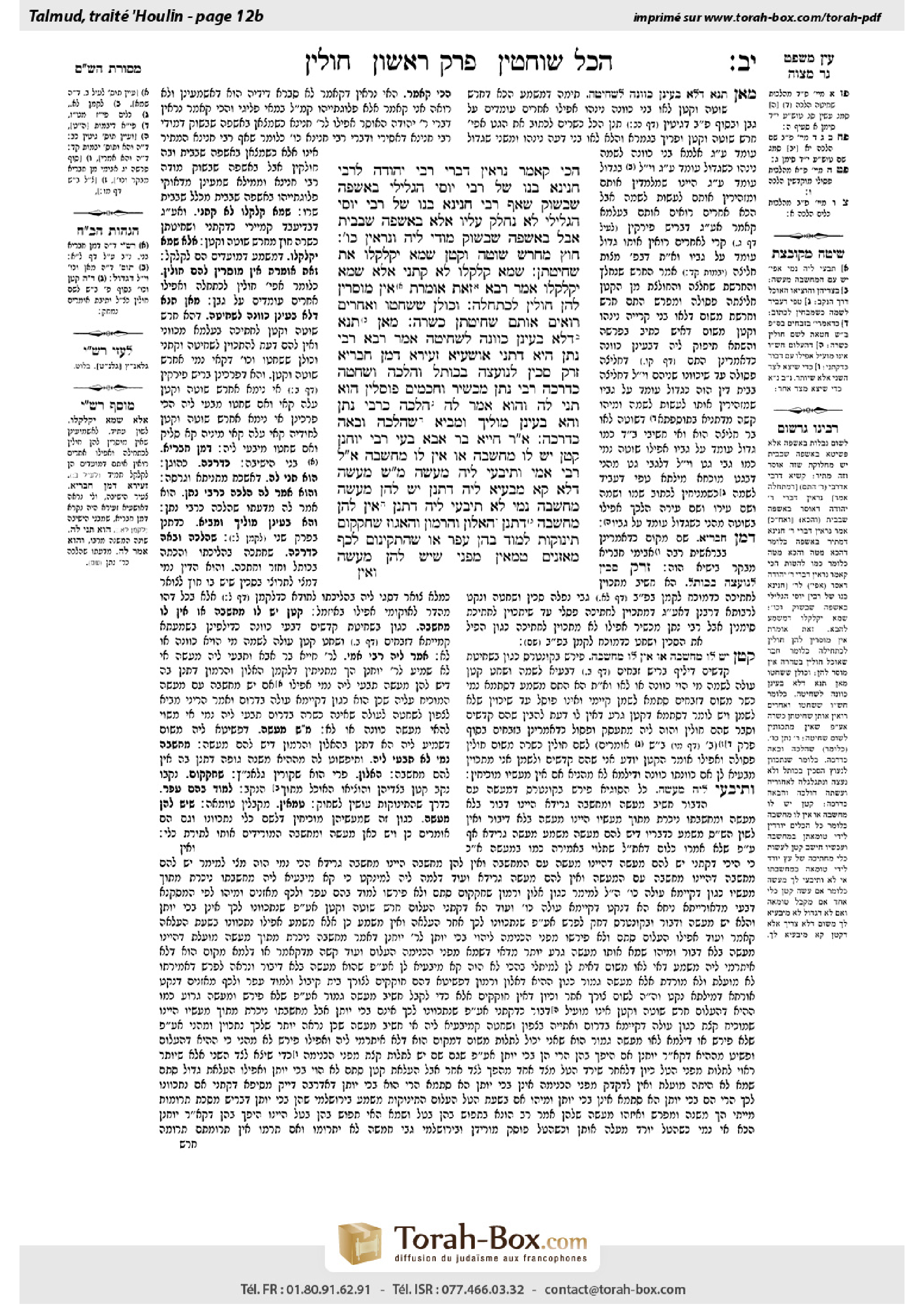
This page of Chullin includes the Aramaic text, an English translation and an AI-generated French translation, alongside the scan above.
חולין י״ב ב · Aramaic and Hebrew text
הָכִי קָאָמַר: נִרְאִין דִּבְרֵי רַבִּי יְהוּדָה לְרַבִּי חֲנִינָא בְּנוֹ שֶׁל רַבִּי יוֹסֵי הַגְּלִילִי בְּאַשְׁפָּה שֶׁבַּשּׁוּק, שֶׁאַף רַבִּי חֲנִינָא בְּנוֹ שֶׁל רַבִּי יוֹסֵי הַגְּלִילִי לֹא נֶחְלַק עָלָיו אֶלָּא בְּאַשְׁפָּה שֶׁבַּבַּיִת, אֲבָל בְּאַשְׁפָּה שֶׁבַּשּׁוּק מוֹדֵי לֵיהּ, וְנִרְאִין כּוּ׳.
חוּץ מֵחֵרֵשׁ שׁוֹטֶה וְקָטָן, שֶׁמָּא יְקַלְקְלוּ אֶת שְׁחִיטָתָן. ״שֶׁמָּא קִלְקְלוּ״ לָא קָתָנֵי, אֶלָּא ״שֶׁמָּא יְקַלְקְלוּ״. אָמַר רָבָא: זֹאת אוֹמֶרֶת אֵין מוֹסְרִין לָהֶן חוּלִּין לְכַתְּחִלָּה.
וְכוּלָּן שֶׁשָּׁחֲטוּ וַאֲחֵרִים רוֹאִים אוֹתָם, שְׁחִיטָתָן כְּשֵׁרָה. מַאן תְּנָא דְּלָא בָּעֵינַן כַּוָּונָה לִשְׁחִיטָה?
אָמַר רָבָא: רַבִּי נָתָן הִיא, דְּתָנֵי אוֹשַׁעְיָא זְעֵירָא דְּמִן חַבְרַיָּא: זָרַק סַכִּין לְנוֹעֳצָהּ בַּכּוֹתֶל, וְהָלְכָה וְשָׁחֲטָה כְּדַרְכָּהּ – רַבִּי נָתָן מַכְשִׁיר, וַחֲכָמִים פּוֹסְלִין. הוּא תָּנֵי לַהּ, וְהוּא אָמַר לַהּ: הֲלָכָה כְּרַבִּי נָתָן.
וְהָא בָּעֵינַן מוֹלִיךְ וּמֵבִיא? שֶׁהָלְכָה וּבָאָה כְּדַרְכָּהּ.
אָמַר רַבִּי חִיָּיא בַּר אַבָּא, בָּעֵי רַבִּי יוֹחָנָן: קָטָן יֵשׁ לוֹ מַחְשָׁבָה, אוֹ אֵין לוֹ מַחְשָׁבָה?
אֲמַר לֵיהּ רַבִּי אַמֵּי: וְתִיבְּעֵי לֵיהּ מַעֲשֶׂה? מַאי שְׁנָא מַעֲשֶׂה דְּלָא קָא מִבַּעְיָא לֵיהּ – דִּתְנַן: ״יֵשׁ לָהֶן מַעֲשֶׂה״? מַחְשָׁבָה נָמֵי לָא תִּיבְּעֵי לֵיהּ, דִּתְנַן: ״אֵין לָהֶן מַחְשָׁבָה״!
דִּתְנַן: הָאַלּוֹן, וְהָרִמּוֹן, וְהָאֱגוֹז שֶׁחֲקָקוּם תִּינוֹקוֹת לָמוֹד בָּהֶן עָפָר, אוֹ שֶׁהִתְקִינוּם לְכַף מֹאזְנַיִם – טְמֵאִין, מִפְּנֵי שֶׁיֵּשׁ לָהֶן מַעֲשֶׂה,
Chullin 12b · English translation
The Gemara explains: This is what Rabbi Yehuda HaNasi is saying: The statement of Rabbi Yehuda appears correct to Rabbi Ḥanina, son of Rabbi Yosei HaGelili, in a case where one found them in a scrap heap that is in a marketplace, as Rabbi Ḥanina, son of Rabbi Yosei HaGelili, disagrees with Rabbi Yehuda only in a case where one found them in a scrap heap that is in the house. But in a case where he found them in a scrap heap that is in a marketplace he concedes to Rabbi Yehuda. And the statement of Rabbi Ḥanina, son of Rabbi Yosei HaGelili, appears correct to Rabbi Yehuda in a case where he found them in the house, as he concedes to Rabbi Ḥanina in that case.
§ The mishna stated: Everyone slaughters an animal, i.e., can perform halakhically valid slaughter, and their slaughter is valid, except for a deaf-mute, an imbecile, and a minor, lest they ruin their slaughter. The Gemara infers: The tanna does not teach: Due to the concern that they ruined their slaughter, in the past tense; rather, he teaches: Lest they ruin their slaughter, in the future. Rava says: That is to say that one does not give them non-sacred animals for slaughter ab initio, even with the supervision of others.
The mishna continues: And for all of them, when they slaughtered an animal and others see and supervise them, their slaughter is valid, including even a deaf-mute, an imbecile, and a minor, who lack competence and whose intent is not halakhically effective. The Gemara asks: Who is the tanna who taught that we do not require intent for slaughter?
Rava said: It is Rabbi Natan, as Oshaya, the youngest of the company of Sages, taught a baraita, stating: If one threw a knife to embed it in the wall, and in the course of its flight the knife went and slaughtered an animal in its proper manner, Rabbi Natan deems the slaughter valid, and the Rabbis deem the slaughter not valid. Oshaya teaches the baraita and he states about it: The halakha is in accordance with the opinion of Rabbi Natan that there is no need for intent to perform a valid act of slaughter.
The Gemara asks: How could the slaughter in the baraita be valid? But don’t we require that the slaughterer move the knife back and forth on the throat of the animal? When one throws a knife, it goes in one direction and does not return. The Gemara answers: The case in the baraita is one where the knife went and cut the animal’s throat, caromed off the wall and came back to cut the throat again in its proper manner.
§ Rabbi Ḥiyya bar Abba says that Rabbi Yoḥanan raises a dilemma: In matters that require thought and intent, does a minor have halakhically effective thought, or does he not have halakhically effective thought?
Rabbi Ami said to Rabbi Ḥiyya bar Abba: And let Rabbi Yoḥanan raise this dilemma with regard to the action of a minor, whether the action of a minor that indicates intent is effective. What is different about the action of a minor that Rabbi Yoḥanan does not raise a dilemma? Is it due to the fact that we learned in a mishna (Kelim 17:15): A deaf-mute, an imbecile, and a minor have the capacity to perform an action that is halakhically effective? With regard to thought as well let him not raise this dilemma, as we learned in the same mishna: They do not have the capacity for halakhically effective thought.
As we learned in that mishna: With regard to an acorn, a pomegranate, or a nut, which minors hollowed in order to measure dirt with them or that they affixed to a scale, the halakhic status of those shells is that of vessels, and they are susceptible to ritual impurity. By contrast, if the minors merely thought to use the shells for measuring or weighing, unlike adults, they do not thereby render those shells into vessels. The reason for this distinction is due to the fact that they have the capacity to perform an action,
Chullin 12b · Traduction française (IA)
La Guemara explique : C’est ce que dit Rabbi Yéhuda haNasi : L’affirmation de Rabbi Yéhuda est correcte selon Rabbi Ḥanina, fils de Rabbi Yosei haGelili, dans un cas où l’on a trouvé des ossements dans un tas de détritus qui est dans un marché, car Rabbi Ḥanina, fils de Rabbi Yosei haGelili, est en désaccord avec Rabbi Yéhuda uniquement dans un cas où l’on a trouvé des ossements dans un tas de détritus qui est dans la maison. Mais dans un cas où l’on a trouvé des ossements dans un tas de détritus qui est dans un marché, il reconnaît la validité de l’affirmation de Rabbi Yéhuda. Et l’affirmation de Rabbi Ḥanina, fils de Rabbi Yosei haGelili, est correcte selon Rabbi Yéhuda dans un cas où l’on a trouvé des ossements dans la maison, car il reconnaît la validité de l’affirmation de Rabbi Ḥanina dans ce cas-ci.
§ La mitsva a déclaré : Tout le monde peut effectuer une immolation, c’est-à-dire peut effectuer une immolation halakhiquement valide, et leur immolation est valide, sauf pour un sourd-muet, un imbécile et un mineur, de peur qu’ils dégradent leur immolation. La Guemara déduit : Le tanna ne dit pas : En raison de la crainte qu’ils aient dégradé leur immolation, au passé ; plutôt, il dit : De peur qu’ils dégradent leur immolation, à l’avenir. Rava dit : Cela signifie que l’on ne donne pas à ces personnes d’animaux non sacrés pour l’immolation dès le début, même sous la surveillance d’autrui.
La mitsva continue : Et pour tous ceux-ci, lorsqu’ils ont immolé un animal et que d’autres les ont vus et surveillé, leur immolation est valide, y compris même pour un sourd-muet, un imbécile et un mineur, qui manquent de compétence et dont l’intention n’est pas halakhiquement efficace. La Guemara pose la question : De quel tanna provient l’affirmation que nous n’exigeons pas d’intention pour l’immolation ?
Rava dit : C’est Rabbi Natan, car Oshaya, le plus jeune des compagnons des Sages, a enseigné une baraïta, déclarant : Si l’on jette un couteau pour le fixer au mur, et pendant son vol, le couteau va et immole un animal de manière appropriée, Rabbi Natan considère l’immolation comme valide, et les Rabbins la considèrent comme non valide. Oshaya enseigne cette baraïta et il déclare à propos d’elle : La halakha suit l’opinion de Rabbi Natan, selon laquelle il n’est pas nécessaire d’avoir une intention pour effectuer une action valide d’immolation.
La Guemara pose la question : Comment l’immolation dans la baraïta peut-elle être valide ? Mais ne nous exige-t-on pas que l’immolateur fasse aller le couteau de haut en bas sur la gorge de l’animal ? Lorsqu’on jette un couteau, il va dans une direction et ne revient pas. La Guemara répond : Le cas dans la baraïta est celui où le couteau est allé et a coupé la gorge de l’animal, rebondi sur le mur et est revenu pour couper à nouveau la gorge de manière appropriée.
§ Rabbi Ḥiyya bar Abba dit que Rabbi Yoḥanan pose un dilemme : Dans les affaires qui nécessitent de la réflexion et de l’intention, un mineur a-t-il une réflexion halakhiquement efficace, ou n’a-t-il pas une réflexion halakhiquement efficace ?
Rabbi Ami a dit à Rabbi Ḥiyya bar Abba : Et laissez Rabbi Yoḥanan poser ce dilemme concernant l’action d’un mineur, si l’action d’un mineur qui exprime l’intention est efficace. Qu’est-ce qui diffère dans l’action d’un mineur qui empêche Rabbi Yoḥanan de poser ce dilemme ? Est-ce en raison du fait que nous avons appris dans une mitsva (Kelim 17:15) : Un sourd-muet, un imbécile et un mineur ont la capacité d’effectuer une action halakhiquement efficace ? Concernant la pensée également, ne le laissez pas poser ce dilemme, car nous avons appris dans la même mitsva : Ils n’ont pas la capacité de pensée halakhiquement efficace.
Comme nous avons appris dans cette mitsva : Concernant un noyer, une pomele ou un noix, que les mineurs ont creusés afin de mesurer la terre avec eux ou qu’ils ont fixés à une balance, le statut halakhique de ces coques est celui de récipients, et ils sont sujets à la souillure rituelle. En revanche, si les mineurs ont simplement pensé utiliser les coques pour mesurer ou peser, contrairement aux adultes, ils ne rendent pas ces coques en récipients. La raison de cette distinction est en raison du fait qu’ils ont la capacité d’effectuer une action,
Traduction française générée par IA à partir de l’édition anglaise de Sefaria. Vérifie toujours un passage avec le texte source.
Text from Sefaria: William Davidson Edition - Vocalized Aramaic (unknown); William Davidson Edition - English (CC BY NC).