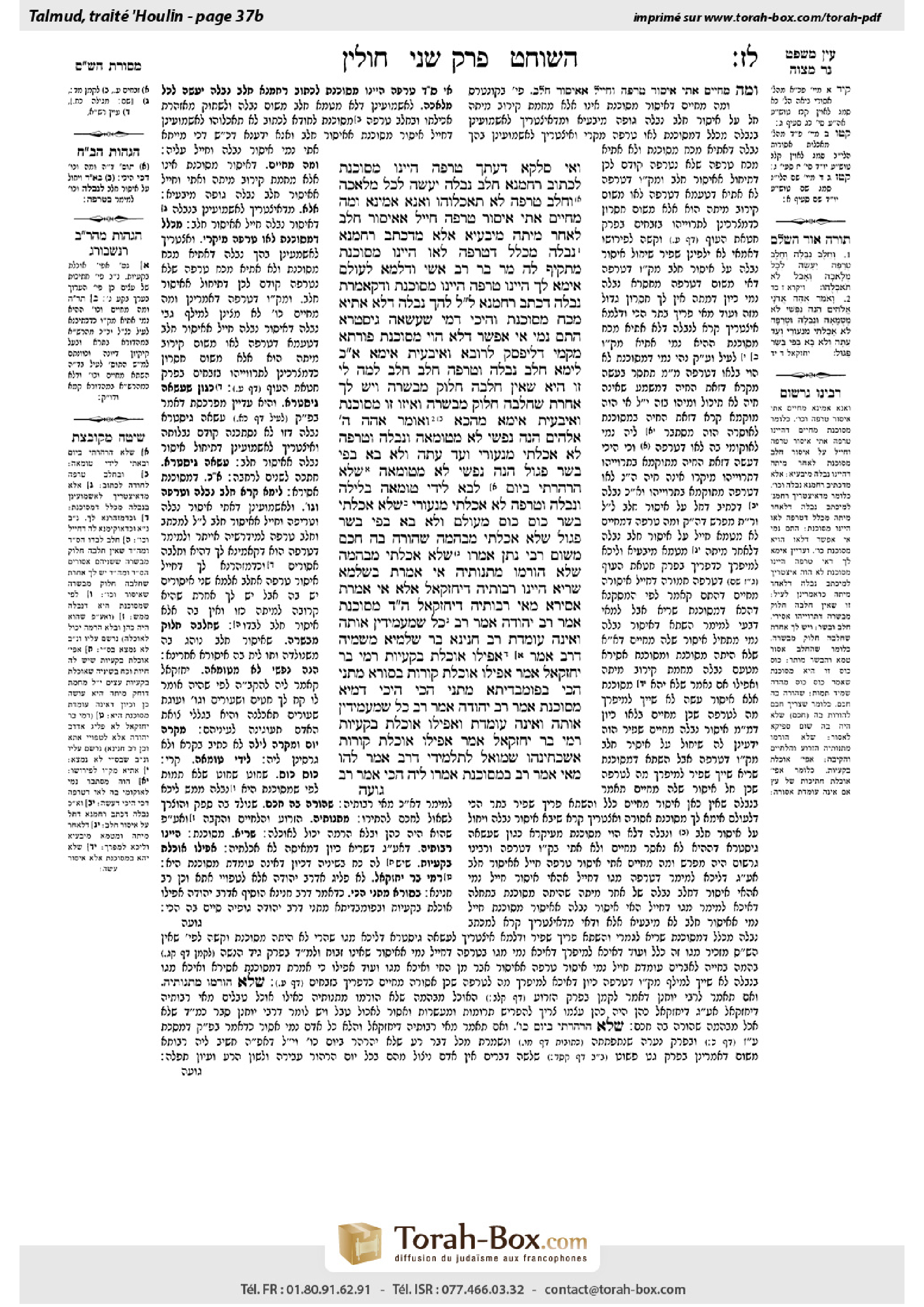
Chullin 37b: Talmud study for Daf Yomi
Study the Talmud for Daf Yomi with scanned pages, Hebrew text, English translations from Sefaria and AI-generated French translations.
Passage selection and English or AI-generated French translation are available where the scan has annotations. Daf Study is independent of Torah-Box and Sefaria.
Browse Chullin · חולין · All tractatesChullin 37b text and translations
This page of Chullin includes the Aramaic text, an English translation and an AI-generated French translation, alongside the scan above.
חולין ל״ז ב · Aramaic and Hebrew text
וְאִי סָלְקָא דַעְתָּךְ טְרֵפָה הַיְינוּ מְסוּכֶּנֶת, לִכְתּוֹב רַחֲמָנָא ״חֵלֶב נְבֵלָה יֵעָשֶׂה לְכׇל מְלָאכָה וְחֵלֶב טְרֵפָה לֹא תֹאכְלוּהוּ״, וַאֲנָא אָמֵינָא: וּמָה מֵחַיִּים אָתֵי אִיסּוּר טְרֵפָה חָיֵיל אַאִיסּוּר חֵלֶב, לְאַחַר מִיתָה מִיבַּעְיָא?!
אֶלָּא, מִדִּכְתַב רַחֲמָנָא ״נְבֵלָה״, מִכְּלָל דִּטְרֵפָה לָאו הַיְינוּ מְסוּכֶּנֶת.
מַתְקֵיף לַהּ מָר בַּר רַב אָשֵׁי: וְדִלְמָא לְעוֹלָם אֵימָא לָךְ הַיְינוּ טְרֵפָה הַיְינוּ מְסוּכֶּנֶת, וּדְקָאָמְרַתְּ: ״נְבֵלָה״ דִּכְתַב רַחֲמָנָא לְמָה לִי? לְהָךְ נְבֵלָה דְּלָא אָתְיָא מִכֹּחַ מְסוּכֶּנֶת. וְהֵיכִי דָּמֵי? שֶׁעֲשָׂאָהּ גִּיסְטְרָא. הָתָם נָמֵי, אִי אֶפְשָׁר דְּלָא הֲוַי מְסוּכֶּנֶת פּוּרְתָּא מִקַּמֵּי דְּלִיפְסֹק לְרוּבָּא.
וְאִיבָּעֵית אֵימָא, אִם כֵּן לֵימָא ״חֵלֶב נְבֵלָה וּטְרֵפָה״, ״חֵלֶב״ ״חֵלֶב״ לְמָה לִי? זוֹ הִיא שֶׁאֵין חֶלְבָּהּ חָלוּק מִבְּשָׂרָהּ, וְיֵשׁ לְךָ אַחֶרֶת שֶׁחֶלְבָּהּ חָלוּק מִבְּשָׂרָהּ, וְאֵיזוֹ זוֹ? מְסוּכֶּנֶת.
וְאִיבָּעֵית אֵימָא מֵהָכָא, ״וָאֹמַר אֲהָהּ ה׳ אֱלֹהִים הִנֵּה נַפְשִׁי לֹא מְטֻמָּאָה וּנְבֵלָה וּטְרֵפָה לֹא אָכַלְתִּי מִנְּעוּרַי וְעַד עַתָּה וְלֹא בָא בְּפִי בְּשַׂר פִּגּוּל״.
״הִנֵּה נַפְשִׁי לֹא מְטֻמָּאָה״ – שֶׁלֹּא הִרְהַרְתִּי בַּיּוֹם לָבֹא לִידֵי טוּמְאָה בַּלַּיְלָה, ״וּנְבֵלָה וּטְרֵפָה לֹא אָכַלְתִּי מִנְּעוּרַי״ – שֶׁלֹּא אָכַלְתִּי בְּשַׂר כּוֹס כּוֹס מֵעוֹלָם, ״וְלֹא בָא בְּפִי בְּשַׂר פִּגּוּל״ – שֶׁלֹּא אָכַלְתִּי מִבְּהֵמָה שֶׁהוֹרָה בָּהּ חָכָם. מִשּׁוּם רַבִּי נָתָן אָמְרוּ: שֶׁלֹּא אָכַלְתִּי מִבְּהֵמָה שֶׁלֹּא הוּרְמוּ מַתְּנוֹתֶיהָ.
אִי אָמְרַתְּ בִּשְׁלָמָא שַׁרְיָא – הַיְינוּ רְבוּתֵיהּ דִּיחֶזְקֵאל, אֶלָּא אִי אָמְרַתְּ אֲסִירָא – מַאי רְבוּתֵיהּ דִּיחֶזְקֵאל?
הֵיכִי דָּמֵי מְסוּכֶּנֶת? אָמַר רַב יְהוּדָה אָמַר רַב: כֹּל שֶׁמַּעֲמִידִין אוֹתָהּ וְאֵינָהּ עוֹמֶדֶת. רַב חֲנִינָא בַּר שֶׁלֶמְיָא מִשְּׁמֵיהּ דְּרַב אָמַר: אֲפִילּוּ אוֹכֶלֶת בְּקָעִיּוֹת. רָמֵי בַּר יְחֶזְקֵאל אָמַר: אֲפִילּוּ אוֹכֶלֶת קוֹרוֹת.
בְּסוּרָא מַתְנֵי הָכִי. בְּפוּמְבְּדִיתָא מַתְנֵי הָכִי: הֵיכִי דָּמְיָא מְסוּכֶּנֶת? אָמַר רַב יְהוּדָה אָמַר רַב: כׇּל שֶׁמַּעֲמִידִין אוֹתָהּ וְאֵינָהּ עוֹמֶדֶת, וַאֲפִילּוּ אוֹכֶלֶת בְּקָעִיּוֹת. רָמֵי בַּר יְחֶזְקֵאל אָמַר: אֲפִילּוּ אוֹכֶלֶת קוֹרוֹת.
אַשְׁכְּחִינְהוּ שְׁמוּאֵל לְתַלְמִידִי דְּרַב, אֲמַר לְהוּ: מַאי אָמַר רַב בִּמְסוּכֶּנֶת? אֲמַרוּ לֵיהּ: הָכִי אָמַר רַב:
Chullin 37b · English translation
And if it enters your mind to say that the halakhic status of a tereifa lacking body parts is the same as that of an animal in danger of imminent death, let the Merciful One write: And the fat of a carcass may be used for any purpose, and the fat of a tereifa you shall not eat. The prohibition against eating the forbidden fat should have been written exclusively with regard to a tereifa, and I would say: If while an animal is alive and in danger of imminent death the prohibition against eating a tereifa takes effect upon the prohibition against eating forbidden fat, is it necessary to state that after its death the prohibition against eating an unslaughtered carcass takes effect upon the prohibition against eating forbidden fat?
The Gemara concludes: Rather, from the fact that the Merciful One writes that the prohibition against eating an unslaughtered carcass takes effect upon the prohibition against eating forbidden fat, one learns by inference that the tereifa in the verse is not the same as an animal in danger of imminent death. Rather, the tereifa in the verse is an animal that was mauled and is lacking body parts, and it is only that animal that is prohibited after slaughter. Eating an animal in danger of imminent death after slaughter is permitted.
Mar bar Rav Ashi objects to this: And perhaps, actually I will say to you that the halakhic status of a tereifa is the same as that of an animal in danger of imminent death, and with regard to that which you said: Why do I need the prohibition with regard to an unslaughtered carcass that the Merciful One writes, one can explain that it is necessary for that unslaughtered carcass that does not come as a result of danger of imminent death. And what are the circumstances of that unslaughtered carcass? It is in a case where one rendered the animal like a shard, by cutting it into two widthwise. The Gemara rejects that distinction: There too, in the case where one rendered the animal like a shard, it is impossible that the animal was not at least somewhat in danger of imminent death before he cut the majority of the animal.
And if you wish, say instead that there is a different source for the fact that the meat of an animal in danger of imminent death is permitted. If it is so that an animal in danger of imminent death is included in the category of tereifa, let the verse say: The fat of an unslaughtered carcass and a tereifa. Why do I need it to be written: “Fat of a carcass and the fat of a tereifa”? The term “fat” is repeated to teach that it is this case where the status of its fat is not distinct from the status of its meat, and both are prohibited; but you have another case where the status of its fat, which is forbidden, is distinct from the status of its meat, which is permitted. And which case is that? That is the case of an animal in danger of imminent death.
And if you wish, say instead that it is derived from here: “Then I said: Ah, Lord God, my soul has not become impure; and from my youth until now I have not eaten an unslaughtered carcass or a tereifa, and no piggul flesh came into my mouth” (Ezekiel 4:14).
The Gemara explains: “My soul has not become impure” means that I did not consider any sinful thoughts during the day that would cause me to come to impurity due to a seminal emission at night. “And from my youth until now I have not eaten an unslaughtered carcass or a tereifa” means that I never ate the flesh of an animal that was in danger of imminent death, leading one to say: Slaughter it, slaughter it quickly, before it dies. “And no piggul flesh came into my mouth” means that I never ate from an animal with regard to which there was uncertainty whether it is forbidden and a Sage issued a ruling to permit it. They said in the name of Rabbi Natan that the last portion of the verse means: That I never ate from an animal whose gifts to which members of the priesthood are entitled, i.e., the foreleg, the jaw, and the maw, were not already separated.
The proof is: Granted, if you say that it is permitted to slaughter and eat an animal in imminent danger of death, then that is the greatness of Ezekiel, as, although eating it is permitted, he refrained from doing so. But if you say that it is forbidden to slaughter and eat that animal, what in that action attests to the greatness of Ezekiel? Apparently, it is permitted to slaughter and eat an animal in danger of imminent death.
§ The Gemara asks: What are the circumstances of an animal in danger of imminent death? Rav Yehuda said that Rav said: It is any animal with regard to which one stands it on its feet but it does not stand unaided. Rav Ḥanina bar Shelamya in the name of Rav said: That indicator is so clear that even if that animal maintains sufficient strength in its jaw and eats pieces of wood, if it is unable to stand, its status is that of an animal in danger of imminent death. Rami bar Yeḥezkel said: That is the case even if that animal eats beams.
In Sura, they would teach the exchange in that manner. In Pumbedita, they would teach the exchange in this manner: What are the circumstances of an animal in danger of imminent death? Rav Yehuda said that Rav said: It is any animal with regard to which one stands it on its feet but it does not stand unaided, even if that animal maintains sufficient strength in its jaw and eats pieces of wood. Rami bar Yeḥezkel said: That indicator is so clear that even if that animal maintains sufficient strength in its jaw and eats beams, if it is unable to stand its status is that of an animal in danger of imminent death.
Shmuel found students of Rav after Rav’s death. He said to them: What did Rav say with regard to an animal in danger of imminent death? They said to him: This is what Rav said:
Chullin 37b · Traduction française (IA)
Et si vous avez l'idée de dire que le statut halakhique d'un tereifa manquant de membres est le même que celui d'un animal en danger d'une mort imminente, faites écrire le Miséricordieux : Et la graisse d'un cadavre peut être utilisée à toute fin, et la graisse d'un tereifa tu ne dois pas la manger. La prohibition de manger la graisse interdite devrait avoir été écrite uniquement en référence à un tereifa, et je dirais : Si, pendant que l'animal est vivant et en danger d'une mort imminente, la prohibition de manger un tereifa s'applique à la prohibition de manger la graisse interdite, est-il nécessaire de dire que, après sa mort, la prohibition de manger un cadavre non sacrifié s'applique à la prohibition de manger la graisse interdite ?
La Guemara conclut : Plutôt, du fait que le Miséricordieux écrit que la prohibition de manger un cadavre non sacrifié s'applique à la prohibition de manger la graisse interdite, on en déduit par analogie que le tereifa mentionné dans la parabole n'est pas le même qu'un animal en danger d'une mort imminente. Plutôt, le tereifa mentionné dans la parabole est un animal qui a été mordu et manque de membres, et c'est cet animal-là qui est interdit après avoir été sacrifié. Manger un animal en danger d'une mort imminente après avoir été sacrifié est permis.
Mar bar Rav Ashi s'oppose à cela : Et peut-être, en réalité, je dirais à vous que le statut halakhique d'un tereifa est le même que celui d'un animal en danger d'une mort imminente, et concernant ce que vous avez dit : Pourquoi ai-je besoin de la prohibition concernant un cadavre non sacrifié que le Miséricordieux écrit, on peut expliquer que c'est nécessaire pour ce cadavre non sacrifié qui ne provient pas d'une mort imminente. Et quels sont les cas de ce cadavre non sacrifié ? C'est le cas où l'on a rendu l'animal comme un fragment, en le coupant en deux par la largeur. La Guemara rejette cette distinction : Il en est de même dans le cas où l'on a rendu l'animal comme un fragment, il est impossible que l'animal ne fût pas du moins un peu en danger d'une mort imminente avant qu'on ne coupe la majorité de l'animal.
Et si vous le souhaitez, dites plutôt que la viande d'un animal en danger d'une mort imminente est permise provient d'une source différente. Si c'est ainsi que l'animal en danger d'une mort imminente est inclus dans la catégorie des tereifim, faites dire la parabole : La graisse d'un cadavre non sacrifié et d'un tereifa. Pourquoi ai-je besoin qu'elle dise : « La graisse d'un cadavre et la graisse d'un tereifa » ? Le terme « graisse » est répété pour enseigner que c'est dans ce cas-là que le statut de sa graisse n'est pas distinct du statut de sa viande, et les deux sont interdits ; mais vous avez un autre cas où le statut de sa graisse, qui est interdite, est distinct du statut de sa viande, qui est permise. Et quel cas est-ce ? C'est le cas d'un animal en danger d'une mort imminente.
Et si vous le souhaitez, dites plutôt qu'il est tiré de là : « Puis je dis : Ah, Seigneur l'Éternel, mon âme n'a pas été souillée ; et depuis mon enfance jusqu'à présent, je n'ai pas mangé un cadavre non sacrifié ou un tereifa, et aucune chair piggul n'a entré dans ma bouche » (Ezéchiel 4:14).
La Guemara explique : « Mon âme n'a pas été souillée » signifie que je n'ai pas eu de pensées impures durant la journée qui auraient pu mener à la souillure par émission sémencière la nuit. « Et depuis mon enfance jusqu'à présent, je n'ai pas mangé un cadavre non sacrifié ou un tereifa » signifie que je n'ai jamais mangé la viande d'un animal en danger d'une mort imminente, ce qui conduit à dire : Sacrifiez-le, sacrifiez-le rapidement, avant qu'il ne meure. « Et aucune chair piggul n'a entré dans ma bouche » signifie que je n'ai jamais mangé d'animal concernant lequel il y avait une incertitude sur son interdiction et un Sage avait rendu un jugement pour le permettre. Ils disent en nom de Rabbi Natan que la dernière partie de la parabole signifie : Que je n'ai jamais mangé d'animal dont les dons auxquels les prêtres sont dits avoir droit, c'est-à-dire les avant-bras, la mâchoire et la gueule, n'étaient pas déjà séparés.
La preuve est : D'accord, si vous dites que c'est permis de sacrifier et de manger un animal en danger d'une mort imminente, alors c'est la grandeur d'Ezéchiel, car, bien que manger ce dernier soit permis, il s'est abstenu de le faire. Mais si vous dites que c'est interdit de sacrifier et de manger cet animal, qu'est-ce dans cette action qui atteste la grandeur d'Ezéchiel ? Apparemment, il est permis de sacrifier et de manger un animal en danger d'une mort imminente.
§ La Guemara pose la question : Quels sont les circonstances d'un animal en danger d'une mort imminente ? Rav Yehuda a dit que Rav a dit : C'est tout animal concernant lequel on le met debout sur ses pattes mais il ne se tient pas seul. Rav Ḥanina bar Shelamya en nom de Rav a dit : Cet indicateur est si clair que même si cet animal maintient suffisamment de force dans sa mâchoire et mange des morceaux de bois, si il ne peut pas se tenir debout, son statut est celui d'un animal en danger d'une mort imminente. Rami bar Yeḥezkel a dit : C'est le cas même si cet animal mange des poutres.
À Sura, ils enseignaient la discussion ainsi. À Pumbedita, ils enseignaient la discussion ainsi : Quels sont les circonstances d'un animal en danger d'une mort imminente ? Rav Yehuda a dit que Rav a dit : C'est tout animal concernant lequel on le met debout sur ses pattes mais il ne se tient pas seul, même si cet animal maintient suffisamment de force dans sa mâchoire et mange des morceaux de bois. Rami bar Yeḥezkel a dit : Cet indicateur est si clair que même si cet animal maintient suffisamment de force dans sa mâchoire et mange des poutres, si il ne peut pas se tenir debout, son statut est celui d'un animal en danger d'une mort imminente.
Shmuel a trouvé des élèves de Rav après la mort de Rav. Il leur a dit : Quel était l'avis de Rav concernant un animal en danger d'une mort imminente ? Ils lui ont répondu : C'est ce que Rav a dit :
Traduction française générée par IA à partir de l’édition anglaise de Sefaria. Vérifie toujours un passage avec le texte source.
Text from Sefaria: William Davidson Edition - Vocalized Aramaic (unknown); William Davidson Edition - English (CC BY NC).