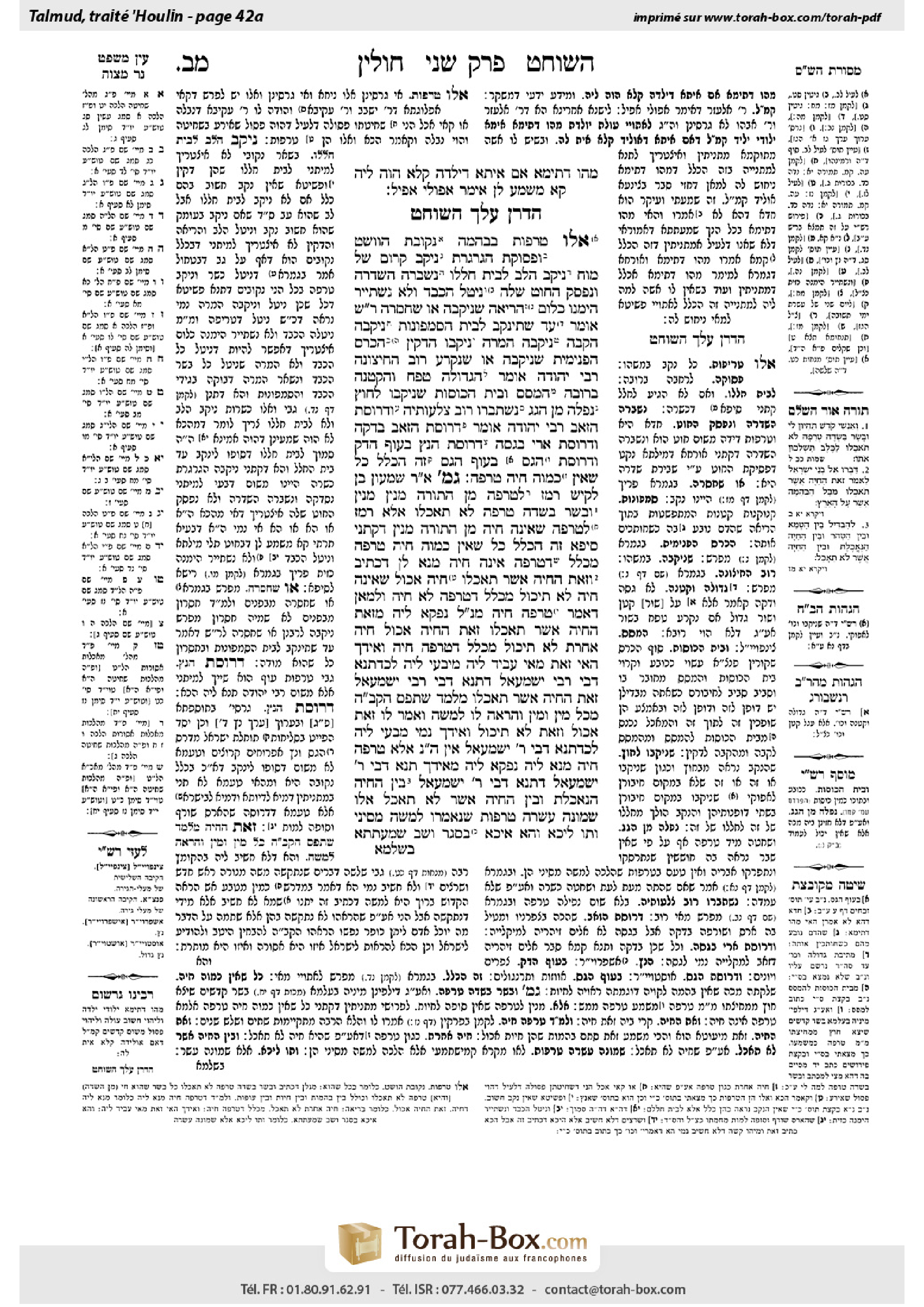
Chullin 42a: Talmud study for Daf Yomi
Study the Talmud for Daf Yomi with scanned pages, Hebrew text, English translations from Sefaria and AI-generated French translations.
Passage selection and English or AI-generated French translation are available where the scan has annotations. Daf Study is independent of Torah-Box and Sefaria.
Browse Chullin · חולין · All tractatesChullin 42a text and translations
This page of Chullin includes the Aramaic text, an English translation and an AI-generated French translation, alongside the scan above.
חולין מ״ב א · Aramaic and Hebrew text
מַהוּ דְּתֵימָא: אִם אִיתָא דְּיָלְדָה – קָלָא הֲוָה לֵיהּ, קָא מַשְׁמַע לַן: אֵימַר אַפּוֹלֵי אַפִּיל.
הֲדַרַן עֲלָךְ הַשּׁוֹחֵט.
מַתְנִי׳ אֵלּוּ טְרֵפוֹת בַּבְּהֵמָה: נְקוּבַת הַוֶּושֶׁט, וּפְסוּקַת הַגַּרְגֶּרֶת, נִיקַּב קְרוּם שֶׁל מוֹחַ, נִיקַּב הַלֵּב לְבֵית חֲלָלוֹ, נִשְׁבְּרָה הַשִּׁדְרָה וְנִפְסַק הַחוּט שֶׁלָּהּ, נִיטַּל הַכָּבֵד וְלֹא נִשְׁתַּיֵּיר הֵימֶנּוּ כְּלוּם.
הָרֵיאָה שֶׁנִּיקְּבָה אוֹ שֶׁחָסְרָה, רַבִּי שִׁמְעוֹן אוֹמֵר: עַד שֶׁתִּינָּקֵב לְבֵית הַסִּמְפּוֹנוֹת. נִיקְּבָה הַקֵּבָה, נִיקְּבָה הַמָּרָה, נִיקְּבוּ הַדַּקִּין, הַכָּרֵס הַפְּנִימִית שֶׁנִּיקְּבָה אוֹ שֶׁנִּקְרַע רוֹב הַחִיצוֹנָה. רַבִּי יְהוּדָה אוֹמֵר: הַגְּדוֹלָה טֶפַח, וְהַקְּטַנָּה בְּרוּבָּהּ. הֶמְסֵס וּבֵית הַכּוֹסוֹת שֶׁנִּיקְּבוּ לַחוּץ.
נָפְלָה מִן הַגָּג, נִשְׁתַּבְּרוּ רוֹב צַלְעוֹתֶיהָ, וּדְרוּסַת הַזְּאֵב. רַבִּי יְהוּדָה אוֹמֵר: דְּרוּסַת הַזְּאֵב בַּדַּקָּה, וּדְרוּסַת אֲרִי בַּגַּסָּה, דְּרוּסַת הַנֵּץ בְּעוֹף הַדַּק, וּדְרוּסַת הַגַּס בְּעוֹף הַגַּס. זֶה הַכְּלָל: כֹּל שֶׁאֵין כָּמוֹהָ חַיָּה – טְרֵפָה.
גְּמָ׳ אָמַר רַבִּי שִׁמְעוֹן בֶּן לָקִישׁ: רֶמֶז לִטְרֵפָה מִן הַתּוֹרָה מִנַּיִן? מִנַּיִן?! ״וּבָשָׂר בַּשָּׂדֶה טְרֵפָה לֹא תֹאכֵלוּ״! אֶלָּא, רֶמֶז לִטְרֵפָה שֶׁאֵינָהּ חַיָּה מִן הַתּוֹרָה מִנַּיִן? דְּקָתָנֵי סֵיפָא: זֶה הַכְּלָל, כֹּל שֶׁאֵין כָּמוֹהָ חַיָּה – טְרֵפָה, מִכְּלָל דִּטְרֵפָה אֵינָהּ חַיָּה, מְנָא לַן?
דִּכְתִיב: ״וְזֹאת הַחַיָּה אֲשֶׁר תֹּאכְלוּ״, חַיָּה – אֱכוֹל, שֶׁאֵינָהּ חַיָּה – לָא תֵּיכוּל, מִכְּלָל דִּטְרֵפָה לֹא חַיָּה.
וּלְמַאן דְּאָמַר טְרֵפָה חַיָּה, מְנָא לֵיהּ? נָפְקָא לֵיהּ מִ״זֹּאת הַחַיָּה אֲשֶׁר תֹּאכְלוּ״ – ״זֹאת הַחַיָּה״ אֱכוֹל, חַיָּה אַחֶרֶת לָא תֵּיכוֹל, מִכְּלָל דִּטְרֵפָה חַיָּה.
וְאִידַּךְ, הַאי ״זֹאת״ מַאי עָבֵיד לֵיהּ? מִיבְּעֵי לֵיהּ לְכִדְתָנָא דְּבֵי רַבִּי יִשְׁמָעֵאל, דְּתָנָא דְּבֵי רַבִּי יִשְׁמָעֵאל: ״זֹאת הַחַיָּה אֲשֶׁר תֹּאכְלוּ״ – מְלַמֵּד שֶׁתָּפַס הַקָּדוֹשׁ בָּרוּךְ הוּא מִכׇּל מִין וּמִין וְהֶרְאָה לוֹ לְמֹשֶׁה, וְאָמַר לוֹ: זֹאת אֱכוֹל, וְזֹאת לָא תֵּיכוֹל.
וְאִידַּךְ נָמֵי מִבְּעֵי לֵיהּ לְכִדְתָנָא דְּבֵי רַבִּי יִשְׁמָעֵאל! אִין הָכִי נָמֵי, אֶלָּא טְרֵפָה חַיָּה מְנָא לֵיהּ? נָפְקָא לֵיהּ מֵאִידַּךְ תָּנָא דְּבֵי רַבִּי יִשְׁמָעֵאל, דְּתָנָא דְּבֵי רַבִּי יִשְׁמָעֵאל: ״בֵּין הַחַיָּה הַנֶּאֱכֶלֶת וּבֵין הַחַיָּה אֲשֶׁר לֹא תֵאָכֵל״ – אֵלּוּ שְׁמוֹנֶה עֶשְׂרֵה טְרֵפוֹת שֶׁנֶּאֶמְרוּ לְמֹשֶׁה מִסִּינַי.
וְתוּ לֵיכָּא? וְהָא אִיכָּא בסג״ר, וְשַׁב שְׁמַעְתָּתָא!
Chullin 42a · English translation
The Gemara answers: Lest you say: If it is so that his wife gave birth, it would have generated publicity and been common knowledge; therefore, one might conclude that the slaughter is valid even if he declared that the slaughter is for the sake of the burnt offering of his wife after childbirth, as in fact she did not give birth. To counter this, Rabbi Elazar teaches us that the slaughter is not valid. Say that his wife miscarried and is liable to bring an offering, but it is not common knowledge, because the baby was not born alive.
MISHNA: These wounds constitute tereifot in an animal, rendering them prohibited for consumption: A perforated gullet, where the perforation goes through the wall of the gullet, or a cut windpipe. If the membrane of the brain was perforated, or if the heart was perforated to its chamber; if the spinal column was broken and its cord was cut; if the liver was removed and nothing remained of it, any of these render the animal a tereifa.
Additionally, a lung that was perforated or that was missing a piece renders the animal a tereifa. Rabbi Shimon says: It is not a tereifa unless it is perforated through to the bronchi. If the abomasum was perforated, or the gallbladder was perforated, or the small intestines were perforated, it is a tereifa. It is also a tereifa in a case where the internal rumen was perforated or where the majority of the external rumen was torn. Rabbi Yehuda says: For a large animal, a tear of one handbreadth renders it a tereifa, while for a small animal, it is a tereifa only if the majority of it was torn. And it is a tereifa where the omasum [hemses] or the reticulum was perforated to the outside, i.e., to the abdominal cavity, but not if the perforation was between the two.
Likewise, if an animal fell from the roof, or if the majority of its ribs were fractured, or if it was clawed by a wolf, it is a tereifa. Rabbi Yehuda says: If it was clawed by a wolf in the case of a small animal, i.e., a sheep or goat; or clawed by a lion in the case of a large animal, i.e., cattle; or if it was clawed by a hawk in the case of a small bird; or if it was clawed by a large bird of prey in the case of a large bird, then it is a tereifa. This is the principle: Any animal that was injured such that an animal in a similar condition could not live for an extended period is a tereifa, the consumption of which is forbidden by Torah law.
GEMARA: Rabbi Shimon ben Lakish says: Where is there an allusion in the Torah to the prohibition of a tereifa? The Gemara interjects: Where is there an allusion? Doesn’t the Torah state explicitly: “You shall not eat any flesh that is torn of animals [tereifa] in the field” (Exodus 22:30)? Rather, the question is: Where is there an allusion in the Torah to the principle that a tereifa cannot live? As the mishna teaches in the last clause: This is the principle: Any animal that was injured such that an animal in a similar condition could not live for an extended period is a tereifa; one learns by inference that a tereifa cannot live. If so, from where do we derive this?
It is derived from a verse, as it is written: “These are the living things which you may eat among all the animals that are on the earth” (Leviticus 11:2). The verse indicates that you may eat a living animal, i.e., one that can survive, but you may not eat an animal that is not living, i.e., one that cannot survive. One learns by inference that a tereifa cannot live.
The Gemara asks: And according to the one who says that a tereifa can live, from where does he derive this? The Gemara responds: He derives it from the same verse: “These are the living things which you may eat among all the animals.” “These” indicates that you may eat only these living things, but you may not eat other living things, i.e., tereifot. One learns by inference that a tereifa can live.
The Gemara asks: And according to the other opinion, that a tereifa cannot live, what does he do with this word “these”? The Gemara responds: He requires it for that which the school of Rabbi Yishmael taught. As the school of Rabbi Yishmael taught that the verse: “These are the living things which you may eat,” teaches that the Holy One, Blessed be He, seized one of each and every species of animal and showed it to Moses, and said to him: These you may eat, and these you may not eat.
The Gemara objects: But the other opinion also requires the word “these” for that which the school of Rabbi Yishmael taught. The Gemara replies: Yes, it is indeed so. Rather, from where does he derive the principle that a tereifa can live? He derives it from the other baraita that the school of Rabbi Yishmael taught. As the school of Rabbi Yishmael taught: The verse states: “To make a difference…between the living thing that may be eaten and the living thing that may not be eaten” (Leviticus 11:47). These living things that may not be eaten are the eighteen tereifot that were stated to Moses at Sinai and enumerated in the mishna. The verse, then, makes reference to a tereifa as a living thing.
The Gemara questions the baraita: And are there no more cases of tereifot? But aren’t there more cases cited in the Mishna and other baraitot, for which a mnemonic is given: Beit, samekh, gimmel, reish; and aren’t there seven additional halakhot, i.e., cases of tereifot, taught by amora’im?
Chullin 42a · Traduction française (IA)
La Guemara répond : De peur que l'on dise : Si c'est ainsi que sa femme a donné naissance, cela aurait généré une publicité et serait devenu connu ; donc, on pourrait conclure que l'immolation est valide même s'il déclare que l'immolation est faite pour l'holocauste de sa femme après l'accouchement, alors qu'en réalité elle n'a pas accouché. Pour contrecarrer cela, Rabbi Eléazar nous enseigne que l'immolation n'est pas valide. Dis qu'elle a eu un avortement et qu'elle est tenue de présenter un sacrifice, mais cela n'est pas connu, car l'enfant n'a pas été né vivant.
MICHNA : Ces plaies constituent des tereifot dans un animal, le rendant interdit à la consommation : un gullet percé, où la perforation traverse la paroi du gullet, ou un cou tranché. Si la membrane du cerveau était percée, ou si le cœur était percé jusqu'à sa cavité ; si la colonne vertébrale était brisée et sa moelle coupée ; si le foie était retiré et ne restait plus rien de lui, tout cela rend l'animal un tereifa.
De plus, un poumon percé ou manquant une partie rend l'animal un tereifa. Rabbi Shimon dit : Ce n'est pas un tereifa à moins qu'il soit percé jusqu'aux bronches. Si l'abomasum était percé, ou la vésicule biliaire, ou les intestins grêles, c'est un tereifa. C'est aussi un tereifa dans le cas où la rumine interne était percée ou où la majorité de la rumine externe était déchirée. Rabbi Yéhuda dit : Pour un grand animal, une déchirure d'un tefach rend l'animal un tereifa, tandis qu'un petit animal est un tereifa seulement si la majorité de lui était déchirée. C'est aussi un tereifa lorsque l'omasum [hemses] ou le réseau était percé à l'extérieur, c'est-à-dire vers la cavité abdominale, mais pas si la perforation était entre les deux.
De même, si un animal tombe du toit, ou si la majorité de ses côtes sont fracturées, ou s'il est mordu par un loup, c'est un tereifa. Rabbi Yéhuda dit : Si c'est un petit animal, c'est-à-dire un mouton ou une chèvre, qui est mordu par un loup ; ou si c'est un grand animal, c'est-à-dire des bœufs, qui est mordu par un lion ; ou si c'est un petit oiseau, c'est-à-dire un oiseau de proie, qui est mordu par un aigle ; ou si c'est un grand oiseau, c'est-à-dire un grand oiseau de proie, qui est mordu par un autre grand oiseau de proie, alors c'est un tereifa. C'est le principe : Tout animal blessé de sorte qu'un animal dans une condition similaire ne puisse pas vivre longtemps est un tereifa, la consommation de laquelle est interdite par la Loi.
GUEMARA : Rabbi Shimon ben Lakish dit : Où est l'indice dans la Torah de l'interdiction du tereifa ? La Guemara interrompt : Où est l'indice ? N'est-ce pas que la Torah dit explicitement : « Vous ne mangerez point de chair qui est déchirée d'animaux [tereifa] dans le champ » (Exode 22:30) ? Plutôt, la question est : Où est l'indice dans la Torah du principe que le tereifa ne peut pas vivre ? Comme la Michna enseigne dans la dernière phrase : C'est le principe : Tout animal blessé de sorte qu'un animal dans une condition similaire ne puisse pas vivre longtemps est un tereifa ; on apprend par déduction que le tereifa ne peut pas vivre. Si c'est ainsi, d'où déduit-on cela ?
Il est déduit d'un verset, car il est écrit : « Ces sont les animaux vivants que vous pouvez manger parmi tous les animaux qui sont sur la terre » (Lévitique 11:2). Le verset indique que vous pouvez manger un animal vivant, c'est-à-dire un animal qui peut survivre, mais vous ne pouvez pas manger un animal qui n'est pas vivant, c'est-à-dire un animal qui ne peut pas survivre. On apprend par déduction que le tereifa ne peut pas vivre.
La Guemara demande : Et selon celui qui dit que le tereifa peut vivre, d'où déduit-il cela ? La Guemara répond : Il le déduit du même verset : « Ces sont les animaux vivants que vous pouvez manger parmi tous les animaux. » « Ces » indique que vous pouvez manger seulement ces animaux vivants, mais vous ne pouvez pas manger d'autres animaux vivants, c'est-à-dire les tereifot. On apprend par déduction que le tereifa peut vivre.
La Guemara demande : Et selon l'autre opinion, celle qui dit que le tereifa ne peut pas vivre, comment interprète-t-il ce mot « ces » ? La Guemara répond : Il le nécessite pour ce que l'école de Rabbi Yishmael a enseigné. Car l'école de Rabbi Yishmael a enseigné que le verset : « Ces sont les animaux vivants que vous pouvez manger », enseigne que l'Éternel, béni soit Son Nom, a pris un de chaque espèce d'animal et l'a montré à Moïse, et lui a dit : Ces-ci vous pouvez manger, et ces-ci vous ne pouvez pas manger.
La Guemara s'oppose : Mais l'autre opinion nécessite aussi le mot « ces » pour ce que l'école de Rabbi Yishmael a enseigné. La Guemara répond : Oui, c'est ainsi. Plutôt, d'où déduit-il le principe que le tereifa peut vivre ? Il le déduit d'une autre baraïta que l'école de Rabbi Yishmael a enseigné. Car l'école de Rabbi Yishmael a enseigné : Le verset dit : « Pour faire une distinction… entre l'animal vivant qui peut être mangé et l'animal vivant qui ne peut pas être mangé » (Lévitique 11:47). Ces animaux vivants qui ne peuvent pas être mangés sont les dix-huit tereifot qui ont été énumérés devant Moïse au Sinaï et mentionnés dans la Michna. Le verset fait alors référence à un tereifa comme un animal vivant.
La Guemara questionne la baraïta : Et n'y a-t-il pas d'autres cas de tereifot ? Mais ne sont-ils pas plus nombreux que ceux cités dans la Michna et d'autres baraitot, pour lesquels un acronyme est donné : Beit, Samekh, Gimmel, Réish ; et ne sont-ils pas sept autres halakhot, c'est-à-dire des cas de tereifot, enseignés par les amoraïm ?
Traduction française générée par IA à partir de l’édition anglaise de Sefaria. Vérifie toujours un passage avec le texte source.
Text from Sefaria: William Davidson Edition - Vocalized Aramaic (unknown); William Davidson Edition - English (CC BY NC).