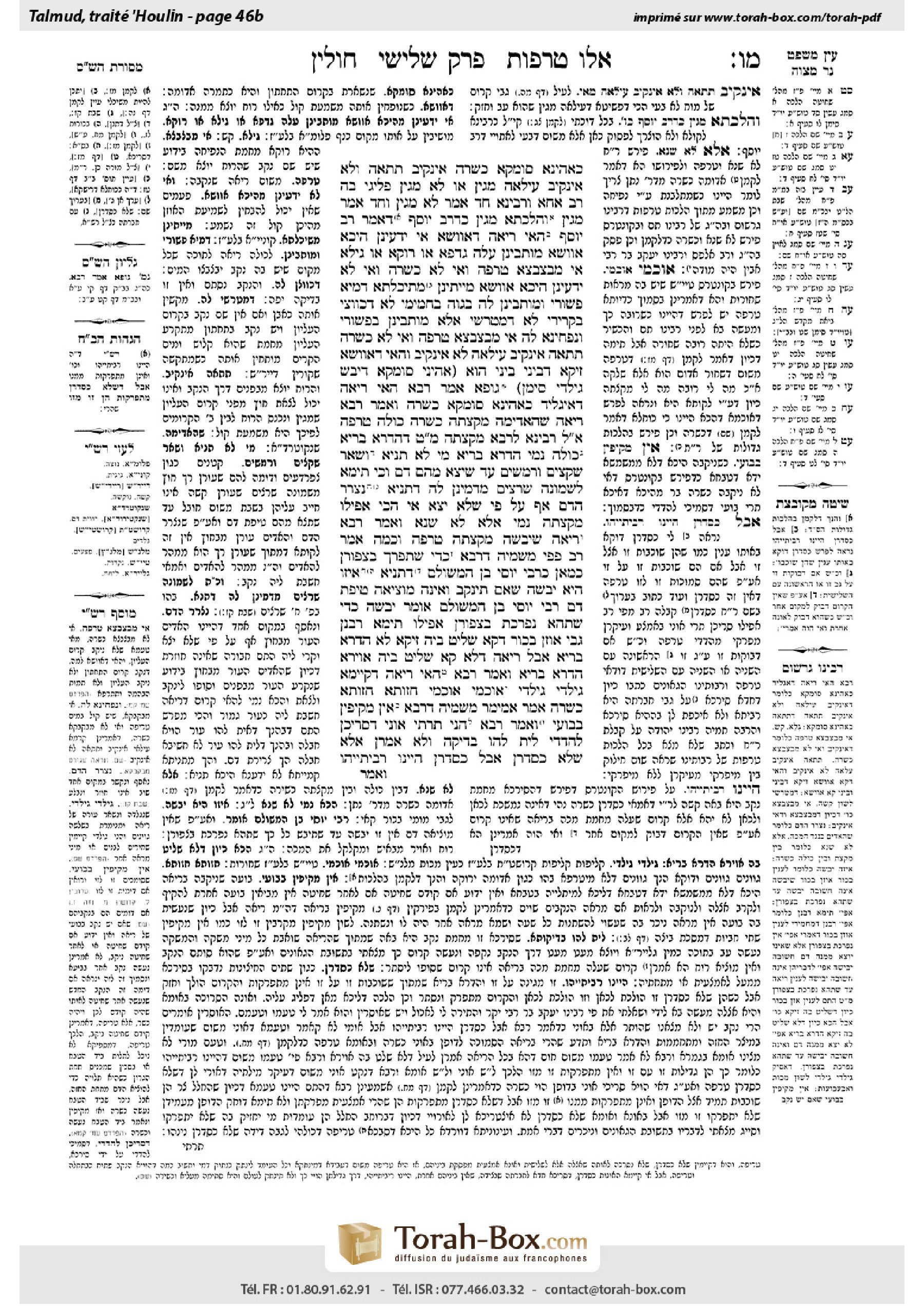
Chullin 46b: Talmud study for Daf Yomi
Study the Talmud for Daf Yomi with scanned pages, Hebrew text, English translations from Sefaria and AI-generated French translations.
Passage selection and English or AI-generated French translation are available where the scan has annotations. Daf Study is independent of Torah-Box and Sefaria.
Browse Chullin · חולין · All tractatesChullin 46b text and translations
This page of Chullin includes the Aramaic text, an English translation and an AI-generated French translation, alongside the scan above.
חולין מ״ו ב · Aramaic and Hebrew text
כַּאֲהִינָא סוּמָּקָא – כְּשֵׁרָה. אִינְּקִיב תַּתָּאָה וְלָא אִינְּקִיב עִילָּאָה – מַגֵּין אוֹ לָא מַגֵּין?
פְּלִיגִי בַּהּ רַב אַחָא וְרָבִינָא, חַד אָמַר: לָא מַגֵּין, וְחַד אָמַר: מַגֵּין. וְהִלְכְתָא מַגֵּין, כִּדְרַב יוֹסֵף, דְּאָמַר רַב יוֹסֵף: הַאי רֵיאָה דְּאָוְושָׁא, אִי יָדְעִינַן הֵיכָא אָוְושָׁא – מוֹתְבִינַן עֲלַהּ גַּדְפָּא אוֹ רוּקָּא אוֹ גִילָא, אִי מְבַצְבְּצָא – טְרֵפָה, וְאִי לָא – כְּשֵׁרָה. וְאִי לָא יָדְעִינַן הֵיכָא אָוְושָׁא – מַיְיתִינַן מְשִׁיכְלְתָא דְּמַיָּא פָּשׁוֹרֵי וּמוֹתְבִינַן לַהּ בְּגַוַּהּ.
בְּחַמִּימֵי לָא – דְּכָוְוצִי, בְּקָרִירֵי לָא – דִּמְטָרְשִׁי, אֶלָּא מוֹתְבִינַן בְּפָשׁוֹרֵי וְנָפְחִינַן לַהּ. אִי מְבַצְבְּצָא – טְרֵפָה, וְאִי לָא – כְּשֵׁרָה. תַּתָּאָה אִינְּקִיב, עִילָּאָה לָא אִינְּקִיב, וְהַאי דְּאָוְושָׁא – זִיקָא דְּבֵינֵי בֵּינֵי הוּא.
(אֲהִינֵי סוּמָּקָא דִּיבַשׁ גִּילְדֵי, סִימָן).
גּוּפָא, אָמַר רָבָא: הַאי רֵיאָה דְּאִיגְּלִיד כַּאֲהִינָא סוּמָּקָא – כְּשֵׁרָה. וְאָמַר רָבָא: רֵיאָה שֶׁהֶאֱדִימָה מִקְצָתָהּ – כְּשֵׁרָה, כּוּלָּהּ – טְרֵפָה.
אֲמַר לֵיהּ רָבִינָא לְרָבָא: מִקְצָתָהּ מַאי טַעְמָא? דְּהָדְרָא בָּרְיָא, כּוּלָּהּ נָמֵי הָדְרָא בָּרְיָא! מִי לָא תַּנְיָא: וּשְׁאָר שְׁקָצִים וּרְמָשִׂים, עַד שֶׁיֵּצֵא מֵהֶם דָּם.
וְכִי תֵּימָא: לִשְׁמוֹנָה שְׁרָצִים מְדַמֵּינַן לַהּ, דְּתַנְיָא: נִצְרַר הַדָּם, אַף עַל פִּי שֶׁלֹּא יָצָא. אִי הָכִי, אֲפִילּוּ מִקְצָתָהּ נָמֵי! אֶלָּא, לָא שְׁנָא.
וְאָמַר רָבָא: רֵיאָה שֶׁיָּבְשָׁה מִקְצָתָהּ – טְרֵפָה. וְכַמָּה? אָמַר רַב פַּפִּי מִשְּׁמֵיהּ דְּרָבָא: כְּדַי שֶׁתִּפָּרֵךְ בְּצִפּוֹרֶן.
כְּמַאן, כְּרַבִּי יוֹסֵי בֶּן הַמְשׁוּלָּם? דְּתַנְיָא: אֵיזוֹ הִיא יְבֵשָׁה – שֶׁאִם תִּינָּקֵב וְאֵינָהּ מוֹצִיאָה טִיפַּת דָּם; רַבִּי יוֹסֵי בֶּן הַמְשׁוּלָּם אוֹמֵר: יְבֵשָׁה כְּדֵי שֶׁתְּהֵא נִפְרֶכֶת בְּצִפּוֹרֶן.
אֲפִילּוּ תֵּימָא רַבָּנַן, גַּבֵּי אוֹזֶן בְּכוֹר דְּקָא שָׁלֵיט בֵּיהּ זִיקָא – לָא הָדְרָא בָּרְיָא, אֲבָל רֵיאָה דְּלָא קָא שָׁלֵיט בַּהּ אַוֵּירָא – הָדְרָא בָּרְיָא. וְאָמַר רָבָא: הַאי רֵיאָה דְּקָיְימָא גִּילְדֵּי גִּילְדֵּי, אוּכָּמֵי אוּכָּמֵי, חֶזְוָותָא חֶזְוָותָא – כְּשֵׁרָה.
אָמַר אַמֵּימָר מִשְּׁמֵיהּ דְּרָבָא: אֵין מַקִּיפִין בְּבוּעֵי.
וְאָמַר רָבָא: הָנֵי תַּרְתֵּי אוּנֵּי דִּסְרִיכָן לַהֲדָדֵי, לֵית לְהוּ בְּדִיקָה. וְלָא אֲמַרַן אֶלָּא שֶׁלֹּא כְּסִדְרָן, אֲבָל כְּסִדְרָן – הַיְינוּ רְבִיתַיְיהוּ.
Chullin 46b · English translation
so that it looks like a red date, is kosher; all the more so is that the case if it was only perforated. But if the inner membrane was perforated but the outer membrane was not perforated, does the outer membrane protect the lung? Or does it not protect it, in which case the animal is a tereifa?
Rav Aḥa and Ravina disagree with regard to this question. One says: It does not protect the lung; and one says: It protects the lung. And the halakha is that it protects the lung, in accordance with the statement of Rav Yosef. As Rav Yosef says: With regard to this lung that emits a sound when inflated, if we know from where it emits a sound, we set a feather, or saliva, or straw on that point. If the saliva bubbles when the lung is inflated, the animal is a tereifa, since this proves that the lung is perforated through both membranes. And if not, the animal is kosher. And if we do not know from where it emits a sound, we bring a basin of tepid water and set the lung inside it.
One cannot place it in hot water, as it causes the lung to contract, closing the perforation. And one cannot place it in cold water, as it hardens the lung and may cause it to crack. Rather, we set it in tepid water and inflate it. If the water bubbles, the animal is a tereifa. And if not, the animal is kosher, since it is apparent that only the inner membrane is perforated and the outer membrane is not perforated, and the fact that it emits a sound is due to the air moving in the space between the two membranes. Evidently, Rav Yosef holds that if only the inner membrane is perforated, the animal is kosher.
§ The Gemara provides a mnemonic to remember the following statements of Rava with regard to the lung: Dates, red, that dried, scabbed.
The Gemara turns to the matter itself mentioned above: Rava says: This animal with a lung whose outer membrane was removed so that it looks like a red date is kosher. And Rava says: With regard to a lung whose outer membrane reddened due to bleeding of the lung, if only part of it turned red, then the animal is kosher, but if all of it turned red, the animal is a tereifa.
Ravina said to Rava: What is the reason that the animal is kosher if only part of the outer membrane reddened? Presumably, it is because the animal eventually recovers from the wound. But even if all of it turned red as well, the animal recovers. Isn’t it taught in a baraita: If one injures one of the eight impure creeping creatures mentioned in the Torah, one is liable for desecrating Shabbat; but if one injures other repugnant creatures and creeping animals, one is not liable until blood leaves their body as a result of the injury, even if their skin reddens as a result of internal bleeding?
And if you would say: We compare the lung to one of the eight creeping creatures, as it is taught in a baraita: If the blood collected under the skin of one of the eight creeping creatures, even if it did not leave the body, one is liable for desecrating Shabbat, because the blood will not be reabsorbed into the body and the wound is permanent; that is difficult: If so, then there is still no reason to distinguish between part of the lung and all of it, and even if only part of the lung turned red, the animal should be rendered a tereifa as well, because the blood will not be reabsorbed into the body. Rather, there is no difference between the reddening of part or all of the lung.
And Rava says: If part of the lung was dried, the animal is a tereifa. And how much must the lung be dried so as to render the animal a tereifa? Rav Pappi says in the name of Rava: It must be so dry that it can be crumbled with a fingernail.
The Gemara asks: In accordance with whose opinion is this statement? Is it in accordance with the opinion of Rabbi Yosei ben HaMeshullam? As it is taught in a mishna (Bekhorot 37a): If a kosher firstborn animal has a blemish, such as a dried ear, it may be slaughtered outside the Temple. What is a dried ear? It is any ear that if perforated does not bleed a drop. Rabbi Yosei ben HaMeshullam says: It must be so dry that it can be crumbled with a fingernail.
The Gemara responds: You may even say that the statement is in accordance with the opinion of the Rabbis. With regard to the ear of a firstborn, which is exposed to the wind, the Rabbis hold that the animal would not recover if it is so dry that it does not bleed. But with regard to the lung, which is not exposed to the wind, the animal would recover unless it is so dry that it can be crumbled with a fingernail. And Rava says: This lung that stands before us covered in scabs, or covered in black marks, or covered in sores with different appearances, is nevertheless kosher.
§ Ameimar says in the name of Rava: One may not compare cysts of the lungs. If one finds a perforated cyst on the lung, but does not know whether it was perforated before or after slaughter, he may not perform a test by perforating another cyst in order to compare their appearances.
And Rava says: These two lobes of the lung that adhere to one another by thin strands have no need for inspection, since it is certain that these adhesions arose due to a perforation of the lung, rendering the animal a tereifa. The Gemara adds: And we said this halakha only with regard to adhesions that are out of order, where a lobe adhered to a non-adjacent lobe. But with regard to adhesions that are in order, that is their normal manner of growth, and the animal is kosher.
Chullin 46b · Traduction française (IA)
afin qu'il ressemble à un dattar rouge, c'est permis ; encore davantage est-ce le cas si l'on a seulement percé. Mais si la membrane interne a été percée mais que la membrane externe n'a pas été percée, la membrane externe protège-t-elle le poumon ? Ou ne la protège-t-elle pas, dans ce cas l'animal est un tereifa ?
Rav Aḥa et Ravina s'opposent sur cette question. L'un dit : elle ne protège pas le poumon ; l'autre dit : elle le protège. Et la halakha est qu'elle le protège, conformément à la déclaration de Rav Yosef. Comme Rav Yosef dit : concernant ce poumon qui émet un son lorsqu'il est gonflé, si nous savons d'où il émet ce son, nous posons une plume, ou du salive, ou de la paille à cet endroit. Si le salive bouillonne lorsqu'on gonfle le poumon, l'animal est un tereifa, car cela prouve que le poumon est percé à travers les deux membranes. Et si ce n'est pas le cas, l'animal est propre. Et si nous ne savons pas d'où il émet un son, nous apportons un bassin d'eau tiède et nous plaçons le poumon à l'intérieur.
On ne peut pas le placer dans de l'eau chaude, car cela fait contracter le poumon, fermant la perforation. Et on ne peut pas le placer dans de l'eau froide, car cela durcit le poumon et peut le faire craquer. Plutôt, on le place dans de l'eau tiède et on le gonfle. Si l'eau bouillonne, l'animal est un tereifa. Et si ce n'est pas le cas, l'animal est propre, car il est évident que seule la membrane interne est percée et que la membrane externe n'est pas percée, et le fait qu'il émet un son est dû à l'air se déplaçant dans l'espace entre les deux membranes. Évidemment, Rav Yosef considère que si seule la membrane interne est percée, l'animal est propre.
§ La Guemara fournit un moyen mnémotechnique pour se souvenir des déclarations de Rava concernant le poumon : Dattes, rouge, qui s'est desséché, qui a formé des croûtes.
La Guemara aborde la question mentionnée ci-dessus : Rava dit : cet animal dont le poumon a eu sa membrane externe retirée de sorte qu'il ressemble à une date rouge est propre. Et Rava dit : concernant un poumon dont la membrane externe s'est teintée de rouge à cause du saignement du poumon, si seulement une partie s'est teintée de rouge, l'animal est propre, mais si toute la membrane s'est teintée de rouge, l'animal est un tereifa.
Ravina dit à Rava : quelle est la raison pour laquelle l'animal est propre si seulement une partie de la membrane externe s'est teintée de rouge ? Probablement, c'est parce que l'animal récupère un jour de la plaie. Mais même si toute la membrane s'est teintée de rouge, l'animal récupère. N'est-il pas enseigné dans une baraïta : Si l'on blesse l'un des huit créatures impures mentionnées dans la Torah, l'on est tenu de profaner le Shabbat ; mais si l'on blesse d'autres créatures repoussantes et les animaux rampants, l'on n'est pas tenu de profaner le Shabbat jusqu'à ce que le sang sorte du corps à cause de la blessure, même si la peau s'est teintée de rouge à cause du saignement interne ?
Et si vous dites : nous comparons le poumon à l'une des huit créatures rampantes, comme il est enseigné dans une baraïta : Si le sang s'est accumulé sous la peau d'une des huit créatures rampantes, même s'il n'a pas quitté le corps, l'on est tenu de profaner le Shabbat, car le sang ne sera pas reabsorbé dans le corps et la plaie est permanente ; c'est difficile : Si c'est ainsi, alors il n'y a pas de raison de distinguer entre une partie du poumon et tout le poumon, et même si seulement une partie du poumon s'est teintée de rouge, l'animal devrait être rendu tereifa également, car le sang ne sera pas reabsorbé dans le corps. Plutôt, il n'y a pas de différence entre la teinture de partie ou de tout le poumon.
Et Rava dit : si une partie du poumon est sèche, l'animal est un tereifa. Et jusqu'à quel point doit être sèche le poumon pour rendre l'animal un tereifa ? Rav Pappi dit en nom de Rava : il doit être si sec qu'il peut être écrasé par un ongle.
La Guemara pose la question : selon l'opinion de qui est cette déclaration ? Est-ce selon l'opinion de Rabbi Yosei ben HaMeshullam ? Comme il est enseigné dans une mishna (Bekhorot 37a) : Si un animal premier-né propre a une imperfection, comme une oreille sèche, il peut être sacrifié en dehors du Temple. Qu'est-ce qu'une oreille sèche ? C'est toute oreille qui, si percée, ne saigne pas une goutte. Rabbi Yosei ben HaMeshullam dit : il doit être si sec qu'il peut être écrasé par un ongle.
La Guemara répond : on peut même dire que cette déclaration est selon l'opinion des Rabbins. Concernant l'oreille d'un premier-né, qui est exposée au vent, les Rabbins considèrent que l'animal ne récupère pas si elle est si sèche qu'elle ne saigne pas. Mais concernant le poumon, qui n'est pas exposé au vent, l'animal récupère à moins qu'il ne soit si sec qu'il peut être écrasé par un ongle. Et Rava dit : ce poumon qui se trouve devant nous recouvert de croûtes, ou recouvert de taches noires, ou recouvert de plaies de différentes apparences, est toutefois propre.
§ Ameimar dit en nom de Rava : on ne peut pas comparer les kystes des poumons. Si l'on trouve un kyste percé sur le poumon, mais qu'on ne sait pas si la perforation a eu lieu avant ou après l'abattage, on ne peut pas faire un test en perçant un autre kyste pour comparer leur apparence.
Et Rava dit : ces deux lobes du poumon qui s'attachent l'un à l'autre par des fils fins n'ont pas besoin d'être examinés, car il est certain que ces adhésions sont dues à une perforation du poumon, rendant l'animal tereifa. La Guemara ajoute : et nous avons dit cette halakha seulement concernant les adhésions qui sont anormales, où un lobe s'attachait à un lobe non adjacent. Mais concernant les adhésions normales, qui sont leur manière normale de croissance, et l'animal est propre.
Traduction française générée par IA à partir de l’édition anglaise de Sefaria. Vérifie toujours un passage avec le texte source.
Text from Sefaria: William Davidson Edition - Vocalized Aramaic (unknown); William Davidson Edition - English (CC BY NC).