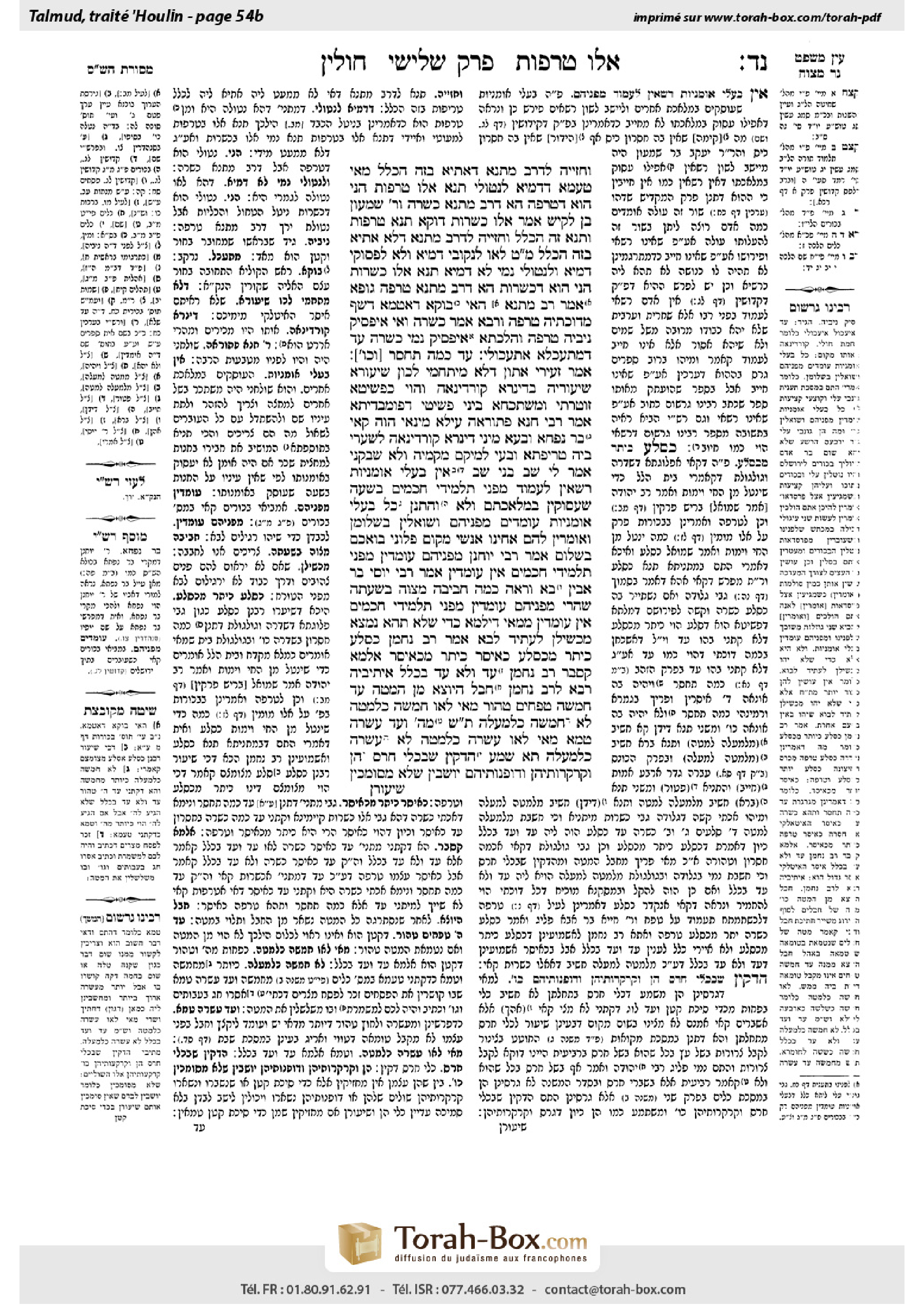
Chullin 54b: Talmud study for Daf Yomi
Study the Talmud for Daf Yomi with scanned pages, Hebrew text, English translations from Sefaria and AI-generated French translations.
Passage selection and English or AI-generated French translation are available where the scan has annotations. Daf Study is independent of Torah-Box and Sefaria.
Browse Chullin · חולין · All tractatesChullin 54b text and translations
This page of Chullin includes the Aramaic text, an English translation and an AI-generated French translation, alongside the scan above.
חולין נ״ד ב · Aramaic and Hebrew text
וְחַזְיַיהּ לִדְרַב מַתְנָא דְּאָתְיָא בְּזֶה הַכְּלָל, מַאי טַעְמָא? דְּדָמְיָא לִנְטוּלֵי. תְּנָא ״אֵלּוּ טְרֵפוֹת״ – הָנֵי הוּא דִּטְרֵפָה, הָא דְּרַב מַתְנָא כְּשֵׁרָה.
וְרַבִּי שִׁמְעוֹן בֶּן לָקִישׁ אָמַר: אֵלּוּ כְּשֵׁרוֹת דַּוְקָא, תְּנָא טְרֵפוֹת, וּתְנָא ״זֶה הַכְּלָל״, וְחַזְיַיהּ לִדְרַב מַתְנָא דְּלָא אָתְיָא בְּ״זֶה הַכְּלָל״, מַאי טַעְמָא? לָאו לִנְקוּבֵי דָּמְיָא, וְלָא לִפְסוּקֵי דָּמְיָא, וְלִנְטוּלֵי נָמֵי לָא דָּמְיָא, תְּנָא ״אֵלּוּ כְּשֵׁרוֹת״ – הָנֵי הוּא דִּכְשֵׁרוֹת, הָא דְּרַב מַתְנָא טְרֵפָה.
גּוּפָא, אָמַר רַב מַתְנָא: הַאי בּוּקָא דְּאַטְמָא דְּשָׁף מִדּוּכְתֵּיהּ – טְרֵפָה, וְרָבָא אָמַר: כְּשֵׁרָה, וְאִי אִיפְּסִיק נִיבֵיהּ – טְרֵפָה. וְהִלְכְתָא: אִיפְּסִיק נָמֵי כְּשֵׁרָה, עַד דְּמִתְעַכְלָא אִתְעֲכוֹלֵי.
עַד כַּמָּה תֶּחְסַר? אָמַר זְעֵירִי: אַתּוּן דְּלָא מִיתְחֲמֵי לְכוֹן שִׁיעוּרָא, שִׁיעוּרֵיהּ בְּדִינָרָא קוּרְדִּינָאָה, וְהָוֵי כִּפְשִׁיטָא זוּטַרְתִּי, וּמִשְׁתַּכְחָא בֵּינֵי פְּשִׁיטֵי דְּפוּמְבְּדִיתָא.
אָמַר רַבִּי חָנָא פָּתוּרָאָה: עִילָּא מִינַּאי הֲוָה קָאֵי בַּר נַפָּחָא, וּבְעָא מִינַּי דִּינָרָא קוּרְדִּינָאָה לְשַׁעוֹרֵי בֵּיהּ טְרֵיפְתָא, וּבְעַי לְמֵיקָם מִקַּמֵּיהּ וְלָא שְׁבַקְנִי. אָמַר לִי: שֵׁב בְּנִי שֵׁב, אֵין בַּעֲלֵי אוּמָּנִיּוֹת רַשָּׁאִין לַעֲמוֹד מִפְּנֵי תַּלְמִידֵי חֲכָמִים בְּשָׁעָה שֶׁעֲסוּקִין בִּמְלַאכְתָּם.
וְלָא? וְהָתְנַן: כׇּל בַּעֲלֵי אוּמָּנִיּוֹת עוֹמְדִים מִפְּנֵיהֶם, וְשׁוֹאֲלִין בִּשְׁלוֹמָן, וְאוֹמְרִין לָהֶם: אַחֵינוּ אַנְשֵׁי מְקוֹם פְּלוֹנִי בּוֹאֲכֶם בְּשָׁלוֹם!
אָמַר רַבִּי יוֹחָנָן: מִפְּנֵיהֶם עוֹמְדִין, מִפְּנֵי תַּלְמִידֵי חֲכָמִים אֵין עוֹמְדִין. אָמַר רַבִּי יוֹסֵי בַּר אָבִין: בֹּא וּרְאֵה כַּמָּה חֲבִיבָה מִצְוָה בִּשְׁעָתָהּ, שֶׁהֲרֵי מִפְּנֵיהֶם עוֹמְדִין, מִפְּנֵי תַּלְמִידֵי חֲכָמִים אֵין עוֹמְדִין.
מִמַּאי? דִּילְמָא כְּדֵי שֶׁלֹּא תְּהֵא נִמְצָא מַכְשִׁילָן לֶעָתִיד לָבֹא.
אָמַר רַב נַחְמָן: כְּסֶלַע – כְּיָתֵר מִכְּסֶלַע, כְּאִיסָּר – כְּיָתֵר מִכְּאִיסָּר.
אַלְמָא קָסָבַר רַב נַחְמָן: ״עַד״, וְלֹא עַד בַּכְּלָל.
אֵיתִיבֵיהּ רָבָא לְרַב נַחְמָן: חֶבֶל הַיּוֹצֵא מִן הַמִּטָּה עַד חֲמִשָּׁה טְפָחִים – טָהוֹר. מַאי לָאו חֲמִשָּׁה כִּלְמַטָּה? לֹא, חֲמִשָּׁה כִּלְמַעְלָה.
תָּא שְׁמַע: מֵחֲמִשָּׁה וְעַד עֲשָׂרָה – טָמֵא. מַאי לָאו עֲשָׂרָה כִּלְמַטָּה? לָא, עֲשָׂרָה כִּלְמַעְלָה.
תָּא שְׁמַע: הַדַּקִּין שֶׁבִּכְלִי חֶרֶס, הֵן וְקַרְקְרוֹתֵיהֶן וְדוֹפְנוֹתֵיהֶם, יוֹשְׁבִין שֶׁלֹּא מְסוּמָּכִין –
Chullin 54b · English translation
and the tanna then saw that the case of Rav Mattana, where the end of the thigh is dislocated, ostensibly comes under the heading of: This is the principle, and one might assume that it renders the animal a tereifa as well. What is the reason for this? It is because a dislocated thigh is similar to the cases of removed organs that render the animal a tereifa. Therefore, he taught the phrase: These are tereifot, at the beginning of the mishna, to emphasize that it is only these that render an animal a tereifa, but in the case of Rav Mattana, the animal is kosher.
And according to Rabbi Shimon ben Lakish, who says that the phrase: These are kosher, is meant specifically, the tanna taught the list of tereifot, and taught afterward that this is the principle. And the tanna then saw that the case of Rav Mattana ostensibly does not come under the heading of: This is the principle, and one might assume that it does not render the animal a tereifa. What is the reason for this? It is because a dislocated thigh is not similar to cases of perforated organs, and it is not similar to cases of cut organs, such as the windpipe, and it is not similar to cases of removed organs. Therefore, he taught the phrase: These are kosher, to emphasize that it is only these that are kosher, but in the case of Rav Mattana, the animal is a tereifa.
The Gemara addresses the matter itself: Rav Mattana says: This head of the femur that was completely dislocated renders the animal a tereifa. And Rava said: The animal is kosher, but if its sinew holding the bone in place is cut, it is a tereifa. The Gemara concludes: And the halakha is: Even if the sinew is cut, the animal is still kosher, unless the sinew decomposed, in which case the animal is a tereifa.
§ The mishna states: How much can the windpipe be missing and still be kosher? Rabban Shimon ben Gamliel says: Until the perforation is the same size as an Italian issar. Ze’eiri, who came from Eretz Yisrael, said with regard to this: You, who are not familiar with the measure of an Italian issar, because it is not used in Babylonia, should estimate its measure as a Kurdish dinar. And it is like a small peruta coin and can be found among the perutot of Pumbedita.
Rabbi Ḥana the money changer said: Bar Nappaḥa, i.e., Rabbi Yoḥanan, was standing over me, and he requested of me a Kurdish dinar with which to measure tereifot, in accordance with the statement of Ze’eiri. And I wanted to rise before him out of respect, but he did not let me. Rabbi Yoḥanan said to me: Sit, my son, sit. Tradesmen are not permitted to stand before Torah scholars when they are engaged in their work.
The Gemara asks: And are tradesmen not permitted to stand before Torah scholars? But didn’t we learn in a mishna (Bikkurim 3:3): When the pilgrims bring their first fruits to Jerusalem, all the tradesmen stand before them, and greet them, and say to them: Our brothers from such and such place, welcome?
Rabbi Yoḥanan said: Yes, they stand before those bringing first fruits, but they do not stand before Torah scholars. Rabbi Yosei bar Avin says: Come and see how beloved is a mitzva performed in its proper time, as the tradesmen stand before those who brought first fruits, while they do not stand before Torah scholars.
The Gemara rejects the statement of Rabbi Yosei bar Avin: From where does one know that they rise out of respect? Perhaps the tradesmen stand only in order not to cause those bringing first fruits to fail and sin in the future. That is, if the tradesmen do not treat those bringing the first fruits with great respect, they may not make the effort to travel to Jerusalem in a subsequent year.
§ The mishna states: How much can the windpipe be missing and still be kosher? Rabban Shimon ben Gamliel says: Until the perforation is the same size as an Italian issar. With regard to this, Rav Naḥman says: Whenever the Sages specify the measure as that of a sela, e.g., with regard to a damaged skull for purposes of tereifot, they mean that even an area exactly the size of a sela is treated as more than a sela. Likewise, when they specify the measure as that of an issar, they mean that an area exactly the size of an issar is treated as though it were more than an issar.
Since Rav Naḥman holds that a perforation exactly the size of an issar is treated as though it were larger than an issar, he must hold that such a perforation in the windpipe renders the animal a tereifa. The Gemara therefore infers: Apparently, Rav Naḥman holds that whenever the Sages use the word: Until, it means until and not including the measure, as the mishna states that an animal with a perforated windpipe is kosher until the perforation reaches the size of an issar.
Rava raised an objection to the opinion of Rav Naḥman from a mishna (Kelim 19:2): The end of a rope that extends from a rope bed is not susceptible to ritual impurity until it is five handbreadths long. If the bed becomes impure, the rope remains pure, because it has no use and is therefore not considered part of the bed. What, is it not teaching that a rope exactly five handbreadths long is treated as though its length were below that amount? If so, the word: Until, means until and including the exact measure. The Gemara responds: No, a rope exactly five handbreadths long is like a rope whose length is above that amount.
The Gemara suggests: Come and hear a proof from the continuation of the mishna: If the end of the rope was of any length from five handbreadths until ten, it is susceptible to impurity. What, is it not teaching that a rope exactly ten handbreadths long is treated as though its length were below that? The Gemara responds: No, a rope exactly ten handbreadths long is treated like a rope whose length is above that, and it is not susceptible to impurity.
The Gemara suggests: Come and hear proof from another mishna (Kelim 2:2): With regard to the smallest of earthenware vessels, if they, or even their broken-off bases or sides, can sit, i.e., remain upright, without being supported,
Chullin 54b · Traduction française (IA)
et le tanna vit alors que le cas de Rav Mattana, où la fin du fémur est déloge, semble tomber sous la rubrique suivante : C’est le principe, et on pourrait penser qu’il rend l’animal tereifa également. Quelle est la raison de cela ? C’est parce que le déloge du fémur est semblable aux cas d’organes retirés qui rendent l’animal tereifa. Ainsi, il enseigna la phrase : Ces sont des tereifot, au début de la mitsna, afin d’insister sur le fait que ce sont seulement ceux-ci qui rendent un animal tereifa, mais dans le cas de Rav Mattana, l’animal est propre.
Et selon Rabbi Shimon ben Lakish, qui dit que la phrase : Ces sont des animaux propres, est entendue spécifiquement, le tanna enseigna la liste des tereifot, et enseigna ensuite que c’est le principe. Et le tanna vit alors que le cas de Rav Mattana ne semble pas tomber sous la rubrique : C’est le principe, et on pourrait penser qu’il ne rend pas l’animal tereifa. Quelle est la raison de cela ? C’est parce que le déloge du fémur n’est pas semblable aux cas d’organes perforés, et n’est pas semblable aux cas d’organes tranchés, tels que la trachée, et n’est pas semblable aux cas d’organes retirés. Ainsi, il enseigna la phrase : Ces sont des animaux propres, afin d’insister sur le fait que ce sont seulement ceux-ci qui sont propres, mais dans le cas de Rav Mattana, l’animal est tereifa.
La Guemara aborde la question elle-même : Rav Mattana dit : Cette tête du fémur qui est complètement déloge rend l’animal tereifa. Et Rava dit : L’animal est propre, mais si la corde qui maintient l’os en place est tranchée, il est tereifa. La Guemara conclut : Et la halakha est : Même si la corde est tranchée, l’animal reste propre, sauf si la corde s’est décomposée, dans ce cas l’animal est tereifa.
§ La mitsva stipule : Combien peut être manquante la trachée et l’animal reste-t-il propre ? Rabban Shimon ben Gamliel dit : Jusqu’à ce que la perforation soit de la taille d’un issar italien. Ze’eiri, qui venait d’Eretz Yisrael, dit à ce sujet : Vous, qui ne connaissez pas la mesure d’un issar italien, car elle n’est pas utilisée en Babylone, devriez estimer sa mesure comme un dinar kurde. Et cela ressemble à une petite peruta et peut être trouvé parmi les perutot de Pumbedita.
Rabbi Ḥana, le changeur, dit : Bar Nappaḥa, c’est-à-dire Rabbi Yoḥanan, était debout sur moi, et il m’a demandé un dinar kurde avec lequel mesurer les tereifot, conformément à la déclaration de Ze’eiri. Et je voulais me lever devant lui par respect, mais il ne m’a pas laissé faire. Rabbi Yoḥanan dit à moi : Assieds-toi, mon fils, assieds-toi. Les marchands ne sont pas autorisés à se tenir debout devant les savants lorsqu’ils sont engagés dans leur travail.
La Guemara demande : Et les marchands ne sont-ils pas autorisés à se tenir debout devant les savants ? Mais n’avons-nous pas appris dans une mitsva (Bikkurim 3:3) : Lorsque les pèlerins apportent leurs premiers fruits à Jérusalem, tous les marchands se tiennent devant eux, les saluent et disent à ceux-ci : Nos frères de telle et telle ville, bienvenue ?
Rabbi Yoḥanan dit : Oui, ils se tiennent devant ceux qui apportent les premiers fruits, mais ils ne se tiennent pas devant les savants de la Torah. Rabbi Yosei bar Avin dit : Viens voir combien une mitsva accomplie à son moment est chérie, car les marchands se tiennent devant ceux qui apportent les premiers fruits, tandis qu’ils ne se tiennent pas devant les savants de la Torah.
La Guemara rejette la déclaration de Rabbi Yosei bar Avin : D’où sait-on qu’ils se lèvent par respect ? Peut-être les marchands se tiennent simplement pour ne pas faire échouer ceux qui apportent les premiers fruits et ne pas pécher à l’avenir. C’est-à-dire, si les marchands ne traitent pas ceux qui apportent les premiers fruits avec un grand respect, ils ne pourraient pas se donner la peine de voyager à Jérusalem l’année suivante.
§ La mitsna stipule : Combien peut être manquante la trachée et l’animal reste-t-il propre ? Rabban Shimon ben Gamliel dit : Jusqu’à ce que la perforation soit de la taille d’un issar italien. À ce sujet, Rav Naḥman dit : Lorsque les Sages spécifient la mesure comme celle d’un sela, par exemple concernant un crâne endommagé pour les tereifot, ils veulent dire que même une surface exactement de la taille d’un sela est traitée comme plus grande qu’un sela. De même, lorsqu’ils spécifient la mesure comme celle d’un issar, ils veulent dire qu’une surface exactement de la taille d’un issar est traitée comme si elle était plus grande qu’un issar.
Puisque Rav Naḥman considère qu’une perforation exactement de la taille d’un issar est traitée comme si elle était plus grande qu’un issar, il doit considérer que telle perforation dans la trachée rend l’animal tereifa. La Guemara en déduit donc : Apparemment, Rav Naḥman considère que chaque fois que les Sages utilisent le mot : Jusqu’à, cela signifie jusqu’à et non y compris la mesure, comme la mitsva stipule qu’un animal avec une trachée perfore est propre jusqu’à ce que la perforation atteigne la taille d’un issar.
Rava souleva une objection contre l’opinion de Rav Naḥman à partir d’une mitsva (Kelim 19:2) : La fin d’un fil qui s’étend d’un lit est insusceptible de souillure rituelle jusqu’à ce qu’il soit de cinq coudées de long. Si le lit devient souillé, le fil reste propre, car il n’a plus d’utilité et n’est donc pas considéré comme faisant partie du lit. Qu’est-ce que cela ne nous apprend pas que le fil exactement de cinq coudées de long est traité comme si sa longueur était inférieure à celle-ci ? Si c’est le cas, le mot : Jusqu’à, signifie jusqu’à et y compris la mesure exacte. La Guemara répond : Non, un fil exactement de cinq coudées de long est comme un fil dont la longueur est supérieure à celle-ci.
La Guemara suggère : Viens écouter une preuve à partir de la continuation de la mitsva : Si la fin du fil était de toute longueur de cinq coudées jusqu’à dix, il est susceptible de souillure. Qu’est-ce que cela ne nous apprend pas que le fil exactement de dix coudées de long est traité comme si sa longueur était inférieure à celle-ci ? La Guemara répond : Non, un fil exactement de dix coudées de long est traité comme un fil dont la longueur est supérieure à celle-ci, et il n’est pas susceptible de souillure.
La Guemara suggère : Viens écouter une preuve tirée d’une autre mitsva (Kelim 2:2) : En ce qui concerne le plus petit des récipients en terre, si ceux-ci, ou même leurs bases ou côtés cassés, peuvent rester debout, c’est-à-dire être debout sans être soutenus,
Traduction française générée par IA à partir de l’édition anglaise de Sefaria. Vérifie toujours un passage avec le texte source.
Text from Sefaria: William Davidson Edition - Vocalized Aramaic (unknown); William Davidson Edition - English (CC BY NC).