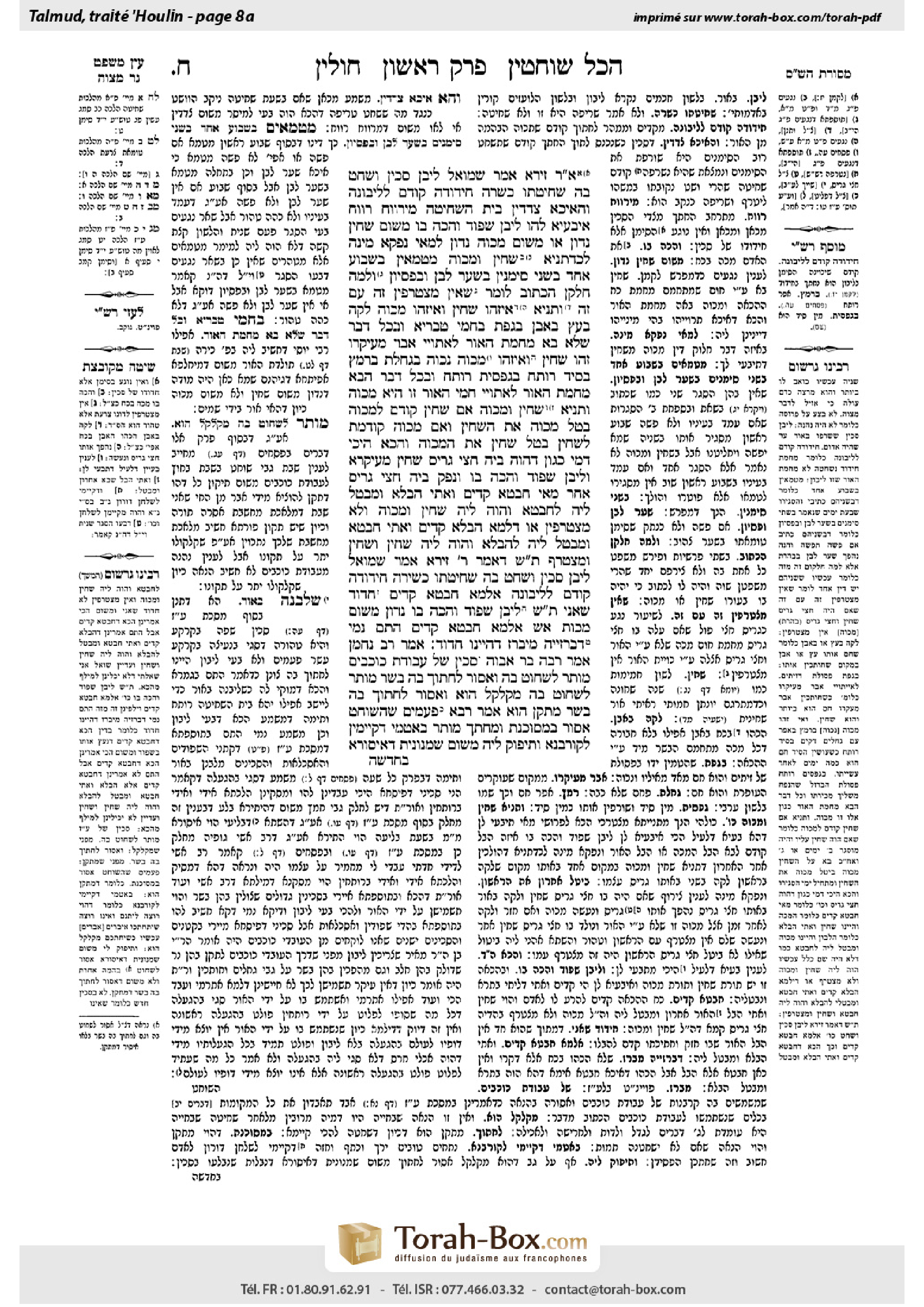
Chullin 8a: Talmud study for Daf Yomi
Study the Talmud for Daf Yomi with scanned pages, Hebrew text, English translations from Sefaria and AI-generated French translations.
Passage selection and English or AI-generated French translation are available where the scan has annotations. Daf Study is independent of Torah-Box and Sefaria.
Browse Chullin · חולין · All tractatesChullin 8a text and translations
This page of Chullin includes the Aramaic text, an English translation and an AI-generated French translation, alongside the scan above.
חולין ח׳ א · Aramaic and Hebrew text
אָמַר רַבִּי זֵירָא אָמַר שְׁמוּאֵל: לִיבֵּן סַכִּין וְשָׁחַט בָּהּ – שְׁחִיטָתוֹ כְּשֵׁרָה, חִידּוּדָהּ קוֹדֵם לְלִיבּוּנָהּ. וְהָאִיכָּא צְדָדִין? בֵּית הַשְּׁחִיטָה מִירְוָוח רָוַוח.
אִיבַּעְיָא לְהוּ: לִיבֵּן שַׁפּוּד וְהִכָּה בּוֹ, מִשּׁוּם שְׁחִין נִדּוֹן אוֹ מִשּׁוּם מִכְוָה נִדּוֹן?
לְמַאי נָפְקָא מִינַּהּ – לְכִדְתַנְיָא: שְׁחִין וּמִכְוָה מְטַמְּאִין בְּשָׁבוּעַ אֶחָד, בִּשְׁנֵי סִימָנִין – בְּשֵׂעָר לָבָן וּבְפִסְיוֹן, וְלָמָּה חִלְּקָן הַכָּתוּב? לוֹמַר שֶׁאֵין מִצְטָרְפִין זֶה עִם זֶה.
וְתַנְיָא: אֵיזֶהוּ שְׁחִין וְאֵיזֶהוּ מִכְוָה? לָקָה בְּעֵץ, בְּאֶבֶן, בְּגֶפֶת, בְּחַמֵּי טְבֶרְיָא, וּבְכׇל דָּבָר שֶׁלֹּא בָּא מֵחֲמַת הָאוּר, לְאֵתוֹיֵי אֲבָר מֵעִיקָּרוֹ – זֶהוּ שְׁחִין. וְאֵיזֶהוּ מִכְוָה? נִכְוָה בְּגַחֶלֶת, בְּרֶמֶץ, בְּסִיד רוֹתֵחַ, בְּגִפְסִיס רוֹתֵחַ, וּבְכׇל דָּבָר הַבָּא מֵחֲמַת הָאוּר, לְאֵתוֹיֵי חַמֵּי הָאוּר – זוֹ הִיא מִכְוָה.
וְתַנְיָא: שְׁחִין וּמִכְוָה, אִם שְׁחִין קוֹדֵם לַמִּכְוָה – בִּטֵּל מִכְוָה אֶת הַשְּׁחִין, וְאִם מִכְוָה קוֹדֶמֶת לַשְּׁחִין – בִּטֵּל שְׁחִין אֶת הַמִּכְוָה.
וְהָכָא, הֵיכִי דָּמֵי? כְּגוֹן דַּהֲוָה בֵּיהּ חֲצִי גְּרִיס שְׁחִין מֵעִיקָּרָא, וְלִיבֵּן שַׁפּוּד וְהִכָּה בּוֹ, וּנְפַק בֵּיהּ חֲצִי גְּרִיס אַחֵר.
מַאי חַבְטָא? קָדֵים וְאָתֵי הַבְלָא וּמְבַטֵּל לֵיהּ לְחַבְטָא, וְהָוֵה לֵיהּ שְׁחִין וּמִכְוָה, וְלָא מִצְטָרְפִין; אוֹ דִלְמָא הַבְלָא קָדֵים, וְאָתֵי חַבְטָא וּמְבַטֵּל לֵיהּ לְהַבְלָא, וְהָוֵה לֵיהּ שְׁחִין וּשְׁחִין, וּמִצְטָרֵף?
תָּא שְׁמַע, דְּאָמַר רַבִּי זֵירָא אָמַר שְׁמוּאֵל: לִיבֵּן סַכִּין וְשָׁחַט בָּהּ – שְׁחִיטָתוֹ כְּשֵׁירָה, חִידּוּדָהּ קוֹדֵם לְלִיבּוּנָהּ. אַלְמָא חַבְטָא קָדֵים! חִדּוּד שָׁאנֵי.
תָּא שְׁמַע: לִיבֵּן שַׁפּוּד וְהִכָּה בּוֹ – נִדּוֹן מִשּׁוּם מִכְוַת אֵשׁ, אַלְמָא חַבְטָא קָדֵים! הָתָם נָמֵי, דְּבַרְזֵייהּ מִיבְרָז, דְּהַיְינוּ חִדּוּד.
אָמַר רַב נַחְמָן אָמַר רַבָּה בַּר אֲבוּהּ: סַכִּין שֶׁל עֲבוֹדָה זָרָה מוּתָּר לִשְׁחוֹט בָּהּ, וְאָסוּר לַחְתּוֹךְ בָּהּ בָּשָׂר. מוּתָּר לִשְׁחוֹט בָּהּ – מְקַלְקֵל הוּא, וְאָסוּר לַחְתּוֹךְ בָּהּ בָּשָׂר – מְתַקֵּן הוּא.
אָמַר רָבָא: פְּעָמִים שֶׁהַשּׁוֹחֵט אָסוּר – בִּמְסוּכֶּנֶת, וּמְחַתֵּךְ מוּתָּר – בְּאַטְמֵי דְּקָיְימָן לְקוּרְבָּנָא.
וְתִיפּוֹק לֵיהּ מִשּׁוּם שַׁמְנוּנִית דְּאִיסּוּרָא!
Chullin 8a · English translation
§ Rabbi Zeira says that Shmuel says: If one heated a knife until it became white hot [libben] and slaughtered an animal with it, his slaughter is valid, as cutting the relevant simanim with the knife’s sharp blade preceded the effect of its white heat. Had the effect of the heat preceded the cutting, the animal would have been rendered a tereifa, an animal with a wound that will cause it to die within twelve months, before the slaughter was completed, by searing the windpipe and the gullet. The Gemara asks: But aren’t there the sides of the knife, which burn the throat and render the animal a tereifa? The Gemara answers: The area of the slaughter in the throat parts immediately after the incision, and the tissue on either side of the incision is not seared by the white-hot blade.
A dilemma was raised before the Sages: If one heated a skewer [shappud] until it became white hot and struck a person with it, and after the wound healed a leprous mark developed, is that mark adjudged as a leprous boil or is it adjudged as a leprous burn?
What is the practical difference whether it is adjudged a boil or a burn? The difference is for that which is taught in a baraita: Both a leprous boil and a leprous burn become impure during one week of quarantine with two symptoms: With white hair that grows in the leprous mark and with spreading of the leprous mark. And why did the verse divide them into two separate passages even though their halakhic status is the same? The verse divided them to say that they do not join together to constitute the requisite measure of impure leprous marks. Rather, there is impurity only if the boil or the burn constitutes that measure individually.
And it is taught in a baraita: Which wound is a boil and which is a burn? If one was struck with wood, with a stone, with pomace, with the hot springs of Tiberias, or with any item that is not heated by fire, a phrase that serves to include lead that was mined from its source in the ground, which is occasionally hot enough to burn a person, this impression left on the skin is a boil. And which wound is a burn? If one was burned with a coal, with hot ashes, with boiling limestone, with boiling gypsum [begippesit], or with any item that is heated by fire, a phrase that serves to include water heated by fire, this impression left on the skin is a burn.
And it is taught in a baraita: If there is a boil and a burn on the same place on the skin and a leprous mark developed, the later wound determines the nature of the leprosy. Therefore, if the boil preceded the burn, the burn nullifies the boil and the mark is a leprous burn. And if the burn preceded the boil, the boil nullifies the burn and the mark is a leprous boil.
And here, where the dilemma was raised whether the mark that develops from being struck with a hot skewer is a boil or a burn, what are the circumstances? It is a case where initially there was a boil half the size of a split bean on the person’s skin, and one heated a skewer until it became white hot and struck him with it, and another mark half the size of a split bean emerged on the skin there.
The Gemara clarifies the dilemma: What is the halakha? Does the effect of the blow come first and then the effect of the heat comes and nullifies the effect of the blow, and it is a half-measure boil and a half-measure burn and they do not join together to constitute a full measure? Or perhaps the effect of the heat comes first and then the effect of the blow comes and nullifies the effect of the heat, and it is a half-measure boil and a half-measure boil and they join together.
The Gemara suggests: Come and hear a resolution to the dilemma from that which Rabbi Zeira says that Shmuel says: If one heated a knife until it became white hot and slaughtered an animal with it, his slaughter is valid, as cutting the relevant simanim with the knife’s sharp blade preceded the effect of its white heat. Apparently, the effect of the blow comes first. The Gemara rejects that proof: Cutting with a sharp blade is different from striking with a blunt object, and only in the case of a blade does the cut precede the effect of the heat.
The Gemara suggests: Come and hear a resolution to the dilemma from a baraita: If one heated a skewer until it became white hot and struck a person with it and after the wound healed a leprous mark developed, that mark is adjudged as a leprous burn caused by fire. Apparently, the effect of the blow precedes the effect of the burn. The Gemara rejects that proof: There too, the reference is to a case where he stabbed the skin with the skewer, which is the same as cutting with a sharp blade.
§ Rav Naḥman says that Rabba bar Avuh says: With regard to a knife used for idol worship, it is permitted to slaughter an animal with it, but it is prohibited to cut meat with it. It is permitted to slaughter an animal with it because slaughtering it is a destructive action vis-à-vis the animal, which is worth more when it is alive. But it is prohibited to cut meat with it, because once the animal is slaughtered, cutting it is a constructive action that renders the meat manageable.
Rava said: There are times when it is prohibited for one who slaughters an animal to use a knife used for idol worship, e.g., in the case of an animal that is in danger, meaning that it is about to die. If he does not slaughter the animal it would become an unslaughtered carcass and depreciate in value. And there are times when it is permitted for one who cuts meat to use a knife of idol worship, e.g., in the case of an animal whose thighs are intended to be sent as a gift to a person of stature. Cutting it into pieces would render it unfit for this purpose, thereby diminishing its value.
The Gemara challenges: And derive that it is prohibited to use a knife used for idol worship, not because benefit from it is prohibited, but due to the residue of fat of forbidden carcasses on the knife.
Chullin 8a · Traduction française (IA)
§ Rabbi Zeira dit que Shmuel dit : Si l'on a chauffé un couteau jusqu'à ce qu'il devienne blanc à l'orange [libben] et qu'on ait sacrifié un animal avec ce couteau, la boucherie est valide, car la découpe des parties pertinentes avec la lame acérée du couteau a précédé l'effet de la chaleur blanche. Si l'effet de la chaleur avait précédé la découpe, l'animal aurait été rendu téréif, c'est-à-dire un animal ayant une blessure qui le fera mourir dans les douze mois suivants, avant que le sacrifice ne soit achevé, en brûlant la trachée et l'œsophage. La Guemara pose la question : Mais ne sont-ce pas les côtés du couteau qui brûlent la gorge et rendent l'animal téréif ? La Guemara répond : La zone de la boucherie dans les parties de la gorge immédiatement après l'incision, et le tissu des deux côtés de l'incision n'est pas brûlé par la lame blanche.
Un dilemme a été soulevé devant les Sages : Si l'on a chauffé un bâton [shappud] jusqu'à ce qu'il devienne rougeoyant et qu'on ait frappé une personne avec ce bâton, et après que la plaie se soit guérie, une marque de lèpre s'est développée, cette marque est-elle considérée comme une lèpre de cloque ou comme une lèpre de brûlure ?
Quelle est la différence pratique entre la considération d'une cloque ou d'une brûlure ? La différence est celle qui est enseignée dans une baraïta : à la fois une cloque de lèpre et une brûlure de lèpre deviennent impures pendant une semaine de quarantaine avec deux symptômes : avec des cheveux blancs qui poussent dans la marque de lèpre et avec l'extension de la marque de lèpre. Et pourquoi la Parashah les divise-t-elle en deux passages séparés même si leur statut halakhique est le même ? La Parashah les divise pour dire qu'ils ne s'unissent pas pour constituer la mesure requise de marques de lèpre impures. En effet, l'impureté existe uniquement si la cloque ou la brûlure constitue cette mesure individuellement.
Et il est enseigné dans une baraïta : Quelle plaie est une cloque et quelle est une brûlure ? Si l'on a été frappé avec du bois, avec une pierre, avec des marcettes, avec les eaux chaudes de Tiberias, ou avec tout objet qui n'est pas chauffé par le feu, une expression qui inclut le plomb extrait de sa source dans la terre, qui est parfois suffisamment chaud pour brûler une personne, cette impression laissée sur la peau est une cloque. Et quelle plaie est une brûlure ? Si l'on a été brûlé avec un charbon, avec des cendres chaudes, avec du calcaire bouillant, avec de la chaux bouillante [begippesit], ou avec tout objet chauffé par le feu, une expression qui inclut l'eau chauffée par le feu, cette impression laissée sur la peau est une brûlure.
Et il est enseigné dans une baraïta : Si une cloque et une brûlure sont présentes sur la même zone de la peau et une marque de lèpre s'est développée, la plaie ultérieure détermine la nature de la lèpre. Ainsi, si la cloque a précédé la brûlure, la brûlure annule la cloque et la marque est une lèpre de brûlure. Et si la brûlure a précédé la cloque, la cloque annule la brûlure et la marque est une lèpre de cloque.
Et ici, où le dilemme a été soulevé sur la nature de la marque développée en étant frappé avec un bâton chaud, quelles sont les circonstances ? C'est un cas où initialement il y avait une cloque de la taille d'une demi-lentille de haricot sur la peau de la personne, et l'on a chauffé un bâton jusqu'à ce qu'il devienne blanc à l'orange et qu'on l'ait frappé avec, et une autre marque de la taille d'une demi-lentille de haricot s'est développée sur la peau là.
La Guemara clarifie le dilemme : Quel est le halakha ? L'effet du coup précède-t-il et l'effet de la chaleur arrive ensuite et annule l'effet du coup, et il s'agit d'une moitié de cuisson et d'une moitié de brûlure qui ne s'unissent pas pour constituer une mesure complète ? Ou peut-être l'effet de la chaleur précède-t-il et l'effet du coup arrive ensuite et annule l'effet de la chaleur, et il s'agit d'une moitié de cuisson et d'une moitié de cuisson qui s'unissent.
La Guemara suggère : Viens écouter une résolution au dilemme à partir de ce que Rabbi Zeira dit que Shmuel dit : Si l'on a chauffé un couteau jusqu'à ce qu'il devienne blanc à l'orange et qu'on ait sacrifié un animal avec ce couteau, la bête est considérée comme sacrifiée, car la découpe des parties pertinentes avec la lame acérée du couteau a précédé l'effet de la chaleur blanche. Apparemment, l'effet du coup précède. La Guemara rejette cette preuve : La découpe avec une lame acérée est différente de l'impact d'un objet lourd, et seul dans le cas d'une lame l'effet de la découpe précède l'effet de la chaleur.
La Guemara suggère : Viens écouter une résolution au dilemme à partir d'une baraïta : Si l'on a chauffé un bâton jusqu'à ce qu'il devienne blanc à l'orange et qu'on ait frappé une personne avec ce bâton et après que la plaie se soit guérie une marque de lèpre s'est développée, cette marque est considérée comme une lèpre de brûlure causée par le feu. Apparemment, l'effet du coup précède l'effet de la brûlure. La Guemara rejette cette preuve : Il s'agit également d'un cas où l'on a perçé la peau avec le bâton, ce qui est le même que la découpe avec une lame acérée.
§ Rav Naḥman dit que Rabba bar Avuh dit : En ce qui concerne un couteau utilisé pour l'idolâtrie, il est permis de sacrifier un animal avec lui, mais il est interdit de couper la viande avec lui. Il est permis de sacrifier un animal avec lui car le sacrifice est une action destructive vis-à-vis de l'animal, qui est plus précieux lorsqu'il est vivant. Mais il est interdit de couper la viande avec lui, car une fois que l'animal est sacrifié, la découpe est une action constructive qui rend la viande manipulable.
Rava dit : Il y a des moments où il est interdit à celui qui sacrifie un animal d'utiliser un couteau utilisé pour l'idolâtrie, par exemple dans le cas d'un animal en danger, c'est-à-dire qui est sur le point de mourir. Si l'on ne sacrifie pas l'animal, il deviendra un cadavre non sacrifié et perdra en valeur. Et il y a des moments où il est permis à celui qui découpe la viande d'utiliser un couteau d'idolâtrie, par exemple dans le cas d'un animal dont les cuisses sont destinées à être offertes à une personne de stature. La découpe en morceaux rendrait cette viande inadaptée à cet usage, diminuant ainsi sa valeur.
La Guemara conteste : Et dérive que l'utilisation d'un couteau utilisé pour l'idolâtrie est interdite, pas parce que l'usage est interdit, mais en raison de la résidu de graisse des cadavres interdits sur le couteau.
Traduction française générée par IA à partir de l’édition anglaise de Sefaria. Vérifie toujours un passage avec le texte source.
Text from Sefaria: William Davidson Edition - Vocalized Aramaic (unknown); William Davidson Edition - English (CC BY NC).