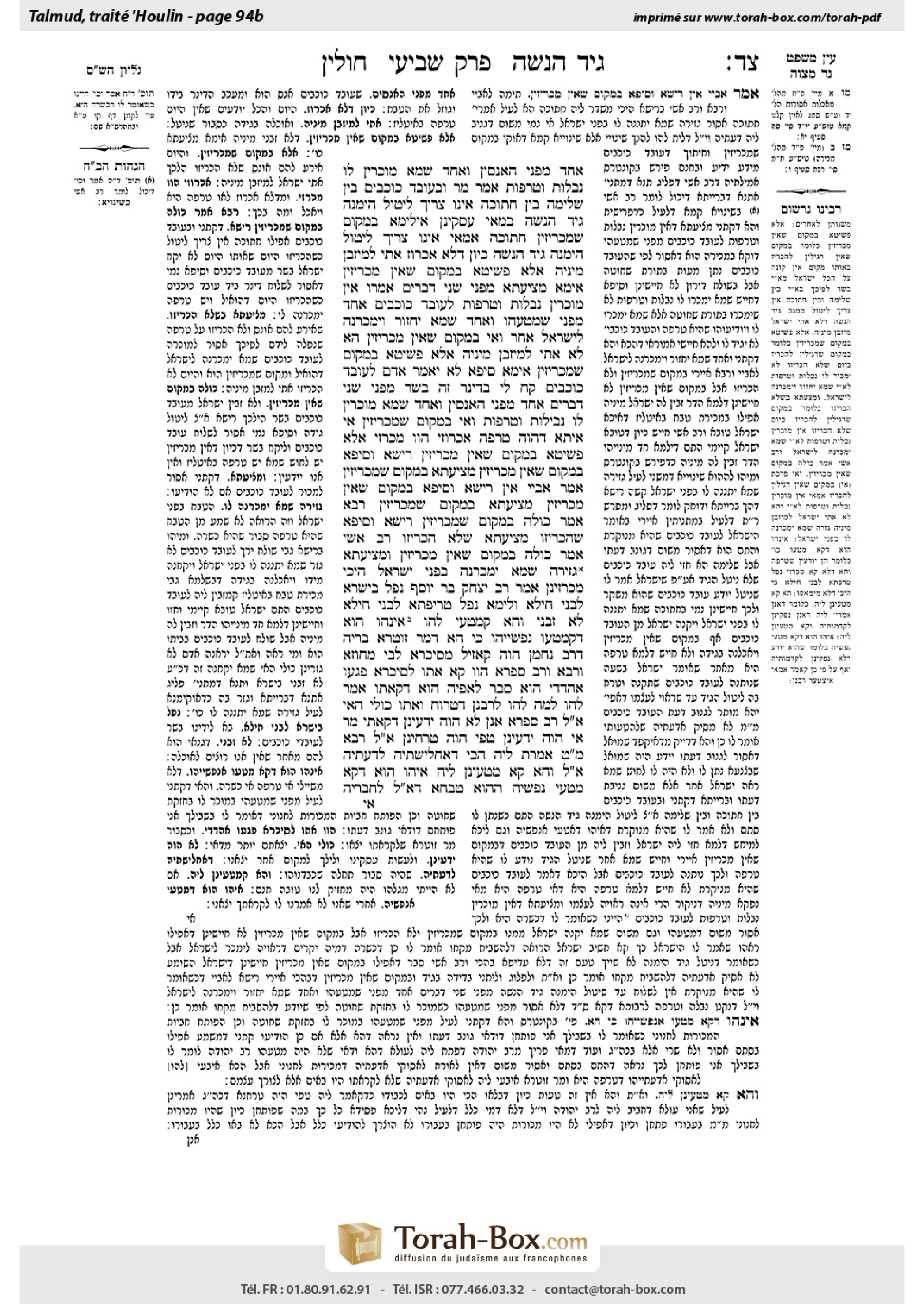
Chullin 94b: Talmud study for Daf Yomi
Study the Talmud for Daf Yomi with scanned pages, Hebrew text, English translations from Sefaria and AI-generated French translations.
Passage selection and English or AI-generated French translation are available where the scan has annotations. Daf Study is independent of Torah-Box and Sefaria.
Browse Chullin · חולין · All tractatesChullin 94b text and translations
This page of Chullin includes the Aramaic text, an English translation and an AI-generated French translation, alongside the scan above.
חולין צ״ד ב · Aramaic and Hebrew text
אֶחָד מִפְּנֵי הָאַנָּסִין, וְאֶחָד שֶׁמָּא מוֹכְרִין לוֹ נְבֵלוֹת וּטְרֵפוֹת.
אָמַר מָר: וּבְגוֹי, בֵּין שְׁלֵימָה בֵּין חֲתוּכָה – אֵינוֹ צָרִיךְ לִיטּוֹל הֵימֶנָּה גִּיד הַנָּשֶׁה. בְּמַאי עָסְקִינַן? אִילֵימָא בְּמָקוֹם שֶׁמַּכְרִיזִין – חֲתוּכָה אַמַּאי אֵינוֹ צָרִיךְ לִיטּוֹל הֵימֶנָּה גִּיד הַנָּשֶׁה? כֵּיוָן דְּלָא אַכְרוּז, אָתֵי לְמִיזְבַּן מִינֵּיהּ.
אֶלָּא פְּשִׁיטָא בִּמְקוֹם שֶׁאֵין מַכְרִיזִין, אֵימָא מְצִיעֲתָא: מִפְּנֵי שְׁנֵי דְבָרִים אָמְרוּ אֵין מוֹכְרִין נְבֵלוֹת וּטְרֵפוֹת לְגוֹי: אֶחָד מִפְּנֵי שֶׁמַּטְעֵהוּ, וְאֶחָד שֶׁמָּא יַחְזוֹר וְיִמְכְּרֶנָּה לְיִשְׂרָאֵל אַחֵר.
וְאִי בִּמְקוֹם שֶׁאֵין מַכְרִיזִין – הָא לָא אָתֵי לְמִיזְבַּן מִינֵּיהּ! אֶלָּא פְּשִׁיטָא בִּמְקוֹם שֶׁמַּכְרִיזִין.
אֵימָא סֵיפָא: לֹא יֹאמַר אָדָם לְגוֹי ״קַח לִי בְּדִינָר זֶה בָּשָׂר״ מִפְּנֵי שְׁנֵי דְבָרִים, אֶחָד – מִפְּנֵי הָאַנָּסִין, וְאֶחָד – שֶׁמָּא מוֹכְרִין לוֹ נְבֵילוֹת וּטְרֵפוֹת, וְאִי בִּמְקוֹם שֶׁמַּכְרִיזִין, אִי אִיתָא דַּהֲוָה טְרֵפָה – אַכְרוֹזֵי הֲווֹ מַכְרְזִי!
אֶלָּא פְּשִׁיטָא בִּמְקוֹם שֶׁאֵין מַכְרִיזִין, רֵישָׁא וְסֵיפָא בִּמְקוֹם שֶׁאֵין מַכְרִיזִין, מְצִיעֲתָא בִּמְקוֹם שֶׁמַּכְרִיזִין!
אָמַר אַבָּיֵי: אִין, רֵישָׁא וְסֵיפָא בִּמְקוֹם שֶׁאֵין מַכְרִיזִין, מְצִיעֲתָא בִּמְקוֹם שֶׁמַּכְרִיזִין.
רָבָא אָמַר: כּוּלַּהּ בִּמְקוֹם שֶׁמַּכְרִיזִין. רֵישָׁא וְסֵיפָא – שֶׁהִכְרִיזוּ, מְצִיעֲתָא – שֶׁלֹּא הִכְרִיזוּ.
רַב אָשֵׁי אָמַר: כּוּלַּהּ בִּמְקוֹם שֶׁאֵין מַכְרִיזִין, וּמְצִיעֲתָא גְּזֵירָה שֶׁמָּא יִמְכְּרֶנָּה בִּפְנֵי יִשְׂרָאֵל.
הֵיכִי מַכְרְזִינַן? אָמַר רַב יִצְחָק בַּר יוֹסֵף: נְפַל בִּישְׂרָא לִבְנֵי חֵילָא.
וְלֵימָא: נְפַל טְרֵיפְתָּא לִבְנֵי חֵילָא! לָא זָבְנִי.
וְהָא קָמַטְעֵי לְהוּ? אִינְהוּ הוּא דְּקָמַטְעוּ נַפְשַׁיְיהוּ.
כִּי הָא דְּמָר זוּטְרָא בְּרֵיהּ דְּרַב נַחְמָן הֲוָה קָאָזֵיל מִסִּיכְרָא לְבֵי מָחוֹזָא, וְרָבָא וְרַב סָפְרָא הֲווֹ קָא אָתוּ לְסִיכְרָא, פְּגַעוּ אַהֲדָדֵי. הוּא סָבַר לְאַפֵּיהּ הוּא דְּקָאָתוּ, אֲמַר לְהוּ: לְמָה לְהוּ לְרַבָּנַן דִּטְרוּחַ וַאֲתוֹ כּוּלֵּי הַאי? אֲמַר לֵיהּ רַב סָפְרָא: אֲנַן לָא הֲוָה יָדְעִינַן דְּקָאָתֵי מָר, אִי הֲוָה יָדְעִינַן טְפֵי הֲוָה טָרְחִינַן.
אֲמַר לֵיהּ רָבָא: מַאי טַעְמָא אֲמַרְתְּ לֵיהּ הָכִי, דְּאַחְלֵישְׁתֵּיהּ לְדַעְתֵּיהּ? אֲמַר לֵיהּ: וְהָא קָא מַטְעֵינַן לֵיהּ! אִיהוּ הוּא דְּקָא מַטְעֵי נַפְשֵׁיהּ.
הָהוּא טַבָּחָא דַּאֲמַר לֵיהּ לְחַבְרֵיהּ:
Chullin 94b · English translation
One factor is because of the oppressors, i.e., the concern that perhaps the gentile will keep the money for himself and force the merchant to give him the meat without payment. And another factor is lest the merchant sell him meat from unslaughtered carcasses or tereifot without realizing that the gentile is purchasing the meat on behalf of a Jew.
The Master said in the baraita: And in the case of one who sends a thigh to a gentile, regardless of whether it is cut or whole he is not required to remove the sciatic nerve from it. The Gemara asks: What are we dealing with? If we say that it is referring to a place where all the butchers are Jewish and they announce every time they sell non-kosher meat to a gentile, then in the case of a thigh that has been cut, why is one not required to remove the sciatic nerve? Since it was not announced that they sold non-kosher meat, a Jew might come to purchase it from a gentile without realizing that it still contains the sciatic nerve.
Rather, it is obvious that it is referring to a place where they do not announce every time they sell non-kosher meat, and in such a place a Jew would not purchase meat from a gentile. But say the middle clause of the baraita: And it was due to two factors that the Sages said that one may not sell meat from unslaughtered animal carcasses or tereifot to a gentile: One is because it misleads him; and another is the concern lest the gentile then sell the meat to another Jew, who will think it is kosher since it originally was sold by a Jew.
But if the baraita is referring to a place where they do not announce every time they sell non-kosher meat to a gentile, a Jew will not come to purchase the meat from the gentile. Rather, it is obvious that the baraita is referring to a place where they announce every time they sell non-kosher meat.
But say the latter clause: And similarly, a person may not say to a gentile: Purchase meat for me with this dinar, due to two factors. One factor is because of the oppressors, and another factor is lest the merchant sell him meat from unslaughtered carcasses or tereifot without realizing that the gentile is purchasing the meat on behalf of a Jew. But if it is referring to a place where they announce every time non-kosher meat is sold, if it would happen that it was a tereifa the butchers would have announced the fact, and the Jew would know not to eat that meat.
Rather, it is obvious that the baraita is referring to a place where they do not announce every time non-kosher meat is sold. But is it possible that the first clause and the latter clause of the baraita are referring to a place where they do not announce every time non-kosher meat is sold but the middle clause is referring to a place where they do announce every time non-kosher meat is sold?
Abaye said: Yes, the first clause and the latter clause of the baraita are referring to a place where they do not announce every time non-kosher meat is sold, and the middle clause is referring to a place where they do announce every time non-kosher meat is sold.
Rava said: The entire baraita is referring to a place where they announce every time non-kosher meat is sold. The first clause and the latter clause are referring to days when they announced that non-kosher meat had been sold, and the middle clause is referring to a day when they did not announce that non-kosher meat had been sold.
Rav Ashi said: The entire baraita is referring to a place where they do not announce every time non-kosher meat is sold. And the reason that the middle clause teaches that it is prohibited to sell meat from unslaughtered carcasses or tereifot to a gentile is due to a rabbinic decree lest the Jew sell it to the gentile in the presence of another Jew, who will think that this particular piece of meat is kosher.
§ The Gemara noted that there were places where they would announce whenever non-kosher meat was sold to a gentile. The Gemara asks: How do we announce that non-kosher meat has been sold? The Gemara answers that Rav Yitzḥak bar Yosef said: Meat has fallen into our possession for the soldiers, i.e., the gentiles.
The Gemara objects: But let them say: A tereifa has fallen into our possession for the soldiers. The Gemara answers that if a butcher would publicize the fact that it is a tereifa, the gentiles would not purchase it from him because they would not want an animal rejected by the Jews.
The Gemara asks: But if the announcement is made in a way that obscures from the gentiles the fact that the animal is a tereifa, doesn’t this deceive them? The Gemara answers: It is they who deceive themselves, because the seller does not specify which kind of meat he is selling.
The Gemara cites proof that it is permitted to allow others to mislead themselves. It is like this incident when Mar Zutra, son of Rav Naḥman, was going from the city of Sikhra to the city of Bei Meḥoza, and at the same time Rava and Rav Safra were going to Sikhra. They met each other, and Mar Zutra thought they were coming out to greet him. He said to them: Why did the Rabbis exert themselves and come all this way to greet me? Rav Safra said to him: We did not know that the Master was coming; if we would have known we would have exerted ourselves more.
Rava said to Rav Safra: What is the reason that you said this to Mar Zutra? By telling him that we were not coming to greet him you upset him. Rav Safra said to Rava: But if I would not have said so we would have misled him. Rava responded: Mar Zutra misled himself, since we never said we were coming to greet him.
§ The Gemara returns to the topic of selling non-kosher meat to a gentile. There was a certain Jewish butcher who said to another individual:
Chullin 94b · Traduction française (IA)
Un facteur est dû aux oppresseurs, c'est-à-dire la crainte que le gentil conserve l'argent pour lui-même et force le marchand à lui donner la viande sans paiement. Un autre facteur est de craindre que le marchand vende à ce gentil de la viande provenant de carcasses non sacrifiées ou de tereifot sans se rendre compte que le gentil achète la viande au nom d'un Juif.
Le Maître a dit dans la baraïta : Et dans le cas d'une cuisse envoyée à un gentil, qu'elle soit coupée ou entière, il n'est pas tenu de retirer le nerf sciatique. La Guemara pose la question : De quoi s'agit-il ? Si l'on dit qu'il s'agit d'un lieu où tous les bouchers sont juifs et qu'ils annoncent chaque fois qu'ils vendent de la viande non-kosher à un gentil, alors dans le cas d'une cuisse coupée, pourquoi n'est-on pas tenu de retirer le nerf sciatique ? Puisque cela n'a pas été annoncé qu'ils vendaient de la viande non-kosher, un Juif pourrait venir acheter cette viande à un gentil sans se rendre compte qu'elle contient encore le nerf sciatique.
Au contraire, il est évident qu'il s'agit d'un lieu où ils n'annoncent pas chaque fois qu'ils vendent de la viande non-kosher, et dans un tel lieu un Juif ne viendrait pas acheter de viande à un gentil. Mais disons la clause intermédiaire de la baraïta : Et c'est à cause de deux facteurs que les Sages ont dit qu'on ne doit pas vendre de viande provenant de carcasses non sacrifiées ou de tereifot à un gentil : l'un est dû à la confusion qu'il peut causer, et l'autre est la crainte que le gentil vende alors la viande à un autre Juif, qui la considérera comme kasher puisqu'elle a été vendue par un Juif.
Mais si la baraïta fait référence à un lieu où ils n'annoncent pas chaque fois qu'ils vendent de la viande non-kosher à un gentil, un Juif ne viendra pas acheter la viande à ce gentil. Au contraire, il est évident que la baraïta fait référence à un lieu où ils annoncent chaque fois qu'ils vendent de la viande non-kosher.
Mais disons la dernière clause : Et de même, une personne ne doit pas dire à un gentil : Achète-moi de la viande avec ce dinar, à cause de deux facteurs. L'un est dû aux oppresseurs, et l'autre est la crainte que le marchand vende à ce gentil de la viande provenant de carcasses non sacrifiées ou de tereifot sans se rendre compte que le gentil achète la viande au nom d'un Juif. Mais si la baraïta fait référence à un lieu où ils annoncent chaque fois que de la viande non-kosher est vendue, si c'était une tereifa, les bouchers auraient annoncé cela, et le Juif aurait su ne pas manger cette viande.
Au contraire, il est évident que la baraïta fait référence à un lieu où ils n'annoncent pas chaque fois que de la viande non-kosher est vendue. Mais est-il possible que la première clause et la dernière clause de la baraïta fassent référence à un lieu où ils n'annoncent pas chaque fois que de la viande non-kosher est vendue, mais que la clause intermédiaire fasse référence à un lieu où ils annoncent chaque fois que de la viande non-kosher est vendue ?
Abaye a dit : Oui, la première clause et la dernière clause de la baraïta s'adressent à un lieu où ils n'annoncent pas chaque fois que de la viande non-kosher est vendue, et la clause intermédiaire s'adresse à un lieu où ils annoncent chaque fois que de la viande non-kosher est vendue.
Rava a dit : L'ensemble de la baraïta s'adresse à un lieu où ils annoncent chaque fois que de la viande non-kosher est vendue. La première clause et la dernière clause s'adressent aux jours où ils ont annoncé que de la viande non-kosher avait été vendue, et la clause intermédiaire s'adresse à un jour où ils n'ont pas annoncé que de la viande non-kosher avait été vendue.
Rav Ashi a dit : L'ensemble de la baraïta s'adresse à un lieu où ils n'annoncent pas chaque fois que de la viande non-kosher est vendue. Et la raison pour laquelle la clause intermédiaire enseigne que vendre de la viande provenant de carcasses non sacrifiées ou de tereifot à un gentil est interdit est due à un décret rabbinique, de crainte que le Juif vende cette viande au gentil en présence d'un autre Juif, qui pensera que cette pièce de viande est kasher.
§ La Guemara souligne que dans certains lieux, on annonçait chaque fois que de la viande non-kosher était vendue à un gentil. La Guemara pose la question : Comment annonce-t-on que de la viande non-kosher a été vendue ? La Guemara répond que Rav Yitzḥak bar Yosef a dit : La viande est tombée entre nos mains pour les soldats, c'est-à-dire les gentils.
La Guemara s'oppose : Mais qu'ils disent : Une tereifa est tombée entre nos mains pour les soldats. La Guemara répond que si un boucher déclarait publiquement qu'il s'agit d'une tereifa, les gentils ne l'achèteraient pas de lui, car ils ne voudraient pas d'un animal rejeté par les Juifs.
La Guemara pose la question : Mais si l'annonce est faite de manière à dissimuler aux gentils le fait que l'animal est une tereifa, ne trompe-t-elle pas ainsi ? La Guemara répond : Ce sont eux qui se trompent eux-mêmes, car le vendeur ne précise pas de quel type de viande il s'agit.
La Guemara cite une preuve que permettre qu'autrui se trompe est permis. C'est comme cet incident où Mar Zutra, fils de Rav Naḥman, allait de la ville de Sikhra à la ville de Bei Meḥoza, et en même temps Rava et Rav Safra allaient à Sikhra. Ils se rencontrèrent, et Mar Zutra pensait qu'ils venaient le saluer. Il dit à eux : Pourquoi les Rabbins se sont-ils donné la peine de venir si loin pour me saluer ? Rav Safra dit à lui : Nous ne savions pas que le Maître venait ; si nous avions su, nous aurions fait plus d'efforts.
Rava dit à Rav Safra : Quelle est la raison pour laquelle tu as dit cela à Mar Zutra ? En lui disant qu'on ne venait pas le saluer, tu as mis en colère lui. Rav Safra dit à Rava : Mais si je n'avais pas dit cela, nous aurions trompé lui. Rava répondit : Mar Zutra s'est trompé lui-même, puisque nous n'avons jamais dit que nous venions le saluer.
§ La Guemara retourne à la question de la vente de viande non-kosher à un gentil. Il y avait un boucher juif qui dit à un autre individu :
Traduction française générée par IA à partir de l’édition anglaise de Sefaria. Vérifie toujours un passage avec le texte source.
Text from Sefaria: William Davidson Edition - Vocalized Aramaic (unknown); William Davidson Edition - English (CC BY NC).