Eruvin 32b: Talmud study for Daf Yomi
Study the Talmud for Daf Yomi with scanned pages, Hebrew text, English translations from Sefaria and AI-generated French translations.
Passage selection and English or AI-generated French translation are available where the scan has annotations. Daf Study is independent of Torah-Box and Sefaria.
Browse Eruvin · עירובין · All tractatesEruvin 32b text and translations
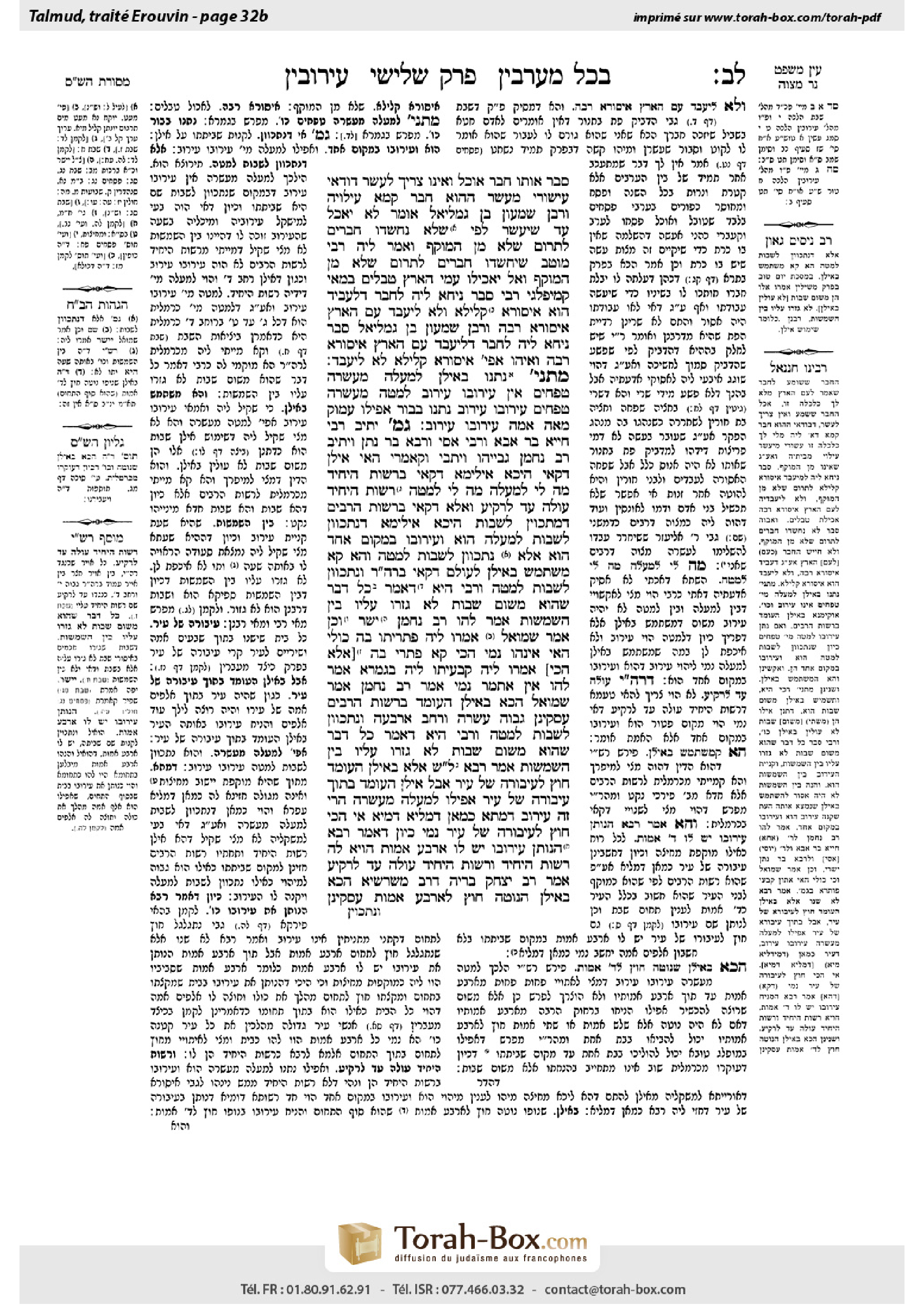
This page of Eruvin includes the Aramaic text, an English translation and an AI-generated French translation, alongside the scan above.
עירובין ל״ב ב · Aramaic and Hebrew text
סָבַר: אוֹתוֹ חָבֵר אוֹכֵל וְאֵינוֹ צָרִיךְ לְעַשֵּׂר, דְּוַדַּאי עַישּׂוֹרֵי מְעַשַּׂר הָהוּא חָבֵר קַמָּא עִילָּוֵיהּ. וְרַבָּן שִׁמְעוֹן בֶּן גַּמְלִיאֵל אוֹמֵר: לֹא יֹאכַל עַד שֶׁיְּעַשֵּׂר, לְפִי שֶׁלֹּא נֶחְשְׁדוּ חֲבֵרִים לִתְרוֹם שֶׁלֹּא מִן הַמּוּקָּף. וַאֲמַר לֵיהּ רַבִּי: מוּטָב שֶׁיֵּחָשְׁדוּ חֲבֵרִים לִתְרוֹם שֶׁלֹּא מִן הַמּוּקָּף וְאַל יַאֲכִילוּ עַמֵּי הָאָרֶץ טְבָלִים.
בְּמַאי קָמִיפַּלְגִי? רַבִּי סָבַר: נִיחָא לֵיהּ לְחָבֵר דְּלֶעֱבֵיד הוּא אִיסּוּרָא קַלִּילָא וְלָא לֶיעֱבֵד עַם הָאָרֶץ אִיסּוּרָא רַבָּה. וְרַבָּן שִׁמְעוֹן בֶּן גַּמְלִיאֵל סָבַר: נִיחָא לֵיהּ לְחָבֵר דְּלֶיעֱבֵד עַם הָאָרֶץ אִיסּוּרָא רַבָּה, וְאִיהוּ אֲפִילּוּ אִיסּוּרָא קַלִּילָא לָא לֶיעֱבֵד.
מַתְנִי׳ נְתָנוֹ בְּאִילָן, לְמַעְלָה מֵעֲשָׂרָה טְפָחִים — אֵין עֵירוּבוֹ עֵירוּב, לְמַטָּה מֵעֲשָׂרָה טְפָחִים — עֵירוּבוֹ עֵירוּב. נְתָנוֹ בְּבוֹר, אֲפִילּוּ עָמוֹק מֵאָה אַמָּה — עֵירוּבוֹ עֵירוּב.
גְּמָ׳ יָתֵיב רַבִּי חִיָּיא בַּר אַבָּא וְרַבִּי אַסִּי וְרָבָא בַּר נָתָן, וְיָתֵיב רַב נַחְמָן גַּבַּיְיהוּ, וְיָתְבִי וְקָאָמְרִי: הַאי אִילָן, דְּקָאֵי הֵיכָא? אִילֵּימָא דְּקָאֵי בִּרְשׁוּת הַיָּחִיד, מָה לִי לְמַעְלָה מָה לִי לְמַטָּה? רְשׁוּת הַיָּחִיד עוֹלָה עַד לָרָקִיעַ.
וְאֶלָּא דְּקָאֵי בִּרְשׁוּת הָרַבִּים. דְּמִתְכַּוֵּין לִשְׁבּוֹת הֵיכָא? אִילֵּימָא דְּנִתְכַּוֵּון לִשְׁבּוֹת לְמַעְלָה — הוּא וְעֵירוּבוֹ בִּמְקוֹם אֶחָד הוּא. אֶלָּא נִתְכַּוֵּון לִשְׁבּוֹת לְמַטָּה — וְהָא קָא מִשְׁתַּמֵּשׁ בְּאִילָן!
לְעוֹלָם דְּקָאֵי בִּרְשׁוּת הָרַבִּים, וְנִתְכַּוֵּון לִשְׁבּוֹת לְמַטָּה. וְרַבִּי הִיא, דְּאָמַר: כׇּל דָּבָר שֶׁהוּא מִשּׁוּם שְׁבוּת לֹא גָּזְרוּ עָלָיו בֵּין הַשְּׁמָשׁוֹת.
אֲמַר לְהוּ רַב נַחְמָן: יִשַׁר, וְכֵן אָמַר שְׁמוּאֵל. אֲמַרוּ לֵיהּ: פָּתְרִיתוּ בָּהּ כּוּלֵּי הַאי?! אִינְהוּ נָמֵי הָכִי קָא פָּתְרִי בָּהּ! [אֶלָּא הָכִי] אֲמַרוּ לֵיהּ: קָבְעִיתוּ לֵיהּ בִּגְמָרָא? אֲמַר לְהוּ: אִין. אִתְּמַר נָמֵי, אָמַר רַב נַחְמָן אָמַר שְׁמוּאֵל: הָכָא בָּאִילָן הָעוֹמֵד בִּרְשׁוּת הָרַבִּים עָסְקִינַן, גָּבוֹהַּ עֲשָׂרָה וְרָחָב אַרְבָּעָה, וְנִתְכַּוֵּון לִשְׁבּוֹת לְמַטָּה, וְרַבִּי הִיא, דְּאָמַר: כׇּל דָּבָר שֶׁהוּא מִשּׁוּם שְׁבוּת לֹא גָּזְרוּ עָלָיו בֵּין הַשְּׁמָשׁוֹת.
אָמַר רָבָא: לֹא שָׁנוּ אֶלָּא בְּאִילָן הָעוֹמֵד חוּץ לְעִיבּוּרָהּ שֶׁל עִיר, אֲבָל אִילָן הָעוֹמֵד בְּתוֹךְ עִיבּוּרָהּ שֶׁל עִיר — אֲפִילּוּ לְמַעְלָה מֵעֲשָׂרָה הֲרֵי זֶה עֵירוּב, דְּמָתָא כְּמַאן דְּמַלְיָא דָּמְיָא.
אִי הָכִי, חוּץ לְעִיבּוּרָהּ שֶׁל עִיר נָמֵי, כֵּיוָן דְּאָמַר רָבָא: הַנּוֹתֵן עֵירוּבוֹ יֵשׁ לוֹ אַרְבַּע אַמּוֹת, הָוְיָא לַהּ רְשׁוּת הַיָּחִיד — וּרְשׁוּת הַיָּחִיד עוֹלָה עַד לָרָקִיעַ!
אָמַר רַב יִצְחָק בְּרֵיהּ דְּרַב מְשַׁרְשְׁיָא: הָכָא בָּאִילָן הַנּוֹטֶה חוּץ לְאַרְבַּע אַמּוֹת עָסְקִינַן,
Eruvin 32b · English translation
holds: That ḥaver, who heard the first ḥaver speaking to the am ha’aretz, may immediately eat from the basket, and he is not required to tithe the produce, as the first ḥaver certainly separated tithes for the person who picked the figs, as he would not have caused an am ha’aretz to eat tevel. And Rabban Shimon ben Gamliel disagrees and says: That ḥaver may not eat of the fruit until he has tithed them, for ḥaverim are not suspected of separating teruma and tithes from produce that is not adjacent to the produce they seek to exempt. And Rabbi Yehuda HaNasi said to him: It is better that ḥaverim should be suspected of separating teruma and tithes from produce that is not adjacent to the produce they seek to exempt, and they should not feed amei ha’aretz produce that is tevel.
The Gemara asks: With regard to what principle do they disagree? The Gemara answers: Rabbi Yehuda HaNasi holds: It is preferable to a ḥaver that he commit a minor transgression, namely separating tithes from produce that is not adjacent to the produce they seek to exempt, so that an am ha’aretz will not commit the major transgression of eating tevel on his account. And Rabban Shimon ben Gamliel holds: It is preferable to a ḥaver that an am ha’aretz commit a major transgression, and that he himself not commit even a minor transgression.
MISHNA: If one placed his eiruv in a tree above ten handbreadths from the ground, his eiruv is not a valid eiruv; if it is below ten handbreadths, his eiruv is a valid eiruv. If he placed the eiruv in a pit, even if it was a hundred cubits deep, his eiruv is a valid eiruv.
GEMARA: Rabbi Ḥiyya bar Abba sat, and with him sat Rabbi Asi and Rava bar Natan, and Rav Naḥman sat beside them, and they sat and said: This tree mentioned in the mishna, where does it stand? If you say it stands in the private domain, what is the difference to me whether the eiruv is placed above ten handbreadths or below ten handbreadths? The private domain ascends to the sky, and there is no difference whether an object is above or below ten handbreadths.
Rather, say that the tree stands in the public domain; but in that case the question arises: Where did the person intend to establish his Shabbat residence? If you say that he intended to establish his Shabbat residence in the tree above, he and his eiruv are in one place. Consequently, the eiruv should be valid, even if is at a height of more than ten handbreadths. Rather, say that he intended to establish his Shabbat residence on the ground below; but isn’t he making use of the tree if he accesses his eiruv? It is prohibited to make use of a tree on Shabbat, and therefore his eiruv should invalid even if it is less than ten handbreadths above the ground because it is inaccessible to him.
The Gemara answers: Actually, we can accept the latter assumption that the tree stands in the public domain, and that he intended to establish his Shabbat residence on the ground below, in the public domain. And with regard to the prohibition against making use of a tree, this mishna is in accordance with the opinion of Rabbi Yehuda HaNasi, who said: Anything that is prohibited on Shabbat not by Torah law, but rather due to a rabbinic decree [shevut], the Sages did not issue the decree to apply during twilight, which is neither definitively day nor definitively night. Since using a tree is only prohibited due to a shevut, it is permitted to make use of the tree and remove one’s eiruv from it during the twilight period, which is when the eiruv establishes the person’s Shabbat residence. Therefore, the eiruv is valid, provided that it is below ten handbreadths. If, however, the eiruv is above ten handbreadths, it is invalid. At that height, removing the eiruv from the tree entails violation of the Torah prohibition of carrying from a private domain to a public domain, which is prohibited even during twilight.
Rav Naḥman said to them: Well said, and Shmuel said similarly with regard to this issue. They said to him: Have you, the Sages of Babylonia, gone so far in your explanation of the mishna? The Gemara asks: Why were the Sages of Eretz Yisrael so surprised? They, too, explained the mishna in this manner. Rather, this is what they said to Rav Naḥman: Have you established this explanation as part of your regular study of the mishna? He said to them: Yes. Indeed, it was also explicitly stated that Rav Naḥman said that Shmuel said: Here, we are dealing with a tree standing in the public domain, and the tree is ten handbreadths high and four handbreadths wide. It thereby constitutes a private domain, and one intended to establish his Shabbat residence below in the public domain. And the mishna is in accordance with the opinion of Rabbi Yehuda HaNasi, who said: Anything that is prohibited on Shabbat not by Torah law, but rather due to a rabbinic decree, the Sages did not issue the decree to apply during twilight.
Rava said in continuation of this discussion: They only taught this law with regard to a tree that stands beyond the outskirts of the city, i.e., outside a radius of seventy and two-thirds cubits around the city. However, with regard to a tree that stands within the outskirts of the city, even if the eiruv was placed above ten handbreadths, it is a valid eiruv, as the city is considered as though it were filled in with earth, so that anything located at any height within the town itself or its outskirts is regarded as being in the same domain. Even though the person intended to establish his Shabbat residence below the tree in the public domain, we view the ground as raised to the height of the eiruv, and his eiruv is therefore valid even though he cannot actually remove it from the tree during the twilight period.
The Gemara asks: If so, if the tree stood beyond the outskirts of the town, there should also be no difference whether the eiruv is above or below the height of ten handbreadths. Since Rava himself said: One who places his eiruv in a particular location has four cubits surrounding him that are considered as a private domain, here too, the area should be considered a private domain; and a private domain rises to the sky. Since the tree stands within this area, all parts of the tree should be regarded as a private domain regardless of their height.
Rav Yitzḥak, son of Rav Mesharshiya, said: Here, we are dealing with a tree that leans out horizontally beyond four cubits from its trunk, and one placed the eiruv on a section that is beyond four cubits,
Eruvin 32b · Traduction française (IA)
affirme : Celui qui a entendu le premier ḥaver parler à l’am ha’aretz peut immédiatement manger du panier et n’est pas tenu de dîmer les produits, car le premier ḥaver a certainement séparé les dîmes pour la personne qui a ramassé les figues, car il ne l’aurait pas fait si cela avait causé à l’am ha’aretz de manger du tevel. Et Rabban Shimon ben Gamliel est d’avis contraire et dit : Ce ḥaver ne peut pas manger des fruits avant d’avoir dîmé ceux-ci, car les ḥaverim ne sont pas soupçonnés de séparer la terouma et les dîmes à partir de produits non adjacents aux produits qu’ils cherchent à exempter. Et Rabbi Yehuda HaNasi dit à lui : Il est préférable que les ḥaverim soient soupçonnés de séparer la terouma et les dîmes à partir de produits non adjacents aux produits qu’ils cherchent à exempter, et qu’ils ne nourrissent pas les amei ha’aretz avec des produits tevel.
La Guemara pose la question : Sur quel principe ces deux opinions s’opposent-elles ? La Guemara répond : Rabbi Yehuda HaNasi affirme : Il est préférable à un ḥaver qu’il commette une faute mineure, à savoir séparer les dîmes à partir de produits non adjacents aux produits qu’il cherche à exempter, afin que l’am ha’aretz ne commette pas la faute grave de manger du tevel à cause de lui. Et Rabban Shimon ben Gamliel affirme : Il est préférable à un ḥaver que l’am ha’aretz commette une faute grave, et qu’il lui-même ne commette pas même une faute mineure.
MICHNA : Si l’on a placé son eiruv dans un arbre au-dessus de dix tefachim du sol, son eiruv n’est pas valide ; si c’est en dessous de dix tefachim, son eiruv est valide. Si l’on a placé l’eiruv dans un puits, même s’il était cent coudées de profondeur, son eiruv est valide.
GUEMARA : Rabbi Ḥiyya bar Abba était assis, et avec lui Rabbi Asi et Rava bar Natan, et Rav Naḥman était assis à côté d’eux, et ils s’assirent et dirent : Cet arbre mentionné dans la mishna, où se trouve-t-il ? Si vous dites qu’il se trouve dans le domaine privé, quelle différence cela fait-il pour moi que l’eiruv soit placé au-dessus ou en dessous de dix tefachim ? Le domaine privé monte jusqu’au ciel, et il n’y a pas de différence entre un objet placé au-dessus ou en dessous de dix tefachim.
Plutôt, dites que l’arbre se trouve dans le domaine public ; mais dans ce cas, la question se pose : Où l’homme avait-il l’intention d’établir son lieu de repos du sabbat ? Si vous dites qu’il avait l’intention d’établir son lieu de repos du sabbat dans l’arbre au-dessus, il et son eiruv sont dans un même lieu. Par conséquent, l’eiruv devrait être valide, même s’il est à une hauteur supérieure à dix tefachim. Plutôt, dites qu’il avait l’intention d’établir son lieu de repos du sabbat sur le sol en dessous ; mais n’est-ce pas qu’il utilise l’arbre s’il accède à son eiruv ? Il est interdit d’utiliser un arbre le sabbat, et par conséquent son eiruv devrait être invalide même s’il est à moins de dix tefachim du sol, car il ne peut pas y accéder.
La Guemara répond : En réalité, nous pouvons accepter cette hypothèse selon laquelle l’arbre se trouve dans le domaine public, et qu’il avait l’intention d’établir son lieu de repos du sabbat sur le sol en dessous, dans le domaine public. Et concernant l’interdiction d’utiliser un arbre, cette mishna est en conformité avec l’opinion de Rabbi Yehuda HaNasi, qui dit : Tout ce qui est interdit le sabbat non par la Loi divine, mais par un décret des Sages [shevut], les Sages n’ont pas émis ce décret pendant l’heure du crépuscule, qui n’est ni clairement jour ni clairement nuit. Puisque l’utilisation d’un arbre est interdite uniquement par un décret des Sages, il est permis d’utiliser l’arbre et de retirer son eiruv de là pendant l’heure du crépuscule, qui est le moment où l’eiruv établit le lieu de repos du sabbat de la personne. Par conséquent, l’eiruv est valide, à condition qu’il soit en dessous de dix tefachim. Cependant, si l’eiruv est au-dessus de dix tefachim, il est invalide. À cette hauteur, retirer l’eiruv de l’arbre entraîne la violation de l’interdiction divine de porter des choses d’un domaine privé vers un domaine public, qui est interdite même pendant l’heure du crépuscule.
Rav Naḥman dit à eux : Bien dit, et Shmuel a dit de même concernant cette question. Ils dirent à lui : Avez-vous, les Sages de Babylone, allé si loin dans votre explication de la mishna ? La Guemara pose la question : Pourquoi les Sages d’Israël étaient-ils si surpris ? Ils, aussi, ont expliqué la mishna ainsi. Plutôt, c’est ce qu’ils dirent à Rav Naḥman : Avez-vous établi cette explication comme partie de votre étude régulière de la mishna ? Il dit à eux : Oui. En effet, cela a été explicitement mentionné que Rav Naḥman dit que Shmuel dit : Ici, nous sommes en présence d’un arbre se trouvant dans le domaine public, et l’arbre est haut de dix tefachim et large de quatre tefachim. Il constitue ainsi un domaine privé, et l’homme avait l’intention d’établir son lieu de repos du sabbat en dessous, dans le domaine public. Et la mishna est en conformité avec l’opinion de Rabbi Yehuda HaNasi, qui dit : Tout ce qui est interdit le sabbat non par la Loi divine, mais par un décret des Sages, les Sages n’ont pas émis ce décret pendant l’heure du crépuscule.
Rava dit en continuation de cette discussion : Ils ont enseigné cette loi uniquement concernant un arbre qui se trouve en dehors des limites de la ville, c’est-à-dire en dehors d’un rayon de soixante-et-deux tiers de coudée autour de la ville. Cependant, concernant un arbre qui se trouve à l’intérieur des limites de la ville, même si l’eiruv était placé au-dessus de dix tefachim, il est un eiruv valide, car la ville est considérée comme si elle était comblée de terre, de sorte que tout ce qui se trouve à toute hauteur à l’intérieur de la ville ou à ses limites est considéré comme étant dans le même domaine. Même si l’homme avait l’intention d’établir son lieu de repos du sabbat en dessous de l’arbre dans le domaine public, nous considérons le sol comme élevé à la hauteur de l’eiruv, et son eiruv est donc valide même s’il ne peut pas en effet le retirer de l’arbre pendant l’heure du crépuscule.
La Guemara pose la question : Si c’est ainsi, si l’arbre se trouvait en dehors des limites de la ville, il ne devrait pas non plus y avoir de différence entre l’eiruv placé au-dessus ou en dessous de dix tefachim. Puisque Rava lui-même a dit : Celui qui place son eiruv dans un lieu particulier a quatre coudées entourant lui qui sont considérés comme un domaine privé, ici aussi, la zone devrait être considérée comme un domaine privé ; et un domaine privé monte jusqu’au ciel. Puisque l’arbre se trouve dans cette zone, toutes les parties de l’arbre devraient être considérées comme un domaine privé, indépendamment de leur hauteur.
Rav Yitzḥak, fils de Rav Mesharshiya, dit : Ici, nous sommes en présence d'un arbre qui penche horizontalement au-delà de quatre cubits par rapport à son tronc, et l'on a placé l'eiruv sur une section située au-delà de quatre cubits,
Traduction française générée par IA à partir de l’édition anglaise de Sefaria. Vérifie toujours un passage avec le texte source.
Text from Sefaria: William Davidson Edition - Vocalized Aramaic (CC BY NC); William Davidson Edition - English (CC BY NC).