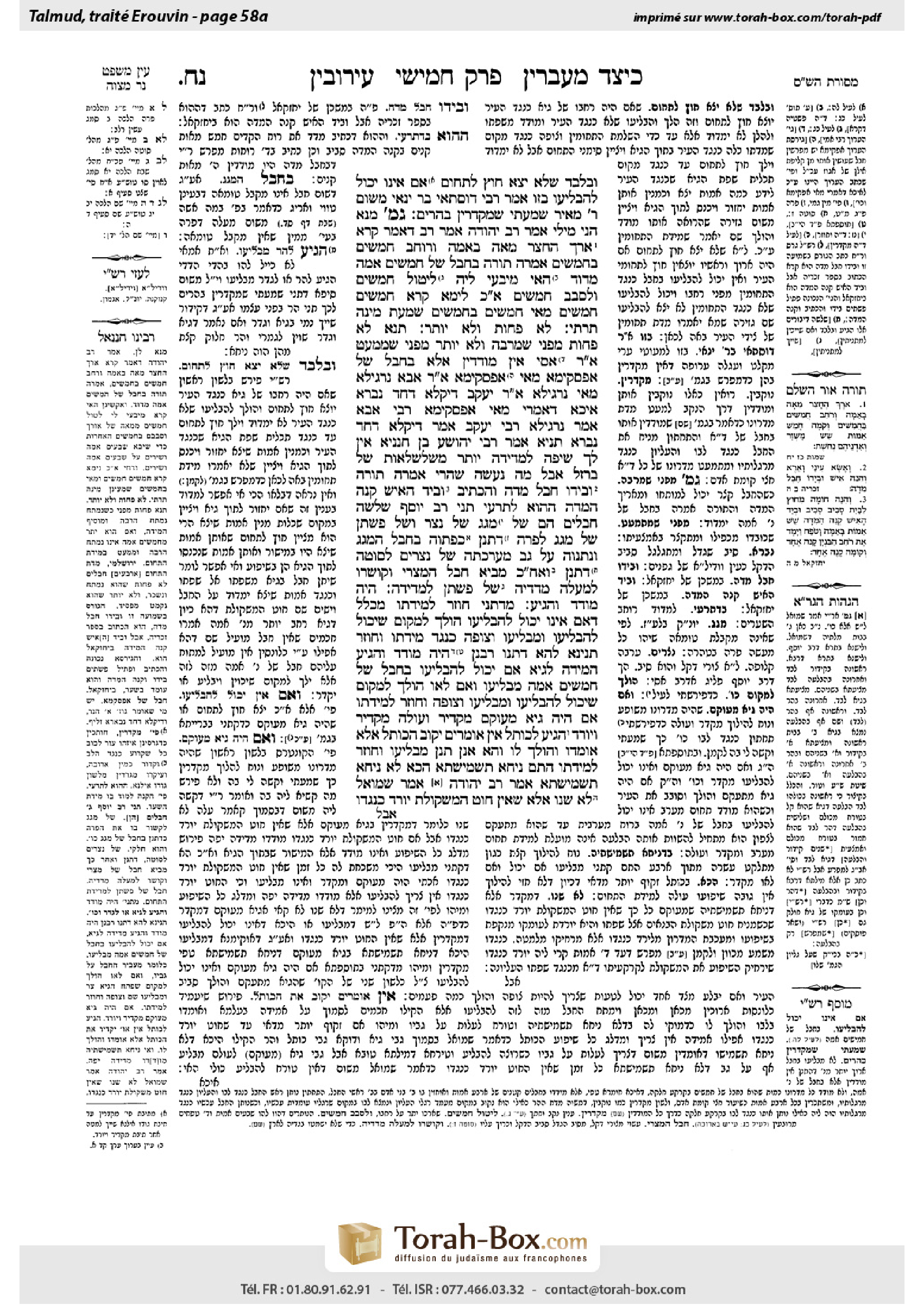
Eruvin 58a: Talmud study for Daf Yomi
Study the Talmud for Daf Yomi with scanned pages, Hebrew text, English translations from Sefaria and AI-generated French translations.
Passage selection and English or AI-generated French translation are available where the scan has annotations. Daf Study is independent of Torah-Box and Sefaria.
Browse Eruvin · עירובין · All tractatesEruvin 58a text and translations
This page of Eruvin includes the Aramaic text, an English translation and an AI-generated French translation, alongside the scan above.
עירובין נ״ח א · Aramaic and Hebrew text
וּבִלְבַד שֶׁלֹּא יֵצֵא חוּץ לַתְּחוּם.
אִם אֵינוֹ יָכוֹל לְהַבְלִיעוֹ — בְּזוֹ אָמַר רַבִּי דּוֹסְתַּאי בַּר יַנַּאי מִשּׁוּם רַבִּי מֵאִיר: שָׁמַעְתִּי שֶׁמְּקַדְּרִין בֶּהָרִים.
גְּמָ׳ מְנָא הָנֵי מִילֵּי? אָמַר רַב יְהוּדָה אָמַר רַב: דְּאָמַר קְרָא ״אֹרֶךְ הֶחָצֵר מֵאָה בָאַמָּה וְרוֹחַב חֲמִשִּׁים בַּחֲמִשִּׁים״, אָמְרָה תּוֹרָה: בְּחֶבֶל שֶׁל חֲמִשִּׁים אַמָּה מְדוֹד.
הַאי מִיבְּעֵי לֵיהּ לִיטּוֹל חֲמִשִּׁים וּלְסַבֵּב חֲמִשִּׁים.
אִם כֵּן לֵימָא קְרָא: ״חֲמִשִּׁים חֲמִשִּׁים״, מַאי ״חֲמִשִּׁים בַּחֲמִשִּׁים״? שָׁמְעַתְּ מִינַּהּ תַּרְתֵּי.
לֹא פָּחוֹת וְלֹא יוֹתֵר. תָּנָא: לֹא פָּחוֹת — מִפְּנֵי שֶׁמַּרְבֶּה, וְלֹא יוֹתֵר — מִפְּנֵי שֶׁמְּמַעֵט.
אָמַר רַבִּי אַסִּי: אֵין מוֹדְדִין אֶלָּא בְּחֶבֶל שֶׁל אַפְסְקִימָא. מַאי אַפְסְקִימָא? אָמַר רַבִּי אַבָּא: נַרְגִּילָא. מַאי נַרְגִּילָא? אָמַר רַבִּי יַעֲקֹב: דִּיקְלָא דְּחַד נְבָרָא. אִיכָּא דְּאָמְרִי: מַאי אַפְסְקִימָא? רַבִּי אַבָּא אָמַר: נַרְגִּילָא, רַבִּי יַעֲקֹב אָמַר: דִּיקְלָא דְּחַד נְבָרָא.
תַּנְיָא, אָמַר רַבִּי יְהוֹשֻׁעַ בֶּן חֲנַנְיָא: אֵין לְךָ שֶׁיָּפֶה לִמְדִידָה יוֹתֵר מִשַּׁלְשְׁלָאוֹת שֶׁל בַּרְזֶל, אֲבָל מַה נַּעֲשֶׂה שֶׁהֲרֵי אָמְרָה תּוֹרָה: ״וּבְיָדוֹ חֶבֶל מִדָּה״.
וְהָכְתִיב: ״וּבְיַד הָאִישׁ קְנֵה הַמִּדָּה״? הָהוּא, לְתַרְעֵי.
תָּנֵי רַב יוֹסֵף, שְׁלֹשָׁה חֲבָלִים הֵם: שֶׁל מָגָג, שֶׁל נֵצֶר, וְשֶׁל פִּשְׁתָּן.
שֶׁל מָגָג לְפָרָה, דִּתְנַן: כְּפָתוּהָ בְּחֶבֶל הַמָּגָג וּנְתָנוּהָ עַל גַּב מַעֲרַכְתָּהּ. שֶׁל נְצָרִים לְסוֹטָה, דִּתְנַן: וְאַחַר כָּךְ מֵבִיא חֶבֶל הַמִּצְרִי וְקוֹשְׁרוֹ לְמַעְלָה מִדַּדֶּיהָ. שֶׁל פִּשְׁתָּן לִמְדִידָה.
הָיָה מוֹדֵד וְהִגִּיעַ. מִדְּתָנֵי: ״חוֹזֵר לְמִידָּתוֹ״, מִכְּלָל דְּאִם אֵינוֹ יָכוֹל לְהַבְלִיעוֹ — הוֹלֵךְ לְמָקוֹם שֶׁיָּכוֹל לְהַבְלִיעוֹ, וּמַבְלִיעוֹ, וְצוֹפֶה כְּנֶגֶד מִידָּתוֹ, וְחוֹזֵר.
תְּנֵינָא לְהָא, דְּתָנוּ רַבָּנַן: הָיָה מוֹדֵד וְהִגִּיעַ הַמִּידָּה לְגַיְא, אִם יָכוֹל לְהַבְלִיעוֹ בְּחֶבֶל שֶׁל חֲמִשִּׁים אַמָּה — מַבְלִיעוֹ. וְאִם לָאו — הוֹלֵךְ לִמְקוֹם שֶׁיָּכוֹל לְהַבְלִיעוֹ, וּמַבְלִיעוֹ, וְצוֹפֶה וְחוֹזֵר לְמִידָּתוֹ.
אִם הָיָה גֵּיא מְעוּקָּם — מַקְדִּיר וְעוֹלֶה, מַקְדִּיר וְיוֹרֵד. הִגִּיעַ לְכוֹתֶל — אֵין אוֹמְרִים יִקּוֹב הַכּוֹתֶל, אֶלָּא אוֹמְדוֹ וְהוֹלֵךְ לוֹ.
וְהָא אֲנַן תְּנַן: מַבְלִיעוֹ וְחוֹזֵר לְמִידָּתוֹ? הָתָם, נִיחָא תַּשְׁמִישְׁתָּא. הָכָא, לָא נִיחָא תַּשְׁמִישְׁתָּא.
אָמַר רַב יְהוּדָה אָמַר שְׁמוּאֵל: לֹא שָׁנוּ אֶלָּא שֶׁאֵין חוּט הַמִּשְׁקוֹלֶת יוֹרֵד כְּנֶגְדּוֹ,
Eruvin 58a · English translation
provided he does not thereby go out beyond the city’s Shabbat limit, as those watching the surveyor might mistakenly think the limit extends to that point.
If, due to the width of the canyon or hill, he cannot span it, with regard to this situation Rabbi Dostai bar Yannai said in the name of Rabbi Meir: I heard that one may pierce hills. In other words, one measures the distance as if there were a hole from one side of the hill to the other, so that in effect, he measures only the horizontal distance and ignores the differences in elevation.
GEMARA: The Gemara asks: From where are these matters, that the Shabbat limit must be measured with a rope fifty cubits long, derived? Rav Yehuda said that Rav said: They are derived from that which the verse states: “The length of the courtyard shall be one hundred cubits, and the breadth fifty by fifty” (Exodus 27:18). The Torah states: Measure with a rope of fifty cubits, i.e., the length and breadth of the courtyard must be measured “by fifty,” with a rope fifty cubits long.
The Gemara asks: This repetitive usage of the word fifty is necessary to teach us something else, namely, that the area of a courtyard is equivalent to a square the size of the Tabernacle’s courtyard. To this end, the Torah states: Take a square of fifty cubits by fifty cubits, and surround it with the remaining fifty cubits in order to form a square, each side of which is just over seventy cubits long.
The Gemara answers: If so, let the verse state: Fifty, fifty, which would have sufficed to teach us the size and shape of a courtyard. What is the significance of the phrase: Fifty by fifty? Conclude from this that the verse comes to teach two things, both the matter of the square courtyard and that the length of the rope used to measure the Shabbat limit should be fifty cubits long.
We learned in the mishna: One may measure a Shabbat limit only with a rope fifty cubits long, not less and not more. It was taught in the Tosefta: No less, because a shorter rope improperly increases the Shabbat limit, as the rope is likely to be stretched. And no more, because a longer rope reduces the limit, as the rope is likely to sag due to its weight.
Rabbi Asi said: One may measure only with a rope of afsakima. The Gemara asks: What is afsakima? Rabbi Abba said: It is the nargila plant. This name was also not widely known, and therefore the Gemara asks: What is nargila? Rabbi Ya’akov said: A palm tree that has only one fibrous vine wrapped around it. Some say a different version of the previous discussion, according to which the Gemara asked: What is afsakima? Rabbi Abba said: It is the nargila plant. Rabbi Ya’akov disagreed and said: It is a palm tree with one fibrous vine.
It was taught in a baraita that Rabbi Yehoshua ben Ḥananya said: You have nothing better for measuring than iron chains, as they do not stretch. But what shall we do, as the Torah states: “I lifted up my eyes again and looked, and behold a man with a measuring rope in his hand” (Zechariah 2:5), from which it is derived that measurements must be made with a rope.
The Gemara asks: Isn’t it also written: “And in the man’s hand a measuring reed of six cubits long, of one cubit and a handbreadth each” (Ezekiel 40:5), which indicates that reeds may also be used for measuring? The Gemara answers: That is used for measuring gates, which are too narrow to be measured with lengthy ropes.
Rav Yosef taught that there are three kinds of rope, each required by halakha for a different purpose: A rope of magag, a kind of bulrush reed; a rope of netzer, made from fibrous palm vines; and a rope of flax.
They are used for the following purposes: A rope of magag is utilized for the burning of the red heifer, as we learned in a mishna: They would bind the heifer with a rope of magag and place it on its woodpile, where it would be burned after it was slaughtered. A rope of netzer was required for a sota, a woman suspected of adultery, as we learned in a mishna: Before the sota is compelled to drink the bitter waters, her clothes are torn. And after that a priest brings a mitzri rope, i.e., a rope made of reeds [netzarim], and binds it above her breasts, so that her garments will not fall. A rope of flax is used for measuring.
It was stated in the mishna: If he was measuring the limit and he reached a canyon or a fence, he spans the area as if it were completely flat and then resumes his measurement. The Gemara comments: From the fact that it taught that he resumes his measurement, it may be derived by inference that if he cannot span it because it is too wide, he goes to a place where it is narrower so that he can span it. And he spans it, and he then looks for the spot at the same distance that is aligned with his original measurement, and he resumes his measurement from there.
The Gemara comments that we have indeed learned this, as the Sages taught the following baraita: In the case of one who was measuring the Shabbat limit and the measurement reached a canyon, if he can span the canyon with a rope of fifty cubits, i.e., if the canyon is less than fifty cubits wide, he spans it. And if not, i.e., if the valley is more than fifty cubits wide, he goes to a place where it is narrower so that he can span it, and he spans it, and he then looks for the spot at the same distance that aligns with his original measurement, and he resumes his measurement from there.
The baraita continues: If the canyon was curved so that it surrounds the city on more than one side, and it cannot be spanned on the side where he wishes to measure the limit, he pierces and ascends, pierces and descends, thereby measuring the canyon’s width bit by bit. If he reached a wall, we do not say that he should pierce the wall so that it can be precisely measured; rather, he estimates its width and then leaves and continues on.
The Gemara asks: Didn’t we learn in the mishna: If he reached a canyon or fence, he spans it and then resumes his measurement? Why is a precise measurement required there, whereas in the case of a wall, an estimate is sufficient? The Gemara explains: There, in the mishna, we are dealing with a place whose use is convenient, i.e., where the slope is relatively gentle so that the area can be crossed. Therefore, the area must actually be measured. However, here, in the baraita, the wall’s use is not convenient. Since one cannot walk through the wall, an estimate of its width is sufficient.
Rav Yehuda said that Shmuel said: They taught the method of piercing only where a plumb line does not drop straight down, i.e., where the canyon has a slope.
Eruvin 58a · Traduction française (IA)
s'il ne sort pas ainsi au-delà de la limite sabbatique de la ville, car ceux qui surveillent l'arpenteur pourraient penser à tort que la limite s'étend jusqu'à ce point.
Si, en raison de la largeur du canyon ou de la montagne, il ne peut pas le franchir, concernant cette situation, Rabbi Dostai bar Yannai a dit en nom de Rabbi Meir : J'ai entendu dire qu'on peut percer les montagnes. En d'autres termes, on mesure la distance comme si il y avait un trou d'un côté de la montagne à l'autre, de sorte qu'en effet, on mesure seulement la distance horizontale et on ignore les différences d'altitude.
GUEMARA : La Guemara pose la question : D'où sont tirés ces enseignements, que la limite sabbatique doit être mesurée avec une corde de cinquante coudées, comme cela est dérivé ? Rav Yehuda a dit que Rav a dit : Ils sont tirés de ce que la Paracha dit : « La longueur du jardin sera cent coudées, et la largeur cinquante par cinquante » (Exode 27:18). La Torah dit : Mesure avec une corde de cinquante coudées, c'est-à-dire que la longueur et la largeur du jardin doivent être mesurées « par cinquante », avec une corde de cinquante coudées.
La Guemara pose la question : Cette répétition du mot « cinquante » est nécessaire pour nous enseigner quelque chose d'autre, à savoir que la surface d'un courtyard est équivalente à un carré de la taille du jardin du Tabernacle. À cet effet, la Torah dit : « Prends un carré de cinquante coudées par cinquante coudées, et entoure-le avec les cinquante coudées restantes afin de former un carré, dont chaque côté est juste un peu plus de soixante-dix coudées. »
La Guemara répond : Si tel est le cas, la Paracha aurait pu dire : Cinquante, cinquante, ce qui aurait suffi pour nous enseigner la taille et la forme du courtyard. Quel est le sens de la phrase : Cinquante par cinquante ? Concluez-en que la Paracha vient enseigner deux choses, à la fois la question du courtyard carré et que la longueur de la corde utilisée pour mesurer la limite sabbatique doit être de cinquante coudées.
Nous avons appris dans la mishna : On peut mesurer la limite sabbatique uniquement avec une corde de cinquante coudées, pas moins et pas plus. Il a été enseigné dans la Tosefta : Pas moins, car une corde plus courte peut augmenter de manière incorrecte la limite sabbatique, car la corde est susceptible de se tendre. Et pas plus, car une corde plus longue réduit la limite, car la corde est susceptible de s'effondrer en raison de son poids.
Rabbi Asi a dit : On peut mesurer uniquement avec une corde d'afsakima. La Guemara pose la question : Qu'est-ce que l'afsakima ? Rabbi Abba a dit : C'est la plante nargila. Ce nom n'était pas très connu, et donc la Guemara pose la question : Qu'est-ce que la nargila ? Rabbi Ya'akov a dit : C'est un arbre à palme qui a seulement un seul tige fibreuse entourée. Certains disent une version différente de la discussion précédente, selon laquelle la Guemara a demandé : Qu'est-ce que l'afsakima ? Rabbi Abba a dit : C'est la plante nargila. Rabbi Ya'akov a désaccordé et a dit : C'est un arbre à palme avec une seule tige fibreuse.
Il a été enseigné dans une baraïta que Rabbi Yehoshua ben Hananya a dit : Vous n'avez rien de mieux pour mesurer que les chaînes en fer, car elles ne se déforment pas. Mais que faire, puisque la Torah dit : « J'ai levé mes yeux à nouveau et j'ai regardé, et voici un homme avec une corde de mesure à la main » (Zacharie 2:5), d'où il est dérivé que les mesures doivent être faites avec une corde.
La Guemara pose la question : N'est-il pas aussi écrit : « Et dans la main de l'homme une canne de mesure de six coudées de long, d'une coudée et d'une paume chacune » (Ezéchiel 40:5), ce qui indique que les cannes peuvent également être utilisées pour mesurer ? La Guemara répond : Cela est utilisé pour mesurer les portes, qui sont trop étroites pour être mesurées avec des cordes longues.
Rav Yosef enseigna que trois sortes de corde sont nécessaires, chacune requise par la halakha pour un but différent : une corde de magag, un genre de roseau ; une corde de netzer, faite de fibres de palme ; et une corde de lin.
Elles sont utilisées pour les buts suivants : une corde de magag est utilisée pour la brûlaison de la bête rouge, comme nous l'avons appris dans une mishna : Ils liaient la bête avec une corde de magag et la plaçaient sur son tas de bois, où elle était brûlée après avoir été sacrifiée. Une corde de netzer était requise pour une sota, une femme soupçonnée d'adultère, comme nous l'avons appris dans une mishna : Avant que la sota ne soit contrainte de boire les eaux amères, ses vêtements sont déchirés. Et après cela, un prêtre apporte une corde mitzri, c'est-à-dire une corde faite de roseaux [netzarim], et la lie au-dessus de ses seins, de sorte que ses vêtements ne tomberont pas. Une corde de lin est utilisée pour mesurer.
Il a été dit dans la mishna : Si l'on mesurait la limite et qu'on arrivait à un canyon ou à un mur, on mesurait l'aire comme si elle était complètement plate et on reprendrait la mesure. La Guemara commente : D'après le fait qu'il a été dit qu'il reprend la mesure, on peut déduire par analogie que si l'on ne peut pas mesurer le canyon car il est trop large, on va à un endroit où il est plus étroit afin de pouvoir le mesurer, et on le mesure, puis on cherche le point à la même distance aligné avec la mesure originale, et on reprend la mesure à partir de là.
La Guemara commente que nous avons effectivement appris cela, car les Sages ont enseigné la baraïta suivante : Dans le cas d'une personne qui mesurait la limite sabbatique et la mesure atteignait un canyon, si l'on peut franchir le canyon avec une corde de cinquante coudées, c'est-à-dire si le canyon est moins de cinquante coudées de large, on le franchit. Et si non, c'est-à-dire si le canyon est plus de cinquante coudées de large, on va à un endroit où il est plus étroit afin de pouvoir le franchir, et on le franchit, puis on cherche le point à la même distance aligné avec la mesure originale, et on reprend la mesure à partir de là.
La baraïta continue : Si le canyon était courbé de sorte qu'il entourait la ville sur plus d'un côté, et qu'il ne pouvait pas être franchi sur le côté où l'on souhaitait mesurer la limite, on perçait et on montait, on perçait et on descendait, mesurant ainsi la largeur du canyon par morceaux. Si l'on atteignait un mur, on ne dit pas qu'on doive percer le mur afin de le mesurer précisément ; plutôt, on estime sa largeur et puis on part et on continue.
La Guemara pose la question : N’avons-nous pas appris dans la Michna : Si l’on arrive à un canyon ou à un mur, on le franchit et ensuite on reprend sa mesure ? Pourquoi une mesure précise est-elle requise dans ce cas, alors que dans le cas d’un mur, une estimation suffit ? La Guemara explique : Là, dans la Michna, nous parlons d’un lieu dont l’utilisation est pratique, c’est-à-dire où la pente est relativement douce de sorte que l’aire puisse être traversée. Par conséquent, l’aire doit être mesurée effectivement. Cependant, ici, dans la baraïta, l’utilisation du mur n’est pas pratique. Puisque l’on ne peut pas marcher à travers le mur, une estimation de sa largeur suffit.
Rav Yehuda a dit que Shmuel a dit : Ils ont enseigné la méthode de perçage uniquement là où une corde à plomb ne tombe pas droit, c’est-à-dire là où le canyon a une pente.
Traduction française générée par IA à partir de l’édition anglaise de Sefaria. Vérifie toujours un passage avec le texte source.
Text from Sefaria: William Davidson Edition - Vocalized Aramaic (CC BY NC); William Davidson Edition - English (CC BY NC).