Eruvin 91a: Talmud study for Daf Yomi
Study the Talmud for Daf Yomi with scanned pages, Hebrew text, English translations from Sefaria and AI-generated French translations.
Passage selection and English or AI-generated French translation are available where the scan has annotations. Daf Study is independent of Torah-Box and Sefaria.
Browse Eruvin · עירובין · All tractatesEruvin 91a text and translations
This page of Eruvin includes the Aramaic text, an English translation and an AI-generated French translation, alongside the scan above.
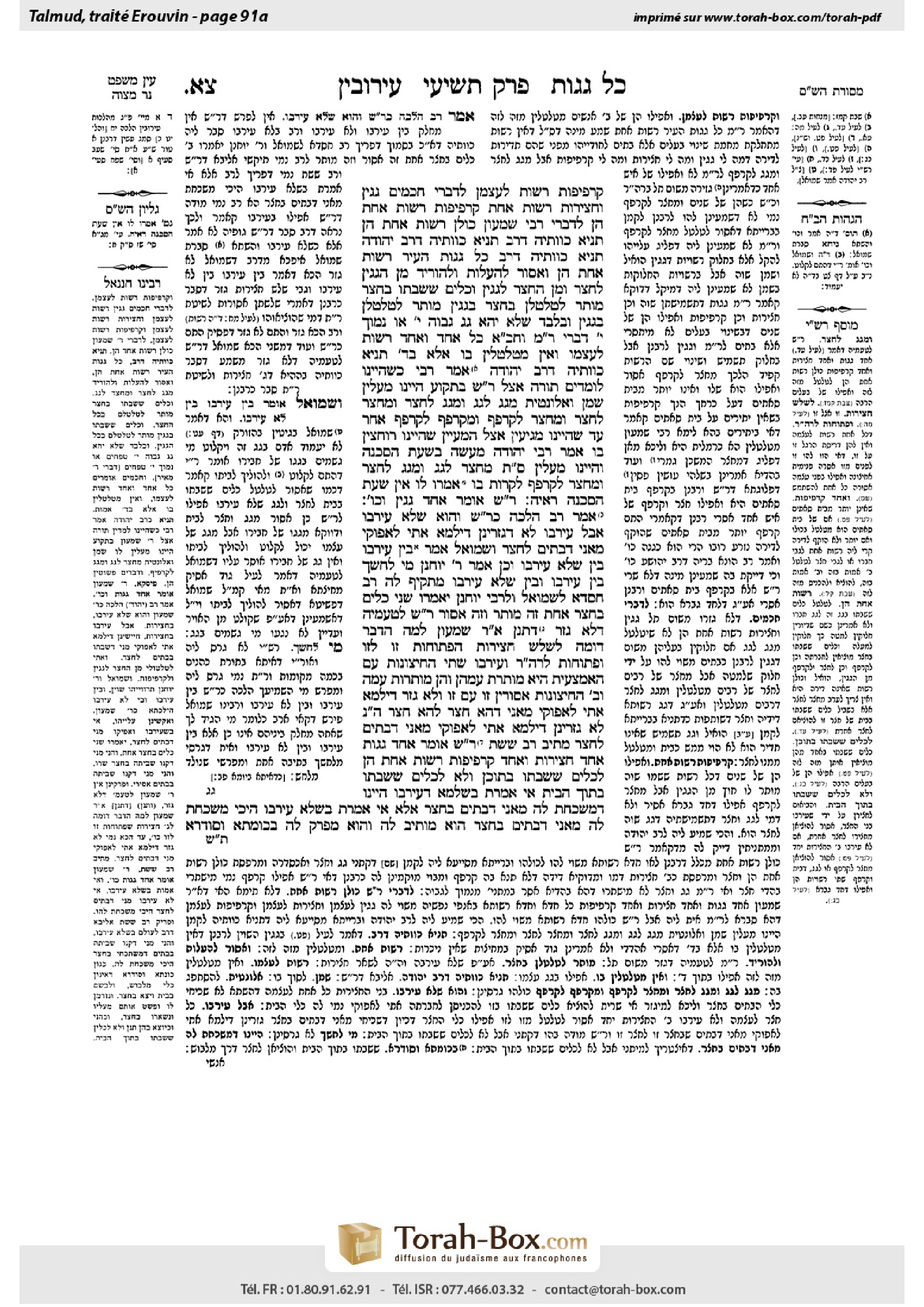
עירובין צ״א א · Aramaic and Hebrew text
קַרְפֵּיפוֹת רְשׁוּת לְעַצְמָן. לְדִבְרֵי חֲכָמִים: גַּגִּין וַחֲצֵירוֹת רְשׁוּת אַחַת, קַרְפֵּיפוֹת רְשׁוּת אַחַת הֵן. לְדִבְרֵי רַבִּי שִׁמְעוֹן: כּוּלָּן רְשׁוּת אַחַת הֵן.
תַּנְיָא כְּווֹתֵיהּ דְּרַב, תַּנְיָא כְּווֹתֵיהּ דְּרַב יְהוּדָה. תַּנְיָא כְּווֹתֵיהּ דְּרַב: כׇּל גַּגּוֹת הָעִיר רְשׁוּת אַחַת הֵן, וְאָסוּר לְהַעֲלוֹת וּלְהוֹרִיד מִן הַגַּגִּין לֶחָצֵר וּמִן הֶחָצֵר לְגַגִּין. וְכֵלִים שֶׁשָּׁבְתוּ בֶּחָצֵר — מוּתָּר לְטַלְטְלָן בֶּחָצֵר, בַּגַּגִּין — מוּתָּר לְטַלְטְלָן בַּגַּגִּין, וּבִלְבַד שֶׁלֹּא יְהֵא גַּג גָּבוֹהַּ עֲשָׂרָה אוֹ נָמוּךְ עֲשָׂרָה, דִּבְרֵי רַבִּי מֵאִיר. וַחֲכָמִים אוֹמְרִים: כׇּל אֶחָד וְאֶחָד רְשׁוּת לְעַצְמוֹ, וְאֵין מְטַלְטְלִין בּוֹ אֶלָּא בְּאַרְבַּע.
תַּנְיָא כְּווֹתֵיהּ דְּרַב יְהוּדָה: אָמַר רַבִּי, כְּשֶׁהָיִינוּ לוֹמְדִים תּוֹרָה אֵצֶל רַבִּי שִׁמְעוֹן בִּתְקוֹעַ, הָיִינוּ מַעֲלִין שֶׁמֶן וַאֲלוּנְטִית מִגַּג לְגַג, וּמִגַּג לְחָצֵר, וּמֵחָצֵר לְחָצֵר, וּמֵחָצֵר לְקַרְפֵּף, וּמִקַּרְפֵּף לְקַרְפֵּף אַחֵר, עַד שֶׁהָיִינוּ מַגִּיעִין אֵצֶל הַמַּעְיָין שֶׁהָיִינוּ רוֹחֲצִין בּוֹ.
אָמַר רַבִּי יְהוּדָה: מַעֲשֶׂה בִּשְׁעַת הַסַּכָּנָה וְהָיִינוּ מַעֲלִין תּוֹרָה מֵחָצֵר לְגַג, וּמִגַּג לְחָצֵר, וּמֵחָצֵר לְקַרְפֵּף לִקְרוֹת בּוֹ.
אָמְרוּ לוֹ: אֵין שְׁעַת הַסַּכָּנָה רְאָיָה.
רַבִּי שִׁמְעוֹן אוֹמֵר: אֶחָד גַּגִּין וְכוּ׳.
אָמַר רַב: הֲלָכָה כְּרַבִּי שִׁמְעוֹן, וְהוּא שֶׁלֹּא עֵירְבוּ. אֲבָל עֵירְבוּ — לָא, דְּגָזְרִינַן דִּילְמָא אָתֵי לְאַפּוֹקֵי מָאנֵי דְבָתִּים לֶחָצֵר.
וּשְׁמוּאֵל אָמַר: בֵּין עֵירְבוּ בֵּין שֶׁלֹּא עֵירְבוּ. וְכֵן אָמַר רַבִּי יוֹחָנָן: מִי לְחָשְׁךָ, בֵּין עֵירְבוּ וּבֵין שֶׁלֹּא עֵירְבוּ?
מַתְקֵיף לַהּ רַב חִסְדָּא: לִשְׁמוּאֵל וּלְרַבִּי יוֹחָנָן, יֹאמְרוּ: שְׁנֵי כֵלִים בְּחָצֵר אַחַת, זֶה מוּתָּר וְזֶה אָסוּר!
רַבִּי שִׁמְעוֹן לְטַעְמֵיהּ, דְּלָא גָּזַר. דִּתְנַן, אָמַר רַבִּי שִׁמְעוֹן: לְמָה הַדָּבָר דּוֹמֶה, לְשָׁלֹשׁ חֲצֵירוֹת הַפְּתוּחוֹת זוֹ לָזוֹ וּפְתוּחוֹת לִרְשׁוּת הָרַבִּים, וְעֵירְבוּ שְׁתֵּי הַחִיצוֹנוֹת עִם הָאֶמְצָעִית — הִיא מוּתֶּרֶת עִמָּהֶן, וְהֵן מוּתָּרוֹת עִמָּהּ, וּשְׁתֵּי הַחִיצוֹנוֹת אֲסוּרִין זוֹ עִם זוֹ.
וְלָא גָּזַר דִּילְמָא אָתֵי לְאַפּוֹקֵי מָאנֵי דְּהָא חָצֵר לְהָא חָצֵר, הָכִי נָמֵי לָא גָּזְרִינַן דִּילְמָא אָתֵי לְאַפּוֹקֵי מָאנֵי דְבָתִּים לְחָצֵר.
מֵתִיב רַב שֵׁשֶׁת: רַבִּי שִׁמְעוֹן אוֹמֵר, אֶחָד גַּגּוֹת אֶחָד חֲצֵירוֹת וְאֶחָד קַרְפֵּיפוֹת רְשׁוּת אַחַת הֵן לְכֵלִים שֶׁשָּׁבְתוּ בְּתוֹכָן, וְלֹא לְכֵלִים שֶׁשָּׁבְתוּ בְּתוֹךְ הַבַּיִת. אִי אָמְרַתְּ בִּשְׁלָמָא דְּעֵירְבוּ — הַיְינוּ דְּמַשְׁכַּחַתְּ לַהּ מָאנֵי דְבָתִּים בְּחָצֵר.
אֶלָּא אִי אָמְרַתְּ בְּשֶׁלֹּא עֵירְבוּ — הֵיכִי מַשְׁכַּחַתְּ לַהּ מָאנֵי דְבָתִּים בְּחָצֵר? הוּא מוֹתֵיב לַהּ וְהוּא מְפָרֵק לַהּ: בְּכוּמְתָּא וְסוּדָרָא.
Eruvin 91a · English translation
Similarly, enclosures are a domain in and of themselves, and one is therefore permitted to carry from one enclosure to another. According to the statement of the Rabbis, roofs and courtyards constitute one domain, and therefore, one may carry even from a roof to a courtyard; however, enclosures are one discrete domain. According to the statement of Rabbi Shimon, all of them, roofs, courtyards, and enclosures, are one domain, and therefore it is permitted to carry between any of them.
The Gemara comments: A baraita was taught in accordance with the opinion of Rav, and a baraita was taught in accordance with the opinion of Rav Yehuda. The Gemara elaborates. A baraita was taught in accordance with the opinion of Rav, that according to the Rabbis one may carry only four cubits on each roof: All the roofs of a city are one domain, and it is prohibited to carry objects up or carry them down, from the roofs to the courtyard or from the courtyard to the roofs. And with regard to vessels that were inside a courtyard when Shabbat began, it is permitted to carry them in the courtyard even if an eiruv was not established, and it is likewise permitted to carry them from that courtyard to other courtyards. With regard to vessels that were on the roofs when Shabbat began, it is permitted to carry them on the roofs, provided that one roof is neither ten handbreadths higher nor ten handbreadths lower than the other. This is the statement of Rabbi Meir. And the Rabbis say: Each and every one of the roofs is a domain in and of itself, and one may move objects on each roof only within four cubits.
Likewise, a baraita was taught in accordance with Rav Yehuda’s interpretation of the opinion of Rabbi Shimon. Rabbi Yehuda HaNasi said: When we were studying Torah with Rabbi Shimon in Tekoa, we would carry oil for smearing and a towel for drying from roof to roof, and from roof to courtyard, and from courtyard to courtyard, and from courtyard to enclosure, and from enclosure to enclosure, to refrain from carrying in a prohibited place, until we reached the spring in which we would bathe.
And similarly, Rabbi Yehuda said: There was an incident during a time of danger, when decrees were issued that banned religious observance, and we would carry a Torah scroll from courtyard to roof, and from roof to courtyard, and from courtyard to enclosure, to read from it.
The Sages said to him: The halakha cannot be determined from that incident, as an incident occurring during a time of danger is no proof. At a time of danger it is permitted to carry even in places where carrying is ordinarily prohibited by rabbinic law.
Rabbi Shimon says: Roofs, courtyards, and enclosures are all one domain with regard to vessels that were inside them when Shabbat began, and one may therefore carry from one of these areas to the other. However, they are not one domain with regard to vessels that were inside the house when Shabbat began.
Rav said: The halakha is in accordance with the opinion of Rabbi Shimon, provided that the residents of each courtyard did not establish a separate eiruv for themselves, as in that case they may not move objects from their houses into the courtyard. However, if they established a separate eiruv for each courtyard, without establishing an eiruv between the various courtyards, no, that is not the halakha, as we issue a decree lest one come to take out vessels from one of the houses to the courtyard, an action that is fundamentally permitted, and subsequently proceed to carry them out to a different courtyard with which an eiruv had not been established, which everyone agrees is prohibited.
And Shmuel said: The halakha is in accordance with Rabbi Shimon, whether they established an eiruv or whether they did not establish an eiruv. And similarly, Rabbi Yoḥanan said: Who whispered to you, who told you that there is a difference whether they established an eiruv or whether they did not establish an eiruv?
Rav Ḥisda strongly objects to this ruling. According to Shmuel and according to Rabbi Yoḥanan, people will say with regard to two vessels located in the same courtyard, one of which was in the courtyard when Shabbat began while the other was in the house, that moving this one, which was in the courtyard at the start of Shabbat, to another courtyard is permitted, while moving that one, which was in the house at the start of Shabbat, to another courtyard, is prohibited.
The Gemara answers: In this regard, Rabbi Shimon conforms to his standard reasoning, as he did not issue a decree due to these concerns. As we learned in a mishna, Rabbi Shimon said: To what is this matter comparable? It is comparable to three courtyards that are open into each other, and that are also open into a public domain. If the two outer courtyards each established an eiruv with the middle one, it is permitted for the residents of the middle one to carry into the two outer ones, and they, the residents of the two outer ones, are permitted to carry into it, but for the residents of the two outer courtyards it is prohibited to carry into each other, as they did not establish an eiruv together.
And in that case Rabbi Shimon did not issue a decree prohibiting one to carry objects from the middle courtyard to one of the outer ones lest one come to take out vessels from this outer courtyard to that outer courtyard, despite the fact that both sets of vessels are located in the middle courtyard. Here too, we do not issue a decree lest one come to take out utensils from one of the houses to the courtyard, and carry them to a different courtyard.
Rav Sheshet raised an objection. We learned in the mishna that Rabbi Shimon says: Roofs, courtyards, and enclosures are all one domain with regard to vessels that were inside them when Shabbat began. But they are not one domain with regard to vessels that were inside the house when Shabbat began. Granted, if you say that it is dealing with a case where the residents of the courtyards established an eiruv, that is how you find vessels that were taken from the house in the courtyard. Because those vessels were in the house at the beginning of Shabbat, they may not be moved to a different courtyard.
However, if you say it is referring to a case where they did not establish an eiruv, under what circumstances can the case of vessels from the house in the courtyard be found? This poses a difficulty for Rav. Rav Sheshet raised the objection, and he resolved it: It refers to the case of a hat or a shawl, which one wore in the house and subsequently went out to the courtyard and placed it there. In this manner, it is possible that objects taken from the house can be found in the courtyard, even if an eiruv was not established.
Eruvin 91a · Traduction française (IA)
De même, les enclos constituent un domaine à part, et l'on est donc autorisé à transporter des objets d'un enclos à un autre. Selon l'opinion des Rabbins, les toits et les courtyards constituent un seul domaine, et par conséquent, l'on peut transporter des objets même d'un toit à un courtyard ; cependant, les enclos constituent un domaine distinct. Selon l'opinion de Rabbi Shimon, tous les éléments, toits, courtyards et enclos, constituent un seul domaine, et par conséquent, il est permis de transporter des objets entre n'importe quels d'entre eux.
La Guemara commente : une baraïta a été enseignée selon l'opinion de Rav, et une baraïta a été enseignée selon l'opinion de Rabbi Yéhuda. La Guemara développe. Une baraïta a été enseignée selon l'opinion de Rav, disant que selon les Rabbins, l'on peut transporter des objets sur chaque toit seulement sur quatre cubits : tous les toits d'une ville constituent un seul domaine, et il est interdit de transporter des objets des toits vers le courtyard ou du courtyard vers les toits. Et concernant les objets qui se trouvaient dans un courtyard au début du Shabbat, il est permis de les transporter dans le courtyard même si un eiruv n'a pas été établi, et il est également permis de les transporter de ce courtyard vers d'autres courtyards. Concernant les objets qui se trouvaient sur les toits au début du Shabbat, il est permis de les transporter sur les toits, à condition qu'un toit ne soit ni dix tefachim plus haut ni dix tefachim plus bas que l'autre. C'est l'opinion de Rabbi Meir. Et les Rabbins disent : chaque toit est un domaine à part, et l'on peut transporter des objets sur chaque toit seulement à l'intérieur de quatre cubits.
De même, une baraïta a été enseignée selon l'interprétation de Rav Yehuda sur l'opinion de Rabbi Shimon. Rabbi Yehuda HaNasi dit : Quand nous étudions la Torah avec Rabbi Shimon à Tekoa, nous transportions de toit à toit, de toit au courtyard, de courtyard à courtyard, de courtyard à enclos, et d'enclos à enclos, afin d'éviter de transporter dans un lieu interdit, jusqu'à ce que nous arrivions à la source où nous nous baignions.
Et de même, Rabbi Yehuda dit : Il y avait un incident pendant une période de danger, lorsqu'on avait émis des décrets interdisant l'observance religieuse, et nous transportions un rouleau de Torah du courtyard au toit, du toit au courtyard, du courtyard à l'enclos, afin de le lire.
Les Sages lui dirent : La halakha ne peut pas être déterminée à partir de cet incident, car un incident survenant pendant une période de danger n'est pas une preuve. Pendant une période de danger, il est permis de transporter même dans les lieux où le transport est normalement interdit par la loi rabbinique.
Rabbi Shimon dit : les toits, les courtyards et les enclos constituent tous un seul domaine concernant les objets qui se trouvaient à l'intérieur d'eux au début du Shabbat, et l'on peut donc transporter des objets d'un de ces lieux à un autre. Cependant, ils ne constituent pas un seul domaine concernant les objets qui se trouvaient à l'intérieur de la maison au début du Shabbat.
Rav dit : la halakha suit l'opinion de Rabbi Shimon, à condition que les habitants de chaque courtyard n'aient pas établi un eiruv distinct pour eux-mêmes, car dans ce cas, ils ne peuvent pas transporter d'objets de leur maison vers le courtyard. Cependant, si ils avaient établi un eiruv distinct pour chaque courtyard, sans établir un eiruv entre les différents courtyards, non, ce n'est pas la halakha, car nous émettons un décret pour empêcher qu'on vienne à transporter des objets d'une maison à un courtyard, une action qui est fondamentalement permise, et ensuite à transporter ces objets vers un autre courtyard avec lequel un eiruv n'avait pas été établi, ce que tout le monde convient qu'il est interdit.
Et Shmuel dit : la halakha suit Rabbi Shimon, qu'ils aient établi un eiruv ou non. Et de même, Rabbi Yoḥanan dit : Qui t'a dit cela, qui t'a raconté qu'il y a une différence selon qu'ils aient établi un eiruv ou non ?
Rav Ḥisda s'oppose fermement à cette décision. Selon Shmuel et selon Rabbi Yoḥanan, les gens diront concernant deux objets situés dans le même courtyard, l'un ayant été dans le courtyard au début du Shabbat et l'autre dans la maison, que le transport de celui qui était dans le courtyard au début du Shabbat vers un autre courtyard est permis, tandis que le transport de celui qui était dans la maison au début du Shabbat vers un autre courtyard est interdit.
La Guemara répond : à cet égard, Rabbi Shimon suit sa raisonnement habituel, car il n'a pas émis un décret à cause de ces préoccupations. Comme nous avons appris dans une mitsna, Rabbi Shimon dit : à quoi cela ressemble-t-il ? Cela ressemble à trois courtyards ouverts les uns vers les autres et ouverts également vers un domaine public. Si les deux courtyards externes ont chacun établi un eiruv avec le courtyard central, il est permis aux habitants du courtyard central de transporter des objets vers les deux courtyards externes, et les habitants des deux courtyards externes sont autorisés à transporter des objets vers celui-ci, mais aux habitants des deux courtyards externes il est interdit de transporter des objets les uns vers les autres, car ils n'ont pas établi un eiruv entre eux.
Et dans ce cas, Rabbi Shimon n'a pas émis un décret interdisant de transporter des objets du courtyard central vers l'un des courtyards externes de peur qu'on vienne à transporter des objets de ce courtyard externe vers l'autre courtyard externe, malgré le fait que les deux ensembles d'objets se trouvent dans le courtyard central. De même, nous n'émettons pas de décret de peur qu'on vienne à transporter des ustensiles d'une maison vers le courtyard et à les transporter vers un autre courtyard.
Rav Sheshet a soulevé une objection. Nous avons appris dans la mitsna que Rabbi Shimon dit : les toits, les courtyards et les enclos sont tous un seul domaine concernant les objets qui se trouvaient à l'intérieur d'eux lors du début du sabbat. Cependant, ils ne constituent pas un seul domaine concernant les objets qui se trouvaient à l'intérieur de la maison lors du début du sabbat. Admettons que vous disiez qu'il s'agit d'un cas où les habitants des courtyards ont établi un eiruv, c'est ainsi que l'on trouve des objets qui ont été emportés de la maison dans le courtyard. Puisque ces objets se trouvaient à l'intérieur de la maison au début du sabbat, ils ne peuvent pas être déplacés vers un autre courtyard.
Cependant, si vous dites qu'il s'agit d'un cas où ils n'ont pas établi un eiruv, sous quelles circonstances peut-on trouver le cas des objets provenant de la maison dans le courtyard ? Cela pose un problème pour Rav. Rav Sheshet a soulevé l'objection, et il l'a résolue : il s'agit du cas d'un chapeau ou d'une écharpe, que l'on portait à l'intérieur de la maison et que l'on a ensuite porté dans le courtyard et placé là. Ainsi, il est possible de trouver des objets emportés de la maison dans le courtyard, même si un eiruv n'a pas été établi.
Traduction française générée par IA à partir de l’édition anglaise de Sefaria. Vérifie toujours un passage avec le texte source.
Text from Sefaria: William Davidson Edition - Vocalized Aramaic (CC BY NC); William Davidson Edition - English (CC BY NC).