Eruvin 91b: Talmud study for Daf Yomi
Study the Talmud for Daf Yomi with scanned pages, Hebrew text, English translations from Sefaria and AI-generated French translations.
Passage selection and English or AI-generated French translation are available where the scan has annotations. Daf Study is independent of Torah-Box and Sefaria.
Browse Eruvin · עירובין · All tractatesEruvin 91b text and translations
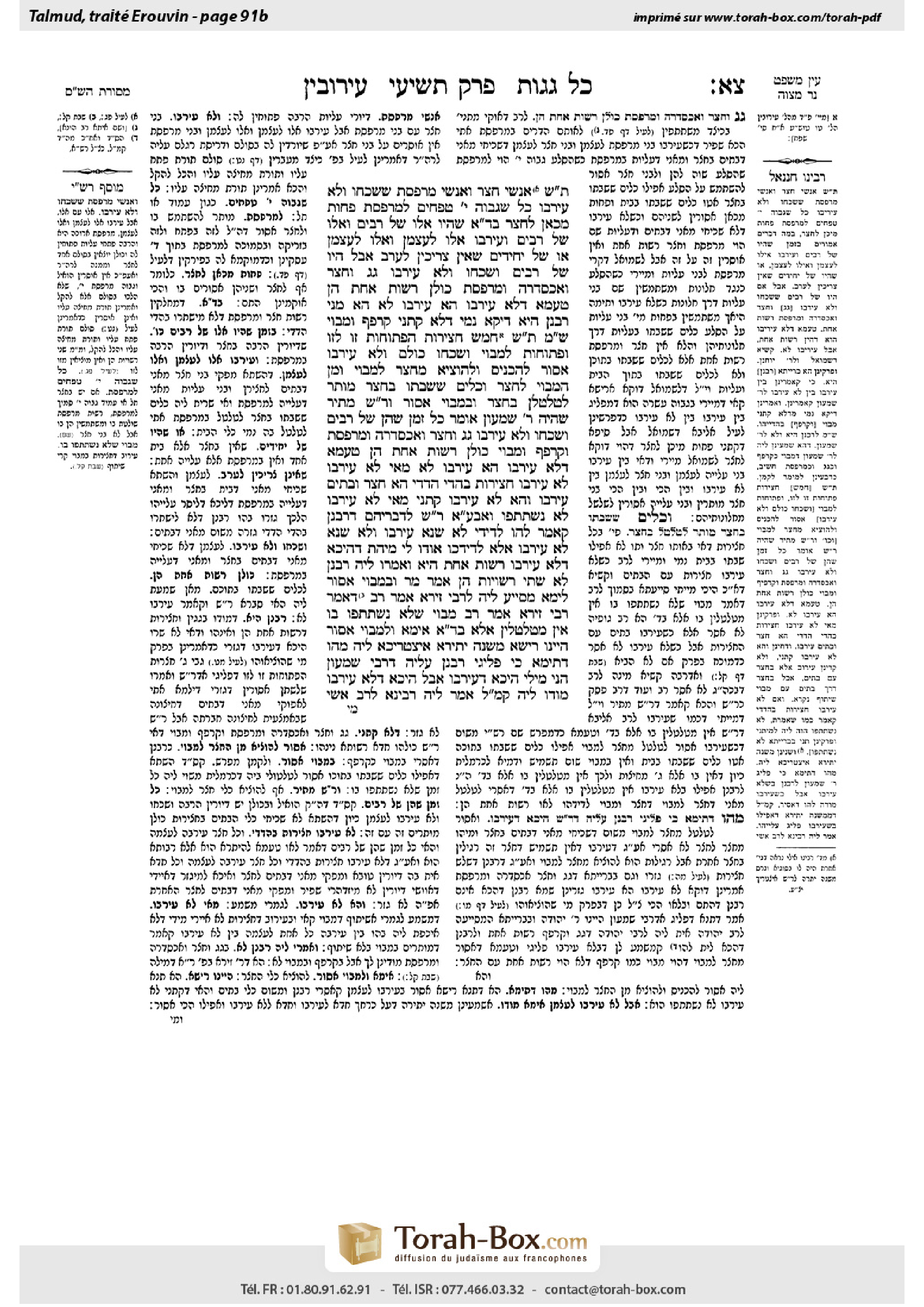
This page of Eruvin includes the Aramaic text, an English translation and an AI-generated French translation, alongside the scan above.
עירובין צ״א ב · Aramaic and Hebrew text
תָּא שְׁמַע: אַנְשֵׁי חָצֵר וְאַנְשֵׁי מִרְפֶּסֶת שֶׁשָּׁכְחוּ וְלֹא עֵירְבוּ, כׇּל שֶׁגָּבוֹהַּ עֲשָׂרָה טְפָחִים — לַמִּרְפֶּסֶת. פָּחוֹת מִכָּאן — לֶחָצֵר. בַּמֶּה דְּבָרִים אֲמוּרִים — שֶׁהָיוּ אֵלּוּ שֶׁל רַבִּים וְאֵלּוּ שֶׁל רַבִּים, וְעֵירְבוּ אֵלּוּ לְעַצְמָן וְאֵלּוּ לְעַצְמָן. אוֹ שֶׁל יְחִידִים שֶׁאֵין צְרִיכִין לְעָרֵב.
אֲבָל הָיוּ שֶׁל רַבִּים, וְשָׁכְחוּ וְלֹא עֵירְבוּ — גַּג וְחָצֵר וְאַכְסַדְרָה וּמִרְפֶּסֶת כּוּלָּן רְשׁוּת אַחַת הֵן.
טַעְמָא דְּלֹא עֵירְבוּ, הָא עֵירְבוּ לָא! הָא מַנִּי — רַבָּנַן הִיא.
דַּיְקָא נָמֵי, דְּלָא קָתָנֵי קַרְפֵּף וּמָבוֹי. שְׁמַע מִינַּהּ.
תָּא שְׁמַע: חָמֵשׁ חֲצֵירוֹת הַפְּתוּחוֹת זוֹ לָזוֹ וּפְתוּחוֹת לְמָבוֹי, וְשָׁכְחוּ כּוּלָּם וְלֹא עֵירְבוּ — אָסוּר לְהַכְנִיס וּלְהוֹצִיא מֵחָצֵר לַמָּבוֹי וּמִן הַמָּבוֹי לֶחָצֵר. וְכֵלִים שֶׁשָּׁבְתוּ בֶּחָצֵר — מוּתָּר לְטַלְטְלָן בֶּחָצֵר, וּבַמָּבוֹי אָסוּר.
וְרַבִּי שִׁמְעוֹן מַתִּיר. שֶׁהָיָה רַבִּי שִׁמְעוֹן אוֹמֵר: כׇּל זְמַן שֶׁהֵן שֶׁל רַבִּים, וְשָׁכְחוּ וְלֹא עֵירְבוּ, גַּג וְחָצֵר וְאַכְסַדְרָה וּמִרְפֶּסֶת וְקַרְפֵּף וּמָבוֹי — כּוּלָּן רְשׁוּת אַחַת הֵן.
טַעְמָא דְּלֹא עֵירְבוּ, הָא עֵירְבוּ — לָא. מַאי ״לֹא עֵירְבוּ״: לֹא עֵירְבוּ חֲצֵירוֹת בַּהֲדֵי הֲדָדֵי, הָא חָצֵר וּבָתִּים — עֵירְבוּ.
וְהָא ״לֹא עֵירְבוּ״ קָתָנֵי! מַאי ״לֹא עֵירְבוּ״: לֹא נִשְׁתַּתְּפוּ.
וְאִיבָּעֵית אֵימָא, רַבִּי שִׁמְעוֹן לְדִבְרֵיהֶם דְּרַבָּנַן קָאֲמַר לְהוּ: לְדִידִי לָא שְׁנָא עֵירְבוּ, וְלָא שְׁנָא לָא עֵירְבוּ. אֶלָּא לְדִידְכוּ, אוֹדוֹ לִי מִיהַת דְּהֵיכָא דְּלֹא עֵירְבוּ רְשׁוּת אַחַת הִיא.
וַאֲמַרוּ לֵיהּ רַבָּנַן: לָא — שְׁתֵּי רְשׁוּיוֹת הֵן.
אָמַר מָר: וּבַמָּבוֹי אָסוּר. לֵימָא מְסַיַּיע לֵיהּ לְרַבִּי זֵירָא אָמַר רַב, דְּאָמַר רַבִּי זֵירָא אָמַר רַב: מָבוֹי שֶׁלֹּא נִשְׁתַּתְּפוּ בּוֹ — אֵין מְטַלְטְלִין אֶלָּא בְּאַרְבַּע אַמּוֹת. אֵימָא: וּלְמָבוֹי — אָסוּר.
הַיְינוּ רֵישָׁא! מִשְׁנָה יַתִּירָא אִיצְטְרִיכָא לֵיהּ, מַהוּ דְּתֵימָא: כִּי פְּלִיגִי רַבָּנַן עֲלֵיהּ דְּרַבִּי שִׁמְעוֹן הָנֵי מִילֵּי הֵיכָא דְּעֵירְבוּ, אֲבָל הֵיכָא דְּלָא עֵירְבוּ — מוֹדוּ לֵיהּ, קָא מַשְׁמַע לַן.
אֲמַר לֵיהּ רָבִינָא לְרַב אָשֵׁי:
Eruvin 91b · English translation
Come and hear proof from a baraita: With regard to the residents of houses that open directly into a courtyard and the residents of upper stories that open onto a balcony from which stairs lead down to that courtyard, who forgot and did not establish an eiruv between them, anything ten handbreadths high in the courtyard, e.g., a mound or a pillar, is attributed to the balcony in terms of its use on Shabbat. The residents of the balcony may move objects between the mound or pillar and their apartments. Anything lower than that is attributed to the courtyard. In what case is this statement, that it is prohibited for the residents of the courtyard to carry to the balcony and vice versa, stated? It is in a case where the residents of the courtyard were many, and the residents of the balcony were many, and these established an eiruv for themselves, and those established an eiruv for themselves; or if the courtyard and the balcony were occupied by individuals who need not establish an eiruv for themselves.
However, if the residents of the courtyard and the balcony were many, and they forgot and did not establish an eiruv for their courtyard or balcony, in that case roof, and courtyard, and portico, and balcony are all one domain, and it is permitted to carry from one to another any vessels that were located in any one of them when Shabbat began.
The Gemara infers: The reason that carrying between them is permitted is that they did not each establish their own eiruv; however, if they each established their own eiruv, no, it is prohibited to carry between them. This inference supports Rav and poses a difficulty for Shmuel. The Gemara answers: Whose opinion is represented by this baraita? It is that of the Rabbis, who maintain that roofs and courtyards form a single domain, contrary to the opinion of Rabbi Shimon. The Rabbis indeed issued a decree that carrying is prohibited if each group established a separate eiruv.
The Gemara comments: The language of the baraita is also precise, as it is not teaching the cases of an enclosure and an alleyway, in accordance with the opinion of Rabbi Shimon, but only the cases of a roof and a courtyard, in accordance with the opinion of the Rabbis. The Gemara concludes: Indeed, learn from here that this is the correct understanding.
Come and hear from another baraita: With regard to five courtyards that are open to each other and are also open to an alleyway, and the residents of all the courtyards forgot and did not establish an eiruv, it is prohibited to carry in or carry out, from a courtyard to the alleyway or from the alleyway to a courtyard. And with regard to vessels that were in the courtyard when Shabbat began, it is permitted to carry them in the courtyard, but in the alleyway it is prohibited to carry them.
And Rabbi Shimon permits doing so, as Rabbi Shimon would say: Whenever the courtyards are in the possession of many people, and they forgot and did not establish an eiruv, the roof, and courtyard, and portico, and balcony, and enclosure, and alleyway are all one domain. These areas are all classified as private domains, and therefore, it is permitted to carry from one to the other.
The Gemara infers: The reason that carrying between them is permitted is that they did not each establish their own eiruv; however, if they each established their own eiruv, no, it is prohibited to carry between them. This inference supports Rav and poses a difficulty for Shmuel. The Gemara answers: What is the meaning of the phrase: They did not establish an eiruv? It means that the residents of the courtyards did not establish an eiruv with each other; however, the residents of each courtyard established an eiruv with the residents of the houses inside it, and it is nevertheless permitted to carry between them, in accordance with the opinion of Shmuel.
The Gemara raises a difficulty. But doesn’t the baraita state: They did not establish an eiruv, indicating that they did not establish any eiruv at all, either with the residents of the other courtyard or within each courtyard? The Gemara rejects this argument. What is the meaning of: They did not establish an eiruv? It means that they did not merge the courtyards facing the alleyway.
And if you wish, say instead: Rabbi Shimon is speaking to the Rabbis in accordance with their own opinion, not enumerating the leniencies inherent in his own ruling. His statement should therefore be understood as follows: According to my own opinion, there is no difference if they established an eiruv and there is no difference if they did not establish an eiruv. However, according to your opinion, agree with me at least that in a case where they did not establish an eiruv it is all considered one domain.
And the Rabbis said to him: No, although we agree with you in the cases of a roof, courtyard, portico, and balcony, in the cases of an enclosure and an alleyway we disagree, as they are two domains and therefore it is prohibited to carry from one to the other.
The Master said above in the baraita: Vessels that were in a courtyard at the start of Shabbat may be carried within the courtyard, but in the alleyway it is prohibited. The Gemara asks: Let us say that this supports that which Rabbi Zeira said that Rav said, as Rabbi Zeira said that Rav said: In an alleyway in which they did not merge the courtyards facing it, one may carry only within four cubits. The Gemara rejects this suggestion. Say that the baraita means: But to an alleyway it is prohibited, i.e., it is prohibited to carry from the courtyard to the alleyway; however, within the alleyway itself it is permitted to carry.
The Gemara raises a difficulty. If so, that is identical to the first clause of the baraita. The tanna would not have taught the very same thing twice. The Gemara answers: The apparently superfluous teaching was necessary, lest you say: When the Rabbis disagree with Rabbi Shimon, it is only in a case where they established an eiruv, but in a case where they did not establish an eiruv, the Rabbis concede to Rabbi Meir that it is all considered one domain and carrying is permitted. The baraita therefore teaches us that the Rabbis disagree with Rabbi Shimon in both cases, as they prohibit carrying in the alleyway even if the residents did not establish an eiruv.
Ravina said to Rav Ashi:
Eruvin 91b · Traduction française (IA)
Venez écouter une preuve tirée d'une baraïta : En ce qui concerne les habitants des maisons qui donnent directement sur une cour et les habitants des étages supérieurs qui donnent sur un balcon depuis lequel des escaliers mènent à cette cour, qui ont oublié et n'ont pas établi un eiruv entre eux, tout ce qui mesure dix tefachim de haut dans la cour, par exemple une montagne ou une colonne, est attribué au balcon en termes d'utilisation le sabbat. Les habitants du balcon peuvent déplacer des objets entre la montagne ou la colonne et leurs appartements. Tout ce qui est plus bas que cela est attribué à la cour. Dans quel cas cette déclaration, selon laquelle il est interdit aux habitants de la cour de porter vers le balcon et vice versa, est-elle formulée ? C'est dans le cas où les habitants de la cour étaient nombreux, et les habitants du balcon étaient nombreux, et ces derniers ont établi un eiruv pour eux-mêmes, et ceux-ci ont établi un eiruv pour eux-mêmes ; ou si la cour et le balcon étaient occupés par des individus qui n'avaient pas besoin d'établir un eiruv pour eux-mêmes.
Cependant, si les habitants de la cour et du balcon étaient nombreux, et qu'ils avaient oublié et n'avaient pas établi un eiruv pour leur cour ou leur balcon, dans ce cas, le toit, la cour, le portique et le balcon forment tous un seul domaine, et il est permis de porter des objets d'un lieu à l'autre, quels que soient les objets situés dans l'un d'entre eux au début du sabbat.
La Guemara déduit : La raison pour laquelle le transport entre eux est permis est qu'ils n'ont pas chacun établi leur propre eiruv ; cependant, si chacun avait établi son propre eiruv, non, il est interdit de porter entre eux. Cette déduction soutient Rav et pose un problème pour Shmuel. La Guemara répond : Quel est l'opinion représentée par cette baraïta ? Celle des Rabbins, qui maintiennent que les toits et les cours forment un seul domaine, contrairement à l'opinion de Rabbi Shimon. Les Rabbins ont en effet émis un décret selon lequel le transport est interdit si chaque groupe a établi un eiruv séparé.
La Guemara commente : La formulation de la baraïta est aussi précise, car elle ne traite pas des cas d'une enceinte et d'un passage, conformément à l'opinion de Rabbi Shimon, mais uniquement des cas d'un toit et d'une cour, conformément à l'opinion des Rabbins. La Guemara conclut : En effet, apprenez-en ici que c'est la bonne compréhension.
Venez écouter une autre baraïta : En ce qui concerne cinq cours qui s'ouvrent les uns sur les autres et qui s'ouvrent également sur un passage, et les habitants de toutes les cours ayant oublié et n'ayant pas établi un eiruv, il est interdit de porter à l'intérieur ou à l'extérieur, d'une cour vers le passage ou du passage vers une cour. Et en ce qui concerne les objets qui se trouvaient dans la cour au début du sabbat, il est permis de les porter dans la cour, mais dans le passage il est interdit de les porter.
Et Rabbi Shimon permet cela, car Rabbi Shimon dirait : Lorsque les cours sont en possession de nombreux habitants, et qu'ils ont oublié et n'ont pas établi un eiruv, le toit, la cour, le portique, le balcon, l'enceinte et le passage forment tous un seul domaine. Ces zones sont toutes classées comme des domaines privés, et par conséquent, il est permis de porter d'un lieu à l'autre.
La Guemara conclut : La raison pour laquelle le transport entre eux est permis est qu'ils n'ont pas chacun établi leur propre eiruv ; cependant, si chacun avait établi son propre eiruv, il serait interdit de porter entre eux. Cette déduction soutient Rav et pose un problème pour Shmuel. La Guemara répond : Quelle est la signification de la phrase : Ils n'ont pas établi un eiruv ? Cela signifie que les habitants des cours n'ont pas établi un eiruv entre eux ; cependant, les habitants de chaque cour ont établi un eiruv avec les habitants des maisons à l'intérieur, et il est tout de même permis de porter entre eux, conformément à l'opinion de Shmuel.
La Guemara soulève une difficulté. Mais ne dit pas la baraïta pas : Ils n'ont pas établi un eiruv, indiquant qu'ils n'ont pas établi aucun eiruv du tout, ni avec les habitants de l'autre cour ni à l'intérieur de chaque cour ? La Guemara rejette cet argument. Quelle est la signification de : Ils n'ont pas établi un eiruv ? Cela signifie qu'ils n'ont pas fusionné les cours face au passage.
Et si vous le souhaitez, dites plutôt : Rabbi Shimon parle aux Rabbins selon leur propre opinion, sans énumérer les facilités inherentes à son propre jugement. Son déclaration devrait donc être comprise ainsi : Selon mon propre opinion, il n'y a pas de différence si ils ont établi un eiruv et s'ils n'ont pas établi un eiruv. Cependant, selon votre opinion, acceptez au moins que dans le cas où ils n'ont pas établi un eiruv, tout est considéré comme un seul domaine.
Et les Rabbins dirent à lui : Non, bien qu'on s'accorde avec vous dans les cas du toit, de la cour, du portique et du balcon, dans les cas de l'enceinte et du passage, on ne s'accorde pas, car ils sont deux domaines et par conséquent il est interdit de porter d'un lieu à l'autre.
Le Maître dit ci-dessus dans la baraïta : Les objets qui se trouvaient dans une cour au début du sabbat peuvent être portés à l'intérieur de la cour, mais dans le passage il est interdit de les porter. La Guemara demande : Disons que cela soutient ce que Rabbi Zeira a dit que Rav a dit, car Rabbi Zeira a dit que Rav a dit : Dans un passage où les cours face à lui n'ont pas fusionné, on peut porter seulement à l'intérieur de quatre cubits. La Guemara rejette cette suggestion. Dites que la baraïta signifie : Mais vers le passage il est interdit, c'est-à-dire il est interdit de porter de la cour vers le passage ; cependant, à l'intérieur du passage même, il est permis de porter.
La Guemara soulève une difficulté. Si c'est ainsi, cela est identique à la première clause de la baraïta. Le tanna n'aurait pas enseigné la même chose deux fois. La Guemara répond : cet enseignement apparemment superflu était nécessaire, afin que l'on ne dise pas : lorsque les Rabbins divergent d'avec Rabbi Shimon, c'est uniquement dans un cas où ils ont établi un eiruv, mais dans un cas où ils n'ont pas établi un eiruv, les Rabbins reconnaissent à Rabbi Meir que tout est considéré comme un seul domaine et le transport est permis. La baraïta nous apprend donc que les Rabbins divergent d'avec Rabbi Shimon dans les deux cas, car ils interdisent le transport dans le passage même si les habitants n'ont pas établi un eiruv.
Ravina dit à Rav Ashi :
Traduction française générée par IA à partir de l’édition anglaise de Sefaria. Vérifie toujours un passage avec le texte source.
Text from Sefaria: William Davidson Edition - Vocalized Aramaic (CC BY NC); William Davidson Edition - English (CC BY NC).