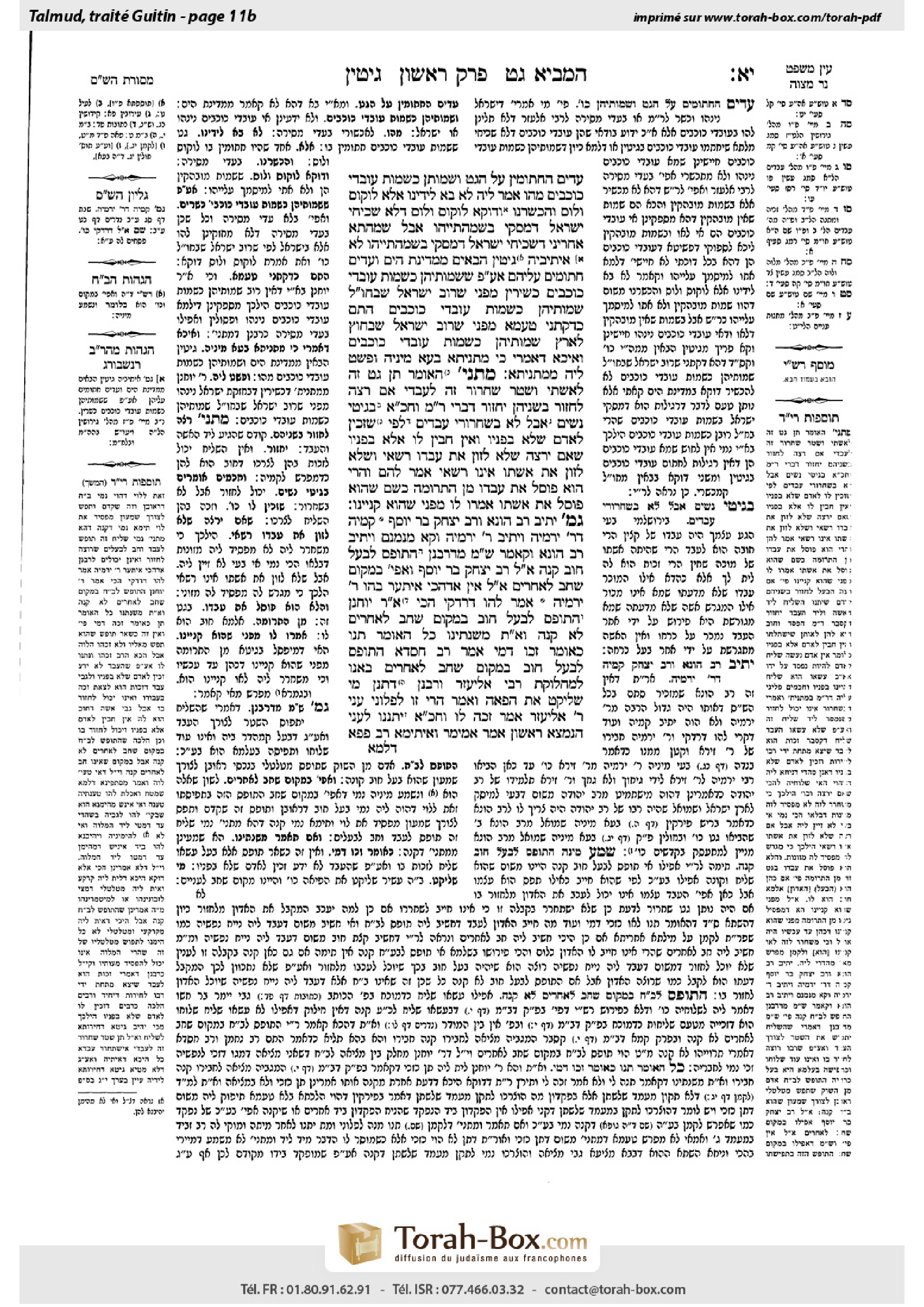
Gittin 11b: Talmud study for Daf Yomi
Study the Talmud for Daf Yomi with scanned pages, Hebrew text, English translations from Sefaria and AI-generated French translations.
Passage selection and English or AI-generated French translation are available where the scan has annotations. Daf Study is independent of Torah-Box and Sefaria.
Browse Gittin · גיטין · All tractatesGittin 11b text and translations
This page of Gittin includes the Aramaic text, an English translation and an AI-generated French translation, alongside the scan above.
גיטין י״א ב · Aramaic and Hebrew text
עֵדִים הַחֲתוּמִין עַל הַגֵּט וּשְׁמוֹתָן כְּשֵׁמוֹת גּוֹיִם, מַהוּ? אֲמַר לֵיהּ: לָא בָּא לְיָדֵינוּ אֶלָּא לוֹקוּס וְלוּס, וְהִכְשַׁרְנוּ.
וְדַוְקָא לוֹקוּס וְלוּס, דְּלָא שְׁכִיחִי יִשְׂרָאֵל דְּמַסְּקִי בִּשְׁמָהָתַיְיהוּ, אֲבָל שְׁמָהָתָא אַחֲרִינֵי דִּשְׁכִיחִי יִשְׂרָאֵל דְּמַסְּקִי בִּשְׁמָהָתַיְיהוּ – לָא.
אֵיתִיבֵיהּ: גִּיטִּין הַבָּאִים מִמְּדִינַת הַיָּם וְעֵדִים חֲתוּמִים עֲלֵיהֶם, אַף עַל פִּי שֶׁשְּׁמוֹתֵיהֶן כִּשְׁמוֹת גּוֹיִם – כְּשֵׁירִין, מִפְּנֵי שֶׁרוֹב יִשְׂרָאֵל שֶׁבְּחוּצָה לָאָרֶץ שְׁמוֹתֵיהֶן כִּשְׁמוֹת גּוֹיִם.
הָתָם, כִּדְקָתָנֵי טַעְמָא: מִפְּנֵי שֶׁרוֹב יִשְׂרָאֵל שֶׁבְּחוּצָה לָאָרֶץ שְׁמוֹתֵיהֶן כִּשְׁמוֹת גּוֹיִם.
וְאִיכָּא דְּאָמְרִי, כִּי מַתְנִיתָא בְּעָא מִינֵּיהּ, וּפְשַׁט לֵיהּ מִמַּתְנִיתָא.
מַתְנִי׳ הָאוֹמֵר ״תֵּן גֵּט זֶה לְאִשְׁתִּי, וּשְׁטַר שִׁחְרוּר זֶה לְעַבְדִּי״, אִם רָצָה לַחֲזוֹר בִּשְׁנֵיהֶן – יַחְזוֹר, דִּבְרֵי רַבִּי מֵאִיר.
וַחֲכָמִים אוֹמְרִים: בְּגִיטֵּי נָשִׁים, אֲבָל לֹא בְּשִׁחְרוּרֵי עֲבָדִים; לְפִי שֶׁזָּכִין לָאָדָם שֶׁלֹּא בְּפָנָיו, וְאֵין חָבִין לוֹ אֶלָּא בְּפָנָיו;
שֶׁאִם יִרְצֶה שֶׁלֹּא לָזוּן אֶת עַבְדּוֹ – רַשַּׁאי, וְשֶׁלֹּא לָזוּן אֶת אִשְׁתּוֹ – אֵינוֹ רַשַּׁאי.
אָמַר לָהֶם: וַהֲרֵי הוּא פּוֹסֵל אֶת עַבְדּוֹ מִן הַתְּרוּמָה, כְּשֵׁם שֶׁהוּא פּוֹסֵל אֶת אִשְׁתּוֹ! אָמְרוּ לוֹ: מִפְּנֵי שֶׁהוּא קִנְיָינוֹ.
גְּמָ׳ יָתֵיב רַב הוּנָא וְרַב יִצְחָק בַּר יוֹסֵף קַמֵּיהּ דְּרַבִּי יִרְמְיָה, וְיָתֵיב רַבִּי יִרְמְיָה וְקָא מְנַמְנֵם, וְיָתֵיב רַב הוּנָא וְקָאָמַר: שְׁמַע מִינַּהּ מִדְּרַבָּנַן, הַתּוֹפֵס לְבַעַל חוֹב, קָנָה.
אֲמַר לֵיהּ רַב יִצְחָק בַּר יוֹסֵף: וַאֲפִילּוּ בִּמְקוֹם שֶׁחָב לַאֲחֵרִים? אָמַר לֵיהּ: אִין.
אַדְּהָכִי אִיתְּעַר בְּהוּ רַבִּי יִרְמְיָה. אֲמַר לְהוּ: דַּרְדְּקֵי! הָכִי אָמַר רַבִּי יוֹחָנָן: הַתּוֹפֵס לְבַעַל חוֹב בִּמְקוֹם שֶׁחָב לַאֲחֵרִים – לֹא קָנָה. וְאִם תֹּאמַר: מִשְׁנָתֵינוּ!
כׇּל הָאוֹמֵר ״תְּנוּ״, כְּאוֹמֵר ״זְכוּ״ דָּמֵי.
אָמַר רַב חִסְדָּא: הַתּוֹפֵס לְבַעַל חוֹב בִּמְקוֹם שֶׁחָב לַאֲחֵרִים, בָּאנוּ לְמַחְלוֹקֶת רַבִּי אֱלִיעֶזֶר וְרַבָּנַן. דִּתְנַן: מִי שֶׁלִּיקֵּט אֶת הַפֵּאָה, וְאָמַר ״הֲרֵי זוֹ לִפְלוֹנִי עָנִי״, רַבִּי אֱלִיעֶזֶר אָמַר: זָכָה לוֹ, וַחֲכָמִים אוֹמְרִים: יִתְּנֶנּוּ לְעָנִי הַנִּמְצָא רִאשׁוֹן.
אָמַר אַמֵּימָר, וְאִיתֵּימָא רַב פָּפָּא:
Gittin 11b · English translation
With regard to witnesses who signed a bill of divorce and whose names are like the names of gentiles, what is the halakha? Rabbi Yoḥanan said to him: There came before us bills of divorce that were signed only with names such as Lukos and Los, and we deemed them valid by means of the witnesses of transmission.
The Gemara infers: And this applies specifically to names such as Lukos and Los, as it is uncommon to find Jews who are called by these names. However, with regard to other gentile names, concerning which it is common to find Jews who are called by these names, no, the documents are not valid, as people might mistakenly rely on the signatures of gentiles.
Reish Lakish raised an objection to this ruling from a baraita (Tosefta 4:8): With regard to bills of divorce that come from a country overseas, and witnesses are signed upon them, even though the names of the witnesses are like the names of gentiles, they are valid, because the names of most Jews outside of Eretz Yisrael are like the names of gentiles. This indicates that a bill of divorce is valid even when the names are not clearly those of gentiles.
The Gemara answers: There the halakha is different, as it teaches the reason explicitly: Because the names of most Jews outside of Eretz Yisrael are like the names of gentiles. Consequently, it can be assumed that the court examined the matter at the time of the signing, and that the document was signed by Jews. However, in Eretz Yisrael it is more likely that ambiguous names are actually those of gentiles, and therefore a document of this kind is valid only when it is clear it was signed by gentiles, to avoid mistakes.
This was one version of the discussion. And there are those who say that Reish Lakish asked Rabbi Yoḥanan about the very same case as in the baraita, and he resolved the matter for him from the baraita, that even if the names signed on a bill of divorce brought from outside of Eretz Yisrael are like the names of gentiles, they are valid.
MISHNA: With regard to one who says to another: Give this bill of divorce to my wife, or: Give this bill of manumission to my slave, if before the document reaches the woman or the slave the giver wishes to retract his decision, then with regard to both of them, he can retract. This is the statement of Rabbi Meir.
And the Rabbis say: One can retract his decision in the case of bills of divorce but not in the case of bills of manumission. The Rabbis explain the reason for their ruling: This is because one can act in a person’s interest in his absence, and therefore the agent acquires the document on behalf of the slave from the moment the owner hands the bill of manumission to the agent. But one can act to a person’s detriment only in his presence. The receipt of a bill of divorce is considered to be to a woman’s detriment, and therefore an agent cannot receive it for her without her consent.
They explain further: The emancipation of a slave is in his interests, despite the fact that he receives sustenance from his master while a slave, as, if the master wishes not to sustain his slave he is allowed not to provide him with sustenance. This demonstrates that slavery is not in the interest of the slave, as he does not receive any guaranteed benefit. But if a husband wishes not to sustain his wife, he is not allowed to proceed in this manner. Consequently, marriage is in the interests of the woman.
Rabbi Meir said to the Rabbis: But even so, it is not in the interest of a slave to be emancipated, as, if his master is a priest, he disqualifies his slave from partaking of teruma by emancipating him, just as a husband who is a priest disqualifies his Israelite wife from partaking of teruma by divorcing her. The Rabbis said to him: It is permitted for a priest’s slave to partake of teruma not because he has a right to sustenance, but rather because he is his master’s acquisition.
GEMARA: The Gemara relates: Rav Huna and Rav Yitzḥak bar Yosef were sitting before Rabbi Yirmeya, and Rabbi Yirmeya was sitting and dozing while the other two Sages conversed. And Rav Huna was sitting and saying: With regard to the statement of the Rabbis that a master cannot retract a bill of manumission once he has given it to an agent, one can conclude from it that if a third party seizes a debtor’s property on behalf of a creditor, an act that is certainly in the interests of the creditor, he acquires this property on his behalf. This is similar to the case here, where the agent acquires the bill of manumission on behalf of the slave.
Rav Yitzḥak bar Yosef said to Rav Huna: Do you state this halakha even in a case when the seizure of property is to the detriment of others, e.g., if there are other creditors who would lose the opportunity to seize the property? Rav Huna said to him: Yes.
In the meantime Rabbi Yirmeya woke up, due to their conversation, as he was not sleeping deeply. He said to them: Children [dardekei], this is what Rabbi Yoḥanan says: One who seizes property on behalf of a creditor in a case where it is to the detriment of others does not acquire. And if you say that the mishna apparently teaches the opposite, as the agent acquires the bill of manumission on behalf of the slave despite the fact that this causes a loss for the master, that case is different.
Rabbi Yirmeya elaborates: The reason for the ruling in the mishna is that anyone who says: Give to so-and-so, is like one who says: Acquire on behalf of so-and-so. Since the master said: Give this bill of manumission to my slave, the agent immediately acquires it on the slave’s behalf, despite the fact that the bill is to the detriment of the master. However, this halakha has no bearing on a case where a person independently seizes property on behalf of another, and by doing so acts to the disadvantage of others.
Rav Ḥisda says: With regard to this issue of one who seizes property on behalf of a creditor in a case where it is to the detriment of others, we have arrived at the dispute between Rabbi Eliezer and the Rabbis. What is this dispute? As we learned in a mishna (Pe’a 4:9): With regard to one who is not poor but collected produce in the corner of the field, which is given to the poor [pe’a], and said: This produce that I have collected is for so-and-so, who is a poor person, Rabbi Eliezer said: He has acquired it on his behalf, and the Rabbis say: He has not acquired it on his behalf; rather, he gives the produce he gathered to whichever poor person appears first before him. Apparently, Rabbi Eliezer holds that one can gather pe’a on behalf of a poor person, despite the fact that he acts to the detriment of other paupers, while the Rabbis disagree.
Ameimar said, and some say that it was actually Rav Pappa who said:
Gittin 11b · Traduction française (IA)
Concernant les témoins qui ont signé un acte de divorce et dont les noms ressemblent à ceux des Gentils, quelle est la halakha ? Rabbi Yoḥanan dit à lui : Des actes de divorce ont été présentés devant nous, signés uniquement avec des noms tels que Lukos et Los, et nous avons estimé qu'ils étaient valides grâce aux témoins de transmission.
La Guemara en déduit : Cela s'applique spécifiquement à des noms tels que Lukos et Los, car il est rare de trouver des Juifs portant ces noms. Cependant, concernant d'autres noms de Gentils, pour lesquels il est courant de trouver des Juifs portant ces noms, non, les documents ne sont pas valides, car les gens pourraient s'appuyer à tort sur les signatures des Gentils.
Reish Lakish a soulevé une objection contre cette décision à partir d'une baraïta (Tosefta 4:8) : Concernant les actes de divorce provenant d'un pays éloigné, et les témoins y ont signé, même si les noms des témoins ressemblent à ceux des Gentils, ils sont valides, car les noms de la plupart des Juifs en dehors d'Israël ressemblent à ceux des Gentils. Cela montre qu'un acte de divorce est valide même lorsque les noms ne sont pas clairement ceux des Gentils.
La Guemara répond : La halakha est différente là, car elle enseigne explicitement la raison : car les noms de la plupart des Juifs en dehors d'Israël sont semblables aux noms des Gentils. Par conséquent, on peut supposer que le tribunal a examiné la question à l'époque de la signature et que le document a été signé par des Juifs. Cependant, en Israël, il est plus probable que les noms ambigus soient effectivement ceux des Gentils, et par conséquent, un document de ce genre est valide uniquement lorsqu'il est clair qu'il a été signé par des Gentils, afin d'éviter les erreurs.
C'était une version de la discussion. Et il y a ceux qui disent que Reish Lakish a interrogé Rabbi Yoḥanan sur le même cas que dans la baraïta, et il a résolu la question pour lui à partir de la baraïta, disant que même si les noms signés sur un acte de divorce apporté d'en dehors d'Israël sont semblables à ceux des Gentils, ils sont valides.
MICHNA : Concernant celui qui dit à un autre : Donne ce document de divorce à ma femme, ou : Donne ce document de manumission à mon esclave, si avant que le document n'atteigne la femme ou l'esclave, le donneur souhaite rétracter sa décision, alors concernant les deux, il peut rétracter. C'est la déclaration de Rabbi Meir.
Et les Rabbins disent : on peut rétracter sa décision dans le cas des lettres de divorce, mais pas dans le cas des lettres de manumission. Les Rabbins expliquent la raison de leur décision : c'est parce qu'on peut agir en faveur d'une personne en son absence, et donc l'agent acquiert le document au nom de l'esclave dès que l'propriétaire remet la lettre de manumission à l'agent. Mais on ne peut agir en损害 d'une personne qu'en sa présence. La réception d'une lettre de divorce est considérée comme étant en detriment de la femme, et donc l'agent ne peut pas la recevoir pour elle sans son consentement.
Ils expliquent davantage : L'émancipation d'un esclave est dans son intérêt, malgré le fait qu'il reçoit du sustentation de son maître pendant qu'il est esclave, car, si le maître désire ne pas sustenter son esclave, il est autorisé à ne pas lui fournir de sustentation. Cela démontre que l'esclavage n'est pas dans l'intérêt de l'esclave, car il ne reçoit aucun bénéfice garanti. Mais si un mari désire ne pas sustenter sa femme, il n'est pas autorisé à agir ainsi. Par conséquent, le mariage est dans l'intérêt de la femme.
Le maître Meir dit aux Rabbins : Mais même ainsi, il n'est pas dans l'intérêt d'un esclave d'être émancipé, car, si son maître est un prêtre, il disqualifie son esclave de participer à la terouma en l'émancipant, tout comme un mari qui est un prêtre disqualifie sa femme israélite de participer à la terouma en la divorçant. Les Rabbins lui répondent : Il est permis à un esclave du prêtre de participer à la terouma non pas parce qu'il a le droit à la sustentation, mais plutôt parce qu'il est la propriété de son maître.
GUEMARA : La Guemara relate : Rav Huna et Rav Yitzḥak bar Yosef étaient assis devant Rabbi Yirmeya, et Rabbi Yirmeya était assis et dormait tandis que les deux autres Sages discutaient. Et Rav Huna était assis et disait : Concernant l'affirmation des Rabbins selon laquelle un maître ne peut pas récuser un acte de manumission une fois qu'il l'a donné à un agent, on peut en conclure que si un tiers saisit les biens d'un débiteur au nom d'un créancier, une action certainement en faveur du créancier, il acquiert ces biens à son nom. Cela est semblable au cas présent, où l'agent acquiert l'acte de manumission au nom de l'esclave.
Rav Yitzḥak bar Yosef dit à Rav Huna : Est-ce que vous affirmez cette halakha même dans un cas où la saisie des biens nuit aux autres, par exemple, si d'autres créanciers perdent l'opportunité de saisir les biens ? Rav Huna répondit à lui : Oui.
Pendant ce temps, Rabbi Yirmeya s'était réveillé en raison de leur conversation, car il ne dormait pas profondément. Il dit à eux : Enfants [dardekei], c'est ce que Rabbi Yoḥanan dit : Celui qui saisit des biens au nom d'un créancier dans un cas où cela nuit aux autres ne devient pas propriétaire. Et si vous dites que la mitsva semble enseigner l'opposé, car l'agent acquiert le contrat de manumission au nom de l'esclave malgré le fait que cela cause une perte pour le maître, ce cas est différent.
Rabbi Yirmeya explique : La raison du jugement de la michna est que celui qui dit : Donne à tel ou tel, est comme celui qui dit : Acquière à titre de tel ou tel. Puisque le maître a dit : Donne ce contrat de manumission à mon esclave, l'agent acquiert immédiatement ce contrat à titre de l'esclave, malgré le fait que le contrat est préjudiciable au maître. Cependant, cette halakha ne s'applique pas à un cas où une personne saisit indépendamment une propriété à titre d'une autre personne, et agit ainsi à préjudice d'autrui.
Rav Ḥisda dit : En ce qui concerne cette question d'une personne qui s'empare de biens au nom d'un créancier dans un cas où cela nuit aux autres, nous avons atteint le débat entre Rabbi Eliezer et les Rabbins. Quel est ce débat ? Comme nous l'avons appris dans une mitsva (Pe’a 4:9) : En ce qui concerne une personne qui n'est pas pauvre mais qui a récolté des produits dans la partie du champ réservée aux pauvres [pe’a], et qui dit : Ces produits que j'ai récoltés sont pour tel et tel, qui est un pauvre, Rabbi Eliezer dit : Il les a acquis à son nom, et les Rabbins disent : Il ne les a pas acquis à son nom ; plutôt, il donne les produits qu'il a récoltés à celui des pauvres qui se présente le premier devant lui. Apparemment, Rabbi Eliezer considère que l'on peut récolter la pe’a au nom d'un pauvre, malgré le fait qu'il agisse à l'encontre des autres pauvres, tandis que les Rabbins en désaccord.
Ameimar a dit, et certains disent qu'il s'agissait en réalité de Rav Pappa qui a dit :
Traduction française générée par IA à partir de l’édition anglaise de Sefaria. Vérifie toujours un passage avec le texte source.
Text from Sefaria: William Davidson Edition - Vocalized Aramaic (CC BY NC); William Davidson Edition - English (CC BY NC).