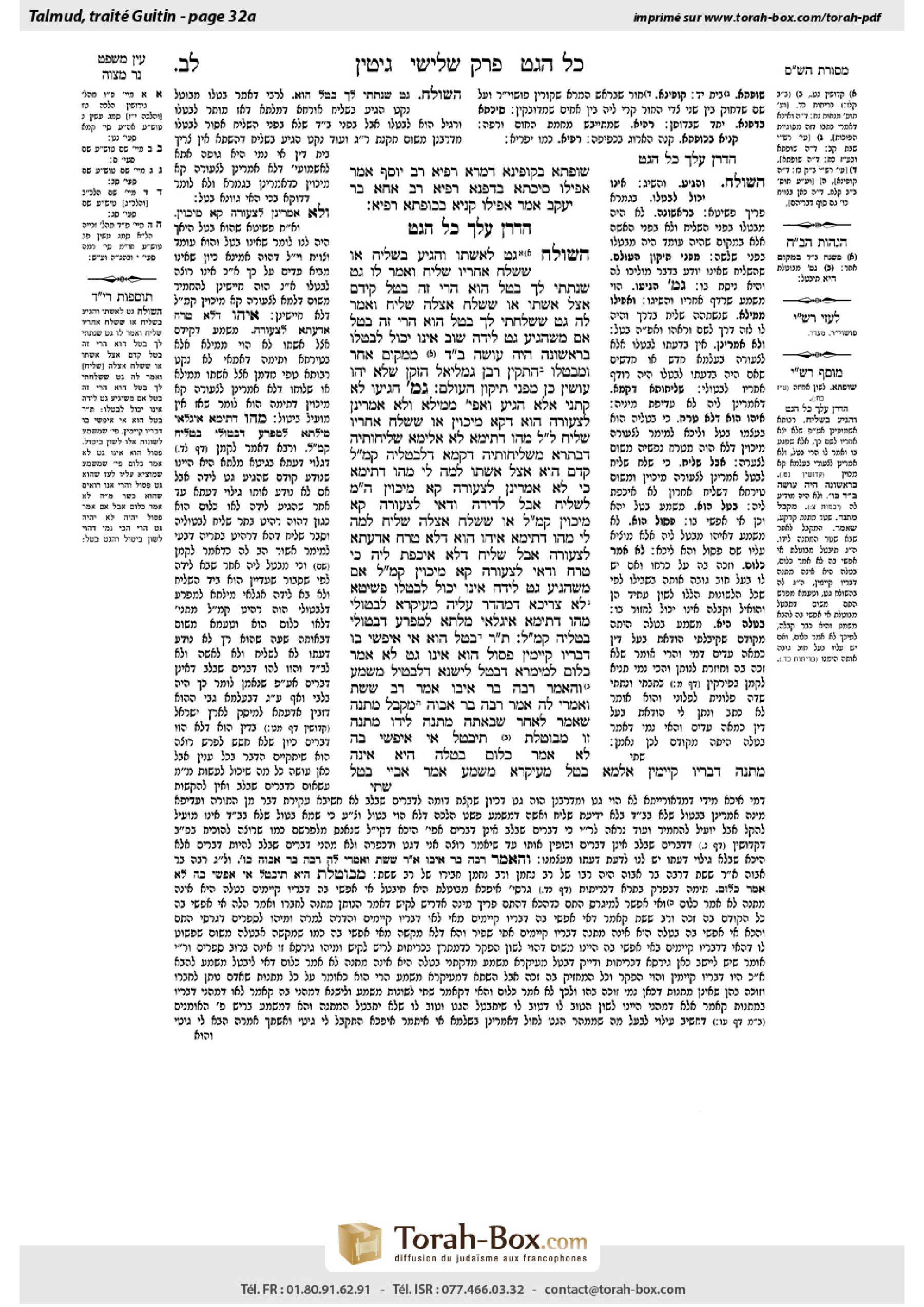
Gittin 32a: Talmud study for Daf Yomi
Study the Talmud for Daf Yomi with scanned pages, Hebrew text, English translations from Sefaria and AI-generated French translations.
Passage selection and English or AI-generated French translation are available where the scan has annotations. Daf Study is independent of Torah-Box and Sefaria.
Browse Gittin · גיטין · All tractatesGittin 32a text and translations
This page of Gittin includes the Aramaic text, an English translation and an AI-generated French translation, alongside the scan above.
גיטין ל״ב א · Aramaic and Hebrew text
שׁוּפְתָּא בְּקוֹפִינָא דְמָרָא – רָפְיָא. רַב יוֹסֵף אָמַר: אֲפִילּוּ סִיכְּתָא בְּדַפְנָא – רָפְיָא. רַב אַחָא בַּר יַעֲקֹב אָמַר: אֲפִילּוּ קַנְיָא בְּכוּפְתָּא – רָפְיָא.
הֲדַרַן עֲלָךְ כׇּל גֵּט
הַשּׁוֹלֵחַ גֵּט לְאִשְׁתּוֹ, וְהִגִּיעַ בַּשָּׁלִיחַ אוֹ שֶׁשָּׁלַח אַחֲרָיו שָׁלִיחַ, וְאָמַר לוֹ: ״גֵּט שֶׁנָּתַתִּי לְךָ, בָּטֵל הוּא״ – הֲרֵי זֶה בָּטֵל. קִידֵּם אֵצֶל אִשְׁתּוֹ אוֹ שֶׁשָּׁלַח אֶצְלָהּ שָׁלִיחַ, וְאָמַר לָהּ: ״גֵּט שֶׁשָּׁלַחְתִּי לִךְ, בָּטֵל הוּא״ – הֲרֵי זֶה בָּטֵל. אִם מִשֶּׁהִגִּיעַ גֵּט לְיָדָהּ – שׁוּב אֵינוֹ יָכוֹל לְבַטְּלוֹ.
בָּרִאשׁוֹנָה הָיָה עוֹשֶׂה בֵּית דִּין מִמָּקוֹם אַחֵר וּמְבַטְּלוֹ, הִתְקִין רַבָּן גַּמְלִיאֵל הַזָּקֵן שֶׁלֹּא יְהוּ עוֹשִׂין כֵּן, מִפְּנֵי תִּיקּוּן הָעוֹלָם.
גְּמָ׳ ״הִגִּיעוֹ״ לָא קָתָנֵי, אֶלָּא ״הִגִּיעַ״ – וַאֲפִילּוּ מִמֵּילָא, וְלָא אָמְרִינַן לְצַעוֹרַהּ הוּא דְּקָא מִיכַּוֵּין.
״אוֹ שֶׁשָּׁלַח אַחֲרָיו שָׁלִיחַ״ – לְמָה לִי? מַהוּ דְּתֵימָא: לָא אַלִּימָא שְׁלִיחוּתֵיהּ דְּבָתְרָא מִשְּׁלִיחוּתֵיהּ דְּקַמָּא – דִּלְבַטְּלֵיהּ, קָא מַשְׁמַע לַן.
״קָדַם הוּא אֵצֶל אִשְׁתּוֹ״ – לְמָה לִי? מַהוּ דְּתֵימָא: כִּי לָא אָמְרִינַן לְצַעוֹרַהּ קָא מִיכַּוֵּין – הָנֵי מִילֵּי לְשָׁלִיחַ, אֲבָל לְדִידַהּ וַדַּאי לְצַעוֹרַהּ קָא מִיכַּוֵּין, קָא מַשְׁמַע לַן.
״אוֹ שֶׁשָּׁלַח אֶצְלָהּ שָׁלִיחַ״ – לְמָה לִי? מַהוּ דְּתֵימָא: אִיהוּ הוּא דְּלָא טָרַח אַדַּעְתָּא לְצַעוֹרַהּ, אֲבָל שָׁלִיחַ, דְּלָא אִיכְפַּת לֵיהּ כִּי טָרַח – וַדַּאי לְצַעוֹרַהּ קָא מִיכַּוֵּין, קָא מַשְׁמַע לַן.
אִם מִשֶּׁהִגִּיעַ גֵּט לְיָדָהּ – אֵינוֹ יָכוֹל לְבַטְּלוֹ. פְּשִׁיטָא! לָא צְרִיכָא דְּמַהְדַּר עֲלֵיהּ מֵעִיקָּרָא לְבַטּוֹלֵי; מַהוּ דְּתֵימָא: אִיגַּלַּאי מִלְּתָא לְמַפְרֵעַ דְּבַטּוֹלֵי בַּטְּלֵיהּ, קָא מַשְׁמַע לַן.
תָּנוּ רַבָּנַן: ״בָּטֵל הוּא״; ״אִי אֶיפְשִׁי בּוֹ״ – דְּבָרָיו קַיָּימִין. ״פָּסוּל הוּא״; ״אֵינוֹ גֵּט״ – לֹא אָמַר כְּלוּם.
לְמֵימְרָא דְּ״בָטֵל״ לִישָּׁנָא דְּלִבְּטִיל מַשְׁמַע?! וְהָאָמַר רַבָּה בַּר אַיְבוּ, אָמַר רַב שֵׁשֶׁת; וְאָמְרִי לַהּ אָמַר רַבָּה בַּר אֲבוּהּ: מְקַבֵּל מַתָּנָה, שֶׁאָמַר לְאַחַר שֶׁבָּאתָה מַתָּנָה לְיָדוֹ: ״מַתָּנָה זוֹ מְבוּטֶּלֶת״; ״תִּיבַּטֵּל״; ״אִי אֶיפְשִׁי בָּהּ״ – לֹא אָמַר כְּלוּם. ״בְּטֵלָה הִיא״; ״אֵינָהּ מַתָּנָה״ – דְּבָרָיו קַיָּימִין. אַלְמָא ״בָּטֵל״ מֵעִיקָּרָא מַשְׁמַע!
אָמַר אַבָּיֵי: ״בָּטֵל״
Gittin 32a · English translation
the handle in the hole [kofina] of the hoe [mara] becomes loose [rafya], as he understands the word yafri to refer to separating connected items. Similarly, Rav Yosef said: Even the peg hammered into the wall becomes loose. Rav Aḥa bar Ya’akov said: Even the reed woven into the basket becomes loose.
MISHNA: In the case of one who sends a bill of divorce to his wife with an agent, and he reached the agent, or where he sent another agent after him, and he said to the agent delivering the bill of divorce: The bill of divorce that I gave you, it is void, then this bill of divorce is hereby void. Similarly, if the husband reached his wife before the bill of divorce reached her, or in a case where he sent an agent to her, and he said, or had the agent say, to his wife: The bill of divorce that I sent to you, it is void, then this bill of divorce is hereby void. However, if he stated this once the bill of divorce had entered her possession, he can no longer render it void, as the divorce had already taken effect.
The mishna relates that initially, a husband who wished to render the bill of divorce void would convene a court elsewhere and render the bill of divorce void in the presence of the court before it reached his wife. Rabban Gamliel the Elder instituted an ordinance that one should not do this, for the betterment of the world. The Gemara will explain what this means.
GEMARA: The mishna states that if one sends a bill of divorce with an agent and then meets the agent and renders void the bill of divorce in his presence, then it is void. The Gemara points out: The mishna does not teach: He reached the agent after pursuing him; rather: He reached the agent, meaning and even if he reached him incidentally, without intent, he renders the bill of divorce void with his statement. And we do not say that in that case he intends only to vex his wife and does not actually intend to render the bill of divorce void.
The Gemara asks: Why do I need the mishna to state that the bill of divorce is void when he reached the agent, or in a case where he sent another agent after him? The legal status of a person’s agent is like that of himself, so it seems obvious that just as the husband can nullify the agency of the first agent, so too can the second agent nullify the agency of the first agent. The Gemara answers: This principle was stated lest you say that the agency of the latter, the second agent, is not stronger than the agency of the former, and that the latter agent cannot nullify the agency of the first agent and only the husband can nullify it. Therefore, the mishna teaches us that the second agent can nullify the agency of the first agent.
The Gemara continues and asks: Why do I need the mishna to teach a case where a husband reached his wife before the bill of divorce reached her? It is obvious that a husband can render void the bill of divorce before it reaches his wife. The Gemara explains: This principle was stated lest you say that when we don’t say that he intends only to vex her like in the case above, and the bill of divorce is in fact void, this matter applies only when he said to the agent that the bill of divorce is void; however, if he said that to her, he certainly intends only to vex her, and he does not actually intend to render the bill of divorce void. Therefore, the mishna teaches us that even in this case the bill of divorce is void.
The Gemara continues and asks: Why do I need the mishna to state: Or where he sent an agent to her, which, as stated above, means that the legal status of a person’s agent is like that of himself? The Gemara answers: It is necessary lest you say that only he would not exert himself with the sole intent to vex her, by informing her falsely that the bill of divorce is void; however, with regard to the agent, as the husband does not care if he exerts himself for no reason, and the husband certainly intends only to vex her when he sends an agent and not actually to render the bill of divorce void. Therefore, the mishna teaches us that in this case as well the bill of divorce is void.
The mishna states further: If he stated this once the bill of divorce had entered her possession, he can no longer render it void, as the divorce had already taken effect. The Gemara asks: Isn’t this obvious? Once the bill of divorce has entered her possession, they are divorced. The Gemara answers: No, it is necessary for the mishna to state that even in a case where he was going around searching for the bill of divorce from the beginning in order to render it void before it reached his wife, once it enters her possession it is too late. Lest you say: Once he renders the bill of divorce void, even after it had entered her possession, it has become clear retroactively that he rendered it void from the beginning, before it reached his wife, therefore the mishna teaches us that since the bill of divorce was rendered void only after it had entered her possession, they are divorced.
§ The Sages taught: If a husband made one of the following statements with regard to a bill of divorce that he sent: It is void [batel hu], or: I do not desire it, then his statement takes effect and the bill of divorce is void. However, if he said: It is invalid, or: It is not a bill of divorce, then it is as though he said nothing, as the bill of divorce has nothing disqualifying it.
The Gemara asks: Is this to say that the formulation: Batel, is a prescriptive formulation that means: Let it become void, and not a descriptive formulation that means that the bill of divorce is already void? But didn’t Rabba bar Aivu say that Rav Sheshet said, and some say that Rabba bar Avuh says: With regard to one who receives a gift, who, after the gift had entered his possession, said: This gift is rendered void; or if he said: Let it become void; or if he said: I do not desire it, it is as though he said nothing. He has already acquired the gift, and he cannot undo his acquisition. However, if he said: It is void [betela he], or: It is not a gift, his statement is effective, as these formulations indicate that he had never agreed to acquire the gift in the first place. Apparently, the formulation: Batel, means that it is void from the beginning, and not that it should become void, in opposition to the baraita.
Abaye said: The formulation: Batel,
Gittin 32a · Traduction française (IA)
la poignée dans le trou [kofina] de la houe [mara] devient lâche [rafya], car il comprend le mot yafri comme désignant la séparation d'objets connectés. De même, Rav Yosef a dit : Même le clou martelé dans le mur devient lâche. Rav Aḥa bar Ya’akov a dit : Même la tige tissée dans le panier devient lâche.
MICHNA : Dans le cas d’un homme qui envoie un acte de divorce à sa femme par un agent, et qu’il atteint l’agent, ou dans le cas où il envoie un autre agent après lui, et qu’il dit à l’agent qui livre l’acte de divorce : L’acte de divorce que je t’ai donné, il est nul, alors cet acte de divorce est désormais nul. De même, si l’homme atteint sa femme avant que l’acte de divorce ne l’atteigne, ou dans le cas où il envoie un agent à elle, et qu’il dit, ou qu’il fait dire à son épouse : L’acte de divorce que j’ai envoyé à toi, il est nul, alors cet acte de divorce est désormais nul. Cependant, si il déclare cela après que l’acte de divorce ait été en possession de sa femme, il ne peut plus le rendre nul, car le divorce avait déjà pris effet.
La mishna relate que d’abord, un mari qui souhaitait rendre l’acte de divorce nul convoquait un tribunal ailleurs et rendait l’acte de divorce nul en présence du tribunal avant qu’il ne parvienne à sa femme. Rabban Gamliel le Vieux a institué un ordonnance selon laquelle on ne devrait pas faire cela, pour le bien du monde. La Guemara expliquera ce que cela signifie.
GUEMARA : La mishna indique que si l’on envoie un acte de divorce par un agent et qu’on rencontre l’agent et qu’on annule l’acte de divorce en sa présence, alors l’acte de divorce est nul. La Guemara souligne : La mishna ne dit pas : Il a atteint l’agent après avoir poursuivi celui-ci ; plutôt : Il a atteint l’agent, c’est-à-dire même si l’homme l’a atteint accidentellement, sans intention, il annule l’acte de divorce par sa déclaration. Et nous ne disons pas que dans ce cas il veut seulement vexer sa femme et qu’il n’a pas réellement l’intention d’annuler l’acte de divorce.
La Guemara pose la question : Pourquoi ai-je besoin de la mishna pour dire que l’acte de divorce est nul quand il a atteint l’agent, ou dans le cas où il a envoyé un autre agent après lui ? Le statut juridique d’un agent d’une personne est comme celui de lui-même, donc il semble évident que tout comme le mari peut annuler l’agence du premier agent, ainsi l’agent second peut annuler l’agence du première agent. La Guemara répond : Ce principe a été énoncé afin que vous ne disiez pas que l’agence du second agent, celui qui vient après, n’est pas plus forte que celle du premier, et que l’agent second ne peut annuler l’agence du premier agent, et que seul le mari peut l’annuler. Par conséquent, la mishna nous enseigne que l’agent second peut annuler l’agence du premier agent.
La Guemara continue et pose la question : Pourquoi ai-je besoin de la Michna pour enseigner le cas où le mari atteint sa femme avant que l’acte de divorce ne l’atteigne ? Il est évident que le mari peut rendre nul l’acte de divorce avant qu’il ne parvienne à sa femme. La Guemara explique : Ce principe a été énoncé afin que vous ne disiez pas que lorsque nous ne disons pas qu’il veut seulement vexer sa femme comme dans le cas ci-dessus, et que l’acte de divorce est effectivement nul, cela s’applique uniquement quand il dit à l’agent que l’acte de divorce est nul ; cependant, si il dit cela à elle, il veut certainement seulement vexer sa femme, et il n’a pas réellement l’intention de rendre l’acte de divorce nul. Par conséquent, la Michna nous enseigne que même dans ce cas l’acte de divorce est nul.
La Guemara continue et pose la question : Pourquoi ai-je besoin de la Michna pour dire : Ou dans le cas où il a envoyé un agent à elle, ce qui, comme dit ci-dessus, signifie que le statut juridique d’un agent d’une personne est comme celui de lui-même ? La Guemara répond : Il est nécessaire afin que vous ne disiez pas que seul il ne s’efforce pas avec l’intention unique de vexer sa femme, en informant faussement qu’il l’acte de divorce est nul ; cependant, concernant l’agent, comme le mari ne s’occupe pas s’il s’efforce pour rien, et le mari veut certainement seulement vexer sa femme quand il envoie un agent et non pas réellement rendre l’acte de divorce nul. Par conséquent, la Michna nous enseigne que dans ce cas également l’acte de divorce est nul.
La mishna ajoute : Si l'homme déclare cela une fois que l'acte de divorce est entré en possession de sa femme, il ne peut plus le rendre nul, car le divorce avait déjà pris effet. La Guemara pose la question : N'est-ce pas évident ? Une fois que l'acte de divorce est entré en possession de sa femme, ils sont divorcés. La Guemara répond : Non, il est nécessaire que la mishna le précise, même dans le cas où il cherchait depuis le début à trouver l'acte de divorce afin de le rendre nul avant qu'il ne parvienne à sa femme, une fois qu'il entre en possession de sa femme, il est trop tard. Afin de ne pas penser que : Une fois qu'il a rendu l'acte de divorce nul, même après qu'il ait été en possession de sa femme, cela a clarifié rétrospectivement qu'il l'avait rendu nul dès le début, avant qu'il ne parvienne à sa femme, donc la mishna nous enseigne que puisque l'acte de divorce a été rendu nul après qu'il ait été en possession de sa femme, ils sont divorcés.
§ Les Sages ont enseigné : Si un mari fait l'une des déclarations suivantes concernant un acte de divorce qu'il a envoyé : « Il est nul [batel hu] », ou : « Je ne le désire pas », alors sa déclaration est efficace et l'acte de divorce est nul. Cependant, si il dit : « Il est invalide », ou : « Ce n'est pas un acte de divorce », alors cela est comme s'il n'avait rien dit, car l'acte de divorce ne présente rien de disqualifiant.
La Guemara pose la question : Est-ce que cela signifie que la formulation : batel, est une formulation prescriptive qui signifie : qu'il devienne nul, et non une formulation descriptive qui signifie que le divorce est déjà nul ? Mais n’a-t-il pas dit Rabba bar Aivu que Rav Sheshet a dit, et certains disent que Rabba bar Avuh a dit : En ce qui concerne celui qui reçoit un cadeau, et qui, après que le cadeau eut pénétré dans sa possession, dit : Ce cadeau est rendu nul ; ou s’il dit : Qu’il devienne nul ; ou s’il dit : Je ne désire pas cela, cela équivaut à ce qu’il ait dit rien. Il a déjà acquis le cadeau, et il ne peut pas annuler son acquisition. Cependant, s’il dit : Il est nul [betela he], ou : Ce n’est pas un cadeau, sa déclaration est efficace, car ces formulations indiquent qu’il n’avait jamais accepté d’acquérir le cadeau au départ. Apparemment, la formulation : batel, signifie qu’il est nul dès le début, et non qu’il devienne nul, en opposition à la baraïta.
Abaye dit : La formulation : batel,
Traduction française générée par IA à partir de l’édition anglaise de Sefaria. Vérifie toujours un passage avec le texte source.
Text from Sefaria: William Davidson Edition - Vocalized Aramaic (CC BY NC); William Davidson Edition - English (CC BY NC).