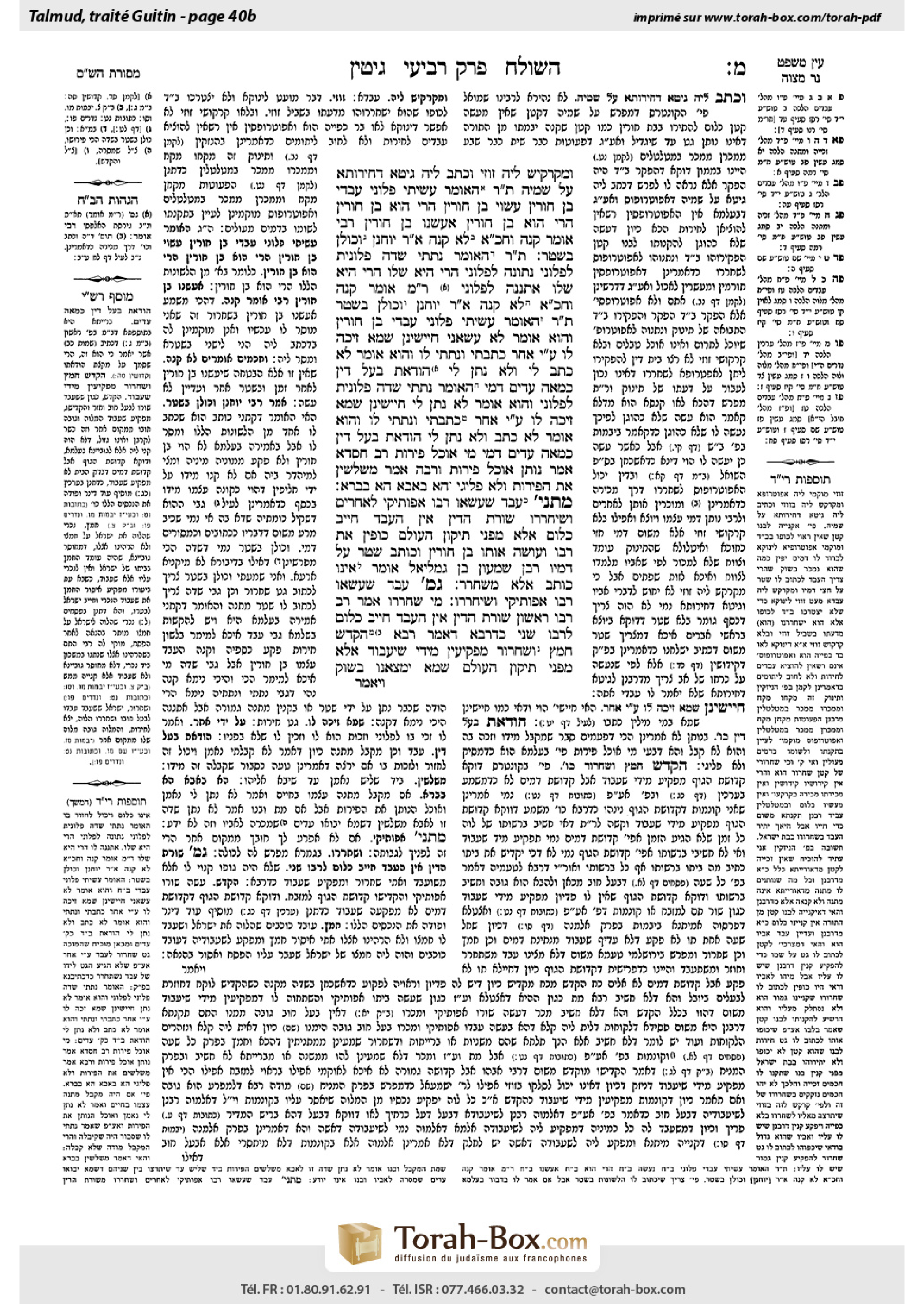
Gittin 40b: Talmud study for Daf Yomi
Study the Talmud for Daf Yomi with scanned pages, Hebrew text, English translations from Sefaria and AI-generated French translations.
Passage selection and English or AI-generated French translation are available where the scan has annotations. Daf Study is independent of Torah-Box and Sefaria.
Browse Gittin · גיטין · All tractatesGittin 40b text and translations
This page of Gittin includes the Aramaic text, an English translation and an AI-generated French translation, alongside the scan above.
גיטין מ׳ ב · Aramaic and Hebrew text
וּמְקַרְקֵישׁ לֵיהּ זוּזֵי, וְכָתֵב לֵיהּ גִּיטָּא דְחֵירוּתָא עַל שְׁמֵיהּ.
תָּנוּ רַבָּנַן, הָאוֹמֵר: ״עָשִׂיתִי פְּלוֹנִי עַבְדִּי בֶּן חוֹרִין״; ״עָשׂוּי בֶּן חוֹרִין״; ״הֲרֵי הוּא בֶּן חוֹרִין״ – הֲרֵי הוּא בֶּן חוֹרִין.
״אֶעֱשֶׂנּוּ בֶּן חוֹרִין״ – רַבִּי אוֹמֵר: קָנָה, וַחֲכָמִים אוֹמְרִים: לֹא קָנָה. אָמַר רַבִּי יוֹחָנָן: וְכוּלָּן – בִּשְׁטָר.
תָּנוּ רַבָּנַן, הָאוֹמֵר: ״נָתַתִּי שָׂדֶה פְּלוֹנִית לִפְלוֹנִי״; ״נְתוּנָה לִפְלוֹנִי״; ״הֲרֵי הִיא שֶׁלּוֹ״ – הֲרֵי הִיא שֶׁלּוֹ. ״אֶתְּנֶנָּה לִפְלוֹנִי״ – רַבִּי מֵאִיר אוֹמֵר: קָנָה; וַחֲכָמִים אוֹמְרִים: לֹא קָנָה. אָמַר רַבִּי יוֹחָנָן: וְכוּלָּן – בִּשְׁטָר.
תָּנוּ רַבָּנַן, הָאוֹמֵר: ״עָשִׂיתִי פְּלוֹנִי עַבְדִּי בֶּן חוֹרִין״, וְהוּא אוֹמֵר: ״לֹא עֲשָׂאַנִי״ – חָיְישִׁינַן שֶׁמָּא זִיכָּה לוֹ עַל יְדֵי אַחֵר. ״כָּתַבְתִּי וְנָתַתִּי לוֹ״, וְהוּא אוֹמֵר: ״לֹא כָּתַב לִי וְלֹא נָתַן לִי״ – הוֹדָאַת בַּעַל דִּין כְּמֵאָה עֵדִים דָּמֵי.
הָאוֹמֵר: ״נָתַתִּי שָׂדֶה פְּלוֹנִית לִפְלוֹנִי״, וְהוּא אוֹמֵר: ״לֹא נָתַן לִי״ – חָיְישִׁינַן שֶׁמָּא זִיכָּה לוֹ עַל יְדֵי אַחֵר. ״כָּתַבְתִּי וְנָתַתִּי לוֹ״, וְהוּא אוֹמֵר: ״לֹא כָּתַב וְלֹא נָתַן לִי״ – הוֹדָאַת בַּעַל דִּין כְּמֵאָה עֵדִים דָּמֵי.
מִי אוֹכֵל פֵּירוֹת? רַב חִסְדָּא אָמַר: נוֹתֵן אוֹכֵל פֵּירוֹת; וְרַבָּה אָמַר: מְשַׁלְּשִׁין אֶת הַפֵּירוֹת.
וְלָא פְּלִיגִי: הָא בְּאַבָּא, הָא בִּבְרָא.
מַתְנִי׳ עֶבֶד שֶׁעֲשָׂאוֹ רַבּוֹ אַפּוֹתֵיקֵי לַאֲחֵרִים, וְשִׁיחְרְרוֹ – שׁוּרַת הַדִּין אֵין הָעֶבֶד חַיָּיב כְּלוּם; אֶלָּא מִפְּנֵי תִּיקּוּן הָעוֹלָם, כּוֹפִין אֶת רַבּוֹ וְעוֹשֶׂה אוֹתוֹ בֶּן חוֹרִין, וְכוֹתֵב שְׁטָר עַל דָּמָיו. רַבָּן שִׁמְעוֹן בֶּן גַּמְלִיאֵל אוֹמֵר: אֵינוֹ כּוֹתֵב, אֶלָּא מְשַׁחְרֵר.
גְּמָ׳ עֶבֶד שֶׁעֲשָׂאוֹ רַבּוֹ אַפּוֹתֵיקֵי וְשִׁיחְרְרוֹ: מִי שִׁחְרְרוֹ? אָמַר רַב: רַבּוֹ רִאשׁוֹן. שׁוּרַת הַדִּין אֵין הָעֶבֶד חַיָּיב כְּלוּם לְרַבּוֹ שֵׁנִי –
כִּדְרָבָא, דְּאָמַר רָבָא: הֶקְדֵּשׁ, חָמֵץ וְשִׁחְרוּר – מַפְקִיעִין מִידֵי שִׁיעְבּוּד; אֶלָּא מִפְּנֵי תִּיקּוּן הָעוֹלָם, שֶׁמָּא יִמְצָאֶנּוּ בַּשּׁוּק
Gittin 40b · English translation
and the slave should jingle the dinars before him. The child will want the money and he will decide to emancipate him, and they should write him a bill of emancipation in his name.
§ The Sages taught that with regard to one who says: I made so-and-so my slave a freeman, or: My slave was made a freeman, or: Behold he is a freeman, in all of these cases he is a freeman as a result.
If he says: I will make him a freeman, Rabbi Yehuda HaNasi says: The slave has acquired himself, and the Rabbis say: He has not acquired himself. Rabbi Yoḥanan says: And all of these halakhot apply only when the formulation was written in a document that was transferred to the slave. A verbal statement alone is not effective in emancipating the slave.
Similarly, the Sages taught that with regard to one who says: I gave such and such a field to so-and-so as a gift; or: This field is given to so-and-so; or: Behold it is his, in all of these cases it belongs to the recipient. If he says: I will give it to so-and-so, then Rabbi Meir says: That person has acquired the field. And the Rabbis say: He has not acquired it. With regard to this, Rabbi Yoḥanan also says: And all of these halakhot apply only when the formulation was written in a document that was transferred to the recipient. A verbal statement alone is not effective in transferring the field.
The Sages taught that with regard to one who says: I made so-and-so my slave a freeman, and the slave says: He did not make me a freeman, then we are concerned that perhaps the master transferred the slave’s emancipation to him through another person without the slave being aware of this, and the slave is assumed to be emancipated. However, if the master said: I wrote and I gave to him a bill of manumission, and the slave says: He did not write it for me and he did not give me a bill of manumission, then he remains a slave, as the legal status of the admission of a litigant is similar to the testimony of one hundred witnesses. Just as the testimony of witnesses is deemed credible by the court, so is the admission of a litigant deemed credible.
Similarly, with regard to one who says: I gave such and such a field to so-and-so, and the supposed recipient says: He did not give me it, then we are concerned that perhaps he transferred the field to him through another person without the recipient being aware of this, and the field becomes his. However, if one says: I wrote and gave to him a document stating that I am giving him the field, and the supposed recipient says: He did not write it and did not give me a document stating that he is giving me the field, then he does not take possession of the field, as the legal status of the admission of a litigant is similar to the testimony of one hundred witnesses.
The Gemara asks: In this case, where the original owner states that he gave the field to his friend, and the supposed recipient states that he did not receive it, who consumes the produce of the field? Rav Ḥisda says: The giver consumes the produce, as the field remains in his possession, and Rabba says: The produce is deposited with a third party until it can be determined who the rightful owner is.
The Gemara comments: And they do not disagree. Rather, they are referring to different cases: This case pertains to the father, the one who is the supposed recipient of the field. As long as he is alive and states that he did not receive the field, the produce is consumed by the original owner. That case pertains to the son of the supposed recipient of the field, who claims that his father did not receive it. Since it is possible that the father received it without the son’s knowledge, the produce is deposited with a third party until it can be determined who the rightful owner is.
MISHNA: In the case of a slave whose master set him aside as designated repayment [apoteiki] of a debt to other people from whom he borrowed money, and afterward he emancipated him, then according to the letter of the law the slave bears no responsibility for the debt. However, for the betterment of the world, his master is forced to make him a freeman, and the slave writes a promissory note for his value to pay the debt to the creditor. Rabban Shimon ben Gamliel says: He does not write a promissory note; he only emancipates the slave.
GEMARA: The mishna taught the case of a slave whose master set him aside as designated repayment of a debt to other people and afterward emancipated him. The Gemara clarifies: Who emancipated him? Rav said: His first master emancipated him, and the mishna is teaching as follows: According to the letter of the law, the slave is not obligated to serve his second master at all.
Why does he not have to serve the second master? This halakha is in accordance with the statement of Rava, as Rava says: Consecration of an item to the Temple, becoming subject to the prohibition of leavened bread on Passover, and the emancipation of a slave abrogate any lien that exists upon an item. Therefore, in the case of the mishna, the slave should be a freeman after his master emancipates him, and the creditor may not take possession of him. However, for the betterment of the world, lest the creditor will find the slave in the market
Gittin 40b · Traduction française (IA)
et l'esclave devrait faire sonner les dinars devant lui. L'enfant voudra l'argent et il décidera de l'émanciper, et ils devraient écrire un acte d'émancipation en son nom.
§ Les Sages enseignent que concernant celui qui dit : J'ai rendu tel ou tel mon esclave libre, ou : Mon esclave a été rendu libre, ou : Voici qu'il est libre, dans tous ces cas il est libre à cause de cela.
Si l'on dit : Je vais rendre cet homme libre, Rabbi Yehuda HaNasi dit : L'esclave a acquis sa liberté, et les Rabbins disent : Il n'a pas acquis sa liberté. Rabbi Yoḥanan dit : Et toutes ces halakhot s'appliquent seulement lorsque la formulation était écrite dans un document transmis à l'esclave. Une déclaration verbale seule n'est pas efficace pour émanciper l'esclave.
De même, les Sages enseignent que concernant celui qui dit : J'ai donné telle et telle terre à tel ou tel en cadeau ; ou : Cette terre est donnée à tel ou tel ; ou : Voici qu'elle est sienne, dans tous ces cas elle appartient au destinataire. Si il dit : Je vais lui donner cette terre, alors Rabbi Meir dit : Cette personne a acquis la terre. Et les Rabbins disent : Il n'a pas acquis cette terre. Concernant cela, Rabbi Yoḥanan dit aussi : Et toutes ces halakhot s'appliquent seulement lorsque la formulation était écrite dans un document transmis au destinataire. Une déclaration verbale seule n'est pas efficace pour transférer la terre.
Les Sages enseignent que concernant celui qui dit : J'ai rendu tel ou tel mon esclave libre, et l'esclave dit : Il n'a pas rendu libre, alors nous craignons que peut-être le maître a transféré la liberté de l'esclave à une autre personne sans que l'esclave ne soit conscient de cela, et l'esclave est considéré comme libre. Cependant, si le maître dit : J'ai écrit et je lui ai donné un acte d'émancipation, et l'esclave dit : Il n'a pas écrit cela pour moi et il n'a pas donné un acte d'émancipation, alors il reste esclave, car le statut juridique de l'admission d'un litigeant est semblable au témoignage de cent témoins. Aussi bien que le témoignage des témoins est considéré comme crédible par le tribunal, ainsi l'admission d'un litigeant est considérée comme crédible.
De même, concernant celui qui dit : J'ai donné telle et telle terre à tel ou tel, et le destinataire dit : Il ne m'a pas donnée, alors nous craignons que peut-être il a transféré la terre à lui via une autre personne sans que le destinataire ne soit conscient de cela, et la terre devient sienne. Cependant, si l'on dit : J'ai écrit et je lui ai donné un document disant que je lui donne la terre, et le destinataire dit : Il n'a pas écrit cela et il n'a pas donné un document disant qu'il me donne la terre, alors il ne prend pas possession de la terre, car le statut juridique de l'admission d'un litigeant est semblable au témoignage de cent témoins.
Le Guemara pose la question : Dans ce cas, où l'original propriétaire dit qu'il a donné la terre à son ami, et le destinataire dit qu'il ne l'a pas reçue, qui consomme les produits de la terre ? Rav Ḥisda dit : Le donneur consomme les produits, car la terre reste en son possession, et Rabba dit : Les produits sont déposés avec un tiers jusqu'à ce qu'il soit déterminé qui est le propriétaire légitime.
Le Guemara commente : Et ils ne sont pas en désaccord. Plutôt, ils parlent de cas différents : Ce cas concerne le père, celui qui est le destinataire de la terre. Tant qu'il est vivant et dit qu'il n'a pas reçu la terre, les produits sont consommés par l'original propriétaire. Ce cas concerne le fils du destinataire de la terre, qui affirme que son père n'a pas reçu la terre. Puisque c'est possible que le père l'ait reçue sans la connaissance du fils, les produits sont déposés avec un tiers jusqu'à ce qu'il soit déterminé qui est le propriétaire légitime.
MICHNA : Dans le cas d'un esclave que son maître avait désigné comme réparation d'une dette envers d'autres personnes à qui il avait emprunté de l'argent, et ensuite l'avait émancipé, alors selon la lettre de la loi l'esclave ne porte pas de responsabilité pour la dette. Cependant, pour le bien du monde, son maître est contraint de l'émanciper, et l'esclave écrit un billet de promesse pour sa valeur afin de payer la dette au créancier. Rabban Shimon ben Gamliel dit : Il n'écrit pas un billet de promesse ; il suffit qu'il l'émancipe.
GUEMARA : La mishna enseigne le cas d'un esclave que son maître avait désigné comme réparation d'une dette envers d'autres personnes et ensuite l'avait émancipé. Le Guemara clarifie : Qui l'a émancipé ? Rav dit : Son premier maître l'avait émancipé, et la mishna enseigne comme suit : Selon la lettre de la loi, l'esclave n'est pas tenu de servir son deuxième maître du tout.
Pourquoi ne doit-il pas servir le deuxième maître ? Cette halakha est selon l'affirmation de Rava, car Rava dit : La consécration d'un objet au Temple, la soumission à l'interdiction du pain aisé pendant la Pâque, et l'émancipation d'un esclave annulent toute garantie existant sur un objet. Ainsi, dans le cas de la mishna, l'esclave devrait être libre après que son maître l'ait émancipé, et le créancier ne peut pas prendre possession de lui. Cependant, pour le bien du monde, de peur que le créancier trouve l'esclave sur le marché,
Traduction française générée par IA à partir de l’édition anglaise de Sefaria. Vérifie toujours un passage avec le texte source.
Text from Sefaria: William Davidson Edition - Vocalized Aramaic (CC BY NC); William Davidson Edition - English (CC BY NC).