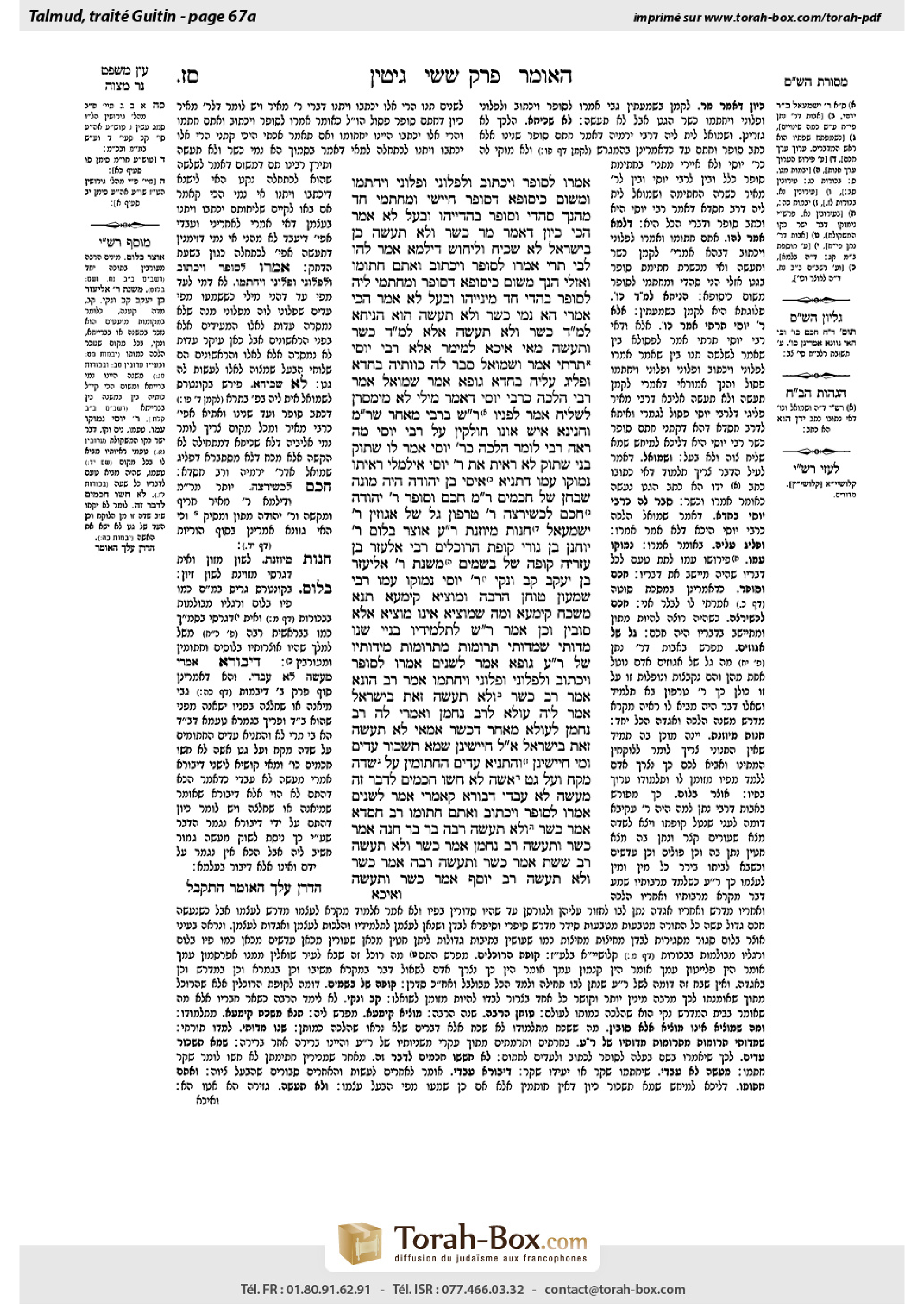
Gittin 67a: Talmud study for Daf Yomi
Study the Talmud for Daf Yomi with scanned pages, Hebrew text, English translations from Sefaria and AI-generated French translations.
Passage selection and English or AI-generated French translation are available where the scan has annotations. Daf Study is independent of Torah-Box and Sefaria.
Browse Gittin · גיטין · All tractatesGittin 67a text and translations
This page of Gittin includes the Aramaic text, an English translation and an AI-generated French translation, alongside the scan above.
גיטין ס״ז א · Aramaic and Hebrew text
״אִמְרוּ לְסוֹפֵר וְיִכְתּוֹב, וְלִפְלוֹנִי וּפְלוֹנִי וְיַחְתֹּמוּ״; וּמִשּׁוּם כִּיסּוּפָא דְּסוֹפֵר – חָיְישִׁי וּמַחְתְּמִי חַד מֵהָנָךְ סָהֲדִי, וְסוֹפֵר בַּהֲדַיְיהוּ, וּבַעַל לָא אָמַר הָכִי!
כֵּיוָן דְּאָמַר מָר: ״כָּשֵׁר, וְלֹא תֵּעָשֶׂה כֵּן בְּיִשְׂרָאֵל״ – לָא שְׁכִיחַ.
וְלֵיחוּשׁ דִּילְמָא אֲמַר לְהוּ לְבֵי תְרֵי: ״אִמְרוּ לְסוֹפֵר וְיִכְתּוֹב, וְאַתֶּם חֲתוֹמוּ״, וְאָזְלִי הָנָךְ מִשּׁוּם כִּיסּוּפָא דְּסוֹפֵר, וּמַחְתְּמִי לֵיהּ לְסוֹפֵר בַּהֲדֵי חַד מִינַּיְיהוּ, וּבַעַל לָא אָמַר הָכִי! אָמְרִי: הָא נָמֵי ״כָּשֵׁר וְלֹא תֵּעָשֶׂה״ הוּא.
הָנִיחָא לְמַאן דְּאָמַר: ״כָּשֵׁר וְלֹא תֵּעָשֶׂה״; אֶלָּא לְמַאן דְּאָמַר ״כָּשֵׁר וְתַעֲשֶׂה״ – מַאי אִיכָּא לְמֵימַר?
אֶלָּא רַבִּי יוֹסֵי – תַּרְתֵּי אָמַר; וּשְׁמוּאֵל סָבַר לַהּ כְּווֹתֵיהּ בַּחֲדָא, וּפְלִיג עֲלֵיהּ בַּחֲדָא.
גּוּפָא – אָמַר שְׁמוּאֵל אָמַר רַבִּי: הֲלָכָה כְּרַבִּי יוֹסֵי, דְּאָמַר מִילֵּי לָא מִימַּסְרָן לְשָׁלִיחַ. אָמַר לְפָנָיו רַבִּי שִׁמְעוֹן בְּרַבִּי: מֵאַחַר שֶׁרַבִּי מֵאִיר וַחֲנִינָא אִישׁ אוֹנוֹ חוֹלְקִין עַל רַבִּי יוֹסֵי, מָה רָאָה רַבִּי לוֹמַר הֲלָכָה כְּרַבִּי יוֹסֵי?
אָמַר לוֹ: שְׁתוֹק בְּנִי, שְׁתוֹק, לֹא רָאִיתָ אֶת רַבִּי יוֹסֵי, אִילְמָלֵי רְאִיתוֹ – נִמּוּקוֹ עִמּוֹ.
דְּתַנְיָא, אִיסִי בֶּן יְהוּדָה הָיָה מוֹנֶה שִׁבְחָן שֶׁל חֲכָמִים: רַבִּי מֵאִיר – חָכָם וְסוֹפֵר; רַבִּי יְהוּדָה – חָכָם לִכְשֶׁיִּרְצֶה; רַבִּי טַרְפוֹן – גַּל שֶׁל אֱגוֹזִין; רַבִּי יִשְׁמָעֵאל – חֲנוּת מְיוּזֶּנֶת; רַבִּי עֲקִיבָא – אוֹצָר בָּלוּם; רַבִּי יוֹחָנָן בֶּן נוּרִי – קוּפַּת הָרוֹכְלִים; רַבִּי אֶלְעָזָר בֶּן עֲזַרְיָה – קוּפָּה שֶׁל בְּשָׂמִים; מִשְׁנַת רַבִּי אֱלִיעֶזֶר בֶּן יַעֲקֹב – קַב וְנָקִי; רַבִּי יוֹסֵי – נִמּוּקוֹ עִמּוֹ; רַבִּי שִׁמְעוֹן – טוֹחֵן הַרְבֵּה וּמוֹצִיא קִימְעָא.
תָּנָא: מְשַׁכֵּחַ קִימְעָא, וּמַה שֶּׁמּוֹצִיא – אֵינוֹ מוֹצִיא אֶלָּא סוּבִּין. וְכֵן אָמַר רַבִּי שִׁמְעוֹן לְתַלְמִידָיו: בָּנַיי, שְׁנוּ מִדּוֹתַי, שֶׁמִּדּוֹתַי תְּרוּמוֹת מִתְּרוּמוֹת מִידּוֹתָיו שֶׁל רַבִּי עֲקִיבָא.
גּוּפָא – אָמַר לִשְׁנַיִם: ״אִמְרוּ לְסוֹפֵר וְיִכְתּוֹב, וְלִפְלוֹנִי וּפְלוֹנִי וְיַחְתֹּמוּ״ – אָמַר רַב הוּנָא אָמַר רַב: כָּשֵׁר, וְלֹא תֵּעָשֶׂה זֹאת בְּיִשְׂרָאֵל.
אֲמַר לֵיהּ עוּלָּא לְרַב נַחְמָן, וְאָמְרִי לַהּ רַב נַחְמָן לְעוּלָּא: מֵאַחַר דְּכָשֵׁר, אַמַּאי לֹא תֵּעָשֶׂה זֹאת בְּיִשְׂרָאֵל? אֲמַר לֵיהּ: חָיְישִׁינַן שֶׁמָּא תִּשְׂכּוֹר עֵדִים.
וּמִי חָיְישִׁינַן?! וְהָתַנְיָא: עֵדִים הַחֲתוּמִין עַל שְׂדֵה מִקָּח, וְעַל גֵּט אִשָּׁה – לֹא חָשׁוּ חֲכָמִים לְדָבָר זֶה! מַעֲשֶׂה לָא עָבְדִי, דִּבּוּרָא קָאָמְרִי.
אָמַר לִשְׁנַיִם: ״אִמְרוּ לְסוֹפֵר וְיִכְתּוֹב, וְאַתֶּם חֲתוֹמוּ״ – רַב חִסְדָּא אָמַר: ״כָּשֵׁר וְלֹא תֵּעָשֶׂה״, רַבָּה בַּר בַּר חָנָה אָמַר: ״כָּשֵׁר וְתֵעָשֶׂה״;
רַב נַחְמָן אָמַר: ״כָּשֵׁר וְלֹא תֵּעָשֶׂה״, רַב שֵׁשֶׁת אָמַר: ״כָּשֵׁר וְתֵעָשֶׂה״; רַבָּה אָמַר: ״כָּשֵׁר וְלֹא תֵּעָשֶׂה״, רַב יוֹסֵף אָמַר: ״כָּשֵׁר וְתֵעָשֶׂה״.
Gittin 67a · English translation
Tell a scribe and he will write the document and tell so-and-so and so-and-so and they will sign it. And due to the shame of the scribe, who asks: Don’t you consider me a sufficiently upright person to sign the document as a witness, the agents are concerned to avoid that disgrace and have one of those witnesses and the scribe sign together with him, and the husband did not say to do so. The bill of divorce is invalid because it was signed contrary to the husband’s instructions, and the agents will mistakenly think it is valid.
The Gemara answers: Since the Master said, as cited later, that such a bill of divorce is valid, however, it shall not be done in Israel, as the husband himself should appoint the scribe and the witnesses, it is an uncommon case for the husband to appoint an agent to arrange the bill of divorce, and the Sages do not issue a decree for cases that are uncommon.
The Gemara asks: And let us be concerned lest the husband say to two people: Tell the scribe and he will write the document and you sign it, and these two, due to the shame of the scribe, go and have the scribe sign the document together with one of them, and the husband did not say to do so. The Sages say: In this case too, it is valid; however, it shall not be done. This too is uncommon, and there is neither concern nor a decree.
The Gemara responds: This works out well according to the one who said in this case as well: It is valid; however, it shall not be done. But according to the one who said: It is valid and it may be done, i.e., it is permitted ab initio, what is there to say?
Rather, this is the explanation. Rabbi Yosei stated two halakhot: The first is that verbal directives cannot be delegated to an agent. The second is that even when the husband said: Tell another to write the document, this agency cannot be transferred to another person. And Shmuel holds in accordance with the opinion of Rabbi Yosei in one case, i.e., that verbal directives cannot be delegated to an agent, and he disagrees with him in one case, as Shmuel holds that if the husband explicitly said: Tell another to write the document, this agency can be transferred.
§ With regard to the previously cited matter itself, Shmuel says that Rabbi Yehuda HaNasi says: The halakha is in accordance with the opinion of Rabbi Yosei, who says: Verbal directives cannot be delegated to an agent. Rabbi Shimon, son of Rabbi Yehuda HaNasi, said before his father: Since Rabbi Meir and Rabbi Ḥanina of Ono, who hold that verbal directives can be delegated to an agent, disagree with Rabbi Yosei, what led Rabbi Yehuda HaNasi to say that the halakha is in accordance with the opinion of Rabbi Yosei?
Rabbi Yehuda HaNasi said to his son: Be silent, my son; be silent. You did not see Rabbi Yosei, as, if you had seen him, you would know that his reasoning [nimmuko] accompanies his statements. Therefore, I deem his opinion most reliable.
This is as it is taught in a baraita that Isi ben Yehuda would recount the praise of the Sages by characterizing each of them: Rabbi Meir, a scholar and scribe; Rabbi Yehuda, a scholar when he chooses to be one; Rabbi Tarfon, a pile of nuts, as, just as when one removes a nut from a pile all the other nuts fall, so too, when a student would ask Rabbi Tarfon with regard to one matter, he would cite sources from all the disciplines of the Torah; Rabbi Yishmael, a well-stocked store; Rabbi Akiva, a full storehouse; Rabbi Yoḥanan ben Nuri, a peddler’s basket, in which there is a small amount of each product; Rabbi Elazar ben Azarya, a basket of fragrant spices, as everything he says is reasonable; the mishna of Rabbi Eliezer ben Ya’akov is measured [kav] and immaculate; Rabbi Yosei, his reasoning accompanies his statements; Rabbi Shimon grinds much and removes little.
It is taught in explanation: Rabbi Shimon would forget little of his studies, and what he removed from his memory, he removed only chaff. And likewise, Rabbi Shimon said to his students: My sons, accept my halakhic rulings, as my rulings are the finest rulings of the finest rulings of Rabbi Akiva.
§ With regard to the matter previously cited itself, a case where one who said to two people: Tell a scribe and he will write the document and tell so-and-so and so-and-so and they will sign it, Rav Huna says that Rav says: It is valid; however, it shall not be done in Israel ab initio. The husband himself must appoint the scribe and witnesses.
Ulla said to Rav Naḥman, and some say that Rav Naḥman said to Ulla: Since it is valid, why shall it not be done in Israel? He said to him: We are concerned lest the woman hire witnesses. Since this is permitted by means of an agent, and the witnesses themselves do not know what the husband said, a woman could hire witnesses to tell a scribe to write a bill of divorce on her behalf and hire witnesses to sign it without her husband’s knowledge.
The Gemara asks: But are we concerned about that possibility? But isn’t it taught in a baraita (Tosefta, Yevamot 4:7): With regard to witnesses who are signed on a field of sale and a woman’s bill of divorce, the Sages were not concerned with regard to this matter of forgery, that perhaps these documents were written without consent of the owner and the husband, respectively. The Gemara answers: Although they would not perform an action and forge a bill of divorce, they would utter a statement and tell another to forge a document. The other person acts unknowingly, unaware of the impropriety involved.
The Gemara cites another halakha: If one said to two people: Tell the scribe and he will write the document and you sign it, Rav Ḥisda says: This bill of divorce is valid; however, it shall not be done ab initio. Rabba bar bar Ḥana says: It is valid and it may be done ab initio.
Several other amora’im dispute this matter. Rav Naḥman says: It is valid; however, it shall not be done ab initio. Rav Sheshet says: It is valid and it may be done ab initio. Rabba says: It is valid; however, it shall not be done. Rav Yosef says: It is valid and it may be done.
Gittin 67a · Traduction française (IA)
Dis à un scribe et il écrira le document et dis à telle et telle et ils signeront. Et à cause de la honte du scribe, qui demande : Ne considères-tu pas que je suis suffisamment honnête pour signer le document en tant que témoin, les agents veulent éviter cette disgrâce et font signer le document avec l'un de ces témoins et le scribe ensemble, et l'époux n'a pas dit de le faire. Le document de divorce est invalide car il a été signé contrairement aux instructions de l'époux, et les agents penseront à tort qu'il est valide.
La Guemara répond : Puisque le Maître a dit, comme cité plus tard, que tel document de divorce est valide, cependant, il ne doit pas être fait en Israël, car l'époux lui-même doit désigner le scribe et les témoins, il est peu courant que l'époux désigne un agent pour organiser le document de divorce, et les Sages ne donnent pas un décret pour les cas peu courants.
La Guemara pose la question : Et si nous craignons que l'époux dise à deux personnes : Dis au scribe et il écrira le document et vous signez, et ces deux personnes, à cause de la honte du scribe, vont faire signer le document avec l'un d'eux et le scribe, et l'époux n'a pas dit de le faire. Les Sages disent : Dans ce cas également, il est valide ; cependant, il ne doit pas être fait. Cela est également peu courant, et il n'y a ni crainte ni décret.
La Guemara répond : Cela s'arrange bien selon celui qui a dit dans ce cas également : Il est valide ; cependant, il ne doit pas être fait. Mais selon celui qui a dit : Il est valide et il peut être fait, c'est-à-dire il est permis dès le début, que dire alors ?
Plutôt, c'est l'explication. Rabbi Yosei a énoncé deux halakhot : La première est que les directives verbales ne peuvent pas être déléguées à un agent. La seconde est que même lorsque l'époux a dit : Dis à un autre d'écrire le document, cette délégation ne peut pas être transférée à une autre personne. Et Shmuel suit l'opinion de Rabbi Yosei dans un cas, c'est-à-dire que les directives verbales ne peuvent pas être déléguées à un agent, et il s'oppose à lui dans un autre cas, car Shmuel considère que si l'époux a explicitement dit : Dis à un autre d'écrire le document, cette délégation peut être transférée.
§ En ce qui concerne la question citée précédemment, Shmuel dit que Rabbi Yehuda HaNasi dit : La halakha suit l'opinion de Rabbi Yosei, qui dit : Les directives verbales ne peuvent pas être déléguées à un agent. Rabbi Shimon, fils de Rabbi Yehuda HaNasi, a dit devant son père : Puisque Rabbi Meir et Rabbi Ḥanina d'Ono, qui considèrent que les directives verbales peuvent être déléguées à un agent, s'opposent à Rabbi Yosei, pourquoi Rabbi Yehuda HaNasi a-t-il dit que la halakha suit l'opinion de Rabbi Yosei ?
Rabbi Yehuda HaNasi a dit à son fils : Sois silencieux, mon fils ; sois silencieux. Tu n'as pas vu Rabbi Yosei, car si tu l'avais vu, tu saurais que son raisonnement accompagne ses déclarations. Par conséquent, je considère son opinion comme la plus fiable.
C'est comme il est enseigné dans une baraïta que Isi ben Yehuda racontait la louange des Sages en les caractérisant ainsi : Rabbi Meir, un savant et un scribe ; Rabbi Yehuda, un savant lorsqu'il le veut ; Rabbi Tarfon, un tas de noix, car, comme quand on enlève une noix d'un tas, toutes les autres noix tombent, de même, quand un étudiant demandait à Rabbi Tarfon sur une seule question, il citait des sources de toutes les disciplines de la Torah ; Rabbi Yishmael, un entrepôt bien rempli ; Rabbi Akiva, un entrepôt plein ; Rabbi Yoḥanan ben Nuri, un panier de marchand, dans lequel il y a un peu de chaque produit ; Rabbi Elazar ben Azarya, un panier d'épices parfumées, car tout ce qu'il dit est raisonnable ; la mishna de Rabbi Eliezer ben Ya’akov est mesurée [kav] et immaculée ; Rabbi Yosei, son raisonnement accompagne ses déclarations ; Rabbi Shimon, il oublie peu de ses études, et ce qu'il enlève de sa mémoire, il enlève seulement la paille.
C'est comme il est expliqué : Rabbi Shimon oubliait peu de ses études, et ce qu'il enlevait de sa mémoire, il enlevait seulement la paille. Et de même, Rabbi Shimon a dit à ses élèves : Mes fils, acceptez mes décisions halakhiques, car mes décisions sont les meilleures décisions des meilleures décisions de Rabbi Akiva.
§ En ce qui concerne la question citée précédemment, un cas où l'on a dit à deux personnes : Dis à un scribe et il écrira le document, et dis à telle et telle et ils signeront, Rav Huna dit que Rav dit : C'est valide ; cependant, il ne doit pas être fait en Israël dès le début. L'époux lui-même doit désigner le scribe et les témoins.
Ulla a dit à Rav Naḥman, et certains disent que Rav Naḥman a dit à Ulla : Puisque c'est valide, pourquoi ne le fait-on pas en Israël ? Il a dit à lui : Nous craignons que la femme embauche des témoins. Puisque cela est permis par l'intermédiaire d'un agent, et que les témoins eux-mêmes ne savent pas ce que l'époux a dit, une femme pourrait embaucher des témoins pour dire au scribe d'écrire un document de divorce à sa place et embaucher des témoins pour le signer sans la connaissance de son époux.
La Guemara pose la question : Mais craignons-nous cela ? Mais n'est-il pas enseigné dans une baraïta (Tosefta, Yevamot 4:7) : En ce qui concerne les témoins signés sur un champ de vente et un document de divorce d'une femme, les Sages ne s'inquiétaient pas de cette question de contrefaçon, que peut-être ces documents ont été écrits sans le consentement du propriétaire et de l'époux, respectivement. La Guemara répond : Bien qu'ils ne fassent pas d'action et ne contrefassent pas un document de divorce, ils pourraient dire une déclaration et dire à un autre de contrefaire un document. L'autre personne agit sans savoir, sans être consciente de l'impécuniosité impliquée.
La Guemara cite une autre halakha : Si l'on a dit à deux personnes : Dis au scribe et il écrira le document et vous signez, Rav Ḥisda dit : Ce document de divorce est valide ; cependant, il ne doit pas être effectué dès le début. Rabba bar bar Ḥana dit : Il est valide et il peut être effectué dès le début.
Plusieurs autres amoraim discutent ce point. Rav Naḥman dit : C'est valable ; cependant, cela ne doit pas être fait dès le début. Rav Sheshet dit : C'est valable et cela peut être fait dès le début. Rabba dit : C'est valable ; cependant, cela ne doit pas être fait. Rav Yosef dit : C'est valable et cela peut être fait.
Traduction française générée par IA à partir de l’édition anglaise de Sefaria. Vérifie toujours un passage avec le texte source.
Text from Sefaria: William Davidson Edition - Vocalized Aramaic (CC BY NC); William Davidson Edition - English (CC BY NC).